How to Find Striped Bass in Deep Water
There's nothing quite like the thrill of a hard-fighting striped bass, but finding them when they decide to go deep can feel like trying to locate a needle in a massive, shimmering haystack. Many anglers get frustrated because they know the stripers are there, but they just can't seem to pinpoint their exact location or get them to bite. This comprehensive guide is here to unravel the mysteries of deepwater striped bass behavior in Georgia's vast reservoirs, providing you with the knowledge and techniques to not just find these powerful fish, but successfully bring them to your boat.
Why Striped Bass Seek the Depths in Georgia Lakes
It might seem like stripers just disappear when they go deep, but there's always a reason behind their movements. Understanding these motivations is the first step to finding them, especially as the seasons change and conditions shift on big lakes like Lake Lanier or Lake Hartwell.
Understanding Thermoclines and Oxygen Levels
One of the biggest factors driving striped bass into deeper water, particularly during the warmer months, is the formation of the thermocline. Imagine a giant, invisible blanket stretching across the lake. Above this blanket, the water is warm and has plenty of oxygen. Below it, the water gets much colder, but critically, it can also become depleted of oxygen in the deepest layers. Striped bass, being a cold-water species at heart, seek out a comfort zone that offers a good balance of cooler temperatures and sufficient oxygen. This sweet spot is often found just above or within the thermocline.
If you're out on the lake in summer and struggling, it's probably because the stripers have moved to this narrow band. They're not just looking for a cool drink; they need oxygen to survive, and too little of either will push them around. Think of it like walking into a crowded room: you want enough space to breathe comfortably. For a striper, that means finding that perfect thermal refuge. Understanding How Water Temperature Affects Fish Behavior is crucial for predicting these movements.
Following the Baitfish Schools
Striped bass are predators, and like any good predator, they go where the food is. During certain times of the year, especially when surface waters heat up, the primary forage species like threadfin and gizzard shad also seek refuge in deeper, cooler, more oxygenated water. Where the bait goes, the stripers follow. These massive schools of baitfish can congregate around deep points, humps, ledges, and creek channels, essentially creating an underwater buffet for hungry stripers.
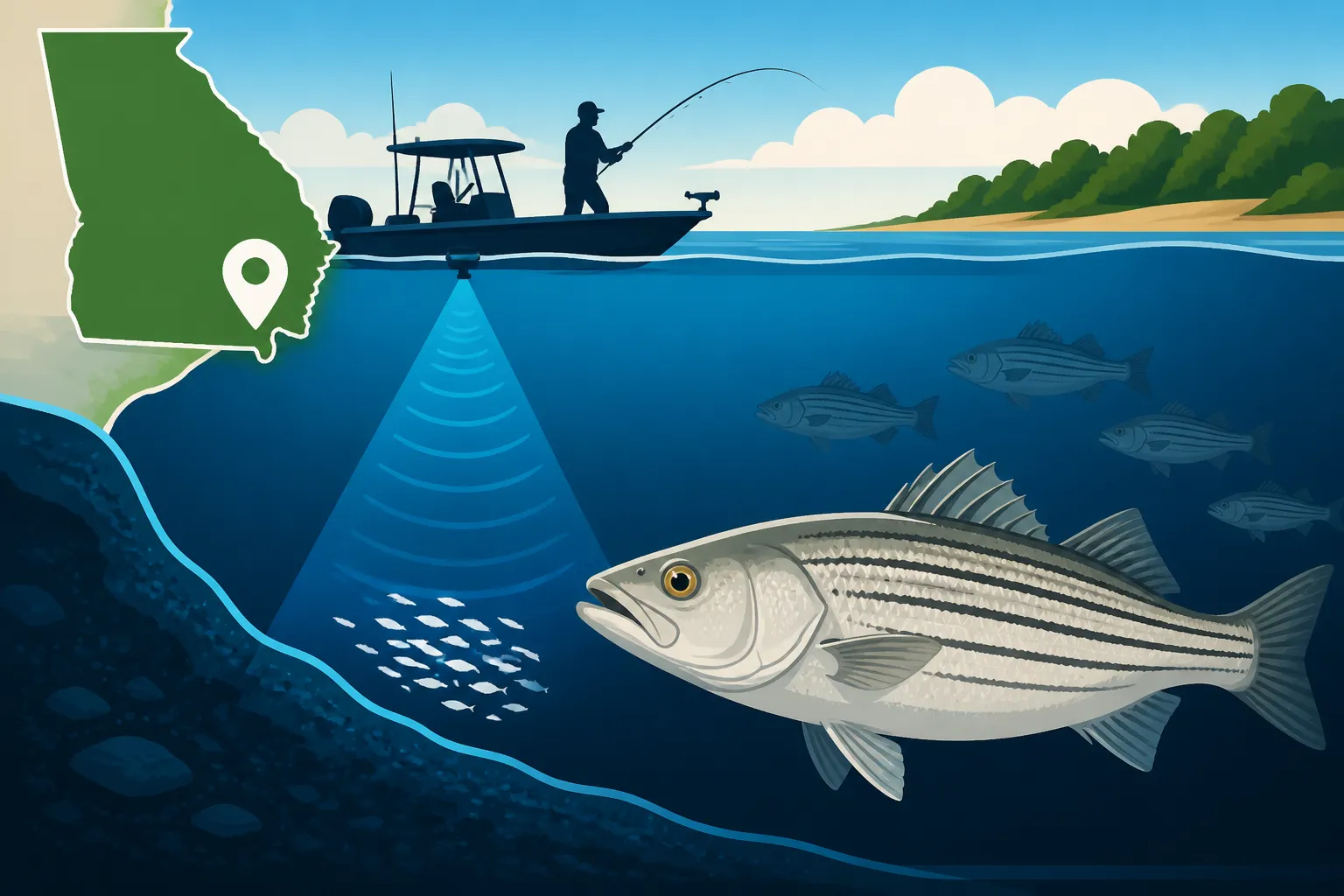
Your fish finder isn't just for seeing stripers; it's also your window into the baitfish world. If you find dense schools of bait suspended in 30 to 60 feet of water, often shaped like a massive ball or an elongated cloud, you can bet that striped bass won't be far behind. Sometimes, the stripers will be lurking just below or to the sides of these schools, waiting for the perfect moment to ambush their prey. It's a game of hide-and-seek, and the baitfish are often the key to unlocking the stripers' location. Knowing the Best Time of Year for Striped Bass Fishing in Georgia often correlates with when and where this baitfish movement occurs.
Essential Tools for Locating Deepwater Striped Bass
Trying to find deepwater stripers without the right gear is like trying to navigate Atlanta traffic blindfolded. You need specialized tools to peer into the underwater world and present your baits effectively once you've found them.
The Indispensable Role of Modern Fish Finders
If there's one piece of equipment you absolutely cannot skimp on when chasing deepwater stripers, it's a high-quality fish finder. Forget the old flasher units; modern electronics offer incredible detail and precision, showing you not just fish, but also baitfish, thermoclines, and intricate underwater structure. Brands like Lowrance, Humminbird, and Garmin offer units with CHIRP sonar, DownScan, and SideScan capabilities that paint a crystal-clear picture of what's beneath your boat. You can often find great deals on these robust setups on Amazon, making it easy to get ready for your next big trip.
When you're looking for deepwater stripers, your fish finder becomes your eyes. You'll be watching for those tell-tale arches or even distinct individual fish marks, usually positioned near or within schools of bait. Pay close attention to the depth where you're seeing these marks and cross-reference them with the depth of the thermocline, if your unit shows it. The goal is to identify that specific depth zone where stripers are most active. For a deeper dive, check out our guide on Best Fish Finders for Georgia Reservoir Fishing.
Choosing the Right Rod, Reel, and Line for Deepwater Battles
Once you've located the fish, you need the right tackle to get your bait down to them and handle the ensuing fight. Deepwater stripers are powerful, often much more so than their shallower counterparts, and they demand a robust setup.
For rods, look for medium-heavy to heavy power, with a fast or moderate-fast action, typically 7 to 7.5 feet long. This length gives you leverage, while the power helps you horse larger fish out of the depths. Graphite rods are generally preferred for their sensitivity, allowing you to feel subtle bites even with a lot of line out.
Matching your rod with a reliable reel is just as important. For conventional setups, a high-quality baitcasting or conventional reel with a strong drag system and ample line capacity is key. For spinning gear, opt for a large, robust reel in the 4000-6000 size range. You'll be fighting fish that can peel off line in powerful runs.
Line choice is critical. Braided line is highly recommended for deepwater striper fishing because it has virtually no stretch, which vastly improves sensitivity and hook-setting power over long distances. A 30-50 pound test braided mainline is common. To this, you'll want to add a fluorocarbon leader, usually 20-30 pound test, for its abrasion resistance and invisibility in the water. This combination ensures you can feel the bite, set the hook, and withstand the powerful fight. For a more detailed breakdown, consider reading our guide on the Best Tackle for Georgia Striped Bass Fishing.
Here's a quick reference for deepwater striper gear:
| Gear Component | Recommendation | Why It Matters |
|---|---|---|
| Fish Finder | CHIRP, DownScan/SideScan capable unit | Pinpoints fish, bait, and structure in detail. |
| Rod | 7-7.5 ft, Medium-Heavy to Heavy Power, Fast Action | Leverage for depth, power for large fish. |
| Reel | Quality Baitcasting/Conventional or 4000-6000 Spinning | Strong drag, ample line capacity for long runs. |
| Main Line | 30-50 lb Braided Line | No stretch for sensitivity and hook sets. |
| Leader Material | 20-30 lb Fluorocarbon | Abrasion resistance, nearly invisible underwater. |
| Terminal Tackle | Heavy barrel swivels, 1-3 oz egg/Carolina sinkers | Prevents line twist, gets bait to depth quickly. |
Master Techniques for Targeting Stripers Down Deep
Once you've found those deepwater stripers with your electronics, the next challenge is presenting your bait effectively. Two primary techniques dominate deepwater striper fishing: downlining and deep trolling. Both require patience, precision, and an understanding of how stripers react in their deep-water domain.
Precision Downlining with Live Bait
Downlining is arguably the most effective way to target deepwater striped bass, especially when they are schooled tightly or holding on specific structure. This technique involves presenting a live bait – typically a gizzard shad, threadfin shad, blueback herring, or even a large shiner – directly to the fish you see on your fish finder. Many anglers consider How to Rig Herring for Striped Bass to be a fine art.
Here's a breakdown of the process:
- Locate the Fish: Use your fish finder to mark a school of stripers and note their depth.
- Position Your Boat: Maneuver your boat directly over or just upstream of the fish. Using your trolling motor with a spot-lock feature (if available) is incredibly helpful here to maintain position.
- Deploy the Bait: Rig your live bait on a circle hook (sized appropriately for the bait, usually 3/0 to 6/0), then add a heavy barrel swivel above the leader, and an egg sinker or Carolina sinker (1 to 3 ounces, depending on current and depth) above that. Slowly lower your rig, watching your fish finder closely. The goal is to drop your bait just above the depth you're marking fish. If the stripers are at 40 feet, aim for 38-39 feet. Avoid dropping right into the middle of the school, as it can spook them.
- Wait and Watch: Once your bait is at the desired depth, engage your reel. Keep an eye on your rod tip for subtle twitches or sudden bends. With live bait, the fish often take it and run, so be ready for that drag-screaming strike!
- Adjust as Needed: If you're not getting bites, adjust your depth slightly. Sometimes fish will hold a few feet higher or lower than where they're actively feeding. Try different baits if one isn't working. This technique is detailed further in our guide to Live Bait Rigs for Striped Bass.
Effective Deep Trolling Strategies
Deep trolling is another highly productive method, particularly when stripers are spread out over a larger area or when you're trying to cover more water. This technique involves dragging baits or lures behind the boat at a slow, controlled speed, using various methods to get them down to the desired depths.
There are several ways to troll deep for stripers:
- Lead Core Line: This specialized line has a lead core that helps it sink, with different colors indicating specific depths. You can use lead core to pull crankbaits, spoons, or even live bait at precise depths.
- Downriggers: These mechanical devices allow you to clip your fishing line to a heavy cannonball weight, which is then lowered to a specific depth. When a fish strikes, the line pops free from the clip, allowing you to fight the fish directly without the weight of the cannonball. This is an incredibly precise way to present baits at specific depths.
- Planer Boards & Sinker Systems: While more common for shallower trolling or spreading lines, heavy sinker systems (like a three-way swivel with a heavy weight and a short leader to your bait) can also be used to get baits down, though they are less precise than downriggers.
When trolling, pay close attention to your boat speed. Stripers often prefer a specific retrieve speed for baits. Experiment with different speeds (typically 1.5 to 3 mph) until you find what triggers bites. Keep a close watch on your electronics to confirm your lures are running at the depth where you're seeing fish and bait. Trolling can be very effective for covering large areas of Lake Lanier Fishing Guide, Georgia or other large reservoirs. Our guide on Deep Water Techniques for Striped Bass offers more tactical advice.
Reading the Water: Interpreting Sonar and Structure
Your fish finder is an amazing piece of technology, but it's only as good as your ability to interpret what it's showing you. Learning to truly "read the water" through your sonar display, and understanding the types of deepwater structure that attract stripers, will significantly increase your success.
Decoding Your Fish Finder Display
Modern fish finders provide a wealth of information, and it can be overwhelming at first. Here are some key things to look for when hunting deepwater stripers:
- The Thermocline: Many units will show a distinct band where the water temperature rapidly changes. This is often represented by a darker or more dense line on your screen. As discussed, stripers love to hang around this zone.
- Bait Balls: These appear as dense clouds or clumps on your screen. They might be tightly packed or more spread out. Stripers will almost always be associated with these.
- Fish Arches/Marks: Stripers will show up as distinct arches or, on some units, as "fish ID" symbols. Look for larger, stronger arches, especially those positioned below, within, or on the edges of bait balls. Sometimes you'll see individual fish marked near deep structure, indicating a solitary hunter.
- Structure: Your sonar will show humps, ledges, creek channels, old roadbeds, and even standing timber. Stripers use these features for ambush points, travel corridors, and holding areas. Understanding What Depth Striped Bass Hold At can often be determined by the interaction of these elements.
The key is to combine these pieces of information. For example, if you see a dense bait ball at 45 feet, just above the thermocline, and larger fish arches lurking around its edges, you've likely found a prime striper feeding zone. Don't just motor aimlessly; actively use your electronics to map out the underwater landscape and identify potential hotspots.
Identifying Key Deepwater Structure
Striped bass are not just random wanderers; they relate to specific underwater features, even in deep water. Learning to identify these key structures will help you predict where stripers might be holding, even before your fish finder marks them.
- Deep Humps and Points: These elevated areas often attract baitfish and provide ambush points for stripers. They're like underwater mountains or hills.
- Creek Channels: Old creek beds that wind through the bottom of the lake are highways for baitfish and predators alike. Stripers will often patrol these channels.
- Ledges and Drop-offs: Anywhere there's a significant change in depth, you'll find a ledge or drop-off. These provide vertical relief that stripers can use to move between different depths or ambush prey.
- Standing Timber: In many Georgia reservoirs, particularly those flooded decades ago, vast amounts of standing timber remain. These submerged forests offer cover, structure, and attract baitfish, making them prime striper territory.
- Roadbeds and Foundations: Believe it or not, old roads and building foundations from submerged towns can create excellent deepwater structure. These artificial structures break up the monotony of the lake bottom and attract fish.
By identifying these features on your electronic charts and then confirming their presence with your sonar, you can develop a strategy for approaching and fishing them. Learning to mentally (or even physically, with mapping tools) connect these dots will turn you into a much more efficient and successful deepwater striper angler. Understanding the habits of Striped Bass and Hybrid Striped Bass in Georgia Waters means understanding where they like to hide. Good luck out there!
Disclaimer
This article is for general informational purposes only and does not constitute professional advice. Laws, prices and regulations vary by location and change over time. Consult a qualified professional for guidance on your specific situation.