How to Jig for Crappie in Deep Water
It’s a tale as old as time for many Georgia anglers: you’re out on your favorite lake, the sun is shining, and you know there are crappie somewhere, but they’ve decided to go deep. Suddenly, what seemed like a straightforward fishing trip turns into a frustrating puzzle. Getting those finicky papermouths to bite when they’re holding in 15, 20, or even 30 feet of water can feel impossible. But don’t worry, you’re not alone in that struggle, and this guide is here to help you unlock the secrets to effectively jigging for crappie in deep water, turning those elusive bites into a full livewell.
Understanding Deep-Water Crappie Behavior
Crappie are masters of adaptation, and understanding why they go deep and what they’re doing down there is the first step to catching them. It's not just random; there's always a method to their madness, whether they're following bait, seeking comfort, or avoiding pressure.
Seasonal Movement to Deeper Water
As the seasons change in Georgia, so do the habits of crappie. While spring sees them push into the shallows for the spawn, the heat of summer and the chill of winter often drive them to deeper, more stable environments. In summer, the thermocline plays a huge role. Below this layer, the water is cooler and more oxygenated, providing a comfortable sanctuary from scorching surface temperatures. Crappie will actively seek out these cooler zones. During winter, the entire water column cools down, but deep water still offers stability. It doesn't fluctuate in temperature as rapidly as the surface, providing a more consistent and often slightly warmer environment where crappie can conserve energy. This seasonal migration means that if you're not finding them shallow, it's time to adjust your approach and look down. Understanding How Water Temperature Affects Fish Behavior is absolutely key here.
Preferred Deep-Water Structures
Crappie, whether they're the spotted wonders of the Black Crappie Identification: Spots vs Stripes or their slightly more slender cousins, the white crappie, are structure-oriented fish. Even in deep water, they aren't just suspended aimlessly. They're typically holding tight to some kind of cover or structure. Think about submerged timber, brush piles, old roadbeds, creek channels, bridge pilings, or even deep rock ledges. These structures provide ambush points for feeding and a sense of security from predators. Finding these underwater highways and hideouts is paramount. Without structure, crappie are often scattered and harder to pinpoint. This is where your electronics become invaluable, helping you paint a picture of the underwater landscape.
Crappie Feeding Habits in Depth
When crappie are deep, their feeding habits can shift slightly. While they'll still readily hit small minnows and jigs, their activity levels might be slightly lower due to cooler water and slower metabolisms, especially in winter. They tend to be less aggressive and more subtle in their strikes. They’re often feeding on schools of baitfish, like shad, that also seek the refuge of deeper water. Your presentation needs to match this slower, more methodical feeding style. A fast-moving lure might get ignored, while a slowly presented, hovering jig mimicking an injured baitfish can be irresistible. This often means less erratic jigging and more emphasis on controlled, subtle movements.
Essential Gear for Deep-Water Jigging
Successfully targeting deep-water crappie requires the right tools for the job. You can't just use your standard shallow-water panfish setup and expect the same results. Sensitivity, line control, and the ability to detect faint bites are crucial.
Rod and Reel Selection for Sensitivity
When you're jigging in deep water, detecting those incredibly subtle crappie bites is everything. A crappie might just "thump" it, or even just put a little bit of weight on your line – it won't be like a bass ripping your rod out of your hand. This calls for a rod with a fast action and a very sensitive tip. A 6 to 7-foot light or ultralight spinning rod is often ideal, as it provides enough backbone for hooksets but has a forgiving tip that telegraphs even the slightest tap. Brands like St. Croix or Ugly Stik offer excellent sensitivity without breaking the bank. For the reel, a small, smooth spinning reel (size 1000 or 2000) with a good drag system is perfect. You want something lightweight that balances well with your rod, allowing you to hold it for extended periods without fatigue. Many anglers find great deals and a wide selection of Best Rods for Crappie Fishing in Georgia on Amazon, reading reviews to ensure they get the sensitivity they need.
Line Choices: Sensitivity vs. Strength
Your fishing line is the direct connection to your jig, and thus, to the crappie. For deep-water jigging, you need a line that offers low stretch for maximum sensitivity and good abrasion resistance, especially if you're fishing around submerged timber or rocky ledges.
- Fluorocarbon: This is often the top choice for serious deep-water crappie anglers. Its low stretch properties make it incredibly sensitive, allowing you to feel those light bites. It also has a refractive index similar to water, making it nearly invisible, which can be a huge advantage for skittish crappie. Opt for 4 to 6-pound test.
- Braided Line (with a fluorocarbon leader): Braided line offers zero stretch and incredible sensitivity, making it fantastic for feeling everything happening at the end of your line. However, it's highly visible and can spook fish. The best approach is often to tie a 4-6 foot fluorocarbon leader (4 to 6 lb test) to your braided mainline (6-10 lb test). This gives you the best of both worlds: sensitivity and stealth.
- Monofilament: While more affordable and easier to tie, monofilament has more stretch, which can dampen sensitivity and make it harder to detect light bites in deep water. It's generally less preferred for deep jigging, though some still use it in clear water for its invisibility.
Consider experimenting with different line types to see what feels best for you and your particular setup.
Jig Types, Sizes, and Colors for Deep Water
Choosing the right jig is critical. For deep water, weight is important to get your bait down quickly and keep it in the strike zone, especially if there's any current.
- Jig Heads: Stick with jig heads ranging from 1/16 oz to 1/8 oz for most crappie situations. If you're going exceptionally deep (25+ feet) or dealing with current, you might go up to 1/4 oz. The hook size should typically be a #2 or #4, matched to your soft plastic.
- Soft Plastics: Small, finesse-style soft plastic bodies are excellent. Think about 1.5 to 2.5-inch curly-tail grubs, paddle-tail minnows, tube jigs, or small straight-tail baits. Brands like Bobby Garland, Johnson, and Strike King make excellent crappie-specific plastics.
- Colors: Crappie can be picky, and color often matters. In deeper, darker water, brighter colors like chartreuse, pink, or orange can be very effective because they stand out. However, don't dismiss natural colors like pearl, white, or shad patterns, especially on clearer days or in lakes with heavy fishing pressure. It's always a good idea to have a variety on hand. You can find a huge array of these jig bodies and heads on Amazon, which makes it easy to experiment. If you want more specifics, check out our guide on Best Jig Colors for Crappie Fishing.
Here’s a quick overview of common jig types and their applications in deep water:
| Jig Type | Weight Range (Deep Water) | Best For | Retrieval Style | Notes |
|---|---|---|---|---|
| Curly Tail Grub | 1/16 – 1/8 oz | All-around, versatile, good tail action | Slow retrieve, lift-fall | Mimics small baitfish or insect larvae. |
| Paddle Tail Minnow | 1/16 – 1/8 oz | Mimicking shad, more natural swim profile | Steady retrieve, slight jig | Great for suspended crappie. |
| Tube Jig | 1/16 – 1/8 oz | Vertical jigging, subtle presentation | Slow drop, twitch, pause | Good around brush piles, less snagging. |
| Straight Tail Minnow | 1/16 – 1/8 oz | Finesse situations, very light bite | Minimal movement, slight quiver | Ideal for wary crappie or cold water. |
Using Electronics to Your Advantage
This is non-negotiable for deep-water crappie. A good fishfinder with down-imaging and side-imaging capabilities is your best friend. It allows you to:
- Locate Structure: Identify submerged timber, brush piles, ledges, and channel swings where crappie hold. You can literally see these structures on your screen.
- Find Schools of Baitfish: Crappie follow their food. If you see dense clouds of baitfish, crappie are likely nearby or will be soon.
- Pinpoint Crappie: Modern electronics can distinguish individual fish, showing you exactly where the crappie are holding within a brush pile or along a ledge. Some units, like those from Humminbird or Garmin, offer incredible detail, allowing you to literally drop your jig right on top of the fish you see. This capability is especially important when you're trying to figure out How to Find Crappie Around Brush Piles.
- Track Your Jig: Many fishfinders can even show you your jig descending and how fish are reacting to it. This allows for real-time adjustments to your presentation.
Learning to read your electronics effectively is a skill in itself, but it's one that will drastically improve your deep-water crappie success.
Mastering Deep-Water Jigging Techniques
Once you've got the right gear and a good understanding of crappie behavior, it's time to put it all into practice with effective jigging techniques.
Vertical Jigging vs. Casting and Retrieving
In deep water, especially when crappie are concentrated on a specific piece of structure, vertical jigging is often the most effective method.
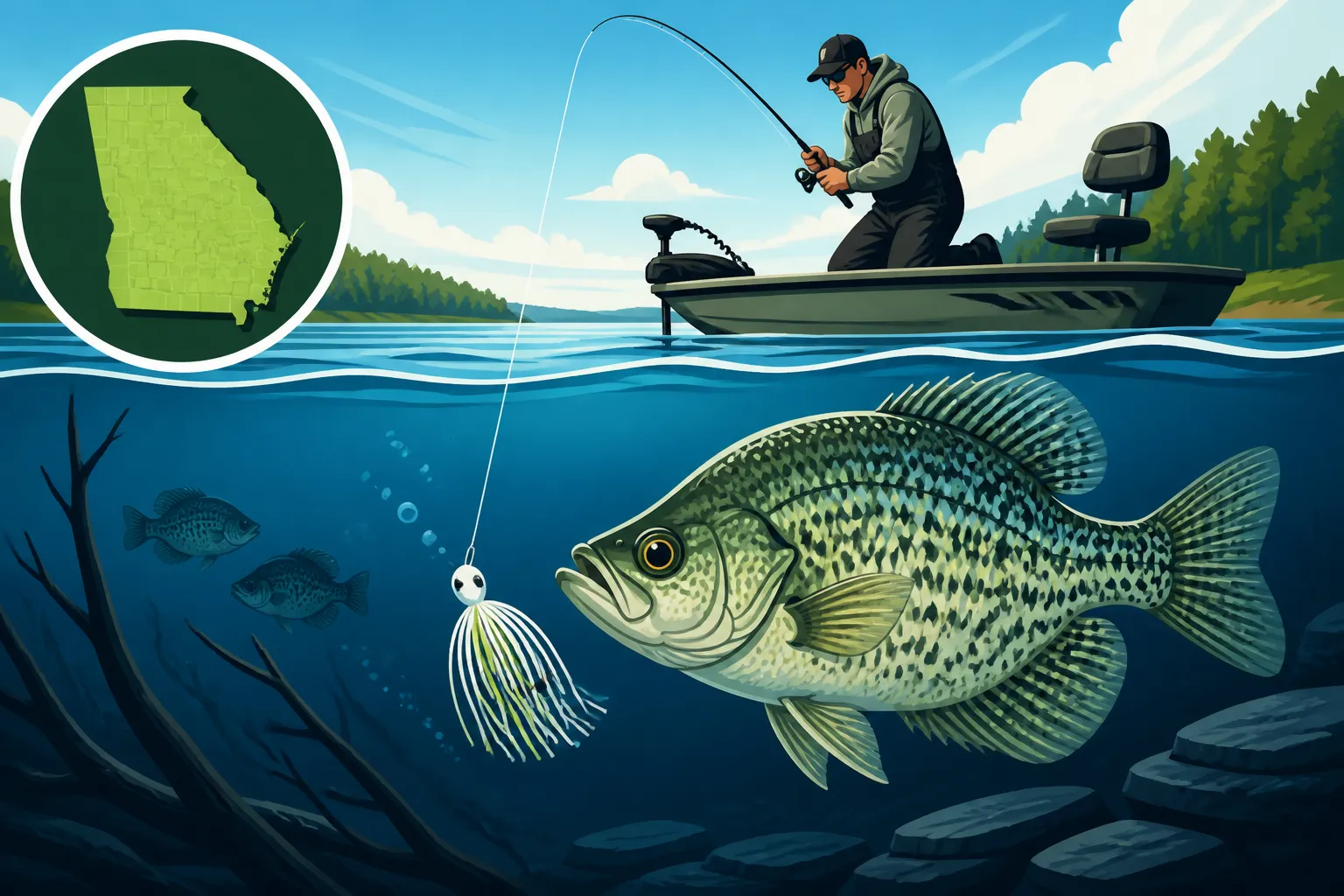
- Vertical Jigging: This involves positioning your boat directly over the crappie or structure you've located with your electronics. You then drop your jig straight down, keeping it as vertical as possible. This allows for precise depth control and the ability to work your bait slowly and methodically in the strike zone. You can use your trolling motor to maintain position. The beauty of vertical jigging is that you can literally watch your jig on your sonar screen as it descends and approaches the fish.
- Casting and Retrieving: While less common for truly deep crappie (20+ feet), casting can still be effective if crappie are scattered along a deep break or slightly shallower edge (10-15 feet). You'd cast your jig out, let it sink to the desired depth, and then slowly retrieve it with a lift-and-fall or slow-reel retrieve, often incorporating subtle twitches. This covers more water but sacrifices the pinpoint accuracy of vertical jigging.
For deep crappie, prioritize vertical jigging. It’s a more direct approach and gives you better control over your bait's depth and action. This differs significantly from How to Jig for Crappie in shallower water, where casting is often more prevalent.
Reading Your Sonar and Lure Presentation
Your sonar isn't just for finding fish; it's your window into how they're reacting to your bait. When vertical jigging, keep a close eye on your screen.
- Identify the Depth: Note the exact depth where crappie are holding. Are they on the bottom, suspended 5 feet off a brush pile, or at a specific depth in the water column?
- Drop Your Jig: Slowly lower your jig until it appears on your sonar screen. Try to position it just above the fish. Crappie often look up to feed.
- Subtle Action: Once in the strike zone, impart very subtle movements. A tiny twitch of the rod tip, a slow lift and fall of just a few inches, or simply holding the jig still can be incredibly effective. Sometimes, the less you do, the better. Imagine your jig as an injured baitfish weakly fluttering.
- Observe Reactions: Watch your screen. Do fish move towards your jig? Do they ignore it? If they ignore it, try changing your jig color, size, or retrieve speed. A lot of times, if they swim up to your jig, they're interested. If they swim down, they're often spooked or uninterested. This real-time feedback is invaluable.
Detecting Subtle Bites
This is arguably the hardest part of deep-water crappie fishing. As mentioned, a deep crappie bite can be incredibly light. It might not be a violent jerk; instead, look for:
- A "Tick" or "Thump": The most classic crappie bite. You'll feel a faint tap on your line.
- Spongy or Mushy Feeling: Your line might just feel heavier, like you've hooked a piece of moss or mud. Set the hook!
- Line Twitch: Watch your line where it enters the water. A sudden twitch or slackening of the line can indicate a bite.
- Rod Tip Dip: The very tip of your sensitive rod might just barely dip or straighten out unexpectedly.
If you feel anything out of the ordinary, even a slight hesitation, set the hook with a quick, upward sweep of the rod. It's always better to set the hook on a phantom bite than to miss a real one. This requires intense focus and a sensitive rod and line. Alternatively, some anglers prefer How to Tightline for Crappie, which often uses heavier weights and even more direct line-to-bait contact.
Common Mistakes and How to Avoid Them
Even seasoned anglers make mistakes, and deep-water crappie can be incredibly unforgiving of them.
- Fishing Too Fast: Crappie in deep, often cooler water, are generally less aggressive. A fast retrieve or aggressive jigging motion will often get ignored. Slow down, way down.
- Not Using Electronics: Trying to find deep crappie without a fishfinder is like trying to find a needle in a haystack in the dark. It's possible but incredibly inefficient. Invest in good electronics and learn to use them.
- Ignoring the Bite Zone: Crappie often suspend at a very specific depth. If they're 18 feet down, and you're jigging at 15 or 20, you'll miss them. Use your electronics to stay in the precise strike zone.
- Using Overly Heavy Line/Jigs: While you need some weight to get down, going too heavy on your line or jig can reduce sensitivity and make your presentation less natural. Stick to light lines and appropriate jig weights.
- Not Changing Jigs/Colors: If you're not getting bites after 15-20 minutes, don't be afraid to change your jig size, shape, or color. Crappie can be incredibly particular on a given day.
- Being Too Loud: Loud noises in the boat can spook crappie, especially in clearer, deep water. Be mindful of dropping tackle boxes or shuffling feet.
Finding the Best Deep-Water Crappie Hotspots
Knowing how to fish deep is only half the battle; you also need to know where to look. Georgia has fantastic crappie fishing, and many of our lakes offer prime deep-water opportunities.
Submerged Timber and Brush Piles
These are absolute crappie magnets. Whether it's standing timber from a flooded lake, fallen trees along a deep bank, or deliberately sunk brush piles, crappie will stack up in them like cordwood. The branches and limbs provide cover, shade, and a place for baitfish to hide, which in turn attracts crappie.
- Using Sonar: Use your down-imaging and side-imaging to locate these brush piles. They'll often appear as dense, irregular shapes on your screen.
- Approach Carefully: Once you spot a brush pile, approach it slowly and silently, using your trolling motor. Try to get directly over it or slightly upwind/upcurrent so you can drift over it.
- Work the Edges and Top: Don't just drop your jig into the thickest part and get snagged. Start by working the edges of the brush, then try the top, and finally, if you're feeling brave, drop it into the denser parts. Precision is key. Keep a hook remover handy, or consider using a single-hook jig to reduce snags. This is especially true for our Best Crappie Lakes in Georgia, where anglers frequently sink brush.
Deep Ledges and Channel Bends
In many of Georgia's reservoirs, like Lake Sinclair or Lake Oconee, the old creek and river channels offer fantastic deep-water crappie habitat. These channels often have sharp drops, ledges, and bends that provide current breaks and ambush points.
- Contour Maps: Use detailed contour maps on your fishfinder or a dedicated GPS unit to identify these deep channels, ledges, and humps.
- Trolling Motor Control: Use your trolling motor to slowly cruise along these contours, keeping a close eye on your sonar for any signs of fish or bait.
- Follow the Breaks: Crappie will often position themselves along the break lines of these ledges, waiting for baitfish to swim by. Work your jig meticulously along these depth changes, often dropping it just off the edge of the break and slowly bringing it up. Don't be afraid to try different depths along the same ledge.
Seasonal Patterns for Deep Crappie
While we've touched on summer and winter, understanding the nuances of how crappie use deep water throughout the year can give you an edge.
- Early Spring/Late Fall: As water temperatures transition, crappie will move between shallow and deep zones. They might start deep, move shallow to feed or spawn, and then return deep. Focus on transition areas – deeper water adjacent to spawning flats or submerged points.
- Summer: This is prime time for deep-water crappie. They’ll be holding in those thermoclines, often related to the deepest available structure. Look for them in 20-30 feet of water, or even deeper in very large reservoirs.
- Winter: Crappie will generally be in the deepest parts of the lake, often around the main lake basin or deep channels, again relating to submerged timber or other structure. Their metabolism will be slow, requiring very subtle presentations and light bites. Sometimes, you'll find them suspended in dense schools over deeper water, making for excellent vertical jigging. Consider if Do Crappie Bite Better at Night? applies, as crappie are often more active feeders during low light conditions or after dark, even in deeper water.
By paying attention to the specific time of year, water temperatures, and weather patterns, you can narrow down your search for deep-water crappie and increase your chances of success. It's a challenging but highly rewarding pursuit that truly tests an angler's skill and patience.
Disclaimer
Fishing conditions and regulations in Georgia can change. Always consult the latest Georgia Department of Natural Resources (DNR) guidelines and local signage before heading out. Be safe, responsible, and practice good stewardship of our natural resources.