Winter Fishing Patterns on Georgia’s Reservoirs
Winter fishing in Georgia’s reservoirs often feels like a cruel joke, doesn’t it? The air is biting, the boat ramp is slick, and sometimes it seems like every fish in the lake has packed up and moved to Florida. It's frustrating when you head out, bundled to the gills, only to spend hours in silence, wondering if you're even in the right spot. But I promise you, those fish are still there, they're just playing hard to get. This comprehensive guide is here to unravel the mysteries of winter fishing patterns on Georgia’s reservoirs, arming you with the knowledge and tactics to turn those slow, cold days into surprisingly productive ones.
Understanding Winter's Impact on Georgia Reservoirs
When the mercury truly plummets and winter takes hold across Georgia, our beloved reservoirs undergo a profound transformation. It's not just the crisp air you feel; the entire aquatic ecosystem shifts, and understanding these changes is the first step to successful winter angling. Forget what you know about summer patterns; winter demands a completely different approach.
The Cold Truth About Water Temperatures
Let's face it, fish are cold-blooded creatures, and their entire existence revolves around water temperature. As fall gives way to winter, the surface water of Georgia's reservoirs cools rapidly. This cooling eventually leads to a phenomenon known as "turnover," where the water column becomes uniform in temperature and oxygen levels from top to bottom. Once the lake has turned over, which typically happens late fall or early winter, you won't find those distinct warm and cold layers anymore. Instead, the entire water column will gradually cool.
This uniform cooling has a massive impact. Fish metabolism slows down dramatically. Think of it like trying to run a marathon in slow motion; they just don't have the same energy or desire to chase down a meal. Bass, for instance, might be looking for water in the mid-40s to low 50s Fahrenheit, while crappie could tolerate slightly colder but will still be sluggish. Stripers are a bit more tolerant of cold water, but even they will seek out stable thermal conditions. This means your presentations need to slow down considerably, mimicking an easy, slow-moving meal rather than an energetic fleeing one. Understanding how water temperature affects fish behavior is crucial, and it forces us to reconsider everything from lure choice to retrieve speed.
Winter Lake Levels and Clarity Changes
Another significant shift you'll notice on Georgia's reservoirs during winter is the change in lake levels and water clarity. Many of our reservoirs, like Lake Lanier or Lake Hartwell, are managed for flood control and power generation. This often means that lake levels are drawn down during the colder months, sometimes significantly. This drawdown can expose structures that are usually hidden underwater, like old roadbeds, stumps, brush piles, or rock formations, giving you a clearer picture of the fish-holding cover. It's like the lake is pulling back its curtain, revealing secret fishing spots!
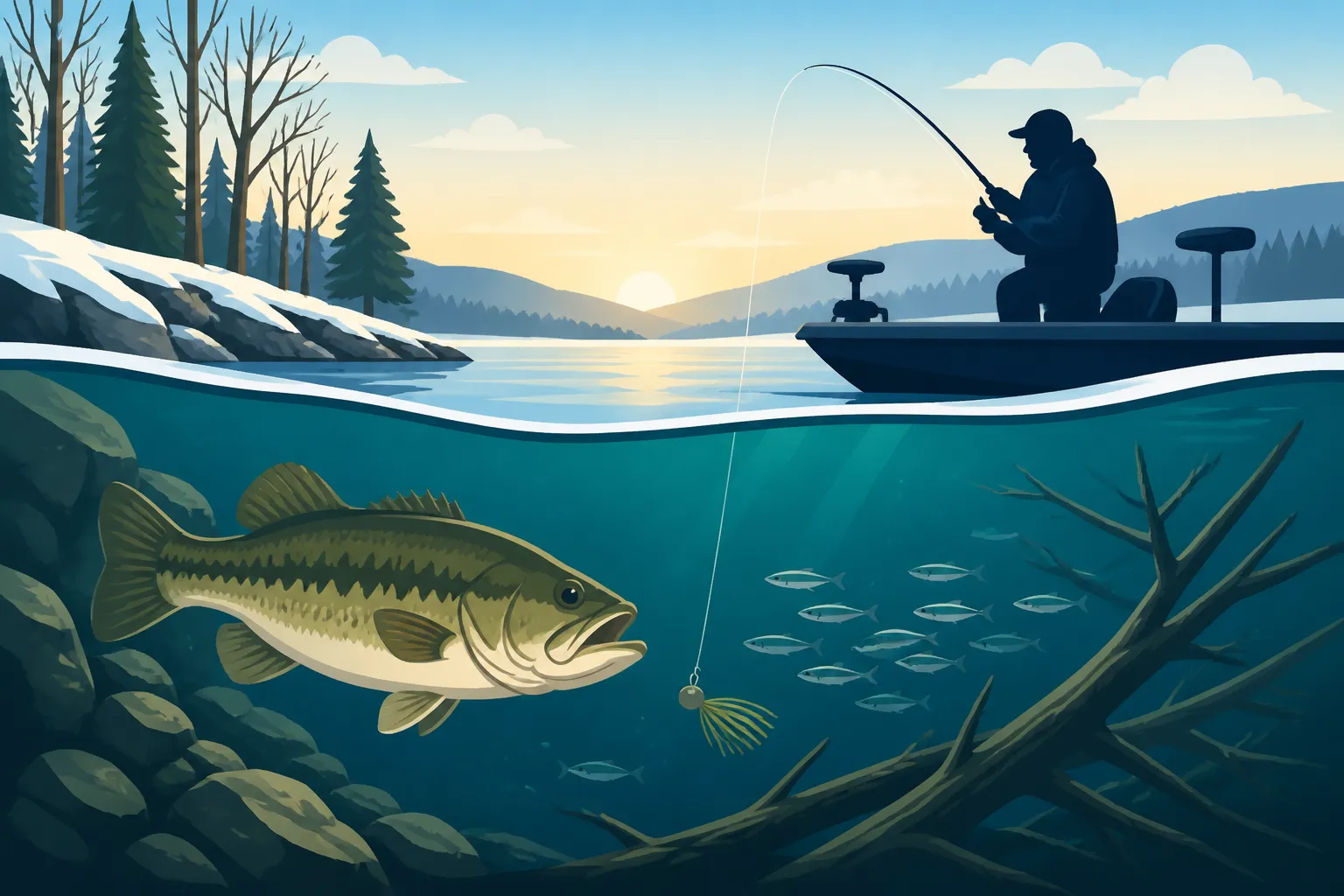
Along with lower water levels, winter often brings increased water clarity. With less sunlight and cooler temperatures, algae blooms are minimal, and there's less boat traffic to stir up sediment. This crystal-clear water can be a double-edged sword. On one hand, it allows you to see more structure, and on the other, it makes fish much more skittish and prone to spooking. You'll need to adjust your approach by using lighter line, making longer casts, and opting for more natural-colored baits. This is a far cry from the murky, warm water fishing of summer where you could often get away with bolder presentations.
Locating Fish in Winter: Where They Go and Why
With the cold and clarity changes, fish don't just disappear; they simply relocate to areas where they can conserve energy and find stable conditions. Finding them requires a keen eye for structure and an understanding of their thermal preferences.
Deep Water Structures and Cover
During the winter months, fish are largely driven by two primary instincts: finding stable temperatures and having access to food. In reservoirs, this often means they gravitate towards deeper water and associated structures. Think main lake channels, significant humps that rise out of deep water, long tapering points, and sharp ledges. These areas offer thermal stability, as deep water takes longer to cool down and often holds a slightly more consistent temperature than shallow areas. They also provide natural highways for baitfish.
Look for areas with vertical cover that extends into these deeper zones. Standing timber, submerged roadbeds, bridge pilings, and large rock formations are prime examples. These structures act like apartment buildings for baitfish and offer ambush points for predators. For example, on Lake Oconee, finding deep brush piles in creek channels can be absolutely deadly for crappie. Don't be afraid to fish depths from 20 to 60 feet or even deeper, especially for suspended fish. Using your electronics becomes paramount here, as you're literally searching for needles in a haystack of water.
Thermal Refuges and Power Generation
While most of the lake cools uniformly, there are specific spots that can offer a slight thermal advantage, acting as magnets for fish. One of the most famous examples in Georgia is the area around power generation plants. Lakes like Lake Sinclair are well-known for their warmer water discharges from power plants, creating localized "hot spots" where fish remain more active throughout the winter. If you're wondering why Lake Sinclair Winter Bass Fishing Near the Power Plant is so popular, this is why!
These thermal refuges attract baitfish, which in turn attract larger predatory fish like bass, stripers, and crappie. Beyond just the warmth, the current created by water discharge can also trigger feeding. This current pushes baitfish, making them easier targets for game fish. However, these areas can also get crowded, so be prepared to share the water. It’s a testament to how crucial even a few degrees can be in influencing where fish choose to spend their winter.
Targeting Key Species in Winter
While the general rule of "slow down" applies across the board, specific species in Georgia's reservoirs require nuanced tactics to tempt them into biting during the colder months. Let's dive into some of the most popular winter targets.
Largemouth and Spotted Bass Tactics
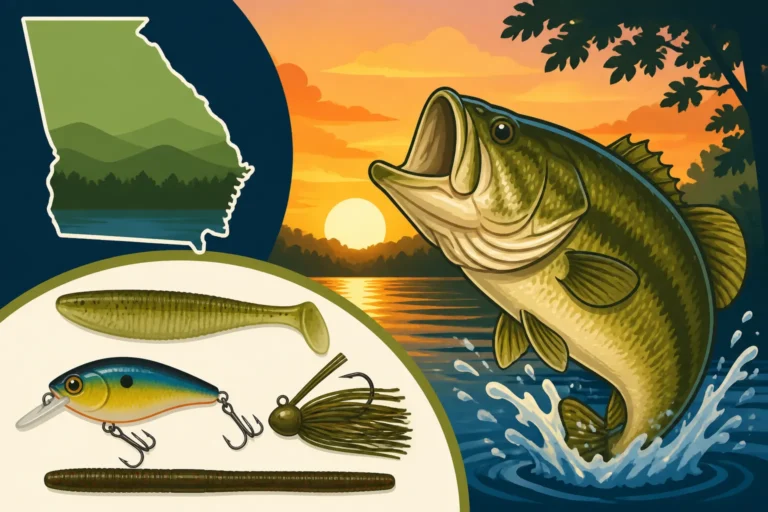
Winter bass fishing in Georgia can be incredibly rewarding, but it demands patience and precision. Both largemouth and spotted bass become quite lethargic in cold water, often schooling up tightly in deep water on main lake points, humps, or channel swings. Your best bet is to target these deep structures with slow, methodical presentations.
Jigging spoons are absolute killers for winter bass. Drop them down to the depth where you see fish or bait on your electronics, then just lift and drop them, allowing them to flutter enticingly. Another highly effective technique is the drop shot rig, especially when bass are suspended or holding tight to cover. A small, subtle bait on a drop shot, presented right in their face, can be irresistible. For those looking for a bigger bite, the Alabama rig (or A-rig) can be incredibly effective, mimicking a school of baitfish and drawing reaction strikes from larger, inactive bass. Lakes like Lanier, Oconee, and West Point are renowned for their winter bass fisheries. If you're looking for the prime time to chase big bass, understanding Best Time of Year to Catch Bass at Lake Lanier, Georgia will certainly help. Remember, these fish aren't going to chase far, so get your bait right in front of them and let it sit.
Crappie Fishing in the Cold Months
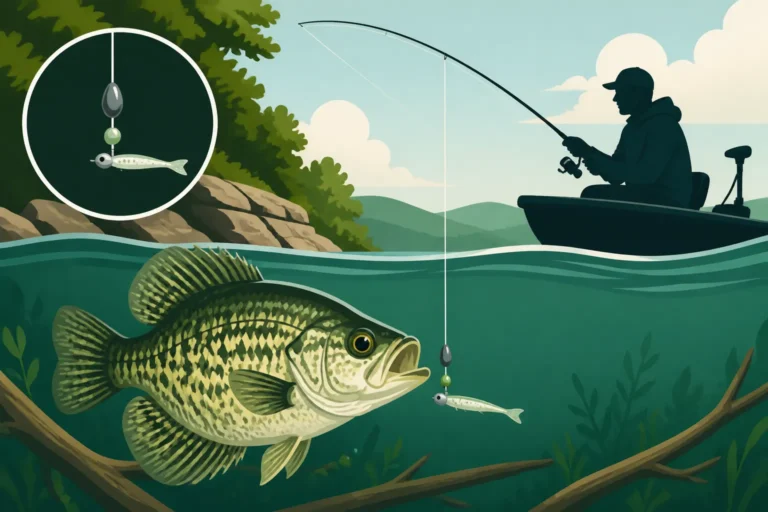
Crappie are another phenomenal winter target in Georgia reservoirs. Unlike bass that might suspend or hug the bottom, crappie often hold tightly to submerged brush piles, standing timber, and bridge pilings in deep water. They school up in massive numbers, making it possible to have an incredible day once you locate a productive spot.
Vertical jigging is the name of the game for winter crappie. Use small jigs (1/16 to 1/8 ounce) tipped with a small plastic grub or, even better, a live minnow. Drop your offering straight down into the brush pile, watching your electronics closely to see where the fish are holding. Gently twitch the rod tip, keeping the bait in the strike zone for extended periods. Sometimes, simply holding the bait perfectly still is enough to entice a bite. Popular crappie lakes in Georgia include Lake Sinclair, Lake Oconee, and Clarks Hill Lake, which are all fantastic fisheries during the winter. For more specific insights on where to find these panfish, check out our guide on the Best Crappie Lakes in Georgia. Patience is key, as crappie bites can be incredibly subtle, feeling like nothing more than a slight pressure or a tiny tap.
Striper and Hybrid Striper Strategies
For those who love a hard fight, winter offers some of the best striped bass and hybrid striped bass fishing in Georgia. These powerful fish tend to follow massive schools of baitfish, like threadfin and gizzard shad, into the deeper, open water sections of our reservoirs. They can be found roaming main lake channels or schooling over deep humps and ledges.
Your electronics are absolutely critical for finding winter stripers. Look for large schools of baitfish, often appearing as dense clouds on your sonar, and the stripers will usually be lurking just beneath or around them. Down-lining live bait, typically large shiners or shad, is a highly effective method. Drop your bait to the depth where you're seeing fish, using a heavy sinker to keep it in the strike zone. Jigging spoons can also be effective when stripers are actively feeding or suspended. Trolling deep-diving crankbaits or bucktail jigs can cover a lot of water and help you locate scattered schools. Lakes like Lanier, Oconee, and Hartwell are prime destinations for winter stripers. Mastering Deep Water Techniques for Striped Bass will significantly boost your chances of landing one of these powerful fish.
Essential Gear and Techniques for Winter Success
Winter fishing isn't just about finding the fish; it's about being prepared and having the right tools to maximize your chances when they do bite. From cutting-edge electronics to the clothes on your back, every detail matters in the cold.
Electronics: Your Best Friend on Cold Water
In winter, fish are concentrated, deep, and often tucked away in very specific locations. This makes advanced marine electronics not just helpful, but absolutely indispensable. Your fish finder, especially one with side imaging and down imaging capabilities, becomes your eyes below the surface. You're not just looking for fish anymore; you're actively searching for subtle changes in bottom contour, isolated brush piles, standing timber, and most importantly, schools of baitfish.
A high-quality unit allows you to scan wide areas for baitfish schools and pinpoint individual fish holding tight to structure. Once you mark a school of bait or a cluster of fish, you can drop a waypoint and precisely position your boat to make effective presentations. Many anglers invest heavily in these tools, and for good reason—they dramatically increase your efficiency on the water. Brands like Garmin, Lowrance, and Humminbird offer a range of options, and you can find excellent deals on these advanced units on platforms like Amazon. Don't cheap out on your electronics; they are the single most important piece of gear for winter reservoir fishing.
Slow and Steady Wins the Race: Presentation Matters
This cannot be emphasized enough: slow down. Fish are lethargic in cold water, and their strike zone shrinks considerably. They're not going to expend much energy chasing a fast-moving bait. Your retrieve speeds need to be painstakingly slow, sometimes to the point where it feels unnatural. Long pauses, subtle twitches, and minimal movement are often what triggers a bite.
Think about using baits that have a lot of inherent action with minimal angler input, like a slow-falling jig or a finesse worm on a shaky head. If you're jigging, let the bait sit on the bottom for several seconds before making your next subtle lift. For soft plastics, a slow drag or a gentle shake is often more effective than an aggressive hop. Pay close attention to your line for the faintest tick or unnatural movement, as winter bites can be incredibly light. Using sensitive rods and lighter line can help detect these subtle strikes. If you're focused on bass, having the right setup for Best Rods and Reels for Georgia Largemouth Bass will make a huge difference in feeling those light taps.
Dressing for the Chill and Staying Safe
Let's be realistic: winter fishing in Georgia can be brutally cold, especially on the open water of a reservoir. Staying warm and dry isn't just about comfort; it's about safety. Layering is paramount. Start with a moisture-wicking base layer, add insulating middle layers (fleece or down are great), and top it off with a waterproof and windproof outer shell. Don't forget a warm hat, gloves, and waterproof boots. Cold feet and hands can quickly ruin a fishing trip.
Beyond just staying warm, safety should always be your top priority. Always wear a Coast Guard-approved life jacket, especially when moving between spots or when water temperatures are low. If you unexpectedly go overboard in cold water, hypothermia can set in rapidly. Always let someone know where you're going and when you expect to return. Consider bringing a fully charged cell phone in a waterproof case, a whistle, and a throw cushion. Even on a relatively calm day, unexpected issues can arise. For a more comprehensive look at safety, consider reviewing a Safety Gear Checklist for a Day on Lake Lanier. A little preparation goes a long way in ensuring a safe and enjoyable winter outing.
| Species | Typical Winter Depth | Best Baits/Lures | Key Presentation |
|---|---|---|---|
| Largemouth Bass | 20-50 feet (deep cover) | Jigging Spoons, Drop Shots, A-Rigs | Slow lift & drop, subtle shakes |
| Spotted Bass | 30-70 feet (open water) | Jigging Spoons, Drop Shots, Underspins | Vertical jigging, slow retrieve |
| Crappie | 15-40 feet (brush piles) | Small Jigs (1/16-1/8 oz), Live Minnows | Vertical jigging, hold still |
| Striped Bass | 30-80 feet (main channels) | Live Shad/Shiners, Jigging Spoons, Trolling | Down-lining, slow retrieve, trolling |
Overcoming Winter Fishing Challenges
Winter fishing, by its very nature, presents a unique set of challenges. It's not always easy, and there will be days when the fish truly seem to have lockjaw. But by understanding these hurdles and learning how to adapt, you can significantly improve your odds.
Dealing with Lockjaw and Finicky Bites
The dreaded "lockjaw" is a common term among winter anglers, referring to those days when fish simply refuse to bite, no matter what you throw at them. This isn't necessarily because there are no fish around, but because their metabolism is so slow that they're barely active. Bites can be incredibly light, feeling more like a slight pressure on the line or the weight of a leaf rather than an aggressive strike.
To combat finicky bites, you often need to downsize your baits. Smaller jigs, finesse worms, or tiny minnows can be more appealing to a sluggish fish. Experiment with scent attractants, which can entice a reluctant fish to hold onto your bait longer, giving you more time to feel the bite. Varying your retrieve speed, or more accurately, your lack of retrieve speed, can also make a difference. Sometimes, just letting the bait sit perfectly still for 10-15 seconds before a barely perceptible twitch is the trick. Patience truly is a virtue here; accept that bites will be fewer and far between, but the ones you do get will often be quality fish. Don't rush into moving to another spot if you've marked fish; spend some extra time trying different presentations and depths in the same area.
Weather Wisdom and Adapting to Conditions
While you can't control the weather, you can certainly understand how it influences winter fishing patterns and adapt your approach accordingly. Cold fronts, those sharp drops in temperature that often follow a warm spell, are notorious for shutting down a bite. The sudden change in barometric pressure can make fish lethargic and push them deeper. After a strong cold front, you might find fish tighter to cover and even less willing to chase. Our guide on How to Fish After a Cold Front dives deeper into these adjustments.
Ideally, the best winter fishing days are often stable, overcast, and perhaps even slightly warmer than average. These are the days when fish might be a little more active and willing to move and feed. Bright, sunny, bluebird skies, especially after a cold front, tend to make fish hug the bottom or tight cover and be even more skittish due to increased water clarity. If you're faced with tough post-front conditions, consider targeting even deeper water, slowing your retrieve even further, and using the most subtle, natural baits you have. Adapting to these weather shifts is critical for consistent success, turning potentially frustrating days into valuable learning experiences.
Disclaimer
Fishing involves inherent risks. Always prioritize safety, understand and follow all local fishing regulations, and be mindful of weather conditions. This guide provides general information and should not replace professional advice or personal judgment. The author and publisher are not responsible for any incidents that may occur while following this information.