How the statewide bass limit compares to reservoir limits in Georgia
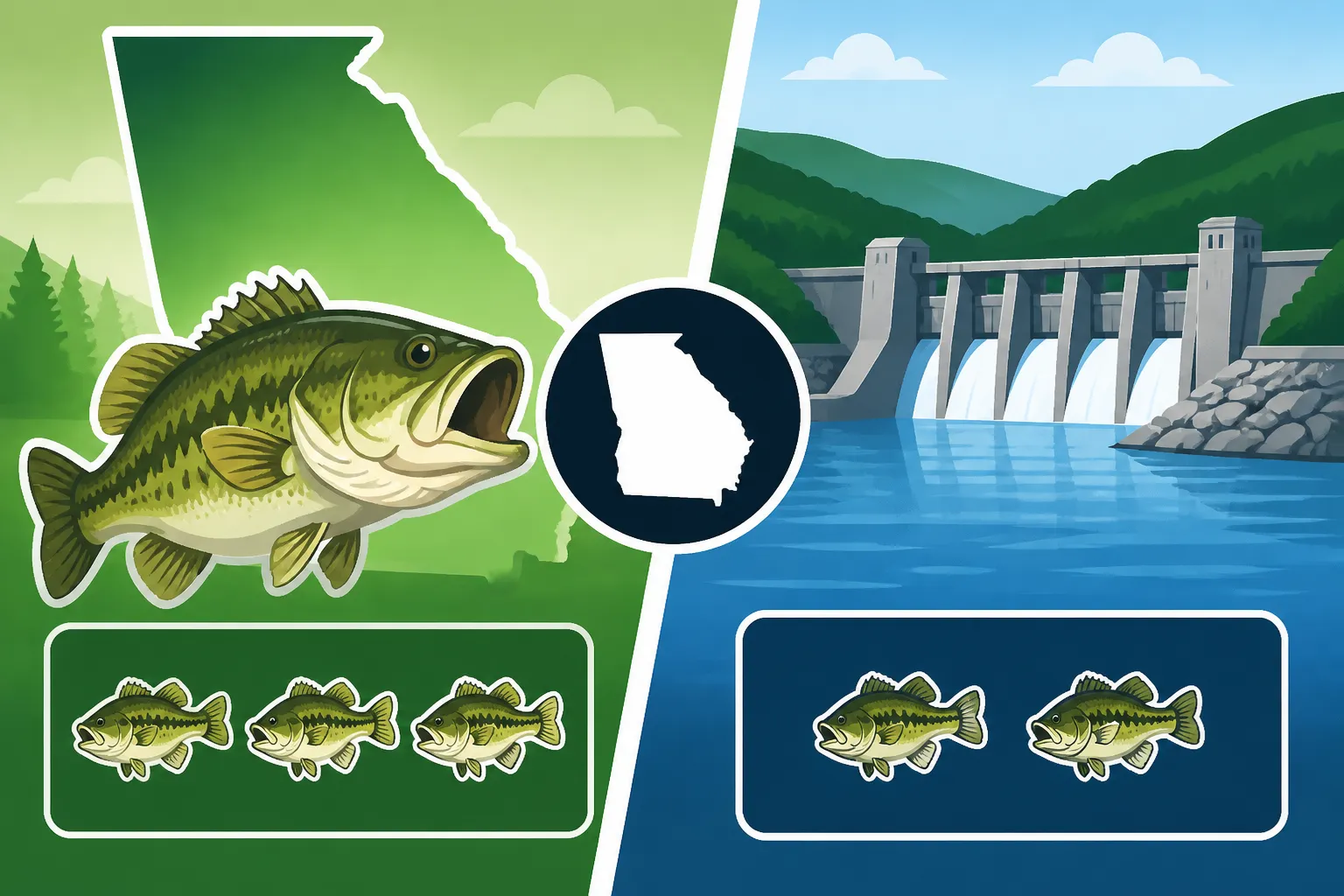
It can be incredibly frustrating to head out for a day of bass fishing in Georgia, only to realize you're not entirely sure if the statewide regulations apply to your favorite lake, or if there's some special rule you've overlooked. The truth is, Georgia's bass limits aren't always a one-size-fits-all situation, and understanding these nuances is crucial for staying legal and contributing to healthy fish populations. This guide is here to untangle that confusion, walking you through the statewide bass limits and then diving deep into how they compare and sometimes differ from specific reservoir regulations across the state.
Understanding Georgia's Statewide Largemouth Bass Regulations
Let's start with the basics, which apply to the vast majority of lakes, ponds, and rivers across Georgia unless otherwise specified. These are the rules you should commit to memory as your baseline before you even consider heading out. For many anglers, these general guidelines will be all you need for a successful and legal day on the water.
The General Daily Creel Limit for Bass
When it comes to how many bass you can actually keep in a day, Georgia has a pretty straightforward rule that covers most of its waters. Anglers are generally allowed to keep up to ten largemouth bass per day. This "creel limit" is designed to allow recreational anglers to enjoy their catch while still protecting the overall bass population from overfishing. It's a generous limit for most casual fishing trips, giving you plenty of opportunity to bring home some fish for dinner if you choose. Just remember, this number refers to the total number of bass, not just those of a certain size. It's important to differentiate this from species like trout, which often have different daily limits. You can find more specific details on the various limits in the Georgia Fish Size and Creel Limits guide.
Now, while "ten" sounds simple, it's always wise to double-check if you're fishing a specific public fishing area or a very small, managed pond, as these might have even more restrictive rules that deviate slightly from the statewide norm. But for the big, sprawling lakes and rivers, ten is usually the magic number. It’s always best practice to review the current Georgia Fishing Regulations Explained before each season, just in case anything has been updated.
Minimum Length Requirements Across Most Waters
Beyond the number of fish you can keep, there's also the matter of their size. For largemouth bass, the statewide minimum length limit in Georgia is generally 12 inches. This means that any largemouth bass you catch that measures less than 12 inches from the tip of its snout to the end of its tail (with the mouth closed and tail pinched) must be immediately released back into the water. This minimum length helps ensure that bass have a chance to grow and reproduce at least once, contributing to the next generation of fish before they're harvested.
Think of it like this: releasing those smaller fish gives them a chance to become the trophy-sized bass you dream of catching next year. It's a critical conservation measure that benefits everyone. Having a reliable measuring board or ruler on your boat or in your tackle box is absolutely essential for compliance. You can find many great options on Amazon, making sure you're always ready to accurately measure your catch. This 12-inch rule is the standard that applies unless a particular body of water has a different, more specific regulation in place, which we'll get into next. If you're curious about the general rules, our article on Statewide Largemouth Bass Size Limits in Georgia delves deeper into this topic.
Why Certain Reservoirs Have Special Bass Limits
You might be wondering why some lakes have rules that are different from the statewide regulations. It's not just to make things confusing, I promise! These special regulations are actually carefully considered and implemented by the Georgia Department of Natural Resources (DNR) for very specific ecological and management reasons. They are designed to improve fishing, protect unique fisheries, and ensure sustainable populations for generations of anglers to come.
Conservation Efforts and Population Management
The primary reason for specialized bass limits on certain reservoirs boils down to conservation and population management. Not all lakes are created equal when it comes to fish habitat, forage availability, and angler pressure. Some lakes might have an abundance of smaller, stunted bass, while others might be struggling to produce trophy-sized fish. By adjusting creel limits or minimum/slot length limits, fisheries biologists can fine-tune the management of a specific lake to achieve certain goals.
For example, if a lake has too many small bass, a more liberal slot limit might encourage anglers to keep more smaller fish, reducing competition for food and allowing the remaining bass to grow larger. Conversely, if a lake is known for producing trophy bass, a stricter minimum length or even a protected slot might be put in place to ensure those big fish are released to continue growing and reproducing. These decisions are based on extensive research, fish population surveys, and scientific understanding of the lake's ecosystem. It's all about balancing angler enjoyment with the long-term health of the fishery. Understanding the specific Georgia Fishing Regulations Explained can help clarify these regional differences.
Examples of Reservoir-Specific Rules and Their Impact
Georgia has some fantastic lakes, and many of them have unique stories and management strategies. Let's look at a few examples of how these rules play out in the real world:
Take a lake like Lake Lanier, for instance. It's a powerhouse for bass fishing, particularly spotted bass, and it has a 14-inch minimum length limit for largemouth bass. This is two inches above the statewide 12-inch minimum. Why? Because Lake Lanier's fishery managers have determined that this higher minimum helps protect the lake's excellent bass population, allowing them to reach a more robust size before being harvested. This kind of targeted management helps maintain the lake's reputation as a premier bass fishery. Many anglers wonder, Is the bass limit different at Lake Lanier than elsewhere in Georgia?, and the answer is a resounding yes!
Another fascinating example is Lake Lindsay Grace, located within the Paradise Public Fishing Area. This lake has a truly unique slot limit: you have to release all largemouth bass between 15 and 22 inches in length. Anglers are only allowed to keep bass under 15 inches or over 22 inches, with a daily creel limit of two bass. This is a classic "trophy management" strategy, designed to protect prime breeding-age bass and allow them to grow to truly massive sizes, while also providing opportunities for anglers to take home smaller fish or a true giant. You can learn more about this specific regulation in our article, Releasing 15 to 22 Inch Bass at Lake Lindsay Grace. These kinds of specific regulations highlight the careful thought that goes into managing each unique body of water.
Navigating Key Reservoir Bass Limits in Georgia
Now that we understand why these differences exist, let's dive into some of the specific reservoirs that deviate from the statewide bass limits. This is where your pre-trip planning really pays off, ensuring you're compliant with local rules and helping to maintain the quality of fishing in these prized waters.
Lakes with a 14-Inch Minimum Length Rule
Several prominent Georgia reservoirs implement a 14-inch minimum length limit for largemouth bass, moving beyond the standard 12-inch statewide rule. These lakes are often high-pressure fisheries or those with specific population dynamics that benefit from protecting bass until they reach a larger size. Knowing these lakes is critical for any serious bass angler in Georgia.
Some of the most popular lakes that adhere to this 14-inch minimum include:
- Lake Lanier: As mentioned, this lake is famous for its spotted and largemouth bass. The 14-inch minimum for largemouths is a key component of its management strategy. If you're wondering Why does Lake Lanier have a 14-inch bass minimum?, it's all about fostering a robust and healthy bass population.
- Lake Oconee: Another fantastic bass fishery in central Georgia, Lake Oconee also requires a 14-inch minimum for largemouth bass. This helps ensure quality fishing experiences for its many visitors. You can find specific rules for this lake in Lake Oconee bass size limit.
- West Point Reservoir: Straddling the Georgia-Alabama border, West Point is a major impoundment on the Chattahoochee River and also enforces the 14-inch minimum. Our guide to West Point Reservoir bass minimum length can help you prepare.
- Walter F. George Reservoir (Lake Eufaula): This large reservoir on the Chattahoochee River, also shared with Alabama, follows the 14-inch rule. Details are available in Walter F. George Reservoir bass size rules.
- Lake Blackshear: Located on the Flint River, Lake Blackshear is a popular spot for bass fishing and also requires a 14-inch minimum length. For more information, check out Lake Blackshear largemouth bass minimum length.
It's absolutely essential to consult the latest Georgia fishing regulations booklet or the Georgia DNR website before heading out to any of these specific impoundments. What's allowed on one lake might lead to a citation on another. Always carry a reliable tape measure or measuring board, available on Amazon or at local tackle shops, to confirm your catch meets the legal requirements before deciding to keep it.
Unique Slot Limits and Catch-and-Release Zones
Beyond simple minimum lengths, some waters have even more intricate regulations designed to create specific fishing outcomes, often focusing on trophy management or protecting key spawning populations. These are the rules that can really catch you off guard if you're not prepared.
The prime example, as we briefly touched upon, is Lake Lindsay Grace. This public fishing area is unique in Georgia because it features a protected slot limit for largemouth bass. Specifically, all bass measuring between 15 and 22 inches must be immediately released. This means you can only keep bass smaller than 15 inches or larger than 22 inches, with a daily creel limit of two bass. The goal here is clear: to grow truly massive bass by protecting the prime growing and breeding-size fish. This is the definition of a "trophy fishery" management strategy. If you're planning a trip there, be sure to read our dedicated article on Lake Lindsay Grace Bass Slot Limit for all the details.
These kinds of slot limits require careful attention to detail. You need to measure every fish accurately and be ready to release those within the protected slot. It's a commitment to conservation that yields incredible results in terms of fish size.
Shoal Bass Exceptions and River-Specific Rules
While largemouth bass often get the spotlight, Georgia is also home to other fantastic black bass species, including the feisty shoal bass. This species is native to certain river systems, most notably the Flint River, and often has its own set of distinct regulations. These river-specific rules are tailored to the unique ecology and population dynamics of shoal bass.
For most waters where shoal bass are found, including the upper Flint River, there is a 12-inch minimum length limit for shoal bass. However, there's a significant exception: the Flint River below Warwick Dam has a more restrictive rule. In this specific stretch of river, all shoal bass caught must be immediately released, regardless of size. This is a pure catch-and-release zone for shoal bass, implemented to protect a particularly important part of their habitat and population.
It's crucial not to confuse shoal bass with largemouth or spotted bass, especially in rivers where multiple species might coexist. Shoal bass have a distinctive pattern, often lacking the distinct lateral line of a largemouth and featuring more pronounced vertical bars. Always consult the Shoal Bass Size Limit Rules, Georgia for the specific stretch of river you plan to fish. Misidentifying your catch could lead to unknowingly violating a protected species regulation. Our guide on Georgia shoal bass fishing regulations offers even more in-depth information.
Navigating Georgia Bass Limits: A Quick Comparison
To help make sense of the different rules, here's a quick comparison table summarizing the general statewide rules versus some of the specific reservoir limits we've discussed. Keep this in mind as you plan your fishing adventures!
| Water Body/Type | Species | Minimum Length (inches) | Slot Limit | Daily Creel Limit | Special Notes |
|---|---|---|---|---|---|
| Statewide (General Waters) | Largemouth Bass | 12 | None | 10 | Applies to most lakes, ponds, and rivers unless specified. |
| Lake Lanier | Largemouth Bass | 14 | None | 10 | Higher minimum to promote larger fish. |
| Lake Oconee | Largemouth Bass | 14 | None | 10 | |
| West Point Reservoir | Largemouth Bass | 14 | None | 10 | |
| Walter F. George Reservoir | Largemouth Bass | 14 | None | 10 | |
| Lake Blackshear | Largemouth Bass | 14 | None | 10 | |
| Lake Lindsay Grace (P.F.A.) | Largemouth Bass | None | Release 15-22 inches | 2 | Trophy management: only keep under 15" or over 22". |
| Flint River (Most Sections) | Shoal Bass | 12 | None | 10 | |
| Flint River (Below Warwick Dam) | Shoal Bass | Catch & Release Only | Release All | 0 | Critical conservation zone for shoal bass. |
Staying Informed and Legal on Georgia Waters
The most important takeaway from all this is simple: always be informed before you cast a line. Fishing regulations, while usually quite stable, can change, and specific lake rules are often updated based on ongoing fisheries management. A little preparation goes a long way in ensuring a legal and enjoyable fishing trip.
Checking Current Regulations Before You Go
Before every fishing trip, especially if you're venturing to a new lake or one you haven't visited in a while, take a few minutes to check the latest Georgia fishing regulations. The Georgia Department of Natural Resources (DNR), Wildlife Resources Division, is your official source for this information. They publish a comprehensive annual fishing guide, which is available online as a PDF, and often have specific lake regulations listed on their website.
You can often pick up a printed copy of the regulations guide at local bait and tackle shops, sporting goods stores, or even at some state parks. Think of it as your fishing bible for the season! Ignorance of the law is never an excuse, and game wardens are out there to protect the resource, which includes ensuring anglers are compliant. A quick check of Georgia Fishing Regulations Explained can save you a lot of hassle and potential fines.
It’s also wise to check for any temporary closures or advisories that might be in effect for your chosen fishing spot. Sometimes, due to environmental concerns, stocking schedules, or maintenance, certain areas might have temporary restrictions.
Essential Gear for Measuring and Releasing Fish Properly
Having the right gear isn't just about catching fish; it's also about managing them responsibly according to regulations. For measuring bass, a good quality, rigid measuring board or a flexible tape measure (look for one that's designed for fishing, often waterproof and durable) is indispensable. You can find excellent options on Amazon or at any local sporting goods store. Make sure it's long enough to measure the largest bass you expect to catch.
When it comes to releasing fish, especially those that fall within a protected slot or minimum length, proper handling is paramount to their survival. Here are a few tips and essential items:
- Pliers/Forceps: These are crucial for quickly and safely removing hooks, especially if the fish has swallowed the hook deeply. Minimize the time the fish is out of the water.
- Net with Rubber Mesh: If you're using a net, opt for one with rubberized or knotless mesh. This is much gentler on a fish's slime coat, fins, and scales compared to traditional knotted nylon nets, which can strip away protective mucus and damage fins.
- Fish Grips/Lip Grips: For larger bass, a quality set of fish grips can help you handle the fish securely without putting your fingers in harm's way or squeezing the fish's body, which can cause internal damage. Many anglers swear by brands like the Berkley Big Game Lip Grips, which are widely available.
- Camera (Optional but Recommended): If you're going to take a photo, have your camera ready beforehand. Get the shot quickly and release the fish promptly. Avoid holding fish by the jaw at an extreme angle, especially large bass, as this can dislocate their jaw. Support their belly with your other hand.
Remember, the goal of these regulations is to ensure there are plenty of bass for everyone to enjoy for years to come. By doing your part to understand and follow the rules, and by practicing proper catch-and-release techniques, you're directly contributing to a healthier and more vibrant Georgia fishery.
Disclaimer
Please remember that fishing regulations can change. While every effort has been made to provide accurate and up-to-date information, it is always your responsibility to consult the latest official regulations published by the Georgia Department of Natural Resources (DNR) or the relevant authorities before engaging in any fishing activities. This guide is for informational purposes only and should not be considered legal advice.