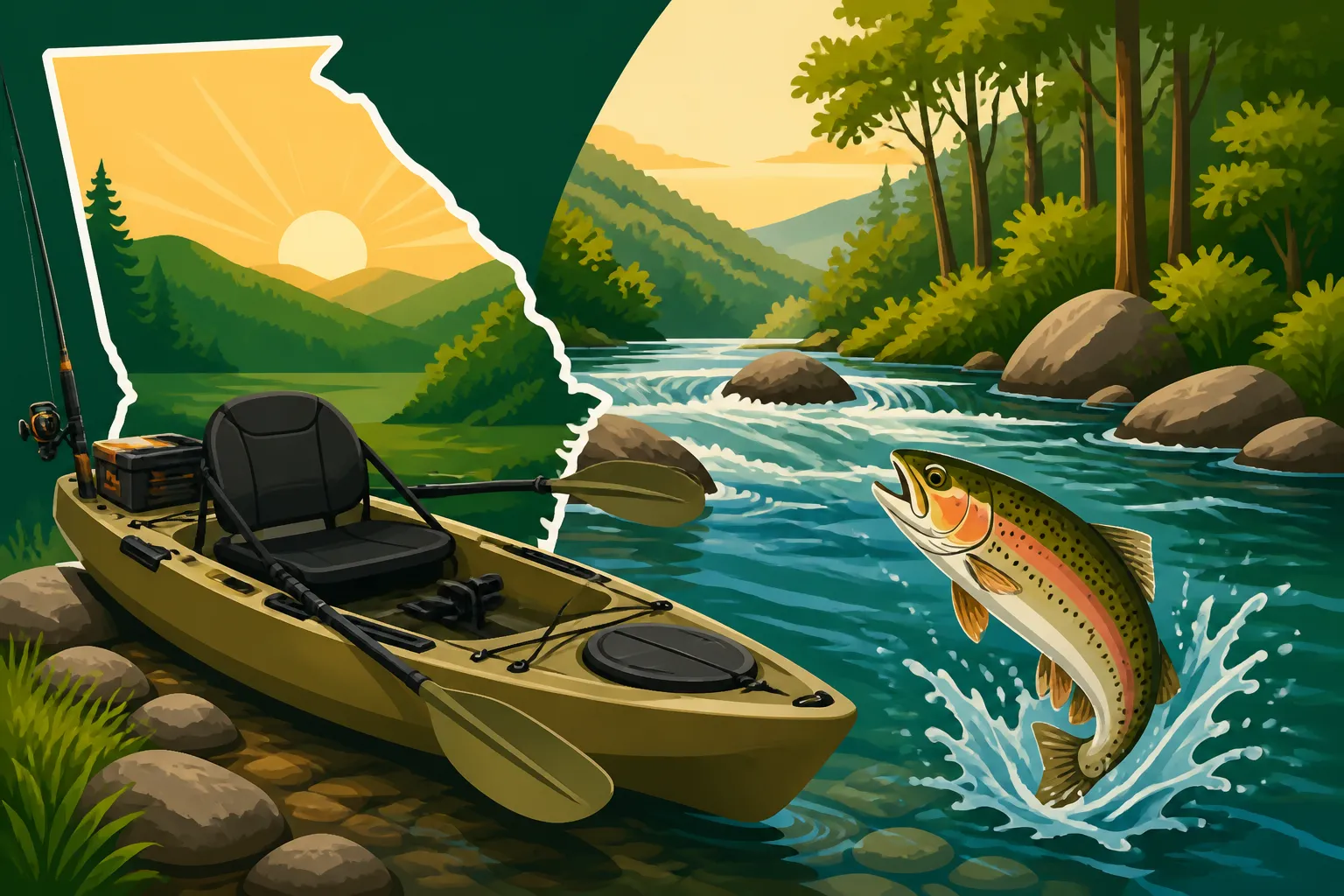
Best Kayak for Fishing Georgia’s Trout Streams
Trying to navigate Georgia's winding, rocky trout streams in a kayak can feel like trying to fit a square peg into a round hole. Many anglers find their larger, lake-oriented fishing kayaks are just too unwieldy for the tight turns and shallow riffles of places like the Toccoa or the Chattahoochee headwaters. This guide is here to cut through that frustration, helping you understand exactly what makes a kayak perfect for chasing those elusive trout in Georgia's beautiful, but challenging, mountain waters.
Why Kayak Fishing for Trout in Georgia is Unique
Fishing Georgia's trout streams from a kayak isn't like fishing a big, open reservoir for bass. The environment itself dictates a completely different approach and, consequently, a different kind of watercraft. You're dealing with dynamic, often unpredictable conditions that demand specific features from your kayak. It’s a delicate dance between stealth, stability, and sheer muscle power when the water gets low.
Navigating Shallow, Rocky Streams
Picture yourself on the upper sections of the Amicalola or Noontootla Creek. These aren't wide, lazy rivers. You're talking about stretches where the water can be ankle-deep in some spots, then drop into a churning pool, only to spread out over a wide, gravelly shoals area immediately afterward. A long, heavy kayak designed for tracking straight across a lake will quickly become a liability here. You'll be constantly getting hung up on rocks, dragging over shallow sections, or struggling to pivot around fallen timber. The ideal kayak for these waters needs to be nimble and have a shallow draft, meaning it doesn't sit deep in the water. This allows you to glide over many obstacles that would stop a larger boat dead in its tracks, keeping you fishing instead of portaging. The ability to easily pull it over small obstructions or drag it a short distance is absolutely critical.
Stealth and Accessibility Benefits
One of the biggest advantages of a kayak on a trout stream is its incredible stealth. Trout are notoriously spooky fish. A heavy jon boat or even a small motorboat will send vibrations and noise through the water that can put trout on high alert, making them much harder to catch. Kayaks, especially when paddled or drifted silently, allow you to approach prime holding water without disturbing the fish. This quiet approach is particularly effective in Georgia's clearer mountain streams, where trout have excellent visibility. Beyond stealth, kayaks open up access to stretches of river that are simply impossible to reach by foot or with larger boats. You can slip into tight pockets, around bends, and into remote pools that receive less fishing pressure. Imagine drifting into a secluded bend on the Chattahoochee River Headwaters Trout Fishing where a big brown trout has never seen a lure – that's the kind of opportunity kayak fishing provides.
Key Features to Look for in a Trout Fishing Kayak
When you're out there on a Georgia trout stream, the kayak isn't just a vessel; it's an extension of your fishing prowess. The right features can make or break your day, turning frustration into fluid, productive angling. These considerations go beyond just comfort; they directly impact your ability to fish effectively and safely in challenging conditions.
Stability and Maneuverability
For trout fishing, especially when you're casting, setting hooks, or even trying to stand up for a better view (and a longer cast), stability is paramount. You don't want to feel like you're constantly fighting to stay upright, particularly when the current picks up or you hook into a feisty rainbow. A wider kayak, often with a flatter hull, will offer more initial stability, which is great for beginners or those who like to move around a bit. However, too much width can hinder maneuverability in tight spots, so it's a balance.
Maneuverability is equally crucial. Imagine trying to turn a long, straight-tracking lake kayak in a narrow stream section with fast current and overhanging branches. It's a recipe for disaster. You need a kayak that can turn on a dime, pivot easily, and respond quickly to paddle strokes. Shorter kayaks, usually under 12 feet, and those with more rocker (a curve in the hull from bow to stern) tend to be much more agile. This agility allows you to navigate rapids, avoid rocks, and position yourself precisely for that perfect cast into a promising trout hole. If you plan on doing a lot of standing, look for kayaks specifically designed with standing platforms or very wide, stable hulls.
Portability and Weight
Let's be real: you're not always going to find a perfect boat ramp right on the trout stream. More often than not, you'll be parking a little ways off, maybe hiking down a bank, or even dragging your kayak over a small stretch of land to bypass a tricky section of rapids. This is where portability and weight become critical factors. A heavy, bulky kayak is a nightmare to transport, load onto your vehicle, or drag by yourself.
Look for lighter materials, like rotomolded polyethylene, but pay close attention to the overall weight. Many excellent fishing kayaks are designed with features that make them easier to carry, such as molded handles, scupper holes that double as handholds, or even wheels. If you're frequently fishing solo or planning to explore more remote, less accessible stretches of river, a lighter kayak will significantly improve your experience. Remember, sometimes you need to get your boat from one access point to another without the luxury of a paved road, so the easier it is to carry, the more fishing you'll actually do. You might even find yourself buying accessories to aid in portability, like a specialized Kayak Cart for Boat Ramp Launches.
Storage and Rigging Options
While you're not taking an offshore setup to a trout stream, you still need smart storage for your gear. Trout fishing often involves multiple rod setups, a variety of tackle, a net, and essential safety items. Good storage means quick access to what you need and secure placement for what you don't. Look for features like:
- Rod holders: Flush-mount or adjustable rod holders are essential for securing extra rods or keeping your active rod out of the way while paddling.
- Storage hatches: Watertight hatches, especially in the bow or stern, are great for keeping electronics, extra layers, snacks, or your wallet dry.
- Tank wells/Bungees: Open storage areas with bungee cords are perfect for dry bags, tackle boxes, or a small cooler.
- Gear tracks: These rails allow you to mount various accessories like fish finders, camera mounts, or additional rod holders, offering a customizable setup. You can find a huge selection of these kinds of rigging accessories at places like Bass Pro Shops.
- Cup holders: A small, seemingly insignificant detail, but a place for your drink or a small container of bait is surprisingly helpful.
The key is thoughtful, accessible storage that keeps your gear secure without getting in the way of your paddling or casting. A cluttered deck is a recipe for snags and frustration when you're focused on the fish. You can find a useful Kayak Fishing Gear Checklist for Georgia Anglers to help ensure you don't forget anything important.
Types of Kayaks Best Suited for Georgia Trout Streams
Just like there are different types of fishing, there are different types of kayaks designed to excel in various environments. For Georgia's trout streams, which often present a mix of shallow riffles, moderate currents, and deep pools, choosing the right kayak type can make a world of difference in your enjoyment and success.
Sit-on-Top vs. Sit-Inside Kayaks
This is often the first big decision an angler faces. Both have their merits, but for trout stream fishing, one often shines brighter.
Sit-on-Top (SOT) Kayaks: These are generally more popular for fishing.
- Pros:
- Stability: Often wider and more stable, making it easier to cast, move around, and even stand up in some models. This is a huge plus when trying to sight fish or get a better angle on a tight casting lane.
- Easy Entry/Exit: If you need to hop out to wade a shallow section, drag your kayak, or relieve yourself, it's much easier to do with an SOT.
- Self-Bailing: Scupper holes drain water, so you don't have to worry about taking on water from waves or rain. You'll likely get wet, but the boat won't swamp.
- Open Deck Space: More room for tackle boxes, coolers, and gear, making it easier to access what you need without rummaging.
- Cons:
- Wet Ride: You're more exposed to the elements and splash, meaning you're likely to get wet, especially in cold weather or rougher sections.
- Wind Resistance: The higher profile can make them more susceptible to wind, which can be a factor on larger, more open sections of a river.
Sit-Inside (SIT) Kayaks:
- Pros:
- Dryer Ride: You're more enclosed, offering better protection from splash and colder water. This can be a significant comfort factor when fishing Georgia's Delayed Harvest Trout Streams Explained in the cooler months.
- Warmer: The enclosed cockpit provides insulation, which is nice on chilly mornings.
- Tracking: Often narrower and longer, they tend to track straighter and can be faster with less effort.
- Cons:
- Less Stable: Generally less stable than SOTs, making casting and moving around more challenging. Standing is usually not an option.
- Difficult Entry/Exit: Getting in and out can be a struggle, especially if you need to quickly exit in shallow or moving water.
- Limited Storage: Deck space is more confined, and internal storage requires reaching into the hull, which can be inconvenient.
- Swamping Risk: If swamped, they can be challenging to drain and recover on the water.
For trout streams where you might need to stand, hop out frequently, and carry a decent amount of gear, a well-designed sit-on-top kayak often provides the most versatility and comfort for fishing.
Smaller, Agile Fishing Kayaks (Length and Width)
The "sweet spot" for trout stream kayaks in Georgia usually falls into the shorter, more agile category.
- Length: Aim for kayaks generally between 10 to 12 feet long.
- Under 10 feet: While incredibly maneuverable and easy to transport, they often lack sufficient tracking for longer paddles and can feel cramped for gear.
- 10-12 feet: This range offers an excellent balance of maneuverability for tight turns and enough length for decent tracking when you're paddling through a slower pool. They're still manageable for portaging and loading.
- Over 12 feet: These start becoming unwieldy for the narrower, more winding sections of Georgia's trout streams. They'll track well on open water but will be a handful in current or around obstacles.
- Width: A width of 30-34 inches typically provides a good compromise.
- Narrower (under 30 inches): Faster and easier to paddle, but often sacrifices primary stability, which is important for fishing.
- Wider (over 34 inches): Offers excellent stability, especially for standing, but can be slower, harder to paddle against currents, and more difficult to maneuver in tight spots.
Look for kayaks with a good blend of primary stability (how stable it feels when you first get in) and secondary stability (how stable it feels when tilted to one side). A boat with a slightly rounded or pontoon-style hull can offer this, allowing for quick turns while still providing a solid platform for casting. You can browse countless options on sites like Amazon to see the variety of sizes and designs available.
Inflatable Kayaks and Their Role
Inflatable kayaks have come a long way and deserve consideration, particularly for their incredible portability.
- Pros:
- Ultimate Portability: Deflate and pack into a duffel bag, making them perfect for those who lack storage space or need to hike a long way to an access point. This is a game-changer for reaching truly remote stretches of water.
- Durability: Modern inflatable kayaks are made from tough, multi-layered PVC or Hypalon, making them surprisingly resistant to punctures from rocks and snags.
- Stability: Often very wide when inflated, providing excellent stability for fishing.
- Shallow Draft: They float incredibly high in the water, making them ideal for very shallow riffles.
- Cons:
- Setup Time: Requires inflation and deflation, which adds time to your trip, though electric pumps can speed this up.
- Performance: Can be slower and more affected by wind than hardshell kayaks. Paddling against strong currents can be challenging.
- Hook Punctures: While durable, a direct hook jab is still a risk, though repair kits are usually included.
- Less Rigging: Typically have fewer options for mounting accessories directly to the boat.
For anglers prioritizing extreme portability and access to very remote, challenging waters, a high-quality inflatable fishing kayak can be an excellent choice. Just be prepared for a slightly different paddling experience and a bit more setup time.
| Feature | Sit-on-Top Kayak | Sit-Inside Kayak | Inflatable Kayak |
|---|---|---|---|
| Stability | Very good, often suitable for standing | Moderate, less ideal for standing | Excellent, often very wide and stable |
| Maneuverability | Good, especially shorter models | Good, often tracks well | Good, but can be wind-affected |
| Portability | Moderate to heavy, requires car-top | Moderate to heavy, requires car-top | Excellent, deflates into bag |
| Wetness | Wet ride, self-bailing | Dryer ride, enclosed cockpit | Can be wet, depending on design |
| Gear Access | Excellent, open deck space | Limited to cockpit and hatches | Moderate, usually open deck with bungees |
| Stream Suitability | High, versatile for most conditions | Moderate, best in calmer sections | High, especially for remote/shallow water |
| Best Use Case | All-around trout fishing, active casting | Cold weather, longer paddles | Remote access, transport limitations |
Essential Gear and Accessories for Kayak Trout Fishing
Having the right kayak is only part of the equation; equipping it with the right gear and accessories is what truly rounds out your trout fishing experience on Georgia's waters. Safety, efficiency, and comfort are all key considerations.
Safety Equipment
No matter how calm the stream looks, safety should always be your top priority. Accidents happen, and being prepared can make all the difference.
- Life Vest (PFD): This is non-negotiable. Always wear a Coast Guard-approved personal flotation device. Even if you're a strong swimmer, a PFD can save your life if you unexpectedly capsize in cold water or get knocked unconscious. Look for fishing-specific PFDs with pockets for tackle or tools. Best Life Jacket for Kayak Fishing resources can guide your choice.
- Whistle: A simple, loud whistle attached to your PFD is crucial for signaling for help in an emergency, especially if you're out of sight around a bend.
- Paddle Leash: This prevents your paddle from floating away if you drop it or capsize. Imagine being stranded in a current without a paddle – it's a terrifying thought.
- First-Aid Kit: A small, waterproof kit with essentials for cuts, scrapes, and minor emergencies is always a good idea.
- Communication Device: A fully charged cell phone in a waterproof case or a marine VHF radio for more remote areas. Tell someone your float plan (where you're going and when you expect to return).
Anchoring and Positioning
Trout streams, by their very nature, involve current. Being able to control your position is vital for effective fishing and staying safe.
- Drag Chain or Small Anchor: For slower currents or when you want to slow your drift, a small drag chain or a lightweight anchor (like a grapnel anchor) can be incredibly useful. Make sure it's on a quick-release system so you can deploy or retrieve it rapidly if the situation changes.
- Stake-Out Pole or Anchor Trolley: A stake-out pole is essentially a sturdy pole that you can push into the streambed to hold your position. An anchor trolley system allows you to position your anchor line anywhere along the length of your kayak, letting you pivot and orient yourself into the current without repositioning the anchor itself. This is especially handy when you're trying to work a specific riffle or pool on the Toccoa River Trout Fishing in Georgia.
Rods, Reels, and Tackle Storage
Your fishing gear needs to complement your kayak setup and the unique challenges of trout streams.
- Rods and Reels: Opt for lighter, shorter rods – often 6 to 7 feet – that allow for accurate casting in tight quarters and are easier to manage from a seated position. A medium-light or light action spinning rod is often ideal for throwing small spinners, spoons, or natural baits. If you're into fly fishing, a 3-5 weight fly rod is perfect for these streams; check out Best Fly Rod for North Georgia Trout Streams for more specific advice.
- Waterproof Tackle Boxes: Accidents happen, and keeping your lures, hooks, and weights dry is a must. Small, compact, waterproof tackle boxes that fit easily into your hatches or bungeed areas are essential. You can find excellent options from brands available at Bass Pro Shops or through online retailers like Amazon.
- Dry Bags: For anything that absolutely cannot get wet – extra clothes, car keys, wallet, phone – a dry bag is indispensable. A simple roll-top dry bag that fits securely in a tank well or under bungees can protect your valuables. For a full breakdown, check out Best Dry Bag for Kayak Fishing Trips.
- Small Net: A rubberized, tangle-free landing net is crucial for safely landing and releasing trout, minimizing harm to the fish. Many can be attached to your kayak with a magnet or clip.
Remember, the goal is efficiency and minimal clutter. Every piece of gear should have a purpose and a place, making your time on the water more about fishing and less about fumbling with your equipment.
Disclaimer
This article is for general informational purposes only and does not constitute professional advice. Laws, prices and regulations vary by location and change over time. Consult a qualified professional for guidance on your specific situation.