Best Tackle for Georgia Striped Bass Fishing
Trying to figure out the perfect tackle setup for Georgia's magnificent striped bass can feel like a riddle wrapped in an enigma, especially with these powerful fish inhabiting everything from vast reservoirs to meandering rivers. You're not alone if you've felt overwhelmed by the sheer number of options out there. This guide is here to untangle that confusion, providing clear, actionable advice on choosing the best rods, reels, lines, and lures to help you land those hard-fighting stripers in Georgia's diverse waters.
Understanding Striped Bass Behavior in Georgia
Before we even get to the gear, let's talk about the fish themselves. Striped bass are incredible athletes, but they're also creatures of habit. Knowing where they live and what they're looking for throughout the year is going to be your biggest advantage in selecting the right tackle. Georgia's waters offer a unique challenge, hosting both landlocked populations in our massive reservoirs and migratory fish in our coastal rivers. Each environment demands a slightly different approach.
Habitat and Migration Patterns
In Georgia's freshwater reservoirs like Lake Lanier, Lake Hartwell, or Lake Oconee, striped bass are landlocked, meaning they spend their entire lives within these lake systems. They typically follow baitfish, especially shad, moving with them throughout the water column. In warmer months, you'll often find them deep, seeking cooler, oxygen-rich water, while in cooler seasons, they might move shallower. Their movements aren't about spawning runs to the ocean, but rather about temperature, oxygen, and food availability. Understanding these patterns is key to finding them consistently.
Conversely, our coastal rivers, such as the Altamaha or Savannah River, host anadromous striped bass. These fish spend most of their adult lives in saltwater estuaries and the ocean, but they migrate upstream into freshwater rivers to spawn. This means their presence in these rivers is highly seasonal, usually peaking in the spring when they move upriver, and then again in the fall as they disperse. For these migratory fish, your tackle might need to stand up to not just the fish, but also stronger currents and potentially more snags associated with river fishing. Striped Bass Fishing Guide for Georgia Rivers offers a deeper dive into these unique fisheries.
Seasonal Feeding Habits
Striped bass are opportunistic predators with a voracious appetite. Their diet primarily consists of baitfish, like shad and herring, but they'll also gobble up smaller fish and even crustaceans in saltwater environments. Their feeding habits shift dramatically with the seasons and water temperature. In the warmer months, when water temperatures are high, stripers can be found schooling in deeper, cooler water, often suspending over ledges or channels. They might feed most actively during low light conditions at dawn, dusk, or even at night.
During the cooler spring and fall months, stripers are often much more active and can be found shallower, chasing baitfish closer to the surface or around structure. This is often when you'll see those exciting topwater blowups or aggressive strikes on fast-moving lures. In winter, their metabolism slows down, and they might become more lethargic, requiring a slower, more subtle presentation, often with live bait or vertically jigged lures. Tailoring your lure choice and presentation to these seasonal feeding habits is just as important as having the right gear. Understanding these nuances will help you make the right choice when considering Best Time of Year for Striped Bass Fishing in Georgia.
Rods for Georgia Striped Bass
Choosing the right rod for striped bass in Georgia isn't just about grabbing the strongest one you can find. It's about matching the rod's characteristics to the techniques you'll be using and the size of the fish you're likely to encounter. A rod that's too heavy can tire you out quickly, while one that's too light risks losing that trophy fish you've been dreaming about. The diversity of Georgia's striped bass fisheries, from open water trolling to casting around structure, necessitates a thoughtful approach.
Rod Power and Action Considerations
Rod "power" refers to its lifting strength – how much pressure it takes to bend the rod. For striped bass, you're generally looking at medium-heavy to heavy power rods. A medium-heavy rod is a fantastic all-around choice for casting larger lures or fishing with medium-sized live bait. It offers enough backbone to handle a good-sized striper while still providing some sensitivity. For situations involving heavier live baits, deep-water jigging, or trolling large umbrella rigs, a heavy power rod is going to be your workhorse. This extra power allows you to exert more leverage on big fish and haul in heavy tackle without overtaxing your gear.
Rod "action" describes where the rod bends. Fast action rods bend mostly at the tip, offering excellent sensitivity for detecting subtle bites and quick hook sets. This is ideal for jigging or working artificial lures where feel is paramount. Moderate-fast action rods bend further down the blank, providing a good balance of sensitivity and a more parabolic bend that helps keep hooks set during a long fight, especially with powerful, head-shaking stripers. This is a versatile choice for many casting and live bait applications. A slower action rod, bending more uniformly throughout its length, is less common for stripers but can be useful for softer presentations or when using very light line.
Rod Length for Different Fishing Scenarios
The length of your rod impacts casting distance, leverage, and maneuverability. For most boat-based striper fishing in Georgia's lakes and rivers, a rod between 6'6" and 7'6" is a sweet spot. A 7-foot rod, for example, offers a good balance of casting distance and fish-fighting power. It's long enough to make decent casts with plugs and jigs, and short enough to handle comfortably in a boat when battling a powerful fish near the transom. This length also provides good leverage when trying to steer a striper away from boat motors or other obstacles.
If you're primarily fishing from the bank or need to make extremely long casts, a longer rod, perhaps 8 to 9 feet, can be a huge advantage. The extra length allows you to launch baits further out into the lake or river, reaching those distant schools of stripers. However, these longer rods can be cumbersome in tight quarters or when fighting a fish in a crowded boat. For dedicated trolling, shorter, heavier rods (around 5'6" to 6'6") are often preferred as they fit into rod holders more easily and offer maximum leverage for pulling heavy rigs and fighting fish that are already hooked at speed. When looking for the ideal stick, remember that many options are available at reputable retailers like Bass Pro Shops, or can be conveniently browsed on Amazon. Finding the Best Rod for Striped Bass Fishing in Georgia means considering where and how you'll primarily be fishing.
Reels for Georgia Striped Bass
Once you've got your rod sorted, the reel is the next crucial piece of the puzzle. For striped bass, your reel needs to be robust, offer a smooth drag, and have ample line capacity. These fish are known for making powerful, blistering runs, and a weak reel simply won't stand a chance.
Spinning Reels for Lighter Tackle and Casting
Spinning reels are incredibly versatile and user-friendly, making them a popular choice for many striper anglers, especially those who prefer casting artificial lures or lighter live baits. For striped bass, you'll want a medium to heavy-duty spinning reel, typically in the 4000 to 6000 size range, or even larger for monster stripers or saltwater applications. The key features to look for are a strong, smooth drag system that can withstand those sudden, powerful runs without sticking or chattering. A high-quality drag will help prevent line breaks and allow you to tire out the fish effectively.
Another important aspect is line capacity. Stripers can make long runs, so having enough line on your spool is critical. Look for models that can comfortably hold at least 200 yards of 15-20 lb monofilament or 30-50 lb braided line. A good retrieve ratio is also beneficial; many spinning reels suitable for stripers will have a gear ratio in the 5.0:1 to 6.2:1 range, offering a good balance of power and speed. This allows you to quickly reel in slack or retrieve lures, and still have enough torque to muscle a big fish.
Baitcasting Reels for Heavier Applications and Trolling
Baitcasting reels truly shine when you're dealing with heavier lines, larger baits, or specific techniques like trolling and downlining. They offer superior power and control, especially for managing big fish. For striper fishing, look for robust, conventional-style baitcasters or low-profile baitcasters designed for heavy freshwater applications. Sizes generally range from 200 to 400 series or larger. The main advantages of baitcasters include their direct line-to-spool contact, which provides excellent feel, and their powerful drag systems, which are often more robust than spinning reels of a comparable size.
Line capacity is again paramount here. You'll want a baitcasting reel that can hold a significant amount of heavy monofilament or braided line, especially if you're trolling with umbrella rigs or downlining large live baits where stripers can peel off dozens of yards in seconds. Gear ratios for baitcasters vary; a lower ratio (around 4.0:1 to 5.0:1) is great for power and slow presentations, while a higher ratio (6.0:1 and up) is excellent for quick retrieves and working faster lures. When you're running downlines or pulling deep-diving plugs in the middle of Lake Lanier, the power and control of a good baitcaster are unmatched. For more on this, check out Trolling Gear for Georgia Striped Bass and How to Downline for Striped Bass.
Line Capacity and Drag Systems
No matter which type of reel you choose, prioritizing line capacity and a reliable drag system cannot be overstated for striped bass fishing. Imagine hooking into a 20-pound striper that suddenly decides to make a 50-yard sprint towards the deepest part of the lake. If your reel can't hold enough line, or if your drag sticks and snaps your line, that fish is gone. A reel with a smooth, consistent drag is crucial for wearing down strong fish without putting too much stress on your line. Test your drag regularly by pulling line directly from the spool; it should come off smoothly and without hesitation.
Consider the typical size of striped bass in the waters you frequent. In many of Georgia's reservoirs, a 10-20 pound striper is a common catch, but 30-40 pounders are certainly not unheard of. Your reel's line capacity should be able to handle those larger, longer runs. Most quality reels will specify their line capacity for both monofilament and braided line, allowing you to choose based on your preferred line type. Don't skimp on a reel with a subpar drag; it's one of the most critical components for successfully landing a trophy striper.
Fishing Line for Striped Bass
The fishing line is your direct connection to the fish, and for strong, hard-fighting striped bass, it needs to be tough, reliable, and chosen wisely for the task at hand. There are three main types of line you'll typically encounter, each with its own benefits and drawbacks for striper fishing in Georgia.
Monofilament for Shock Absorption and Stretch
Monofilament line, often simply called "mono," is a classic choice for a reason. It's typically less expensive than other lines, has good abrasion resistance, and, most importantly for stripers, offers a significant amount of stretch. This stretch acts as a shock absorber, cushioning the impact of those brutal striper strikes and helping to prevent hooks from tearing out of the fish's mouth during powerful head shakes or sudden runs. This can be a real advantage when using live bait or lures with treble hooks.
Mono is also a good choice for topwater fishing, as many varieties float, helping your lures sit correctly on the surface. For main lines, anglers often choose 15-30 lb test monofilament for striped bass, depending on the size of fish and the cover they're fishing around. However, mono's stretch can also be a disadvantage in deep water or when using techniques that require maximum sensitivity, as it can reduce your feel for subtle bites. It also has a larger diameter compared to braided line of similar strength, meaning less line capacity on your reel.
Braided Line for Strength and Sensitivity
Braided line has become incredibly popular for striper fishing due to its exceptional strength-to-diameter ratio and zero stretch. You can use a much thinner diameter braid to achieve significantly higher breaking strengths compared to mono, meaning you can load more strong line onto your reel. The lack of stretch provides incredible sensitivity, allowing you to feel every bump, twitch, and subtle bite, even when fishing in deep water or with a lot of line out. This sensitivity also translates to powerful, direct hook sets.
Common breaking strengths for braided main lines when targeting Georgia stripers range from 30 lb to 65 lb, with some anglers going even heavier for specific techniques like trolling heavy umbrella rigs. While braid is fantastic for sensitivity and strength, it can be more visible in clear water, and its lack of stretch offers no shock absorption, which can sometimes lead to hooks pulling free or knots slipping if not tied correctly. For this reason, many anglers opt to tie a fluorocarbon leader to their braided main line.
Fluorocarbon Leaders for Stealth
Fluorocarbon line is virtually invisible underwater due to its refractive index being very similar to water. This makes it an excellent choice for leaders, especially in clear water conditions where stripers might be line-shy. It also boasts excellent abrasion resistance, which is a huge plus when fishing around rocky bottom, submerged timber, or shell beds. By using a fluorocarbon leader (typically 15-40 lb test) tied to a braided main line, you get the benefits of braid's strength and sensitivity while presenting your lure or bait stealthily.
The length of your leader can vary; a 3-6 foot leader is common for most casting applications, allowing for good knot strength and shock absorption near the lure. For live bait applications, longer leaders might be preferred. When tying braid to fluorocarbon, a strong, reliable knot like the FG knot or Alberto knot is essential to prevent slippage. Combining these line types effectively gives you the best of all worlds for tackling Georgia's striped bass. Best Gear for Striped Bass Fishing dives deeper into the synergy of these components.
| Line Type | Key Benefit for Striped Bass | Pros | Cons | Common Test Strength | Best Use Case |
|---|---|---|---|---|---|
| Monofilament | Shock Absorption | Good stretch, affordable, decent abrasion resistance, floats | Less sensitive, higher diameter, UV degradation over time | 15-30 lb | Live bait, topwater, beginner-friendly |
| Braided Line | Strength & Sensitivity | High strength-to-diameter, no stretch, long casts, durable | Visible in clear water, no shock absorption, can cut guides if frayed, higher cost | 30-65 lb | Deep jigging, trolling, casting heavy lures, maximum feel |
| Fluorocarbon | Stealth & Abrasion Resistance | Virtually invisible, good abrasion resistance, good sensitivity | Stiffer than mono, can be more expensive, less stretch than mono | 15-40 lb (leader) | Leaders for braid, clear water, around structure |
Essential Lures and Baits for Striped Bass
Striped bass are aggressive predators, and a wide array of lures and baits can entice them. However, some stand out as consistent producers in Georgia's waters. The key is often to "match the hatch" – imitate the baitfish that stripers are feeding on.
Topwater and Subsurface Plugs
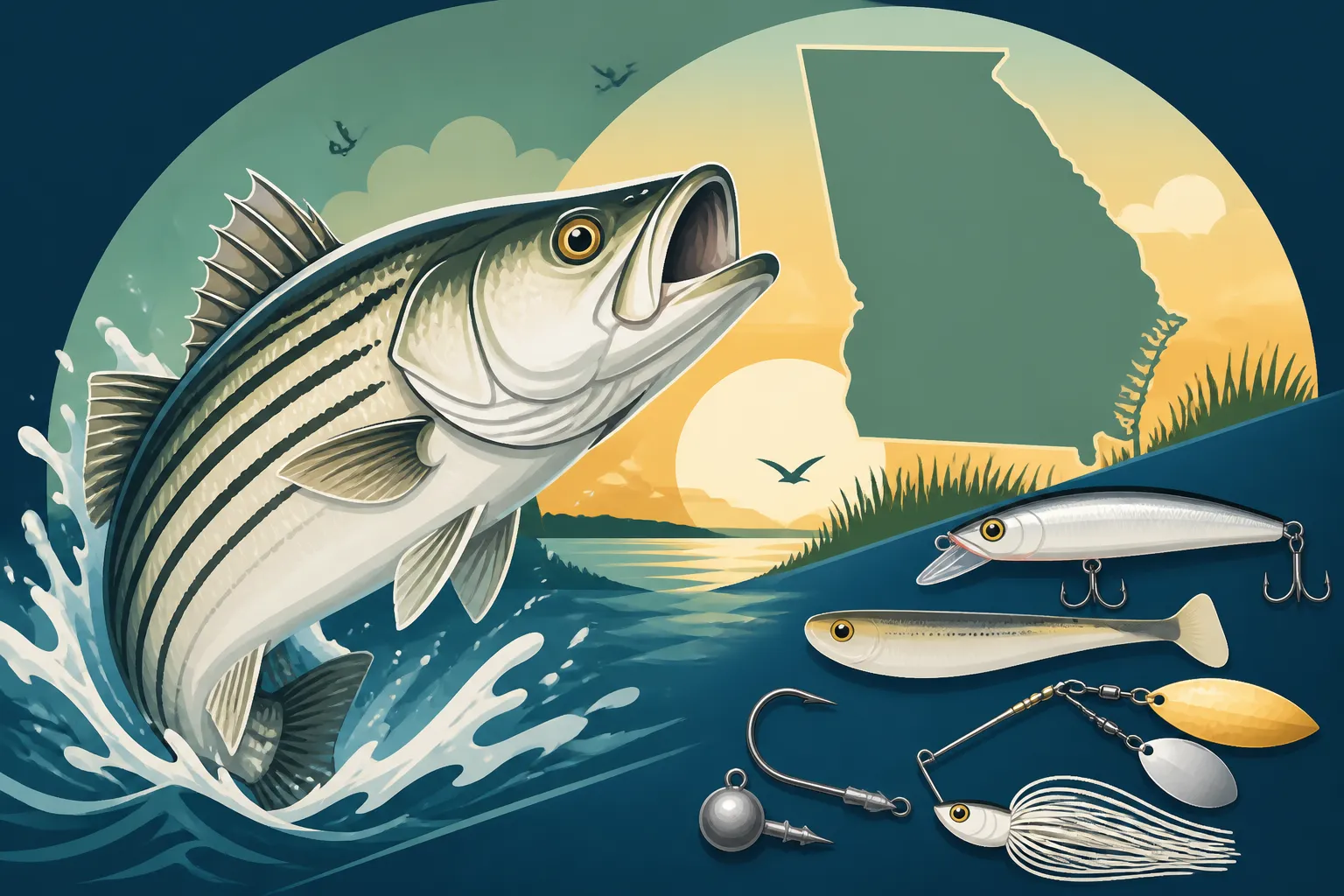
There's nothing quite like a striper exploding on a topwater lure, especially during those low-light hours or when they're actively schooling. Big walking baits (like a Zara Spook or Super Spook) and poppers are fantastic for drawing stripers to the surface. Look for lures in baitfish patterns, typically white, chrome, or shad colors, that mimic the size of local baitfish. These are particularly effective in the spring and fall when stripers are shallower and more aggressive.
Subsurface plugs, often called lipped jerkbaits or diving minnows, are equally important. These lures are designed to be retrieved just below the surface or at specific depths, mimicking an injured baitfish. Long, slender plugs (like Rapala X-Raps or similar brands) in chrome, blue back, or natural shad patterns can be incredibly effective when stripers are holding slightly deeper than topwater range. Vary your retrieve, incorporating jerks and pauses, to trigger strikes. These are workhorses for covering water and finding active fish.
Jigs and Soft Plastics
Jigs, especially bucktail jigs and lead head jigs paired with soft plastics, are incredibly versatile and effective for striped bass in various depths. Bucktail jigs, often in white, chartreuse, or olive patterns, are classic striper killers. They can be cast and retrieved with a jigging motion, or vertically jigged in deep water. Their natural pulsation and profile perfectly imitate baitfish. Weights can range from 1/2 oz for shallower casting to several ounces for deep water vertical jigging, especially when you need to get down to where the What Depth Striped Bass Hold At are.
Soft plastics rigged on jig heads are also highly productive. Swimbaits, flukes, and paddle tail grubs in white, pearl, or shad colors can be cast, retrieved, or jigged effectively. The key with soft plastics is to match the jig head weight to the depth and current, allowing the lure to sink naturally and be worked effectively. The subtle action of a soft plastic tail can often entice strikes when fish are less aggressive or holding in tight schools. These lures are particularly effective when you're targeting suspended fish in the middle of Lake Lanier or when stripers are holding near structure on the bottom.
Live Bait Rigs and Techniques
When stripers are finicky or deep, live bait often reigns supreme. Gizzard shad, threadfin shad, blueback herring, and even larger shiners are common choices in Georgia's freshwater lakes. In coastal rivers, menhaden or mullet are popular. The primary methods for presenting live bait include freelinig, downlining, and using a slip bobber. Freelinig involves simply casting a lively baitfish with minimal weight (or none at all) and allowing it to swim naturally, mimicking a lost or injured baitfish. This is great for active fish near the surface or when fishing around defined structure.
Downlining is a highly effective technique for targeting deep, suspended stripers. It involves using a heavy lead weight (often several ounces) to quickly drop a live baitfish to a specific depth, usually where you've marked fish on your sonar. The baitfish is typically hooked through the nose or back, allowing it to swim naturally in place. For a comprehensive guide on this technique, check out How to Downline for Striped Bass. Live Bait Rigs for Striped Bass offers more detailed information on setup and presentation. Circle hooks are often preferred for live bait to ensure a solid hook set in the corner of the fish's mouth, minimizing harm to the fish if you plan to release it.
Terminal Tackle and Accessories
The smaller, often overlooked components of your tackle setup can make all the difference between landing a fish and losing it. For striped bass, your terminal tackle needs to be as robust as your main line and lure.
Hooks, Swivels, and Weights
Hooks: For live bait, sharp, strong hooks are non-negotiable. Circle hooks are widely favored for stripers because they are designed to hook fish in the corner of the mouth, which reduces gut-hooking and makes catch-and-release easier and safer for the fish. Sizes typically range from 3/0 to 7/0, depending on the size of your bait and the target fish. For artificial lures with treble hooks, ensure they are sharp and strong enough to withstand the power of a striper. You might even consider upgrading stock hooks on some lures for added peace of mind.
Swivels: High-quality barrel swivels or ball-bearing swivels are crucial for preventing line twist, especially when trolling or using baits that spin. Swivels also provide a clean connection point for leaders and main lines. Look for swivels with a high breaking strength that matches or exceeds your main line. You don't want a swivel to be the weak link in your setup. Snap swivels can be convenient for quickly changing lures, but always ensure they are rated for the strength needed for stripers.
Weights: From split shot to egg sinkers to heavy bank or trolling weights, having a variety is essential. For live bait, you might use a small split shot to get your bait down a few feet, or a larger egg sinker on a Carolina rig for bottom fishing. For downlining, bell or pyramid weights from 2 oz up to 10 oz or more are common, allowing you to quickly get your bait to the desired depth. Trolling sometimes requires even heavier lead to keep lures running deep, especially in strong currents or at higher speeds. Always match your weight to the depth, current, and desired presentation.
Essential Tools and Safety Gear
Beyond your rod, reel, and line, a few essential tools and safety items will significantly enhance your striper fishing experience and ensure you're prepared for anything.
Pliers/Hook Removers: Stripers have strong jaws and often swallow baits or lures deeply. A good pair of long-nosed pliers, or even specialized hook removers, is indispensable for safely and efficiently extracting hooks. This is particularly important for catch-and-release, as minimizing handling time and damage to the fish is key.
Landing Net or Boga Grip: Landing a large, thrashing striper can be challenging, especially in a boat. A large, rubberized landing net helps protect the fish's slime coat and is easier on the fish if you plan to release it. Alternatively, a Boga Grip (or similar lip-gripping device) can safely secure a fish for weighing, pictures, and release without having to touch it, minimizing stress. For those bigger stripers, these tools are invaluable.
Cooler with Ice: If you plan to keep your catch, a quality cooler packed with ice is essential. Striped bass are excellent table fare, but they need to be bled and iced down quickly to preserve their meat quality. Don't let your hard-won catch spoil on a hot Georgia day.
First-Aid Kit: Accidents happen. Hooks can fly, knives can slip, and fish can bite. A basic first-aid kit with bandages, antiseptic wipes, and pain relievers should always be onboard or in your tackle bag.
Sun Protection: Georgia sun can be brutal, especially on the water. Sunscreen, a wide-brimmed hat, and polarized sunglasses are vital. Polarized sunglasses, in particular, not only protect your eyes but also help you spot submerged structure or even schooling baitfish, giving you an edge. When you're out there, whether you're shopping at a local Bass Pro Shops or browsing online on Amazon, prioritizing safety and utility with these accessories will make your trip much more enjoyable and successful.
Disclaimer
This article is for general informational purposes only and does not constitute professional advice. Laws, prices and regulations vary by location and change over time. Consult a qualified professional for guidance on your specific situation.