Black Crappie vs White Crappie: How to Tell Them Apart
It's a common story for us Georgia anglers: you've had a fantastic day out on the water, pulling in slab after slab of delicious crappie, but then you get home, and the nagging question starts. "Was that a black crappie or a white crappie?" Sometimes it feels like they're playing a trick on you, looking so similar, yet having subtle differences that can be surprisingly hard to pin down. This guide is here to untangle that crappie conundrum, giving you the insider tips and tricks to confidently tell your black crappie from your white crappie in Georgia's abundant waters.
The Crappie Conundrum: Why They're So Easy to Confuse
Let's be honest, distinguishing between a black crappie and a white crappie when you're out on the lake, maybe in fading light or with a cooler full of identical-looking fish, can feel like a real challenge. They're both panfish, they both taste amazing, and they often share similar habitats. It’s no wonder many anglers simply call them "specks" or "papermouths" and call it a day! But for those who really want to understand their catch, or perhaps adhere to specific local regulations that might differentiate between the two, knowing the subtle tells is key.
The confusion stems from their close relation within the Pomoxis genus. They're like cousins in the fish world, sharing many family traits. Both species have that distinctly compressed, disc-like body shape, large eyes, and a small mouth. They also tend to school, especially during certain times of the year, making it possible to catch both species in the same general area. Think of it like trying to tell apart two siblings who've inherited similar features from their parents—it takes a keen eye and sometimes a little extra investigation to spot the individual characteristics. This guide will help you develop that keen eye.
Shared Characteristics Leading to Misidentification
The primary reason for misidentification lies in their overarching similarities. Both black and white crappie possess that unmistakable "panfish" profile, meaning they are thin and deep-bodied, almost like a dinner plate. They're also both silvery in general coloration, although this can vary greatly depending on water clarity, diet, and habitat. A crappie from dark, tannin-stained water might appear much darker than one from clear, sandy-bottomed lakes. Their mouths are also quite similar—small and delicate, which is why they earned the nickname "papermouths" for how easily a hook can tear out.
Another confounding factor is their size. While white crappie can grow larger on average in some systems, both species can reach impressive sizes, making it difficult to use size alone as a definitive identifier. A large black crappie might easily be mistaken for a white crappie if you're not paying attention to other details. Plus, they both have those striking dorsal and anal fins that are almost mirror images of each other. It's these general similarities that often lead to a quick, incorrect assumption, especially if you're not specifically looking for the finer points of distinction.
Habitat Overlap in Georgia Waters
To make things even more interesting, black and white crappie often coexist in the same lakes, rivers, and ponds across Georgia. While they have preferences, these aren't always mutually exclusive. You might find black crappie favoring brush piles and submerged timber in a clearer cove, while white crappie school in more open water nearby, but there are always exceptions. A big brush pile could hold both! This habitat overlap means you can't always rely on where you caught the fish as a sole identifier.
Consider a popular spot like Lake Sinclair, known for its fantastic crappie fishing. Anglers might be pulling fish from a brush pile off a main lake point and catching what they assume is one species, only to realize later they had a mix. Or perhaps you're fishing a river system like the Altamaha, where both species thrive in different sections or even side-by-side. The key is to understand that while preferences exist, expecting one species exclusively in a given spot is a setup for misidentification. That's why having a few key visual cues is so much more reliable, regardless of the water you're fishing. For more on where these fish hang out, check out Crappie Fishing Ponds and Streams Across Georgia.
Spotting the Differences: Black Crappie vs. White Crappie
Alright, let's get down to brass tacks. While they might look like twins from a distance, there are some undeniable physical characteristics that, once you know them, make telling these two apart a breeze. It's all about counting and patterns, my friend. Don't feel bad if you've missed these before; they're subtle if you're not looking.
Body Shape and Dorsal Fin Spines
This is probably the most reliable and easiest way to tell the difference, even for a beginner. It all comes down to their body shape and, crucially, the number of spines in their dorsal fin.
First, the body shape:
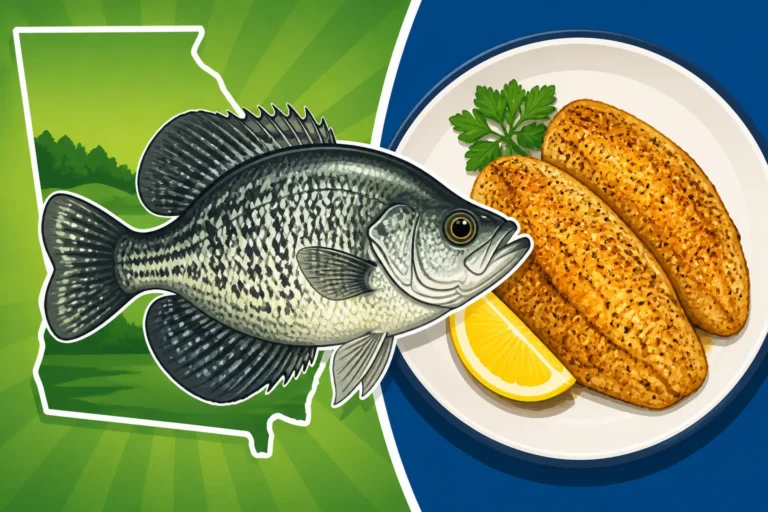
- Black Crappie tend to have a deeper, more rounded, and compact body. Think of them as almost circular, or like a very squashed football. They often look chunkier for their length.
- White Crappie are usually more elongated and slender, with a body that appears taller than it is wide. They have a more oval, slightly torpedo-like profile, especially as they get longer.
Now, for the dorsal fin spines, this is the definitive tell:
- Black Crappie almost always have 7 or 8 dorsal fin spines. You count the hard, pointed rays on the fin on their back. If you catch one, gently hold the fin erect and count them. Seven or eight, and you've got yourself a black crappie.
- White Crappie consistently have 6 dorsal fin spines. No more, no less. This is the magic number.
This spine count is the golden rule. It's biological, it's consistent, and it works every time. If you're ever in doubt, just count those spines! It’s much more reliable than trying to guess based on coloration, which can be highly variable. You might even consider carrying a small, waterproof field guide or a laminated card with this info, easily found on Amazon, to double-check when you're on the boat or bank. The difference in spine count is highlighted in our detailed guide, White Crappie Fin and Spine Count vs Black Crappie.
Coloration and Pattern
While the dorsal spine count is your most foolproof method, coloration and pattern are helpful secondary indicators, especially once you've trained your eye. Remember, these can vary with water conditions, diet, and even the fish's mood, but there are general trends.
-
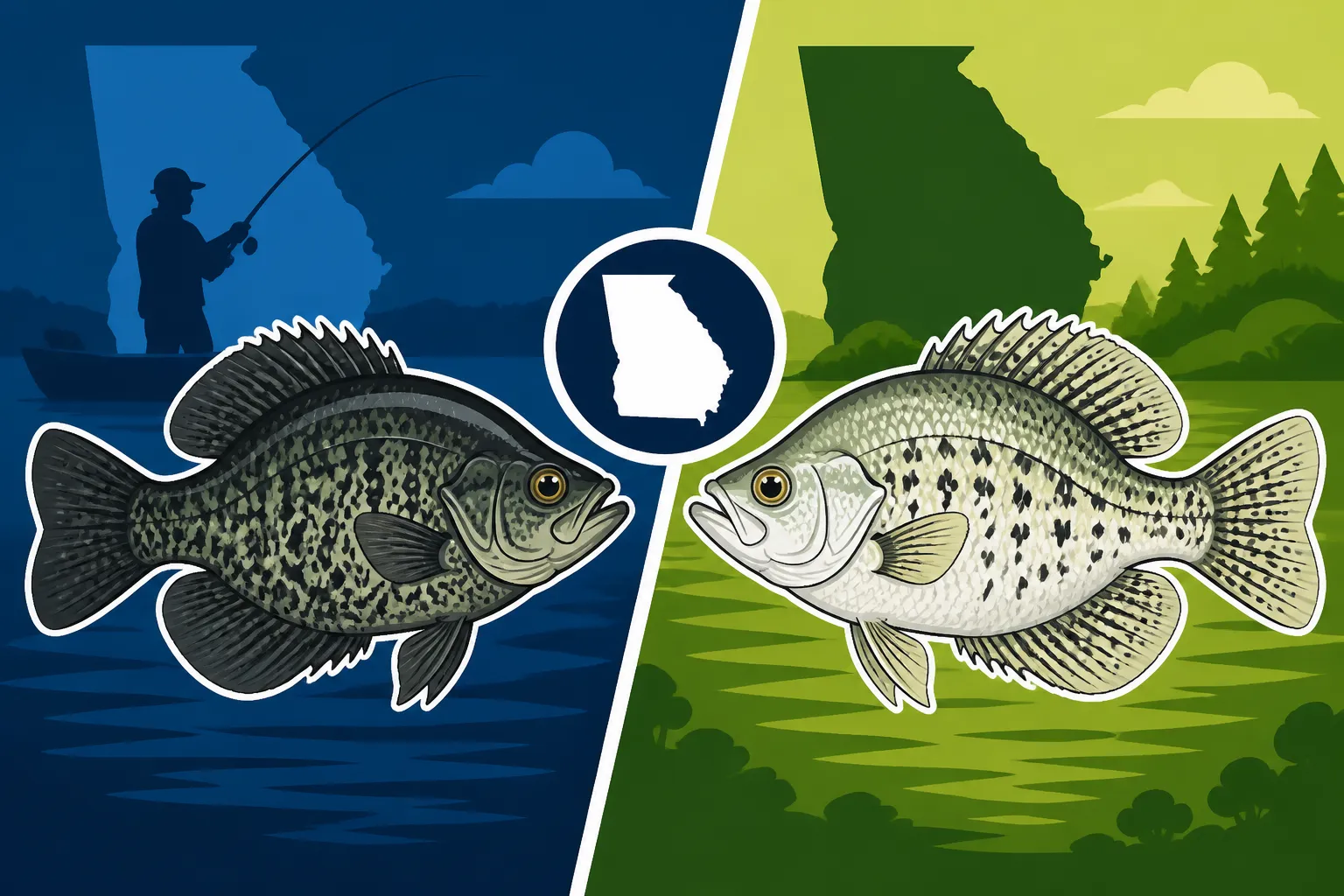
Black Crappie are characterized by irregular, scattered dark spots and speckles all over their body, almost like someone took a paintbrush and flicked dark paint at them. These spots often extend onto their dorsal, caudal, and anal fins, giving them a generally darker, "peppered" appearance. There's no distinct pattern; it's more of a random mottling. They also often have a more pronounced dark blotch on their gill plate, though this isn't always present or obvious. They tend to have a more brassy or greenish tint to their overall coloration, particularly on their backs.
-
White Crappie, on the other hand, typically display distinct, dark vertical bars or stripes along their sides. These bars are usually fairly evenly spaced and run from their back down towards their belly. The pattern is much more organized and linear than the black crappie's scattered spots. Their overall body color tends to be lighter and more silvery, sometimes with a yellowish or pale green sheen. The fins on a white crappie are often clearer, with fewer dark spots compared to a black crappie, though they can have some light speckling.
Again, these color patterns can be influenced by the environment. A white crappie from very clear water might have fainter bars, and a black crappie from dark water might appear almost uniformly dark. But if you see clear, distinct vertical bars, you're almost certainly looking at a white crappie. If it's more of a speckled, camouflaged look, it's probably a black crappie. This visual cue is described in more detail in Black Crappie Identification: Spots vs Stripes.
Mouth Size and Head Shape
These are more subtle differences that require a bit more observation, but they can still contribute to your overall identification.
-
Black Crappie generally have a somewhat larger mouth that extends back further, often past the middle of their eye. Their head also tends to be a bit more concave above the eyes, giving them a slight "dish-faced" appearance. This larger mouth and more sloped head can make them look a bit more aggressive, if a fish can look aggressive, that is!
-
White Crappie typically possess a smaller mouth that usually doesn't extend much beyond the front margin of the eye. Their head profile is often straighter or slightly convex above the eyes, giving them a more rounded, smoother head shape. Think of it as a gentler, less angular profile compared to their black crappie cousins.
These head and mouth characteristics are not as definitive as the dorsal spine count or the distinct patterns, but they can serve as corroborating evidence. If you've counted the spines and noticed the coloration, taking a moment to observe the mouth and head can solidify your identification. For instance, if you're looking at a fish with 6 dorsal spines and vertical bars, and it also has a relatively small mouth and straight head, you can be extremely confident it's a white crappie.
Here's a handy table to help you keep these distinctions straight:
| Feature | Black Crappie | White Crappie |
|---|---|---|
| Body Shape | Deep-bodied, rounded, compressed (like a disc) | More elongated, slender, often taller than wide |
| Dorsal Spines | 7 or 8 (most reliable) | 6 (most reliable) |
| Color/Pattern | Scattered dark spots/speckles, mottled look | Distinct vertical bars/stripes on sides |
| Mouth Size | Larger, extends past middle of the eye | Smaller, usually not past front of the eye |
| Head Shape | Often slightly concave above the eyes | Usually straighter or slightly convex above eyes |
| Common Habitats | Clearer water, dense vegetation, brush piles | Murkier water, open water, stump fields |
Habitat and Behavior Clues
While physical characteristics are the most accurate way to identify black and white crappie, understanding their general habitat preferences and behaviors can also give you some excellent clues. Knowing where each species tends to hang out can significantly improve your chances of targeting them specifically, and it can help you make an educated guess before you even get a good look at your catch.
Preferred Water Types and Structure
Both crappie species are found throughout Georgia, from large reservoirs to smaller ponds and slow-moving rivers. However, they do have some distinct preferences that can guide your fishing efforts.
-
Black Crappie generally prefer clearer, cooler waters with more abundant submerged vegetation and woody cover. Think of them as the "bushy" crappie – they love to hide in thick stands of hydrilla, lily pads, fallen trees, and brush piles. If you're fishing a clear, nutrient-rich cove with lots of natural structure, you're likely to encounter more black crappie. They tend to be a bit more solitary or gather in smaller schools tight to cover. Our guide on Best Crappie Lakes in Georgia often highlights waters with good black crappie populations.
-
White Crappie are a bit more tolerant of murkier or more turbid waters and are often found in larger, more open sections of lakes and rivers. They can handle a bit more current and are commonly associated with river channels, stump fields, and open-water humps and ledges. They are also notorious for schooling in large numbers, often suspended over deeper water or around bridge pilings and dock structures in less vegetated areas. If you're fishing a big, open reservoir and marking large schools of fish suspended, there's a good chance you're looking at white crappie.
This doesn't mean you won't find white crappie near a brush pile or black crappie in slightly stained water. Nature loves to throw us curveballs! But these general tendencies can help you form a hypothesis about what you're likely to catch in a given spot. If you're targeting fish tight to thick cover, be ready for black crappie. If you're trolling open water or casting to big schools, anticipate white crappie.
Feeding Habits and Activity Levels
The slight differences in their preferred habitats also translate into some variations in their feeding habits and activity levels, which can impact how and when you target them.
-
Black Crappie, with their preference for dense cover, tend to be more ambush predators. They'll often lurk in the shadows of a brush pile or under lily pads, waiting for baitfish, insects, or crustaceans to swim by. This can make them a bit less aggressive or prone to chase a bait, requiring a more precise and slower presentation. They might be less active during the brightest parts of the day, preferring to feed in lower light conditions or when tucked deep into cover. If you're using small jigs or minnows fished vertically into thick structure, you're probably playing to a black crappie's strengths. Want to know more about how to tempt these fish? Check out Best Bait for Black Crappie in Georgia.
-
White Crappie, especially when schooling in open water, can be incredibly active and aggressive feeders. They'll often chase down schools of baitfish, making them excellent targets for trolling with small crankbaits or casting small jigs to suspended schools. Their tolerance for murkier water also means they might be more active throughout the day, as reduced light penetration in stained water makes it easier for them to hunt. When you find a large school of white crappie, you can often catch them one after another, as their competitive feeding instinct kicks in. Learning How to Jig for Crappie is a fantastic skill for both species, but particularly effective when white crappie are in a feeding frenzy.
Understanding these behavioral nuances can help you refine your fishing strategy. If the bite is tough and you suspect black crappie, slowing down your retrieve and really working the cover might be the ticket. If you're seeing lots of activity on your fish finder in open water, speeding up your presentation for white crappie could lead to more hookups.
Why Identification Matters for Georgia Anglers
Beyond simply satisfying your curiosity, knowing the difference between black and white crappie can actually be quite important for a few practical reasons when you're fishing in Georgia. It can influence how you fish, where you fish, and even how you comply with regulations.
Navigating Regulations and Creel Limits
While Georgia's statewide fishing regulations generally don't differentiate between black and white crappie for size and creel limits, there can be very specific instances or localized regulations where it does matter. Always, and I mean always, double-check the latest regulations from the Georgia Department of Natural Resources (DNR) before you head out. These rules can change, and ignorance is rarely an excuse in the eyes of a game warden.
For example, a specific Public Fishing Area (PFA) or a particular lake might have a special management plan in place that targets one crappie species over the other, perhaps to help balance the population. While these are less common for crappie than for bass or trout, being able to accurately identify your catch means you're prepared for any scenario. Imagine getting a fine because you misidentified a fish that had a specific slot limit you weren't aware of! Understanding the species you're catching also allows you to be a more informed angler, contributing to conservation efforts by understanding the health of the crappie populations in your favorite waters. Our article, Georgia Fish Size and Creel Limits, provides general guidance, but local rules are always king.
Tailoring Your Fishing Strategy for Success
Beyond regulations, accurately identifying crappie species can significantly improve your fishing success. As we discussed, black and white crappie have different preferences for habitat and feeding behavior. If you know which species you're primarily targeting, or which one is dominant in a particular area, you can tailor your approach.
For instance, if you're out on Lake Oconee and notice you're consistently catching white crappie, you might focus your efforts on trolling open water flats or fishing around main lake points with deeper structure. You'd likely lean towards baits like small crankbaits or larger jigs that can cover water more effectively. Conversely, if you're in a smaller, clearer pond with lots of lily pads and fallen timber, and you're getting bites from black crappie, you'll want to slow down, use smaller jigs or live minnows, and meticulously work every piece of cover. This targeted approach is much more effective than a one-size-fits-all strategy. Understanding these nuances helps you fish smarter, not just harder. If you're looking for Best Crappie Fishing Spots on Lake Sinclair, knowing what type of crappie dominates certain areas there can be a game-changer.
Ultimately, the goal is to become a more skilled and knowledgeable angler. The more you understand the fish you're pursuing, the more successful and enjoyable your time on the water will be. Take the time to count those spines and observe those patterns—it's an investment in better fishing experiences.
Disclaimer
This article is for general informational purposes only and does not constitute professional advice. Laws, prices and regulations vary by location and change over time. Consult a qualified professional for guidance on your specific situation.