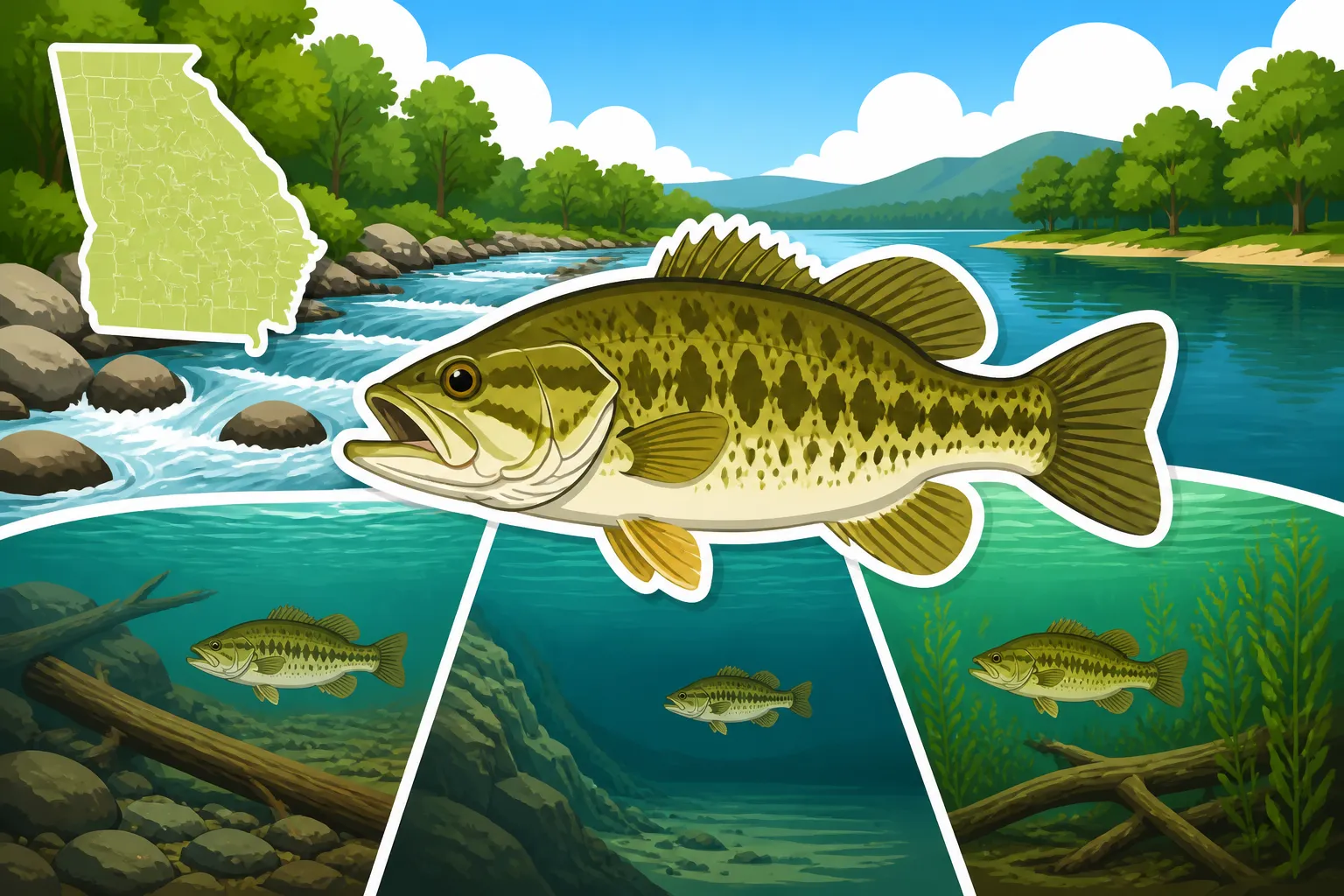
Where Spotted Bass Live in Rivers and Lakes
There’s nothing quite like the thrill of feeling that unmistakable thump on your line, setting the hook, and battling a feisty spotted bass. But if you’ve spent frustrating hours casting into what felt like promising waters only to come up empty-handed, you're not alone. Figuring out exactly where these tenacious fish prefer to hide in Georgia's diverse rivers and lakes can feel like a puzzle. This guide is here to demystify the prime real estate spotted bass occupy, helping you target your efforts and increase your chances of a successful day on the water.
Understanding Spotted Bass Habitat Preferences
Spotted bass, often mistaken for their largemouth cousins, have some distinct preferences when it comes to where they make their homes. They aren't just everywhere bass are; they're quite particular about the specific conditions they seek out. Knowing these preferences is the first step in locating them, whether you're on a sprawling reservoir or a meandering river.
The Preference for Rocky, Clear Waters
One of the most defining characteristics of spotted bass habitat is their love for rocky, clear water. Unlike largemouth bass, which often prefer heavy vegetation, stumps, and murky shallows, spotted bass thrive in areas with harder bottoms and better water clarity. Think rocky points, bluff walls, gravel beds, and areas with chunk rock. These environments offer them ample ambush points and a consistent supply of cooler, oxygenated water, which is crucial, especially during warmer months. They'll often hug these structures, making them a fantastic target for anglers who know what to look for on their fish finders or with keen eyes from shore.
They really shine in reservoirs formed from rocky riverbeds, where these natural features have been submerged. You'll find them holding tight to granite outcroppings or hidden rock piles. The clear water isn't just a preference; it's also a necessity for their primary hunting strategy, which often involves sight-feeding on small baitfish. If you're scanning a lake and see expansive, muddy flats, you're likely in largemouth territory. Shift your focus to where the water takes on that inviting, clearer hue and the bottom structure transitions to rock and gravel.
Current and Structure Attraction
Another critical factor in finding spotted bass is understanding their relationship with current and underwater structure. Spotted bass are built for battling current, and they often use it to their advantage when feeding. In rivers, this means they'll position themselves just out of the main flow, in current breaks behind rocks, logs, or river bends, waiting for unsuspecting prey to be swept by. They expend less energy while having food delivered right to their doorstep. The stronger the current, the more precise their holding spots usually become.
In reservoirs, while not always as pronounced as river current, there are still areas of flow, particularly near dam gates, creek mouths after heavy rains, or deep channels. Spotted bass will stack up in these areas, especially where there's also vertical structure like steep drop-offs, submerged timber, or old bridge pilings. They use these features for cover and ambush, moving up and down the water column as light and forage dictate. A good fish finder can be your best friend here, helping you pinpoint those subtle changes in bottom contour or those hidden brush piles where fish might be stacking. When shopping for reliable electronics, many anglers start their search on Amazon for competitive pricing and a wide selection.
Spotted Bass in Georgia's Major Reservoirs
Georgia is blessed with numerous reservoirs, and many of them are absolutely fantastic for spotted bass fishing. These impoundments often mimic the clear, rocky river environments that spotted bass prefer, providing vast expanses of ideal habitat. Understanding which lakes are prime for "spots" is key to a successful outing.
Lake Lanier: A Prime Spotted Bass Destination
If there's one lake in Georgia synonymous with spotted bass, it's Lake Lanier. Located just north of Atlanta, Lanier is a quintessential spotted bass fishery, renowned for its deep, clear, and rocky waters. The lake’s primary forage base, blueback herring, also plays a huge role in why Lanier's spotted bass thrive and grow to impressive sizes. Anglers often find spotted bass schooling in open water, chasing these herring, particularly during the warmer months. You'll want to focus your efforts on the lake's abundant rocky points, humps, deep docks, and submerged islands. Best Spots for Bass Fishing on Lake Lanier often coincide with these rocky structures.
During the pre-spawn and spawn, spotted bass will move shallower, often utilizing gravel pockets and secondary points, but they typically don't venture into the thick, shallow cover that largemouths favor. As summer heats up, they'll retreat to deeper water, often suspending over deep channels or around bait balls. Winter fishing on Lanier can be phenomenal, as the spotted bass remain active, feeding on herring in the deep, clear water. This lake offers incredible opportunities for both quantity and quality spotted bass, making it a bucket list destination for many anglers. Check out our comprehensive Lake Lanier Fishing Guide, Georgia for more detailed tips.
Other Key Reservoirs: Allatoona, Carters, and Hartwell
While Lanier might steal the spotlight, several other Georgia reservoirs offer excellent spotted bass fishing. Each has its own unique characteristics but generally adheres to the clear, rocky water preference of these fish.
- Lake Allatoona: Northwest of Atlanta, Allatoona is another superb spotted bass lake. It's known for its red clay banks, but underneath, you'll find plenty of rock and deep channels. Spotted bass here love steep banks, rocky points, and submerged timber, especially on the main lake and in larger creek arms. The Etowah River arm, in particular, offers good spotted bass action. The fish here are often found relating to baitfish schools, moving up and down the water column throughout the day.
- Carters Lake: This deep, clear reservoir in North Georgia is famous for its crystal-clear water and steep, rocky bluff walls. Carters is one of the deepest lakes in the state, and its spotted bass thrive in these conditions. They are often found suspended over deep water, especially around points and submerged timber. Due to the clarity, light line and subtle presentations are often key here. It's a fantastic lake for targeting bigger spots, but patience and good electronics are essential for finding them in its vast depths.
- Lake Hartwell: Straddling the Georgia-South Carolina border, Lake Hartwell also holds a strong population of spotted bass, particularly in its rocky, clearer sections. While largemouths are prominent, the spotted bass have found their niche in the deeper main lake and lower end of major creeks. Look for them on main lake points, around brush piles, and along the deep humps and ledges that drop into the old river channels. Like Lanier, Hartwell's spotted bass will often chase schools of baitfish in open water, making topwater and reaction baits effective when they're actively feeding.
These lakes present fantastic opportunities, but remember that spotted bass fishing often requires a different approach than largemouths. Understanding the subtle differences in behavior and habitat, as covered in Spotted Bass vs Largemouth Bass: What's the Difference?, will significantly improve your catch rate.
Spotted Bass in Georgia's Rivers and Creeks
While reservoirs often come to mind first when discussing spotted bass, many of Georgia's rivers and even some larger creeks provide excellent habitat for these hard-fighting fish. Riverine spotted bass can be a bit more challenging to locate due to the constant current and varied bottom structure, but their aggressive strikes make the effort worthwhile.
Piedmont Rivers: Etowah, Chattahoochee, and Flint
Georgia's Piedmont region rivers are particularly well-suited for spotted bass. These rivers often feature rocky bottoms, clear to moderately clear water, and a mix of pools and flowing sections that spotted bass adore.
- Etowah River: The Etowah River, especially its upper and middle sections, is a fantastic spotted bass fishery. It's characterized by abundant rock shoals, gravel bars, and deep pockets. Spotted bass here will hold in the eddies behind large rocks, in the current seams where faster water meets slower water, and around submerged timber that breaks the flow. Kayak fishing or wading can be incredibly effective on the Etowah, allowing you to quietly access prime spots. The key is to read the water and understand how current creates feeding lanes and resting areas.
- Chattahoochee River: While often known for trout in its colder, upper reaches, the Chattahoochee River downstream, particularly below several dams and through the metro Atlanta area, also holds a healthy population of spotted bass. These sections, especially where the river flows over rock beds and has varying depths, are ideal. Look for them around bridge pilings, submerged rip-rap, and deeper scour holes. The tailrace areas below dams can be exceptionally productive, as current and baitfish are concentrated, creating a feeding frenzy at times.
- Flint River: While the Flint River is famous for its unique Shoal Bass: Georgia's River-Specialist Black Bass, it also holds spotted bass, particularly in areas with less current or where the river widens into deeper pools. The habitat preferences can overlap, with both species often relating to rocky structure and current breaks. Identifying the differences is key, but targeting areas with mixed rock and sand, and moderate current, can yield both species.
River fishing for spotted bass often requires different tactics than lake fishing. Understanding how to present baits in current, and being proficient with jigs and crankbaits that mimic river forage, is essential.
Navigating Smaller Tributaries and Creeks
Don't overlook the potential of smaller tributaries and larger creeks that feed into Georgia's major rivers and reservoirs. During certain times of the year, particularly the spring, spotted bass will push up these smaller waterways for spawning and to chase baitfish. These areas might be less pressured and offer excellent opportunities, especially for anglers willing to explore by foot or with a lightweight kayak.
Look for creeks with rocky bottoms, clear water, and deeper holes. Overhanging trees, downed logs, and undercut banks in these creeks provide prime ambush points. While you might not find the sheer numbers of fish as in the main lake or river, the ones you do find can often be aggressive and less wary. A small spinning rod with light line and a collection of finesse baits (like shaky heads or small crankbaits) can be incredibly effective in these intimate settings. Always check local regulations, as some smaller creeks might have specific rules or be designated as trout waters.
Seasonal Movements and Where to Find Them
Understanding where spotted bass live isn't just about identifying the right type of water and structure; it also involves knowing how their locations shift throughout the year. Like all fish, spotted bass are heavily influenced by water temperature, light levels, and the availability of food, leading to predictable seasonal movements.
Spring: Spawning and Shallow Water
As water temperatures begin to rise in early spring, spotted bass start their migration from deeper wintering grounds to shallower areas in preparation for spawning. This is often one of the most exciting times to target them. They'll move to secondary points, creek channel swings, and flat, rocky or gravelly pockets, often adjacent to deeper water. Unlike largemouths, which prefer heavy cover, spotted bass typically spawn on harder bottoms like gravel, sand, or small rock, usually in water depths ranging from a few feet down to 15-20 feet, depending on water clarity and sunlight penetration.
During this pre-spawn period, they'll be aggressive feeders, trying to bulk up before the energy-intensive spawning process. Look for them cruising near transition areas where deep water meets shallower flats. Once they start nesting, they can be sight-fished in clearer waters, though they become more protective than actively feeding. Post-spawn, they'll often linger in these same areas for a week or two, recovering, before beginning their move back to deeper summer haunts.
Summer: Deep Water and Thermoclines
When the relentless Georgia summer heat sets in, spotted bass generally head for deeper, cooler, and more oxygenated waters. In reservoirs, this often means suspending over the thermocline – the layer of water where temperature changes rapidly. They'll hold on deep points, ledges, humps, and submerged timber, often at depths of 20 to 60 feet or even deeper, chasing baitfish like blueback herring or threadfin shad. This is when your electronics become absolutely crucial for locating bait balls and the fish feeding on them.
River spotted bass will also seek refuge from the heat, often retreating to the deepest pools, current breaks, and shaded areas along bluff walls. They'll become less active during the bright midday sun, preferring to feed during dawn, dusk, or even at night when temperatures are cooler. Techniques like deep jigging, drop-shotting, and targeting offshore schools with spoons or swimbaits become highly effective during these scorching months. A good pair of polarized sunglasses found on Amazon can help you spot subtle movements in clear water during these times.
Fall: Following Baitfish
As autumn arrives and water temperatures start to drop, spotted bass experience a renewed burst of energy. This is often considered another fantastic time to fish for them. They'll begin to move shallower again, following schools of baitfish that are also moving into creek arms and coves, fattening up for winter. You'll find them around main lake points, channel swings, and the mouths of creeks, actively feeding on shad and herring.
Topwater action can be explosive during the fall, especially during low light conditions, as spotted bass aggressively ambush schools of baitfish. Crankbaits, jerkbaits, and spinnerbaits are also highly effective as they mimic the fleeing baitfish. The key is to find the bait, and the spotted bass won't be far behind. This period of intense feeding is crucial for them to build up reserves for the colder months ahead.
Winter: Slow and Deep
Winter sees spotted bass return to their deeper haunts, but unlike largemouths which can become quite lethargic, spots often remain surprisingly active, especially in Georgia's clearer, deeper reservoirs like Lanier or Carters. They'll hold on deep structure – bluff walls, main lake points, deep humps, and even suspended over the deepest parts of the old river channels. Water clarity is usually at its best in winter, and spotted bass will relate closely to structure, often in large schools.
Slow, methodical presentations are typically most effective during winter. Drop-shot rigs, shaky heads, jigging spoons, and small swimbaits fished painstakingly slow are common tactics. While their metabolism slows, they still need to feed, and if you can locate a school, you can often catch several fish in one spot. Pay close attention to subtle bites, as winter strikes can be very light. Understanding How Water Temperature Affects Fish Behavior is paramount during this season.
Key Habitat Indicators for Spotted Bass
Finding spotted bass isn't always about knowing the exact coordinates; it's about learning to "read the water" and identify key indicators of their preferred habitat. Once you train your eye and utilize your gear, you'll start seeing potential spotted bass zones everywhere.
Submerged Structures and Drop-Offs
Spotted bass are absolute fanatics for submerged structures and dramatic changes in bottom contour. When you're on the water, whether in a boat or bank fishing, look for clues that hint at these features. On reservoirs, this means points that drop sharply into deeper water, rocky humps that rise off the main lake bottom, and distinct ledges or creek channel breaks. These are areas where baitfish often congregate, and spotted bass will stage along these contours, ready to ambush. Even subtle changes in depth that you might see on a topo map can be key.
In rivers, think about current-breaking structures: large boulders, downed trees that create eddies, or abrupt changes in the riverbed from shallow rapids to deep pools. Old bridge foundations or rip-rap along banks also provide excellent cover and current breaks. If you're using a fish finder (a great tool to purchase on Amazon to see what's below), pay close attention to the bottom composition – an abundance of hard, rocky returns is a strong indicator you're in spotted bass country. They like to feel secure and have easy access to both deep water and feeding lanes.
Clear Water and Oxygen Levels
We've mentioned clear water before, but it's worth emphasizing again. Spotted bass generally prefer clearer water over murky or stained conditions. This preference is linked to their visual feeding habits and the higher oxygen content often associated with clearer water. When you're scouting new areas or deciding where to launch, observe the water clarity. If it's heavily stained or muddy, your chances of finding largemouths might be higher, but spots will likely be few and far between.
Beyond clarity, oxygen levels are also crucial, especially in deeper reservoir environments during summer. While you can't see oxygen, areas with good current, deeper channels, or proximity to inflows (like cool creek water) often have higher dissolved oxygen. Spotted bass, being more active than some other species, need that oxygen. This is why they often relate to the thermocline in summer – it's where the water is both cool enough and oxygenated enough for them to thrive. Understanding these subtle environmental cues can give you a significant advantage in consistently locating where spotted bass live in Georgia. Learning how to properly identify these fish can be tricky, so make sure to review our guide on Spotted Bass Identification: What Makes It Different.
| Habitat Feature | Rivers | Lakes/Reservoirs |
|---|---|---|
| Primary Structure | Rocky shoals, gravel bars, current breaks, submerged logs, undercut banks | Rocky points, humps, bluff walls, deep ledges, submerged timber, bridge pilings |
| Water Clarity | Clear to moderately clear | Clear to moderately clear |
| Current Preference | Strong preference for current breaks, eddies, main channel | Relate to current near dams, creek mouths, main river channels, wind-driven flow |
| Depth Preference | Varying depths, often in deeper pools adjacent to current | Often deeper, especially in summer (20-60+ feet), follow thermocline |
| Bottom Composition | Rock, gravel, sand | Rock, gravel, clay with rock outcroppings |
| Forage Base | Crayfish, minnows, small baitfish (shiners, darters) | Blueback herring, threadfin shad, crayfish, juvenile fish |
Disclaimer
This article is for general informational purposes only and does not constitute professional advice. Laws, prices and regulations vary by location and change over time. Consult a qualified professional for guidance on your specific situation.