Native vs Stocked Striped Bass in Georgia
Many Georgia anglers hit the water dreaming of a powerful striped bass, but few realize there's a fascinating backstory to these hard-fighting fish. The presence of striped bass in our state isn't as simple as just "they're here"; it involves a delicate balance of wild populations and extensive stocking efforts. This guide will dive deep into the world of native and stocked striped bass in Georgia, exploring where they come from, how they thrive, and what it means for your fishing adventures.
The Wild Heart of Georgia: Native Striped Bass
It's easy to think of all striped bass as just "stripers," but there's a truly special lineage of these fish that have called Georgia's rivers home for centuries. These are our native striped bass, survivors from a time before man-made lakes and large-scale stocking programs. They represent a connection to the wild, untamed nature of our state's waterways, and encountering one is a real treat for any angler.
Historical Strongholds and River Runs
Georgia's native striped bass populations are primarily found in the Altamaha and Savannah River systems. These ancient rivers provide the long stretches of free-flowing water and diverse habitats that these anadromous fish absolutely require to complete their life cycle. Unlike their landlocked cousins, true native stripers are born in freshwater, migrate to the saltwater of the Atlantic Ocean to grow large and strong, and then return to their natal rivers to spawn. This incredible journey is a testament to their resilience and instinct. Imagine the sheer determination it takes for a fish to swim hundreds of miles upstream, battling currents and obstacles, all for the sake of reproduction.
For generations, these river-run stripers have been an integral part of Georgia's natural heritage. They've adapted to the specific conditions of our coastal rivers, developing unique genetic traits that allow them to thrive in these demanding environments. While their numbers fluctuate due to various factors, including habitat changes and environmental pressures, these native populations continue to persist, offering a glimpse into the past and a hope for the future of wild striped bass in Georgia. Anglers who specifically target these fish often spend countless hours learning the nuances of river fishing, understanding current breaks, and anticipating their migratory patterns. It's a different kind of challenge than lake fishing, demanding patience and a deep respect for the river's rhythm.
Life Cycle and Unique Challenges
The life cycle of a native, anadromous striped bass is nothing short of epic. After hatching in the freshwater stretches of rivers like the Altamaha, the tiny fry drift downstream, eventually making their way to the brackish estuaries and then the vastness of the Atlantic Ocean. Here, they grow, feeding on smaller fish and crustaceans, packing on size and strength over several years. Once they reach maturity, typically between two and five years old, an ancient urge calls them back to the very same rivers where they were born. This upstream migration, often occurring in late winter and early spring, is when these magnificent fish are most accessible to anglers in freshwater. They seek out specific spawning grounds characterized by strong currents and rocky bottoms, where their eggs can tumble freely, mimicking the natural conditions needed for successful incubation.
However, these native populations face numerous challenges. Habitat degradation, water quality issues, and obstacles like dams that block their migratory routes can severely impact their ability to spawn successfully. Unlike their stocked counterparts, which are raised in a controlled environment, native stripers are entirely dependent on healthy, unimpeded river systems. They are also highly sensitive to water temperature and oxygen levels, making them vulnerable to environmental changes. Conservation efforts are crucial to protect these wild populations, ensuring that future generations can still witness the awe-inspiring return of these oceanic giants to our rivers. Protecting these native fish often involves complex management strategies that go beyond just fishing regulations, touching on water management, pollution control, and habitat restoration.
Augmenting Nature: Georgia's Striped Bass Stocking Programs
While Georgia is blessed with native striped bass in certain river systems, the vast majority of stripers encountered by anglers across the state, especially in our large freshwater reservoirs, are the result of extensive and successful stocking programs. These programs are vital for creating and sustaining the incredible fisheries that draw thousands of anglers to lakes like Lanier, Oconee, and Clarks Hill.
The 'Why' Behind Stocking Efforts
So, why do we stock striped bass? The primary reason is that many of Georgia's large reservoirs, while excellent fishing environments, simply don't have the necessary conditions for striped bass to naturally reproduce and sustain a population. Stripers need long, free-flowing rivers with specific current speeds and water depths for their eggs to hatch. The eggs are semi-buoyant and must remain suspended in the water column for several days to develop; if they settle to the bottom in still lake waters, they perish. Our major reservoirs, formed by dams, lack these critical flowing river stretches for successful natural spawning. Without stocking, these lakes would likely have very few, if any, striped bass.
Stocking programs fill this void, providing anglers with access to a thrilling fishery that wouldn't otherwise exist. Beyond just creating a fishery, stocking also helps manage the aquatic ecosystem in these lakes. Striped bass are voracious predators, and a healthy population can help control populations of other forage fish, contributing to the overall balance of the lake. It's a proactive approach to fisheries management, ensuring that anglers can consistently enjoy the pursuit of these powerful fish, knowing that the state is actively working to maintain healthy populations. You can find excellent Best Tackle for Georgia Striped Bass Fishing and Best Bait for Striped Bass in Georgia guides to help you make the most of these stocked populations.
From Hatchery to Reservoir: The Journey of a Stocked Striper
The journey of a stocked striped bass begins long before it ever hits the waters of a Georgia reservoir. It starts in state-run fish hatcheries, where broodstock (adult fish kept for breeding) are carefully managed. Eggs and milt are collected, fertilized, and then incubated under controlled conditions designed to maximize survival rates. Once hatched, the tiny fry are raised in nursery ponds, fed a specialized diet, and protected from predators. This early care is crucial, as the survival rate of wild-spawned striped bass fry is naturally very low. Hatchery environments give them a significant head start.
When the fish reach a certain size, typically several inches long, they are carefully transported in specialized trucks to various stocking locations across the state. These locations are chosen based on scientific assessment of the lake's capacity, existing forage base, and angler access. The goal is to distribute the young stripers efficiently, giving them the best chance to adapt to their new environment and grow into trophy-sized fish. This ongoing process, often occurring annually, requires significant resources, scientific expertise, and dedicated personnel. It's a continuous cycle of breeding, rearing, and releasing, all to support Georgia's incredible striped bass fishing. If you're looking for gear to land these beauties, many anglers find great deals on rods, reels, and lures through online retailers like Amazon, often reading reviews to choose the best setup for their target species.
Spotting the Differences: Native vs. Stocked Fish
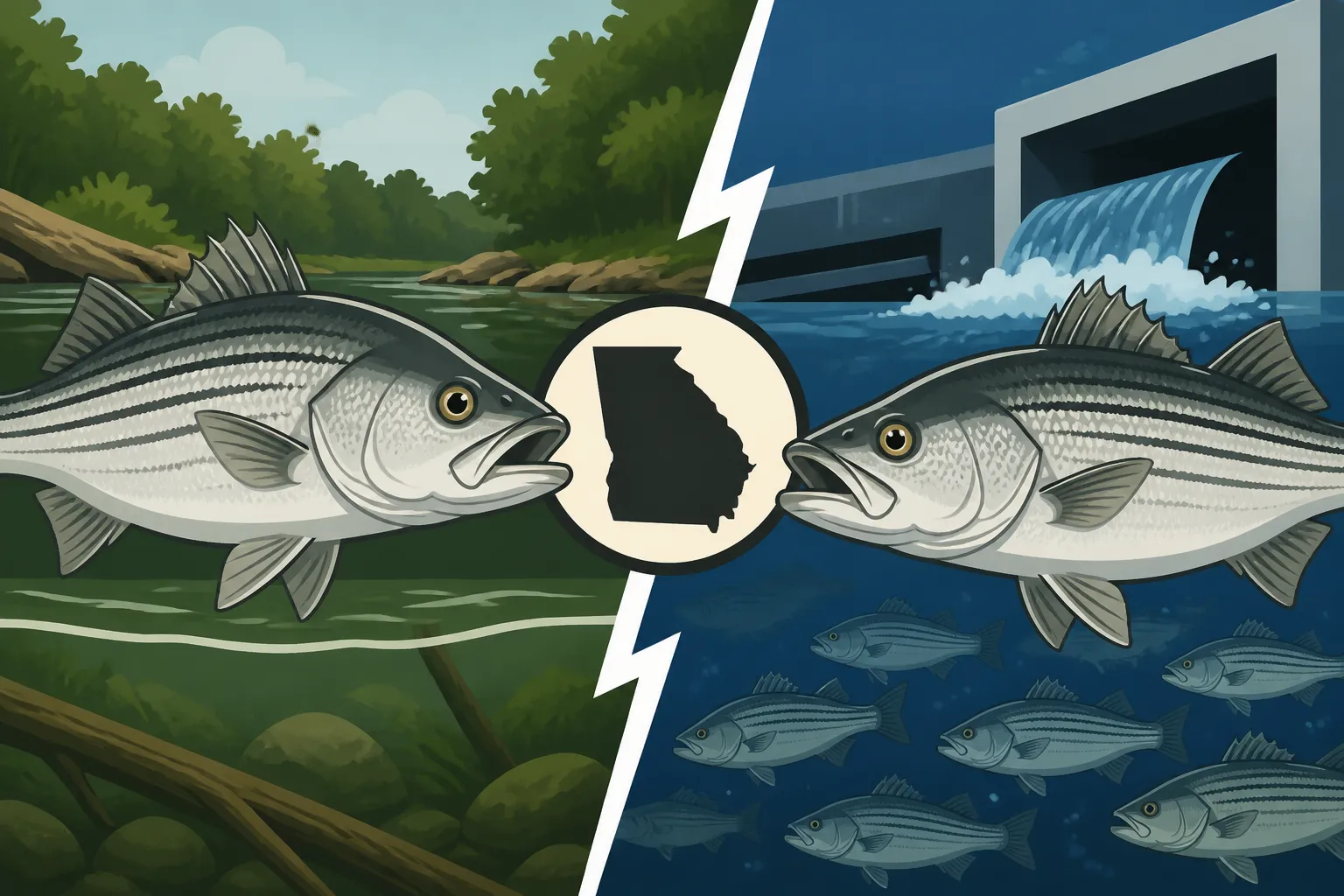
For the average angler, telling the difference between a native river-run striped bass and a stocked reservoir fish can be quite a challenge. Both are powerful, silver-sided predators with distinct dark stripes. However, there are subtle clues, both physical and behavioral, that can sometimes help you distinguish between these two types of Georgia stripers. Understanding these differences adds another layer of appreciation to your catch.
Physical Clues and Fin Clip Markers
While not always definitive, some physical traits can sometimes hint at a striper's origin. Native, river-run striped bass often exhibit a sleeker, more torpedo-shaped body, reflecting their life in strong currents and long migrations. Their fins might appear slightly more worn or developed due to the rigors of navigating river systems and ocean environments. The coloration can also vary subtly; river fish might have a slightly darker or more iridescent hue compared to their reservoir counterparts, influenced by their diet and environment. However, these are highly subjective observations and can be misleading.
The most reliable physical marker, for those fish that have been part of a scientific study or stocking program, are fin clips. Fisheries biologists often clip a small, specific fin (like the adipose fin or a portion of a caudal fin lobe) on a percentage of stocked fish before releasing them. This "tag" is permanent and allows researchers to identify a fish as stocked, and sometimes even the year it was released, when it is later caught. While not every stocked fish is clipped, finding a healed fin clip is a sure sign you've caught a hatchery-reared fish. If you're curious about identifying fish, a good How to Identify a Striped Bass guide can be incredibly helpful. You might even find specialized fish identification books on Amazon to take your knowledge to the next level.
Habitat and Behavioral Distinctions
Perhaps more telling than physical appearance are the habitat and behavioral patterns. Native stripers, by their very nature, are found in Georgia's major coastal river systems that flow to the Atlantic Ocean. Catching a striped bass many miles upstream in the Altamaha or Savannah River is a strong indicator of a native, migratory fish. These fish often follow specific seasonal migration patterns, moving upriver to spawn in the spring. Their behavior is often tied to river currents, tidal movements, and the availability of migratory baitfish like herring or shad. They're often found in deeper runs, eddies, and around structure that provides current breaks.
Stocked striped bass, on the other hand, are predominantly found in landlocked freshwater reservoirs across the state, far from any ocean access. Lakes like Lanier, Oconee, Hartwell, and Thurmond are prime examples of where you'll find thriving stocked populations. These fish behave more like traditional freshwater predators, following schools of threadfin and gizzard shad in open water, congregating around humps, points, and deep channels. Their movements are dictated more by water temperature, oxygen levels, and forage location within the lake environment. They don't undertake long spawning migrations in the same way native fish do, as they are not able to successfully reproduce in these lake environments. Understanding these Where to Catch Striped Bass in Georgia River Basins differences is key to successful angling.
| Feature | Native Striped Bass | Stocked Striped Bass |
|---|---|---|
| Primary Habitat | Coastal river systems (e.g., Altamaha, Savannah) | Landlocked freshwater reservoirs (e.g., Lanier, Oconee) |
| Reproduction | Natural spawning in freshwater rivers (anadromous) | No natural reproduction in lakes; hatchery-dependent |
| Migration | Long migrations between ocean and freshwater rivers | Primarily seasonal movements within the reservoir |
| Body Shape | Often sleeker, more torpedo-like | Can vary, often more robust in well-fed reservoirs |
| Fin Clips | Generally absent | May have healed fin clips as markers |
| Diet | Diverse ocean and river forage | Primarily freshwater forage (shad, herring) |
| Genetic Diversity | Higher natural genetic diversity | Limited genetic diversity from broodstock |
Tailoring Your Approach: Fishing for Both Types of Stripers
Whether you're after a wild, river-run striper or a hard-fighting reservoir giant, understanding the subtle differences in their behavior and habitat is crucial for success. You wouldn't use the same exact tactics for a brook trout in a mountain stream as you would for a largemouth bass in a pond, and the same principle applies here. Adapting your techniques to the specific environment and fish type will dramatically increase your chances of a memorable catch.
Strategies for River-Run Stripers
Targeting native, anadromous striped bass in Georgia's river systems requires a patient and often more specialized approach. These fish are usually migrating upstream, meaning they're often moving and can be found in different spots day-to-day. Look for them in deeper river channels, strong current breaks, eddies behind submerged logs or rocks, and where tributaries enter the main river. These are natural ambush points or resting areas during their arduous journey. Live bait is often king here – large shad, herring, or eels can be incredibly effective, fished on a Carolina rig or a three-way swivel rig to keep them in the strike zone. Think about how these fish are feeding; they're opportunistic predators grabbing whatever comes their way in the current.
Artificial lures can also work wonders, especially bucktail jigs, large swimbaits, or deep-diving crankbaits that mimic migratory baitfish. Presentation is key; you often need to cast upstream and allow your lure to drift naturally with the current, retrieving it just fast enough to impart action. Heavy tackle is often necessary, not just for the fish itself, but to contend with strong currents and potential snags. Always remember that these are wild fish, and conservation is paramount. Practice careful catch and release, especially for larger breeding-size fish, to protect these valuable native populations. Knowing the Best Season for Striped Bass Fishing in Georgia rivers can also greatly impact your success.
Techniques for Reservoir-Dwelling Stocked Fish
Fishing for stocked striped bass in Georgia's expansive reservoirs like Lake Lanier or Lake Oconee presents a different set of challenges and opportunities. These fish are often found in open water, suspending over deep channels, around submerged structures, or chasing massive schools of baitfish. Your best friend here is often a good fish finder and a solid understanding of how water temperature and dissolved oxygen affect fish depth. During warmer months, stripers tend to hold deeper, seeking cooler, more oxygenated water. In cooler months, they might be closer to the surface or around shallow points.
Live bait, particularly threadfin and gizzard shad, is still incredibly effective in reservoirs. Anglers often employ "downlining" or "freelining" techniques, presenting live bait at various depths within a bait school. Trolling with large crankbaits, bucktail jigs, or umbrella rigs is another popular and highly productive method for covering vast amounts of water and locating active schools of stripers. For those who enjoy casting, topwater lures can provide explosive action during dawn and dusk feeding frenzies, or when stripers are actively "schooling" on the surface. Understanding Deep Water Techniques for Striped Bass and Live Bait Rigs for Striped Bass are game-changers for reservoir fishing. Remember, stocked stripers are an amazing resource, so follow all regulations to ensure these fisheries remain strong.
The Broader Picture: Conservation and Management
The existence of both native and robust stocked striped bass populations in Georgia is a testament to the state's diverse aquatic environments and proactive fisheries management. However, it also highlights the ongoing need for thoughtful conservation and careful management to ensure these incredible fish continue to thrive for future generations of anglers. It’s not just about catching fish; it’s about understanding their world and playing our part in protecting it.
Balancing Wild and Managed Populations
Managing striped bass in Georgia is a delicate balancing act. On one hand, we have the imperative to protect and restore our truly wild, native populations in the Altamaha and Savannah River systems. This involves not only fishing regulations but also broader environmental initiatives focused on water quality, habitat preservation, and ensuring unimpeded migratory pathways. Efforts to remove obsolete dams or install fish ladders, while complex, can be vital for the long-term survival of these unique genetic strains. There's a strong scientific and ecological reason to value these native fish beyond their angling potential – they are a unique part of our natural biodiversity.
On the other hand, Georgia's stocked reservoir fisheries are incredibly popular and economically important. These managed populations rely heavily on consistent stocking efforts, careful assessment of forage availability, and regulations designed to sustain harvestable numbers. The goal here is to provide abundant angling opportunities while maintaining healthy fish sizes and overall lake ecosystems. Sometimes, the conversation turns to the potential for stocked fish to interbreed with native populations if they were to somehow meet, but the geographical separation and genetic differences between landlocked and anadromous populations generally mitigate this concern in Georgia. The management strategies for each are distinct but equally important, aimed at optimizing the health and sustainability of both.
The Angler's Role in Striped Bass Sustainability
As anglers, we play a crucial role in the sustainability of both native and stocked striped bass populations. First and foremost, adhering to all fishing regulations, including size limits, creel limits, and seasonal restrictions, is non-negotiable. These rules are based on scientific data and are designed to protect fish stocks. Educating ourselves on Georgia Fish Size and Creel Limits helps ensure we're fishing responsibly. Beyond regulations, practicing ethical catch and release, especially for larger breeding-sized fish or those showing signs of stress, is vital. Using appropriate tackle, minimizing fight time, and handling fish gently can significantly improve their survival rates after release.
Furthermore, being an advocate for clean water and healthy aquatic habitats benefits all fish species, including striped bass. Supporting conservation organizations, participating in habitat restoration projects, or simply reporting pollution can make a real difference. For those interested in the science, engaging with the Georgia Department of Natural Resources (DNR) by reporting fin-clipped fish or participating in angler surveys can provide invaluable data for fisheries biologists. Whether you're chasing a true river giant or a trophy from one of our magnificent reservoirs, every angler's actions contribute to the future of striped bass fishing in Georgia. Finding reputable fishing guides or educational resources on platforms like Amazon can also empower anglers to be more informed and responsible stewards of our waterways.
Disclaimer
This article is for general informational purposes only and does not constitute professional advice. Laws, prices and regulations vary by location and change over time. Consult a qualified professional for guidance on your specific situation.