Catfish Species Guide: Channel, Blue, and Flathead Catfish
There's nothing quite like the tug of a big catfish on the end of your line, but sometimes it can be tough to know exactly what kind of whiskered warrior you've hooked. For anglers across Georgia, understanding the distinct characteristics, habits, and preferred haunts of our most common catfish species – the Channel, Blue, and Flathead – can dramatically improve your fishing success. This guide will help you easily identify each type, learn their secrets, and ultimately, put more fish in your cooler or on your camera.
Understanding Georgia's Catfish Culture
Catfish hold a special place in the hearts of many Georgia anglers. They represent a blend of relaxation and excitement, offering both a reliable catch for a family dinner and the thrilling possibility of a truly massive, line-stripping fight. Whether you're fishing a quiet pond or a sprawling river, chances are good you'll encounter one of our popular catfish species.
Why Catfish Are So Popular
For generations, catfish have been a cornerstone of Southern fishing culture. They're accessible, often found in a variety of waters from small creeks to vast reservoirs, and they're not always picky eaters, making them a great target for anglers of all skill levels. There's also the pure joy of the unknown – will it be a feisty two-pounder or a monster that tests the limits of your gear? Plus, let's be honest, fresh catfish fillets are a delicious reward for a day spent on the water.
The Thrill of the Catch and the Feast
The fight a catfish puts up is often underestimated. While Channel cats offer a respectable tussle, bigger Blue and Flathead catfish can feel like you've hooked a submerged log that suddenly decides to take off like a freight train. Landing one of these giants, especially in swift river currents, is a true test of strength and skill. And after the battle, comes the feast. There's a reason why fried catfish is a staple in so many Southern kitchens – it’s mild, flaky, and absolutely delicious when prepared fresh. Many anglers head out specifically with dinner in mind, and catfish rarely disappoint.
Georgia's Diverse Catfish Waters
From the fast-flowing Altamaha River to the deep, expansive waters of Lake Lanier and Lake Oconee, Georgia boasts an incredible array of habitats that support thriving catfish populations. You can find them lurking in the murky depths of southern Georgia's Blackshear Lake, or navigating the strong currents of the Savannah River. This diversity means that no matter where you are in the state, a good catfish fishing spot is likely just a short drive away. Knowing which species prefers which type of water is key to choosing your location wisely.
Channel Catfish: The Everyday Angler's Friend
The Channel Catfish is arguably the most recognizable and widely distributed catfish species in Georgia. They are the backbone of many local fishing holes and often the first catfish many anglers learn to catch. They're abundant, relatively easy to entice, and provide excellent table fare.
Key Identification Marks and Characteristics
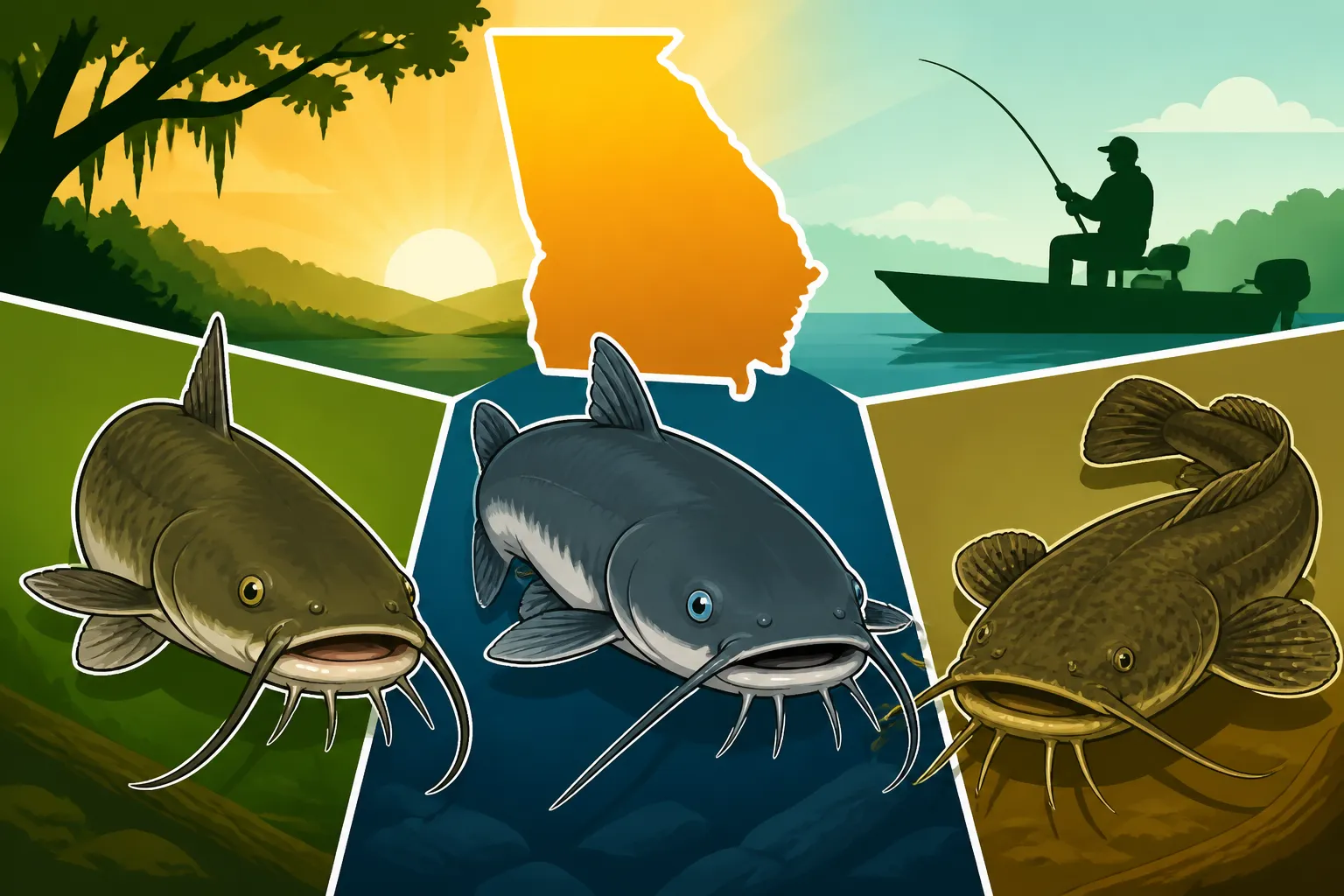
When you pull in a Channel Catfish, you'll generally notice a few distinct features. First, their bodies are typically slender and somewhat torpedo-shaped, often with an olive-green to gray back that fades into silvery sides and a white belly. They are most easily identified by their deeply forked tail, almost like a swallow's tail. You'll also see scattered black spots along their sides, especially on younger fish, which tend to fade as they age. They have barbels around their mouth, which are their "whiskers" used for sensing food in murky water. Their dorsal fin and pectoral fins each have a sharp, serrated spine, so handle them carefully! For more specific details, check out Channel Catfish Identification and Habits.
They generally don't reach the gargantuan sizes of their Blue and Flathead cousins, but a good-sized Channel Catfish can still provide a hearty meal and a fun fight. They're a classic catch that brings a smile to any angler's face.
Habitat and Preferred Locations
Channel Catfish are incredibly adaptable and thrive in a wide range of environments throughout Georgia. You'll find them in rivers, streams, lakes, ponds, and even some brackish coastal waters. They prefer areas with slow to moderate currents, often seeking out deeper holes, undercut banks, and areas with submerged timber or brush piles where they can find cover and ambush prey.
On larger impoundments like Lake Hartwell or West Point Lake, they'll congregate in the deeper channels, creek mouths, and sometimes even around riprap on bridges or dams. In smaller ponds and rivers, look for them around fallen trees, rock formations, and any structure that offers them a bit of shade and protection. They're opportunistic feeders, constantly cruising for their next meal.
Best Baits and Techniques for Channel Catfish
Channel Catfish are not particularly picky eaters, which is one of their most endearing qualities. They have an excellent sense of smell, making stink baits, cut baits, and anything with a strong odor highly effective. Classic baits include chicken livers, smelly cheese baits, nightcrawlers, hot dogs, and various commercial "stink baits" readily available at any tackle shop or even on Amazon. Small pieces of cut bait, like shad or herring, can also be very productive.
For techniques, bottom fishing is king for Channel Cats. A simple Carolina rig with a circle hook and an egg sinker, cast out and allowed to sit on the bottom, is incredibly effective. You can also try fishing under a bobber in shallower areas, especially around brush or docks. Don't be afraid to experiment with different baits and depths; sometimes what works one day won't work the next. If you want to dive deeper into bait choices, our guide on Best Bait for Channel Catfish in Georgia has you covered.
Eating Qualities and Size Expectations
Channel Catfish are renowned for their excellent table quality. Their flesh is typically mild, flaky, and white, making them a favorite for frying, baking, or grilling. Many anglers prefer the taste of smaller Channel Cats, usually those in the 1-5 pound range, as they tend to have a milder flavor and fewer bones to navigate.
While they can grow larger, a "trophy" Channel Catfish in Georgia is typically in the 10-20 pound range, though larger specimens are certainly caught. The state record stands well above that, but for your average outing, anything over five pounds is a fantastic catch. They offer a perfect balance of sport and sustenance, making them a staple for countless fishing trips.
Blue Catfish: The River Monster of Georgia
If you're looking for a serious challenge and the chance to hook into a truly massive fish, the Blue Catfish is your target. These giants are known for their immense size, powerful fights, and preference for deeper, moving waters. They are a different beast entirely from the Channel Catfish.
Distinctive Features for Identification
Blue Catfish share some similarities with Channel Catfish, but there are crucial differences. As their name suggests, they often have a bluish-gray color on their back and sides, fading to a white belly, and they usually lack the distinct spots that Channel Cats often have (though very young blues might show faint spotting). The most reliable identifier is their anal fin, which is much longer and has a straighter margin than the Channel Catfish's more rounded fin. Their tail is also deeply forked, similar to a Channel Cat.
They possess a humped back, especially noticeable on larger individuals, which gives them a very powerful, stout appearance. Unlike Flatheads, their lower jaw does not protrude beyond their upper jaw. When you're wrestling a big one, these visual cues can be a bit hard to spot, but knowing what to look for when you finally get it to the boat or bank is key to proper identification. Check out Blue Catfish Identification and Size for more details on distinguishing features.
Where to Find Blue Catfish in Georgia
Blue Catfish prefer large rivers and major lake systems, especially those with strong currents and abundant open water. They thrive in deeper channels, bends, and scour holes within these riverine environments. In Georgia, prime locations include the lower reaches of the Savannah River, the Altamaha River, and certain large reservoirs like Clarks Hill Lake (also known as Lake Thurmond) and Lake Eufaula (Walter F. George Reservoir).
These fish are often found near significant underwater structure such as old riverbeds, drop-offs, humps, and submerged timber. They're not generally found in small ponds or quiet creeks. They're pelagic hunters, often roaming vast stretches of water in search of large schools of baitfish. Your best bet is to target areas with significant depth changes and strong current breaks.
Trophy Tactics: Targeting Bigger Blues
Targeting trophy Blue Catfish requires a different approach than chasing Channel Cats. Forget the small chicken livers; big blues demand big baits. Fresh cut bait is paramount. Shad, herring, skipjack, or even smaller live bream (where legal) are excellent choices. Many experienced anglers swear by fresh cut gizzard shad as a top bait. You can often find a good selection of specialized bait on Amazon.
Heavy-duty gear is a must. You'll need stout rods, reels with excellent drag systems, and strong braided or monofilament line. A Carolina rig with a heavy sinker (2-8 ounces, depending on current) to hold your bait on the bottom is standard. Anglers will often anchor upstream of a promising hole or channel and fan-cast multiple lines, waiting for that tell-tale slam. Drifting cut bait along deep channels can also be incredibly effective, allowing you to cover more ground and find actively feeding fish. For specific bait recommendations for these monsters, read our guide on Best Bait for Blue Catfish in Georgia Rivers.
The Fight and the Fillet: What to Expect
The fight from a large Blue Catfish is legendary. They are incredibly powerful, often making long, sustained runs and digging deep into the current. Hooking into a blue in a swift river can feel like trying to reel in a car tire. It’s a battle of wills that can last for many minutes, pushing both angler and tackle to their limits. Landing one of these beasts is a badge of honor.
Blue Catfish also offer excellent table fare. Their flesh is firm, white, and mild, particularly in smaller to medium-sized fish (under 20-30 pounds). While the really massive ones provide impressive bragging rights, their meat can sometimes be coarser. However, fillets from smaller Blues are prized for their taste and texture, perfect for frying or grilling.
Flathead Catfish: The Ambush Predator
The Flathead Catfish is the enigmatic hunter of Georgia's waters. Unlike the opportunistic scavenging of Channel and Blue Cats, Flatheads are true predators, preferring live bait and often lurking in heavy cover to ambush their prey. They are a unique challenge for any angler.
Unique Look and Behavior
Flathead Catfish are unmistakable once you've seen one. Their head is, as their name implies, noticeably flattened and broad. Their lower jaw protrudes beyond the upper jaw, giving them a distinctive "bulldog" appearance. Their eyes are relatively small. Their bodies are mottled brown and yellow, offering excellent camouflage against logs and muddy bottoms.
Crucially, their tail is not forked like the Channel or Blue Catfish; instead, it is square or slightly rounded. This is a dead giveaway for identification. Flatheads are solitary fish, preferring to hide in dense cover like log jams, undercut banks, or rock piles during the day, emerging at night to hunt. They are strictly piscivorous, meaning they primarily eat other fish. Our guide on Flathead Catfish Identification and Habits provides even more distinguishing characteristics.
Flathead's Favorite Haunts and Hunting Grounds
Flathead Catfish are kings of the river, preferring slow-moving to moderate currents with plenty of heavy structure. You'll find them in the Chattahoochee River, the Flint River, the Ocmulgee River, and many other larger river systems across Georgia. They love deep holes with log jams, root wads, old bridge pilings, and any place where they can conceal themselves and wait for an unsuspecting meal to swim by.
In lakes, they'll seek out the deepest, darkest sections of submerged timber fields or old creek channels choked with brush. They are less common in open water than Blue Catfish. If you're looking for Flatheads, you need to go where the cover is thick and the water is deep, often requiring specialized techniques to get your bait into their hidden lairs.
Live Bait is Key: Flathead-Specific Strategies
Because Flatheads are predators, they overwhelmingly prefer live bait. Small live bream, sunfish, shad, or even robust goldfish (where legal) are top choices. The bait needs to be lively enough to attract attention but not so large that the Flathead can't engulf it. Using a stout circle hook through the back or lips of a live baitfish is the most common presentation.
Anglers targeting Flatheads will typically use heavy-duty gear, similar to what's used for large Blue Catfish. A sturdy rod, a reel with a strong drag, and heavy braided line are essential. The most common technique is to fish a Carolina rig or a three-way swivel rig with a heavy sinker to keep your live bait near the bottom and in the strike zone. Patience is key, as Flatheads often take their time before committing to a strike. You need to be prepared for an incredibly powerful initial run once they do. For a deep dive into bait choices, especially live vs. cut, check out Live Bream vs Cut Bait for Flathead Catfish.
Size, Taste, and the Challenge
Flathead Catfish grow to impressive sizes, often rivaling the largest Blue Catfish. A 20-pound Flathead is a respectable catch, but fish exceeding 50 pounds are not uncommon in Georgia's river systems. Landing one of these giants, especially from heavy cover, is an immense challenge and requires serious strength and dedication. They pull hard and will try to get back into the snags they call home.
Their table quality is also highly regarded. Flathead Catfish have firm, white, and exceptionally mild meat. Many anglers consider them the best-eating of the three major catfish species, particularly the smaller to medium-sized ones (under 20-30 pounds). Their diet of live fish contributes to their clean flavor. If you're looking for both a challenging fight and a delicious meal, the Flathead is an excellent target.
Comparing Georgia's Catfish Species
Understanding the subtle and not-so-subtle differences between Channel, Blue, and Flathead Catfish is crucial for anglers. It not only helps with identification but also informs your strategy, gear choices, and even where you decide to fish. Let's break down how they stack up against each other.
Side-by-Side: ID, Size, and Habitat Differences
When you're out on the water, quick identification can sometimes be tricky, especially with younger fish. However, focusing on a few key traits will set you straight.
Here's a handy comparison:
| Feature | Channel Catfish | Blue Catfish | Flathead Catfish |
|---|---|---|---|
| Tail Shape | Deeply forked | Deeply forked | Square or slightly rounded (not forked) |
| Body Color | Olive-green to gray, silvery sides, white belly. Often has black spots (especially young fish). | Bluish-gray back/sides, white belly. Lacks spots. | Mottled brown/yellow, often darker. Excellent camouflage. |
| Anal Fin | Rounded margin, 24-29 rays | Straight margin, 30-36 rays | Rounded margin, 14-17 rays |
| Head Shape | Moderately flattened | Moderately flattened, slight hump on larger fish | Very broad and noticeably flattened. Lower jaw protrudes. |
| Typical Size | 1-10 lbs (up to 20+ lbs) | 5-50 lbs (up to 100+ lbs) | 10-50 lbs (up to 100+ lbs) |
| Preferred Habitat | Wide variety: rivers, lakes, ponds, slow to moderate current, some structure. | Large rivers, deep channels, strong currents, major reservoirs. | Rivers with heavy cover (log jams, rocks), deep holes, slow current. |
| Primary Diet | Omnivorous (insects, small fish, detritus) | Primarily piscivorous (fish, mussels, crawfish) | Strictly piscivorous (live fish) |
This table provides a quick reference, but remember, there's always some variation. The key is to look for a combination of these features rather than relying on just one.
Choosing Your Target Species: What Are You After?
Your fishing goals will largely dictate which catfish species you should target. If you're looking for a relaxed day on the water with a high chance of catching fish for a delicious meal, the Channel Catfish is your go-to. They are plentiful and receptive to a wide range of common baits. If you're bringing kids along, the action-packed fishing for smaller Channels can't be beaten.
If the thrill of a monumental fight and the potential for a state-record fish excites you, then Blue Catfish or Flathead Catfish are your quarry. Blue Catfish offer a powerful, open-water fight, often found in large schools, meaning multiple hookups are possible. Flatheads, on the other hand, provide a more tactical, hide-and-seek challenge, often requiring precision casting into heavy cover and a brute-force battle to pull them out. Each species offers a distinct angling experience.
Gear Up: Rods, Reels, and Line for Each Catfish
Matching your gear to your target species is essential for success and enjoyment.
- Channel Catfish: For smaller Channel Cats, a medium-heavy spinning or baitcasting rod, about 6.5 to 7.5 feet long, paired with a reel spooled with 10-20 lb monofilament or braided line is perfect. You don't need super heavy-duty gear, but something robust enough to handle the occasional larger fish. A good entry-level combo can be found easily on Amazon.
- Blue Catfish: Stepping up the game, you'll want heavy-action rods, 7 to 9 feet long, specifically designed for catfish or surf fishing. Baitcasting reels with a high line capacity and a smooth, powerful drag system are non-negotiable. Spool these with 30-80 lb braided line or heavy monofilament. You'll need that strength to pull these fish out of deep water and strong currents. Consider a heavier rod to handle the weight of bigger sinkers too. Our guide on Best Rod for Catfish Fishing on Georgia Rivers has more specific recommendations.
- Flathead Catfish: Similar to trophy Blue Catfish, Flatheads demand heavy gear. A heavy to extra-heavy rod, 7 to 8.5 feet, with a strong backbone is crucial for pulling fish out of heavy cover. Use a high-quality baitcasting reel with a robust drag, loaded with 40-100 lb braided line. This isn't just about fighting the fish; it's about getting your bait into thick snags and getting the fish out of them without breaking off.
Essential Catfishing Techniques for Georgia Waters
Beyond knowing your species and gear, mastering a few key techniques will significantly boost your catfish success across Georgia. Catfish are often thought of as simple to catch, but applying specific strategies can lead to much more consistent and larger catches.
Mastering Bottom Fishing
Bottom fishing is the bread and butter of catfishing, no matter the species. The principle is simple: get your bait to the bottom where catfish often feed. The most common rig is the Carolina rig. This involves threading an egg sinker onto your main line, followed by a bead (to protect your knot), then tying on a swivel. To the other end of the swivel, you attach a leader (12-36 inches long, depending on conditions) and then your hook. This setup allows the fish to pick up the bait without immediately feeling the weight of the sinker, giving you a better hook set.
When fishing on the bottom, always try to present your bait naturally. Cast upstream if there's a current, allowing your bait to drift naturally into a hole or eddy. If there's no current, fan cast to cover different areas of the bottom. Patience is paramount, as catfish often take their time to investigate a bait before committing. For more foundational knowledge, refer to Catfish Bottom Fishing Basics.
Trotlines and Jug Fishing: Advanced Tactics
For those looking to expand their catfishing horizons beyond rod and reel, trotlines and jug fishing offer effective ways to catch multiple fish, especially larger ones. These methods are common in Georgia but come with specific regulations that you must be aware of, including limits on the number of hooks, buoy marking requirements, and prohibited areas. Always consult the Georgia Department of Natural Resources regulations before deploying either of these methods.
- Trotlines: A trotline is a long line stretched across a river or lake, with multiple baited hooks attached at intervals. It's often anchored on both ends. This allows you to cover a large area and present many baits simultaneously. Trotline Fishing Explained goes into the intricacies of setting up and maintaining one.
- Jug Fishing: Jug fishing involves individual lines tied to floating jugs or bottles, each with a baited hook. The jugs float freely, allowing the bait to drift and cover expansive areas. When a fish bites, the jug starts to move or dip, signaling a catch. This can be a very active and fun way to fish, especially with a partner. Learn more about this dynamic technique in Jug Fishing for Catfish.
Both methods can be highly productive for all three species of catfish, particularly Blue and Flathead, as they allow you to deploy larger baits in areas that might be difficult to reach with a traditional cast.
Night Fishing for Catfish
Catfish are largely nocturnal feeders, especially the larger specimens. As the sun sets and the water cools, these whiskered hunters become more active, venturing out from their daytime hideouts to forage. This makes night fishing one of the most productive times to target them in Georgia. The stillness of the night, combined with their heightened senses, often leads to more aggressive bites.
When night fishing, remember to bring headlamps or lanterns, insect repellent, and glow sticks or bells for your rod tips to alert you to bites. Catfish will often move into shallower water at night to hunt, so don't be afraid to target areas that might seem too shallow during the day, such as flats adjacent to deeper channels or submerged points. Different baits can also become more effective after dark. To master this exciting approach, dive into our How to Catch Catfish at Night guide.
Conservation and Responsible Catfishing in Georgia
As passionate anglers, it's our responsibility to ensure the health and abundance of Georgia's catfish populations for generations to come. This means not only adhering to regulations but also practicing ethical angling and conservation methods.
Understanding Regulations and Limits
Georgia has specific regulations regarding catfish, including daily creel limits (how many fish you can keep) and sometimes size limits for certain species or in particular waters. These rules are put in place by the Georgia Department of Natural Resources (DNR) to manage fish populations and prevent overfishing. It's imperative to consult the current Georgia Fishing Regulations before each outing. For example, while Channel Catfish usually have generous limits, trophy Blue and Flathead Catfish might have more specific rules, especially regarding trotlines and jug fishing.
Familiarize yourself with the statewide limits and any special regulations for the specific lake or river you plan to fish. Ignorance of the law is not an excuse, and penalties for violations can be stiff. Staying informed ensures you're fishing legally and contributing to sustainable fisheries. Remember, you'll also need a valid Georgia Fishing License Guide before you even cast a line!
Catch and Release Best Practices
While many catfish are caught for the dinner table, practicing proper catch and release, especially for larger breeding fish, is vital for conservation. Big catfish are the backbone of future generations, and releasing them ensures they can continue to spawn and grow.
Here are some tips for responsible catch and release:
- Minimize Fight Time: Try to land the fish as quickly as possible to reduce stress.
- Handle with Care: Use wet hands or gloves to protect the fish's slime coat. Avoid squeezing them, especially around the belly.
- Use Proper Tools: Have needle-nose pliers or a hook remover handy to quickly extract hooks, especially circle hooks which tend to hook in the corner of the mouth.
- Support the Fish: If taking a photo, support the fish horizontally with two hands or vertically by the lower jaw (without hanging it by the gills). Never hold a large fish by the gills alone.
- Revive If Necessary: If the fish seems stressed or is slow to swim off, gently hold it upright in the water, facing into the current, until it regains its strength and swims away on its own.
By being mindful of these practices, we can all do our part to keep Georgia's catfish populations healthy and thriving.
Protecting Our Catfish Populations
Our catfish resources are a treasure, and protecting them goes beyond just following regulations. It means being mindful of our impact on the environment. Avoid leaving trash, tangled lines, or discarded bait behind. Be aware of aquatic invasive species and take precautions to prevent their spread. Support conservation efforts and organizations that work to improve water quality and fish habitats.
Every angler has a role to play in stewardship. By fishing responsibly, practicing selective harvest, and respecting the environment, we ensure that the thrill of catching a Georgia catfish will be available for many more years to come.
Disclaimer
This article is for general informational purposes only and does not constitute professional advice. Laws, prices and regulations vary by location and change over time. Consult a qualified professional for guidance on your specific situation.