What happens if you get caught fishing without a license?
It’s a scenario no angler wants to face: you’re out on the water, enjoying a peaceful day, when suddenly a game warden pulls up. Your heart sinks as you realize you can’t find your fishing license, or worse, you never even bought one. The dread that washes over you is real, and the consequences can be more serious than just a slap on the wrist. This comprehensive guide is here to walk you through exactly what can happen if you get caught fishing in Georgia without the proper license, helping you understand the potential repercussions and how to avoid them altogether.
The Immediate Impact of Getting Caught Without a License
Picture this: you’ve found the perfect spot on Lake Lanier, the sun is shining, and the fish are biting. You’re reeling in a nice largemouth when you notice a boat approaching. It's the Georgia Department of Natural Resources (DNR), and they’re asking to see your license. If you come up empty-handed, that tranquil day can quickly turn into a stressful encounter.
On-the-Spot Enforcement and Initial Procedures
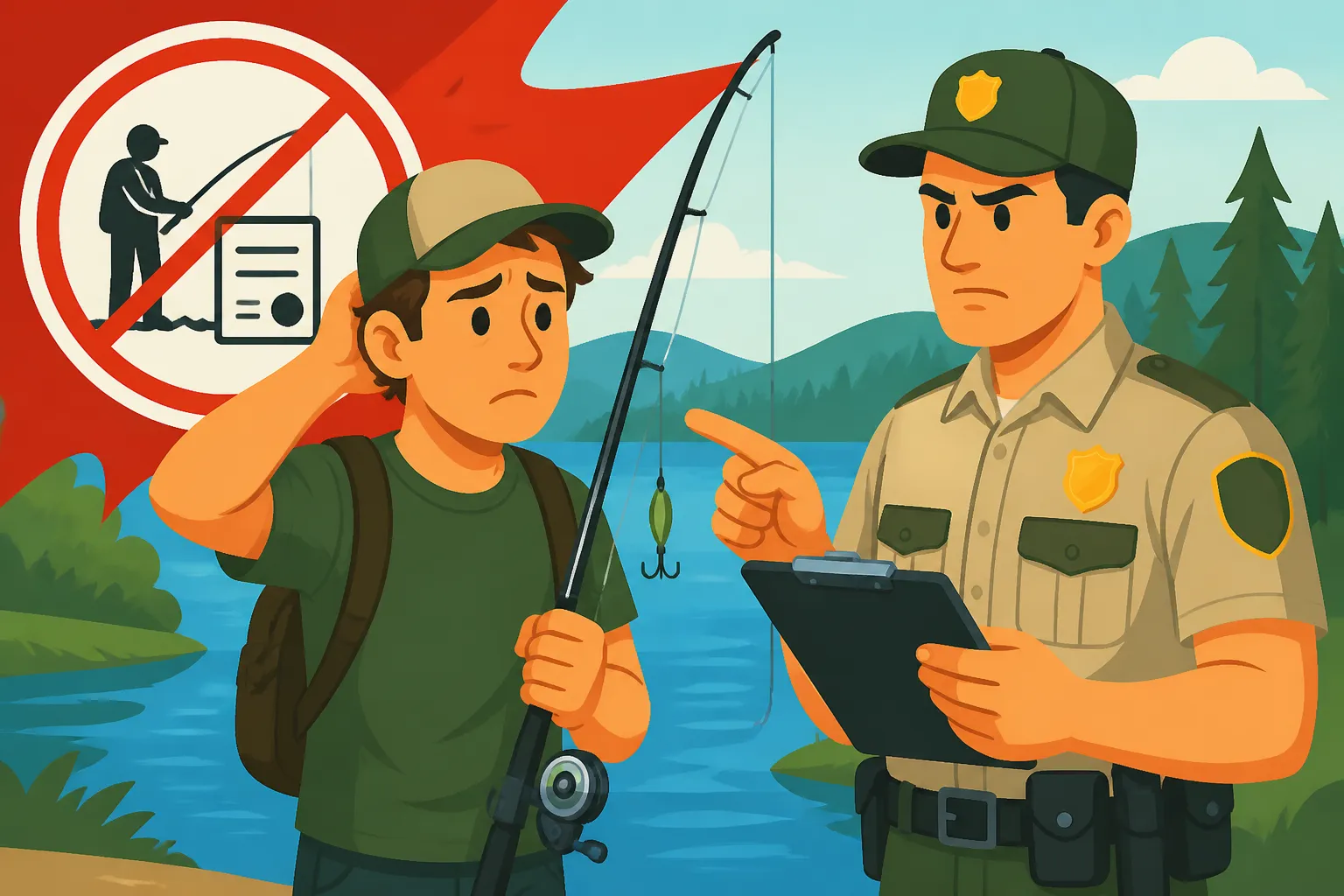
When a game warden encounters someone fishing without a valid license, their primary goal is to enforce state regulations and ensure fair play for everyone. They're not out to ruin your day, but they are there to do their job, which includes verifying compliance with fishing laws. The process usually begins with a request for your identification and fishing license. If you can't produce one, they'll conduct an investigation. They might ask you questions about why you don't have a license, how long you've been fishing, and if you've caught any fish. It's crucial to remain calm, cooperative, and honest throughout this interaction. Getting defensive or argumentative won't help your situation; in fact, it could potentially lead to additional charges or complications.
The warden will verify your identity and check state records to see if you have any existing licenses or previous violations. Even if you claim to have purchased one online, they have ways to confirm that information on the spot. If it's determined you are indeed fishing without a valid license, they will typically issue you a citation. This isn't just a friendly reminder; it's a legal document requiring you to appear in court or pay a fine, depending on the specifics of the offense and the jurisdiction. This initial interaction can be intimidating, but understanding the steps helps you navigate it without making things worse.
Understanding the Charges: Misdemeanor Offense
Fishing without a valid license in Georgia isn't just an administrative oversight; it's classified as a misdemeanor offense. This is a significant detail, as it means it's a criminal charge, not merely a civil infraction. Unlike a parking ticket, a misdemeanor can potentially go on your criminal record, which can have implications far beyond the fishing grounds. While it's generally considered a minor misdemeanor for a first offense, it carries the weight of a criminal charge under Georgia law.
This means you’re not just looking at a simple fine; you’re facing a court appearance where you'll have to answer to the charge. The legal system treats this seriously because fishing licenses are vital for funding conservation efforts, fish stocking programs, and the overall management of Georgia's natural resources. When people don't buy licenses, these critical programs suffer. The state sees it as a direct threat to the sustainability of our beautiful lakes, rivers, and coastal waters. It’s why the Georgia Department of Natural Resources is so diligent in its enforcement.
Navigating the Legal and Financial Fallout
The immediate encounter with a game warden is just the beginning. The real consequences start to unfold as you deal with the legal system. It can be a confusing and expensive journey if you're unprepared.
Fines and Court Costs You Could Face
The financial penalties for fishing without a license in Georgia can vary, but they are certainly not insignificant. For a first-time offense, fines can range from around $150 to $500, sometimes even more, depending on the county, the judge, and any aggravating circumstances. For example, if you were also caught violating other regulations, like exceeding creel limits or fishing in a closed area, the fines could escalate quickly. But it's not just the fine you have to worry about. There are often additional court costs, administrative fees, and surcharges that can easily double the initial fine amount.
Consider a hypothetical situation: a first-time offender fishing without a license on the Ocmulgee River might face a base fine of $200. Add in a $50 mandatory surcharge, $100 in court costs, and a $25 "wildlife enhancement fee," and suddenly that $200 fine has ballooned to $375 or more. These costs can be a real shock, especially if you thought it was just a minor issue. It highlights why it's always cheaper and less stressful to simply buy your license upfront. You can easily purchase your license online or find a Georgia License Agents Near You if you prefer.
| Offense Type | Typical Fine Range (First Offense) | Additional Costs (Estimate) | Total Potential Cost (Estimate) | Potential Jail Time | Other Consequences |
|---|---|---|---|---|---|
| Fishing Without License | $150 – $500 | $100 – $250 | $250 – $750 | Up to 12 months* | License suspension, criminal record |
| Failure to Possess License (but valid) | $50 – $150 | $50 – $100 | $100 – $250 | N/A | Requirement to produce proof, minor inconvenience |
| Fishing During Suspension | $500 – $1,000+ | $200 – $500+ | $700 – $1,500+ | Up to 12 months* | Extended suspension, felony charges (repeat offenses) |
Note: While jail time of up to 12 months is legally possible for a misdemeanor in Georgia, it is extremely rare for a first-time, standalone offense of fishing without a license unless there are aggravating factors or a pattern of non-compliance. However, it's important to understand the maximum legal consequences.
Potential for License Suspension and Future Restrictions
Beyond the immediate financial hit, one of the most significant consequences of getting caught fishing without a license is the potential suspension of your fishing privileges. The Georgia DNR has the authority to suspend or revoke your ability to purchase a fishing license for a period of time, often ranging from one to three years for a first offense. Imagine being an avid angler, only to be told you can't legally cast a line in Georgia waters for an entire year or more. That’s a tough pill to swallow.
This suspension means you won't be able to buy any type of fishing license, whether it's a basic Georgia Fishing License Guide for freshwater, a Georgia Saltwater Information Permit Explained for coastal trips, or even a Mountain Trout License Add-On in Georgia if you love fishing the mountain streams. For someone who lives and breathes fishing, this restriction can feel like a life sentence. Furthermore, repeat offenses can lead to even longer suspensions, higher fines, and more severe legal consequences, potentially elevating the charge to a felony in extreme cases. It's a clear deterrent designed to encourage compliance and fund critical conservation efforts.
Other Consequences Beyond the Wallet
While fines and license suspensions are the most direct penalties, fishing without a license can lead to other headaches. As mentioned, it's a misdemeanor, meaning it creates a criminal record. For many jobs, particularly those requiring background checks or professional licenses, a criminal record—even for a minor misdemeanor—can be a significant hurdle. It might affect your ability to secure employment, rent an apartment, or even obtain certain types of loans.
Then there’s the impact on your reputation. Being known as someone who skirts the rules isn't a badge of honor in the close-knit angling community. You might face social repercussions or be looked down upon by fellow anglers who conscientiously follow regulations. There's also the risk of losing any gear associated with the offense. While uncommon for a simple license violation, in some instances where other serious infractions occur (like poaching protected species), equipment can be confiscated. It's a powerful reminder that following the rules isn't just about avoiding a ticket; it's about being a responsible steward of our natural environment.
How to Prevent This Headache: Ensuring You're Always Legal
Avoiding the stress and penalties of fishing without a license is incredibly simple: buy one and carry it with you! It’s the easiest way to ensure your fishing trips remain enjoyable and worry-free.
Checking Your License Status and Renewal Options
The Georgia Department of Natural Resources (DNR) makes it incredibly easy to manage your fishing license. You can quickly check the status of your current license online through the official Go Outdoors Georgia website. This is a fantastic resource, especially if you're like me and sometimes forget when you purchased your last one. You can log in with your customer ID and review all your licenses, their expiration dates, and even print a copy if needed. For those moments when you're just not sure, a quick check can save you a world of trouble.
If your license is nearing expiration, the good news is that renewing it is just as straightforward. Many licenses are valid for a full 365 days from the date of purchase, not just a calendar year, giving you flexibility. You can renew your license online, by phone, or in person at various license agents across the state. This accessibility means there's really no excuse for an expired license. Don't forget, if you bought any essential fishing gear from Amazon, like a new tackle box or a convenient fishing vest, it's a great place to keep your printed license or a screenshot on your phone, just in case. Learning How to Renew a Georgia Fishing License is an important step for any regular angler.
The Importance of a Mountain Trout License or Saltwater Permit
Many anglers mistakenly believe a basic Georgia fishing license covers all types of fishing. While it's a great start, certain specialized fishing requires additional permits or licenses. If you plan to fish for trout in designated trout waters, particularly in the beautiful streams of North Georgia, you'll need a Mountain Trout License Add-On in Georgia in addition to your regular fishing license. This specific add-on helps fund the state's trout stocking and management programs that keep those waters teeming with rainbow, brown, and brook trout.
Similarly, if your adventures take you to Georgia's stunning coast to fish the saltwaters around places like St. Simons Island or Brunswick, you'll need a free Georgia Saltwater Information Permit Explained. While it doesn't cost anything, it is required. This permit helps the DNR collect vital data on saltwater fishing efforts, which is crucial for managing coastal fish populations responsibly. Forgetting these additional permits can land you in just as much trouble as not having a basic license. Always double-check the specific regulations for the waters you plan to fish before you cast your first line.
What About Kids and Seniors?
Georgia offers some fantastic exceptions and special provisions for certain age groups, which can sometimes lead to confusion. For instance, children under the age of 16 are generally exempt from needing a fishing license in Georgia. This is a wonderful initiative designed to encourage youth participation in outdoor activities and make fishing accessible for families. So, if you're taking your grandkids out to a local pond, they likely won't need their own license. However, if you're unsure about the specifics, especially if a child is close to the age cutoff, it's always best to check the official Do Kids Need a Fishing License in Georgia? guidelines.
Seniors also have special considerations. Georgia offers reduced-cost annual licenses and even free lifetime licenses for qualifying older residents. For example, Georgia residents born before July 1, 1952, are eligible for a free Senior Lifetime Sportsman's License. Those born after that date, but who are 65 and older, can get a discounted annual license or a paid lifetime license. Understanding these specific rules is important. You can find more details on Senior Fishing License Rules in Georgia. It's a fantastic benefit for our seasoned anglers, but you still need to officially apply for and possess these special licenses to be legal on the water.
What to Do If You've Been Caught
Even the most prepared angler can find themselves in a tough spot. Maybe your wallet fell out of your pocket, or your digital license wouldn't load. If you are caught without a license, knowing how to handle the situation can make a difference.
Remaining Calm and Cooperative
If a game warden approaches you and you realize you don't have your license, the absolute best thing you can do is remain calm and cooperative. Panicking, becoming argumentative, or trying to hide something will only escalate the situation and could lead to more serious charges. Wardens are trained professionals, and they deal with all sorts of people. A calm demeanor and a willingness to cooperate will always serve you better.
Politely explain your situation. If you genuinely forgot your license at home but know you have a valid one, state that clearly and offer to provide proof as soon as possible. Sometimes, if you have a valid license but just don't have it on your person, the warden might issue a warning or a less severe citation, often referred to as "failure to possess," which typically carries a lower fine than fishing without any valid license. They might even allow you to show proof later. However, this is entirely at the warden's discretion and shouldn't be expected. Have your identification ready, listen carefully to their instructions, and answer any questions honestly and concisely. If you happen to be on a vessel that you purchased some safety gear for from Amazon, like life jackets or a first-aid kit, make sure those are accessible and compliant too, as wardens may also check for general boating safety.
Seeking Legal Advice and Understanding Your Rights
If you receive a citation for fishing without a license, it’s important to understand that you have legal rights. As a misdemeanor, it's not something to ignore. You will have a court date, and you'll need to decide whether to simply pay the fine or appear in court to present your case. If the circumstances are complex, or if you believe you were cited unfairly, seeking legal advice from an attorney who specializes in misdemeanor or wildlife law might be a wise step. They can explain the specific charges against you, discuss potential defenses, and represent you in court.
An attorney can help you understand the long-term implications of a conviction, especially if you have career aspirations that involve background checks. They might also be able to negotiate with the prosecutor for a reduced charge or alternative resolution, particularly for first-time offenders. While it might seem like an extra expense, the cost of legal counsel could be significantly less than the combined fines, court costs, and potential future complications of a misdemeanor on your record. Take the citation seriously, explore your options, and make an informed decision about how to proceed.
Disclaimer
The information provided in this guide is for general informational purposes only and does not constitute legal advice. Fishing regulations and penalties can change, and interpretations may vary. Always consult the most current Georgia Department of Natural Resources regulations or a legal professional for specific guidance regarding your situation.