How to Identify a Redfish
It can be incredibly exciting to feel that tug on your line in Georgia's coastal waters, but for many new (and even some seasoned freshwater) anglers, distinguishing between the various species can be a real head-scratcher. You might land a powerful fish, bronze and beautiful, and wonder, "Is this a redfish? Or something else entirely?" This guide is here to unravel that mystery, giving you all the clear identification tips you need to confidently spot a redfish on your next Georgia adventure.
What Exactly Is a Redfish? The Georgia Coastal Star
When we talk about redfish in Georgia, we're almost always referring to the Red Drum, scientifically known as Sciaenops ocellatus. This incredible species is not just a popular sport fish; it's a vital part of our coastal ecosystem and a true icon of Georgia's salt marshes and estuaries. For many, catching a Georgia redfish is a bucket-list experience, celebrated for its strong fight and impressive size.
The Basics of Sciaenops ocellatus
The red drum, or redfish as it's more commonly called here, is a member of the drum family (Sciaenidae), which includes other familiar species like spotted seatrout and black drum. These fish are found along the Atlantic and Gulf coasts of the United States. In Georgia, they thrive in our vast network of saltwater creeks, tidal rivers, and coastal sounds, especially those with muddy or grassy bottoms where they can forage for food. They're often found patrolling oyster beds, cruising shallow flats, and holding around structure like docks and submerged snags. Understanding their preferred habitat can sometimes give you a clue about what's on the end of your line, even before you get a good look! Did you know the redfish is one of Redfish: One of Georgia's Official State Fish? It's pretty special to our state!
Why Redfish are a Coastal Icon
From the moment a redfish takes your bait, you'll understand why they're so revered. They are powerful fighters, making strong runs and bulldogging their way back to cover, providing an exhilarating challenge for anglers of all skill levels. Beyond their sporting appeal, redfish also hold a significant place in coastal culture. Their presence signals a healthy marsh system, and their pursuit brings communities together, whether it's through tournaments or quiet days spent exploring the backwater creeks. Their striking appearance and dogged determination on the line solidify their status as a true coastal treasure. The thrill of sight fishing for them in clear, shallow water is an experience that keeps many anglers coming back to our beautiful coast year after year.
Key Identification Features of Redfish
When you're out on the water, especially if you're targeting new species, having a clear mental checklist of identification features is your best friend. For redfish, there are a few standout characteristics that, once you know them, make identification much simpler.
The Iconic Tail Spot
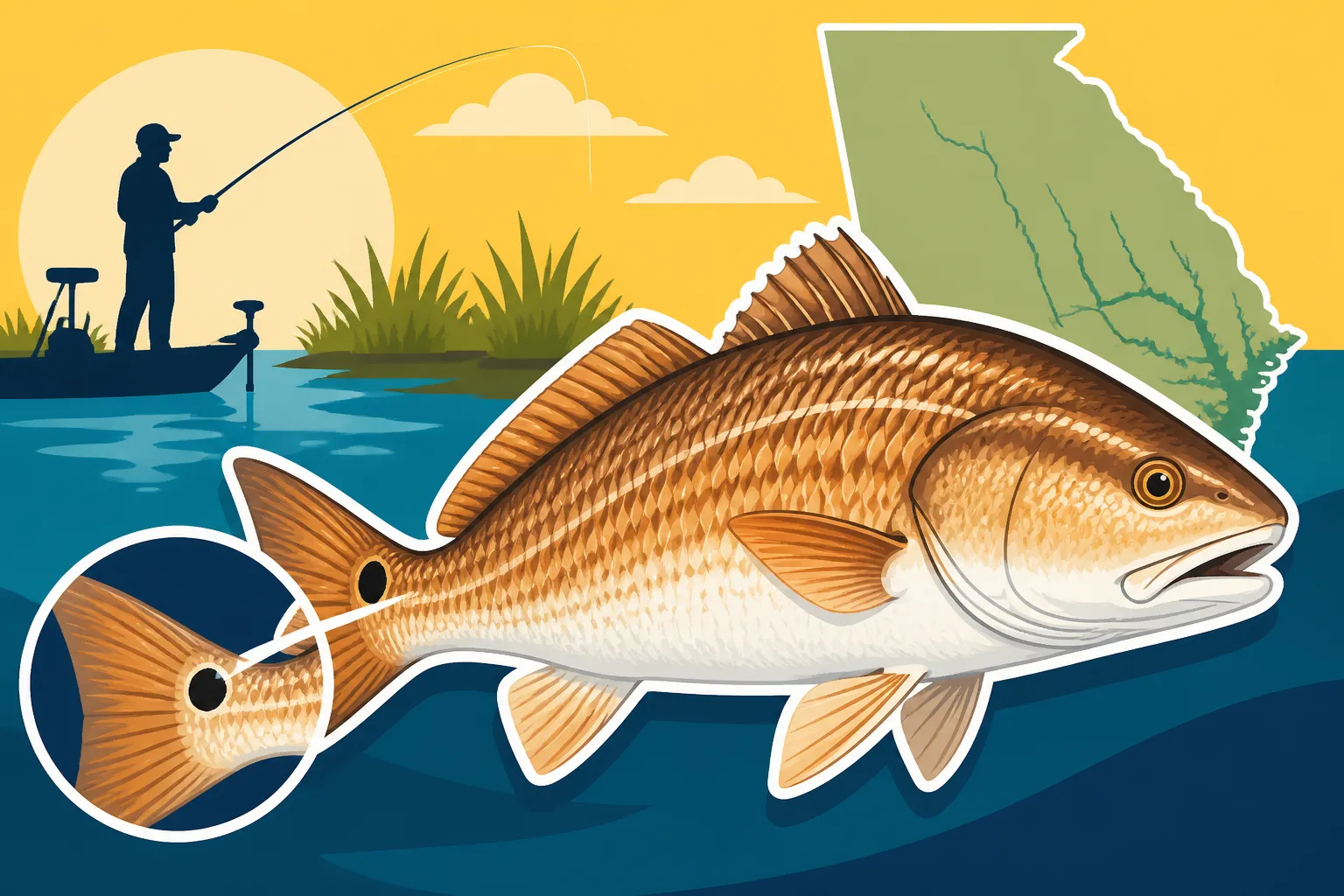
Without a doubt, the single most defining characteristic of a redfish is its distinctive black spot (or spots!) located at the base of its tail. This "ocellus" or "eyespot" is typically found on the upper part of the caudal fin (tail fin) where it meets the body. While most redfish have just one prominent spot, it's not uncommon to see fish with multiple spots, or even very faint ones. I've seen redfish with as many as five or six spots, looking like they've been splattered with black paint! This tail spot is thought to mimic an eye, confusing predators and directing their attack towards a less vulnerable part of the fish. If you catch a copper-colored fish with a black spot on its tail, you've almost certainly got yourself a redfish.
Body Color and Shape
Redfish boast a stunning coppery-bronze coloration on their backs and sides, which gradually fades to a silvery-white on their belly. The intensity of this color can actually vary quite a bit depending on the specific environment the fish lives in. Redfish caught in dark, tannic creek waters might appear much darker, almost a deep reddish-brown, while those from clearer, sandy flats might have a lighter, brighter bronze hue. This natural camouflage helps them blend in with the bottom substrate. Their body shape is elongated and somewhat robust, not overly deep-bodied, giving them that torpedo-like power for strong runs. They possess large, prominent scales that are quite coarse to the touch.
Mouth and Fin Characteristics
Take a closer look at a redfish's mouth, and you'll notice it's positioned slightly downward. This subterminal mouth is perfectly adapted for bottom feeding, allowing them to root around in the mud and sand for crabs, shrimp, and small fish. Their lower jaw is typically shorter than their upper jaw. Their fins are generally sturdy, with a distinctive high, spiny dorsal fin and a rounded, fan-like caudal (tail) fin that is incredibly powerful for propulsion. When they flare those fins, especially the dorsal, it's a clear indicator of their species. For those who enjoy fly fishing for trout in North Georgia, the mouth on a redfish is quite different than the upturned mouth you'd see on a trout species like a Rainbow Trout Fishing in North Georgia Streams.
Size and Growth
Redfish in Georgia can range from small "puppy drum" found in the shallow backwaters, often just a foot or so long, to much larger, mature "bull reds" that can exceed 40 pounds and measure well over three feet. These larger fish are often caught in deeper waters or near the inlets and are critical breeding stock. Georgia has specific slot limits for redfish, meaning only fish within a certain size range can be kept, with larger fish needing to be released. Knowing the general size range helps confirm identification and ensures you're abiding by conservation efforts. You can learn more about Georgia Fish Size and Creel Limits to ensure you're always fishing responsibly.
Common Look-Alikes and How to Tell Them Apart
The real challenge for many anglers isn't just knowing what a redfish looks like, but knowing how to differentiate it from other species that share similar habitats and, at first glance, might seem quite similar. It's easy to get confused when you're excited, especially if you're fishing in murky water or low light.
Spotted Seatrout vs. Redfish
This is perhaps the most common mix-up in Georgia's coastal waters. Both are highly prized, and both have spots! However, the spots on a spotted seatrout (often simply called "trout") are all over their body, including their back, sides, and fins, not just concentrated at the tail. Also, seatrout have two prominent canine-like teeth in their upper jaw, which redfish lack. Their body shape is generally more slender and elongated, almost cigar-like, compared to the more robust redfish. Finally, seatrout tend to have a yellowish tint inside their mouths, which is another quick identifier.
Black Drum vs. Redfish
Black drum are another frequent catch in redfish territory, especially for bottom anglers. While young black drum can sometimes have faint vertical bars on their sides that might, from a distance, be mistaken for the bronze coloration of a redfish, the differences are quite stark upon closer inspection. The most telling feature of a black drum is the presence of several whisker-like barbels under their chin. Redfish do not have these. Black drum also have a much deeper, more arched body profile and are typically a dark, mottled gray or black color, rather than the coppery-bronze of a redfish. And, of course, no black spot on the tail!
Sheepshead and Other Coastal Species
Sheepshead are fantastic fighting fish and delicious table fare, often found around the same oyster beds and structures as redfish. However, their identification is usually much easier. Sheepshead have distinct, human-like incisor teeth designed for crushing shellfish, and prominent vertical black and white bars on their sides. They also lack any tail spot. Other species like Weakfish or even larger croaker could potentially be confused by a very inexperienced eye, but by focusing on the key features of the redfish – especially that tail spot and coppery color – you'll quickly learn to tell them apart. When in doubt, a quick check against a reliable fish identification chart or a waterproof field guide you might have purchased from Amazon can clear things right up.
Here's a quick comparison table to help you keep these species straight:
| Feature | Redfish (Red Drum) | Spotted Seatrout | Black Drum |
|---|---|---|---|
| Primary Spots | 1-5 distinct black spots on tail base | Numerous small black spots all over body & fins | No distinct spots; sometimes faint vertical bars when young |
| Mouth | Slightly downturned, no prominent canine teeth | Prominent canine teeth in upper jaw | Slightly downturned, no prominent canine teeth |
| Chin Barbels | None | None | Several whisker-like barbels under chin |
| Body Shape | Elongated, robust, moderately deep | More slender, elongated, cigar-shaped | Deep-bodied, humped back |
| Coloration | Coppery-bronze to reddish-brown, white belly | Silvery-gray to greenish back, white belly | Dark gray to black, often mottled; white belly |
| Scales | Large, coarse | Smaller, smoother | Very large, coarse |
Why Proper Identification Matters
Beyond the simple satisfaction of knowing what you've caught, being able to correctly identify a redfish (or any other species) is profoundly important for several reasons. It impacts everything from obeying the law to contributing to conservation efforts, and ultimately, your overall enjoyment of fishing in Georgia.
Adhering to Georgia's Fishing Regulations
Georgia's Department of Natural Resources (DNR) establishes specific regulations for each fish species, including size limits, creel limits (how many you can keep per day), and sometimes seasonal closures. For redfish, this often means a strict slot limit, where only fish within a certain length range can be harvested, and anything outside that range must be released. If you can't tell a redfish from a black drum, you might accidentally keep an undersized or oversized fish, which can result in penalties. Remember, even if you have a valid Georgia Saltwater Fishing Permit Guide, knowing the specific rules for the species you catch is vital. Always double-check the latest regulations before you head out, perhaps by looking them up on your phone or having a printed copy from the DNR website, or even laminated charts found on Amazon.
Conservation and Sustainable Fishing
Beyond avoiding fines, proper identification is a cornerstone of responsible angling and conservation. When you correctly identify and release a fish outside of the legal slot limit, especially those larger "bull reds" that are crucial for spawning, you're directly contributing to the health and sustainability of the redfish population for future generations. Misidentifying a fish and removing it from the ecosystem incorrectly can have unintended consequences. Being a well-informed angler means being a better steward of our natural resources, ensuring that the beautiful Georgia coast remains a vibrant fishery. Many anglers are passionate about conservation, and knowing your fish is step one.
Enhancing Your Fishing Experience
Let's be honest, there's a certain satisfaction that comes with knowing exactly what you've reeled in. It allows you to brag appropriately (or tell a funny story about the one that got away!) and to target specific species with greater success next time. Understanding the habits and preferences of redfish, which you can only do if you know you're catching them consistently, makes you a more skilled and knowledgeable angler. Plus, a good fishing tale always starts with, "So, I hooked into this massive redfish…" rather than, "I caught some kind of bronzey-spotty thing!" Carrying a waterproof field guide, easily available on Amazon, can turn every catch into a learning opportunity and deepen your appreciation for Georgia's diverse marine life. For more tips on How to Choose the Right Bait and Lure for the Season, understanding your target species is key.
Hopefully, this guide has armed you with the confidence to identify that distinctive, powerful redfish on your next Georgia coastal fishing trip!
Disclaimer
This article is for general informational purposes only and does not constitute professional advice. Laws, prices and regulations vary by location and change over time. Consult a qualified professional for guidance on your specific situation.