How to Adjust Lure Choice After a Cold Front
There’s nothing quite like the excitement of a planned fishing trip, only to wake up to a sudden drop in temperature. We’ve all been there: a beautiful fall day turns crisp overnight, or a warm spring spell gets smacked by an unexpected chill, and suddenly, the fish that were biting like crazy yesterday are now acting like they’ve vanished. It’s incredibly frustrating when a cold front rolls through, leaving anglers scratching their heads about what went wrong. This guide is here to help you understand how these sudden weather shifts impact fish behavior and, more importantly, how to adjust your lure choices to still find success on Georgia’s waters.
Understanding the Impact of a Cold Front on Fish Behavior
A cold front isn't just a change in the air temperature; it's a complete shift in the atmospheric pressure and often the water temperature, especially in shallower areas. These changes mess with a fish's entire world, influencing everything from their metabolism to their willingness to chase a meal. Knowing why they react this way is the first step to figuring out how to catch them.
Why Fish Get Lockjaw After a Front
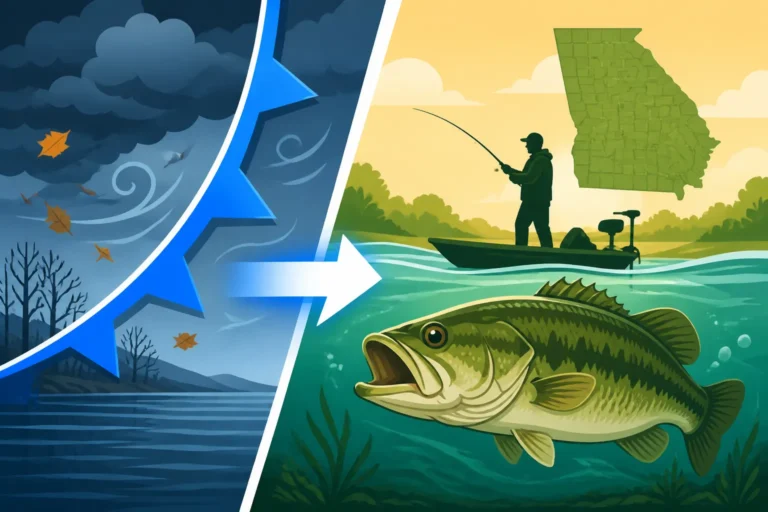
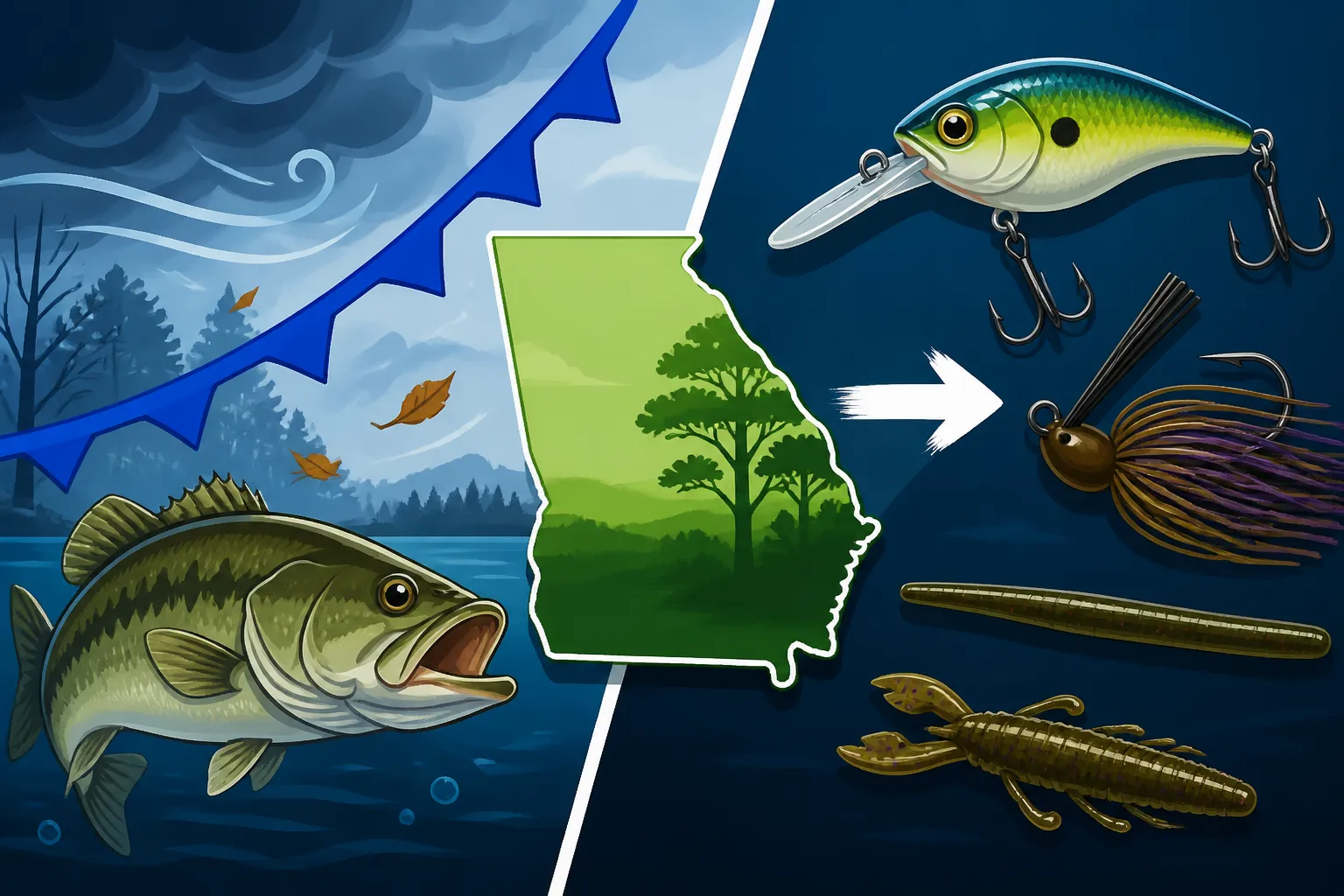
When a cold front moves in, atmospheric pressure typically rises. For us humans, it might just mean a clearer, crisper day. For fish, especially those with swim bladders, this increased pressure can be uncomfortable and disorienting. Imagine feeling a constant squeeze – you wouldn't be in the mood for an aggressive meal either! Their metabolism slows down, making them less active and less inclined to expend energy chasing fast-moving baits. They become lethargic, often seeking refuge in deeper water or dense cover where conditions are more stable. It's not that they're not hungry; they're just not actively hunting with the same zeal they had before the front arrived. This is often why you hear anglers talk about fish having "lockjaw."
Beyond the pressure, the sudden temperature drop, even if slight, signals to fish that it's time to conserve energy. Their digestive processes slow, and their natural instinct is to hunker down. This is particularly true for warmwater species like largemouth bass, which are highly sensitive to temperature fluctuations. They're not going to chase down a fast-moving crankbait or react to a loud topwater lure. Instead, they're looking for an easy, nearby meal that requires minimal effort to ambush.
Key Changes in Water Temperature and Clarity
While atmospheric pressure is a big player, changes in water temperature are equally crucial, especially in shallower lakes and rivers. A sharp drop in air temperature can quickly cool the surface water, sending fish scurrying for warmer, more stable depths. This thermocline, or temperature gradient, can shift dramatically. Fish will migrate to areas where the water temperature is more consistent and comfortable, often deeper sections, around natural springs, or near warmer discharge areas like those found near power plants on lakes like Lake Sinclair Fishing Spots.
Water clarity can also be affected, though this is less directly caused by the cold front itself and more by associated weather. Strong winds that often accompany a front can churn up shallow areas, making the water muddy and reducing visibility. Conversely, calm, clear skies that follow a front can sometimes lead to incredibly clear water, which might make fish even warier and more prone to spooking from visible lines or presentations. Understanding these subtle shifts in their environment helps you choose not just what lure to use, but also where and how to present it. For a deeper dive, check out How Water Temperature Changes Affect Fish Behavior.
General Principles for Lure Selection Post-Cold Front
When the weather turns sour, and the fish seem to have packed their bags, it's time to drastically rethink your approach. The aggressive tactics that worked yesterday are likely to fall flat today. The key is to present something that appeals to a lethargic, cautious fish that isn't keen on expending much energy.
Slow and Subtle is the Name of the Game
Forget power fishing. After a cold front, fish are less likely to chase down a rapidly retrieved lure. Their metabolism has slowed, their aggression has plummeted, and they're looking for an easy meal. This means your presentation needs to be agonizingly slow and incredibly subtle. Think about a baitfish barely moving, almost dead, struggling along the bottom, or a worm slowly wiggling its way into cover. This is the meal a reluctant fish is most likely to consider.
Finesse techniques truly shine in these conditions. This might involve letting a jig sit motionless on the bottom for extended periods, barely twitching it, or slowly dragging a soft plastic. The idea is to keep the lure in the strike zone for as long as possible, giving the fish ample time to decide if they want to bite, rather than forcing a reaction strike. Patience becomes your most valuable tool, often more important than the lure itself. Remember, these fish aren't actively feeding; they're reacting to an opportunity that requires minimal effort.
Downsizing and Natural Colors
Big, flashy lures that mimic aggressive baitfish are usually a no-go after a cold front. Instead, downsize your offerings significantly. Smaller baits look less intimidating and more like an easy snack to a fish that's feeling sluggish. A 2-inch grub or a tiny jig often outperforms a 4-inch swimbait. The goal is to match the hatch, but also to match the mood of the fish. If they're not actively hunting, they're not going to go for a large meal.
When it comes to color, "natural" is your best friend. Clear skies and colder water often lead to increased water clarity, making fish more visually sensitive and wary of unnatural presentations. Earth tones like greens, browns, and grays, or translucent colors that mimic a struggling baitfish, are typically more effective. Think about shades like "junebug," "green pumpkin," "watermelon seed," or smoke with black flake. These colors blend in naturally with the environment and don't scream "predator!" to an already nervous fish. Bright, gaudy colors might draw attention in other conditions, but after a front, they can often spook fish away. You can find a huge variety of these finesse baits on Amazon.
Specific Lure Adjustments for Different Fish Species
While the general principles of slowing down and downsizing apply across the board, different fish species will respond best to specific lure types and presentations. Let's break down some common adjustments for Georgia's most popular catches.
Bass (Largemouth & Spotted)
For largemouth and spotted bass, a cold front often sends them deep or into the thickest cover they can find. They're still there, but they're tight to structure and aren't moving much. This is where finesse rigs truly shine.
- Jigs: A classic football or flipping jig, especially in darker or natural colors like black and blue or green pumpkin, is deadly. Pair it with a small, subtle trailer. The key is to crawl it agonizingly slow along the bottom, through brush piles, or around rock formations. Let it sit, then barely hop it. The skirt's subtle pulsation can be just enough to entice a strike from an otherwise uninterested bass. Focus on areas with steep drops, old creek channels, or deep brush.
- Drop Shot Rigs: The drop shot is a phenomenal choice because it allows you to present a small soft plastic bait at a precise depth, often suspended just above the bottom, right in a fish's face. Use small worms, minnow imitations, or creature baits on light line and tiny hooks. The beauty of the drop shot is that you can shake the rod tip to give the bait action without moving the weight, keeping the lure in the strike zone longer. This rig is perfect for targeting individual fish marked on your fish finder.
- Shaky Head Jigs: Another excellent choice for a slow presentation. A small finesse worm rigged on a shaky head jig allows for subtle movements with minimal effort. Cast it out, let it sink, and slowly drag or shake it along the bottom. The upright posture of the worm on the shaky head mimics a foraging baitfish or crawfish. Again, natural colors are usually best. For recommendations on gear that pairs well with these techniques, explore Best Rods and Reels for Georgia Largemouth Bass.
Crappie
Crappie, being notorious for their finicky nature, become even more challenging after a cold front. They'll often school up tightly in deeper water, suspending over brush piles, timber, or submerged structure.
- Small Jigs: Tiny hair jigs or soft plastic crappie jigs (1/32 to 1/16 ounce) are ideal. Colors can vary, but clear, smoke, or chartreuse can sometimes trigger bites, especially if there's any stain to the water. The presentation is everything: vertically jigging directly over a submerged brush pile or slowly retrieving it can be effective.
- Live Minnows: Sometimes, nothing beats a live minnow presented on a small hook under a bobber or on a tight-line rig. The natural movement of a minnow is often the only thing that can tempt a lethargic crappie. Present it slowly and patiently, often with little to no added weight, letting the minnow's natural movements do the work. Spider rigging, where multiple rods with minnows or jigs are deployed at different depths, can also be highly effective for finding the crappie's preferred depth. For more on this, check out How to Jig for Crappie.
- Blade Baits: In some cases, especially if crappie are tightly schooled and slightly more active than anticipated, a small blade bait can be dropped down and jigged vertically. The vibration can sometimes trigger a reaction strike, even if subtle. However, this is usually a last resort when the finesse options aren't producing.
Trout
Georgia's trout, particularly in the mountain streams, are also affected by cold fronts. They'll become less aggressive and often hold in deeper pools, runs, or behind large rocks where the current is less strenuous and the water temperature is more stable. Georgia Trout Streams Explained talks about the different types of trout, and each can be affected.
- Small Spinners and Spoons: While larger, flashier spinners might work on aggressive trout, after a front, downsize significantly. Think 1/32 to 1/8 ounce spinners with duller blades or small spoons in silver or gold, slowly retrieved just above the bottom of deeper pools. The slower retrieve mimics a struggling baitfish or insect.
- Natural Bait (PowerBait, Worms, Corn): For stocked trout, nothing beats the power of natural or scented baits. Small balls of PowerBait (especially those mimicking salmon eggs), tiny pieces of nightcrawler, or even corn kernels can be incredibly effective when drifted naturally through runs or allowed to sit in pools. The scent and natural appearance are hard for a sluggish trout to resist.
- Nymphs and Wet Flies (Fly Fishing): For fly anglers, deep-drifted nymphs are the way to go. Small patterns like Prince Nymphs, Hare's Ear, or Pheasant Tail Nymphs, weighted to get down quickly, can imitate the aquatic insects that make up a large part of a trout's diet. Focus on dead-drifting them through seams, eddies, and deeper pockets. A strike indicator is crucial for detecting subtle takes. Consider consulting Best Fly Rod for North Georgia Trout Streams for appropriate gear.
Here’s a quick overview of lure adjustments after a cold front:
| Species | Pre-Front Lures (Aggressive) | Post-Front Lures (Subtle) | Key Presentation |
|---|---|---|---|
| Bass | Crankbaits, Spinnerbaits, Topwater | Jigs, Drop Shot, Shaky Head, Neko Rig | Slow crawl, subtle shakes, long pauses |
| Crappie | Trolling jigs, Spider rigs (fast) | Small jigs, Live Minnows, Tiny Spoons | Vertical jigging, slow retrieves, still |
| Trout | Inline Spinners, Dry Flies | Small Spinners, Nymphs, PowerBait/Worms | Slow retrieve, dead drift, bottom bounce |
| Catfish | Cut bait, Stink bait (active) | Cut bait, Worms (smaller pieces) | Bottom fishing, less scent trail |
| Bream/Panfish | Crickets, Worms (active) | Tiny jigs, Small worms, Crickets | Static presentation, vertical drops |
Gear Considerations and Presentation Tips
Making the right lure choice is only half the battle. How you present that lure, and the gear you use to do it, can make all the difference in coaxing a bite from a reluctant fish after a cold front.
Lighter Line and Rod Action
When you're dealing with finicky fish and subtle bites, your tackle needs to be incredibly sensitive. This often means switching to lighter fishing lines. Where you might normally use 10-12 lb test fluorocarbon or monofilament, consider dropping down to 6-8 lb test, or even 4 lb test for crappie and trout. Lighter line is less visible to wary fish in clear water, and it offers less resistance, allowing your lure to have a more natural fall or drift. Fluorocarbon is an excellent choice for finesse presentations because it's virtually invisible underwater and has excellent sensitivity, letting you feel those barely-there taps.
Your rod choice also plays a huge role. Medium-light or light action rods with fast tips are perfect for detecting those incredibly subtle bites that are common after a cold front. The sensitive tip allows you to see or feel the slightest movement, while the backbone still provides enough power to set the hook. A longer rod (6'6" to 7'6") can also aid in casting lighter lures and maintaining better line control for those slow, deliberate retrieves. This added sensitivity is crucial when fish aren't aggressively striking, but rather "mouthing" or "inhaling" the bait. For those interested in Best Rods for Crappie Fishing in Georgia or even Best Tackle for Catfish in Georgia, lighter options are generally recommended after a front.
Master the Slow Retrieve
This can't be stressed enough: slow down. Most anglers, myself included, have a tendency to retrieve too fast, especially when accustomed to aggressive fish. After a cold front, the retrieve should be glacial. If you think you're going slow enough, slow down even more. For bottom-hugging baits like jigs or Texas-rigged worms, this means barely dragging them, allowing long pauses, and feeling every rock, stick, or change in bottom composition. For suspended baits like a drop shot, it means minimal shakes of the rod tip, just enough to make the bait quiver.
The key is patience and discipline. It can feel unnatural to fish so slowly, but it's often the only way to get a bite from a sluggish fish. Sometimes, just letting a soft plastic bait sink on slack line into cover is enough. The natural, uninhibited fall can trigger a strike without any retrieve at all. Think about the cadence: cast, let it fall, count to ten, twitch, count to five, reel slowly, repeat. Vary your pauses; sometimes a longer pause is exactly what's needed. It's less about covering water and more about thoroughly working a small, high-percentage area where you suspect fish are holding. This is also key for Winter Fishing Patterns on Georgia's Reservoirs, where fish are naturally less active.
Final Thoughts on Cold Front Fishing
Facing a cold front can definitely dampen your fishing spirits, but it doesn't have to ruin your day on the water. By understanding how these weather changes affect fish and adjusting your lure choices and presentation accordingly, you can still find success. Remember, the fish are still there; they're just not playing by the usual rules. Focus on finesse, go small, go natural, and most importantly, slow everything down.
Be patient, observant, and don't be afraid to experiment with different depths and retrieve speeds within that "slow and subtle" framework. Sometimes, a slight change in the angle of your cast or the length of your pause can unlock a pattern. With these adjustments, you might just find that even after a cold front, Georgia's waters can still offer some rewarding fishing experiences. You might find more helpful information in How to Fish After a Cold Front.
Disclaimer
This article is for general informational purposes only and does not constitute professional advice. Laws, prices and regulations vary by location and change over time. Consult a qualified professional for guidance on your specific situation.