Best Jig Colors for Crappie Fishing
Stepping into any tackle shop, it's easy to get overwhelmed. Rows upon rows of crappie jigs, all shimmering in a rainbow of colors, can leave even seasoned anglers scratching their heads. You stand there, wondering if that neon pink jig is really better than the classic chartreuse, or if that subtle pearl white will actually get a bite. Choosing the right jig color for crappie fishing in Georgia isn't just a shot in the dark; it's a strategic decision that can dramatically affect your success. This guide is here to cut through the confusion and help you understand why certain colors work best, when to tie them on, and how to put more slab crappie in your livewell.
Understanding How Crappie See Color and Light Underwater
Before we even talk about specific colors, it’s crucial to understand that crappie don't see the world quite like we do. Their underwater environment fundamentally alters how light, and therefore color, behaves. What looks vibrant in your hand above water can look completely different a few feet down or in stained water.
The Unique Vision of Crappie
Crappie are masters of low-light conditions. Their eyes are designed to gather as much light as possible, making them incredibly effective hunters at dawn, dusk, and even into the night. This excellent low-light vision also means they're quite sensitive to subtle differences in light and shadow, which is where jig color, or lack thereof, comes into play. While some fish are thought to be colorblind, crappie are definitely not. Studies suggest they perceive colors, especially in the blue and green spectrum, quite well. This sensitivity to color, combined with their ability to see in dim conditions, explains why certain jig colors consistently outperform others in specific scenarios.
The Science of Light Filtration Underwater
Water acts as a natural filter, absorbing light differently depending on its wavelength. Red, orange, and yellow are the first colors to be absorbed and disappear as you go deeper. Think about diving into a pool – things start to look bluer or greener as you descend. In clear Georgia lakes like some parts of Lake Lanier, red might become a dull brown or gray at just 10-15 feet. Green and blue wavelengths penetrate the deepest, which is why baitfish and forage often have silvery, iridescent, or greenish hues. When the water is stained or muddy, this filtration effect is intensified, and all colors are absorbed more quickly. This means that a jig that looks brilliant red on the surface might simply appear as a dark blob to a crappie suspended 20 feet down in murky water.
Top Jig Colors for Georgia Crappie and When to Use Them
Knowing how light works underwater, let's dive into the most effective jig colors for crappie fishing across Georgia’s diverse waters. From the clear reservoirs to the stained river systems, having the right colors on hand is non-negotiable.
Chartreuse and Bright Greens
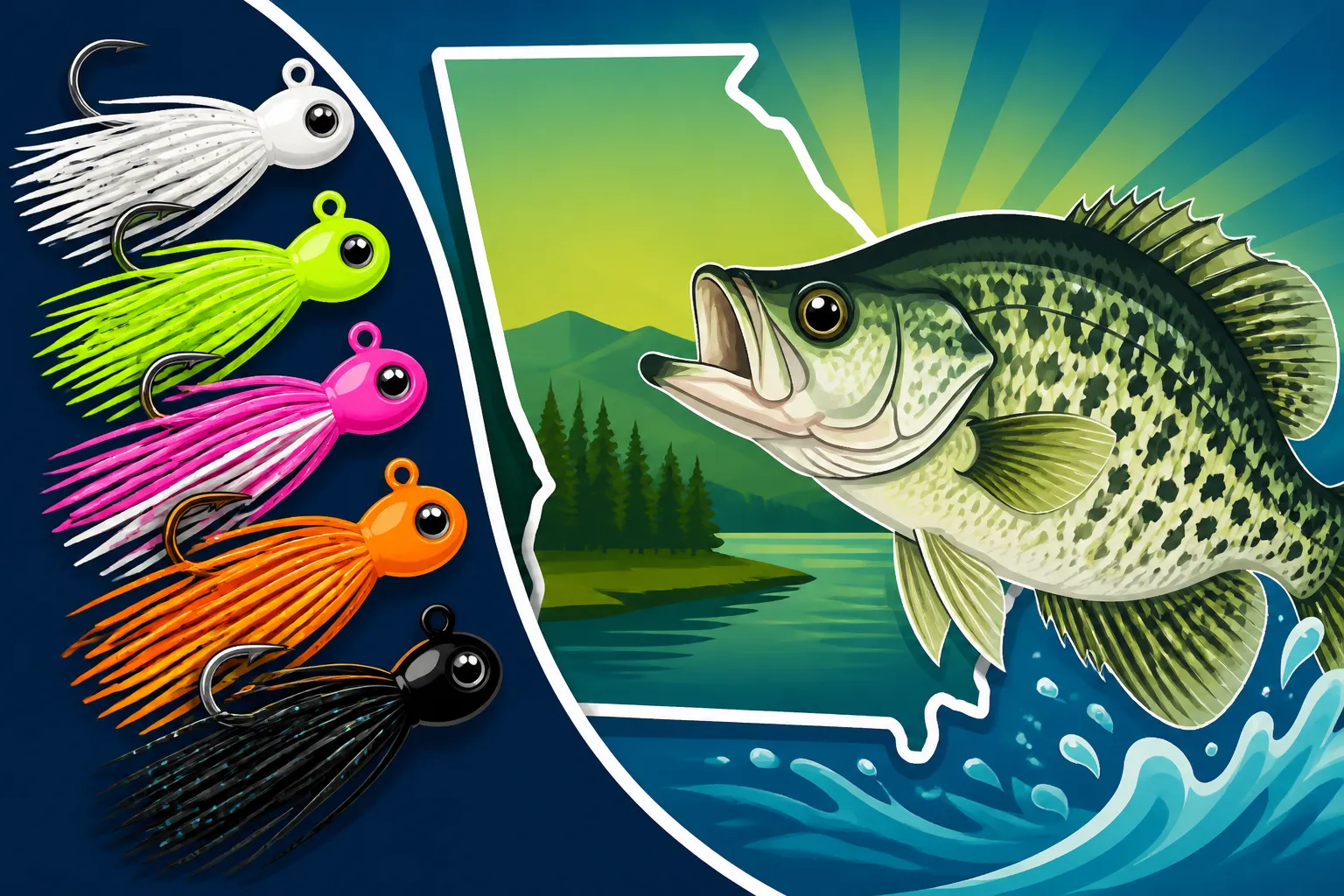
If there's one color that's a universal crappie catcher, it's chartreuse. This vibrant, almost neon green-yellow is a staple in every crappie angler's tackle box, and for good reason. It’s incredibly visible in a wide range of water conditions, particularly in stained or turbid water common in many Georgia lakes and rivers. Its brightness contrasts sharply against darker backgrounds, making it easy for crappie to spot from a distance, even in low light.
- When to use it: This is your go-to color for cloudy days, murky water, or when fishing in deeper, darker areas. It's also excellent for pushing through heavy cover where you need maximum visibility to attract attention. Many anglers swear by chartreuse in the spring, especially during the pre-spawn and spawn periods when crappie are aggressive and actively feeding.
White, Pearl, and Silver
These lighter, often translucent colors are fantastic imitators of small baitfish, like shad or minnows, which are a primary food source for crappie. White, pearl, and silver jigs reflect ambient light, giving them a natural shimmer that can be incredibly enticing.
- When to use it: These colors shine brightest in clear water conditions or on bright, sunny days when the light can penetrate deeply and reflect off the jig. They offer a more subtle, realistic presentation. If you’re fishing in clearer parts of Lake Oconee or targeting crappie suspended in open water, these colors can be deadly. They're also effective when crappie are finicky and a more natural presentation is required.
Black and Darker Hues
It might seem counterintuitive to use dark colors, but black, dark blue, or dark brown jigs are absolute powerhouses in specific situations. Instead of relying on reflecting light, these colors create a strong silhouette against the lighter sky or water surface above, making them highly visible from below.
- When to use it: Darker colors are phenomenal for low-light conditions, such as dawn, dusk, night fishing (which can be incredibly productive for crappie!), or in extremely muddy or heavily stained water. If you're trying Night Fishing Techniques for Catfish in Georgia and happen to encounter crappie, a black jig is often the ticket. The stark contrast makes the jig stand out, even when other colors "wash out."
Pink and Orange
Sometimes, crappie just want something a little different, and that's where pink and orange come in. While not as universally popular as chartreuse or white, these colors can be surprisingly effective, especially in certain types of stained water or colder temperatures. Pink, particularly, has a way of grabbing attention.
- When to use it: Consider pink or orange when you're in slightly stained water or when the fish aren't responding to the usual suspects. Some anglers find them particularly good in colder water, as they might trigger a reaction strike. They also work well as one half of a two-tone jig, like pink-chartreuse, offering both flash and an unusual hue.
Multi-Color Combinations
Often, the best approach isn't a single color, but a combination. Jigs with two or even three colors can provide the best of both worlds, offering contrast, visibility, and a natural look all at once.
- When to use it: Combinations like black-chartreuse, pink-white, or red-chartreuse are incredibly versatile. The darker color provides the silhouette, while the brighter color adds a pop of visibility. This is particularly useful when you're not quite sure of the water clarity or light conditions, or when you’re jigging and want to imitate a small baitfish with a bit more flair. A small jig with a dark head and a bright body can mimic a minnow perfectly. You can find a huge variety of these options on platforms like Amazon.
Matching Jig Colors to Water and Weather Conditions
The best crappie anglers understand that there’s no single "magic" color; rather, it’s about adapting to the conditions Mother Nature throws your way. Water clarity, sunlight, and even depth all play significant roles.
Clear Water Scenarios
When you're fishing in pristine, clear waters, like some of the deeper sections of Lake Burton or Rabun, crappie have excellent visibility. This means they can be pickier and are more likely to inspect your bait closely.
- Strategy: Opt for natural, subtle colors that mimic common forage. White, pearl, silver, and light greens are excellent choices. Translucent jigs with a hint of glitter can also be very effective, reflecting natural light without being overly aggressive. Think about what a real minnow looks like in clear water – it’s not usually bright neon. Sometimes, even a bare lead head with a simple white or pearl plastic body is all you need.
Stained or Murky Water Strategies
Many of Georgia's excellent crappie fisheries, like Lake Sinclair, can have stained or murky water, especially after heavy rains or in areas with high runoff. In these conditions, light penetration is significantly reduced, and fish rely more on scent, vibration, and strong visual cues.
- Strategy: This is where bright, high-contrast colors shine. Chartreuse, bright orange, hot pink, and dark colors like black are your best friends. These colors maintain their visibility longest in low-light penetration. The goal here is to create a profile that crappie can easily see, even if the actual color is somewhat distorted. Consider using jigs with a touch of flash or glitter, but primarily focus on the base color's ability to stand out. When you're jigging for crappie in these conditions, a robust presentation with a vibrant jig is key.
Bright Sunlight vs. Cloudy Days
The amount of direct sunlight hitting the water surface dramatically impacts jig visibility.
- Bright, Sunny Days: In high sun, especially in clear water, too much flash or too bright a color can sometimes spook crappie. Opt for more natural colors like white, pearl, light blue, or even natural browns and greens. If you're fishing deeper, where light is less intense, you can lean towards brighter options.
- Cloudy, Overcast Days: These are often fantastic crappie days because the diffused light makes fish less shy. Brighter colors like chartreuse, electric chicken (a mix of chartreuse and pink/orange), and even glow-in-the-dark options can be incredibly effective. The subdued natural light allows these jigs to stand out without being overpowering.
Deep Water Considerations
As mentioned earlier, colors change dramatically with depth. Red disappears first, followed by orange, yellow, and then green. Blue penetrates the deepest.
- Strategy: When fishing deep for crappie, especially if you’re trying some deep water techniques and encounter crappie, don't necessarily avoid "warm" colors entirely. While a red jig might appear black or gray at 20 feet, that dark silhouette can still be effective. However, colors like blue, purple, white, and chartreuse will retain more of their original hue or brightness. Many anglers combine a dark jig head with a bright body to get both a silhouette and a visible color. It's often a good idea to experiment with glow jigs for truly deep or dark conditions, as their luminescence isn't dependent on ambient light.
Seasonal Color Shifts and Experimentation
Crappie behavior, and therefore their preferred jig colors, can also shift with the seasons. Understanding these subtle changes, and always being willing to experiment, will make you a more successful angler.
Spring Crappie: Pre-Spawn and Spawn Aggression
Spring is often considered prime crappie time in Georgia. As water temperatures rise, crappie move into shallower waters to spawn. During the pre-spawn, they're feeding heavily to gain energy, and during the spawn, they can be very territorial.
- Color Strategy: In the pre-spawn, when fish are actively chasing bait, brighter, more aggressive colors like chartreuse, electric chicken, and bright whites are often fantastic. They mimic the lively baitfish crappie are targeting. During the spawn, especially when fish are on beds, a more subtle approach with natural whites, light greens, or even black (to mimic a bug or leech) can work, but sometimes a small, bright jig will trigger a protective strike. Consider using something that stands out but isn't overly flashy. The best time of year to catch crappie in Georgia is definitely spring for many anglers, and color choice is paramount.
Summer and Fall Crappie: Adapting to Forage and Depth
As summer heats up, crappie often retreat to deeper, cooler waters, often suspending over brush piles, ledges, or submerged timber. In the fall, they start to feed aggressively again as temperatures drop, preparing for winter.
- Color Strategy (Summer): In summer, crappie are less aggressive, so a more natural presentation is usually best. Whites, grays, and natural greens that closely resemble baitfish like shad are excellent. If you’re fishing deeper, remember the light filtration rules and lean towards colors that remain visible, or consider a jig with a lot of natural action and subtle flash.
- Color Strategy (Fall): Fall crappie are often hungry. Both bright and natural colors can work. Chartreuse, white, and various two-tone jigs (e.g., black-chartreuse) are solid choices. If you know what the crappie are feeding on (e.g., small threadfin shad), try to match that forage with your jig color as closely as possible.
Winter Crappie: Subtle Presentations and Reaction Bites
Winter fishing can be challenging, but highly rewarding. Crappie are usually slow and lethargic, conserving energy in the colder water. They tend to school tightly in deep water structure.
- Color Strategy: Subtle is often key. Small jigs in natural colors like white, gray, or brown can be effective for a slow, vertical presentation. However, sometimes a bolder, high-contrast color like chartreuse or black can trigger a reaction strike from a sluggish fish that might otherwise ignore a more natural offering. The key is to present it very slowly and precisely. You might find some excellent choices on Amazon to stock up for winter.
The Importance of Experimentation
Ultimately, crappie can be incredibly finicky. What worked yesterday might not work today. The weather changes, the water conditions shift, and the fish's mood fluctuates. The single most important crappie fishing "technique" is to experiment.
- Practical Tips:
- Start with a proven color: Begin with a confidence color for the conditions (e.g., chartreuse in stained water).
- Cycle through colors: If you're not getting bites, switch colors every 10-15 minutes. Try a bright, then a natural, then a dark.
- Observe and adapt: Pay attention to what your fellow anglers are catching them on. If you're fishing a place like one of Georgia's best crappie lakes, chances are someone has figured out the local preference.
- Consider jig size and action: Sometimes it’s not just the color, but the size or the tail action of the jig that makes the difference. Many anglers recommend using small soft plastics when tightlining for crappie.
- Keep a diverse tackle box: Make sure you have a good selection of various colors, not just shades, but truly different hues, in your tackle bag. This will allow you to adapt to any scenario you encounter on Georgia's waters.
Having a good selection of crappie jigs in various colors, sizes, and actions is essential. Below is a simple table to help you quickly reference some common conditions and effective color choices.
| Water Condition | Light Condition | Depth | Recommended Jig Colors | Notes |
|---|---|---|---|---|
| Clear | Sunny | Shallow | White, Pearl, Silver, Light Green | Natural, subtle presentation. Mimics baitfish. |
| Clear | Cloudy/Low Light | Shallow | White, Chartreuse, Pink | Good visibility without being too aggressive. |
| Clear | Sunny | Deep | White, Blue, Purple, Chartreuse | Colors that penetrate deeper. Silhouette if dark. |
| Stained/Murky | Sunny | Any | Chartreuse, Orange, Hot Pink, Dark Colors (Black, Dark Blue) | High visibility, strong contrast. Dark colors create silhouette. |
| Stained/Murky | Cloudy/Low Light | Any | Chartreuse, Black, Glow-in-the-dark, Electric Chicken | Maximum visibility and contrast in poor light. |
| Very Deep | Any | Deep | White, Blue, Black, Glow-in-the-dark | Rely on colors that penetrate or create strong silhouette. |
When it comes to identifying black crappie versus white crappie, their feeding habits can differ slightly, but generally, the color principles remain the same. What really matters is your confidence in the lure you're using and your willingness to try something new if the bites aren't coming.
Disclaimer
Fishing conditions and regulations in Georgia can change. Always consult the latest Georgia Department of Natural Resources (DNR) guidelines and local signage before heading out on the water. This guide provides general information and recommendations for educational purposes.