How to Flip a Jig Into Heavy Cover for Bass
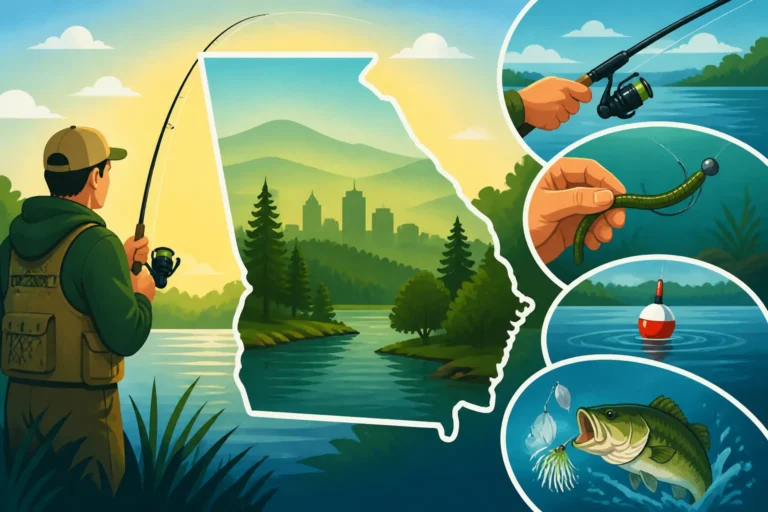
There’s nothing quite like the rush of pulling a big, feisty largemouth bass out of the thickest, nastiest cover. But let's be honest, getting your lure into those dense spots without spooking the fish or getting hopelessly snagged can feel like trying to thread a needle in the dark. If you've ever found yourself frustrated by bass hunkered down in hydrilla mats, sunken brush piles, or flooded timber, this guide is for you. We're going to dive deep into the precise, stealthy art of flipping a jig into heavy cover, helping you unlock those hidden honey holes and put more Georgia bass in your boat.
Understanding the Art of Flipping a Jig
Flipping isn't just another way to cast; it's a specialized, close-quarters combat technique designed to present a lure with pinpoint accuracy and minimal disturbance. It’s what you turn to when the fish are buried deep in the nastiest stuff, daring you to come get them.
Why Flipping is Different from Pitching or Casting
Many anglers, especially those new to targeting bass in heavy cover, often use the terms "flipping," "pitching," and "casting" interchangeably. But understanding the distinct nuances of each is crucial for success.
- Casting is your standard, overhand or sidearm toss, where you spool out a good amount of line and launch your lure a considerable distance. It’s great for covering open water or targeting sparse cover, but it creates a splash and a wider entry angle that can alert wary bass in tight quarters.
- Pitching is a step closer to flipping. You'll typically use less line out, a smooth underhand swing, and release the line with your thumb to send the lure out. It’s more controlled than casting and allows for a softer entry, making it effective for slightly heavier cover at moderate distances, say 15-30 feet.
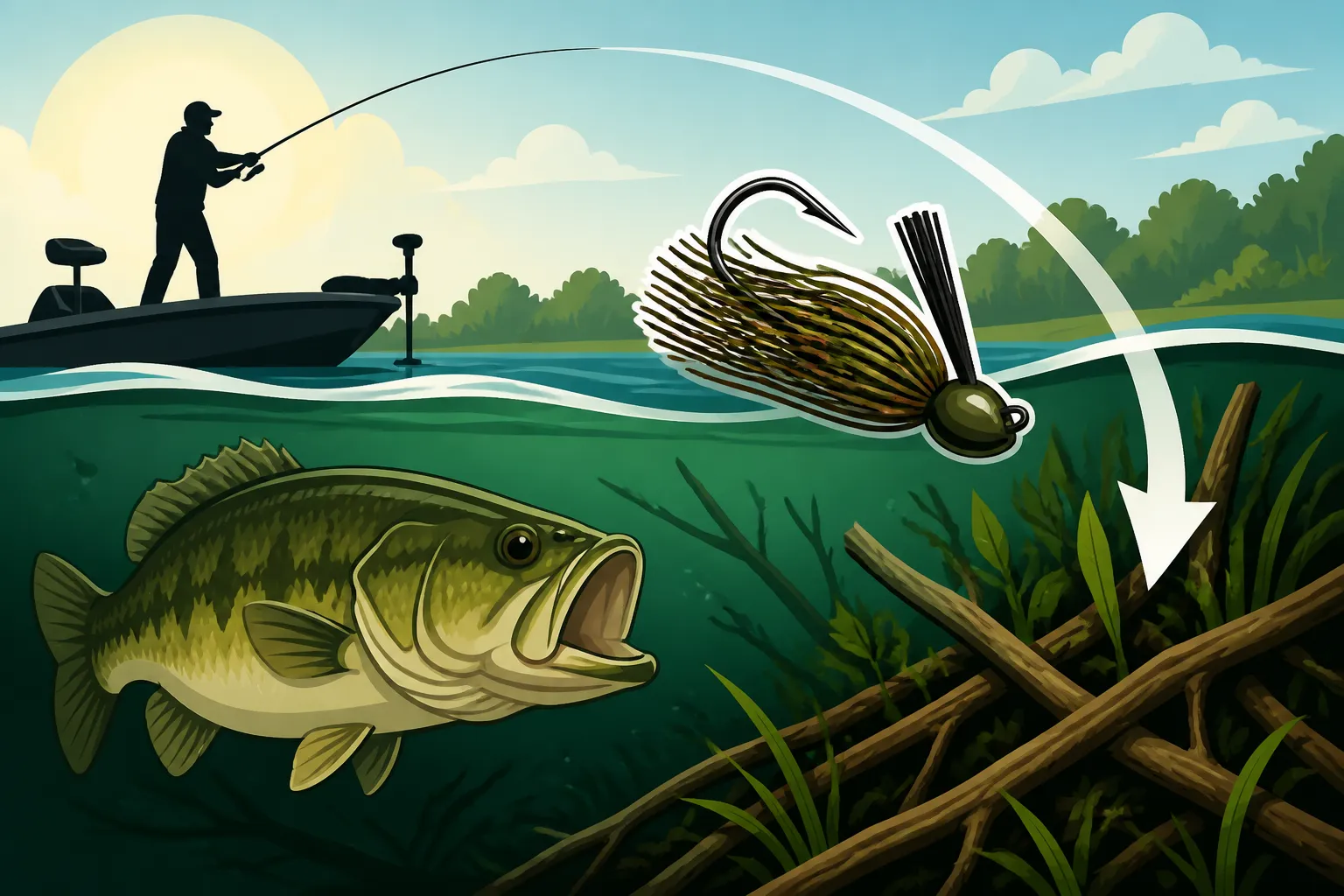
- Flipping, however, is the most refined and stealthy of the three. It’s a very short-range technique, usually for targets within 5-15 feet of your boat. Instead of reeling out a long line, you pull out a short length (often just enough so the jig hangs 1-2 feet below your rod tip). You then use a pendulum-like swing of your rod, controlling the lure's trajectory by hand, releasing the line at the last second to drop it softly into the smallest of openings in heavy cover. The goal is a silent, almost splash-free entry. This minimal disturbance is key when bass are super spooky or under high fishing pressure, something common on popular Georgia lakes like Lake Lanier or Lake Oconee. It allows you to get your lure into places other anglers can't or won't try, often resulting in bigger bites.
The frustration for many beginners is mistaking a loud "plop" for a subtle "tick." A loud entry often sends bass scattering, while a soft entry lets your jig slip into their sanctuary unnoticed, increasing your chances of a strike.
Essential Gear for Successful Jig Flipping
You wouldn't bring a butter knife to a sword fight, and you shouldn't bring light tackle to a flipping match. This technique demands specialized gear to handle heavy cover, powerful hooksets, and the brutal fight that often ensues.
First up, the rod. You need a heavy power, fast action baitcasting rod, typically between 7' and 7'6" in length. A heavy power rod provides the backbone necessary to leverage big bass out of dense vegetation or thick timber without breaking. The fast action means the tip is sensitive enough to detect subtle bites but quickly transitions into a stiff backbone, giving you immediate power for a hookset. For fishing particularly dense mats or massive laydowns, some anglers even opt for extra-heavy power rods up to 8 feet. When you're trying to fish around something like the massive cypress trees you find on Lake Seminole, that extra backbone can be a lifesaver. You can find a wide selection of these specialized rods on Amazon, often from brands like St. Croix, G. Loomis, or Dobyns.
Next, your reel. A high-speed baitcasting reel with a gear ratio of 7.1:1 or higher is paramount. This allows for rapid line retrieval, which is critical for quickly taking up slack after a cast, pulling fish out of cover, and making multiple presentations in a short amount of time. Look for reels with strong drag systems, as you'll be putting a lot of pressure on them.
Line choice is perhaps the most critical component. For flipping, you're looking for strength and abrasion resistance.
- Braided line is a popular choice, with strengths ranging from 50 to 65 pounds. It has virtually no stretch, which gives you maximum sensitivity for detecting bites and incredible power for driving the hook home and ripping fish out of cover. Its exceptional abrasion resistance is a huge advantage when fishing around sharp wood or abrasive vegetation. For tips on choosing the right line, check out our guide on Best Braided Line for Georgia Bass Fishing.
- Some anglers prefer heavy fluorocarbon line, typically in the 20-25 pound test range, for its lower visibility and slightly more natural lure presentation. While fluorocarbon offers good abrasion resistance, it doesn't quite match braid in zero-stretch performance or sheer strength, especially in the densest cover. The choice often comes down to personal preference and the specific conditions.
Finally, the star of the show: the jig. A flipping jig is specifically designed for this technique. They typically feature a compact head shape (often bullet-shaped or arkie-style) that allows them to slip through cover easily, a stout, super-sharp hook that won't flex under pressure, and a dense weed guard to prevent snags. Weights usually range from 3/8 ounce to 3/4 ounce, depending on the depth and density of the cover. Common colors for Georgia waters include black and blue, green pumpkin, brown, and watermelon red, often paired with a complementary jig trailer. A good trailer, like a Berkley PowerBait Chunks or a Strike King Rage Craw, adds bulk, action, and scent, mimicking a crawfish or a fleeing baitfish. The trailer is crucial for imparting the right action as your jig falls and is worked through the cover.
Here’s a quick table for gear pairing:
| Gear Component | Recommended Specifications | Why It Matters |
|---|---|---|
| Rod | 7' – 7'6" (Heavy to Extra Heavy Power, Fast Action) | Power for hooksets & extraction; sensitivity for bites; reach for accuracy. |
| Reel | Baitcasting (7.1:1+ Gear Ratio) | Quick line retrieval for slack management, fast presentations, and fighting fish. |
| Line (Braided) | 50-65 lb Test | Zero stretch for sensitivity & hookset power; extreme abrasion resistance. |
| Line (Fluorocarbon) | 20-25 lb Test | Low visibility; good abrasion resistance; slightly more natural presentation. |
| Jig | 3/8 – 3/4 oz Flipping Jig (Bullet or Arkie Head, Stout Hook) | Designed to penetrate cover; heavy hook for big bass; weed guard prevents snags. |
| Trailer | Crawfish or Creature Baits (e.g., Berkley PowerBait Chunks) | Adds bulk, action, and scent, mimicking natural forage. |
For a more general overview of jig fishing, you might find our article on How to Jig for Largemouth Bass helpful, though remember flipping is a more specialized application.
Mastering the Flipping Technique Step-by-Step
Now that you have the right tools, let's break down the physical act of flipping. It's all about smooth motions, precision, and developing a feel for your lure and the cover.
The Proper Grip and Rod Control
Before you even think about swinging, establish your stance and grip. Most anglers find it comfortable to hold the rod about halfway up the handle with their dominant hand, leaving plenty of handle extending below for leverage. Your non-dominant hand will be crucial for controlling the line.
With your rod tip pointed generally towards your target, reel in your jig until it hangs about 1 to 2 feet below the tip. This short line length is critical for control. Now, take that short length of line, between your reel and the first guide, and grasp it gently but firmly with your non-dominant hand. Your thumb will be on the spool of the reel, ready to disengage the clutch. The beauty of this technique is that you're essentially using your hand to feed out the line, rather than relying solely on the reel's free spool. This gives you ultimate control over the speed and direction of your lure.
Your body positioning matters, too. Square up to your target, keeping your feet planted. A slight bend in your knees can help with balance and allow for a more fluid motion. The goal is to move as little as possible while delivering the jig, maintaining a low profile that won't spook fish lurking close by.
Executing the Flip: Precision and Stealth
This is where the magic happens – and where many beginners struggle with making too much noise. The key is to think of your rod tip as the pivot point for a pendulum.
- Initiate the Swing: With the jig hanging freely and the line held in your non-dominant hand, gently lift your rod tip upward and backward, causing the jig to swing forward like a pendulum. It's a subtle motion, not a forceful heave.
- Release the Line: As the jig reaches the forward peak of its swing, and just before it starts to fall, quickly release the line from your non-dominant hand. Simultaneously, disengage your reel's clutch with your thumb. This allows the jig to continue its forward trajectory, propelled by its own momentum.
- Guide the Lure: As the jig travels, keep your rod tip low and pointed at your target. Your non-dominant hand, now free from the line, can hover near the spool, ready to apply light thumb pressure if the jig threatens to overshoot or to feather the line for an even softer entry. The goal is for the jig to enter the water with a quiet "tick" or "plip," not a loud "splash." This soft entry is non-negotiable for wary bass hiding in places like the dense hydrilla mats of Lake Seminole or the flooded timber on West Point Lake.
- Targeting Openings: The true test of a flipper is the ability to drop a jig into the smallest, most impossible-looking openings in dense cover – a tiny hole in a mat of lily pads, a gap between two submerged logs, or right up against a dock piling. This requires practice and keen observation. Don't be discouraged by hitting branches or making a loud splash at first; everyone goes through it. The trick is repetition and consciously aiming for a feather-light landing.
Working the Jig and Detecting Bites
Once your jig has pierced the cover and entered the water, the work isn't over. How you present the jig below the surface is just as important as how you got it there.
- The Fall: Allow the jig to fall naturally through the water column. Often, bass will strike on the initial fall, so stay alert. Keep a very slight amount of slack in your line—just enough for the jig to fall unimpeded, but not so much that you can't feel a bite or watch your line.
- Working the Cover: Once the jig hits bottom or reaches the desired depth, engage your reel. Now, use subtle movements of your rod tip to animate the jig. Short hops, gentle shakes, or a slow drag can entice a strike. Think about what a crawfish or a baitfish would do: scuttle, dart, or hide. Your jig should mimic these movements. Don't be afraid to let it sit motionless for a few seconds; sometimes a pause is what triggers a reaction strike. You're trying to fish around something like the numerous docks found on Lake Oconee or the vast amounts of brush piles in Lake Lanier. Knowing how to present your jig effectively is critical.
- Detecting Bites: This is where things get tricky, especially in heavy cover where every twig or leaf can feel like a bite. You're looking for anything unusual:
- The "Thump": This is the classic, unmistakable bite. It feels like a solid thud or jolt transmitted up your rod.
- Spongy Resistance: Sometimes, the line will just feel "heavy" or "mushy" when you lift your rod. This often means a bass has picked up the jig and is just sitting there.
- Line Movement: Watch your line where it enters the water. Any twitch, jump, or movement sideways that isn't caused by current or wind is a definite indicator. If your line starts moving off, set the hook!
- The Vanish: Sometimes, your line will simply go slack or seem to move sideways. This means a fish has picked up the jig and is swimming towards you, creating slack. Set the hook immediately.
When you detect a bite, your hookset needs to be immediate and powerful. Don't waste time reeling down; sweep the rod hard and low to the side, driving that stout hook past the weed guard and into the fish's mouth. The lack of stretch in braided line really shines here, allowing for maximum hook-setting power.
Navigating Heavy Cover and Maximizing Your Chances
Flipping a jig is a precision tool, and like any tool, it's most effective when used in the right circumstances and locations. Understanding where and why bass use heavy cover in Georgia is crucial for putting your technique to good use.
Identifying Prime Bass Hiding Spots in Georgia
Bass are ambush predators, and heavy cover provides them with the perfect combination of concealment, shade, and access to food. In Georgia, we have an incredible variety of heavy cover, and knowing what to look for can significantly improve your success rate.
- Laydowns and Brush Piles: These are fallen trees or deliberately sunken brush, common in many of Georgia’s reservoirs like Lake Lanier, Lake Hartwell, and Lake Sinclair. Bass will hold tight to the trunks and branches, especially in deeper sections or where currents create eddies. They offer fantastic ambush points for passing baitfish. Look for the densest parts, often where branches crisscross, creating shaded pockets. You'll want to target the shady side first, as bass often position themselves there. If you're looking for more general spots, our guide to Best Bass Fishing Lakes in Georgia can point you in the right direction.
- Submerged Vegetation (Hydrilla, Milfoil, Coontail): Many Georgia lakes, particularly in the central and southern parts of the state, boast extensive beds of submerged grass. Lakes like Lake Seminole are famous for this. These aquatic plants create dense mats on the surface or thick underwater forests where bass feel secure. During warmer months, especially, bass will retreat into these oxygen-rich, shaded havens. Your goal is to punch through the surface mats or find the edges and holes within the underwater beds.
- Docks and Piers: Human-made structures like boat docks and fishing piers are bass magnets. They offer shade, cover, and often have brush piles or natural irregularities underneath them. Bass will stage under the walkways, near the pilings, or right at the ends of the docks. You'll want to gently flip or skip your jig into the darkest, most inaccessible parts under these structures. Many public fishing areas, like those at Georgia State Parks, offer numerous docks where bass often congregate.
- Cypress Trees: In southern Georgia, especially around slow-moving rivers and lakes like Lake Blackshear or the Flint River, cypress trees are prominent. Their gnarly knees and sprawling roots offer incredible cover. Bass will tuck right up against the trunks, particularly where the water is a bit deeper or there's a slight current break.
- Flooded Timber: Reservoirs that were created by impounding rivers often have vast areas of standing timber that were left behind. West Point Lake is a prime example of this. These skeletal trees provide vertical cover from the surface down to significant depths. Bass will relate to the trunks and branches at various levels, depending on light, temperature, and baitfish presence. Our article on How to Catch Bass Around Submerged Timber offers even more strategies for these areas.
- Current Breaks: Anywhere water flow is interrupted – behind a bridge piling, an exposed stump, or a large rock – creates a current break. Bass will position themselves in these calmer pockets, expending less energy while waiting for food to drift by.
Always consider the role of water temperature and time of year. During the Spring Bass Fishing Patterns on Georgia's Reservoirs, bass will be moving into shallower cover for spawning, making flipping highly effective. As summer heats up, they might pull deeper into dense mats or under the thickest dock cover.
Strategies for Different Cover Types
Flipping isn't a one-size-fits-all approach. You'll need to adapt your jig presentation and retrieve to match the type of cover you're targeting.
- Woody Cover (Laydowns, Brush Piles, Flooded Timber): This is classic flipping territory.
- Presentation: Aim for the darkest, most intricate parts of the cover. Don't be afraid to put your jig into the branches. The weed guard is there for a reason!
- Retrieve: Let the jig fall, then impart subtle hops and shakes. Work it slowly, allowing it to bump against the wood. Many bites come when the jig "breaks free" from a snag or drops off a limb. For areas with less dense timber, check out our guide on West Point Lake Fishing Spots, Georgia as an example of where this technique excels.
- Challenges: Snags are inevitable. When you feel a snag, don't just yank. Try to shake your rod tip, change angles, or even slowly pull back to dislodge it. Sometimes, walking your boat closer can help free it.
- Vegetation (Lily Pads, Hydrilla Mats): Flipping into dense vegetation requires a slightly heavier jig and more aggressive presentation.
- Presentation: For thick mats, you might need a heavier jig (1/2 to 3/4 oz) to "punch" through the vegetation. Let it fall to the bottom.
- Retrieve: Once through, work the jig with short, sharp hops. If you're fishing the edges or holes within vegetation, a lighter jig might be more appropriate, allowing for a slower fall.
- Challenges: Getting tangled in the grass is common. A clean, sharp hook is essential to penetrate fish mouths through vegetation. Using a strong braid ensures you can rip bass out of these green jungles.
- Docks/Piers: These structures offer great shade and overhead cover.
- Presentation: Precision is paramount here. You want to get the jig as far back under the dock as possible, often with a low, skipping flip or a gentle drop right next to a piling.
- Retrieve: Fish it slowly. Bass under docks are often less active, waiting for an easy meal. Let the jig sit for a moment after it lands, then give it a few subtle shakes.
- Challenges: Hitting the dock itself can spook fish. Practice your soft landings. Watch out for ropes and cables that can cut your line.
One of the biggest frustrations is getting snagged repeatedly. Remember, if you're not getting snagged occasionally, you're probably not fishing tight enough to the cover where the big bass live. It’s part of the game.
The Importance of Stealth and Repetitive Presentations
Flipping is inherently stealthy, but your overall approach to the cover needs to be too.
- Quiet Approach: Use your trolling motor judiciously, or if you're in a kayak or canoe, paddle quietly. Avoid banging anything in your boat. The less noise you make, the less likely you are to alert bass. This is particularly important on highly pressured waters.
- Multiple Angles: Don't just make one flip into a piece of cover and move on. Work every conceivable angle. Flip to the front, the sides, and the back. Sometimes a bass will only bite if the jig approaches from a specific direction.
- Repetitive Presentations: Often, it takes multiple presentations to a single piece of cover to trigger a strike. That bass might not be ready to bite on the first drop, but a few more quiet entries and tempting wiggles might just convince them. Don't be afraid to put your jig in the same small opening five or six times.
- Varying Retrieve and Depth: If the bass aren't biting on a steady retrieve, try speeding it up, slowing it down, or letting the jig sit longer. Experiment with how high you hop the jig off the bottom. Bass can be finicky about their preferred presentation on any given day. The "shake" (subtle rod tip vibration) and "pause" technique is often deadly; shake it for a few seconds, then let it sit completely still.
Troubleshooting Common Flipping Challenges
Even seasoned anglers face challenges when flipping. It's a demanding technique, but understanding common pitfalls and how to overcome them will significantly boost your confidence and catch rate.
Dealing with Snags and Backlashes
If you're flipping heavy cover effectively, you're going to get snagged. It's a fact of life. The goal isn't to avoid snags entirely, but to minimize them and know how to deal with them when they happen.
- Snags:
- Prevention: Use jigs with robust weed guards. Keep your line taut during the fall so you can feel potential hang-ups before they become full snags. When you feel a slight resistance, try to shake the jig free gently.
- Recovery: If you do get fully snagged, resist the urge to just yank. Point your rod directly at the snag, put your reel in free spool, and reel in the slack line by hand until it's tight. Then, with your rod tip pointing at the snag, pull straight back hard and quickly release the tension. Repeat this motion. The sudden slack and snap can often pop the jig free. If that doesn't work, slowly try to walk your boat directly over the snag, maintaining tension on the line. Sometimes, approaching from a different angle will free the lure. A plug knocker, a heavy weight that slides down your line to knock the lure free, can also be a lifesaver. This simple device, often available on Amazon, can save you countless jigs and frustration.
- Backlashes (Bird's Nests): These are less common with flipping than with casting because you're releasing line by hand. However, they can still happen, especially if you get complacent with your thumb control on the spool.
- Prevention: Always maintain a light but consistent thumb pressure on the spool as the line pays out. Even with the line coming off your hand, a sudden surge or lack of thumb pressure can cause an override. Ensure your reel's brakes and tension knob are properly set for the weight of your jig and the conditions.
- Recovery: If you get a backlash, don't yank it tighter. Gently pull out the loose loops of line, working from the outside of the bird's nest inwards. Take your time, and you can usually salvage most backlashes.
The frustration of losing a favorite jig or spending precious fishing time untangling a backlash is real, but a little prevention and practice can go a long way.
Adjusting for Different Bass Moods and Water Conditions
Bass behavior isn't static; it changes with the weather, water temperature, and pressure. A successful flipper knows how to adapt.
- Active vs. Inactive Bass:
- Active: If bass are aggressive, you might be able to work your jig a little faster, with more pronounced hops or shakes. They're more likely to chase.
- Inactive: When bass are lethargic (perhaps after a cold front or during very hot weather), slow down. Very slow. Let the jig sit motionless for longer periods. Subtle twitches are often more effective than aggressive movements. Sometimes a smaller, more compact jig or trailer can make a difference.
- Water Clarity:
- Clear Water: In very clear water, like some of Georgia's mountain streams or deep reservoirs, jig colors like green pumpkin, watermelon, or natural baitfish patterns often work best. Fluorocarbon line might also be preferred for its lower visibility. You might also need to be even more meticulous about your stealthy presentations.
- Stained/Murky Water: In stained or muddy conditions, brighter colors like black and blue, junebug, or even white can stand out more effectively. The vibration and profile of your trailer become even more important. Braided line is perfectly fine here, as visibility isn't as much of a concern.
- Weather and Temperature:
- Cold Fronts: Bass often become lethargic and tuck even deeper into cover after a cold front rolls through. This is when slowing down your presentation is critical. Smaller, less aggressive movements, and longer pauses, are usually the ticket. Our guide on Fishing After a Cold Front delves into this in more detail.
- Warm Water: In hot summer months, bass will seek cooler, oxygenated water. This could mean deeper cover, dense overhead mats providing shade, or areas with slight current. Flipping into these shaded, protected areas becomes even more important. For general information on how temperature affects fish, refer to our article on How Water Temperature Affects Fish Behavior.
- Pressure: Highly pressured bass on popular lakes have seen every lure in the book. This makes a stealthy, precise flip into untouched cover even more valuable. Subtle variations in jig color, trailer action, or presentation speed can make the difference.
The Patience Game: When to Stay and When to Move
Flipping is often a slow, methodical game. You're trying to coax a fish out of its bedroom, not just cast randomly. This requires patience and a strategic mindset.
- Don't Abandon Too Quickly: If you've identified a promising piece of cover, don't just make one or two flips and move on. Work it thoroughly from multiple angles. Make repeated presentations into the same small opening. Sometimes it takes half a dozen or more drops before a bass decides to strike.
- Work Every Angle: Approach the cover from different sides. A bass might only see your jig correctly or be in the right mood if it comes from a specific direction. Don't be afraid to reposition your boat slightly to hit that one un-fished spot.
- Observe and Adapt: Pay attention to every detail. Did you see a slight flicker of a tail? Did your line twitch? Was there a subtle change in the cover? These small clues can tell you if a fish is present and if you should stay.
- Knowing When to Move On: While patience is key, stubbornness isn't always rewarded. If you've thoroughly worked a piece of cover – every angle, multiple presentations, varied retrieves – and haven't had a sniff, it's time to move. Conserve your energy and focus on finding new productive cover. This is where having a good understanding of Largemouth Bass Fishing in Georgia: The Complete Species Guide can help you predict where fish might be based on seasonal patterns.
- Trust Your Gut: Sometimes, a spot just looks fishy, even if it hasn't produced immediately. Trust that instinct, but back it up with a systematic approach.
Mastering Your Flipping Game for Georgia Bass
Flipping a jig into heavy cover isn't just a technique; it's a commitment. It's a testament to patience, precision, and an unyielding belief that the biggest bass are often hiding in the places other anglers overlook or avoid. We've covered the crucial differences between flipping and other casting methods, detailed the essential gear you'll need, and walked through the step-by-step execution for both delivering and working your jig. We've also explored how to read Georgia's diverse heavy cover and adapt your strategies to maximize your chances.
Remember, practice makes perfect. Spend time on the water, honing your pendulum swing, perfecting your soft entries, and developing that keen sense for detecting even the most subtle bites. Don't be afraid to experiment with jig colors and trailers, and always pay attention to how bass react to different presentations under varying conditions. The satisfaction of pulling a trophy bass from a gnarly brush pile or a thick hydrilla mat is one of the most rewarding experiences in all of Georgia fishing. So go ahead, arm yourself with the right gear, sharpen your skills, and dive into the thick stuff – those monster bass are waiting!
Disclaimer
The information provided in this guide is for general informational purposes only. Fishing regulations, license requirements, and safety guidelines can change. Always consult the official Georgia Department of Natural Resources (GDNR) website or publications for the most current and accurate information before heading out on the water. Ensure you have the proper licenses and adhere to all local, state, and federal laws. Fishing can be dangerous; always prioritize safety and wear appropriate personal flotation devices.