Top Crappie Fishing Lakes in Georgia
Crappie fishing in Georgia can sometimes feel like chasing ghosts – you know those delicious slabs are out there, but finding the right spots and mastering the techniques can be a real challenge. Whether you're a seasoned angler or just starting out, pinpointing the most productive lakes and understanding crappie behavior is key to filling your cooler. This comprehensive guide will pull back the curtain on Georgia's top crappie fishing lakes, revealing their secrets, seasonal patterns, and the best ways to catch these sought-after panfish.
Understanding Georgia's Crappie Species and Their Habits
Before we dive into specific lakes, it's really helpful to know a bit about the crappie themselves. Georgia waters are home to two main species, and while they look similar, understanding their subtle differences can make a big impact on your fishing strategy.
Distinguishing Black Crappie from White Crappie
Crappie are undeniably one of the most popular panfish species, beloved for their delicate flavor and the feisty fight they put up on light tackle. However, not all crappie are created equal, and knowing whether you're targeting black or white crappie can help you refine your approach.
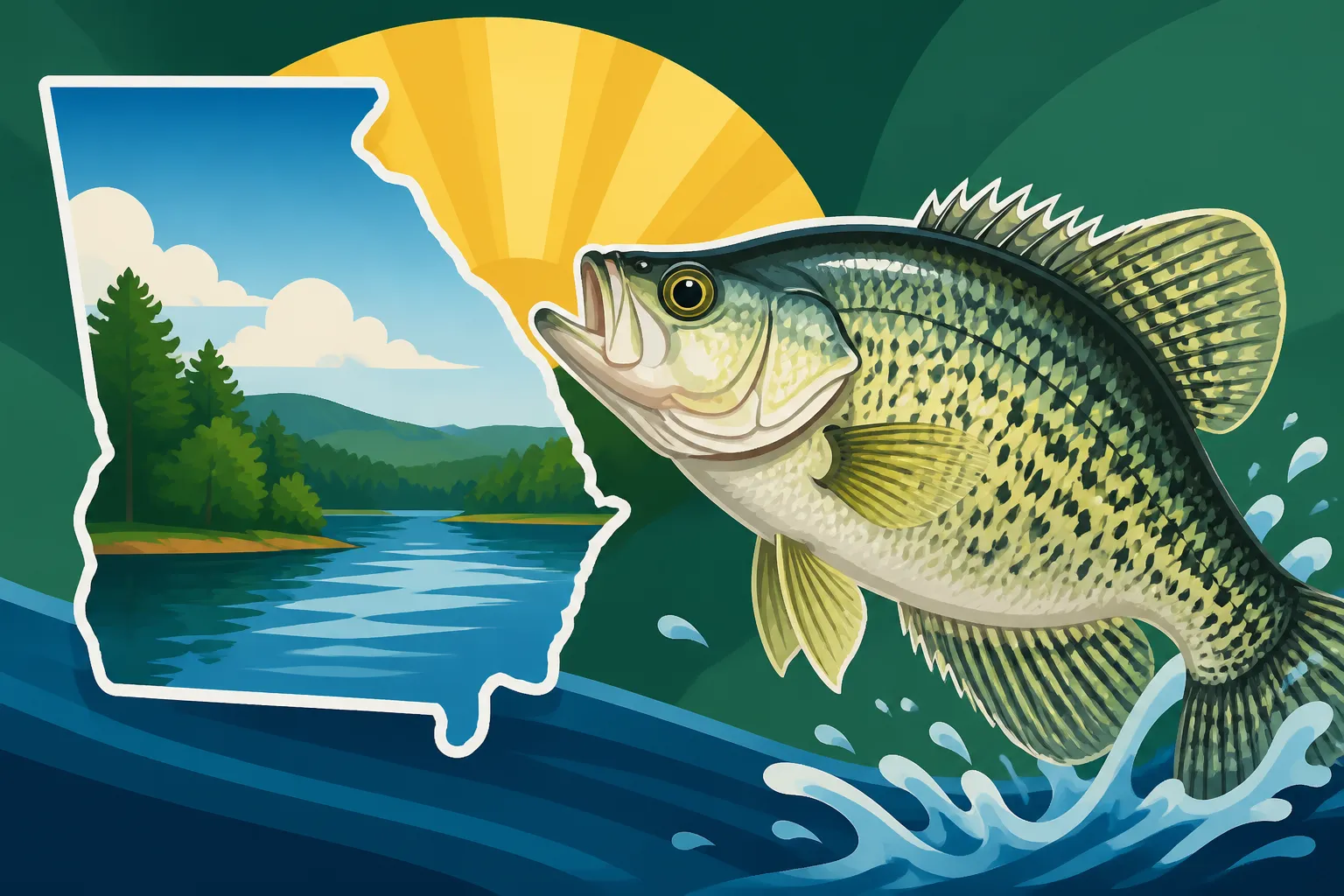
Black crappie, often called speckled perch, are generally identifiable by their irregular, scattered black spots all over their silvery bodies. If you're counting dorsal spines – those sharp rays in the fin on their back – a black crappie will usually have seven or eight. They tend to have a more rounded, deeper body shape, almost like a dinner plate. These fish typically prefer clearer water with abundant submerged vegetation, brush piles, or standing timber, where they can ambush prey. You'll often find them tucked into denser cover. For a deeper dive into their characteristics, check out our guide on Black Crappie Identification: A Georgia Angler's Guide.
On the other hand, white crappie sport more distinct, evenly spaced vertical bars or stripes along their sides, especially when compared to the black crappie's scattered spots. They typically have six dorsal spines, which is the easiest way to tell them apart if you get a clear look. White crappie usually have a slightly more elongated or slender body shape. They are generally more tolerant of turbid or murky water and often prefer areas with less dense cover, such as open water over channel bends, around sparse standing timber, or near large structural elements like bridge pilings. You can learn more about differentiating them in our White Crappie Identification Guide.
Ultimately, knowing which species you're primarily encountering, or which one a particular lake is known for, can guide your choice of fishing spots and even your preferred techniques. For instance, if a lake is known for clear water and heavy cover, you might lean towards black crappie tactics. If it's a more turbid river-run lake, white crappie strategies might be more effective.
Decoding Crappie Behavior: Seasonal Movements and Preferred Habitats
Crappie are masters of relating to structure, but their exact location changes dramatically with the seasons, primarily driven by water temperature and their spawning cycle. Understanding these migrations is absolutely critical for consistent success.
In the spring, as water temperatures begin to climb into the upper 50s and low 60s Fahrenheit, crappie transition from their deeper wintering grounds to shallower areas. This is the pre-spawn staging phase, where they gather in creek channels, brush piles, and submerged timber adjacent to potential spawning flats. Once the water temperature consistently hits the mid-60s, the spawn begins. Crappie move into very shallow water, often just 2-6 feet deep, seeking out submerged vegetation, brush, or even the shade of boat docks and cypress trees to lay their eggs. This is a fantastic time for shallow water tactics. While we're talking crappie, the general timing of the spawn for many species is similar, so understanding When Largemouth Bass Spawn on Georgia's Lakes can give you a hint of when other fish might be active in the shallows too.
As summer arrives and water temperatures soar into the 70s and 80s, crappie retreat to deeper, cooler waters. They often suspend at the thermocline (the layer where water temperature changes rapidly), or relate to deep brush piles, standing timber in old creek beds, and major submerged structure. This is when deep-water jigging, trolling, and even night fishing can be incredibly productive, as crappie move up shallower under the cover of darkness to feed. If you're curious about this, our guide on Do Crappie Bite Better at Night? offers some great insights.
Fall sees crappie regrouping and feeding aggressively to prepare for winter. As water temperatures drop, they often move to mid-depths, actively chasing schools of baitfish. Look for them around channel swings, points, and humps where they can intercept schooling bait. Finally, in winter, crappie seek out the warmest available water and often concentrate in deep holes, channel bends, or near power plant discharges. Vertical jigging or tightlining live minnows directly over these deep schools becomes the go-to method.
Premier Crappie Fishing Lakes Across Georgia
Georgia is blessed with an abundance of fantastic crappie lakes, each with its own unique character and prime fishing periods. Let's explore some of the very best.
Lake Sinclair: The Winter Crappie Haven
Lake Sinclair, located near Milledgeville, is a true gem for crappie anglers, especially during the colder months. Its reputation as a winter crappie hotspot is well-earned, largely due to the warm water discharge from the Georgia Power plant. This inflow of warmer water attracts and concentrates baitfish and crappie, keeping them active even when other lakes slow to a crawl.
During winter, the areas around the power plant discharge are, predictably, absolute magnets for crappie. Anglers flock to these warmer zones, often finding schools of crappie tightly packed in deep creek channels and around bridge pilings. Beyond the power plant, look for crappie in the main lake creek channels, focusing on brush piles and areas with submerged timber. As spring approaches, they'll begin moving into shallower coves and feeder creeks to stage for the spawn. For more insights on fishing this area, our article on Lake Sinclair Winter Bass Fishing Near the Power Plant can provide additional context on how the warm water influences fish behavior.
The most effective tactics on Sinclair involve vertical jigging or tightlining live minnows directly into schools of crappie. Spider rigging, where multiple rods are deployed from the boat to cover a wide area and different depths, is also extremely popular. Many anglers swear by a chartreuse or white jig tipped with a minnow. If you're looking for specific honey holes, you'll want to read up on the Best Crappie Spots on Lake Sinclair. Access to Lake Sinclair is excellent, with numerous public boat ramps and marinas around the lake. For those unfamiliar with the area, hiring a local guide can significantly cut down on the learning curve. You can often find experienced crappie guides specializing in Sinclair through platforms like FishingBooker, connecting you with local experts who know the lake's seasonal nuances.
Lake Oconee: Consistent Action and Diverse Cover
Just upstream from Lake Sinclair lies Lake Oconee, another powerhouse crappie lake that offers consistent action throughout the year. Oconee is known for its healthy populations of both black and white crappie, thriving in its diverse underwater landscape.
Lake Oconee's key fishing zones are primarily found in its numerous creek arms, particularly the Richland Creek and Lick Creek sections. These areas feature extensive standing timber, both natural and man-made brush piles, and an abundance of private boat docks, all of which provide excellent cover for crappie. The standing timber found in many of Oconee's coves and channels is especially productive, often holding schools of fish at various depths depending on the season. If you're exploring these areas, dive deeper with our guide to Lick Creek and Richland Creek Fishing Spots on Lake Oconee.
Technique-wise, jigging is king on Lake Oconee. Anglers frequently employ various jigging methods, from vertical jigging over brush piles to casting and retrieving small jigs or soft plastics around docks and timber. Using slip bobbers for precise depth control, especially when crappie are suspended or relating to specific depths around structure, is also highly effective. Our guide on How to Jig for Crappie provides excellent starting points for these techniques. The best seasons for crappie on Oconee are spring during the spawn and fall when crappie are actively feeding. However, good fishing can be found year-round with the right approach. Access is plentiful with state park ramps and various private marinas.
Clarks Hill Lake (Lake Thurmond): Home of Slab Crappie
Straddling the Georgia-South Carolina border, Clarks Hill Lake, also known as Lake Thurmond, is one of the largest lakes east of the Mississippi and a true mecca for crappie anglers seeking "slab" crappie. Its immense size and complex underwater topography create vast habitat for large crappie.
The lake's defining feature for crappie fishing is its extensive flooded timber. Entire forests were submerged when the lake was impounded, creating an unparalleled habitat of standing trees, stumps, and brush that crappie absolutely love. Beyond the timber, anglers target crappie in deep creek channels, submerged roadbeds, and around bridge structures. Understanding these features is crucial, and you can get more details on Flooded Timber Crappie Spots on Lake Thurmond.
Given the expansive nature of Clarks Hill, strategies like spider rigging, where multiple long rods are used to present baits at different depths while slowly trolling, are incredibly effective for covering water and locating schools. Long-lining small jigs or minnow rigs is another popular method. When crappie are suspended in deep water, targeting them with downriggers or heavy jigs can also produce results. Navigation on Clarks Hill can be challenging due to the vast amounts of submerged timber, so having good electronics and paying attention to marked channels is vital. Access is excellent, with numerous public boat ramps managed by the U.S. Army Corps of Engineers. If you're planning a trip and want to maximize your chances, consider booking a charter through FishingBooker to leverage a local captain's intimate knowledge of this massive fishery.
Northern and Southern Georgia's Hidden Crappie Gems
While the larger, more famous lakes get a lot of attention, Georgia holds several other fantastic crappie fishing opportunities, from the deep waters of North Georgia to the cypress-filled backwaters of the South.
Lake Lanier: North Georgia's Underestimated Crappie Fishery
Lake Lanier, often synonymous with incredible bass fishing, is actually an excellent, albeit often underestimated, crappie fishery in North Georgia. Many anglers overlook Lanier's crappie potential, focusing instead on its famous largemouth and spotted bass, which means less pressure on its abundant crappie populations.
Lanier's crappie tend to be deep-water oriented, especially outside of the spawn. Key structures include the numerous bridge pilings that span the lake, deep brush piles (both natural and intentionally submerged by anglers), and bluff walls that drop into deep water. The crappie often suspend around these structures, following schools of baitfish. Knowing where to find the Best Crappie Fishing Spots on Lake Lanier can make all the difference.
Seasonal patterns on Lanier are distinct. Winter fishing can be exceptional, with crappie schooling tightly in deep creeks and channels, particularly in the lower lake. The spring spawn sees them moving into shallower pockets and creeks, offering opportunities for casting jigs and minnows. During summer, they retreat to the deep, requiring anglers to use electronics to locate suspended schools. Given the depth, tackle considerations for deeper fish involve slightly heavier jigs or jigging spoons.
Lake Blackshear: A Cypress-Lined Crappie Paradise
Journeying south, Lake Blackshear, near Cordele, presents a unique and highly productive crappie fishery. Unlike the deep, clear impoundments of North Georgia, Blackshear is characterized by its shallow, stump-filled waters and iconic cypress trees, creating an ideal environment for crappie.
The primary crappie habitat on Lake Blackshear is its abundant natural cover. The lake is dotted with cypress trees, which offer incredible structure and shade for crappie. Additionally, you'll find numerous stumps, submerged logs, and expansive lily pad fields in its many coves and backwaters. These shallow, woody areas are crappie magnets, especially during the spring and fall. For detailed locations, check out the Best Crappie Fishing Spots on Lake Blackshear, Georgia.
Effective techniques for Blackshear's crappie often involve tight-lining live minnows or small jigs into the dense cover provided by the cypress trees and lily pads. Dipping jigs into pockets within the vegetation or fishing a slip bobber rig around stumps are also highly productive methods. Because of the shallow water and abundant snags, stout crappie rods and slightly heavier line might be beneficial to pull fish out of cover. The best times to visit Lake Blackshear for crappie are spring for the shallow spawn and fall for active feeding. The lake also has excellent local amenities and is a popular destination for those seeking a more traditional, swamp-like fishing experience. If you’re looking to explore Blackshear’s unique waters with an expert, FishingBooker can help you find local guides who specialize in these cypress-filled crappie grounds.
Here's a quick comparison of these fantastic crappie lakes:
| Lake Name | Key Features | Best Season(s) | Typical Tactics | Primary Crappie Species |
|---|---|---|---|---|
| Lake Sinclair | Power plant warmth, creek channels, brush piles | Winter, Spring | Vertical Jigging, Tightlining Minnows, Spider Rigging | Both, often White |
| Lake Oconee | Standing timber, brush piles, docks, creek arms | Spring, Fall | Jigging, Slip Bobbers, Trolling | Both, good numbers |
| Clarks Hill/Thurmond | Vast flooded timber, deep channels | Spring, Fall | Spider Rigging, Long-lining, Deep Jigging | Both, known for Slabs |
| Lake Lanier | Deep brush piles, bridge pilings, clear water | Winter, Spring | Deep Vertical Jigging, Small Jigs | Black Crappie |
| Lake Blackshear | Cypress trees, stumps, lily pads | Spring, Fall | Tightlining, Dipping Jigs, Slip Bobbers | Both, good numbers |
Essential Gear and Proven Techniques for Crappie Success
No matter which incredible Georgia lake you choose to fish, having the right gear and understanding effective techniques will be paramount to your crappie fishing success. Crappie have a notoriously light bite, so finesse is often the name of the game.
Choosing the Right Tackle for Finesse Crappie Fishing
Crappie fishing is a delicate dance, and your tackle needs to be tuned for it. The importance of light to ultralight tackle for crappie cannot be overstated; their bite is often subtle, and a heavy rod can miss it entirely.
For rods, most crappie anglers prefer a spinning setup, typically a 6- to 7-foot light or ultralight action rod. The key here is sensitivity. A good crappie rod will have a soft tip that flexes easily, allowing you to detect even the slightest tap from a crappie, but enough backbone to set the hook. This sensitivity is crucial when fishing jigs in deep water or feeling the subtle "thump" of a crappie inhaling a minnow. For a comprehensive look at what rods perform best, take a look at our Best Rods for Crappie Fishing in Georgia.
Matching your rod with a small spinning reel, typically in the 500 to 1000 size range, is ideal. These reels are lightweight and provide a smooth drag system, which is essential for fighting crappie on light line. Spool your reel with 4- to 6-pound monofilament or fluorocarbon line. Monofilament offers good knot strength and some stretch, while fluorocarbon is nearly invisible underwater and has less stretch for increased sensitivity. Whichever you choose, ensure your line is fresh and free of abrasions. The balance between your rod and reel is also important; a well-balanced setup feels comfortable in your hand and minimizes fatigue during a long day of fishing.
Beyond the rod and reel, a few other essentials belong in your crappie tackle box. Small needle-nose pliers are indispensable for hook removal. Line clippers are handier than using your teeth, and a small, fine-mesh landing net can prevent losing a prized slab crappie right at the boat.
Mastering Baits, Lures, and Rigs That Entice Crappie
When it comes to getting crappie to bite, you generally have two main categories: live bait and artificial lures, with various rigging methods to present them effectively.
Live minnows are, without a doubt, king for crappie. There's just something about a struggling minnow that crappie can't resist. When using minnows, hook them lightly through the lips or just behind the dorsal fin, allowing them to swim naturally. This is often the simplest and most effective bait, especially when crappie are finicky or during colder water periods.
Jigs are the most versatile artificial lure for crappie. Sizes typically range from 1/32 to 1/8 ounce, though heavier jigs are used in deeper water or strong currents. Color can be critical, and crappie anglers often debate the best hues, but chartreuse, white, black/chartreuse, and pink are perennial favorites in Georgia. Varying your jigging technique – from a steady retrieve to short, sharp twitches or subtle lifts – can make a huge difference. You can explore more about color choices in our guide on Best Jig Colors for Crappie Fishing and learn the nuances of presentation from How to Jig for Crappie.
Beyond basic jigging, several popular rigs maximize your chances. Tightlining Techniques for Crappie involves dropping a minnow or jig straight down to the fish, often without a bobber, relying on feel. Spider rigging, as mentioned for Clarks Hill, uses multiple rods set up at different depths and distances from the boat, covering a wide swath of water. Slip bobber rigs are excellent for presenting a bait at a precise depth, especially when crappie are suspended over structure. The bobber slides freely on the line until it hits a stopper knot, allowing you to cast easily and then let the bait sink to the predetermined depth. Experimenting with these various presentations based on the lake and conditions will definitely put more crappie in your boat. Don't forget, sometimes adding scent attractants to your artificial baits can provide that extra edge, and for covering water, small crankbaits are sometimes trolled to locate aggressive fish.
Disclaimer
Fishing regulations, license requirements, and local rules can change. Always consult the Georgia Department of Natural Resources (DNR) website or their official publications for the most current information before heading out on your fishing trip. Ensure you have the proper licenses and are aware of all creel limits and size restrictions for the specific waters you are fishing.