Best Jig for Spotted Bass Fishing
Choosing the right jig for spotted bass in Georgia can feel like trying to solve a complicated puzzle, especially when you’re standing at the tackle shop staring at endless options, wondering which one will actually make a difference out on the water. Many anglers struggle to dial in their presentations, leading to frustrating days with few bites. This comprehensive guide is here to break down the complexities, helping you understand the nuances of jig selection and presentation specifically for Georgia’s spotted bass, so you can fish with confidence and see more success.
Understanding Spotted Bass Behavior and Habitat
Before you can pick the perfect jig, you really need to get inside the head of a spotted bass. They're not just mini-largemouths; they have their own unique personality and preferences that dictate how and where they feed. Knowing this will dramatically improve your jig choices and fishing strategy.
Where Spotted Bass Live in Georgia Waters
Spotted bass, often affectionately called "spots" by us Georgia anglers, tend to prefer deeper, clearer, and rockier waters than their largemouth cousins. Think about your favorite Georgia reservoirs like Lake Lanier, Lake Allatoona, or even Lake Burton – these are prime spotted bass territory. While largemouth might hang out in shallow, brushy coves, spots gravitate towards main lake points, steep drop-offs, humps, and submerged timber in deeper water. They love to relate to structure, whether it's a rocky bluff, a timber pile, or an underwater ridge. You'll often find them schooled up, especially when they're actively feeding. This means if you find one, there are likely many more nearby. Understanding these preferences helps you narrow down where you should be casting your jig. They're masters of using underwater contours and cover to ambush prey, so your jig needs to mimic something vulnerable in their preferred ambush spots. For more on where these feisty fish hang out, check out our guide on Spotted Bass Fishing in Georgia Lakes and Rivers.
How Spotted Bass Feed
Spotted bass are aggressive, opportunistic predators. They're not afraid to chase down a meal, and they'll often strike with a ferocity that can surprise you, even on a subtle jig presentation. Unlike largemouth that might gently "thump" a bait, spots often hit a jig like a freight train, ripping the rod right out of your hands if you're not paying attention. They're keen sight feeders, especially in the clear waters they prefer, which means visual appeal in your jig (color, action, profile) is incredibly important. They'll actively pursue baitfish like shad, blueback herring, and smaller sunfish. Their diet also includes crawfish, which are a huge part of why jigs are so effective. When you're fishing a jig for spotted bass, you're usually trying to imitate either a crawfish scurrying along the bottom or a wounded baitfish trying to escape. Understanding this feeding behavior will help you determine how to work your jig to trigger those aggressive bites.
Seasonal Movements Affecting Jig Choice
Just like any fish, spotted bass movements and feeding patterns change with the seasons, and this absolutely impacts what kind of jig you should be throwing. In the cooler months of fall and winter, spots often school up in deeper water, sometimes incredibly deep, around main lake structure. During this time, a heavier jig that can get down to them quickly and stay in the strike zone is crucial. As spring approaches and the water warms, they'll start to move shallower, staging on points and humps near spawning areas. This is when a football jig or a finesse jig can really shine as they transition. In the heat of summer, they'll often go deep again during the day, following baitfish schools, making vertical jigging with spoons or heavier jigs effective. Understanding How Water Temperature Affects Fish Behavior is key here. Conversely, during low light conditions or cloudy days, they might move up shallower even in summer. Paying attention to water temperature and time of year will help you anticipate where the spots are and, consequently, which jig will be most effective at reaching them and enticing a strike.
Key Characteristics of Effective Jigs for Spotted Bass
Now that we've covered the "why," let's dive into the "what" – the specific features that make a jig deadly for spotted bass. It's not just about picking a jig; it's about picking the right jig for the conditions you're facing.
Jig Head Design and Weight
The jig head is the heart of your presentation, determining how the bait moves, falls, and interacts with the bottom. For spotted bass, several head designs stand out:
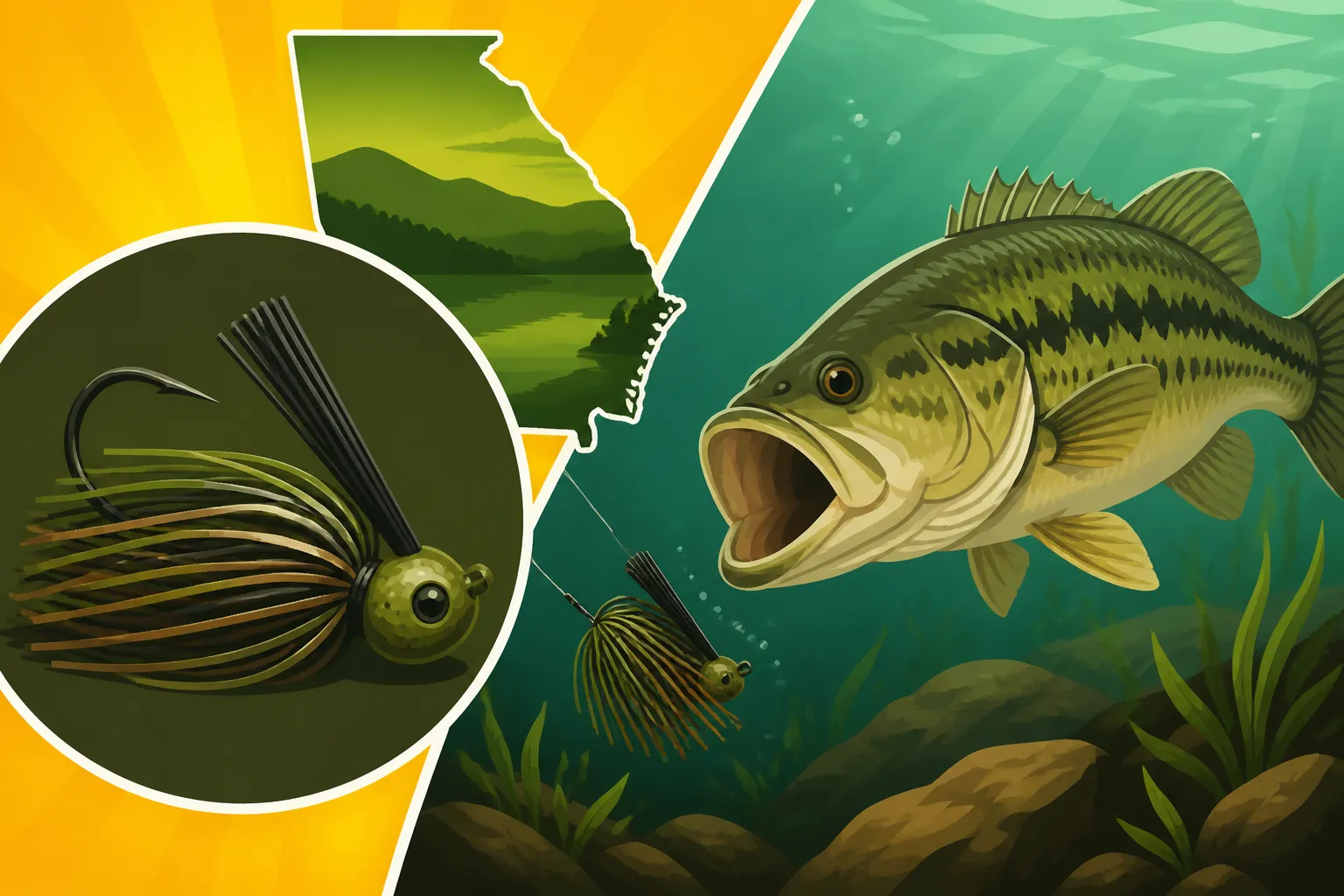
- Football Jigs: These are absolute workhorses for spotted bass, especially when fishing rocky bottom or offshore structure. The football shape helps the jig "walk" over rocks and crevices without snagging as much as a traditional round head. It also makes the skirt flair out enticingly when it hits the bottom. Weights from 1/2 oz to 1 oz are common, allowing you to effectively fish depths from 15 to 60 feet. The heavier weights are perfect for getting down quickly in current or deep water and maintaining bottom contact.
- Round Head Jigs: While perhaps not as snag-resistant in heavy rock as a football jig, a round head jig with a weed guard can be excellent for skipping under docks or pitching into lighter cover. Lighter weights (1/4 oz to 3/8 oz) are great for finesse presentations or shallower waters.
- Stand-Up Jigs: These heads are designed to make the jig stand upright when it rests on the bottom, mimicking a crawfish in a defensive posture. This can be a huge strike trigger, particularly when spots are keying in on crawfish.
- A-Rig or Swimbait Heads: For anglers using multi-lure rigs or single swimbaits, specialized jig heads with strong hooks are essential. These are typically heavier, designed to be fished quickly through the water column to imitate a school of baitfish.
The weight of your jig is crucial. Too light, and you can't get it to the fish or maintain bottom contact in wind or current. Too heavy, and you might spook fish or make the presentation unnatural. Always aim for the lightest jig you can get away with while still feeling the bottom effectively.
Skirt Material and Color
The skirt breathes life into your jig, providing action, bulk, and color that can seal the deal.
- Silicone Skirts: These are the most common and versatile. They offer excellent durability, a wide range of colors, and a natural pulsing action in the water. Fine-strand silicone creates a very subtle, fluid movement, while thicker strands give more bulk and a slower fall.
- Living Rubber Skirts: Favored by many traditionalists, living rubber provides an incredibly natural, lifelike action. The strands "live" and move even when the jig is paused, offering a constant invitation to a curious spotted bass. However, living rubber can be less durable than silicone.
- Colors: Matching the hatch is often the name of the game. For crawfish imitators, natural browns, greens, black, and pumpkinseed patterns (like green pumpkin or black and blue) are go-tos. If spotted bass are feeding on baitfish, white, chartreuse, silver, or shad patterns will be more effective. In darker or stained water, brighter or more contrasting colors can help your jig stand out. In clear water, subtle, natural hues often perform best. Always consider the water clarity and forage when selecting your color. You can find a vast array of these options at places like Bass Pro Shops or online through Amazon.
Trailer Selection
A jig isn't complete without a trailer. The trailer adds bulk, profile, and action, often being the final visual cue that triggers a strike.
- Crawfish Imitators: Soft plastic crawfish trailers are classic for a reason. They perfectly mimic a crawfish, especially when paired with a football or stand-up jig. Brands offer various sizes and claw actions to match the local forage.
- Grub or Chunk Trailers: Single-tail or double-tail grubs add subtle action and bulk. A pork or soft plastic chunk provides a very compact, bulky profile that can slow the fall and make the jig look meatier.
- Swimbait Trailers: For a more baitfish-oriented presentation, especially with swim jigs, a small paddle-tail swimbait can be incredibly effective. It adds a natural swimming action that can draw strikes from aggressive, chasing spots.
- Finesse Trailers: When fishing a finesse jig, small, subtle trailers like a tiny creature bait or a small compact grub are perfect. The goal is to present a small, non-threatening meal to pressured fish.
The right trailer should complement the jig's skirt and head design, enhancing its overall appeal without overpowering it. Experimentation is key! For deeper insights into bait and lure choices, you might find our guide on How to Choose the Right Bait and Lure for the Season helpful.
Top Jig Styles for Different Spotted Bass Scenarios in Georgia
Now let's put it all together and talk about specific jig styles and when to deploy them for Georgia's spotted bass. Each style has its strengths, and knowing which one to tie on can make all the difference.
Football Jigs for Deep Water and Rock
If you're targeting spotted bass in their natural deep, rocky habitat on lakes like Lanier or Allatoona, the football jig is your MVP. Its wide, flat head is designed to resist snagging by rocking over rocks and boulders, rather than wedging in them.
- When to Use It: Ideal for offshore humps, deep points, rocky ledges, and transition areas from main lake points to creek channels. It's especially effective when spots are holding tight to the bottom in 20-60 feet of water, which they often do outside of the spawn. Use it in cooler months or during the summer when fish are deep.
- Technique: The most common retrieve is a slow drag. Cast it out, let it sink to the bottom on a semi-slack line (watching for line jumps), and then slowly drag it along with your rod tip. Periodically, give it a slight hop or shake to imitate a crawfish scuttling and then pausing. Keep your rod tip slightly elevated to feel those subtle bites as the jig moves over structure. The key is maintaining constant bottom contact and feeling every rock, shell, or limb. When you feel a "tick" or extra weight, set the hook!
Finesse Jigs for Clear Water and Pressured Fish
Sometimes, spotted bass can be incredibly finicky, especially in Georgia's clearer reservoirs after a lot of fishing pressure. This is when you need to downsize and go subtle with a finesse jig.
- When to Use It: Perfect for ultra-clear water, highly pressured fisheries, or when fishing behind other anglers who have already thrown bigger, bulkier baits. It's also great for colder water conditions when fish are less active and prefer a smaller, slower meal. Look for shallower rock piles, subtle points, or docks that have seen a lot of boat traffic.
- Technique: Think subtle. Use lighter line (8-12 lb fluorocarbon is common) to enhance sensitivity and allow for a natural fall. Cast your finesse jig, let it sink, and then use very short hops, subtle shakes of the rod tip, or a slow drag. The idea is to make the jig appear as a small, easy meal. The bites can be very light – a slight mushiness, a tick, or just a feeling of added weight. Don't be afraid to let it sit motionless for several seconds after a hop; often, that's when the strike happens.
Swim Jigs for Covering Water and Reaction Strikes
When spotted bass are actively chasing baitfish, or you need to cover a lot of water quickly, a swim jig can be incredibly effective at drawing reaction strikes.
- When to Use It: Great for shallower areas, around docks, submerged grass, or when spotted bass are actively busting on baitfish near the surface. It excels in early morning, late evening, or on cloudy days when fish are more likely to move up and feed aggressively. It's also a fantastic choice for fishing wind-blown points where baitfish are congregating.
- Technique: As the name suggests, you swim this jig. Cast it out and retrieve it steadily, mimicking a swimming baitfish. Vary your retrieve speed, add subtle twitches, or let it fall occasionally to imitate a wounded bait. The skirt and paddle-tail swimbait trailer will provide an irresistible pulsating and kicking action. The bites are usually aggressive, often feeling like your bait just ran into a brick wall. This is a power fishing technique that can trigger incredible strikes when fish are active. For tips on specific tackle for this, read our Best Tackle for Spotted Bass on Lake Lanier guide.
Jigging Spoons for Vertical Presentation
When spotted bass are schooled up tight in deep water, or you're seeing them suspended on your electronics, a jigging spoon can be a phenomenal tool.
- When to Use It: Ideal for deep schooling fish, especially during the summer and winter months when spots suspend over humps, points, or channel swings, often keying in on baitfish like blueback herring. If you see a tight ball of bait and fish underneath on your fish finder, it's time for a spoon.
- Technique: This is a vertical presentation. Position your boat directly over the fish you see on your electronics. Drop the spoon down to their depth, let it hit the bottom, or position it just above the school. Then, use aggressive snaps and drops of your rod tip. Lift the spoon sharply 2-4 feet, then let it fall back on a semi-slack line, allowing it to flutter enticingly. Most bites occur on the fall, so watch your line intently for any hesitation or twitch. It's all about triggering a reaction strike with that erratic, falling motion.
Techniques for Presenting Your Jig Effectively
Having the right jig is only half the battle; knowing how to present it is the other. Your rod, reel, line, and retrieval technique all play a crucial role in tricking those wily spotted bass.
Rod, Reel, and Line for Jig Fishing
The right gear setup is paramount for jig fishing for spotted bass. You need sensitivity to feel subtle bites and enough power to set the hook and fight aggressive fish.
- Rod: A 7-foot to 7-foot, 6-inch medium-heavy or heavy power baitcasting rod with a fast action is generally preferred. The length provides better casting distance and leverage, while the medium-heavy power gives you the backbone to drive a hook home. The fast action means the rod bends mostly in the tip, offering excellent sensitivity for detecting those light bites and keeping you connected to the jig. For finesse jigs, you might opt for a slightly lighter medium power rod or even a spinning setup if you're throwing very light jigs.
- Reel: A baitcasting reel with a gear ratio in the 6.3:1 to 7.5:1 range is versatile. A faster retrieve (7.1:1 or higher) helps you pick up slack quickly after a bite or make follow-up casts. Ensure it has a smooth, strong drag, because spotted bass fight hard!
- Line: Fluorocarbon line is the champion for jig fishing. Its low stretch provides incredible sensitivity, allowing you to feel every pebble and every faint tap. It's also nearly invisible underwater, which is a huge advantage in clear spotted bass waters. Strengths typically range from 12 to 20 pounds, depending on the cover and jig weight. For swim jigs in heavier cover, some anglers might opt for braided line with a fluorocarbon leader for maximum power. You can learn more about gear in our Best Rod and Reel Combo for Largemouth Bass in Georgia guide, many principles of which apply to spotted bass.
Working the Jig: Retrieves and Actions
This is where the art of jig fishing comes in. Spotted bass often react to specific movements, and varying your retrieve can be the key to unlocking a bite.
- Dragging: The most common retrieve for football and stand-up jigs. Cast it out, let it sink, and then slowly drag it across the bottom using your rod. Don't reel; just use your rod to sweep the jig forward, then reel in the slack as you bring your rod back to the starting position. This mimics a crawfish slowly crawling along.
- Hopping: After dragging, lift your rod tip sharply to make the jig "hop" a foot or two off the bottom, then let it fall back on semi-slack line. This can imitate a crawfish trying to escape. Vary the height and intensity of your hops.
- Shaking: For finesse jigs, a subtle "shaking" motion of the rod tip can make the skirt undulate without moving the jig far from its spot. This can be deadly for inactive or pressured fish.
- Swimming: As discussed with swim jigs, a steady retrieve where the jig "swims" through the water column is effective for active fish or imitating baitfish. Experiment with pauses and twitches.
The goal is always to make your jig look like an easy meal. Pay attention to what triggers bites on a given day and don't be afraid to mix it up until you find what works.
Reading the Bite and Setting the Hook
Spotted bass bites on a jig can range from a subtle "tick" to a rod-jarring "thump." Learning to differentiate between a bite and the jig simply hitting structure takes practice.
- Subtle Takes: Often, it feels like your line just goes slack, or you feel a slight "mushiness" or added weight on your line. Sometimes, your line will simply move sideways. These are often fish that have picked up the jig and are moving off with it.
- Aggressive Thumps: These are unmistakable. It feels like a quick, sharp strike, almost like a tug or a jerk. When this happens, it's usually an aggressive fish that has hammered the jig.
- Setting the Hook: When you detect a bite, it's crucial to set the hook immediately and assertively. A good jig hook set is a sweep of the rod, not a straight up-and-down jerk. Point your rod tip low to the water, take up any slack, and then sweep the rod hard to the side (left or right, depending on which way you're holding it), driving that hook home. Don't be shy; these fish have tough mouths.
Staying focused and maintaining good line management are critical. Any distraction can mean missing a subtle bite. For more general advice on hooking fish, our Basic Fishing Techniques Every Beginner Should Know might offer some foundational tips.
Here’s a quick overview of some popular jig styles for spotted bass:
| Jig Style | Ideal Conditions | Primary Forage Imitation | Key Presentation Method | Spotted Bass Hotspots in Georgia |
|---|---|---|---|---|
| Football Jig | Deep, rocky bottom; offshore structure | Crawfish | Slow drag, hop, shake | Lake Lanier, Lake Allatoona, Lake Hartwell |
| Finesse Jig | Clear, pressured water; cold water | Small crawfish, insects | Short hops, subtle shakes, drag | Lake Burton, parts of Lake Blue Ridge |
| Swim Jig | Shallow cover; active baitfish bite; stained water | Baitfish (shad, herring) | Steady retrieve, twitch, pause | Docks on Lake Oconee, shallow points on West Point |
| Jigging Spoon | Deep, schooling suspended fish; open water | Dying baitfish | Vertical jig, sharp snaps | Deep humps on Lake Lanier, main lake basins |
| Flipping/Pitching Jig | Heavy cover (docks, timber); shallow to mid-depth | Crawfish, bluegill | Pitch, flip, lift, drop | Submerged timber in Lake Seminole, dock pilings |
Disclaimer
This article is for general informational purposes only and does not constitute professional advice. Laws, prices and regulations vary by location and change over time. Consult a qualified professional for guidance on your specific situation.