Georgia Boat Ramp Etiquette for Busy Weekends
There's nothing quite like the frustration of pulling up to a busy Georgia boat ramp on a beautiful Saturday morning, only to find chaos, clogged lanes, and fellow anglers seemingly intent on making everyone else's day harder. We've all been there, trying to enjoy a peaceful day on the water, but before you even launch, you're caught in a slow-motion tangle of unprepared boaters. This guide is all about navigating those bustling weekends with grace and efficiency, ensuring your time at the ramp is as smooth as possible, and you get out on the water faster to enjoy the Georgia Fishing you came for.
Pre-Ramp Preparation: Your Secret Weapon Against Weekend Woes
The single biggest factor in a smooth boat launch or retrieve, especially when it's packed, is how well you prepare before you even get into the ramp line. Think of it as your backstage pass to avoiding glares and impatient honks. This isn't just about saving your own time; it's about respecting everyone else's, too.
Get Everything Ready in the Staging Area
Before you even think about backing down the ramp, pull over into a designated staging area—or even an unused corner of the parking lot if one isn't clearly marked. This is where you do all the fiddly bits that take up precious ramp time. Get your drain plug in (seriously, don't forget this one!), load all your tackle boxes, rods, coolers, and safety gear. Make sure your boat's straps are removed, the motor trim is up, and your livewell is ready to go. Fumbling with these things when you're blocking the ramp is a surefire way to escalate tension. I’ve seen more than one argument start because someone was still trying to find their drain plug while five other boats waited. Take a moment, breathe, and get it done right the first time. For a quick checklist of essential gear, you might find some useful tips in Safety Gear Checklist for a Day on Lake Lanier.
Test Lights and Connectors
Imagine backing your boat down a ramp only to realize your trailer lights aren't working. Not only is this a safety hazard, but it immediately adds stress and delays to your launch. Before leaving home, or at the very least, while in the staging area, do a quick check of your trailer lights. Make sure your boat's electrical connections are secure and everything is in working order. This quick check can prevent a significant holdup and ensure you're compliant with towing regulations. A malfunctioning brake light or turn signal isn't just an inconvenience; it can be dangerous on busy roads, and especially on narrow ramp access roads. Make sure you understand all of Georgia Boat Registration Requirements Explained for your vessel before heading out.
At the Ramp Itself: Precision and Speed
Once you're actually in the queue for the ramp, it's go-time. This is where practice, focus, and good old-fashioned courtesy really shine. Every second counts when there’s a line forming behind you.
Backing Down and Launching Efficiently
This is where the rubber meets the road—or, more accurately, the trailer tires meet the water. If you’re not confident in backing your trailer, try practicing on an empty parking lot during off-peak hours. When it's busy, try to execute your launch in one smooth motion. Get your boat far enough into the water for it to float off the trailer, but not so deep that your tow vehicle starts to float or get waterlogged. A good rule of thumb is to have about two-thirds of your trailer submerged.
Once the boat is floating, if you have a partner, they can take the boat and pull it away from the ramp while you quickly park the trailer. If you’re solo, secure the boat to a dock cleat or have it tied to you, then park. Remember, the goal is to get your rig off the ramp as quickly and safely as possible. Don't linger. If you're looking for specifics on popular lakes, Boat Ramp Tips for Launching at Lake Lanier has some great practical advice.
Retrieving Your Boat with Finesse
Retrieving your boat can be just as, if not more, challenging than launching, especially on a busy day when you’re tired after a long day of fishing. Just like launching, preparation is key. While waiting for your turn, get your ropes ready, open your boat’s drain plug after you’ve pulled it out of the water, and have your straps and tie-downs accessible.
When it’s your turn, back your trailer smoothly and efficiently into the water, just deep enough for your boat to easily come onto the bunks or rollers. Then, get your boat onto the trailer and secure it quickly. Once it’s fully on the trailer and the winch strap is tightened, pull out of the way immediately. Do not start tying down your gear or emptying your cooler at the water's edge. Drive to the staging area or a parking spot to complete your post-fishing rituals. This helps keep the line moving and prevents unnecessary bottlenecks.
A Quick Guide to Ramp Courtesy
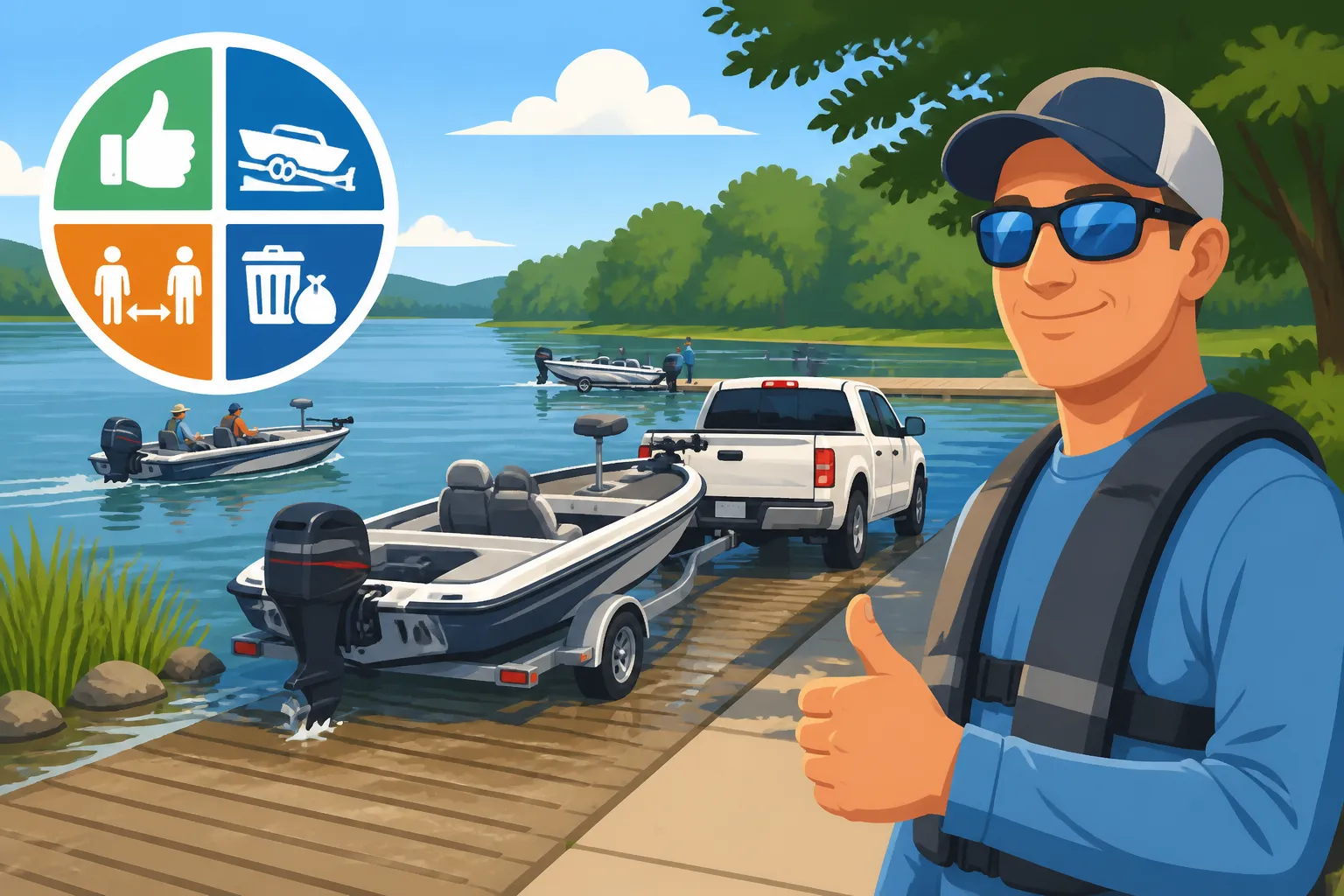
| Action | Do | Don't |
|---|---|---|
| Preparation | Prep boat in staging area: drain plug, straps, gear loaded. | Hog the ramp prepping, forgetting drain plug, or loading tackle. |
| Backing/Launching | Back in smoothly, launch quickly, get off the ramp swiftly. | Take multiple attempts, block the ramp chatting, or forget to park. |
| Retrieving | Trailer ready, boat loaded efficiently, pull out immediately. | Linger on the ramp to unload, clean fish, or socialize. |
| Parking | Park trailer in designated spots, avoid blocking access. | Take up multiple spots, park haphazardly, or block other vehicles. |
| Communication | Be patient, offer help if safe, use clear hand signals. | Yell, honk impatiently, give unsolicited advice, or act aggressively. |
| Children/Pets | Keep kids/pets safe and out of the way. | Let children/pets run freely, creating hazards or distractions. |
On the Water and Parking: Beyond the Concrete
The etiquette doesn’t stop the moment your boat touches the water, or when your trailer is parked. Maintaining a respectful attitude throughout your entire visit is crucial for a pleasant experience for everyone.
Moving Away from the Ramp and Docking
Once your boat is launched, don't just sit there tied to the dock, adjusting your electronics or sorting tackle. Get your boat away from the immediate ramp area as quickly as possible. Find a quieter spot further down the lake or river to get organized. This keeps the dock clear for the next boater and prevents congestion. Also, when docking, be mindful of the space you take up. Docks at busy ramps are often limited, so don't tie up in a prime spot if you're just planning to run to the restroom or grab a quick bite. Pull further down or anchor out of the way if you're going to be a while. Consider the capacity of the boat, too; some docks are better suited for larger vessels. If you're pondering what boat is right for you, Best Boat for Fishing Lake Lanier offers some excellent insights.
Trailer Parking Protocol
Once your boat is launched, the next step is parking your tow vehicle and trailer. This is another major choke point on busy weekends. Always park in designated trailer parking spots. These spots are typically longer and wider to accommodate trailers. Never take up multiple spots with a single vehicle and trailer, and never park in regular car parking spots, which are usually reserved for smaller vehicles without trailers.
Blocking access roads, boat lanes, or other parking spots is a cardinal sin. If the main lot is full, look for overflow parking areas. Sometimes this means a bit of a walk, but it's far better than causing a traffic jam. Be aware of signage, as some parks or ramps have specific rules for trailer parking or even charge a fee. Being prepared with change or a payment method can save you another frustrating delay. Your Best Trailer for Towing a Boat to Georgia Lakes will thank you for finding it a proper spot.
General Mindset and Communication: The Human Element
Ultimately, boat ramp etiquette boils down to one thing: being a considerate human being. A little patience and clear communication can defuse most potentially tense situations.
Patience is a Virtue
We all want to get on the water, especially on a beautiful weekend. But rushing, honking, and getting angry only makes things worse. Assume that most people are trying their best, even if their "best" isn't as efficient as yours. A few minutes of waiting is a small price to pay for a stress-free day. If someone is struggling, and it's safe to do so, offer a helping hand. Sometimes a simple offer to hold a rope or guide a trailer can turn a frustrating situation into a positive interaction. Remember, we're all out there for the same reason: to enjoy the Georgia Fishing License Guide and the beautiful waters of Georgia.
Clear Communication and Hand Signals
When backing a trailer, especially with a partner, establish clear hand signals beforehand. Shouting over engine noise and other distractions is ineffective and often just adds to the confusion. A simple "stop," "go," "back straight," or "turn left/right" signal can make all the difference. If you're approaching the ramp and see someone struggling, a quick, polite "Can I lend a hand?" is always better than an exasperated sigh or a rude comment.
Equipping yourself with the right gear can also contribute to a smoother process. For example, a quality set of wireless communication devices (like those found at Bass Pro Shops or on Amazon) can be a game-changer for backing up, eliminating the need for shouting. Even a simple whistle (which you should have anyway, if you're asking Do You Need a Whistle on a Kayak in Georgia?) can be used for pre-arranged signals. Remember, the goal is to make the process as seamless as possible for everyone involved. Being prepared and considerate helps create a friendly environment, which is what fishing is all about.
Disclaimer
This article is for general informational purposes only and does not constitute professional advice. Laws, prices and regulations vary by location and change over time. Consult a qualified professional for guidance on your specific situation.