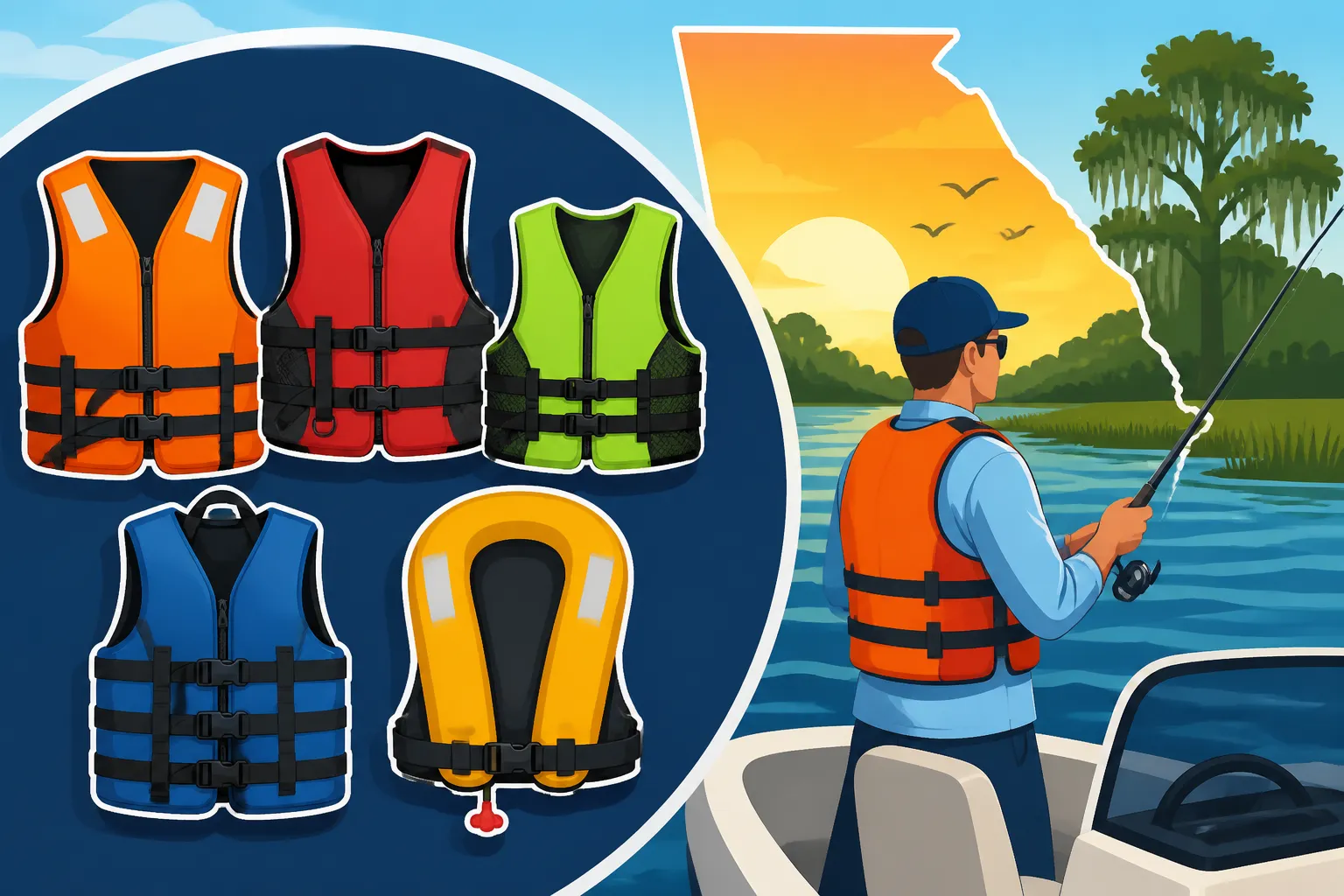
Coast Guard-Approved Life Jacket Types for Georgia Boaters
It's easy to look at a rack of life jackets and think they're all pretty much the same, right? You just grab one, throw it on, and you're good to go. But for us Georgia anglers and boaters, knowing the distinct types approved by the U.S. Coast Guard isn't just about following the rules—it's about ensuring genuine safety for ourselves, our families, and our friends out on our beautiful lakes, rivers, and coastal waters. This guide will walk you through the different types, what they're best for, and why understanding these nuances can truly make all the difference.
Why Coast Guard Approval Matters on Georgia Waters
When you're out on Lake Lanier, cruising the Altamaha River, or casting a line in the marshes of the Golden Isles, safety is paramount. A personal flotation device (PFD), more commonly known as a life jacket, is arguably the single most important piece of safety equipment on any vessel. But not all PFDs are created equal, and simply having "a" life jacket isn't always enough to meet legal requirements or provide the optimal safety for your specific situation. The U.S. Coast Guard's approval system exists precisely to standardize and categorize these devices, making it easier for us to choose the right gear for our adventures.
Understanding the "Approved" Stamp
That little stamp or label indicating "U.S. Coast Guard Approved" is more than just bureaucracy; it's a promise of tested performance. It means the PFD has undergone rigorous testing to ensure it meets specific buoyancy, material, and construction standards. Without this approval, a device isn't considered a legal PFD on federally controlled waters, which includes most of Georgia's major lakes and rivers. Even if you're on a smaller, state-controlled lake, Georgia law generally defers to the Coast Guard standards for PFDs. So, when you're shopping, always look for that stamp – it’s your first indicator of reliability and compliance.
Choosing approved gear helps prevent those frustrating moments when a game warden checks your vessel and finds your safety equipment isn't up to snuff. Beyond the legal aspect, the approval ensures the PFD will actually perform as intended in an emergency, giving you and your loved ones the best chance of survival.
Legal Requirements and Your Safety Net
Georgia law, like federal law, mandates that all vessels must have at least one readily accessible U.S. Coast Guard-approved wearable PFD for each person on board. If your vessel is 16 feet or longer (excluding canoes and kayaks), you also need one throwable Type IV device. But here's where understanding the types becomes critical: while any approved wearable PFD fulfills the minimum requirement, some types offer significantly more protection or are better suited for certain activities. For instance, a basic Type II vest might be fine for a leisurely pontoon ride on a calm lake, but it's not what you'd want if you're offshore fishing in choppy coastal waters where a Type I would be far more appropriate.
Think of your life jacket as an extension of your fishing prowess; it's there to protect you when conditions take an unexpected turn. Whether it's an accidental fall overboard, an unforeseen storm, or a sudden mechanical issue, a properly chosen and fitted PFD acts as your personal safety net, keeping you afloat and giving rescuers more time to reach you. It's especially crucial for children. Make sure you're familiar with Georgia Life Jacket Laws for Boaters and Kids and Life Jacket Requirements for Kids Under 13 in Georgia to keep everyone safe and compliant.
Decoding the Labels: The Five PFD Types
The U.S. Coast Guard categorizes PFDs into five main types, each designed with different levels of buoyancy, turning capabilities, and appropriate uses. Understanding these distinctions is key to making an informed choice that truly matches your boating and fishing activities here in Georgia. Let's break them down.
Type I: Offshore Life Jackets – Maximum Buoyancy
These are the heavy-duty champions of the PFD world. Type I life jackets provide the most buoyancy, typically around 22 pounds for adults, and are designed for all water conditions, especially rough, remote, or open ocean waters where rescue might be delayed. Their key feature is their ability to turn most unconscious wearers face-up in the water, a critical safety element when you're far from shore or help.
You'll often see these on commercial vessels, charter boats heading offshore from Brunswick or Savannah, or on large pleasure craft venturing far out into the Atlantic. They tend to be a bit bulkier than other types, which can feel restrictive, but that bulk is what provides superior flotation and turning ability. While you might not typically wear one for a casual trip on Lake Oconee, if you're planning a serious deep-sea fishing expedition off the Georgia coast, a Type I is your best bet for maximum safety.
Type II: Near-Shore Vests – Good for Calm Waters
Type II PFDs are the next step down in buoyancy, offering at least 15.5 pounds for adults. These are generally designed for use in calmer, inland waters where there's a good chance of a quick rescue. They are less bulky and more comfortable than Type I PFDs but still offer decent flotation. They might turn an unconscious person face-up, but it's not guaranteed, especially if the wearer is wearing heavy clothing or is in a specific body position.
These are incredibly common and often what you'll find as standard equipment on rental boats or for casual family outings on Georgia's many reservoirs like Lake Hartwell or Lake Sinclair. They're a solid choice for activities like pontoon boating, light fishing, or simply cruising around on a sunny day where you're always within sight of shore and assistance. They offer a good balance of comfort and safety for most recreational boating scenarios.
Type III: Flotation Aids – The Most Common Choice
The Type III is arguably the most popular PFD among recreational boaters and anglers, and for good reason. With at least 15.5 pounds of buoyancy (similar to a Type II), these flotation aids are designed for continuous wear and offer the most comfort and freedom of movement. They are perfect for active pursuits like kayak fishing on the Toccoa River, fly fishing in smaller streams, or even competitive bass fishing on Lake Lanier. The trade-off for this comfort is that they are generally not designed to turn an unconscious wearer face-up; you need to be able to help yourself into a face-up position.
Because of their comfort and versatility, you'll see a wide variety of Type III designs, including fishing vests with pockets, watersports vests, and inflatable models that are very low profile until activated. For Georgia anglers, a comfortable Type III with features like multiple pockets for lures, tools, and other gear, often found at retailers like Bass Pro Shops, can make a day on the water much more enjoyable while keeping you safe. Online marketplaces like Amazon also offer a vast selection of Type III vests in various styles and price points. Just remember that comfort shouldn't overshadow the need for a proper fit.
Type IV: Throwable Devices – Backup, Not Worn
Unlike the other types, Type IV PFDs are not designed to be worn. Instead, they are meant to be thrown to someone in distress. Think of those square cushions or ring buoys you see on boats. They provide at least 16.5 pounds of buoyancy. As mentioned, if your vessel is 16 feet or longer, you need to have one of these on board, readily accessible.
A common misconception is that a throwable device can count as a wearable PFD. It cannot. While essential for rescuing someone who has unexpectedly fallen overboard, it doesn't substitute for each person having their own wearable life jacket. You might grab a Type IV to toss to a friend who slipped off the dock at sunrise, but they still need their own Type I, II, or III PFD on the boat.
Type V: Special Use Devices – Activity-Specific Protection
Type V PFDs are specialty devices designed for specific activities and must be used according to their label. This category includes everything from whitewater rafting vests to deck suits, work vests, and manually or automatically inflatable PFDs. The key here is that they are only considered Coast Guard-approved when worn for their intended use. For example, an inflatable PFD, which can be incredibly comfortable and low-profile, is a Type V device. Its approval depends on you actually wearing it and having it properly maintained.
Many anglers gravitate towards inflatable Type V PFDs because they are lightweight and unobtrusive, especially for casting or moving around the boat. However, most inflatable PFDs are not suitable for non-swimmers or for activities where the wearer might be unconscious or unable to self-rescue. Always check the label for specific conditions of use. If you choose an inflatable, make sure you understand how to inspect it and, if necessary, re-arm it. Best Inflatable Life Jackets for Georgia Anglers might be a good read if you're considering this option.
Here’s a quick overview of the PFD types:
| PFD Type | Buoyancy (Adult) | Intended Use | Turns Unconscious Wearer Face Up? | Comfort/Bulk | Typical Activities in Georgia |
|---|---|---|---|---|---|
| Type I | 22 lbs + | Offshore, rough waters, delayed rescue | Yes, most | Bulkiest | Deep-sea fishing, remote coastal voyages |
| Type II | 15.5 lbs + | Near-shore, calm waters, quick rescue | Might | Moderate | Pontoon boating, casual lake fishing |
| Type III | 15.5 lbs + | Inland waters, continuous wear | No | Most comfortable | Bass fishing, kayaking, watersports |
| Type IV | 16.5 lbs + | Throwable device | N/A (Not worn) | N/A | Rescue aid from boat or shore |
| Type V | Varies | Special use, activity-specific | Varies, check label | Varies, often low profile | Kayak fishing, work vests, sailboarding |
Choosing the Right PFD for Your Georgia Adventures
Now that you know the different types, the real trick is figuring out which one (or ones) makes the most sense for your specific fishing and boating habits here in Georgia. It’s not just about meeting the minimum legal requirement; it’s about optimizing your safety and comfort for whatever watery playground you choose to explore.
Matching Your PFD to Your Boating Activity
Consider what you're actually doing when you're on the water. Are you taking the grandkids out for a leisurely afternoon of bream fishing on a calm pond? A comfortable Type II or III vest might be perfect, ensuring they have enough flotation while still being able to cast easily. For more active kids, you might want to consider specific youth vests, which are usually Type III. Do Kids Need a Fishing License in Georgia? might also be relevant for your junior anglers.
If you're an avid bass angler spending hours standing, casting, and moving around a bass boat on a large reservoir like West Point Lake, a traditional bulky Type I or II PFD is going to get in your way. This is where a low-profile Type III fishing vest, perhaps with an integrated tackle system, or even an inflatable Type V PFD really shines. These allow for maximum mobility without sacrificing critical flotation should you accidentally take an unexpected swim. For competitive anglers, specialized tournament vests are often Type III or V and designed for maximum comfort and utility. You can find excellent options from reputable brands at places like Bass Pro Shops, where you can often try them on to check the fit.
Even if you're bank fishing along the Chattahoochee River, while not legally required to wear a PFD, having one readily available, especially if you're near deep or fast-moving water, is just plain smart. Think about the specific environment and the potential risks.
Ensuring a Proper Fit for All Ages
The best life jacket in the world is useless if it doesn't fit correctly. A poorly fitting PFD can ride up, restrict movement, or even slip off in the water, defeating its entire purpose.
- For Adults: When trying on a PFD, buckle and zip it up, then lift your arms over your head. Have someone gently pull up on the shoulders of the PFD. If it rides up past your ears or chin, it's too big. It should fit snugly but comfortably, allowing for full range of motion. Remember, sizes vary by manufacturer, so always check the weight and chest size recommendations on the label.
- For Children: Fit is even more critical for kids. Never buy a child's PFD "to grow into." It must fit them perfectly right now. Just like with adults, check that it doesn't ride up. Children's PFDs often come with leg straps or crotch straps to prevent them from riding up over their heads in the water, which is a common and dangerous issue if the fit isn't right. Make sure these straps are used and adjusted correctly. For toddlers and infants, look for PFDs with a large collar to support their head and a grab handle for easy retrieval. Many parents find a good selection of child-specific PFDs at big box stores or specialty retailers.
No matter the age, once you've found a good fit, test it in shallow water if possible. This will give you confidence in its performance and help everyone get accustomed to wearing it. It's an important part of any Safety Gear Checklist for Georgia Boaters.
Care and Maintenance for Long-Lasting Safety
You've invested in a good Coast Guard-approved life jacket, and you've made sure it fits everyone properly. Great! But the job isn't done. Just like your fishing reels and rods, your PFDs need a little TLC to ensure they remain effective and reliable for years to come. Neglecting maintenance can compromise their integrity, reducing their buoyancy or causing critical components like zippers and buckles to fail when you need them most.
Regular Inspections and Cleaning
Make it a habit to inspect all your PFDs before each boating season and periodically throughout. What should you look for?
- Fabric and Stitching: Check for rips, tears, or excessive fading in the outer shell. Sun exposure can degrade the fabric over time. Look closely at all seams and straps for frayed stitching or loose threads. Any significant damage here can affect buoyancy or cause the PFD to come apart.
- Buoyancy Material: Squeeze the flotation foam. Does it feel firm and resilient, or does it feel stiff, brittle, or waterlogged? Over time, foam can lose its flotation properties, especially if constantly compressed or exposed to harsh conditions.
- Zippers, Buckles, and Straps: Test all zippers to ensure they glide smoothly and fully engage. Inspect buckles for cracks, breaks, or deformities. Ensure all straps are intact and adjust easily. These are the components that keep the PFD securely on your body.
- Inflatables: If you have inflatable PFDs (Type V), your inspection routine is a bit more involved. Check the CO2 cylinder to make sure it hasn't been punctured or discharged. Look for the "ready" indicator, which usually shows green. Inspect the inflation mechanism for corrosion or blockages. It’s also wise to perform an oral inflation test periodically to check for leaks in the bladder. This ensures that if you ever have to manually inflate it, it will hold air. Always check the manufacturer's recommendations for re-arming kits and service intervals.
After use, especially if they've been in saltwater or have gotten dirty, PFDs should be rinsed with fresh water to remove salt, sand, and grime. Use a mild soap if necessary for stubborn dirt, but avoid harsh detergents or bleach, which can damage the fabric and flotation material. Always allow PFDs to air dry completely in a well-ventilated area, away from direct sunlight, before storing them. Never put them in a dryer or use direct heat, as this can severely damage the materials.
Proper Storage for Extended Life
How you store your PFDs can significantly impact their lifespan. Incorrect storage can lead to mildew, material degradation, and even damage to the flotation foam.
- Cool, Dry Place: Store PFDs in a cool, dry, well-ventilated area away from direct sunlight, extreme temperatures, and harsh chemicals (like gasoline or cleaning solutions). A garage, shed, or dedicated storage locker on your boat works well, as long as it meets these conditions.
- Avoid Compression: Do not store PFDs under heavy objects or in tight spaces where they can be continuously compressed. Constant compression can permanently flatten the foam, reducing its buoyancy. Hang them up or lay them flat if possible, allowing the foam to maintain its natural loft.
- Accessibility: While stored, make sure they remain easily accessible. In an emergency, you don't want to be fumbling through a cluttered locker to find a life jacket. Consider where you keep them on the boat so that they can be quickly grabbed by anyone who needs one. Remember, the goal is for them to be "readily accessible."
Taking these simple steps will ensure your Coast Guard-approved life jackets are always ready to protect you and your fellow adventurers, keeping your Georgia fishing experiences safe and enjoyable. For more general boating information, check out Georgia Boat Registration Requirements Explained and Georgia Boater Education Card Requirements.
Disclaimer
This article is for general informational purposes only and does not constitute professional advice. Laws, prices and regulations vary by location and change over time. Consult a qualified professional for guidance on your specific situation.