Safety Gear Checklist for Georgia Boaters
There's nothing quite like the open water in Georgia, whether you're navigating the vast expanse of Lake Lanier, exploring the winding channels of the Altamaha River, or venturing out into the coastal estuaries. But beneath that serene surface, or even just around the next bend, unexpected situations can arise quickly. Many boaters, especially newer ones, feel overwhelmed by the sheer volume of rules and the fear of missing something critical, which can lead to stress or, much worse, a dangerous incident. This comprehensive guide is here to cut through the confusion, offering a clear, empathetic breakdown of the essential safety gear required for all Georgia boaters, ensuring you're prepared for anything and can enjoy your time on the water with confidence.
The Absolute Must-Haves: Core Safety Equipment
When you're out on the water, whether it's a quick trip across a calm lake or an all-day adventure on a bustling river, certain pieces of equipment aren't just good ideas—they're legal necessities. These core safety items are your first line of defense in an emergency, designed to keep you and your passengers safe from common boating hazards. Understanding these requirements isn't just about avoiding a citation; it's about protecting lives.
Personal Flotation Devices PFDs for Everyone
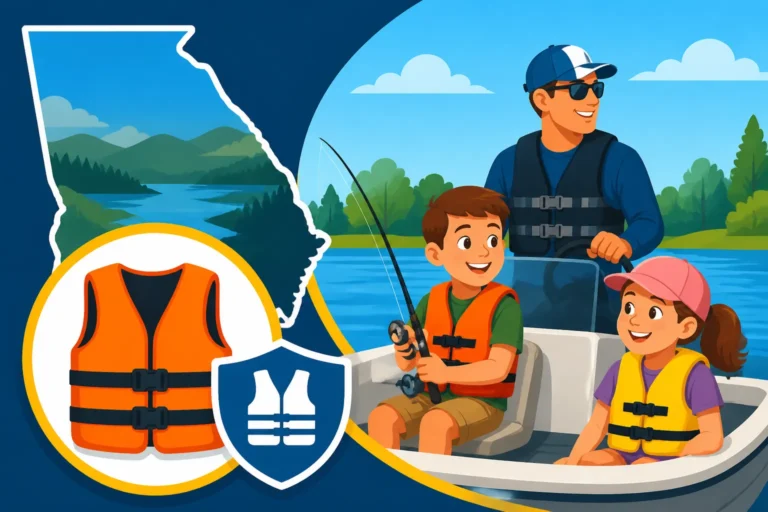
One of the most fundamental and universally required pieces of safety gear is the personal flotation device, or PFD, more commonly known as a life jacket. It might seem obvious, but you absolutely need enough Coast Guard-approved PFDs for every single person on board your vessel. This isn't just a suggestion; it's a non-negotiable rule in Georgia, and across the nation, because in the event of an unexpected capsize, a person overboard situation, or even just a sudden wave, a life jacket can be the difference between life and death.
Beyond simply having enough, the PFDs must be readily accessible and correctly sized for each individual. A life jacket stuffed in a locker under a pile of gear isn't "readily accessible" when seconds count. Think about the fit, too: a PFD that's too loose can ride up and won't keep a person's head above water, while one that's too tight will be uncomfortable and might not be worn at all. This is especially critical for children, where ill-fitting life jackets are a common issue.
Georgia law has specific stipulations for children, requiring all children under 13 years of age to wear a Coast Guard-approved PFD at all times while on a moving vessel. This isn't just about having one on board; it's about active use. It's a common misconception that if a child is a strong swimmer, they don't need to wear a life jacket, but even the best swimmers can be overcome by cold water shock, disorientation, or injury in an unexpected fall overboard. Make sure you're up to speed on Georgia Life Jacket Laws for Boaters and Kids to ensure every little one on your boat is protected.
Visual Distress Signals
Imagine a sudden, dense fog rolling in on Lake Lanier, or your engine unexpectedly dying just as dusk approaches on the Chattahoochee River, leaving you adrift and unable to move. This is precisely when visual distress signals become absolutely vital. These devices are designed to alert other boaters, or search and rescue teams, to your location when you're in trouble. For vessels operating in coastal waters, certain lakes, or at night, specific types of visual distress signals are legally required.
The type of signal needed often depends on whether you're operating during the day or night, and where you're boating. For daytime, an orange distress flag is a common visual signal. At night, or in conditions of reduced visibility, flares (either handheld or aerial) are widely used and legally required on many vessels. However, flares have an expiration date and must be replaced periodically, which can sometimes catch boaters off guard.
Thankfully, technology offers modern alternatives. Electronic visual distress signals (eVDs) are now Coast Guard-approved and offer a fantastic, reusable option, eliminating the need to constantly check expiration dates on traditional flares. These devices often flash an S.O.S. pattern and can be highly effective for signaling over long distances at night. Regardless of which type you choose, ensure they are in good working order and easily accessible. Having them locked away or buried under fishing gear won't help you when you need them most. It's a good idea to familiarize yourself with What Safety Equipment Is Required on a Georgia Boat for a complete list of necessities.
Sound-Producing Devices
Just like visual signals, sound-producing devices play a crucial role in communication and alerting others, especially when visibility is poor. Every vessel is required to carry some means of making an efficient sound signal. For smaller boats, a simple whistle can suffice, but larger vessels will need a horn or a bell. The purpose is twofold: to signal your presence to other boaters in conditions like fog or heavy rain, and to communicate intentions, such as passing another vessel.
Picture this: you're navigating a winding section of the Savannah River, and suddenly, a thick mist settles in, reducing your visibility to mere yards. In such a scenario, using your sound-producing device according to established navigation rules can prevent a collision with another boat that might not see you coming. It's a fundamental aspect of safe boating and one that is often overlooked until it's desperately needed.
Ensure your chosen device is loud enough to be heard over engine noise and other ambient sounds on the water. A small, barely audible whistle clipped to a life jacket might be okay for a kayak, but a larger powerboat demands something more substantial, like an air horn or a built-in electric horn. Knowing the appropriate signals—like one long blast to warn of your presence, or specific sequences for passing—is just as important as having the device itself.
Fire Safety and Prevention
While we all hope to never experience a fire on our boat, the reality is that fuel, electrical systems, and engines create a potential risk. Taking proactive steps for fire safety is not only a legal requirement but a critical part of protecting your vessel and everyone aboard. A small electrical issue or a bit of spilled fuel can escalate rapidly, so being prepared is paramount.
Marine-Rated Fire Extinguishers
When it comes to fire safety on a boat, a marine-rated fire extinguisher isn't just any old extinguisher you'd keep in your kitchen. It's specifically designed to handle the types of fires that typically occur on a boat—those involving flammable liquids like gasoline or oil, and electrical fires. Georgia law, aligning with federal regulations, mandates that most motorized vessels carry at least one Coast Guard-approved, marine-type fire extinguisher.
These extinguishers are often labeled with a "B" rating, indicating their effectiveness against flammable liquid and electrical fires. The number accompanying the letter (e.g., B-I, B-II) indicates the size and extinguishing capacity. It's not enough to just have one; it needs to be easily accessible and in good working order. That means checking the pressure gauge regularly to ensure it's in the green zone, and inspecting it for any signs of damage or tampering. An extinguisher buried under a cooler or under a pile of life jackets is useless when an emergency strikes. For more detailed information on selection and placement, check out our guide on the Best Fire Extinguisher for a Small Fishing Boat.
Consider a hypothetical situation: you've just refueled at the marina, and a small amount of gasoline spills into the bilge. A spark from an electrical connection, or even a hot engine component, could ignite those fumes. Having a functioning fire extinguisher mounted near the helm or in the galley, ready for immediate use, can prevent a minor incident from becoming a catastrophic blaze. It's a small investment for massive peace of mind.
Proper Ventilation for Fuel Compartments
One of the silent, unseen dangers on any boat with an inboard engine or enclosed fuel tanks is the accumulation of gasoline fumes. These fumes are heavier than air and can settle in the bilge or enclosed compartments, creating a highly explosive atmosphere. Without proper ventilation, a single spark—from starting the engine, flipping a switch, or even a static discharge—can lead to a devastating explosion. This is why adequate ventilation is not just a recommendation but a strict safety standard.
Most modern powerboats are equipped with either natural ventilation systems, forced ventilation (blowers), or both. Natural ventilation typically involves vents that allow air to circulate through the fuel compartment, pushing out fumes. Forced ventilation systems use electrically powered blowers to actively exhaust fumes from the engine and fuel tank spaces before starting the engine. It's crucial to operate your blower for several minutes before starting your engine, especially after fueling, to purge any potentially dangerous fumes.
Regular inspection of your ventilation system is also vital. Ensure that all vents are clear of obstructions, and that blowers are functioning correctly. Any strange smells of gasoline should be investigated immediately, and never ignore a blower that isn't working. This preventative measure is one of the most effective ways to mitigate the risk of fire and explosion on your boat, making sure your boating adventures remain safe and enjoyable.
Navigation, Communication, and Emergency Readiness
Beyond the immediate protection offered by PFDs and fire extinguishers, being prepared for unforeseen circumstances involves having the right tools for navigation, staying connected, and equipping yourself for minor mishaps or prolonged waits. These elements contribute significantly to your overall safety and ability to handle unexpected challenges on the water.
Anchors, Lines, and Paddles/Oars
Even the most powerful engine can fail, and even the most seasoned captain can encounter unexpected currents or wind. That's why having reliable anchors, lines, and some form of manual propulsion (paddles or oars) are indispensable for any Georgia boater. An anchor isn't just for stopping to fish; it's a critical safety device that can hold your boat steady in an emergency, preventing you from drifting into hazardous areas or onto shore.
Choosing the right anchor depends heavily on the type of boat you have and the waters you frequent. A small jon boat on a river might get by with a grapnel anchor, but a larger vessel on a wide-open lake like Clarks Hill will need something more robust, like a fluke or plow anchor, to effectively hold against wind and waves. Always make sure you have enough anchor rode (rope and chain) for the depths you'll be anchoring in—a general rule of thumb is a 7:1 scope, meaning seven feet of rode for every one foot of depth. For more in-depth advice, check out our guide on the Best Anchor for Fishing Georgia Reservoirs.
Alongside your anchor, sturdy dock lines are crucial. These aren't just for tying up at the marina; they can be used for towing, securing gear, or even as a lifeline in a person-overboard situation. And for those moments when your engine sputters its last, a set of robust paddles or oars can get you back to shore or at least out of immediate danger, especially on smaller vessels or in calm waters. Never underestimate the power of human propulsion when all else fails.
Communication Devices
In today's connected world, it's easy to assume your cell phone is all you need for communication on the water. While a cell phone is certainly useful for checking weather or calling friends, it should never be your sole means of emergency communication, especially on larger lakes or coastal waters where service can be spotty or nonexistent. VHF marine radios are the standard for boat-to-boat and boat-to-shore communication, allowing you to hail other vessels, contact marine patrol, or issue a Mayday call to the Coast Guard.
A VHF radio operates on dedicated marine frequencies and can often reach much further than a cell phone, especially from boat-to-boat. Channel 16 is the international hailing and distress frequency, constantly monitored by the Coast Guard and other vessels. Knowing how to properly use a VHF radio and making a clear distress call is a skill every boater should possess. Even if you're primarily on inland lakes, a handheld VHF radio can be a lifesaver.
For those venturing further offshore, or into extremely remote areas, an Emergency Position Indicating Radio Beacon (EPIRB) or a Personal Locator Beacon (PLB) offers the ultimate peace of mind. These devices, once activated, transmit a distress signal that is picked up by satellites and relayed to rescue coordination centers, pinpointing your exact location. While a significant investment, they are invaluable for serious offshore anglers and long-distance cruisers, serving as a reliable backup when all other communication fails. Always remember to file a float plan with a trusted friend or family member before you head out, detailing your route, destination, and expected return time.
First-Aid Kit and Emergency Supplies
Accidents and unexpected turns of events aren't always dramatic engine failures or capsizes. Sometimes, it's a simple cut from a fish hook, a nasty sunburn, or a sudden bout of seasickness that can spoil a day or even require more serious attention. That's why a well-stocked first-aid kit is an absolute must-have on any boat, no matter how short your trip. It's about being prepared for the everyday scrapes and the less common, but still possible, medical emergencies.
Your kit should include basics like bandages, antiseptic wipes, pain relievers, and any personal medications for those on board. But think beyond just the essentials; consider items like motion sickness medication, tweezers for splinters or hooks, waterproof tape, and even a snakebite kit if you're exploring swampy river areas. A severe allergic reaction or a sudden illness requires quick action, and having the necessary supplies on hand can prevent a situation from escalating while you make your way back to shore or wait for assistance.
Beyond medical supplies, a broader emergency kit with additional supplies is a smart move. This could include extra bottled water, non-perishable snacks, a space blanket, spare clothes, a basic toolkit for minor repairs, and a reliable flashlight or headlamp with extra batteries. You never know when a short trip might turn into an unexpected overnight stay due to weather, mechanical issues, or other unforeseen circumstances. A comprehensive list of what to pack can be found in our guide on What to Keep in a Boat Emergency Kit, ensuring you're ready for anything.
Registration, Documentation, and Legal Requirements
Boating isn't just about fun and relaxation; it's also about responsibility and adherence to laws and regulations. Just like driving a car, operating a boat in Georgia comes with legal obligations regarding registration, titling, and operator education. Ignoring these can lead to fines, inconvenience, and even impoundment of your vessel, turning a pleasant day on the water into a bureaucratic nightmare.
Boat Registration and Documentation
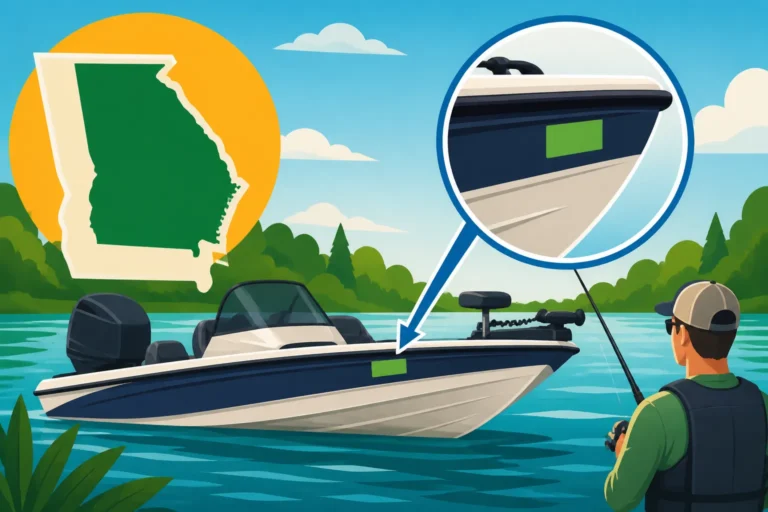
Every motorized boat, and most sailboats over 12 feet in length, operating in Georgia waters must be properly registered with the Georgia Department of Natural Resources (DNR). This isn't just a formality; it provides identification for your vessel and helps authorities track ownership. When you register your boat, you'll receive a registration certificate and decals that must be displayed on your boat in a specific manner. Your registration numbers need to be prominently affixed to each side of the bow, and the current year's decal should be placed on the left side of those numbers.
It's critical that your registration certificate is aboard your vessel whenever it's in use. Think of it like your car's registration and proof of insurance—you need to be able to produce it if requested by marine patrol or other law enforcement. Keeping it in a waterproof bag or compartment is always a good idea. For new boat owners, or those relocating to Georgia, understanding the process is key to avoiding issues. Our detailed guide, Georgia Boat Registration Requirements Explained, walks you through everything you need to know.
Registration typically needs to be renewed annually or biennially, depending on the type of registration. Missing a renewal can result in penalties, so it's wise to keep track of your expiration date. The good news is that renewing your registration is usually a straightforward process that can often be done online. For specific steps and timelines, refer to our article on How to Renew Your Georgia Boat Registration to ensure you're always in compliance.
Boater Education Card
Just as you need a driver's license to operate a car, many boaters in Georgia are required to have a Boater Education Card. This card demonstrates that you've completed a state-approved boating safety course, equipping you with essential knowledge about navigation rules, safety practices, and emergency procedures. The primary requirement for the Boater Education Card applies to anyone born on or after January 1, 1998, who operates a motorized vessel on Georgia waters.
Even if you don't fall within this age bracket, completing a boating safety course is highly recommended for all operators. These courses cover a vast array of topics, from understanding aids to navigation and right-of-way rules to basic boat maintenance and how to respond to common emergencies. It's an investment in your safety and the safety of your passengers, as well as those around you on the water. Many insurance companies also offer discounts to boaters who have completed such a course.
Getting your Boater Education Card is typically done through an approved online course or in-person class, followed by a test. Once you pass, you'll receive your card, which you should keep with you while operating your boat. It's proof that you've invested the time to learn safe boating practices. For all the details on who needs it and how to obtain one, be sure to read our guide on Georgia Boater Education Card Requirements.
Understanding BUI Laws
Boating under the influence (BUI) is just as serious, if not more so, than driving under the influence (DUI). The combination of sun, wind, waves, and the motion of a boat can amplify the effects of alcohol, impairing judgment and coordination significantly. Georgia has strict laws against operating a vessel while intoxicated, and the penalties are severe, mirroring those for DUI. This includes fines, loss of boating privileges, and even jail time.
The legal blood alcohol limit for operating a boat in Georgia is the same as for driving a car: 0.08% for adults. For those under 21, it's even stricter, often a "zero tolerance" policy. Marine patrol officers are vigilant, especially during holidays and peak boating seasons, and they have the authority to stop and board vessels to ensure compliance with safety regulations, including checking for BUI.
It's not just alcohol; operating a boat under the influence of drugs, including prescription medications that impair your ability, is also illegal. The best advice is simple: if you plan to drink, don't operate your boat. Designate a sober captain, or save the celebratory drinks for when you're safely back on shore. Understanding Georgia Boating Under the Influence Laws is crucial for every boater to avoid dangerous situations and legal repercussions.
Smart Add-ons: Beyond the Basics for Peace of Mind
While the previous sections covered the absolute necessities and legal requirements, truly responsible and prepared boaters often go a step further. These "smart add-ons" aren't always mandated by law, but they significantly enhance your safety, comfort, and overall enjoyment on the water. Think of them as upgrading your peace of mind.
GPS/Chartplotter and Depth Finder
In today's world, navigating by landmarks and gut feeling alone can be a recipe for trouble, especially on large, unfamiliar bodies of water. A GPS unit with a built-in chartplotter is an invaluable tool for any boater, providing real-time location, mapping capabilities, and the ability to plot courses and mark important waypoints. It helps you stay on track, avoid shallow areas, and find your way back to the ramp even in low visibility.
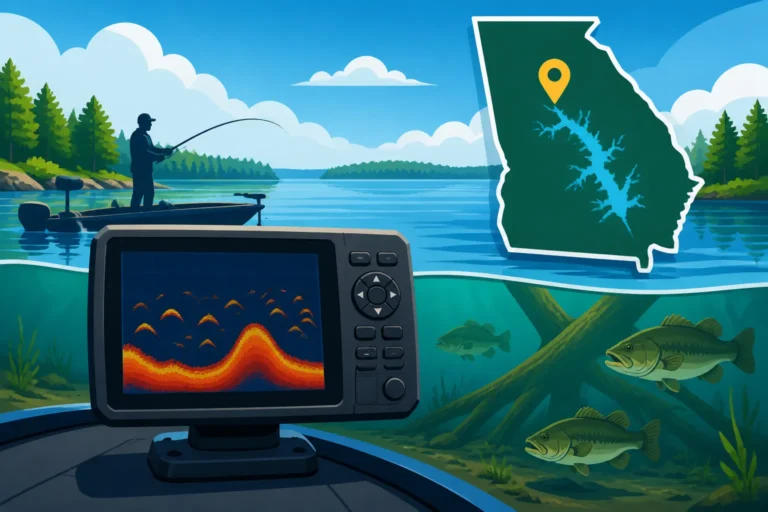
Many modern GPS units come integrated with depth finders, also known as fish finders. While primarily thought of by anglers looking for productive fishing spots, a depth finder is also a crucial safety tool. It helps you identify sudden changes in depth, spot submerged hazards like stumps or rock piles, and navigate safely around sandbars. Avoiding running aground can save you from costly repairs and potentially dangerous situations for you and your passengers.
Consider models from trusted brands like Garmin or Lowrance, which offer a range of options from portable handheld units to sophisticated multi-function displays for larger boats. Even if you're familiar with your local waters, these devices can highlight subtle changes, unexpected hazards, or guide you through a foggy return to the dock. For anglers, these are essential for finding structure, but for any boater, they're a significant safety upgrade. Dive deeper into finding the right one with our guide on Best Fish Finders for Georgia Reservoir Fishing.
Extra Layers and Sun Protection
Boating might conjure images of bright sunshine and warm breezes, but conditions on the water can change rapidly in Georgia. A sunny morning can quickly turn into a chilly, overcast afternoon, or a sudden thunderstorm can roll in, dropping temperatures dramatically. Being caught unprepared for a change in weather can lead to discomfort, hypothermia, or distraction, which can compromise safety.
Always pack extra layers of clothing, even on what seems like a perfect day. A waterproof and windproof jacket is a non-negotiable item, providing protection against sudden showers or a cool spray. Non-cotton layers that wick moisture away from your skin are ideal. You can easily find great options at retailers like Bass Pro Shops or through online platforms like Amazon, ensuring you have quality gear that stands up to the elements.
Equally important is sun protection. The sun's rays are amplified on the water due to reflection, leading to a much higher risk of sunburn and long-term skin damage. Hats with wide brims, long-sleeved shirts with UPF protection, and plenty of high-SPF sunscreen are essential. Polarized sunglasses are not only great for spotting fish but also reduce glare, improving visibility and reducing eye strain, which is another crucial safety aspect. For tips on choosing the right eyewear, take a look at our article on the Best Sunglasses for Sight Fishing on the Water.
Tools, Spare Parts, and Battery Management
Even a well-maintained boat can experience minor mechanical issues. Having a basic toolkit on board can help you fix simple problems, preventing a tow back to shore or turning a minor inconvenience into a major headache. This isn't about performing major engine overhauls, but rather addressing common issues like loose bolts, a fouled spark plug, or a broken hose clamp.
Your toolkit should include items like wrenches, screwdrivers, pliers, electrical tape, spare fuses, and zip ties. Beyond tools, carrying essential spare parts can be a lifesaver. A spare propeller and the necessary wrench to change it are critical, especially if you venture into shallow or unfamiliar waters where striking an object is a possibility. Having an extra set of spark plugs or a fuel filter can also keep you from being stranded.
Finally, proper battery management is often overlooked until it's too late. A dead battery can mean you can't start your engine, operate your electronics, or even sound your horn. Always ensure your boat's battery is fully charged before heading out, and consider carrying a portable jump starter or a set of marine-grade jumper cables. If your boat has multiple batteries, ensure they are properly wired and consider a battery switch to manage power effectively. These proactive measures can prevent common breakdowns and ensure your day on the water ends as smoothly as it began. For a comprehensive overview, our Safety Gear Checklist for a Day on Lake Lanier offers specific recommendations for that popular waterway.
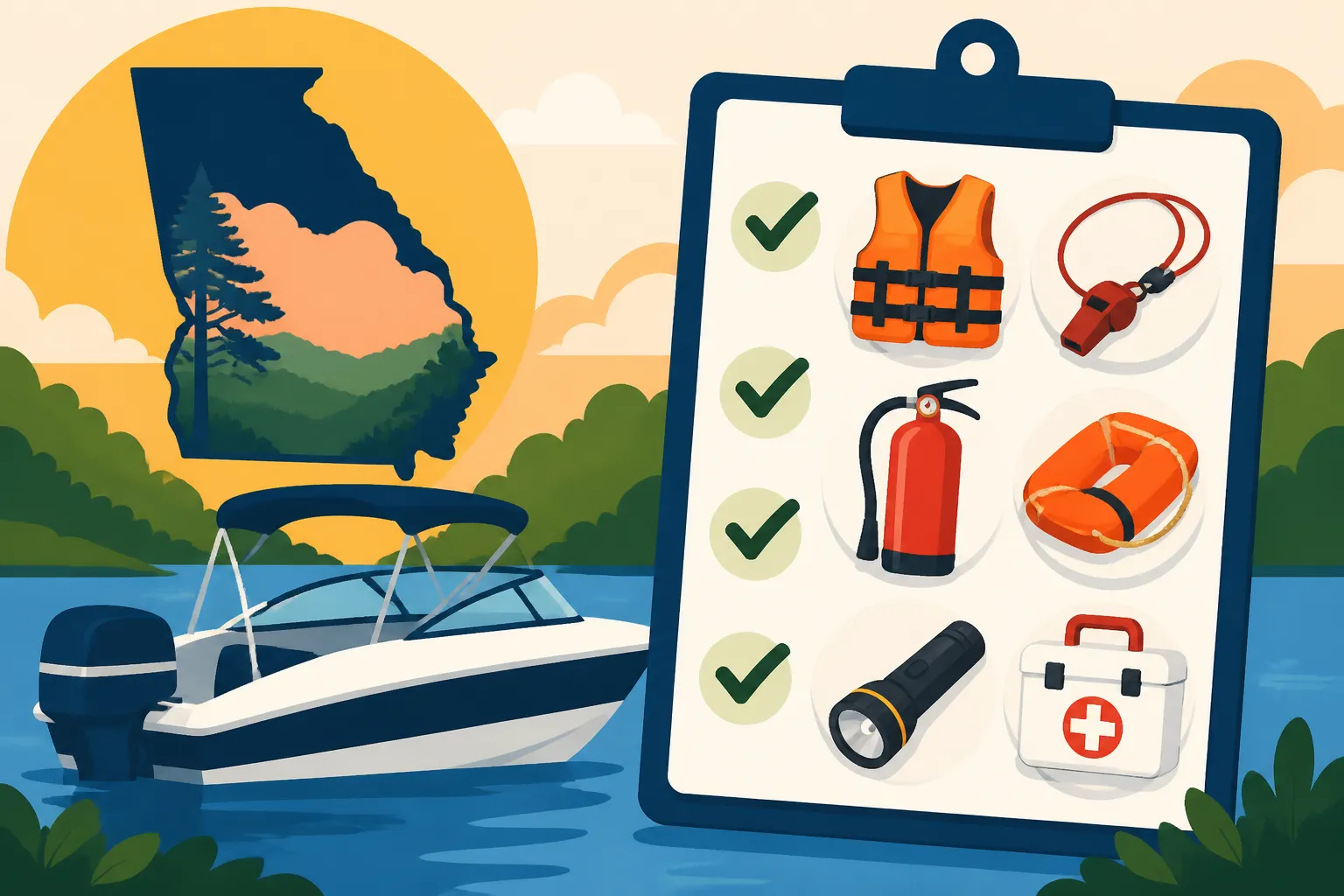
Here's a quick summary of key safety gear:
| Category | Required Gear | Recommended Gear (Smart Add-Ons) | Purpose |
|---|---|---|---|
| Personal Safety | Coast Guard-approved PFDs for all on board | Extra PFDs, throwable flotation device | Prevent drowning, provide support in water |
| Signaling & Visibility | Visual Distress Signals (flares, flag, or eVD) | Air horn, strobe light, signaling mirror | Alert others to your position, communicate intentions |
| Sound-Producing Device (whistle, horn, bell) | |||
| Fire Safety | Marine-rated Fire Extinguisher | Multiple extinguishers (for larger boats) | Suppress fires involving fuel, oil, or electrical systems |
| Proper Ventilation System (for enclosed fuel/engine areas) | Fume detector, engine cut-off switch | Prevent accumulation of explosive fumes | |
| Navigation & Control | Anchor with sufficient rode, dock lines, paddles/oars | GPS/Chartplotter, Depth Finder, backup compass | Stop drift, secure vessel, provide manual propulsion, navigate safely |
| Communication | Cell phone (as backup), Float Plan filed with someone | VHF Marine Radio, EPIRB/PLB (offshore) | Call for help, communicate with other vessels/authorities |
| Emergency Preparedness | First-Aid Kit | Emergency repair kit, tools, spare parts, extra water/food | Address injuries, make minor repairs, sustain during delays |
| Legal Documentation | Boat Registration/Title, Boater Education Card (if required) | Vessel insurance documentation | Legal operation, proof of ownership, demonstrated competency |
Disclaimer
This article is for general informational purposes only and does not constitute professional advice. Laws, prices and regulations vary by location and change over time. Consult a qualified professional for guidance on your specific situation.