How to Identify Bluegill and Other Sunfish
When you're out on a peaceful Georgia pond or a lazy river, reeling in what you think is a nice bream, it's easy to wonder: is this a bluegill, a redbreast, or something else entirely? Many anglers, especially those just starting out or fishing with their kids, often struggle to tell the difference between the various sunfish species. It can be a little frustrating to catch a beautiful fish and not be entirely sure what you've got! This guide is here to clear up that confusion, helping you confidently identify bluegill and their equally fun-to-catch sunfish cousins in Georgia waters.
Understanding the Sunfish Family in Georgia (and What We Call 'Em)
Before we dive into the nitty-gritty of identification, let's talk about the big picture. The sunfish family, scientifically known as Centrarchidae, is a diverse group of freshwater fish that calls Georgia home. This family includes popular sport fish like largemouth bass, crappie, and, of course, all those smaller, feisty "bream" that are so much fun to catch.
What Exactly is a Sunfish, Anyway?
In Georgia, when we talk about "sunfish," we're generally referring to the smaller members of this larger family, distinct from bass and crappie. These are the fish often collectively called "bream" or "panfish" because they're typically small enough to fit in a frying pan and make for delicious table fare. They're characterized by their somewhat compressed, disc-like bodies, spiny dorsal fins, and generally aggressive feeding habits, making them a joy for anglers of all ages. Don't let their small stature fool you; they can put up a surprisingly strong fight on light tackle! If you're looking for more general information on these amazing fish, check out our Bream and Sunfish Guide for Georgia Anglers.
Common Sunfish Species You'll Encounter in Georgia
While bluegill might be the most famous, Georgia's waters are teeming with a variety of sunfish. You'll likely encounter several different species, each with its own subtle charms and identification marks. Beyond the ubiquitous bluegill, some of the most common include:
- Redbreast Sunfish: Known for their vibrant red-orange breasts and elongated opercular (gill) flaps.
- Green Sunfish: Often mistaken for bluegill, they have a larger mouth and a more robust body.
- Spotted Sunfish (also known as Stumpknocker): Characterized by rows of dark spots on their sides and often found in slower moving waters.
- Warmouth: A bit more predatory, with a large mouth and patterns that can resemble a small bass.
- Longear Sunfish: Strikingly colorful with long, dark opercular flaps often edged in red.
Understanding that these are all part of the same extended family helps frame why they can sometimes look so similar, leading to the occasional head-scratching moment on the dock. It’s no wonder folks often just lump them all under the affectionate term "bream." They truly are Bream and Panfish: Georgia's Everyday Catch for many.
The Definitive Guide to Identifying Bluegill
The bluegill is arguably Georgia's most beloved panfish. They're abundant, eager to bite, and provide endless entertainment, especially for young anglers. Knowing how to pick out a bluegill from a lineup of sunfish is a fundamental skill for any Georgia fishing enthusiast.
Key Physical Characteristics of the Bluegill
When you pull a fish out of the water and suspect it's a bluegill, here's what you should be looking for first:
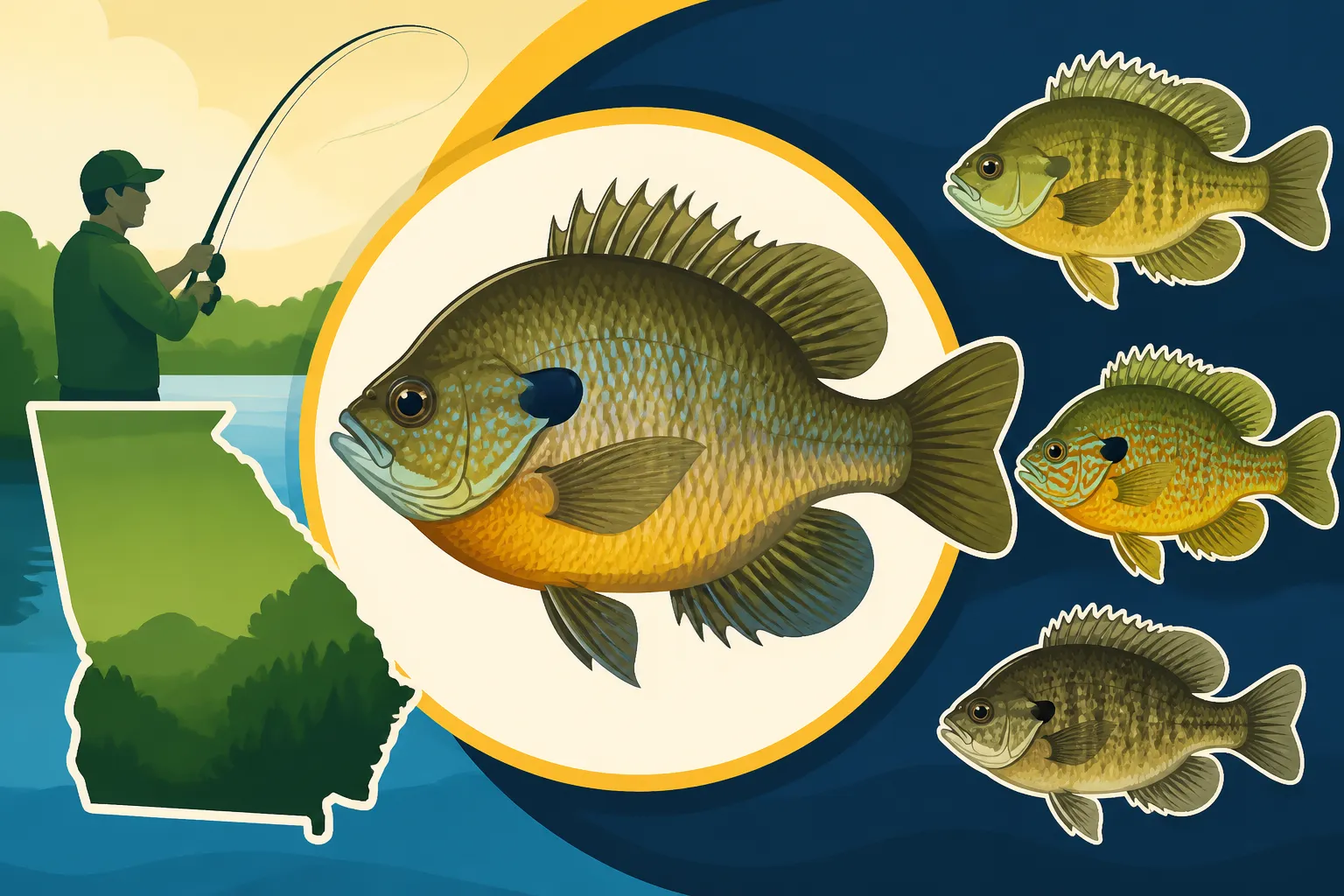
- The "Blue Gill" Spot: The most distinctive feature, and the one that gives them their name, is the prominent, dark (often appearing black or dark blue) spot on the posterior edge of the opercular flap (the gill cover). This spot is usually soft and flexible, unlike the stiffer, elongated flap of a redbreast. It often lacks a colored margin, which can be a key differentiator from some other sunfish.
- Small Mouth: Bluegill have a relatively small mouth. If you hold the fish and gently close its mouth, the corner of its mouth typically won't extend past the front edge of its eye. This is a crucial detail to note when distinguishing them from species like green sunfish or warmouth, which have much larger mouths.
- Body Shape: They generally have a very deep, compressed body, giving them a round or disc-like appearance. Think of it like a pancake or a dinner plate.
- Vertical Barring: While not always distinct, many bluegill will display 5-9 faint, dark vertical bars along their sides, especially when caught from clearer water or during spawning. These bars can fade or become more prominent depending on the fish's mood, habitat, and spawning activity.
- Pectoral Fin: Their pectoral fin (the one just behind the gill cover) is long and pointed. If you press it forward, it will usually extend beyond the eye.
Coloration and Size Variability
One of the trickiest aspects of identifying any sunfish is their incredible ability to change coloration based on their environment, diet, and even their emotional state (like during spawning). A bluegill caught from a muddy pond might look very different from one caught in a clear, deep lake.
- General Coloration: Typically, bluegill have an olive-green back that fades to a yellowish or white belly. Males, especially during spawning season, can develop vibrant orange or yellow throats and breasts, and their bodies might darken considerably, sometimes appearing almost black or dark purple, making those vertical bars very pronounced.
- Size: Bluegill are not usually giant fish. Most average catches range from 6 to 10 inches, weighing less than a pound. However, in nutrient-rich waters with plenty of food, they can certainly grow larger, sometimes exceeding a pound or even two. You can learn more about what to expect from these fish in our article Bluegill Size: What to Expect from Georgia Panfish.
Telling Bluegill Apart from Their Cousins
Now that you're a bluegill identification expert, let's tackle the harder part: distinguishing them from other similar sunfish that share Georgia's waters. This is where a keen eye and knowing those subtle differences really pay off.
Bluegill vs. Redbreast Sunfish
The redbreast sunfish is another popular catch in Georgia, particularly in rivers and streams, but also in many lakes. They are beautiful fish, and it's easy to see why they might be confused with a spawning male bluegill.
- Opercular Flap Length: This is your primary distinguishing characteristic. The redbreast sunfish has a very long, narrow opercular (gill) flap that extends far back, sometimes resembling a "streamer" or "ear tab." This flap is usually solid black or dark brown. In contrast, the bluegill's opercular flap is shorter and wider, with just that distinct dark spot.
- Coloration: While male bluegill can get a reddish tint, the redbreast sunfish consistently lives up to its name with a striking red-orange to yellow breast and belly. Their bodies tend to be more olive-brown with fewer, if any, distinct vertical bars compared to a bluegill.
- Mouth Size: Like bluegill, redbreast sunfish have a relatively small mouth, similar in proportion to the bluegill.
Bluegill vs. Green Sunfish
Green sunfish are often the culprits behind bluegill misidentification. They're hardy fish found in a wide variety of habitats, from small ditches to large reservoirs, and they're eager biters.
- Mouth Size: This is the big one. Green sunfish have a noticeably larger mouth than a bluegill. The corner of their mouth extends back to at least the middle of the eye, often even further back, almost to the posterior edge. This gives them a more "bass-like" appearance around the face.
- Opercular Flap: While they also have a dark spot on the opercular flap, it's typically stiffer and often has a pale, sometimes yellowish-orange, margin. The flap itself is usually shorter and more rounded than a bluegill's.
- Body Shape: Green sunfish tend to have a more elongated, cylindrical body shape compared to the bluegill's deep, compressed disc. They might look a bit stockier.
- Coloration: Their bodies are generally olive-green to brassy yellow, often with iridescent blue-green spots or streaks on their cheeks and opercles. The vertical bars common on bluegill are usually absent or very faint on a green sunfish.
Bluegill vs. Warmouth and Spotted Sunfish
These two are less commonly confused with bluegill once you know what to look for, but they are still part of the sunfish crew in Georgia.
- Warmouth: This fish is a true mini-predator. It has a much larger mouth than a bluegill, extending past the middle of the eye. Their bodies are typically mottled brown and olive, often with distinct radiating lines (like warpaint) from the eye. Their opercular flap is usually stiff and dark with a reddish or orange edge, but it lacks the prominent bluegill "spot."
- Spotted Sunfish (Stumpknocker): As their name suggests, these fish have distinct rows of black spots along their sides, a feature rarely seen on bluegill. They have a small mouth, similar to a bluegill, but their opercular flap is usually longer and stiff, more like a redbreast, and often edged in white or red. Their body is generally more elongated and flatter than a bluegill's, with an olive-brown to yellowish coloration.
Here's a quick comparison table to help you keep these distinctions straight:
| Feature | Bluegill | Redbreast Sunfish | Green Sunfish | Warmouth | Spotted Sunfish (Stumpknocker) |
|---|---|---|---|---|---|
| Opercular Flap | Short, wide, flexible, distinct dark spot | Long, narrow, black/dark brown | Short, rounded, stiff, dark spot with pale edge | Stiff, dark, often reddish edge, no distinct spot | Long, stiff, dark, often white/red edge |
| Mouth Size | Small (doesn't pass front of eye) | Small (doesn't pass front of eye) | Large (passes middle of eye) | Large (passes middle of eye) | Small (doesn't pass front of eye) |
| Body Shape | Deep, compressed, disc-like | Moderately deep, slightly elongated | More elongated, robust, cylindrical | Robust, stocky, bass-like | Elongated, flatter, often spotted |
| Coloration | Olive-green to yellow, faint vertical bars | Olive-brown, bright red-orange breast | Olive-green, iridescent blue on cheeks, no bars | Mottled brown/olive, lines from eye | Olive-brown/yellow, distinct black spots in rows |
| Pectoral Fin | Long, pointed, extends past eye | Shorter, more rounded | Shorter, rounded | Shorter, rounded | Shorter, rounded |
Practical Tips for On-the-Water Identification
Even with all this knowledge, identifying fish in the field can still be a bit tricky, especially when they're flopping around! Here are some practical tips to make the process easier and more reliable.
What to Look for Immediately
When you first reel in a sunfish, don't just admire its beauty (though you definitely should!). Train your eyes to quickly scan for these two primary indicators:
- The Opercular Flap: Is it long and narrow (redbreast, spotted sunfish) or short and wide with a distinct spot (bluegill)? Does the spot have a colored margin (green sunfish)? This is often the quickest way to narrow down the possibilities.
- The Mouth Size: Does the corner of the mouth extend past the front of the eye (green sunfish, warmouth), or is it clearly smaller (bluegill, redbreast, spotted sunfish)?
Once you've got these two features in mind, the other details like coloration and body shape will start to fall into place more easily. Don't be afraid to gently hold the fish still for a moment to get a good look.
Tools to Help You Out
Sometimes, you need a little help from technology or a good old-fashioned book!
- Field Guides: Carrying a small, waterproof field guide specific to Georgia's freshwater fish is invaluable. You can find excellent regional field guides on platforms like Amazon that fit easily into your tackle box or fishing vest. Comparing your catch to detailed drawings or photographs can make a world of difference.
- Reference Photos: Take a quick, clear photo of your catch, especially if you're unsure. You can then compare it to online resources or even ask experienced anglers later. Just be sure to handle the fish gently and return it to the water quickly if you plan to release it.
- Measuring Tape/Scale: While not directly for identification, a measuring tape or a small, portable scale (check Amazon for compact options) can help confirm if your catch is a "trophy" bluegill for its species, or just a really big green sunfish!
- Polarized Sunglasses: A good pair of polarized sunglasses, also easily found on Amazon, can help cut glare and let you see the fish more clearly as you land it, sometimes allowing for a quick identification even before it's fully out of the water.
Catch and Release for Learning
Many sunfish species are quite resilient, making them great candidates for catch and release, especially when you're practicing identification. If you're not planning to keep a fish for dinner, handle it with care to ensure its survival. Wet your hands before touching the fish, support its body, and minimize its time out of water. This allows you to observe, identify, and then release, contributing to healthy fish populations for future generations of anglers. If you're out with little ones, teaching them these responsible practices is part of the fun of fishing. In fact, bluegill are often considered the Easiest Fish for Kids to Catch, making them perfect for teaching both fishing techniques and species identification. For tips on how to fish them, check out our guide on How to Catch Bluegill as a Beginner or even How to Teach a Kid to Fish for Bluegill.
Learning to identify bluegill and their sunfish relatives adds a whole new layer of appreciation to your time on the water. It turns every catch into a mini-biology lesson and helps you understand the amazing diversity swimming beneath the surface of Georgia's lakes and rivers. So next time you feel that familiar tug on your line, take a moment, look closely, and confidently name your catch!
Disclaimer
This article is for general informational purposes only and does not constitute professional advice. Laws, prices and regulations vary by location and change over time. Consult a qualified professional for guidance on your specific situation.