Blue Catfish vs Flathead Catfish: How to Tell Them Apart
It's incredibly frustrating when you're out on the water, you've landed a good-sized catfish, and you're staring at it, wondering if it's a blue or a flathead. These two species are giants of Georgia's waterways, but telling them apart can be tricky, especially if you're relatively new to serious catfishing. This guide is going to walk you through the tell-tale signs, helping you confidently identify your catch and understand what makes each of these magnificent fish unique.
The Challenge of Catfish Identification in Georgia
Georgia's waters are teeming with various catfish species, each with its own quirks and characteristics. While channel catfish are generally easier to spot with their distinct spots (sometimes) and forked tails, blue and flathead catfish often get mistaken for one another due to their impressive size and somewhat similar overall appearance. This confusion isn't just a matter of bragging rights; understanding which species you've caught can inform your fishing techniques, help you understand their behavior, and ensure you're adhering to specific regulations that might apply to one species over the other.
Think about it: you're out on the Flint River, you've got a heavy bend in your rod, and after a good fight, a big cat comes to the surface. Your mind races: is it the powerful, schooling blue or the solitary, ambush-predator flathead? Knowing the subtle differences instantly makes you a more informed angler. Plus, if you're looking for specific gear, like a durable catfish rod and reel combo, knowing the typical fighting style and size potential of each species can guide your choices, whether you're browsing on Amazon or at your local tackle shop.
Why Correct Identification Matters
Beyond satisfying your curiosity, there are practical reasons to distinguish between these two formidable catfish. For starters, their diets and preferred habitats can vary significantly. A blue catfish is often found in large schools, roaming open waters and feeding on a variety of prey, including mussels, crawfish, and smaller fish. Flatheads, on the other hand, are typically solitary ambush predators, lurking in submerged timber and structure, preferring live bait. If you consistently target one species, knowing its habits helps you refine your strategy. You can learn more about their general characteristics in our Catfish Species Compared: Channel vs Blue vs Flathead guide.
Furthermore, while current regulations in Georgia are often general for "catfish," understanding the nuances of each species' biology contributes to better conservation practices. For instance, if you're practicing catch-and-release, knowing the species can help you handle it appropriately based on its typical resilience and recovery time. Plus, having a clear understanding of the species you're pursuing makes conversations with fellow anglers and wildlife officials much clearer and more productive. It shows you're a knowledgeable and responsible participant in Georgia's rich fishing culture.
Dissecting the Blue Catfish: Identifying the True Blue
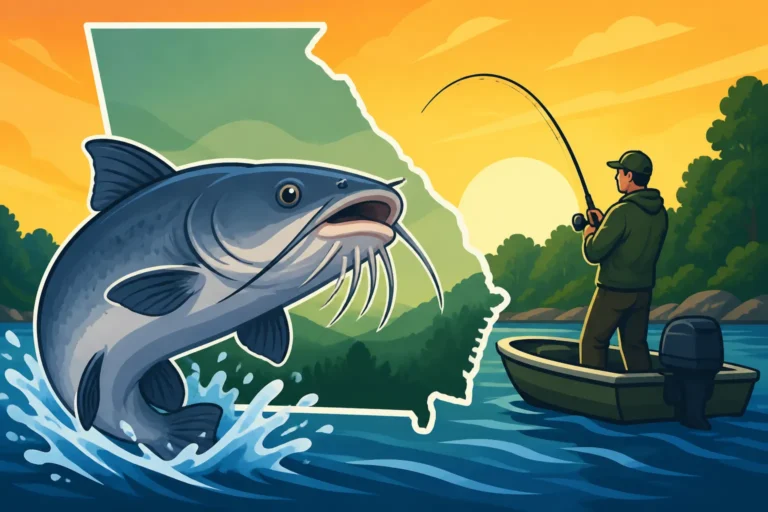
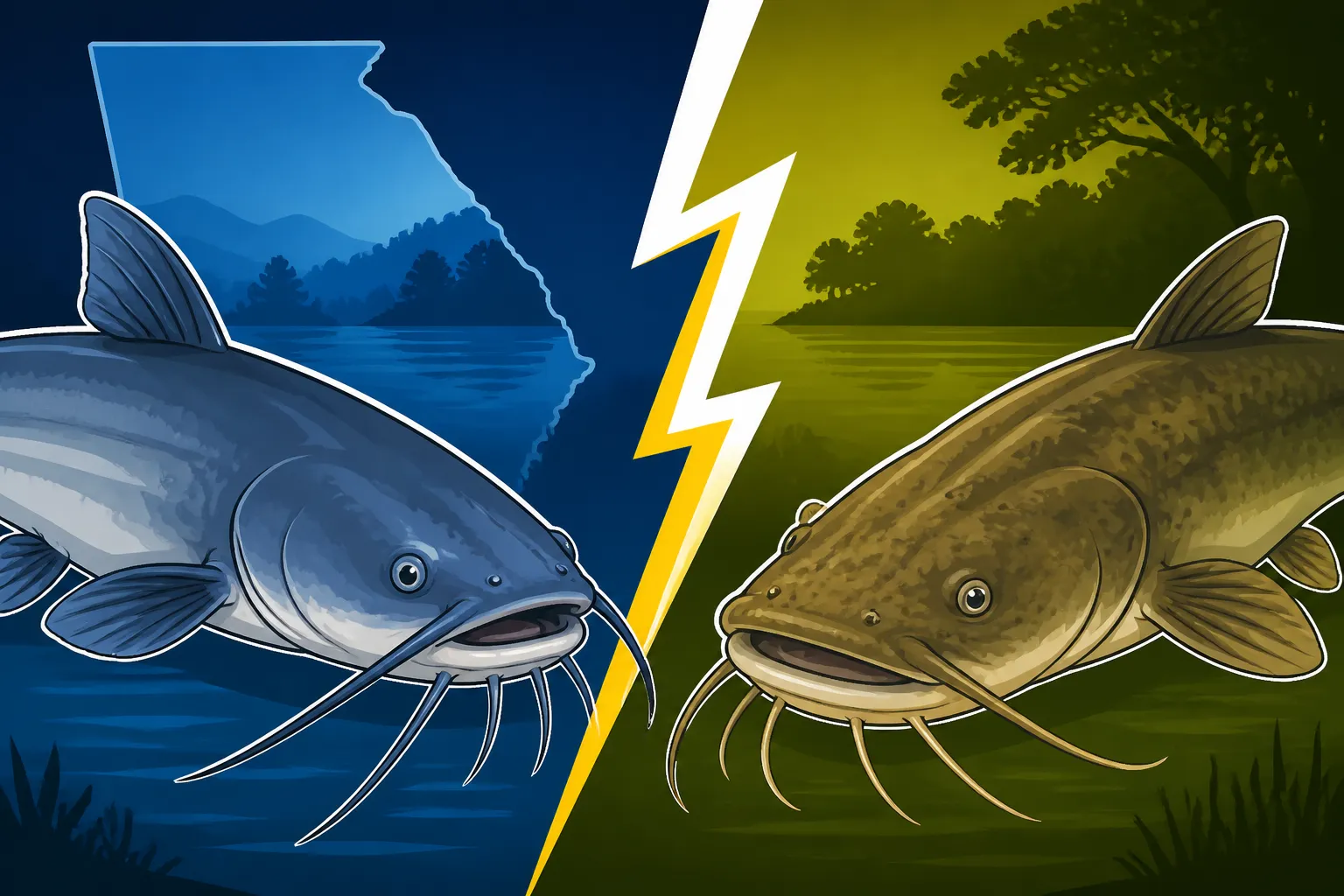
The blue catfish (Ictalurus furcatus) is often considered the largest catfish species in North America, and Georgia boasts some truly impressive specimens. These powerful fish are characterized by their sleek, silver-blue bodies and heavily forked tails, giving them a streamlined appearance built for open water swimming. They are typically found in the main channels of large rivers and reservoirs, often congregating in deeper holes or near current breaks.
When you pull a blue cat out of the water, its sheer size can be daunting. Their body shape suggests power and speed, a stark contrast to the more rounded or mottled appearance of other catfish. This body structure is a key indicator, helping them navigate strong currents and chase down prey. Understanding this helps you appreciate the fight they put up on the line – it's a testament to their aquatic athleticism.
Distinctive Body Shape and Coloration
The most immediate identifiers for a blue catfish are its overall body shape and color. They tend to have a uniformly silver-blue to slate-gray coloration on their back and sides, fading to a white belly. Unlike channel catfish, they typically lack any spots on their body. Their body is generally longer and more slender than a flathead, with a noticeable hump on their back just behind the head, especially in larger specimens. This dorsal hump gives them a distinctive profile.
Imagine holding one: the smooth, scale-less skin has an almost metallic sheen, reflecting the light in shades of blue and silver. There's a certain elegance to their form, despite their brute strength. This coloration also acts as camouflage in the open, often turbid waters they inhabit. Their sleek, torpedo-like body minimizes resistance, allowing them to move efficiently through the water columns of major rivers like the Altamaha or the Savannah. You'll want sturdy gear for these fish, perhaps looking for heavy-duty rods on Amazon designed for big game.
Fin Characteristics and Mouth Shape
Now, let's get into the nitty-gritty: the fins and mouth. The blue catfish has a deeply forked tail, much like a channel catfish, but usually more pronounced. This V-shaped tail is a primary differentiator from the flathead. Their anal fin (the fin on the underside near the tail) is also very long, featuring a straight margin and typically having 30-35 rays. Counting fin rays might seem extreme, but if you're truly stumped, it's a definitive ID marker.
The mouth of a blue catfish is another important clue. It's relatively small and often described as having a subterminal (underslung) position, meaning the upper jaw slightly overhangs the lower jaw. This mouth structure is perfectly adapted for bottom feeding, sucking up mussels, crawfish, and smaller fish. Their barbels (whiskers) are dark and relatively short. Pay close attention to these details – they're not just random features; they're adaptations that tell you a lot about how the fish lives and feeds. If you're using bait, knowing this mouth structure helps you understand how they'll approach and take your offering, which is critical when considering the Best Bait for Blue Catfish in Georgia Rivers.
Unraveling the Flathead Catfish: The Solitary Hunter
The flathead catfish (Pylodictis olivaris) presents a different kind of challenge and reward. These impressive fish are known for their solitary nature, their preference for live prey, and their incredible fighting power. They are ambush predators, often found hunkering down in heavy cover like logjams, submerged trees, or rock piles in rivers and larger creeks. Their physical attributes reflect this lifestyle, making them quite distinct once you know what to look for.
Catching a flathead often means getting into some gnarly structure, a true test of an angler's skill and patience. They don't roam open water in schools like blue cats; instead, they stake out a territory and wait for an unsuspecting meal to pass by. This means your approach to finding and catching them will be vastly different. We've got more tips on finding them in Where to Catch Flathead Catfish in Georgia Rivers.
Distinctive Body Shape and Coloration
The flathead's name is its most obvious clue: they possess a distinctly broad, flattened head, especially when viewed from above. Their body tapers back from this wide head, creating a somewhat wedge-shaped profile. Coloration varies, but they typically have a mottled, yellowish-brown to olive-green body with darker brown or black spots and streaks, providing excellent camouflage against logs and rocky bottoms. Their belly is usually creamy white or pale yellow.
Unlike the blue cat's uniform sheen, the flathead's skin often has a splotchy, almost "dirty" appearance, which is perfect for blending into the muddy or woody bottom where they live. The broad head isn't just for show; it houses powerful jaws capable of engulfing surprisingly large prey. This robust build is designed for power and quick, decisive strikes in close quarters. If you're targeting these beasts, you might want to invest in some heavy-duty line, which you can easily find on Amazon.
Fin Characteristics and Mouth Shape
When it comes to fins, the flathead catfish has a rounded or slightly emarginate (not deeply forked) tail fin. This is perhaps the most immediate visual difference from the blue catfish's deeply forked tail. Their anal fin is notably shorter than that of a blue catfish, with a rounded margin and typically only 14-17 rays. Again, fin ray counts are a definitive way to confirm, but the overall shape is usually enough.
The mouth of a flathead catfish is large and prominent, with the lower jaw protruding beyond the upper jaw, giving it an "underbite" appearance. This large, upward-facing mouth is perfect for grabbing unsuspecting fish swimming above them. Their barbels are generally paler, sometimes even yellowish, and can be quite long, extending past the gills in some cases. When you're considering Live Bream vs Cut Bait for Flathead Catfish, this mouth structure explains why live, struggling bait fish are often so effective – they can easily snatch them up.
Blue Catfish vs. Flathead Catfish: A Side-by-Side Comparison
Now that we've delved into the individual characteristics of these two fascinating species, let's put them side-by-side. Seeing the differences laid out can make identification on the water much easier. It's not just about memorizing a list; it's about understanding how each feature relates to the fish's life and behavior. This deeper understanding will make you a more successful and appreciative angler.
Remember, practice makes perfect. The more you encounter these fish, the quicker you'll be able to spot the key features. Don't be afraid to take a quick photo of your catch (if regulations allow and it's safe for the fish) to review later if you're unsure. You can also refer to our Blue Catfish Identification and Size and Flathead Catfish Identification and Habits guides for even more detailed information.
Key Physical Distinctions Summarized
To make it even clearer, here's a handy table summarizing the main differences you should look for when trying to tell a blue cat from a flathead. Keep this in mind when you're pulling a big one out of a Georgia lake or river!
| Feature | Blue Catfish | Flathead Catfish |
|---|---|---|
| Head Shape | Narrow, slightly humped back behind head | Broad, distinctly flattened, shovel-like head |
| Coloration | Silver-blue to slate-gray, no spots | Mottled yellowish-brown to olive-green, splotchy |
| Tail Fin | Deeply forked, V-shaped | Rounded or slightly emarginate (not deeply forked) |
| Anal Fin | Long, straight margin, 30-35 rays | Short, rounded margin, 14-17 rays |
| Mouth | Relatively small, subterminal (upper jaw overhangs lower) | Large, prominent, lower jaw protrudes (underbite) |
| Eyes | Relatively small | Relatively small, set high on the head |
| Barbels (Whiskers) | Dark, shorter | Pale, sometimes yellowish, longer |
Habitat and Feeding Habits Differences
Beyond their looks, understanding where they live and what they eat is crucial for successful catfishing. Blue catfish are largely considered open-water dwellers, often schooling in large groups. They prefer strong currents and deeper holes in large rivers and reservoirs. Their diet is diverse, consisting of baitfish, mussels, and crayfish, which they typically scavenge or actively hunt in open water. This means techniques like drift fishing with cut bait or even trolling can be effective for them, especially in expansive bodies of water like Lake Oconee or the main channel of the Savannah River.
Flathead catfish, conversely, are structure-oriented ambush predators. They are solitary and prefer to hide in tight cover, such as fallen trees, logjams, rock piles, and undercut banks. They're primarily piscivorous, meaning they prefer live fish as their main food source. Anglers targeting flatheads often use live bait like bream or shad, presenting it near heavy cover where a flathead might be lurking. This distinct preference for live bait and structure makes them a challenging but incredibly rewarding catch, often requiring specific gear and patient fishing methods. You can find more information on their preferences in Best Catfish Gear for Georgia Rivers and Lakes.
Knowing these behavioral distinctions allows you to choose your fishing spot and bait more effectively. If you're looking for a big fight in open water, blues are your target. If you prefer the thrill of extracting a powerful predator from dense cover, flatheads are your game. Both offer incredible fishing experiences here in Georgia, and with these identification tips, you'll be better equipped to pursue your preferred trophy.
Disclaimer
This article is for general informational purposes only and does not constitute professional advice. Laws, prices and regulations vary by location and change over time. Consult a qualified professional for guidance on your specific situation.