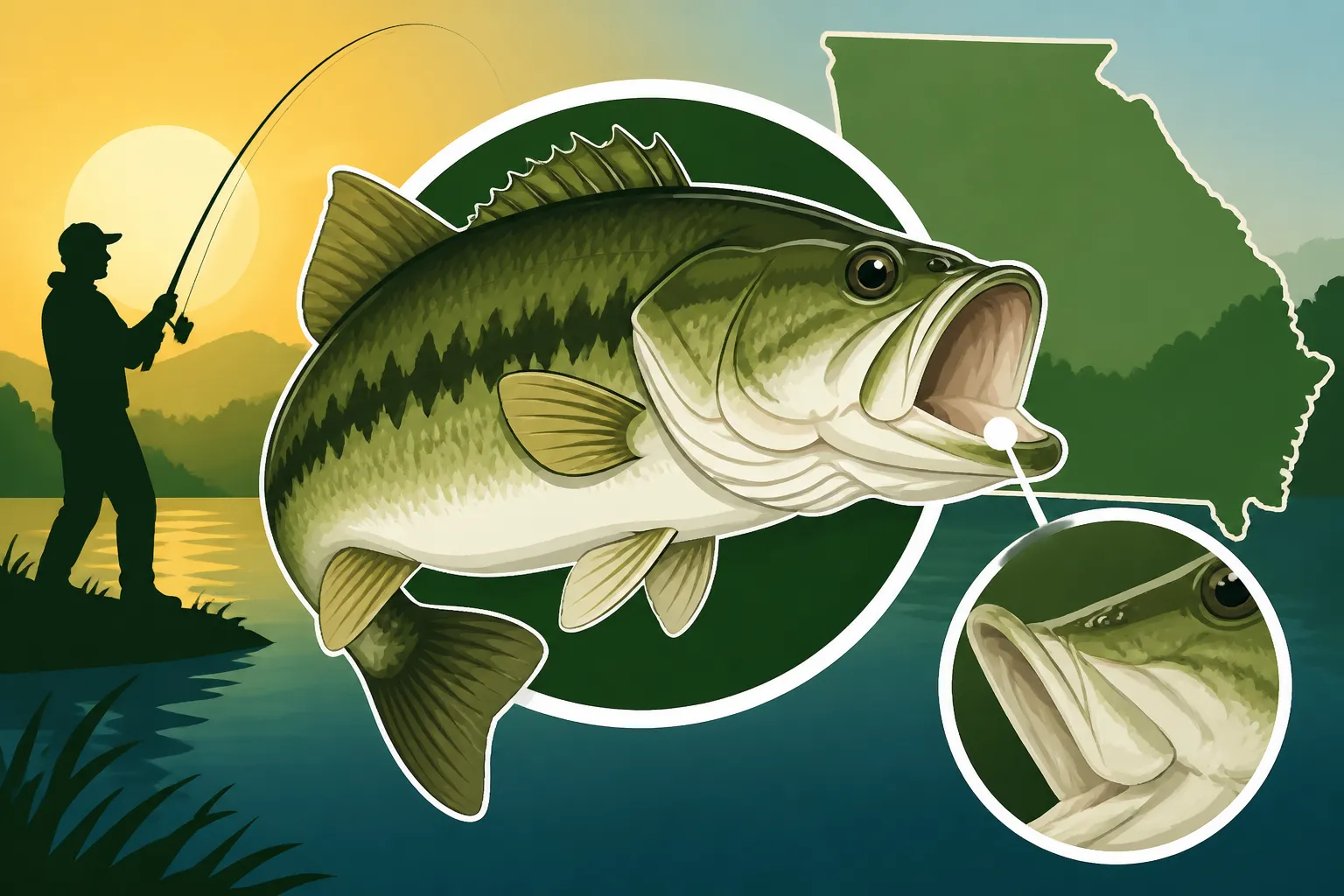
How to Identify a Largemouth Bass
You've just reeled in a beautiful bass from a Georgia lake, and now you're wondering: is this a largemouth? Knowing how to properly identify your catch is more than just impressing your fishing buddies; it's crucial for following regulations, understanding fish behavior, and contributing to the health of our state's incredible fisheries. This guide will walk you through the distinct characteristics of the largemouth bass, help you differentiate it from common look-alikes, and provide practical tips for on-the-water identification.
Why Identifying Your Catch Matters Beyond Bragging Rights
Landing a fish is always exciting, but the excitement often comes with a bit of a puzzle. Is it the species you were targeting? Is it big enough to keep? Could it be a record-breaker? These questions highlight why proper identification is so important. It's not just about knowing what you caught; it's about respecting the rules and contributing to the conservation efforts that keep our Georgia waters thriving.
Understanding Size and Creel Limits
Georgia has specific regulations for different fish species, and bass are no exception. Imagine the frustration of catching a beautiful fish, only to realize later that you've accidentally kept an undersized fish or exceeded the daily limit for that particular species. For instance, the size and creel limits for a largemouth bass might differ significantly from those for a spotted bass or a shoal bass, even if they look somewhat similar at first glance. Georgia largemouth bass daily creel limit and How the statewide bass limit compares to reservoir limits in Georgia are common topics of discussion among anglers, and for good reason! Misidentification can lead to penalties, which no one wants, especially when it was an honest mistake. By taking the time to learn the nuances of each species, you're not just avoiding trouble; you're becoming a more responsible angler. It's a fundamental part of the fishing experience, as important as choosing the right lure or casting technique.
Conserving Georgia's Fisheries
Every time you correctly identify a fish, you're helping to conserve the population. When you release a fish that doesn't meet the legal requirements, or one that you've identified as a sensitive species, you're giving it a chance to reproduce and grow. This responsible angling contributes directly to sustainable fishing for future generations. Our waters are a precious resource, and each of us plays a role in protecting them. Imagine the impact if everyone simply kept whatever they caught without considering the species or its regulations. The populations would quickly dwindle. Proper identification ensures that we, as anglers, are good stewards of our natural environment, allowing the fish stocks to remain healthy and abundant. It's about maintaining that delicate balance between enjoying the sport and preserving the ecosystem.
The Tell-Tale Signs: How to Spot a Largemouth Bass
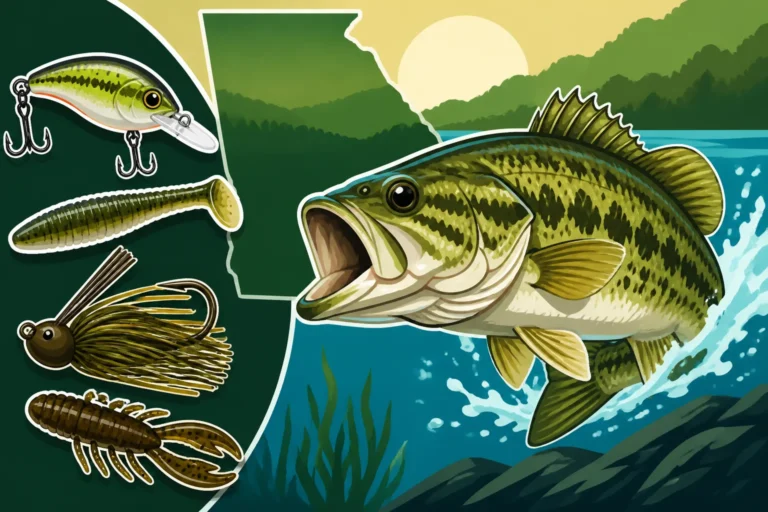
The largemouth bass (Micropterus salmoides) is a true icon of Georgia fishing. It's probably what most people picture when you say "bass." While it shares some general characteristics with its cousins, the spotted and shoal bass, there are a few key features that, once you know them, make identification a breeze. Think of it like learning to recognize a particular person in a crowd – once you know their specific traits, they stand out.
The Distinctive Mouth and Jawline
This is often the first and most obvious clue, hence the "largemouth" name! To identify a largemouth, gently close its mouth (or observe it closely if you're releasing quickly). The key is to see how far back the jaw extends. On a largemouth bass, the corner of the mouth (the maxilla) will extend past the back edge of the eye. This is a critical distinction. Think of a big, gaping maw compared to a smaller, more proportionate mouth.
Now, imagine trying to open a wide-mouthed jar. That's the kind of generous opening a largemouth has, designed perfectly for gulping down smaller fish, frogs, and even small birds and mammals. This feature is particularly noticeable when the fish is excited or displaying aggression. It's a hallmark of a top predator in its aquatic environment. While other bass species have mouths, none quite match the largemouth's impressive oral architecture. When you're fishing and you get a look at the fish's face, this jawline extending beyond the eye is your absolute best friend for a quick ID. If you're ever looking for fishing gear that helps you get a good, clean look at your catch without harming it, you can find plenty of tools on sites like Amazon that aid in safe handling.
Body Shape and Coloration Clues
Largemouth bass typically have a robust, somewhat elongated body that tapers towards the tail. They aren't as slender as some other fish, but they also don't have the incredibly deep, round bodies of something like a crappie. Their overall appearance is powerful and athletic, built for explosive strikes. When it comes to color, largemouth bass usually exhibit a dark green to olive green back, fading to lighter green or silvery sides, and a white belly.
The most characteristic coloration feature is a prominent dark, often irregular, horizontal stripe or series of blotches that runs along the middle of their sides from the gill plate to the tail. This lateral band can vary in intensity depending on the fish's habitat, water clarity, and even its mood. Fish from clear, rocky waters might be darker and more vibrantly patterned, while those from murky, muddy lakes might appear more subdued and uniformly colored. However, that distinctive stripe is almost always there, even if it's faint. It’s like their personal camouflage pattern, helping them blend into submerged vegetation and ambush prey.
Lateral Line and Dorsal Fin Details
Let's get a bit more technical, but don't worry, these details are easy to spot once you know what to look for. The lateral line is a sensory organ that runs along the side of most fish, appearing as a slightly darker or textured line. On a largemouth bass, this line is usually unbroken and continuous, following the curve of its body. This is a subtle but important detail, especially when comparing it to other bass species.
Now, look at the dorsal fin – that's the fin on top of its back. The largemouth bass has two distinct parts to its dorsal fin: a spiny, rigid front section and a softer, rayed back section. The key here is that these two sections are almost completely separated by a deep notch, sometimes appearing as two entirely distinct fins. Imagine a deep valley between two peaks – that's what you're looking for. The spiny part typically has 9-11 spines, and the soft-rayed part has 12-14 soft rays. This deep separation is a crucial identifier that sets the largemouth apart from its cousins. When you're taking a quick photo for identification or just observing, paying attention to that fin separation will give you a lot of confidence in your ID. How to Identify a Largemouth Bass is something every Georgia angler should master.
Common Look-Alikes: Largemouth vs. Spotted vs. Shoal Bass
In Georgia, it's particularly easy to confuse largemouth bass with two other popular species: the spotted bass and the shoal bass. All three are "black bass" species, meaning they belong to the Micropterus genus, and they often inhabit similar waters, leading to understandable mix-ups. However, knowing the subtle differences can help you correctly identify your catch and adhere to specific regulations that might apply to one species over another.
Largemouth vs. Spotted Bass
The spotted bass (Micropterus punctulatus) is probably the most common look-alike for the largemouth in many Georgia lakes and rivers. At first glance, they can appear quite similar, especially smaller specimens. However, there are a few critical differences:
- Mouth Size: This is your primary differentiator. Remember how the largemouth's jaw extends past the eye? For the spotted bass, the corner of the mouth typically does not extend past the back edge of the eye. It's a more proportionate, "normal"-sized mouth relative to its head. If you gently close the fish's mouth, this difference becomes quite clear.
- Patch on Tongue: This is a definitive, almost foolproof test. If you can safely and gently open the fish's mouth and look at its tongue, a spotted bass will almost always have a small patch of teeth on its tongue. A largemouth bass will have a smooth tongue. This is a trick many experienced anglers use when they're unsure.
- Lateral Line & Body Markings: While a largemouth has a distinct horizontal stripe, a spotted bass often has a less defined stripe. Instead, it frequently displays rows of dark spots below the lateral line, giving it a somewhat "spotted" appearance, especially on its belly scales. These spots are usually absent or much fainter on a largemouth.
- Dorsal Fin: The notch between the spiny and soft-rayed dorsal fins on a spotted bass is less pronounced than on a largemouth. It's still there, but it's not as deep or as divided. The two sections appear more connected.
Understanding these distinctions is vital. Spotted Bass vs Largemouth Bass: What's the Difference? can be quite challenging without knowing these key features. If you are ever in doubt, the mouth size and the tongue patch are your best friends for identification.
Largemouth vs. Shoal Bass
The shoal bass (Micropterus cataractae) is a particularly interesting species, often found in the rocky, flowing waters of certain Georgia rivers, most famously the Flint River. While less common than largemouth or spotted bass in many reservoirs, it's crucial to identify them correctly, as they are often managed with more specific conservation goals due to their more limited habitat.
- Mouth Size: Like the spotted bass, the shoal bass typically has a mouth where the jaw does not extend past the back edge of the eye. This immediately differentiates it from the largemouth.
- Body Shape and Coloration: Shoal bass tend to have a more torpedo-shaped body, adapted for life in current, rather than the slightly more robust body of a largemouth. Their coloration is often a dark olive or brownish-green, with distinct, vertical "tiger" bars or blotches along their sides, especially when in pristine river habitats. This pattern is much more vertical and irregular than the horizontal stripe of a largemouth.
- Habitat: While largemouth prefer stiller, often weedier waters, shoal bass thrive in rocky, flowing rivers and creeks. Catching a "bass" with a smaller mouth and distinct vertical bars in a fast-moving river is a strong indicator you have a shoal bass, not a largemouth. Shoal Bass: Georgia's Flint River Specialist is a great resource if you're exploring those unique river fisheries.
- Patch on Tongue: Similar to the spotted bass, shoal bass will typically have a small patch of teeth on their tongue, which is absent on a largemouth.
It's clear that while these bass share a family resemblance, their unique features tell a different story. If you're planning a trip to one of Georgia's diverse waterways, taking a moment to review these identification tips can make all the difference in your angling experience. You can find excellent field guides and identification charts on Amazon that can be a lifesaver when you're out on the water.
Here's a quick comparison table to help you out:
| Feature | Largemouth Bass | Spotted Bass | Shoal Bass |
|---|---|---|---|
| Jawline | Extends past the back edge of the eye | Does NOT extend past the back edge of the eye | Does NOT extend past the back edge of the eye |
| Tongue Patch | Smooth, no teeth | Small patch of teeth | Small patch of teeth |
| Lateral Markings | Prominent, irregular horizontal stripe/blotches | Rows of dark spots below lateral line | Distinct vertical "tiger" bars/blotches |
| Dorsal Fin Notch | Deeply notched, almost separated | Less pronounced notch, more connected | Less pronounced notch, more connected |
| Typical Habitat | Stiller, weedier lakes, ponds, slow rivers | Lakes, rivers, often preferring rocky areas | Rocky, flowing rivers and creeks |
| Body Shape | Robust, elongated | Slightly less robust, more slender | Torpedo-shaped, adapted for current |
Practical Tips for Anglers in the Field
Identifying fish quickly and accurately while you're out on the water can sometimes feel like a challenge, especially when the fish is flopping around, and you're trying to manage your gear. But with a few simple techniques and a little practice, you'll become a pro at recognizing that trophy largemouth or ensuring you're releasing a protected species.
Quick Field Checks
When you've got a fish in hand (or in the net), try to go through a mental checklist of the key identification features. Start with the most obvious and work your way to the more subtle ones:
- The Mouth Test: This is your number one. Gently, but firmly, close the fish's mouth. Does the corner of the jaw go beyond the eye? If yes, it's almost certainly a largemouth. If no, move on to the next step.
- The Tongue Test (if necessary): If the mouth doesn't extend past the eye, the next best thing is the tongue. Carefully open the mouth again and look for a patch of small teeth on the tongue. If you see them, you're likely holding a spotted or shoal bass. If the tongue is smooth, it's a largemouth.
- Dorsal Fin Notch: While you're holding the fish, glance at its dorsal fin. Is there a very deep, almost complete separation between the front spiny part and the back soft-rayed part? That deep notch is a strong indicator of a largemouth.
- Body Pattern: Quickly observe the pattern on the side. Is it a horizontal stripe, distinct spots below the lateral line, or vertical bars? This can confirm your suspicions from the previous steps.
Always handle fish with wet hands to protect their slime coat, and try to keep them out of the water for the shortest time possible, especially if you plan to release them. A good pair of fish-friendly gloves can also help with handling, and you can find many options on Amazon that offer both grip and protection for the fish. Practicing these quick checks will build your confidence and make you a more informed angler.
Photography for Positive ID
Sometimes, even with all the best tips, you might still be unsure, or you might want to show off your catch to others for verification. This is where good photography comes in handy! If you plan to release a fish but want a definite ID later, snap a few clear photos.
Here's what to aim for in your pictures:
- Side Profile: Get a good shot of the entire fish from the side, clearly showing the lateral line, body shape, and any markings.
- Mouth View: Try to get a photo that clearly shows how far back the jaw extends relative to the eye. If possible, a shot of the open mouth from the front or slightly below can show the tongue as well.
- Dorsal Fin: A clear shot of the top of the fish, highlighting the dorsal fin and the presence (or absence) of a deep notch.
- Overall Size/Context: While not strictly for ID, a shot showing the fish next to a ruler or a familiar object can help in estimating its size.
Having these clear reference photos means you can consult field guides later, or even ask experienced anglers for their opinion without keeping the fish out of water for too long. Sharing these photos with local fishing groups or online forums can be a fantastic learning tool, and many anglers are happy to help new people learn How to Identify a Largemouth Bass.
When in Doubt, Release
This is perhaps the most important rule of all, especially when it comes to species that have specific protection or regulations: If you cannot definitively identify the fish, release it. It's always better to err on the side of caution. An honest mistake can still result in a penalty, and more importantly, it can negatively impact fish populations that are being carefully managed.
This is particularly true for fish like shoal bass, which might have stricter limits or even be catch-and-release only in certain areas or during specific times. By choosing to release an unidentified fish, you are actively participating in the conservation efforts that keep Georgia's waters healthy and teeming with life. It shows respect for the resource and ensures that the fish has the best chance to survive and contribute to the ecosystem. Ultimately, the joy of fishing comes from being out on the water, and being a responsible angler ensures that joy can be shared for generations to come.
Disclaimer
This article is for general informational purposes only and does not constitute professional advice. Laws, prices and regulations vary by location and change over time. Consult a qualified professional for guidance on your specific situation.