Striped Bass and Hybrid Striped Bass in Georgia Waters
There's a special kind of thrill that courses through you when a powerful fish absolutely hammers your bait, peels line off your reel, and puts up a fight that leaves your arms aching but your spirit soaring. In Georgia, that heart-pounding experience often comes courtesy of striped bass and their equally feisty cousins, hybrid striped bass. Many anglers, especially those new to these incredible fish, struggle to tell them apart, understand their unique behaviors, and know where and how to effectively target them across our diverse waters. This comprehensive guide is here to unravel the mysteries of these magnificent creatures, helping you identify them, understand their habits, and equip you with the knowledge to consistently land these freshwater titans in Georgia's lakes and rivers.
The Allure of Striped Bass in Georgia
There's something undeniably captivating about the striped bass, often simply called "stripers" by those who pursue them. They embody raw power and an almost primal elegance, making them one of the most sought-after game fish in Georgia. For many, the pursuit of stripers is a lifelong passion, driven by the sheer excitement of tangling with a fish that can grow to impressive sizes and put up an unforgettable battle.
Why Anglers Love Stripers: Power, Fight, Size
Imagine a fish that can hit your lure like a freight train, then make a blistering run that leaves your drag screaming, pulling hundreds of feet of line off your reel in seconds. That's a striped bass for you. Their torpedo-shaped bodies are designed for speed and sustained power, allowing them to fight relentlessly, often making multiple strong runs before finally coming to the net. Unlike some fish that give up after the initial burst, stripers will often surprise you with another surge just when you think you have them whipped. This incredible stamina and strength are what truly sets them apart.
Beyond their fighting prowess, stripers are also known for their impressive size. While average catches might be in the 5- to 15-pound range in many of Georgia's reservoirs, it's not uncommon for anglers to hook into fish weighing 20, 30, or even 40 pounds. The chance of catching a truly trophy-sized striper keeps anglers coming back, hour after hour, season after season. Many seasoned striper anglers will tell you that once you've experienced the thrill of a big striper on the line, other freshwater fishing pursuits can feel a little tame by comparison. It's a truly addictive pursuit, and Georgia offers some fantastic opportunities to engage with it.
A Brief History of Striped Bass in Georgia: Native vs. Stocked
While striped bass are primarily known as an anadromous species, meaning they live in saltwater and migrate to freshwater to spawn, Georgia's inland populations have a fascinating history. Historically, native striped bass would ascend rivers like the Altamaha and Savannah from the Atlantic Ocean to spawn. These river runs still occur today, offering a unique opportunity for anglers targeting true wild stripers. However, the vast majority of striped bass fishing in Georgia's large reservoirs – places like Lake Lanier, Lake Hartwell, and Clarks Hill Lake – relies on robust stocking programs.
The Georgia Department of Natural Resources (DNR) began stocking landlocked striped bass in the state's reservoirs decades ago, realizing the immense potential these fish had for creating world-class fisheries. These stocked fish are unable to reproduce naturally in the lakes due to the lack of long, free-flowing rivers necessary for successful egg development. Therefore, the continued health of these fisheries is directly tied to the DNR's ongoing efforts to raise and release millions of striper fingerlings each year. This distinction between native, riverine stripers and landlocked, stocked populations is crucial for understanding their behavior and where to find them, and it's something we delve into further in our guide on Native vs Stocked Striped Bass in Georgia. These stocking efforts have transformed Georgia into a premier destination for striped bass enthusiasts, making it possible for anglers to experience the saltwater fight in a freshwater setting.
Understanding Striped Bass: Identification and Biology
Before you can effectively target striped bass, you need to know how to identify them and understand a bit about their natural tendencies. They're built for a life of chasing baitfish, and their physical characteristics and behaviors reflect this predatory lifestyle.
Key Identification Marks for Striped Bass
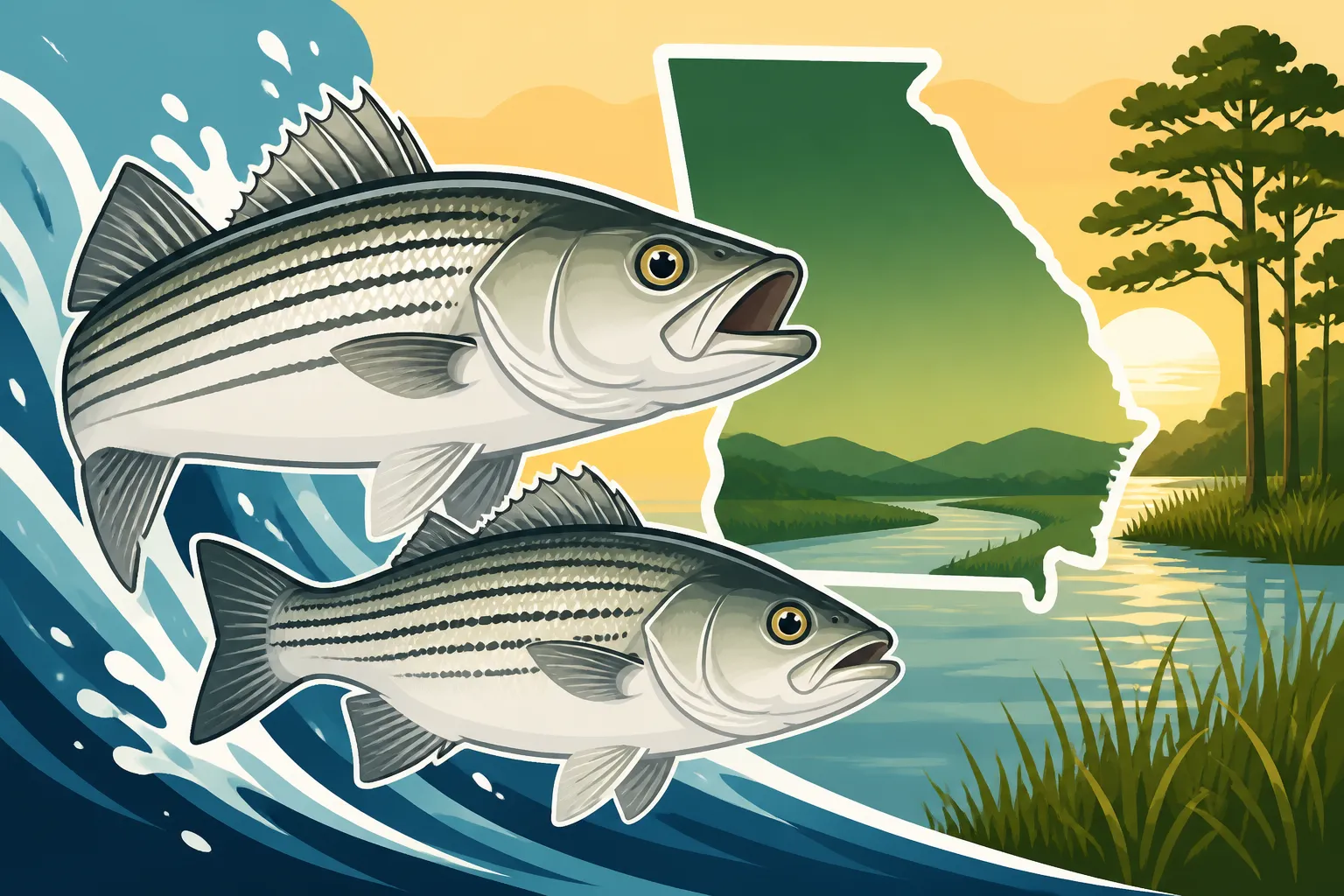
Distinguishing a true striped bass from its hybrid counterpart, or even from a large white bass, is a common challenge. However, a few key features make a pure striper unmistakable. The most obvious is their distinct, unbroken horizontal stripes that run from behind their gill plate all the way to their tail. These stripes are typically dark and prominent, appearing as continuous lines along their silvery-white flanks.
Another telling sign is their body shape. Pure striped bass tend to have a more streamlined, elongated, and cylindrical body compared to the deeper, more compressed body of a white bass or the often "chunkier" appearance of a hybrid. When you feel a pure striper, you'll notice a smooth, sleek profile designed for cutting through water with minimal resistance. Additionally, check the dorsal fins. Striped bass have two separate dorsal fins, with the first being spiny and the second soft-rayed. While other bass species also have two dorsals, the overall body profile and the unbroken stripes are the most reliable indicators. Paying attention to these subtle differences will greatly assist you in identifying your catch accurately.
Habitat and Behavior: Open Water, Schools, Migration
Striped bass are fundamentally open-water predators. In Georgia's large reservoirs, they prefer deep, expansive areas, often congregating around main lake channels, humps, points, and river bends. They are constantly on the move, following schools of baitfish like shad, herring, or alewives, which form the cornerstone of their diet. This pelagic (open-water) lifestyle means they don't typically relate to shallow cover like docks, lily pads, or submerged timber in the same way largemouth bass might, although they will chase bait into shallower coves during feeding frenzies.
One of the most defining behaviors of striped bass is their schooling. They are highly social fish and almost always found in groups, ranging from small pods to massive schools of hundreds of fish. This schooling behavior makes them incredibly effective hunters, as they can collectively corral baitfish. It also means that when you find one striper, you've likely found many. In rivers, especially during cooler months or spawning runs, they will also stage in deeper holes, around current breaks, and below dams. Understanding this inherent schooling and migratory tendency is paramount to locating them, as they will often move significant distances throughout the day and across seasons in pursuit of food and optimal water conditions.
Diet and Feeding Habits: Baitfish, Opportunistic Hunters
Striped bass are apex predators in the freshwater ecosystems they inhabit, and their diet consists almost exclusively of other fish. Shad (both threadfin and gizzard), herring (blueback and alewife), and sometimes even smaller bream or other juvenile fish are their primary food sources. They are incredibly efficient hunters, using their schooling behavior to stun and disorient baitfish before devouring them.
They are also highly opportunistic feeders. While live baitfish are often their preferred meal, stripers will readily strike a variety of artificial lures, especially those that mimic baitfish. Topwater blowups, where a striper explodes on a lure on the surface, are legendary among anglers. They'll also feed on the bottom, especially when baitfish are holding deep, making them susceptible to jigs, spoons, and live bait presented on the bottom. Their feeding activity is often influenced by factors such as water temperature, light levels, and the presence of bait. During prime feeding windows, which can occur at dawn, dusk, or even throughout the night, stripers become incredibly aggressive, making them a fantastic target for anglers who understand their voracious appetites.
Hybrid Striped Bass: The Best of Both Worlds
If you thought striped bass were exciting, wait until you meet their hybrid cousins! Hybrid striped bass, often simply called "hybrids," offer a unique blend of traits that make them another fantastic sportfish in Georgia's waters. They grow fast, fight hard, and are often more readily available in some lakes than pure stripers.
What Exactly is a Hybrid Striper?
A hybrid striped bass is exactly what it sounds like: a cross between two different species. In Georgia, and indeed most of the Southeast, the hybrid striper is typically a cross between a female striped bass (Morone saxatilis) and a male white bass (Morone chrysops). This cross is done artificially in hatcheries, as these two species generally do not hybridize naturally to any significant degree in the wild. The resulting offspring inherit desirable traits from both parents: the larger size and power potential of the striped bass, combined with the hardiness, faster growth rate, and schooling intensity of the white bass.
Because they are sterile, these hybrid populations must be maintained through continuous stocking efforts by state agencies. They are a true testament to fisheries management, creating incredible fishing opportunities in reservoirs where pure stripers might struggle to thrive or where a faster-growing, hard-fighting fish is desired. The Georgia DNR strategically stocks hybrids in specific lakes, knowing they provide a fantastic angling experience and help manage baitfish populations. You can learn more about specific hybrid programs, such as Hybrid Striped Bass at Lake Oconee, in our dedicated articles.
Identifying Hybrid Stripers vs. Pure Stripers
This is where many anglers get tripped up! While hybrids share a strong resemblance to pure stripers, there are some reliable ways to tell them apart. The most common differentiator lies in their stripes. While pure striped bass have continuous, unbroken horizontal stripes, hybrid stripers usually have stripes that are visibly broken, irregular, or disjointed, especially below the lateral line. Some stripes might even appear to be dashed or mottled. Think of it like comparing a perfectly drawn line to a line that's been smudged or interrupted.
Another key identifier is body shape. Hybrids often have a deeper, more robust, and sometimes "football-like" body compared to the more elongated, slender form of a pure striper. They can appear more stout for their length. Additionally, look at the patches of teeth on their tongue. While both stripers and hybrids have two distinct tooth patches, their exact configuration can sometimes offer clues. However, for most anglers on the water, the broken stripes and stockier body are the quickest and most practical ways to differentiate between the two. Understanding these differences is crucial not only for identification but also because creel limits and size restrictions can sometimes vary between the two species, as highlighted in Striped Bass vs Hybrid Striped Bass: Georgia Angler's Guide.
Why Hybrids Thrive in Georgia: Stocking Programs, Growth Rate
Hybrid striped bass have become incredibly popular in Georgia's fisheries due to several key factors. Firstly, their existence is a direct result of successful and consistent stocking programs by the Georgia DNR. These programs ensure a steady supply of fish into the state's reservoirs, creating abundant populations for anglers. The DNR carefully selects lakes where hybrids are likely to flourish, often those with ample baitfish and suitable open-water habitat.
Secondly, hybrids boast an impressive growth rate. They tend to grow faster than pure stripers in their initial years, reaching catchable sizes more quickly, which contributes to more consistent angling success. This faster growth, combined with their incredible fighting spirit – often described as even more intense than a pure striper for their size – makes them a prime target. Hybrids are also generally more tolerant of a wider range of environmental conditions, including warmer water temperatures, which can allow them to thrive in reservoirs where pure stripers might struggle during the hot summer months. Their adaptability and the dedicated stocking efforts make them a resilient and exciting part of Georgia's fishing scene.
Where to Find Striped and Hybrid Striped Bass in Georgia
Georgia is blessed with an abundance of diverse water bodies, many of which host thriving populations of striped and hybrid striped bass. Knowing where to start your search is half the battle, and understanding the nuances of each location can significantly increase your chances of success.
Top Lakes for Striped Bass
When it comes to pure striped bass, Georgia boasts several world-class reservoirs. These large impoundments provide the expansive, deep, and cool waters that stripers need to grow to impressive sizes.
- Lake Lanier: Without a doubt, Lake Lanier stands out as a premier striped bass destination. Known for its clear, deep waters and abundant baitfish (primarily blueback herring), Lanier consistently produces large stripers. Anglers here often target them in the main lake basin, around major creek channels, and over humps and points. The fish tend to suspend in the water column, following the thermocline in summer and roaming shallower in cooler months. Night fishing for stripers on Lanier is also incredibly popular and productive. If you're looking for a serious striper challenge, Lanier is your lake, and you can find more specific advice on Best Time of Year to Catch Bass at Lake Lanier, Georgia which often correlates with striper activity.
- Lake Hartwell: Straddling the Georgia-South Carolina border, Lake Hartwell is another fantastic striper fishery. It’s a vast lake with numerous creeks and channels, offering plenty of deep-water habitat. Stripers on Hartwell also key in on baitfish, and anglers often find success trolling or downlining live bait. The lower end of the lake, near the dam, and the main river channels are typically productive areas.
- Clarks Hill Lake (Lake Strom Thurmond): Like Hartwell, Clarks Hill is another massive Savannah River impoundment shared with South Carolina. It’s renowned for its striped bass fishery, with fish often schooling heavily in the main lake and larger creek arms. Trolling umbrella rigs or jigging spoons are popular tactics here, especially when fish are found suspended in deep water.
These lakes are managed specifically for striped bass, with consistent stocking and favorable environmental conditions that allow these powerful fish to grow and thrive, providing incredible angling opportunities.
Prime Spots for Hybrid Stripers
While pure stripers dominate some lakes, hybrid striped bass have found their niche in others, often thriving in waters that might be a bit warmer or shallower on average.
- Lake Oconee: Lake Oconee is arguably Georgia's most famous hybrid striped bass fishery. Fed by the Oconee River and connected to Lake Sinclair, Oconee's slightly stained waters and abundant gizzard shad make it an ideal hybrid habitat. Hybrids here are aggressive and plentiful, often schooling up in huge numbers. The warmer water discharged from the Georgia Power plant on Lake Sinclair into Oconee can create incredible winter hybrid fishing. You'll often find anglers trolling, casting swimbaits, or fishing live bait in the main lake basin and creek mouths. For a deep dive, check out Hybrid Striped Bass at Lake Oconee.
- Lake Sinclair: Just upstream from Lake Oconee, Lake Sinclair also offers excellent hybrid fishing. While typically known for its largemouth bass and crappie, Sinclair's hybrids can be found in similar open-water areas to Oconee, often following baitfish schools. The power generation activity between the two lakes can create current that concentrates bait and hybrids, making for exciting fishing opportunities.
- West Point Lake: Located on the Chattahoochee River, West Point Lake is another good option for hybrid stripers. While perhaps not as renowned as Oconee for hybrids, West Point offers a solid population that provides great action, particularly in the lower lake and main river channel areas.
These lakes often have robust populations due to strategic stocking, offering fast-paced action for anglers looking for a strong fight.
River Systems and Coastal Areas
Beyond the major reservoirs, Georgia's diverse river systems and coastal waters also hold populations of striped bass, offering different angling experiences.
- Altamaha River: The Altamaha is perhaps Georgia's most famous river for native, anadromous striped bass. These "river stripers" are different from their landlocked cousins, making seasonal runs from the Atlantic Ocean far upriver to spawn. Fishing for these true wild stripers in the Altamaha is a special experience, often done with heavy tackle and large live baits or big swimbaits. The fishing is highly seasonal, peaking in cooler months.
- Savannah River: Similar to the Altamaha, the Savannah River also sees seasonal runs of anadromous striped bass. Anglers targeting them will often focus on the river in the cooler seasons, particularly below dams and in deeper holes where fish congregate.
- Chattahoochee River: While primarily known for its trout fishery in the headwaters, the lower stretches of the Chattahoochee, particularly below Lake Lanier and West Point Lake, can hold migratory or resident populations of striped bass, especially during colder periods when fish move upriver from the larger reservoirs or when water temperatures are favorable.
Coastal areas, though less of a focus for pure freshwater stripers, can offer opportunities for transient "coasties" or even landlocked populations in tidal freshwater reaches. For an overview of prime locations, you might want to consult Best Fishing Spots in Georgia.
Essential Gear and Techniques for Striped and Hybrid Bass
Taming a powerful striped or hybrid bass requires the right tools and a solid understanding of effective tactics. These aren't your average panfish; they demand respect and appropriate tackle. Investing in quality gear, perhaps from a reputable outdoor retailer or even through Amazon, will make a significant difference in your success and enjoyment.
Rods, Reels, and Line for These Powerful Fish
When targeting stripers and hybrids, you need gear that can handle the heavy impact of a strike and the sustained power of their runs. Light tackle simply won't cut it, and you risk breaking rods, snapping lines, or losing that trophy fish of a lifetime.
- Rods: Medium-heavy to heavy power rods, typically 7 to 8 feet long, are ideal. For casting artificials, a fast action rod will help with lure control and hook sets. For live baiting or trolling, a moderate-fast action can provide a bit more give, acting as a shock absorber against powerful head shakes. Look for rods with strong backbone and durable guides.
- Reels: Depending on your preference and technique, both spinning and baitcasting reels have their place.
- Spinning Reels: For casting lighter artificials or when beginners are fishing, a robust spinning reel in the 4000-6000 size range is a good choice. Ensure it has a smooth, powerful drag system and enough line capacity.
- Baitcasting Reels: For heavier lures, deep-water jigging, or trolling, a conventional baitcasting reel or a low-profile baitcaster with a strong drag and high line capacity is often preferred. These reels offer more cranking power and better control when fighting large fish.
- Line: Your choice of line is critical.
- Main Line: 15-30 lb monofilament or fluorocarbon is common for casting and live bait. However, many anglers prefer 30-65 lb braided line for its superior strength-to-diameter ratio, sensitivity, and lack of stretch, which aids in powerful hook sets.
- Leader: Regardless of your main line, a fluorocarbon leader (20-40 lb) is almost always recommended. Fluorocarbon is nearly invisible underwater, providing a stealthy presentation, and its abrasion resistance protects your main line from sharp teeth or rough structures.
- Other Gear: Don't forget a sturdy net with a long handle and rubberized mesh (to protect the fish), pliers for hook removal, and a fish gripper or weighing device. For a more detailed breakdown, consider reading Best Gear for Striped Bass Fishing.
Top Baits and Lures That Get Bites
Stripers and hybrids are predators, and their diet primarily consists of baitfish. Your baits and lures should reflect this.
- Live Bait: This is often the most effective method, especially for larger fish.
- Shad/Herring: Live gizzard shad, threadfin shad, or blueback herring are the kings of striper bait. Their natural action and scent are irresistible. A good livewell to keep them frisky is essential.
- Bream/Other Panfish: For truly trophy-sized stripers, larger baits like bream or other small panfish can be incredibly effective, especially when fished around deeper structure.
- Artificial Lures:
- Swimbaits: Soft plastic swimbaits, often weighted with a jig head, are highly versatile. They mimic baitfish perfectly and can be retrieved at various depths.
- Jigs and Spoons: Heavy metal spoons (like silver spoons) and bucktail jigs are excellent for targeting deep-suspended fish, especially during warmer months. They can be vertically jigged or cast and retrieved.
- Topwater Lures: When stripers are actively chasing bait on the surface (a "boil"), topwater lures like poppers, walking baits, and prop baits can lead to explosive strikes. This is one of the most exciting ways to catch them.
- Crankbaits: Deep-diving crankbaits that mimic shad can be effective when fish are holding at a specific depth or along contours.
- Umbrella Rigs: These multi-lure rigs, often trolled, imitate a small school of baitfish and are incredibly productive for covering water and enticing aggressive stripers.
Always match the size and color of your lure to the prevalent baitfish in the lake you're fishing.
Effective Fishing Techniques
Finding and catching stripers and hybrids often requires dynamic techniques, as these fish are constantly moving.
- Trolling: This is a fantastic way to cover large expanses of water and locate schooling fish. Anglers often troll with planer boards to spread out multiple lines, using live bait, umbrella rigs, deep-diving crankbaits, or large swimbaits. Speed and depth control are key to success.
- Downlining: A popular live bait technique, especially in deeper water. This involves suspending a live baitfish (often a blueback herring or gizzard shad) at a specific depth, usually detected with a fish finder, directly below the boat. The fish are typically fished without a weight or with a very light weight to allow natural movement. This is a primary technique on lakes like Lanier. We have more tips on Live Bait Rigs for Striped Bass.
- Free-lining: Similar to downlining but without a weight, allowing the live bait to swim freely and naturally. This is effective when stripers are actively feeding on bait near the surface or when fishing along points and humps.
- Casting to Boils/Surface Activity: When you see stripers aggressively chasing bait on the surface (often indicated by birds diving or visible thrashing water), quickly cast topwater lures, swimbaits, or jigs into the chaos. This is fast-paced, visual fishing at its best.
- Vertical Jigging: For fish suspended in deep water, especially over structure like humps or ledges, vertical jigging with heavy spoons or bucktail jigs can be deadly. Drop the lure down to the fish's depth, then work it with a series of lifts and drops. For more insights on this, read Deep Water Techniques for Striped Bass.
- Drifting: Allowing your boat to drift with the wind or current while presenting live bait or artificials can be a very effective way to cover water and find active fish. This works well on broad flats or along main lake contours.
A good fish finder and familiarity with contour maps are invaluable tools for locating these nomadic fish, regardless of the technique you employ.
Seasonal Strategies for Success
Striped and hybrid striped bass behavior changes significantly with the seasons, largely driven by water temperature and the movement of their primary food sources. Adapting your approach throughout the year is crucial for consistent success in Georgia's dynamic waters.
Spring: The Pre-Spawn and Spawn Frenzy
As water temperatures begin to rise in early spring, usually from March through May, striped and hybrid bass become incredibly active. This is the pre-spawn period, characterized by fish feeding aggressively to build energy for the upcoming spawning season. They will often move into shallower areas, especially creek mouths and main lake points, chasing baitfish that are also moving into warmer water.
- Pre-Spawn: Look for fish in the upper ends of major creek arms and shallower main lake pockets where baitfish are congregating. Trolling umbrella rigs, casting large swimbaits, or using live bait on planer boards can be highly effective. The fish are often fat and feisty during this time, making for some excellent battles.
- Spawning Runs (for native stripers): For those targeting native stripers in rivers like the Altamaha or Savannah, spring is prime time for their upstream spawning migration. Focus on deeper holes, current breaks, and below shoals. Heavy tackle and large live baits or big swimbaits are the go-to.
- Post-Spawn: After spawning, fish will gradually move back into the main lake. They might be a bit lethargic immediately after spawning but will quickly resume feeding heavily as they recover. Continue to target similar areas but start looking for them to hold a little deeper as the water warms.
Spring offers some of the most consistent and exciting fishing of the year for both species, with fish often shallower and more accessible.
Summer: Deep Water and Night Fishing
Summer brings heat, and with it, stripers and hybrids will retreat to cooler, deeper waters. This is when understanding thermoclines and oxygen levels becomes vital.
- Deep Water: From June through August, look for stripers and hybrids to hold in the main lake channels, over deep humps, and along river ledges, often suspending in the cooler water below the thermocline. A good fish finder is absolutely essential for locating these fish, which might be anywhere from 30 to 80 feet deep. Downlining live bait (blueback herring or gizzard shad) is the predominant and often most effective technique. Look for active schools of baitfish, and the stripers won't be far behind.
- Night Fishing: Many serious striper anglers consider summer night fishing to be legendary. As the sun sets and surface temperatures drop, stripers will often move shallower, sometimes even into 10-20 feet of water, to feed under the cover of darkness. Trolling large crankbaits or fishing live bait under lights (to attract baitfish) can produce incredible results. Topwater action can also explode on calm summer nights. Night Fishing Spots Near Atlanta might offer some relevant insights for anglers in that region.
Summer fishing requires patience and a willingness to adapt to deeper water presentations or to embrace the tranquility and excitement of the night bite.
Fall: Following the Baitfish
As water temperatures begin to cool in September and October, striped and hybrid bass once again become incredibly active, mimicking their spring behavior but with a different focus. This is a time of incredible feeding frenzies.
- Baitfish Migration: The cooling water prompts baitfish to move into shallower creek arms and coves, and the stripers and hybrids will relentlessly follow them. Look for signs of surface activity – birds diving, fish busting the surface – as this indicates active feeding.
- Topwater Action: Fall is arguably the best season for topwater fishing for stripers and hybrids. They will often push bait to the surface, creating spectacular "boils" or "blowups." Be ready with a rod rigged with a large topwater plug, a swimbait, or a jig.
- Casting and Trolling: Casting swimbaits, jerkbaits, or lipless crankbaits into active schools is highly effective. Trolling umbrella rigs or large crankbaits through main lake channels and creek mouths can also produce consistent bites. Fish might be shallower than in summer, often in the 15-40 foot range, but still relating to schools of bait.
The fall bite is aggressive, visual, and often offers some of the most memorable fishing experiences of the year.
Winter: Understanding the Coldwater Bite
Don't put your striper gear away just because it's cold! Winter fishing for striped and hybrid bass in Georgia can be incredibly productive, though it often requires a different mindset.
- Concentrated Fish: As water temperatures drop into the 40s and 50s, baitfish and subsequently the stripers and hybrids will often congregate in very predictable, deep areas. Look for them in the deepest parts of the main lake, particularly in river channels, around humps, and off steep bluff walls. They will often school tightly.
- Slower Metabolism: Fish metabolism slows down in cold water, so they might not be as aggressive as in spring or fall. However, when they do feed, they'll often feed heavily. Presentations need to be slower and more methodical.
- Effective Techniques:
- Downlining Live Bait: Still a primary method, but consider slowing your boat movement and presenting bait very deliberately.
- Vertical Jigging: Spoons and heavy jigs worked slowly and directly on top of deep schools can be deadly.
- Trolling: Slower trolling speeds with umbrella rigs or large, deep-diving crankbaits can entice lethargic fish.
- Power Generation: On lakes with power generation (like Sinclair/Oconee), the discharge of warmer water can create current and attract bait, concentrating hybrids in these areas for fantastic winter fishing. This can be key to Winter Fishing at Lake Sinclair While Other Georgia Lakes Slow Down.
Winter offers the chance for some truly large fish, as the biggest stripers often remain active and congregate in predictable patterns.
Conservation and Regulations
As anglers, we have a responsibility to protect and preserve Georgia's incredible striped and hybrid striped bass fisheries for future generations. This means understanding and adhering to regulations, practicing ethical angling, and promoting good stewardship.
Georgia's Rules for Striped and Hybrid Striped Bass
The Georgia Department of Natural Resources (DNR) sets specific regulations for striped and hybrid striped bass to ensure healthy populations. These regulations can vary by species, by lake, and can change over time, so it's absolutely crucial to always check the most current Georgia Fishing Regulations before you head out.
Typically, regulations will include:
- Size Limits: There might be minimum length requirements (e.g., "no fish under 14 inches"). Sometimes, specific lakes might have slot limits, where you can keep fish below or above a certain size, but must release fish within a certain "slot." These are designed to protect medium-sized, reproductively active fish.
- Creel Limits (Daily Bag Limits): This dictates the maximum number of fish you can keep per day. For example, it might be "5 striped bass or hybrids in combination, no more than 2 over 22 inches." Again, these limits can vary significantly by water body.
- Species-Specific Rules: It's important to be able to tell the difference between pure stripers and hybrids, as the rules might differ. Our guide on Georgia Fish Size and Creel Limits can provide general information, but always verify for your specific target species and location.
Failing to adhere to these rules can result in significant fines and penalties, so take the time to read your Georgia Fishing Regulations Explained. This responsibility is part of being a good angler.
Catch and Release Best Practices
Even if you plan to keep some fish for the table (and both stripers and hybrids are delicious!), practicing proper catch and release for the fish you don't intend to keep is vital for sustaining the fishery. Large, mature fish are particularly important for maintaining healthy genetics.
Here are some best practices:
- Minimize Fight Time: Use appropriate tackle to bring the fish in as quickly as possible without over-stressing it. A prolonged fight can exhaust the fish to the point of no return.
- Handle With Care: Avoid touching the fish's eyes or gills. If possible, keep the fish in the water while unhooking it. If you must remove it from the water, support its entire body horizontally, avoiding vertical hangs by the jaw, which can damage internal organs.
- Use Barbless Hooks (Optional but Recommended): Barbless hooks make removal much easier and quicker, reducing stress on the fish. You can crimp down the barbs on most hooks with pliers.
- Quick Unhooking: Have your pliers or de-hooking tool ready. If the fish is deeply hooked, it's often better to cut the line as close to the hook as possible rather than tearing at the fish to retrieve the hook.
- Revive the Fish: If the fish seems lethargic, hold it gently in the water, facing into the current (if any), and move it back and forth to force water over its gills until it regains its strength and can swim away under its own power. Never just toss a tired fish back; ensure it's strong enough to survive.
Practicing these methods ensures that the fish you release have the best possible chance of survival, contributing to a healthy population for future angling adventures.
The Importance of Sustaining Georgia's Striper Fisheries
Georgia's striped and hybrid striped bass fisheries are an incredible resource, drawing anglers from across the state and beyond. The economic impact of fishing tourism, the sheer joy these fish bring to anglers, and their role in the aquatic ecosystem are all reasons why their conservation is paramount.
The Georgia DNR's stocking programs are a massive undertaking, costing significant resources and requiring careful planning. By respecting regulations, practicing responsible catch and release, and supporting conservation efforts (often through the purchase of fishing licenses and related fees, detailed in Georgia Fishing License Costs and Types), anglers directly contribute to the continued health and vitality of these fisheries. Every angler plays a role in ensuring that the thrill of a screaming drag and a powerful striper on the line remains a cherished part of the Georgia fishing experience for generations to come.
Disclaimer
This article is for general informational purposes only and does not constitute professional advice. Laws, prices and regulations vary by location and change over time. Consult a qualified professional for guidance on your specific situation.