How Big a Boat Do You Need for Lake Lanier
Choosing the right size boat for Lake Lanier can feel like a daunting task, especially when you're dreaming of epic fishing trips or serene family outings on its vast waters. Many anglers and boaters find themselves caught between wanting enough space and power, and worrying about the practicalities of storage, cost, and handling. This guide aims to cut through the confusion and help you determine the ideal boat size that fits your specific needs and ensures you have the best possible experience on one of Georgia's most beloved lakes.
Understanding Lake Lanier's Dynamics and Your Fishing Style
Before you even start looking at boat specs, it’s crucial to understand the environment you'll be boating in and what you plan to do with your boat. Lake Lanier isn't just any lake; it's a massive, multi-faceted body of water that demands a bit of respect and consideration when it comes to vessel choice.
The Vastness of Lake Lanier
Lake Lanier is huge, covering over 38,000 acres with roughly 692 miles of shoreline. This isn't a small pond where any jon boat will do. Its expansive open water means that wind can kick up quickly, turning calm conditions into choppy, challenging waves in a matter of minutes. Many a smaller craft has been caught off guard by a sudden afternoon thunderstorm or strong winds, making for a very uncomfortable, if not unsafe, ride back to the ramp. You need a boat that can handle these conditions safely and comfortably. Think about the stability a wider, deeper hull offers, especially if you plan to venture out into the main channels or large open areas.
The sheer size also means you might be covering significant distances to get to your favorite fishing spots or secluded coves. A boat that's underpowered or too small for its intended use can make these trips long, slow, and fuel-inefficient. You want a vessel that can get you where you need to go without feeling like you're fighting the lake every inch of the way. This isn't just about speed, but about comfort and confidence in varying conditions. For a more detailed look at navigating this expansive water, check out our Lake Lanier Fishing Guide, Georgia.
Your Primary Fishing Pursuits
What kind of fishing are you hoping to do on Lanier? This is perhaps the single most important question when deciding on boat size. A dedicated tournament bass angler has vastly different needs than someone who just wants to take the grandkids out for bluegill on a calm Sunday morning.
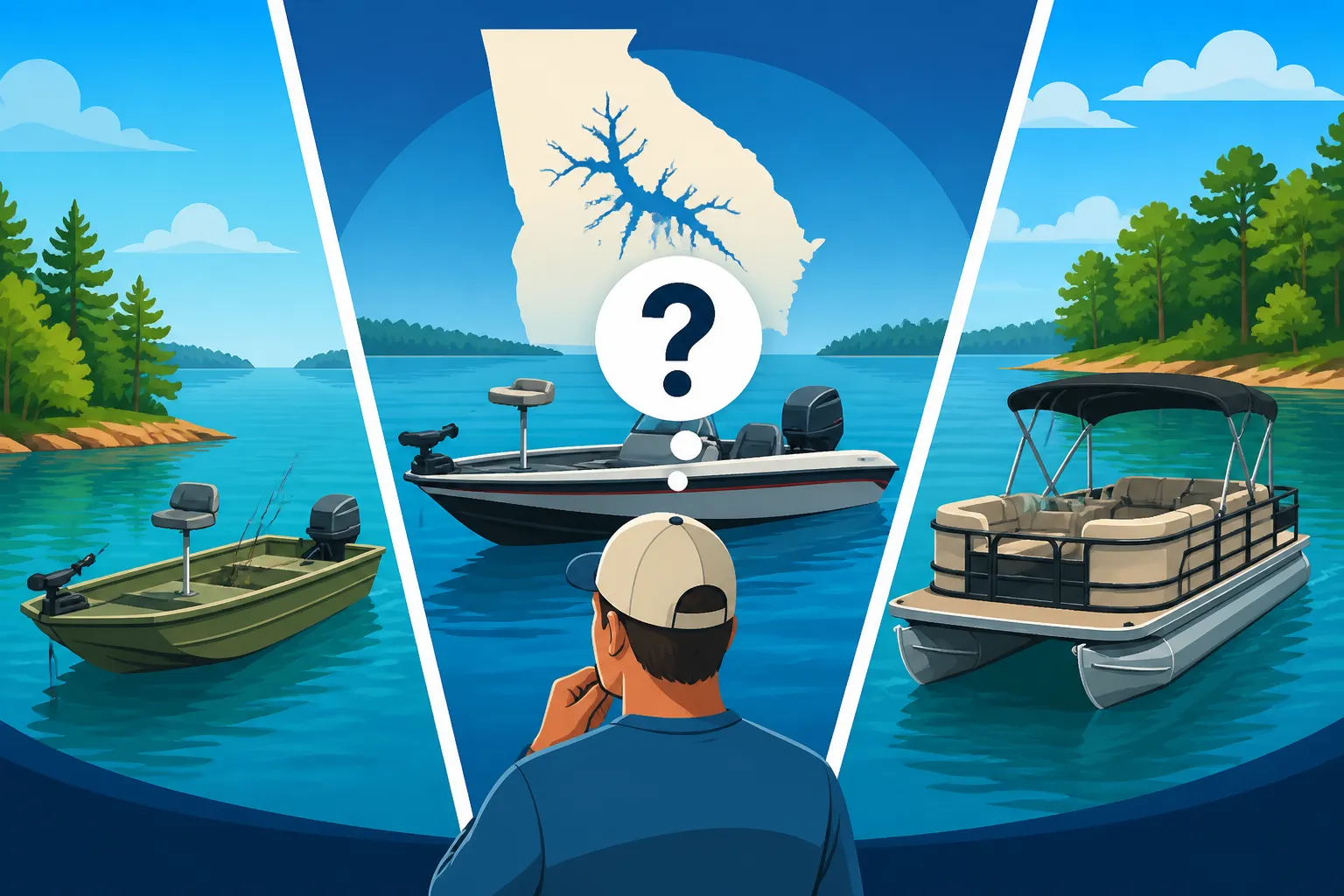
If you're chasing trophy largemouth and spotted bass, you'll likely want a boat designed for speed, stability at high speeds, and a large front casting deck. These boats, often referred to as bass boats, are typically in the 18 to 22-foot range and are purpose-built for casting and moving quickly between spots. They also need ample storage for a mountain of tackle and several rod and reel setups. For serious competitors, exploring options at a local Bass Pro Shops can give you a good idea of what top-tier bass boats offer.
However, if your passion lies in trolling for striped bass or targeting crappie in deep brush piles, a different type of boat might be more suitable. A multi-species or center console boat often provides more open deck space for multiple lines, better visibility, and a more stable platform for battling larger fish in open water. These boats often range from 20 to 25 feet and offer a good balance of space, comfort, and fishability for various species.
Number of Anglers and Gear
Consider how many people will typically be on the boat with you. Are you usually a solo angler, or do you always bring a buddy or two? Perhaps you envision family weekends with kids, coolers, and extra snacks. Every additional person, especially children, adds to the space requirements and affects the boat's stability and performance.
Beyond people, think about the gear. Tournament bass anglers carry multiple rods, tackle boxes, coolers, and sometimes extra electronics. Crappie anglers might have multiple spider-rigging poles. Even casual family fishing can quickly fill a small boat with life jackets, picnic baskets, and sunscreen. A boat that feels just right with one person can quickly become cramped and uncomfortable with three or four, making even simple tasks like moving around or landing a fish a chore. It's always better to have a little more room than not enough, especially on a busy lake like Lanier.
Common Boat Types and Their Suitability for Lake Lanier
Now that you've considered your needs, let's look at some popular boat types and how they stack up for Lake Lanier's unique environment.
Bass Boats
Ah, the quintessential bass boat. These sleek, fast machines are what many anglers picture when they think of serious fishing. Typically ranging from 18 to 22 feet, they are designed with speed and casting in mind. They usually feature large front and rear casting decks, powerful trolling motors, multiple livewells, and specialized storage for an impressive amount of tackle and rods. If your primary goal is competitive bass fishing or covering large areas of Lanier quickly to chase aggressive fish, a bass boat is certainly a strong contender. Best Bass Boat for Georgia Tournaments has more specifics if you're leaning this way.
However, bass boats do have their drawbacks on a large lake like Lanier. Their low profile, while great for casting, can make for a very wet and uncomfortable ride in choppy conditions. If a sudden storm rolls in, you'll feel every wave. Passenger comfort, especially for non-fishing companions, isn't always their strong suit either, as seating can be minimal. Moreover, while fast, they can be fuel-thirsty. You'll need to weigh the benefits of speed and specialized fishing features against comfort and rough water handling.
Center Consoles and Multi-Species Boats
These boats offer a fantastic balance for a diverse lake like Lanier. Typically ranging from 20 to 25 feet, center console and multi-species boats feature a deeper V-hull design, which cuts through chop much more effectively than a traditional bass boat. This means a smoother, drier ride, even when the lake gets rough. The elevated console offers better visibility, and the open deck space allows for 360-degree fishability, which is excellent for trolling, jigging, or accommodating several anglers.
They are incredibly versatile, capable of handling bass, stripers, crappie, and even family tubing or cruising. They generally have more comfortable seating, higher gunwales for added safety (especially with kids), and often come with built-in coolers and larger fuel tanks for longer days on the water. While they might not have the pure casting deck real estate of a bass boat, many models offer excellent fishing platforms and can be customized with rod holders, fish finders (like those found on Amazon or Bass Pro Shops), and additional seating to suit your specific needs. They truly shine as an all-around workhorse on Lanier.
Pontoon Boats for Casual Fishing and Family Outings
Pontoon boats have gained immense popularity on Lake Lanier, and for good reason. They are essentially floating living rooms, offering unparalleled comfort, space, and stability. Ranging from 20 to 28 feet or more, pontoons are perfect for family gatherings, leisurely cruises, swimming, and incredibly comfortable casual fishing. Imagine dropping anchor in a quiet cove, casting a line, and having a picnic right on the water – that's the pontoon dream.
For fishing, pontoons excel at stationary techniques like bottom fishing for catfish, soaking a bait for crappie, or even slow trolling. Their flat, stable deck is fantastic for kids and beginners, minimizing the risk of anyone falling overboard. However, they are not built for speed or battling heavy chop. They can be pushed around by strong winds and are significantly slower than bass or center console boats. If your primary interest is serious tournament fishing or covering vast distances quickly, a pontoon isn't your ideal choice. But for family fun, comfort, and relaxed angling, they are hard to beat.
Aluminum Jon Boats and Smaller Rigs
For most of Lake Lanier's main body, aluminum jon boats or smaller fiberglass rigs (under 17 feet) are generally not recommended as a primary vessel. While they are affordable, easy to launch, and great for smaller, calmer bodies of water or protected coves, they simply aren't designed to handle Lanier's open water and potential for rough conditions.
If your fishing is strictly limited to very calm days, tucked away in quiet creeks and sheltered coves, then a smaller boat could work. However, you'd be severely limited in where and when you can fish safely and comfortably. For serious anglers, they might serve as a secondary boat for smaller local ponds, but not for regular use on Lake Lanier's main channels. If you’re considering fishing with a smaller vessel, always prioritize safety and keep an eye on weather forecasts.
Factors Influencing Boat Size Beyond Just Length
When we talk about "how big," it's not just about the length of the boat. Several other critical factors contribute to a boat's overall size and suitability for a lake like Lanier.
Beam (Width) and Hull Design
The beam, or width of the boat, is incredibly important for stability. A wider boat, even if it's not exceptionally long, will generally feel more stable on the water, especially when people are moving around, casting, or reeling in fish. On a large lake where boat wakes and wind chop are common, good stability prevents that uneasy, rocking feeling and keeps everyone more comfortable.
Hull design also plays a massive role. A deeper V-hull (common in center consoles and some multi-species boats) is designed to slice through waves, providing a smoother ride. A flatter hull (like on a jon boat or even some older bass boat designs) tends to "slap" the waves, creating a rougher, wetter experience. Consider the typical conditions on Lanier and opt for a hull design that can comfortably handle them. A boat that feels too small when you're getting slammed by waves on the main channel can quickly take the fun out of your day.
Engine Horsepower
The engine isn't just about how fast you can go; it's about getting where you need to be efficiently and safely. On a large lake like Lanier, you might need to cover many miles in a day, especially if you're running between distant fishing spots or taking the family for a cruise. An underpowered boat will struggle to get on plane, burn more fuel trying to maintain speed, and generally feel sluggish, particularly with a full load of passengers and gear.
Matching the engine to the boat's size and intended use is key. Most boats have a maximum horsepower rating, and it's always wise to get as close to that maximum as your budget allows, especially for larger boats operating on big water. A well-matched engine provides better performance, more controlled handling, and often better fuel economy at cruising speeds. Having enough power also means you can navigate safely if unexpected weather rolls in and you need to get back to shore quickly.
Storage and Livewell Capacity
No matter your fishing style, you're going to have gear. And on a big lake, you're often out for several hours, maybe even a full day. Adequate storage for rods, tackle, safety equipment like life jackets (which are legally required for children under 13, by the way – see Georgia Life Jacket Laws for Boaters and Kids), coolers, and personal belongings is crucial. A boat that's overflowing with stuff feels cluttered and can even be a tripping hazard.
For anglers, livewell capacity is particularly important. If you plan to keep fish, either for a tournament weigh-in or for the dinner table, you need a livewell that's appropriately sized and well-aerated to keep your catch healthy. Some boats offer dual livewells, which is fantastic for separating different species or just ensuring you have enough space for a good catch. Don't underestimate the importance of these practical considerations; they significantly impact your on-water experience.
Balancing Budget, Towing, and Storage Considerations
The dream boat in your head might be 25 feet with a monster engine, but the reality of your budget, tow vehicle, and storage space might dictate a more modest, yet still highly functional, size.
The Real Cost of Ownership
It’s easy to focus solely on the purchase price of a boat, but the real cost of ownership extends far beyond that initial investment. Factor in fuel, which can add up quickly on Lanier's vast expanse, especially with a powerful engine. There's also regular maintenance, insurance, and of course, registration fees. For those looking at different sizes, understanding things like Georgia Boat Registration Cost for a Boat Under 16 Feet or Georgia Boat Registration Cost for a 16 to 26 Foot Boat can help paint a clearer financial picture.
Don't forget the accessories! From fish finders (check out Best Fish Finder for Lake Lanier) to extra rod holders, safety gear, and specialized tackle, the additions can quickly increase your overall investment. It's smart to create a comprehensive budget that includes these ongoing costs, not just the upfront price tag. Sometimes a slightly smaller, more efficient boat allows you to afford more accessories or more frequent trips.
Tow Vehicle and Storage
This is often the biggest practical limitation for many boat buyers. That 22-foot center console might look perfect, but can your current vehicle safely tow it? Boats and trailers are heavy, and exceeding your vehicle's towing capacity is not only dangerous but illegal. Always check your vehicle's manual for its maximum towing capacity. Beyond the vehicle, consider the trailer itself. Is it in good condition? Does it have proper brakes for larger boats?
Once you get the boat home, where will it live? Do you have space in your driveway, a dedicated garage, or will you need to pay for storage at a marina? Larger boats require more space and can be more difficult to maneuver in tight driveways. Consider the accessibility of your nearest boat ramp, too. A smaller, lighter boat might be easier to launch solo, while a larger one often benefits from an extra pair of hands. For general tips on getting your boat in the water, take a look at our Best Boat Ramps for Fishing in Georgia guide.
New vs. Used: Finding the Right Value
Deciding between a new or used boat significantly impacts what size and features you can afford. A new boat offers peace of mind with warranties, the latest technology, and customization options. However, they come with a higher price tag and rapid depreciation.
Used boats, on the other hand, can offer excellent value. You can often get a larger, more feature-rich boat for the same budget as a smaller new one. The key, however, is doing your homework. Thorough inspections, test drives, and possibly a professional survey are crucial to avoid buying someone else's problems. Websites and local dealerships, and even places like Amazon for smaller accessories, can be good resources for researching and finding pre-owned options. Many anglers find that a well-maintained used boat is the perfect way to get into a larger size without breaking the bank.
Here's a quick comparison of common boat sizes and their general suitability for Lake Lanier:
| Boat Size Range | Typical Boat Types | Primary Use on Lanier | Pros | Cons |
|---|---|---|---|---|
| Under 17 feet | Small Jon Boats, Aluminum V-hulls | Protected coves, calm days, very close to ramp | Inexpensive, easy to launch, fuel-efficient | Poor rough water handling, limited space, unsafe in open water choppy conditions |
| 17-19 feet | Entry-level Bass Boats, Small Utility Boats | Bass fishing, general light fishing, calmer conditions | Good balance of maneuverability, speed (bass boats), decent space | Can be wet/rough in heavy chop, limited capacity for multiple people |
| 20-22 feet | Mid-sized Bass Boats, Smaller Multi-Species | Dedicated bass fishing, all-around fishing in fair weather | Fast, ample fishing features, reasonable rough water handling for size | Can still be challenged by severe chop, less family-friendly seating |
| 23-25 feet | Large Bass Boats, Mid-sized Center Consoles, Multi-Species, smaller Pontoons | Serious fishing (bass, striper), family cruising, good rough water | Excellent rough water handling, spacious, versatile for various activities | Higher cost, larger tow vehicle needed, more storage space |
| 26 feet and up | Large Center Consoles, Pontoons, Deck Boats | Large group cruising, serious open-water fishing, comfort | Superior comfort and space, excellent rough water stability (non-pontoons) | High cost, significant towing/storage challenges, higher running costs |
Ultimately, the "right" size boat for Lake Lanier isn't about the biggest or the fastest. It's about finding the vessel that perfectly aligns with your fishing goals, family needs, comfort level, and practical limitations. Take your time, consider these factors carefully, and you'll be well on your way to countless enjoyable days on the beautiful waters of Lake Lanier.
Disclaimer
This article is for general informational purposes only and does not constitute professional advice. Laws, prices and regulations vary by location and change over time. Consult a qualified professional for guidance on your specific situation.