Why Bass Go Deep After a Cold Front
It’s a tale as old as time for any Georgia angler: you’ve been having a phenomenal few days on the lake, the bass are biting like crazy, and then a sudden cold front blasts through. Suddenly, your favorite shallow coves are dead, the topwater bite is gone, and you can’t seem to buy a strike. This guide will dive deep into understanding why bass disappear to the depths after a cold front hits our Georgia waters and, more importantly, what you can do to still catch them when they do.
The Immediate Impact of a Cold Front on Bass
We've all been there – you wake up after a chilly night following a strong cold front, and the once-active surface of the lake feels eerily still. The crisp, clear air is beautiful, but your fishing prospects suddenly feel grim. That dramatic shift in weather isn't just a nuisance for us; it sends a shockwave through the aquatic environment, forcing bass to make immediate adjustments. Understanding these changes is the first step to figuring out how to catch them.
Water Temperature Swings and the Thermocline
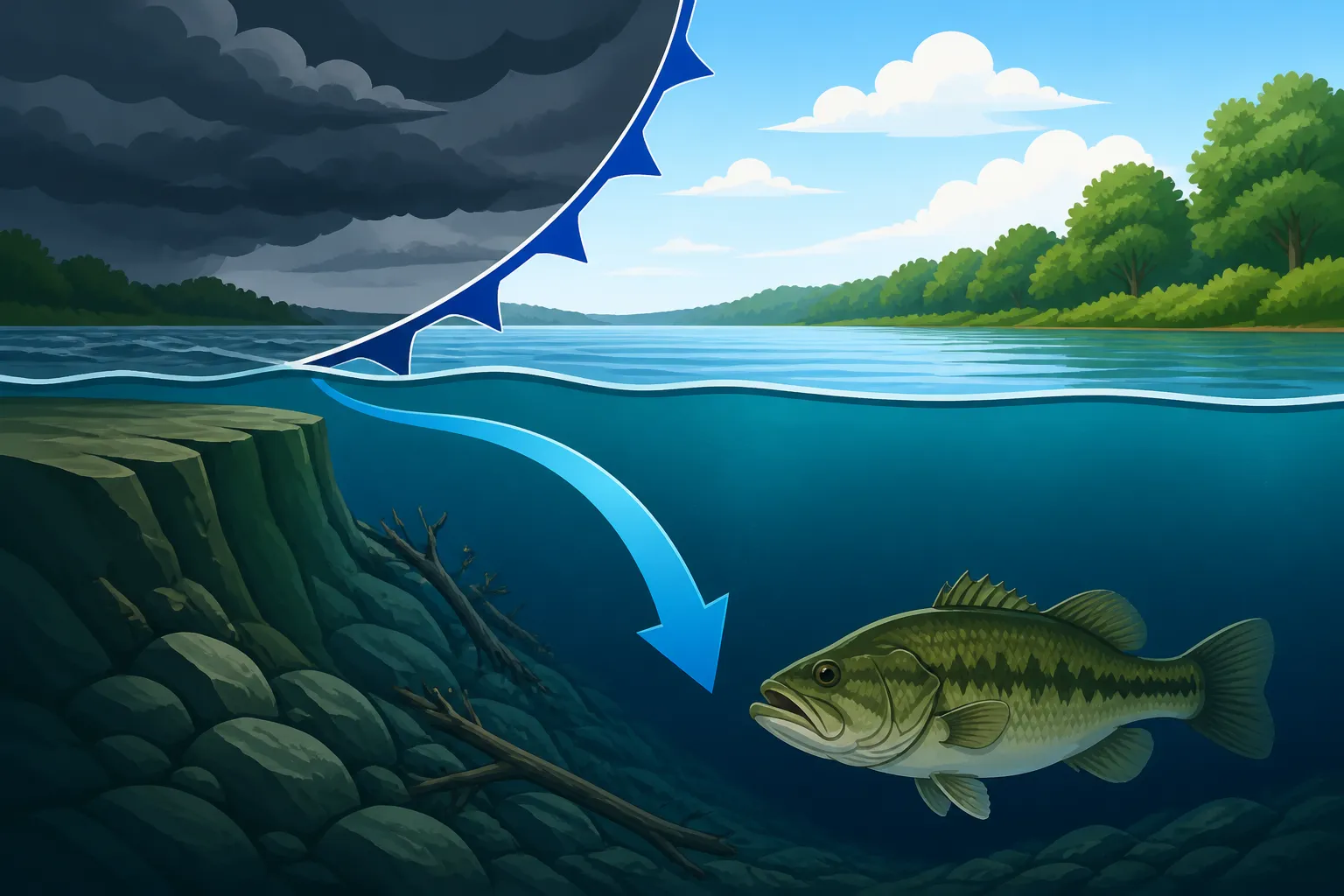
One of the most immediate and profound impacts of a cold front is the rapid drop in surface water temperature. While it might only be a few degrees at the surface, this can feel like a massive change to a fish whose body temperature is directly tied to its environment. Imagine stepping from a warm room into a walk-in freezer – that's a bit how a bass feels. The shallower water cools down much faster, making those previously comfortable zones quickly intolerable.
This isn't just about the surface, though. A cold front can also affect the thermocline, which is that invisible boundary layer in deeper lakes where warm surface water meets colder, deeper water. Before a cold front, this thermocline might be well-established, offering a stable comfort zone for fish. After a front, the cooling surface can push this layer deeper or even cause it to break down in some areas, further unsettling the fish. Bass are constantly seeking thermal comfort, and when their preferred temperature range shrinks or moves, they move with it. This pursuit of consistent temperatures is a huge driver for them going deep.
Barometric Pressure: The Invisible Hand
Beyond temperature, another significant, yet often overlooked, factor is barometric pressure. Before a cold front hits, you often experience those warm, muggy, high-pressure days where the fishing can be fantastic. As the front approaches, the pressure drops, and then, after the front passes, the pressure spikes significantly. This sudden rise in atmospheric pressure puts an external squeeze on a fish's swim bladder, which is an air-filled organ that helps them maintain buoyancy.
When the pressure is high, that external force compresses their swim bladder, making them feel less comfortable at shallower depths. To equalize this pressure and relieve the discomfort, bass will often retreat to deeper water, where the water pressure is naturally higher. It's a physiological response, not just a preference. They're seeking a depth where their internal and external pressures are more balanced, allowing them to move and behave more normally. This is a critical reason why you can't just find them in the same spots after a front; they're literally being pushed down. You might be surprised by How Barometric Pressure Affects Fish Activity.
Fish Metabolism Slowdown and Lethargy
The combination of colder water temperatures and increased barometric pressure generally leads to a significant slowdown in a bass's metabolism. Just like us, when it's cold, they don't feel like running a marathon. Their digestive processes slow, their energy levels drop, and their need to actively hunt for food decreases. This is why the aggressive, reaction bites you enjoyed pre-front often vanish.
Instead of chasing down fast-moving baits, post-front bass become lethargic and less inclined to expend energy. They'll often tuck tight to cover, conserving energy and waiting for an easy meal to swim right by them. This metabolic slowdown means you need to adjust your approach dramatically, shifting from fast-paced retrieves to much slower, more deliberate presentations. For an angler, it means patience becomes your most valuable tool, and understanding their reluctance to move is key to success.
Why Bass Seek Deeper Water After a Cold Front
So, we know cold fronts mess things up, but why specifically does "going deep" become the default solution for bass? It's not just a random act; it's a strategic survival mechanism driven by their physiological needs and instincts. They're looking for stability and safety, and the deeper parts of the lake often provide just that.
Thermal Refuge: Finding Stable Temperatures
The most straightforward reason bass go deep is to find thermal refuge. While the surface water temperature can fluctuate wildly with air temperature changes, deeper water tends to maintain a much more stable temperature. Think of it like a giant thermal battery; it takes a lot more energy to change the temperature of a large volume of water. Below the surface, especially past that thermocline in the summer or in deeper basins during colder months, the water temperature remains relatively constant.
Bass are cold-blooded creatures, and radical temperature swings are stressful for them. By moving to deeper water, they can escape the fluctuating, colder surface conditions and find a more consistent, comfortable thermal band. This allows their bodily functions to operate more smoothly, even if at a slower pace. Finding these "comfort zones" is paramount, and it often means fishing structures and depths that provide access to those deeper, more stable temperatures. How Water Temperature Changes Affect Fish Behavior is a fascinating topic.
Light Penetration: Avoiding Bright, Post-Front Skies
Another major factor, especially relevant after a cold front, is light penetration. Typically, cold fronts bring with them bright, clear skies. While gorgeous for us, these conditions mean increased light penetration into the water, especially in the shallower areas. Bass, particularly largemouth bass, are ambush predators that prefer lower light conditions. Their eyes are adapted for hunting in dimmer environments, and bright sunlight can make them feel exposed and uncomfortable.
When the water is clear and the sun is high and bright, bass will often retreat to deeper, darker water or seek out the deepest, densest cover they can find. This isn't just about comfort; it's a survival instinct. In bright conditions, they are more visible to predators and also have a harder time ambushing their prey effectively. Deeper water provides a natural shield from the harsh sunlight, offering them a sense of security and a better ambush point for the sluggish baitfish that might still be present.
Forage Movement: Where the Baitfish Go
It's not just about the bass themselves; it's also about their food source. Baitfish, like shad, also react strongly to cold fronts and the resulting environmental changes. Just like bass, they'll seek out more stable temperatures and often move to deeper water, especially suspending over open water or relating to deep structure. If the baitfish move, the predators will follow, even if they're not actively feeding.
When the baitfish go deep, bass don't necessarily go into a full feeding frenzy down there, but they will position themselves nearby. They're looking for opportunities. A stunned or weakened baitfish might present an easy meal, and even if their metabolism is slow, they won't pass up an effortless snack. Therefore, finding those deeper bait schools on your fish finder can be a huge clue to locating bass after a cold front. Focus on areas where bait is congregating in deeper channels, points, or humps, as bass are likely nearby.
Adjusting Your Strategy for Deep-Water Bass
So, the bass have gone deep. Now what? Throwing your favorite shallow crankbait or topwater lure is likely just going to result in a lot of wasted casts. Success after a cold front hinges on a complete overhaul of your typical bass fishing strategy. You need to think slow, subtle, and deep. It's about changing your mindset and your tackle.
Focus on Structure and Transition Areas
When bass go deep, they don't just suspend randomly in the middle of nowhere. They'll relate to structure, just deeper. This means focusing your efforts on points that drop off into deep water, ledges, humps, creek channel bends, and submerged timber or brush piles in those deeper zones. These structures provide cover, ambush points, and often act as highways for baitfish moving between different depths.
Pay close attention to "transition areas" – places where the bottom composition changes, or where a hard bottom meets soft mud, or where a flat suddenly drops into a channel. These subtle changes can hold concentrations of fish. For example, a long, tapering point that extends out into a main lake channel might hold bass all along its length as they gradually move deeper. Use your electronics to identify these features and then thoroughly dissect them with your lures. This might mean idling over an area multiple times, slowly picking it apart.
Slow Down Your Presentation (Seriously)
This is perhaps the most critical adjustment: you absolutely must slow down your presentation. Forget about burning crankbaits or walking a dog across the surface. Post-front bass are lethargic, cold, and often in a neutral to negative feeding mood. They are not going to chase a fast-moving bait. Instead, they want an easy meal that practically falls into their mouths.
Think about baits that can be worked slowly and stay in the strike zone for an extended period. Jigs, shaky heads, drop shots, and Carolina rigs are excellent choices. Let your jig sit on the bottom for what feels like an eternity before moving it. Impart tiny twitches to a plastic worm on a shaky head. The bite might feel like a subtle "tick" or just added weight, rather than an aggressive thump. Patience is key. You're trying to tempt them, not provoke a chase. For deeper waters, knowing How to Drop Shot Rig for Bass can be incredibly effective.
Target Key Depths with Precision
Guessing isn't going to cut it when bass are scattered and deep. You need to be precise. This is where your electronics become invaluable. Use your fish finder to identify the depth at which baitfish are suspending, or where you see arches that indicate larger fish. Once you find that depth, you need to be able to consistently put your lure right in front of those fish.
This might mean adjusting the weight of your jig, changing the length of your leader on a Carolina rig, or carefully counting down a deep-diving crankbait until it reaches the desired depth. If you're marking fish at 25 feet, you need a bait that can get to 25 feet and stay there. Don't be afraid to experiment with slightly different depths around the main target zone. Sometimes, they'll be sitting just above or just below the bait. Understanding your specific lake's contours and depths, perhaps from a map, combined with real-time sonar, will greatly increase your success.
| Factor | Pre-Cold Front Conditions | Post-Cold Front Conditions | Recommended Angling Adjustment |
|---|---|---|---|
| Water Temp | Stable, warmer surface water, active fish. | Rapidly cooling surface, seeking stable deep water. | Target deeper thermal refuge, especially near structure. |
| Barometric Press | Falling or stable, comfortable for fish at various depths. | High and stable, uncomfortable in shallow water. | Fish deeper to equalize swim bladder pressure. |
| Light Conditions | Often overcast or stained, bass comfortable in varied light. | Bright, clear skies, increased light penetration. | Seek darker, deeper water or dense overhead cover. |
| Fish Metabolism | Active, aggressive, higher energy levels. | Slow, lethargic, lower energy levels, less chase. | Slow down presentation drastically, subtle movements. |
| Baitfish Movement | Scattered, often shallow. | Congregated in deeper, more stable water. | Use electronics to find deep bait schools; bass will be nearby. |
| Typical Lures | Topwater, shallow crankbaits, spinnerbaits, reaction baits. | Jigs, shaky heads, drop shots, deep-diving crankbaits, spoons. | Match lure depth and action to lethargic, deep fish. |
| Location Focus | Shallow cover, flats, main lake points, docks. | Deep points, ledges, humps, creek channels, submerged timber. | Use sonar to find deep structure and fish concentrations. |
Gear and Tactics for Deep Bass
Successfully fishing for deep-water bass after a cold front requires more than just patience; it demands the right tools and a refined approach. Your standard shallow-water setup might not cut it. We need gear that can get deep, detect subtle bites, and help us understand the underwater world.
Deep Diving Crankbaits, Jigs, and Spoons
When bass move deep, your lure selection needs to reflect that. Deep diving crankbaits are fantastic for covering water and probing those deeper ledges and points. Look for models designed to reach 15, 20, or even 25+ feet. You'll want to experiment with different colors, but natural baitfish patterns are often a safe bet in clear, post-front conditions. When buying, remember there's a huge selection available on Amazon that can help you reach those colder depths. For example, some anglers swear by a Bandit 200 Series or a Strike King 6XD for their Georgia reservoir fishing.
Jigs, especially football jigs or skirted jigs paired with bulky creature baits, are absolute killers for deep bass. They can be slowly dragged, hopped, or even dead-sticked on the bottom, mimicking a crawfish or a sluggish baitfish. A half-ounce or ¾-ounce jig can get down to those fish quickly and stay there. Spoons, like a 3/4 oz or 1 oz jigging spoon, are also incredibly effective. Vertical jigging a spoon over deep structure where you've marked fish can often provoke a reaction strike from even the most stubborn bass. You can find some excellent deep-diving crankbaits and jigs through many online retailers.
Sensitive Rods and Lines for Subtle Bites
Because post-front bass bites are often incredibly subtle – a slight tick, spongy feel, or simply added weight – you absolutely need a sensitive rod. A medium-heavy to heavy action rod with a fast tip, made from high-modulus graphite, will transmit those faint bites better than a slower, fiberglass rod. You'll want to make sure your rod has a really sensitive tip, something you can often find great options for on Amazon, particularly if you're looking for a good value.
Pair that sensitive rod with a low-stretch line. Fluorocarbon is an excellent choice for deep-water presentations because it's virtually invisible underwater and has minimal stretch, allowing for maximum sensitivity. Braided line can also be used, especially with a fluorocarbon leader, for even greater sensitivity and casting distance. Remember, you're not looking for a rod-jerking strike; you're often just feeling for a subtle change in pressure, and your gear needs to be up to the task. Best Rod and Reel Combo for Largemouth Bass in Georgia is a great resource.
Electronics Are Your Friend: Fish Finders and Mapping
Trying to find deep bass without good electronics is like trying to find a needle in a haystack blindfolded. Your fish finder, specifically a good sonar unit with down imaging and side imaging, is your most crucial tool for deep-water fishing. Use it to locate submerged structure like brush piles, rock formations, creek channels, and humps. Even more importantly, use it to mark individual fish or schools of baitfish.
Once you mark fish at a certain depth, you can precisely target them. Many modern units also have excellent GPS capabilities and mapping, allowing you to save waypoints on productive spots and return to them later. Detailed contour maps are also invaluable for understanding the underwater topography of Georgia's lakes. Before you even launch your boat, studying a lake map can help you identify likely deep-water holding areas. Invest in the best electronics you can afford, and take the time to learn how to use them effectively; they will dramatically increase your success in targeting deep bass after a cold front. If you're looking for guidance, check out Best Fish Finders for Georgia Reservoir Fishing.
Disclaimer
This article is for general informational purposes only and does not constitute professional advice. Laws, prices and regulations vary by location and change over time. Consult a qualified professional for guidance on your specific situation.