Best Gear for Striped Bass Fishing
There’s nothing quite like the adrenaline rush of hooking into a powerful striped bass on Georgia’s waters. These hard-fighting fish are a true test of an angler's skill and equipment, often leading to frustration if your gear isn’t up to the task. This guide is dedicated to helping you choose the best rods, reels, lines, and accessories specifically tailored for tackling these incredible fish, ensuring you’re well-prepared for your next striper adventure.
Understanding Striped Bass and Their Habits in Georgia
Before we dive into the nitty-gritty of gear, it's really helpful to understand what makes striped bass tick here in Georgia. Knowing their behavior, where they hang out, and what they eat can make all the difference when it comes to selecting the right tools for the job. You wouldn't bring a butter knife to a steak dinner, and you shouldn't bring light tackle to a striper fight!
Where Striped Bass Thrive in Georgia
Georgia is blessed with some fantastic striped bass fisheries, primarily in our larger reservoirs and their associated river systems. Lakes like Lanier, Oconee, and Clarks Hill (also known as Lake Thurmond) are legendary for their striper populations. These fish, often a mix of pure-bred striped bass and hybrid striped bass, absolutely thrive in these vast, deep-water environments. They're built for open water, constantly on the move, chasing down schools of baitfish like shad and herring.
During different seasons, you'll find these fish in different parts of the lake. In the warmer months, they tend to go deep, seeking cooler, oxygen-rich water, often congregating around thermoclines or river channels. As the water cools in fall and winter, they might move shallower, especially following baitfish into coves and creek arms. Understanding these seasonal movements is crucial because it often dictates the fishing techniques you'll employ, which, in turn, influences your gear choices. If you're looking for an in-depth look at these fish, check out our guide on Striped Bass and Hybrid Striped Bass in Georgia Waters.
Key Characteristics of Striped Bass Fishing
Fishing for striped bass isn't like lazily reeling in a bluegill from a farm pond. These are apex predators, powerful and determined, capable of making incredible runs that will strip line from your reel in seconds. Their sheer size, often ranging from healthy five-pounders to absolute monsters pushing into the 30 or 40-pound range, demands robust equipment.
You’ll face situations where you're battling a fish in deep water, trying to pull it away from submerged timber or a brush pile. Or you might be trolling a large planer board rig, requiring your rod to handle significant drag. The fight is intense, often lasting several minutes, and any weak link in your setup—be it a flimsy rod, a reel with a sticky drag, or subpar line—will likely result in a heartbreaking loss. This is why investing in quality gear isn't just a luxury; it's a necessity for consistent success with Georgia stripers.
Essential Rods and Reels for Striped Bass Fishing
When it comes to outfitting yourself for striped bass, your rod and reel combo is the heart of your setup. This isn't the place to cut corners. You need a system that can absorb powerful shocks, maintain consistent pressure, and hold up to countless battles with these formidable fish.
Choosing the Right Rod
A good striped bass rod needs to be strong, yet sensitive enough to detect subtle bites. For most striper applications in Georgia, you'll be looking at rods in the medium-heavy to heavy power range, with a moderate-fast to fast action.
- Power: This refers to the rod's lifting strength. A medium-heavy rod is a great all-around choice, capable of handling lures in the 1/2 oz to 2 oz range and battling fish up to 20-30 pounds. If you're specifically targeting trophy stripers with heavy baits or in heavy current, a heavy power rod will give you the backbone you need.
- Action: This describes where the rod bends. A moderate-fast action rod will bend more towards the middle, offering a bit more give. This can be great for casting larger lures and absorbing violent head shakes from a striper, reducing the chance of hooks pulling out. A fast action rod, bending mostly in the tip, provides maximum sensitivity and quick hook-sets, which can be advantageous when you need to feel light bites from fish holding deep.
For specific techniques:
- Trolling: If you're planning on trolling with planer boards or downriggers, you'll want longer rods, often 7 to 8 feet, with a softer tip to absorb the drag of the lure or bait, but plenty of backbone to handle a hard strike.
- Casting: For casting bucktails, swimbaits, or topwater plugs, a 7 to 7'6" medium-heavy fast action rod is a fantastic choice, offering a good balance of casting distance and fish-fighting power.
- Live Bait: When fishing live bait, especially downlining herring or shad, a 6'6" to 7' medium-heavy rod with a moderate action can be ideal. It provides enough give to let the striper take the bait naturally before you set the hook.
A popular choice for many Georgia striper anglers are specialized striper rods from brands like Ugly Stik or Penn, known for their durability and power. You can often find a great selection of these on Amazon, making it easy to compare features and prices. For more details on rod selection, our article on Best Rod for Striped Bass Fishing in Georgia offers a deeper dive.
Selecting a Reliable Reel
Your reel is arguably even more critical than your rod when it comes to striped bass. It needs to have a smooth, powerful drag system, ample line capacity, and robust gears to handle the immense pressure these fish exert.
-
Spinning vs. Baitcasting:
- Spinning Reels: Generally easier for beginners to cast and can handle lighter lures effectively. For stripers, you'll want a larger spinning reel, often a 4000 to 6000 series (or even larger), spooled with at least 20-pound test braided line. The key is a strong drag system – look for reels with a maximum drag of at least 15-20 pounds.
- Baitcasting Reels: Offer greater casting accuracy and more direct control over the line and fish. They excel at handling heavier lines and baits and are often preferred for trolling or deep-water jigging. Look for models with a high line capacity (enough for 200+ yards of 30-pound braid), a stout retrieve, and a smooth, reliable drag. Low-profile baitcasters are good for casting, while larger round baitcasters are favored for trolling or heavier live bait presentations.
-
Line Capacity: Stripers make long, powerful runs. Having enough line on your reel is paramount. A good rule of thumb is to have at least 150-200 yards of your chosen line.
-
Drag Power: This is non-negotiable. A sticky or weak drag will lead to snapped lines, pulled hooks, and lost fish. Look for reels with carbon fiber drag washers for smooth, consistent pressure. You want a drag system that can be precisely adjusted and will give line smoothly under heavy load without jerking or seizing.
-
Gear Ratio: While not as critical as drag or capacity, gear ratio can influence how you fish. A faster gear ratio (e.g., 7.1:1) is great for quickly reeling in slack or working topwater lures. A slower ratio (e.g., 5.1:1) offers more cranking power, which is beneficial when fighting a large fish or retrieving heavy Umbrella Rigs.
Brands like Penn, Shimano, and Daiwa consistently produce reels that stand up to the rigors of striper fishing. Be sure to match your reel size to your rod and intended fishing style. Our guide on Best Reel for Trolling Striped Bass offers excellent insights if trolling is your primary method.
Lines, Lures, and Live Bait Setups
With your rod and reel sorted, it's time to think about what connects you directly to the fish: your line, and what you use to attract them: lures and bait. This is where precision and quality really come into play.
Line Selection for Striped Bass
Choosing the right fishing line is crucial for striped bass, as they're known for their powerful runs and sharp fins. You need strength, sensitivity, and abrasion resistance.
-
Braided Line (Braid): This is the go-to choice for many striper anglers, and for good reason.
- Pros: Incredible strength-to-diameter ratio (a 30-pound braid is much thinner than 30-pound mono), virtually no stretch (offering maximum sensitivity for feeling bites and better hook sets), and excellent casting distance. It's fantastic for deep water fishing because it cuts through the water better.
- Cons: Less abrasion-resistant than monofilament (can fray on rocks or sharp structure), highly visible to fish (which is why a leader is often used), and can be expensive. It also requires specific knots.
- Recommended: 20-50 lb test, depending on the lure weight and target size.
-
Monofilament Line (Mono):
- Pros: More forgiving due to its stretch (can prevent hooks from pulling out on head shakes), excellent knot strength, more abrasion-resistant, and less visible than braid. It's also generally more affordable.
- Cons: More stretch (less sensitive), thicker diameter for the same breaking strength, and can develop "memory" (coil up) over time.
- Recommended: 15-30 lb test, often used for live baiting where a bit of stretch can be beneficial.
-
Fluorocarbon Leaders: Almost always used with braided main line.
- Pros: Nearly invisible underwater, very abrasion-resistant, and sinks faster than mono.
- Cons: Less flexible than mono, can be more expensive.
- Recommended: 20-40 lb test, typically 2-6 feet long, connected to braid with an FG knot or a double uni-knot. This allows you to fish with the strength and sensitivity of braid while maintaining stealth.
For deep water techniques for striped bass, braided line with a fluorocarbon leader is a powerhouse combination.
Top Lures for Stripers
Striped bass are aggressive predators, and a variety of lures can entice them. The key is often matching the hatch – using lures that mimic the baitfish they are feeding on.
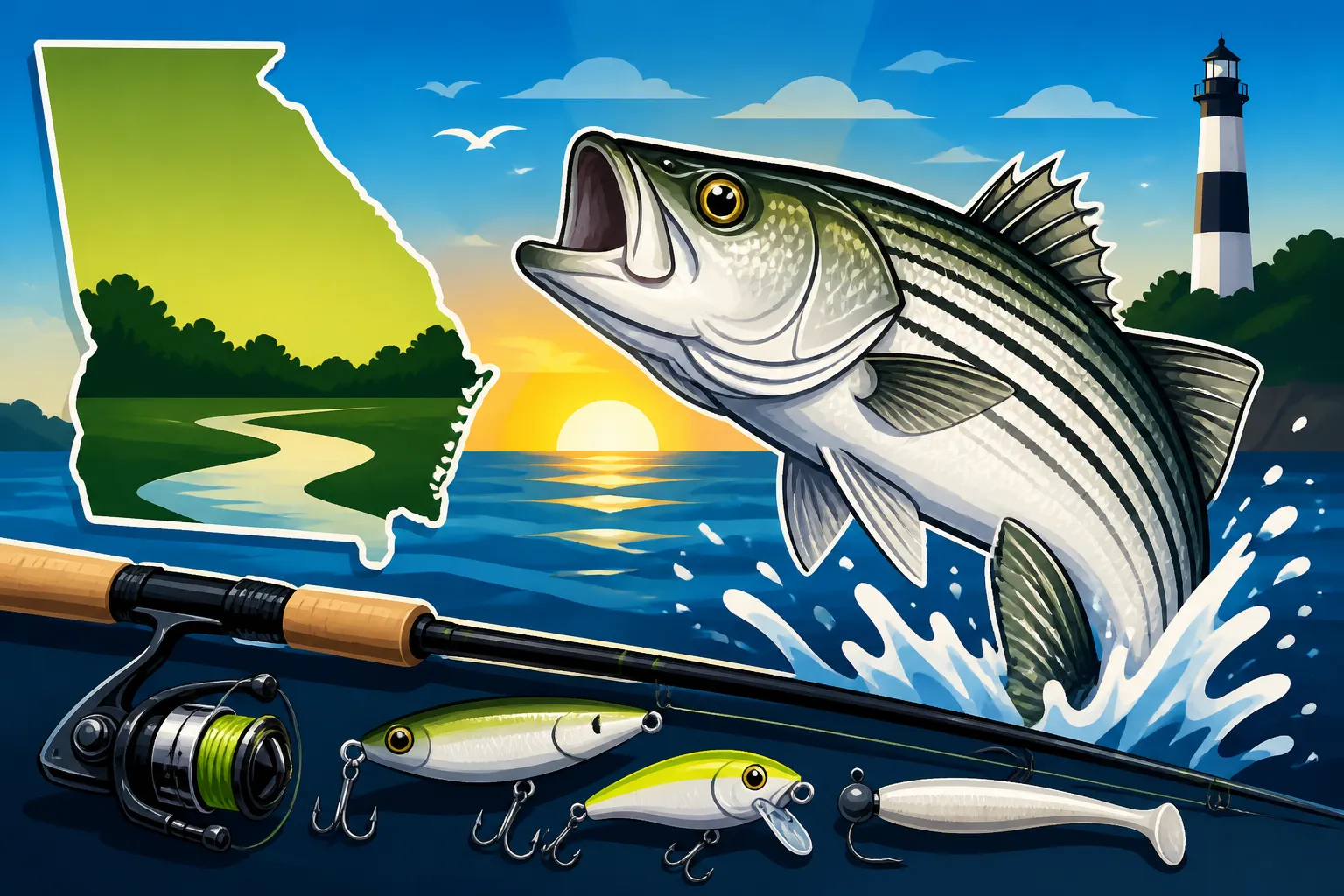
- Bucktail Jigs: A classic and incredibly effective lure. They can be jigged vertically in deep water, cast and retrieved along points, or trolled.
- Sizes: 1/2 oz to 2 oz, sometimes heavier for deep water or strong currents.
- Colors: White, chartreuse, and natural baitfish colors are consistent producers. Tipping with a soft plastic trailer (like a grub or fluke) can add extra appeal.
- Swim Baits: Soft plastic swimbaits, often on a jig head, are excellent for mimicking shad or herring. They have a natural swimming action that stripers find irresistible.
- Sizes: 4-8 inches, depending on the prevalent baitfish.
- Colors: Shad, pearl white, or silver are usually great starting points.
- Topwater Plugs: Nothing beats the excitement of a striper exploding on a topwater lure! These are best used in low light conditions (dawn, dusk) or when stripers are actively busting on the surface.
- Types: Walk-the-dog baits (like Heddon Super Spook), poppers, and prop baits.
- Colors: Chrome, white, and bone are top choices.
- Lipless Crankbaits / Jerkbaits: These lures are great for covering water and triggering reaction strikes, especially when stripers are active but not busting the surface.
- Uses: Cast and retrieved, or ripped through schools of bait.
- Spoons: Casting spoons (e.g., Acme Kastmaster) or jigging spoons (e.g., Hopkins Shorty) are excellent for vertical presentations to deep-holding fish or for casting into schools of busting stripers. They sink fast and have a lot of flash.
Many anglers find great success stocking up on these versatile lures from online retailers like Amazon, ensuring they have a variety of options for different conditions and striper moods.
Effective Live Bait Rigs
While lures are great, live bait often reigns supreme for consistent striper action, especially for larger fish or when they're finicky. Georgia stripers absolutely love live herring and shad. Learning How to Fish Live Bait for Striped Bass is a game-changer.
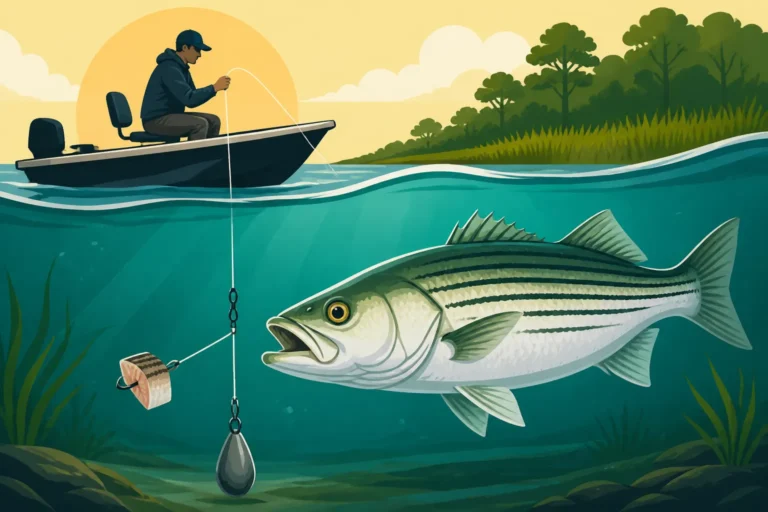
- Downlining: This is perhaps the most popular technique on Georgia's deep lakes. You hook a live bait (often a blueback herring or gizzard shad) and send it down to the depth where you’re seeing stripers on your fish finder. A lead weight is used to get the bait down quickly. This is often done with a slip sinker rig, allowing the fish to take the bait without immediately feeling the weight.
- Freelining: When stripers are near the surface or busting bait, you simply cast a hooked live bait with little to no weight and let it swim naturally towards the fish. The key here is stealth and a quick retrieve if the fish don't hit immediately.
- Planer Boards: These are often used when trolling live bait. They carry your bait away from the boat, covering a wider swath of water and preventing the boat from spooking the fish. You'll typically use a larger rod and reel setup for this, as the planer board itself creates significant drag. For more information on setting up your bait, our guide on How to Rig Herring for Striped Bass is an excellent resource.
A successful live bait setup often requires a good bait tank with aeration to keep your bait lively throughout the day. Happy, healthy bait is crucial for enticing a strike!
Crucial Accessories and Safety Gear
Beyond the core rod, reel, and tackle, there's a whole host of other items that will make your striped bass fishing trips safer, more efficient, and more comfortable. Don't overlook these often-underestimated components of your fishing arsenal.
Must-Have Tools and Electronics
These items aren't just conveniences; they're vital for finding fish, handling them safely, and making your trip successful.
- Fish Finder/GPS Combo: This is arguably the most important electronic device for any serious striper angler. A good fish finder with down imaging, side imaging, or even forward-facing sonar will help you locate schools of baitfish, identify submerged structure, and, most importantly, pinpoint those elusive striped bass holding deep or suspended in the water column. Integrated GPS is invaluable for marking productive spots, navigating large lakes, and returning to "hot" areas. Brands like Humminbird and Garmin offer excellent units that combine these features. Learning What Depth Striped Bass Hold At becomes much easier with this technology.
- Pliers/Forceps: Essential for safely removing hooks from a striper’s tough mouth. Long-nose pliers or specialized de-hooking tools protect both you and the fish.
- Measuring Board/Tape: To ensure you're complying with size limits (if any) and to quickly measure your catch for bragging rights or for proper release.
- Net: A large, sturdy landing net with a rubberized mesh is invaluable for safely landing a thrashing striper. The rubberized mesh is gentler on the fish's slime coat and less likely to tangle hooks.
- Scales: If you plan on weighing your catch, especially for potential trophy fish.
- Cooler with Ice: Not just for drinks, but crucial for keeping any harvested fish fresh, particularly on long, hot Georgia days.
Many of these essential tools, from the latest fish finders to reliable pliers, can be easily purchased through Amazon, allowing you to compare models and read reviews before making your choice.
Safety and Comfort on the Water
Safety should always be your top priority, especially when out on larger bodies of water where weather can change quickly and other boat traffic can be a factor.
- Life Jackets (PFDs): Absolutely non-negotiable for everyone on board. Ensure you have properly fitting, Coast Guard-approved life jackets for every passenger, and consider wearing one yourself, especially if you're alone or fishing in strong currents. Check out our guide on Coast Guard-Approved Life Jackets for Georgia Boaters.
- Sunscreen and Hat: Georgia's sun can be brutal, even on cloudy days. Protect yourself from harmful UV rays. Wide-brimmed hats and performance sun shirts are highly recommended.
- Polarized Sunglasses: These are not just for comfort; they dramatically reduce glare off the water, allowing you to see submerged structure, schooling bait, and even cruising stripers near the surface. They’re a true game-changer for sight fishing.
- First-Aid Kit: A well-stocked kit for minor cuts, scrapes, and other emergencies.
- Plenty of Water and Snacks: Stay hydrated and keep your energy up throughout the day, especially during the warmer months.
- VHF Radio or Cell Phone: For communication in case of an emergency, especially when fishing remote areas where cell service might be spotty.
- Anchor and Rope: Important for holding your position when drifting over a productive spot, or in an emergency.
Preparing for a day of striped bass fishing involves more than just bringing bait; it means preparing for the environment and potential challenges, ensuring everyone can enjoy the experience safely and comfortably.
Comparative Look at Striper Gear Options
To give you a clearer picture, here's a handy table summarizing some key gear considerations when preparing for your Georgia striped bass adventure. This isn't exhaustive, but it highlights the primary options and their best-use scenarios.
| Gear Category | Option 1: Standard / All-Around | Option 2: Heavy / Trophy | Option 3: Specialized (e.g., Light Tackle) | Best Use Case |
|---|---|---|---|---|
| Rod Power | Medium-Heavy | Heavy | Medium | Versatile for casting & live bait |
| Rod Action | Moderate-Fast | Fast | Moderate | Good balance of hook-set & fish fighting |
| Reel Type | Spinning (4000-6000 series) | Baitcasting (Round or Low-profile, large capacity) | Spinning (3000-4000 series) | General casting, ease of use, lighter lures |
| Main Line | 30 lb Braided | 50 lb Braided | 20 lb Braided or 15 lb Monofilament | Strong, sensitive, good casting |
| Leader | 20-30 lb Fluorocarbon | 40-50 lb Fluorocarbon | 15-20 lb Fluorocarbon | Nearly invisible, abrasion resistant |
| Primary Lure | Bucktail Jigs, Swimbaits | Large Swimbaits, Umbrella Rigs | Topwater Plugs, Smaller Jerkbaits | Versatile, mimics baitfish |
| Primary Bait | Live Herring, Shad | Larger Live Shad, Eels | Smaller Live Shad, Shiners | Most effective for consistent bites |
Conclusion
Tackling Georgia's impressive striped bass requires respect, patience, and, most importantly, the right gear. By understanding their habits and selecting powerful rods, reliable reels with robust drag systems, and the correct lines and lures, you'll be well-equipped to handle whatever these freshwater titans throw your way. Remember, investing in quality equipment isn't just about catching more fish; it's about making every battle with a striper a thrilling, successful, and memorable experience on the water. So get geared up, hit the lakes, and tight lines!
Disclaimer
This article is for general informational purposes only and does not constitute professional advice. Laws, prices and regulations vary by location and change over time. Consult a qualified professional for guidance on your specific situation.