Best Bait for Channel Catfish
Trying to figure out the absolute best bait for channel catfish can feel like searching for a needle in a haystack, especially with so many options out there promising to be the magic bullet. It's frustrating to spend your precious fishing time without a bite, wondering if you're using the wrong thing. This guide cuts through the noise, offering practical, proven advice on selecting the most effective baits to consistently catch channel catfish across Georgia's diverse waterways.
Understanding What Attracts Channel Catfish
Before we dive into specific baits, it's really helpful to understand what makes a channel catfish tick. These opportunistic feeders aren't usually picky, but they do have preferences that often revolve around scent and texture. Unlike some game fish that rely heavily on sight or intricate presentations, channel cats are masters of their olfactory senses. They can detect even the faintest scent trails in the water, following them right to your hook. This is why "stink baits" and naturally odorous offerings are so popular.
Another factor is their diet, which is incredibly varied. Channel catfish are scavengers, often feasting on anything from insects and crustaceans to small fish and decaying organic matter. They're not afraid to try something new, which gives anglers a lot of flexibility. The key is to present something that either mimics their natural food sources or provides an irresistible aroma that calls them in. Think about their habitat – muddy river bottoms, deep holes in lakes, and slow-moving currents – places where scent travels well and food might be hiding or drifting by.
Top Natural Baits for Channel Catfish
When it comes to channel catfish, sometimes the simplest, most natural baits are the most effective. These options often mimic what the catfish are already eating in their environment, making them incredibly appealing. You don't need fancy concoctions; just good, fresh ingredients.
Cut Bait: The Scent Trail Powerhouse
Cut bait is arguably one of the most reliable baits for channel catfish, especially for those looking to entice larger fish. The beauty of cut bait lies in its strong scent and oil dispersion, which creates an irresistible chum line that draws catfish from a distance. Any oily fish can be excellent, but some stand out more than others.
Georgia anglers often have great success with shad, particularly gizzard shad or threadfin shad, which are abundant in many of our lakes and rivers. Herring or small sunfish, often referred to as bream, also make fantastic cut bait. The best approach is to cut these fish into chunks, ensuring each piece has some skin and bone for durability on the hook. For smaller channel catfish, a half-inch to one-inch cube might be perfect, while bigger pieces (two to three inches) can ward off smaller nibblers and attract the larger cats. The fresher the cut bait, the better, but don't be afraid to let it sit out for a little while to get good and stinky – that's often when it really shines for catfish. When you're fishing on a river like the Altamaha River Fishing Guide or the Ocmulgee River Fishing Spots in Georgia, using local bait can make all the difference, as it's part of the fish's natural diet.
Live Bait: Wriggling Temptation
While channel catfish are primarily scavengers, they certainly won't turn down a lively meal. Live bait can be incredibly effective, especially if you're targeting more active or aggressive catfish. The erratic movements of a live baitfish or worm can trigger an instinctual strike that still bait might not.
Small live minnows, shiners, or even small bream can be deadly for channel cats. Hook them carefully through the back or lips to keep them alive and swimming for as long as possible. Another classic, and always a winner, is the humble nightcrawler or other large earthworms. A big, juicy wad of worms squirming on a hook sends out vibrations and scents that catfish find hard to ignore. They're particularly effective in shallower waters or when fish are cruising closer to the bottom. For those chilly nights, live bait can be a game-changer when you're learning How to Catch Catfish at Night. You'll want to keep your live bait fresh and active, so a good bait bucket with an aerator is always a wise investment. You can find excellent options on Amazon, which offers a wide selection of aerated bait buckets.
Prepared Baits: The Scent-Driven Edge
Sometimes, convenience and concentrated scent are your best friends. Prepared baits, often called "stink baits," are specially formulated to appeal directly to a channel catfish's powerful sense of smell. These baits are designed to be extremely pungent and release a potent aroma into the water, drawing fish from considerable distances.
Commercial Stink Baits and Punch Baits
The market is flooded with commercial stink baits, and many of them are highly effective. These usually come in tubs or jars and have a thick, paste-like consistency, or they might be sponge-like dip baits. Brands like Catfish Charlie, Berkley PowerBait, and Sonny's Super Sticky are staples for many Georgia catfish anglers. The key with these is often how you apply them. Stink baits are usually "punched" onto a treble hook, allowing the bait to adhere firmly while slowly dissolving and releasing scent. Some anglers will even use specialized bait holders, like spring coils or sponges, to keep the soft bait on the hook.
Punch baits are a variation that's often even thicker and stickier, designed to be pressed onto a treble hook with a stick or tool, creating a dense ball of pungent bait. The strong, often cheesy or garlicky smell, combined with a sticky texture, makes these irresistible to channel catfish. The beauty of these baits is their consistency; they hold up well in current and stay on the hook longer than some natural options, giving you more time between re-baiting. For a reliable setup, ensure you have the right hooks and tools, which are easily available on Amazon.
Homemade Stink Baits and Dough Balls
If you're a DIY enthusiast or just prefer to know exactly what's in your bait, homemade stink baits and dough balls can be incredibly rewarding. Recipes vary widely, but they typically involve a combination of strong-smelling ingredients and a binder to hold it all together.
Common ingredients include aged cheese (like limburger), garlic, fermented grains, chicken livers, and sometimes even strong-smelling pet food mixed with flour or cornmeal to create a dough. Some anglers swear by creating a potent mixture of stale bread, corn, and garlic powder, letting it ferment slightly to enhance the aroma. These concoctions can be formed into small balls or pressed onto a treble hook. The advantage of homemade baits is that you can experiment to find what works best in your local waters. For instance, the catfish in Lake Sinclair might prefer a different scent profile than those in the Chattahoochee River Headwaters, though that's more known for trout. Many anglers find specific local ingredients or unique fermentation processes give them an edge.
Bait Presentation and Rigging for Success
Having the best bait is only half the battle; how you present it to the fish makes a huge difference. Channel catfish are bottom feeders by nature, so getting your bait down to where they are is paramount.
Bottom Rigs: Getting Down Deep
The most common and effective way to present bait for channel catfish is with a bottom rig. There are several variations, but they all aim to keep your bait near the lakebed or river bottom where catfish typically forage.
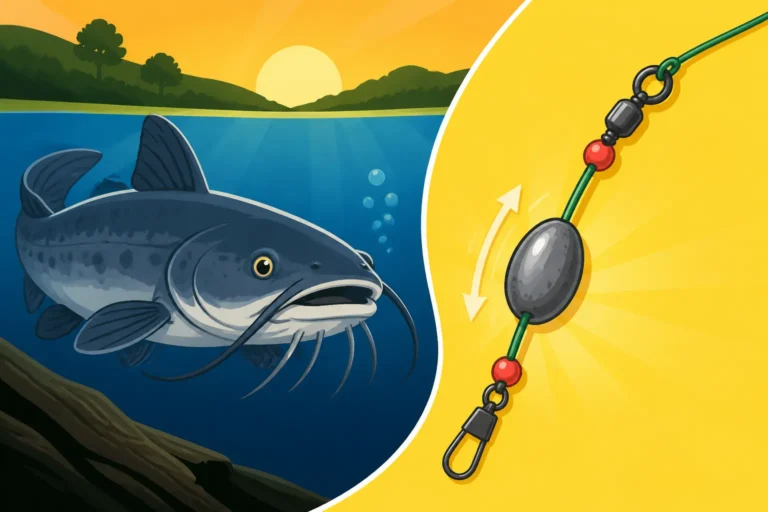
- Carolina Rig: This is a fantastic choice for many situations. It consists of a sliding egg sinker above a swivel, with a leader (usually 12-24 inches) tied to a hook. The sliding sinker allows the fish to pick up the bait and run with it without feeling the weight of the sinker, which can make them drop the bait. This rig is particularly effective when you're casting out and letting the bait sit for a while. You can learn more about How to Rig a Slip Sinker for Catfish for detailed instructions on this versatile setup.
- Santee Cooper Rig: A variation of the Carolina rig, the Santee Cooper rig adds a small float on the leader between the swivel and the hook. This float lifts your bait slightly off the bottom, preventing it from getting buried in muck or weeds, and making it more visible to cruising catfish. It's excellent for slightly softer bottoms or when fish might be suspended just above the lakebed.
- Three-Way Swivel Rig: This rig uses a three-way swivel, with one eye tied to your main line, another to a short leader with a weight, and the third to a longer leader with your hook. This rig allows your bait to drift more naturally in current, while the weight keeps it grounded. It's a popular choice for river fishing.
When setting up any bottom rig, consider the current and depth. Use just enough weight to hold your bait in place without it dragging too much.
Hooks and Line: Matching Your Gear
The right hook and line are crucial for successful catfish angling. Channel catfish have tough, bony mouths, so strong, sharp hooks are a must. Circle hooks are highly recommended because they are designed to hook fish in the corner of the mouth, leading to fewer gut-hooked fish and making catch-and-release easier if you're not planning to keep them. Sizes ranging from 2/0 to 6/0 are generally appropriate for channel catfish, depending on the size of your bait and the fish you're targeting. For detailed information on identifying these fish, check out Channel Catfish Identification and Habits.
As for line, channel catfish aren't typically line-shy, so a robust monofilament or braided line is ideal. For general purpose fishing, 10-20 lb test mono is usually sufficient. If you're targeting larger fish or fishing in areas with heavy cover, bumping up to 30-50 lb braid can provide extra strength and abrasion resistance. Remember, you're often fishing around snags, so a strong line can save you a lot of re-tying time. Understanding How to Bottom Fish for Catfish also involves having the right gear setup.
Tips for Maximizing Your Catfish Catch
Beyond just bait and presentation, a few extra tips can significantly improve your odds when targeting channel catfish in Georgia.
Timing and Location
Channel catfish are often most active during periods of low light, meaning dawn, dusk, and throughout the night. Their incredible sense of smell gives them an advantage in the dark, and they're less wary of predators. This is why Night Fishing for Catfish on Lake Sinclair can be so productive. During the day, they tend to move to deeper, cooler water or seek refuge in shady, covered areas.
When it comes to location, look for areas where food might naturally accumulate or where current delivers scent. This includes creek mouths, points, humps, ledges, and channels in lakes. In rivers, look for deeper holes, eddies, and areas downstream of structure like fallen trees or rock piles. These spots are natural holding areas for catfish. To narrow down your search, exploring articles like Best Catfish Fishing Spots in Georgia can offer specific lake and river suggestions. Remember that seasonal changes affect fish behavior; the Best Time of Year for Catfishing on Georgia's Lake Sinclair might differ from other bodies of water due to thermal properties.
Patience and Persistence
Catfishing is often a game of patience. Once you cast your bait, give it time to do its job. The scent needs to disperse, and the fish need time to locate it. Don't be too quick to reel in and re-cast unless you suspect your bait has been stolen or is in a bad spot. Let your bait soak for at least 20-30 minutes, or even longer, before checking it.
Persistence is also key. If one spot isn't producing, don't be afraid to move and try another. Sometimes, even a short move of 50-100 yards can put you on a whole new school of fish. Pay attention to any bites, even subtle ones, as channel catfish can sometimes be light biters, especially in cooler water.
Chumming for Catfish
Chumming, or strategically introducing attractants into the water, can greatly enhance your success, especially when using cut bait or stink bait. The goal of chumming is to create an extended scent trail that draws fish to your area and keeps them there.
Simple chumming can involve throwing out small pieces of the same cut bait you're using, or even using ingredients like soured corn or crushed oats. Many anglers fill mesh bags with odorous ingredients and hang them off the side of their boat or tie them to a bank stake. The scent slowly leaches out, attracting catfish without overfeeding them. Just be mindful of local regulations, as chumming is not allowed in all waters or for all species in Georgia.
Learning about the different baits and techniques for channel catfish is a journey, and part of the fun is finding what works best for you and your local honey holes. Whether you prefer the raw appeal of cut bait or the pungent draw of a good stink bait, having a solid understanding of these options will put you well on your way to a successful day out on the water. And don't forget to consider if Is Channel Catfish Good to Eat? if you're planning on keeping your catch!
Disclaimer
Fishing regulations and licensing requirements can change. Always consult the latest Georgia Department of Natural Resources (DNR) guidelines before heading out on the water to ensure you are in compliance. This guide is for informational purposes only and does not constitute legal advice.