How to Fish a Drop Shot Rig for Bass
There are days on the water in Georgia when the bass just seem to have lockjaw. You've thrown everything in your tackle box – crankbaits, spinnerbaits, jigs – and nothing seems to entice a strike. It’s incredibly frustrating, especially when you know the fish are there, perhaps schooled up in deeper water or lurking around structure. That’s precisely when you need a finesse presentation that’s almost impossible for a finicky bass to ignore: the drop shot rig. This guide will walk you through everything you need to know to tie, rig, and effectively fish a drop shot for bass across Georgia's diverse waters.
Understanding the Drop Shot Rig: Why It Works So Well
The drop shot rig is a game-changer for many bass anglers, particularly when conditions get tough, or fish are pressured. It offers a presentation that's unlike anything else, allowing your bait to hover tantalizingly in the water column, right in the fish's face, without actually moving. It's a subtle yet incredibly effective technique that can turn a slow day into a memorable one.
The Anatomy of a Drop Shot Rig
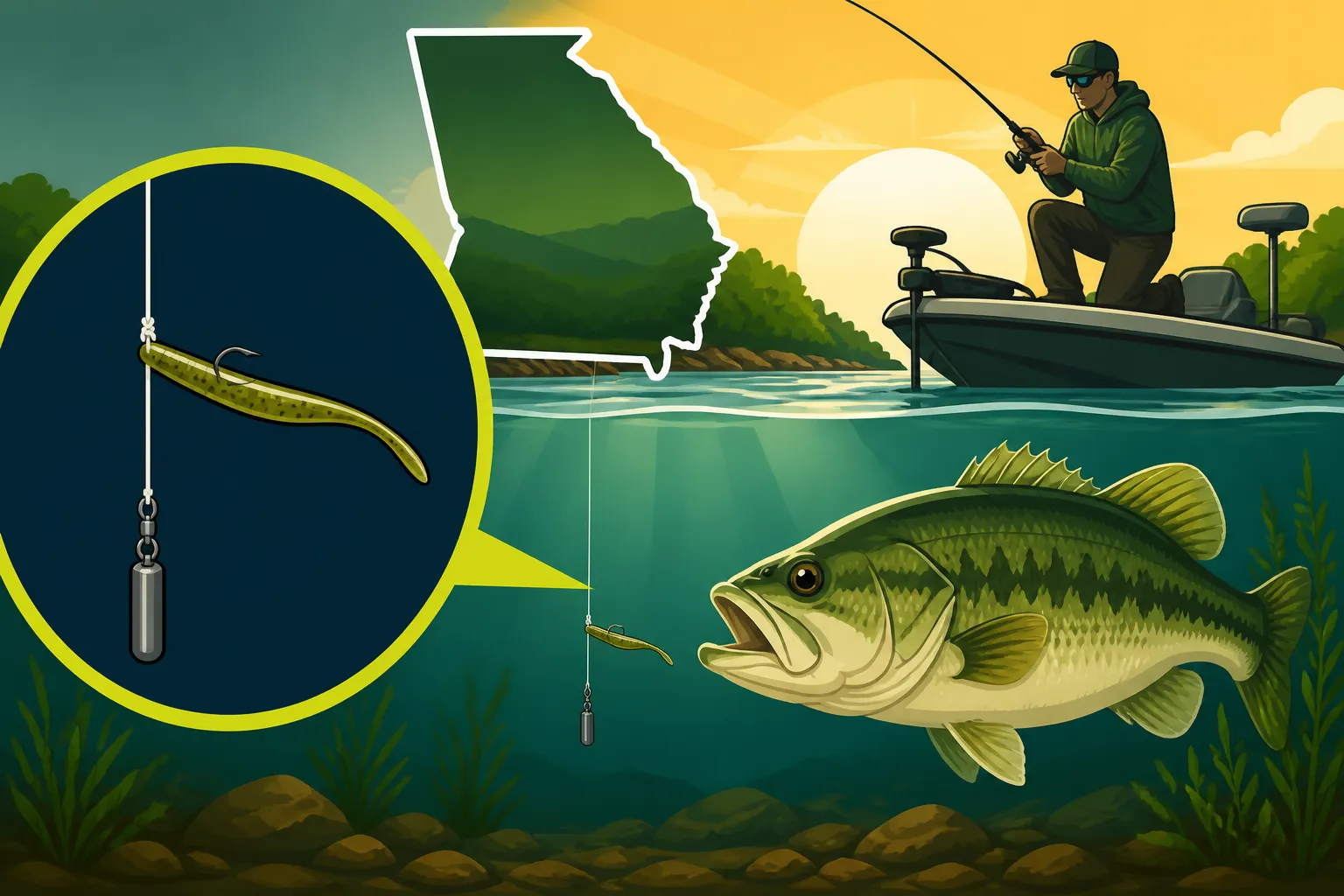
At its core, the drop shot is remarkably simple, which often adds to the frustration when it's not working for you. It consists of a hook tied directly to the main line, with a leader extending below it to an attached weight. That's it! But the magic lies in this specific arrangement. The hook is typically tied with a Palomar knot, leaving a long tag end, which is then threaded back through the eye of the hook from the top down. This makes the hook stand out perpendicular to the line, ensuring your bait presents horizontally. The weight, which is often a cylindrical or tear-drop shape, is then tied to the very end of that tag end.
What's often missed in traditional rigs is how your bait behaves once it hits the bottom. A Texas rig or a Carolina rig, for instance, has the weight right next to the hook or a short distance away. Once that weight settles, so does your bait, often lying flat or only moving when you retrieve. The genius of the drop shot is that the weight holds your line down, but your bait is suspended above it. This means your soft plastic can shimmer and twitch with the slightest movement of your rod tip or even the gentle sway of the water, mimicking a baitfish or an invertebrate hanging out naturally in the water column. It's this continuous, effortless presentation that truly sets it apart.
The Unbeatable Presentation Advantage
Imagine a bass sitting on a deep ledge or near a submerged brush pile. Most conventional baits either quickly fall past them or drag on the bottom, often getting ignored when the fish aren't aggressively feeding. The drop shot, however, allows you to put your bait exactly where the fish are, and keep it there, hovering. You can shake your rod tip just enough to make the bait dance and twitch without actually moving the weight off the bottom. This means your offering stays in the strike zone longer, teasing hesitant bass until they can't resist.
This technique excels in clear water, like the crystal-clear depths of Lake Lanier, where bass often rely heavily on sight and can be spooked by aggressive movements. It's also fantastic when fishing after a cold front, a notorious time when bass become sluggish and less willing to chase. The subtle action of a drop shot bait, just wiggling in place, can often trigger bites when nothing else will. Think about those times you're trying to fish around submerged timber or docks; you can keep your bait right above the snaggy stuff, enticing fish out of cover without getting hung up constantly. The ability to present a bait so naturally, at a precise depth, makes the drop shot an indispensable tool for any serious bass angler in Georgia.
Essential Gear for Your Georgia Drop Shot Setup
Choosing the right gear for drop shot fishing isn't about having the fanciest equipment, but rather having a balanced setup that allows for sensitivity and subtle bait manipulation. You don't want to overpower the finesse nature of this technique with heavy gear. It’s all about feeling those incredibly light bites and delivering that delicate presentation.
Rods, Reels, and Line Choices
When it comes to drop shotting, a spinning setup is almost always the way to go. You'll want a lightweight, sensitive rod, typically in the 6-foot 6-inch to 7-foot 2-inch range, with a medium-light to medium power and a fast or extra-fast action. This combination allows for precise casting of light weights, excellent sensitivity to detect those subtle takes, and enough backbone to manage a feisty Georgia largemouth or spotted bass. Brands like Shimano, Daiwa, and St. Croix offer fantastic options, and you can often find great deals on these rods on Amazon, especially if you're looking to build out your finesse arsenal.
Pair your sensitive rod with a high-quality spinning reel in the 2000-3000 size range. Smooth drag is crucial, as you'll often be fighting fish on lighter lines. For your main line, many anglers opt for 8-10 pound braided line. Braid offers incredible sensitivity due to its lack of stretch and allows for longer casts. The key, however, is to tie on a fluorocarbon leader. Fluorocarbon is nearly invisible underwater, which is a massive advantage in clear water conditions, and its abrasion resistance is beneficial when fishing around structure. A 6-8 pound test fluorocarbon leader is usually ideal. Connect your braid to your fluorocarbon leader using a reliable knot like the FG knot or a double uni-knot. This setup provides the best of both worlds: sensitivity and stealth. If you're wondering which specific lines to get, a quick search on Amazon will show you popular choices from Seaguar or Sufix.
Drop Shot Hooks and Weights
The right hook and weight are critical to the drop shot's effectiveness. For hooks, you're generally looking at small, specialized drop shot hooks. These are typically size 1 or 1/0 hooks, often with a wide gap to accommodate various soft plastics. The most popular styles include "rebarb" hooks, which have a small barb on the shank to hold the bait securely, and octopus or wacky rig style hooks, which are designed to keep the bait horizontal. Brands like Gamakatsu and VMC make excellent drop shot hooks that are super sharp and reliable. You'll find a wide selection of these hooks readily available, and often in multi-packs, when you're stocking up on Amazon.
For weights, versatility is key. Drop shot weights come in various shapes and sizes, and choosing the right one depends on factors like depth, current, and bottom composition.
Here's a quick rundown:
| Weight Type | Description | Best Use Case |
|---|---|---|
| Cylindrical | Long, slender shape; often tear-drop shaped at one end. | Fishing through grass, rocky areas, or sparse cover; less prone to snagging. |
| Round Ball | Classic round weight. | Open water, sandy or muddy bottoms; good for feeling bottom contours. |
| Tear-Drop | A common, versatile shape, often with a swivel at the top. | All-around use; good balance of snag resistance and bottom feel. |
| Pencil/Skinny | Very thin, elongated weights. | Extremely heavy cover, thick grass; minimizes hang-ups. |
Weights typically range from 1/8 ounce to 1/2 ounce. A 1/4 ounce is a great all-around starting point for most Georgia fishing scenarios, but you might go lighter in shallower water or heavier in deep water or strong current. The beauty of most drop shot weights is they have a line clip, allowing you to quickly adjust the leader length without retying. This is a huge time-saver when trying to dial in the fish's preferred depth.
Best Baits for Georgia Drop Shot Fishing
The beauty of the drop shot is its versatility with soft plastics. The most effective baits are typically small, slender worms, minnow imitations, or creature baits that have subtle action. You're not looking for something with a lot of thump or vibration; you want something that looks natural and alive with minimal effort.
Popular choices for Georgia anglers include:
- Straight-Tail Worms: These are probably the most common. Brands like Roboworm, Berkley Powerbait MaxScent Flat Worm, or Yamamoto Shad Shape Worms are fantastic. Colors like green pumpkin, watermelon red, natural shad, or even purple are perennial favorites. Their subtle quiver is irresistible.
- Small Minnow/Shad Imitations: Perfect when bass are targeting baitfish. The Strike King Dream Shot or a simple flukes style bait rigged nose-hooked can be deadly.
- Creature Baits: Smaller creature baits or even chunks of larger plastics can work, especially when trying to mimic crawfish or other bottom-dwelling prey.
- Trick Worms: A classic, versatile worm that can be incredibly effective when nose-hooked.
When selecting a bait, think about the conditions. In clear water, more natural, translucent colors tend to excel. In stained water, brighter colors like chartreuse or junebug might get more attention. The key is to nose-hook your soft plastic, meaning you only push the hook point through the very tip of the bait. This allows the bait to move freely and naturally. Remember, the goal is subtle, natural movement, so choose baits that enhance that presentation. For a full rundown on effective choices, consider exploring "Best Lures for Georgia Largemouth Bass."
Mastering the Drop Shot Technique: Step-by-Step
Tying and fishing a drop shot might seem daunting at first, but with a little practice, it becomes second nature. The payoff for learning this technique can be huge, especially on those days when other methods fail to produce. It's about precision, patience, and a delicate touch.
Tying the Drop Shot Rig Correctly
This is where many anglers get frustrated, as an improperly tied rig can lead to tangles, lost fish, or a bait that doesn't present correctly. The key is the knot you use for the hook and how you orient it.
Here’s a simple, step-by-step guide using a Palomar knot:
- Thread the Line: Take your fluorocarbon leader and pass it through the eye of your drop shot hook, going from the point side (the top) towards the bend (the bottom).
- Form a Loop: Bring the line back through the eye, creating a loop. You now have a doubled line through the hook eye.
- Tie an Overhand Knot: With the doubled line, tie a loose overhand knot, ensuring the hook hangs freely within the loop. Don't tighten it yet.
- Pass Hook Through Loop: Take the hook itself and pass it through the large loop you just created. This is the crucial step that will make the hook stand out properly.
- Moisten and Pull Tight: Moisten the knot with saliva (this reduces friction and prevents line damage) and slowly pull both ends of the line (the main line and the tag end) to cinch the knot down tightly against the hook eye.
- Orient the Hook: Now, take the tag end that is dangling below the hook and thread it back up through the eye of the hook again, but this time, go from the bottom up (the bend side towards the point side). This ensures the hook stands out horizontally, away from the line.
- Attach the Weight: Finally, tie your chosen drop shot weight to the very end of this tag line. You can use a simple overhand knot if your weight has a swivel, or if it has a line clip, simply thread the line through and adjust the length.
The length of the tag end below your hook (which becomes your leader to the weight) will dictate how high your bait sits off the bottom. Experiment with lengths from 6 inches to 3 feet, depending on what the fish are telling you. If fish are hugging the bottom, a shorter leader is better. If they're suspended a bit higher, go longer. This adjustability is a huge advantage of the drop shot.
Presenting Your Drop Shot: The Art of the Subtle Touch
Once your rig is tied, the real finesse work begins. Unlike power fishing techniques, drop shotting is about subtle movements and patience.
- Casting: Make a controlled cast to your target. Don't go for bomb casts unless absolutely necessary. Accuracy is more important. Let the weight fall freely to the bottom.
- Maintaining Slack: As the weight falls, keep a slight bit of slack in your line. This allows the bait to fall naturally and not swing unnaturally due to line tension.
- Detecting Bottom: You'll feel a slight "thump" or softening of the line tension when your weight hits the bottom. Once it's down, reel up the slack until your line is taut, but don't pull the weight off the bottom.
- The "Shake": This is the signature move. With a slightly bowed rod tip, gently twitch or shake the rod. You want just enough movement to make your soft plastic quiver and dance in place, but not enough to move the weight. Imagine a small baitfish or insect just barely moving.
- Dragging and Dead-Sticking: Sometimes, a slow drag across the bottom, occasionally pausing and shaking, is effective. Other times, simply letting the bait sit perfectly still (dead-sticking) and letting natural currents do the work is all it takes. Bass, especially pressured ones, often pick up a "dead" bait they've been staring at for a while.
- Detecting Bites: This is perhaps the most challenging part. Drop shot bites are often incredibly subtle. It might feel like a slight "tick," a spongy feeling, or simply your line going slack or moving sideways. The key is to stay hyper-focused on your line and rod tip. If anything feels unusual, set the hook! Instead of a hard, sweeping hookset, a firm, upward snap of the wrist is usually all you need with these smaller, super-sharp hooks.
Where and When to Use a Drop Shot in Georgia
The drop shot truly shines in specific scenarios across Georgia's diverse fishing landscapes. It's not a run-and-gun technique; it’s for when you need to slow down and pick apart specific areas.
- Deep Water Structures: Lakes like Lanier, Hartwell, and Oconee have abundant deep-water humps, points, and ledges where bass school up, especially in warmer months or during winter. The drop shot is perfect for targeting these fish, allowing you to present a bait directly in their zone for extended periods. This is particularly useful for finding those elusive spotted bass in the deep clear waters of North Georgia. Consider exploring the "Lake Lanier Fishing Guide, Georgia" for prime spots.
- Clear Water Conditions: Whenever the water clarity is high, bass become more visually oriented and wary. The subtle profile and natural action of a drop shot, especially with a fluorocarbon leader, makes it less intimidating. This is common in many of Georgia's mountain reservoirs and even portions of the Chattahoochee River.
- Cold Fronts and Post-Frontal Conditions: As mentioned earlier, bass become lethargic and less aggressive after a cold front passes through. They'll often hug the bottom or tight to cover. A drop shot is ideal for putting a bait right in front of them without requiring them to expend much energy. To understand more about this, read up on "Fishing After a Cold Front."
- Vertical Cover: Docks, bridge pilings, standing timber, and brush piles are all excellent places to pitch a drop shot. You can effectively fish vertically, keeping your bait just above the snags, enticing bass out of their hiding spots. Learning "How to Catch Bass Around Submerged Timber" will complement your drop shot skills nicely.
- Suspended Fish: Sometimes, bass will suspend in the middle of the water column, not necessarily on the bottom. With the drop shot, you can easily adjust your leader length to place your bait at the exact depth the fish are holding, whether that's 5 feet down or 25 feet down.
- Specific Species: While excellent for largemouth, the drop shot is particularly potent for spotted bass, which often inhabit deeper, clearer waters and can be notoriously finicky. It's also effective for smallmouth bass, though they are less common in most Georgia waters.
In essence, whenever you need a subtle, high-percentage presentation for finicky fish, or when you know exactly where the fish are but they just won't bite anything else, the drop shot is your answer. You can even combine it with some of the advice in "Spring Bass Fishing Patterns on Georgia's Reservoirs" to really fine-tune your approach as the seasons change.
Disclaimer
Fishing involves inherent risks. Always prioritize safety on the water. Be aware of your surroundings, wear appropriate safety gear including life jackets, and follow all local, state, and federal fishing regulations. Always practice responsible catch and release when appropriate, and respect private property. The information provided in this guide is for informational purposes only and does not constitute professional advice.