Where to Catch Sea Trout Along the Georgia Coast
One of the biggest frustrations for anglers new to Georgia's coast is knowing where to even begin looking for sea trout. The estuaries and marshlands can feel like an endless maze, and without a clear understanding of where these silver beauties hide, you might spend more time casting into empty water than reeling in fish. This guide is designed to cut through that confusion, giving you the specific locations, times, and techniques you need to successfully target sea trout along the beautiful Georgia coastline.
Unpacking Georgia's Sea Trout: What You Need to Know
Before we dive headfirst into specific fishing holes, it’s really helpful to understand the main species of sea trout we're after, what their preferred haunts look like, and how they behave. Knowing your quarry makes all the difference, turning a hopeful cast into an educated strike.
Identifying Spotted Seatrout and Weakfish
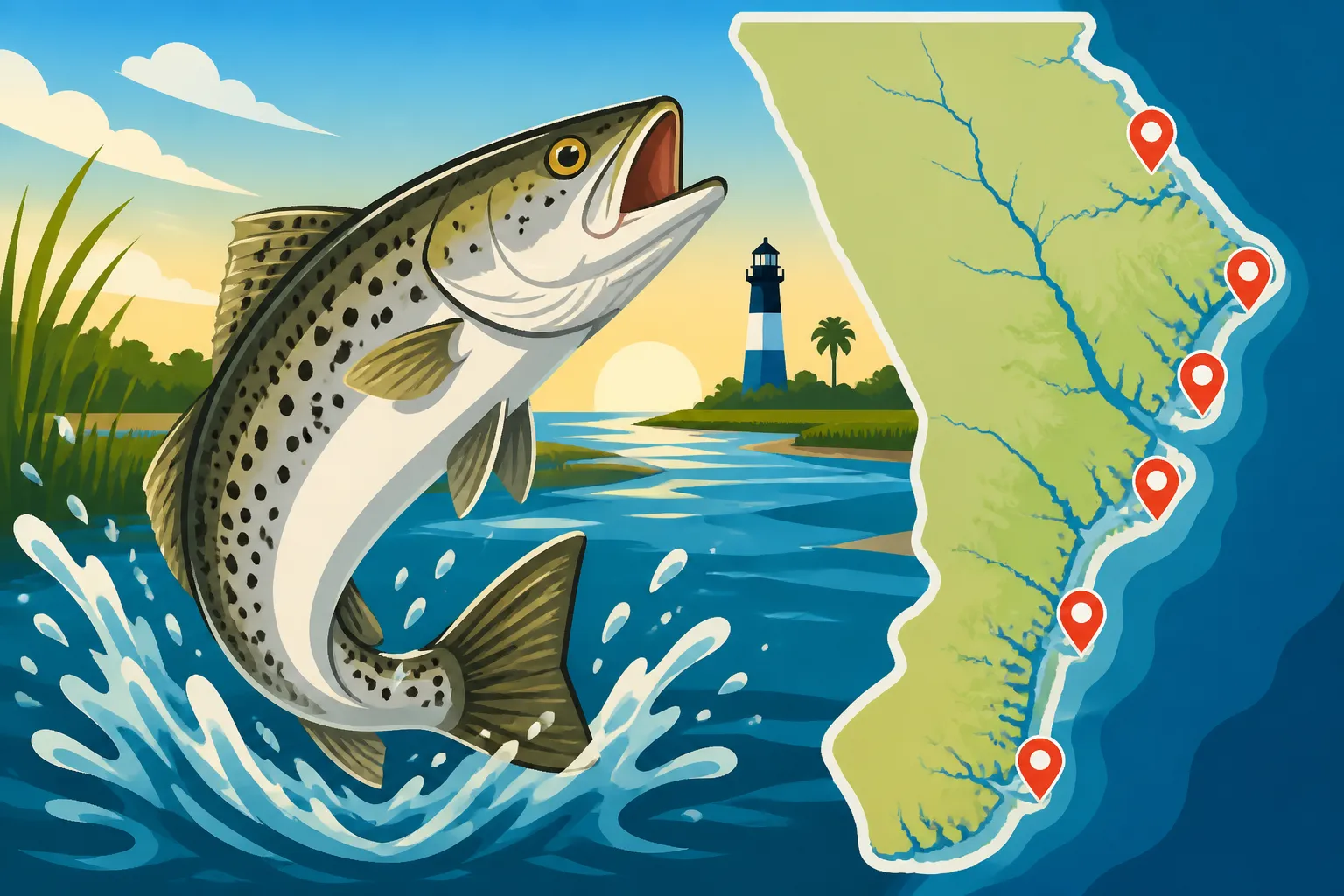
When folks talk about "sea trout" along the Georgia coast, they're typically referring to the Spotted Seatrout (Cynoscion nebulosus). These are the superstars of our inshore waters, recognizable by the distinct black spots scattered across their back and fins, often blending into a beautiful silver-to-green hue. They've got those two prominent canine teeth in their upper jaw that are surprisingly sharp, so be careful when handling! They're not true trout, but rather members of the drum family, related to redfish and croaker. They're highly sought after for their excellent table fare and spirited fight, especially on light tackle.
Less common, but still present, is the Weakfish (Cynoscion regalis), sometimes called Gray Trout. They get their name from their tender mouths, which can tear easily, making them a challenge to land. Weakfish are generally lighter in color, often with a faint dusky or blotchy pattern rather than distinct spots. While they share some habitat with spotted seatrout, they often prefer slightly deeper or more open water and can be a bit more elusive in Georgia's shallow estuaries. Both species are phenomenal eating, but the spotted seatrout is undoubtedly the more consistent target for most coastal anglers here.
Preferred Habitats and Forage
Sea trout are creatures of comfort, and their comfort zone along the Georgia coast revolves around protective structures and plentiful food. They absolutely love the intricate network of tidal creeks, oyster beds, marsh grass edges, and shallow, sandy bottoms adjacent to deeper channels. Think about areas where baitfish like mullet, minnows, and shrimp can congregate, and you're likely thinking about a prime sea trout spot.
Oyster reefs, in particular, are sea trout magnets. These natural structures provide both shelter for the trout and a buffet line of small crabs and invertebrates for their prey. You'll often find them lurking on the edges of these reefs, waiting for an opportune moment to ambush. Similarly, spartina grass (the dominant marsh grass here) serves as a nursery for shrimp and small fish, making the grass lines excellent ambush points, especially during high tide when the trout can push farther back into the flooded marsh. Docks, piers, and any structure that breaks the current or provides shade can also hold impressive numbers of these fish.
Behavioral Quirks and Feeding Habits
Sea trout are opportunistic predators, but they often have preferred feeding windows. They are most active during low light conditions, meaning dawn and dusk are often the magic hours. Overcast days can extend this feeding window, and sometimes, especially in cooler months, they'll feed actively throughout the day. Tides play a massive role here, too. A moving tide, whether incoming or outgoing, is almost always better than slack tide. The moving water dislodges bait, concentrates prey, and often positions the trout in predictable ambush points.
They use a "strike zone" approach, meaning they won't chase a bait very far if they aren't actively feeding. Presenting your bait or lure accurately and subtly is often more critical than making a long cast. They tend to school, especially the smaller "schoolie" trout, so if you catch one, there are often more nearby. Larger "gator" trout, however, tend to be more solitary and will often hold in prime ambush spots by themselves. Pay attention to bird activity – diving birds often indicate baitfish, and where there's bait, there are usually hungry sea trout not far behind.
Top Coastal Regions and Specific Spots for Sea Trout
Georgia's coastline might not be as expansive as some other states, but it's rich with productive waters for sea trout. Knowing which general areas and then honing in on specific types of structures will put you on the fish. Remember, a valid Georgia Saltwater Fishing Permit Guide is essential before you even wet a line.
The Golden Isles: Brunswick, St. Simons, Jekyll Island
The Golden Isles region is arguably the most famous and productive area for inshore fishing in Georgia, and sea trout are a major reason why. This network of barrier islands, sounds, and tidal creeks offers an incredible diversity of habitat.
- Brunswick: The waters around Brunswick, particularly the Brunswick River and its myriad of tributaries, are phenomenal. There are vast stretches of marsh with deep channels and oyster-laden creek mouths. Public access can be found at some boat ramps, but a boat or kayak will give you the most flexibility here. Look for subtle current breaks and eddies where bait might accumulate. If you're looking for an experienced guide to navigate these intricate waters, a service like FishingBooker can connect you with local captains who know the Brunswick area like the back of their hand.
- St. Simons Island: Just a short drive from Brunswick, St. Simons offers excellent opportunities, especially in the larger sounds and tidal creeks like MacKay River, Black Banks River, and the Frederica River. The St. Simons Island pier is also a popular spot, especially during cooler months, where anglers often catch good numbers of trout. The extensive marsh grass lines and shell rakes here are prime targets. For more detailed information on specific areas, check out our St. Simons Island Inshore Fishing Guide.
- Jekyll Island: Known for its pristine beaches, Jekyll Island also boasts productive inshore waters, particularly on its sound side. Places like Jekyll Creek and the surrounding marshes hold good numbers of trout. The Jekyll Island Fishing Pier is another popular, easily accessible spot, especially for those without a boat. Fishing on a falling tide around the jetties and current breaks can be very rewarding.
Savannah and Tybee Island Areas
Further north, the Savannah area offers a distinct, yet equally productive, sea trout fishery. The massive Savannah River system and its convergence with the Atlantic create dynamic conditions.
- Savannah River and its Tributaries: The lower Savannah River, before it meets the open ocean, is teeming with smaller tidal creeks and estuaries that are perfect sea trout habitat. Areas around Fort Pulaski and the various sounds like Tybee Creek are excellent. The deep channels of the river itself can hold larger trout, especially during cooler weather.
- Tybee Island: As Georgia's easternmost point, Tybee Island provides a mix of inshore and nearshore opportunities. Tybee Creek and the Lazaretto Creek are renowned for their sea trout populations. Anglers can find success fishing from the Tybee Pier, which is one of the Best Coastal Fishing Piers in Georgia, particularly at night under the lights. Additionally, the countless small creeks and marsh edges accessible by kayak or small boat can be incredibly productive. Remember, knowing How to Get a Fishing License in Georgia is your first step for any trip.
St. Marys and Cumberland Island National Seashore
Down south, near the Florida border, the St. Marys area provides a slightly different, but equally exciting, fishing experience.
- St. Marys River and Cumberland Sound: The St. Marys River flows into Cumberland Sound, creating a vast estuary system that holds an abundance of bait and, consequently, sea trout. The deepwater channels and extensive oyster bars around St. Marys are ideal. It's a fantastic spot for those looking for a quieter, more remote fishing experience compared to the busier Golden Isles.
- Cumberland Island National Seashore: While accessing the interior waters of Cumberland Island requires specific permits and planning, the surrounding waters, particularly the sound side, are rich with sea trout. This area offers a truly wild fishing experience. You'll need a boat or a local guide to really tap into its potential, but the rewards can be significant. This region is a gem for Coastal Georgia Fishing Spots Guide enthusiasts.
Public Piers and Accessible Shoreline Spots
For anglers without a boat, don't despair! Georgia's coast has several excellent public piers and bank fishing spots where you can target sea trout.
- Jekyll Island Fishing Pier: Located on the south end of Jekyll Island, this pier extends into the sound, offering access to deeper water and passing schools of baitfish and trout.
- St. Simons Island Pier: A very popular spot, offering great fishing for a variety of species, including sea trout, especially at dusk and dawn.
- Tybee Pier: As mentioned, this pier is a consistent producer, particularly known for its night fishing under the lights.
- Docks and Bridges: Many public docks and fishing platforms along tidal creeks and rivers, such as those found in Brunswick, Georgia Saltwater Fishing Spots, can provide excellent opportunities. Always check for public access and respect private property. Fishing around bridge pilings can also be incredibly productive, as these structures create current breaks and attract bait.
Seasonal Patterns and Best Times to Target Sea Trout
Sea trout are present year-round along the Georgia coast, but their location and activity levels shift significantly with the seasons. Understanding these patterns is key to consistent success. Knowing When you can keep trout on Georgia's Delayed Harvest streams might be crucial for freshwater, but for saltwater, it's about understanding the nuances of the tides and seasons.
Spring Spawning and Post-Spawn Activity
Spring is a fantastic time for sea trout. As water temperatures rise, typically from March through May, the fish become much more active after the colder winter months. This is when they begin to move out of their deeper winter holes and start pushing into the shallower marsh areas and tidal creeks. They'll be feeding aggressively, bulking up for the spawn and then recovering afterward.
During the pre-spawn, you'll find them concentrating near the mouths of creeks and over oyster beds, gorging on shrimp and small baitfish. Post-spawn, they might be a bit lethargic immediately after, but quickly resume feeding aggressively to regain strength. The key here is focusing on those incoming and outgoing tides around structure, as they'll be very active ambush predators. A good rule of thumb is to look for clear water and target the edges of grass beds on higher tides.
Summer's Abundance in Estuaries
Summer (June through August) brings an explosion of life to Georgia's estuaries, and sea trout thrive in these conditions. The warmer water means a higher metabolism, so they're feeding constantly. However, they also become more sensitive to heat and bright sunlight. You'll often find them pushing deeper into the marsh on higher tides, seeking cooler water and abundant bait.
The best times to fish during summer are typically early mornings, late evenings, or even at night. During the day, they might retreat to deeper holes, shaded areas under docks, or cooler water around spring-fed creeks. Topwater lures can be incredibly effective during low light periods, creating exciting blow-ups. Fishing the deeper pockets and channels within the estuaries during the hottest parts of the day can also yield results.
Fall Runs: The Prime Time
Many anglers consider fall (September through November) the absolute best time for sea trout fishing in Georgia. As water temperatures begin to cool, the trout go into a pre-winter feeding frenzy, known as "fall runs." They're trying to pack on weight before the cold sets in, making them incredibly aggressive.
During this period, large schools of baitfish, particularly mullet, begin their migration out of the estuaries and towards the ocean. Sea trout will stage along these migration routes, ambushing the passing bait. Look for concentrations of birds diving on baitfish, as this is a strong indicator of actively feeding trout. The fish will be spread out more throughout the system, from shallow grass flats to deeper channels. Cooler fronts can often trigger even more aggressive feeding. This is when some of the largest "gator" trout are caught, particularly in areas like the Golden Isles Coastal Fishing Spots, Georgia.
Winter's Deeper Water Challenges
Winter (December through February) can be a challenging but rewarding time for sea trout. As water temperatures drop, trout become much less active and seek out deeper, more stable water. They'll often school tightly in large, deep holes within tidal creeks, protected channels, or around structures that offer thermal refuge, such as near power plant discharges (though these are less common for sea trout specific spots) or deep bends in rivers.
The key to winter fishing is slowing down your presentation considerably. The trout won't chase a fast-moving lure. Small jigs, live shrimp, or mud minnows fished slowly along the bottom or suspended under a popping cork in deeper water are often most effective. Fishing during the warmest part of the day, usually mid-day, can also be beneficial, as it might coax the fish into a short feeding window. Don't be surprised if you catch multiple fish from the same deep hole, as they tend to congregate.
Essential Gear and Techniques for Coastal Sea Trout Fishing
Having the right tools and knowing how to use them can turn a good day of fishing into a fantastic one. Sea trout aren't necessarily tackle-busters, but light tackle makes the fight a blast and subtle presentations more effective. When planning your trip, remember that the Georgia Fishing License Guide will have all the details on getting squared away with permits.
Recommended Rods, Reels, and Line
For sea trout, lighter is generally better. You want to feel those subtle bites and enjoy the fight without overpowering the fish.
- Rods: A 6'6" to 7'6" medium-light to medium power spinning rod with a fast action is ideal. This length gives you good casting distance while maintaining sensitivity and control for working baits.
- Reels: Pair your rod with a 2500 or 3000 series spinning reel. Brands like Shimano, Daiwa, or Penn offer reliable options that can handle the saltwater environment. Ensure it has a smooth drag system.
- Line: For your main line, 10-15 lb braided line is highly recommended. Braid offers superior sensitivity, minimal stretch, and excellent casting distance. To this, you'll want to add a 2-3 foot leader of 15-20 lb fluorocarbon. Fluorocarbon is nearly invisible underwater, more abrasion resistant than mono, and helps prevent wary fish from seeing your mainline. It's an important part of Best Fishing Techniques for Georgia Anglers.
Top Baits and Lures for Sea Trout
Sea trout aren't overly picky, but they do have preferences. Matching the hatch (what they're currently eating) is always a good strategy.
- Live Bait: This is often the most effective choice, especially for larger trout.
- Live Shrimp: The undisputed king of sea trout baits. Fished under a popping cork or free-lined, shrimp are irresistible.
- Live Minnows (Mud Minnows, Finger Mullet): Excellent choices, especially when trout are targeting finfish. Rig them with a small Kahle hook through the lips or dorsal fin.
- Artificial Lures: Modern artificials are incredibly effective and can cover more water.
- Soft Plastics: Gulp! Shrimp, DOA Shrimp, or Z-Man PaddlerZ rigged on a 1/8 to 1/4 ounce jig head are deadly. Colors like natural shrimp, white, chartreuse, or clear with glitter are perennial favorites.
- Popping Corks: A classic setup for live shrimp or soft plastics. The "pop" attracts attention, mimicking feeding baitfish.
- Topwater Lures: Walk-the-dog style baits (e.g., Heddon Super Spook Jr., Rapala Skitter Walk) are exhilarating to fish at dawn and dusk. The erratic splashing drives trout crazy.
- Spoons: Gold or silver spoons can imitate fleeing baitfish effectively, especially in stained water.
- Suspending Twitchbaits: MirrOlure or Paul Brown's Fat Boy lures can be very effective, especially in cooler water when a slower retrieve is needed. They mimic wounded baitfish perfectly. These baits are similar to some of the Best Bait for Redfish options too, given their shared habitats.
Effective Fishing Techniques
How you present your bait is just as important as what bait you use.
- Popping Cork Rig: This is probably the most iconic sea trout technique. Rig your live shrimp or soft plastic about 18-36 inches below a popping cork. Cast it out near structure or grass lines, let it sit for a few seconds, then give the rod tip a sharp twitch to make the cork "pop." Repeat every 5-10 seconds. The noise and splash draw attention, and the bait dances enticingly.
- Jigging Soft Plastics: Cast your jig head with a soft plastic tail and let it sink to the bottom. Retrieve it with a series of short hops and pauses, mimicking a shrimp or baitfish fluttering along. Vary your retrieve until you find what the fish prefer. This is a very versatile technique and can be deadly around oyster beds and deeper channels.
- Free-Lining Live Bait: Especially effective in areas with good current or when targeting larger, wary trout. Hook a live shrimp or minnow through the head or tail with a small, sharp hook (e.g., a 1/0 or 2/0 circle hook) and let it drift naturally with the current. This minimal tackle approach is incredibly subtle.
- Topwater Action: Cast your topwater lure to areas where you suspect trout are lurking – grass lines, shallow flats, oyster beds. Use a "walk-the-dog" retrieve: twitch the rod tip while reeling in slack, making the lure zigzag enticingly across the surface. Wait for the explosive strike! This is best done during low light.
- Drifting and Trolling (with a guide): For those with access to a boat, drifting tidal creeks with live bait or slow-trolling small jigs can be very effective for covering water and finding schools of trout. Many local charter captains, easily found through services like FishingBooker, specialize in these techniques and can put you on fish when you're visiting for a trip. Don't forget, if you're on a boat, you might need to confirm Do you need a permit for saltwater fishing in Georgia? (the answer is yes, you do, but it's often free!).
Conservation and Catch-and-Release Practices
Georgia's sea trout fishery is a precious resource, and it's up to all of us to help protect it. Always be mindful of size and creel limits set by the Georgia Department of Natural Resources. These regulations are in place to ensure healthy fish populations for future generations.
If you plan to release fish, handle them with care. Use a dehooking tool if possible to minimize damage, avoid touching their gills, and support their body weight horizontally. If you're using a net, opt for a rubberized net to protect their slime coat. Releasing fish responsibly ensures they have the best chance of survival and can reproduce. Understanding rules like the Georgia's Free Saltwater Fishing Permit and local size limits helps keep our waters healthy and abundant.
Saltwater Seasonality Table for Sea Trout
Understanding how the seasons affect sea trout activity and location is crucial for success. This table gives you a quick overview of what to expect throughout the year along the Georgia coast.
| Season | Water Temperature (Avg.) | Key Locations | Best Baits/Lures | Techniques | Notes |
|---|---|---|---|---|---|
| Spring | 60-75°F | Creek mouths, oyster beds, marsh grass edges | Live shrimp, soft plastics, twitchbaits | Popping corks, jigging, free-lining | Active feeding, pre-spawn & post-spawn |
| Summer | 75-85°F | Deeper marsh, shaded docks, cooler creek holes | Live shrimp, topwater, soft plastics | Early/late topwater, slow jigging | Seek shade/cooler water, morning/evening bite |
| Fall | 65-75°F | Migratory bait routes, extensive grass flats | Live mullet, soft plastics, spoons, topwater | Aggressive jigging, popping corks, topwater | "Fall run" feeding frenzy, larger fish |
| Winter | 50-60°F | Deep holes in creeks, protected channels, sounds | Live shrimp, mud minnows, slow-jigged plastics | Slow jigging, suspension rigs | School tightly, slow presentation is key |
Disclaimer
The information provided in this guide is for general informational purposes only and is subject to change. Fishing regulations, license requirements, and local conditions can vary. Always check the latest regulations from the Georgia Department of Natural Resources (DNR) before fishing. The author and publisher are not responsible for any incidents, accidents, or regulatory violations that may occur as a result of using this information. Fish responsibly and safely.