Brunswick, Georgia Saltwater Fishing Spots
Oh, the Georgia coast! There's something truly special about the salty air, the cry of gulls, and the endless maze of marshland that just calls to an angler's soul. But let's be real, for anyone new to saltwater fishing, or even just new to a specific area like Brunswick, it can feel like trying to find a needle in a haystack. With so many creeks, sounds, and open water, knowing where to drop a line for the best chance at success can be downright intimidating. That's exactly why we're diving deep into the incredible saltwater fishing opportunities around Brunswick, Georgia, to give you the insider scoop on where to go, what to chase, and how to make the most of your coastal adventure.
Brunswick: A Premier Gateway to Georgia's Saltwater Fishing
Brunswick, nestled perfectly within Georgia's Golden Isles, isn't just a charming historic city; it's a bonafide hub for saltwater anglers. Its strategic location offers incredible access to a diverse array of fishing environments, from protected inshore estuaries to the bountiful waters of the Atlantic. It’s no wonder so many passionate anglers flock here, seeking everything from feisty redfish to powerful sharks.
The Unique Ecosystem and Geography of the Golden Isles
What makes Brunswick and the surrounding Golden Isles so special for fishing is its truly unique geographical makeup. We're talking about a vast, intricate network of barrier islands, tidal creeks, salt marshes, and open sounds. This isn't your typical sandy beach coastline; it's a dynamic, nutrient-rich estuary system that acts as a nursery and feeding ground for an incredible variety of marine life. The sprawling marshes, fed by rivers like the Turtle River and the Brunswick River, filter nutrients and provide sanctuary, creating a super-highway for baitfish and, consequently, the game fish that chase them.
Imagine standing on a dock, gazing out at a seemingly endless expanse of Spartina grass. Below the surface, those grasses provide vital cover for shrimp and small fish, which are the primary food source for predators like redfish, speckled trout, and flounder. The deep channels and sudden drop-offs in the sounds themselves create perfect ambush points. This complex interplay of shallow flats, deep channels, and abundant forage makes Brunswick's ecosystem incredibly productive. It's not just pretty; it's a biological engine driving an amazing fishery, making it one of the top Coastal Georgia Fishing Spots Guide.
A Stunning Variety of Target Species
One of the biggest draws to fishing around Brunswick is the sheer diversity of species you can target throughout the year. It's not just a "bass fishery" or a "trout fishery"—it's a multi-species wonderland. Depending on the season, you could be fighting a massive red drum, jigging for a speckled sea trout, or wrestling a hard-pulling black drum.
In the warmer months, the inshore waters are teeming with formidable fighters like jack crevalle and tarpon, offering an adrenaline rush that's hard to beat. Pompano and whiting can be found closer to the beaches, especially around tide changes, providing delicious table fare. As the seasons shift, cooler waters bring in different opportunities, though the core inshore species remain strong year-round residents. This constant variety keeps things exciting, meaning there's always something new to learn and something different to chase. It validates that feeling of never getting bored, always having a new challenge to tackle out on the water.
Inshore Fishing Hotspots Around Brunswick
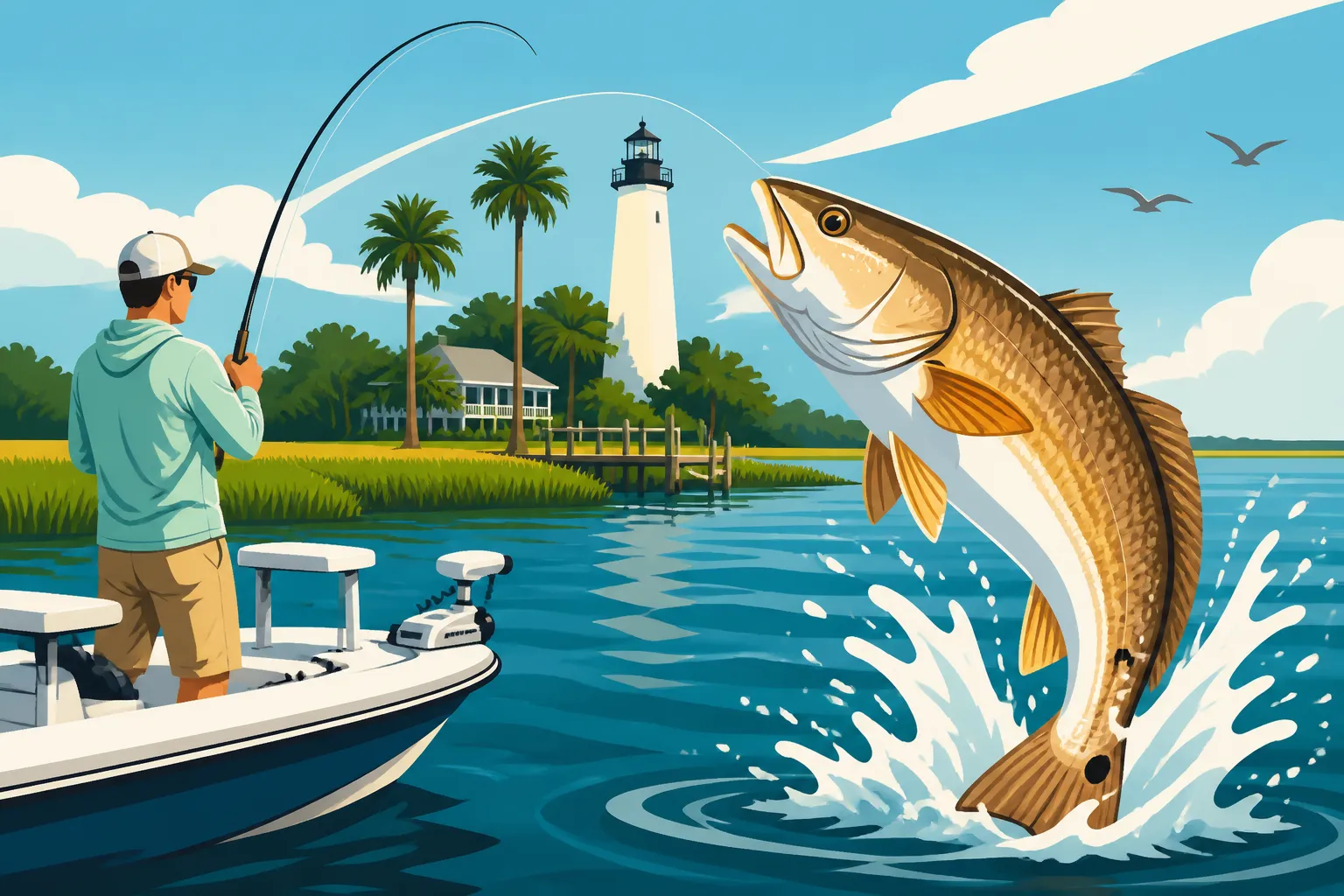
For many anglers, the true magic of Brunswick lies within its inshore waters. The intricate network of creeks, rivers, and sounds offers sheltered fishing opportunities, often with consistent action, regardless of the weather offshore. This is where you can truly immerse yourself in the unique coastal environment, sight-casting to tailing redfish or drifting for speckled trout.
Exploring the Marsh Creeks and Estuaries
The heart of Brunswick's inshore fishing beats within its sprawling marsh creeks and estuaries. These twisting, winding waterways are sanctuaries for baitfish and predators alike. Names like Turtle River, Fancy Bluff Creek, and the Brunswick River itself are legendary among local anglers. These areas are prime hunting grounds for the "Big Three" of Georgia inshore fishing: redfish, speckled trout, and flounder.
When the tide is rising, fish push deep into the marsh, following the bait. This is a fantastic time for shallow-draft boats, kayaks, or even skilled wade fishermen to explore the smaller tributaries. Look for current breaks, oyster beds, and any submerged structure that might hold fish. As the tide begins to fall, those fish are often forced out of the shallower marsh, congregating in the deeper channels and around creek mouths, creating excellent opportunities for anglers waiting with live bait or artificials. Knowing how to read the water, identify current seams, and spot subtle changes in bottom structure is key here. It can feel overwhelming looking at all those twisting marsh creeks on a map, but a little local knowledge, or even just exploring a few well-known spots, can quickly get you hooked. Many anglers find great success targeting Where to Catch Sea Trout Along the Georgia Coast in these fertile areas.
Docks, Piers, and Structure Fishing
Not everyone has a boat, and honestly, you don't always need one to have a fantastic day fishing around Brunswick! The area boasts several excellent spots for pier and dock fishing, as well as plenty of natural and man-made structures that hold fish. The Sidney Lanier Bridge, for example, is a massive structure that creates deep shadows and current breaks, attracting a host of species. While you can't fish directly from the bridge, the surrounding waters beneath and near it are incredibly productive. Anglers often target sheepshead, drum, and even some larger predatory fish around the pilings.
Then there's Blythe Island Regional Park, a true gem for shore anglers. It offers a fantastic fishing pier that extends into the Turtle River, providing access to deeper water without needing a boat. Here, you can expect to catch a mix of species, including redfish, spotted seatrout, flounder, and even some croaker and whiting. It's a family-friendly spot too, with amenities that make it easy to spend the whole day. Other public docks and boat launches around the Brunswick area, like those along the Brunswick River, can also provide surprisingly good opportunities, especially during moving tides. These spots offer a realistic, accessible way for anyone to get a line in the water and experience the thrill of saltwater fishing. Remember, structure is key—any pilings, rock piles, or submerged logs can be a magnet for fish.
| Species | Common Habitat | Best Bait/Lure | Ideal Season | Notes |
|---|---|---|---|---|
| Redfish | Marsh creeks, oyster bars, docks | Live shrimp, cut mullet, Gulp! | Year-Round | Strong fighters, often tail in shallows |
| Speckled Trout | Creek mouths, grass lines, docks | Live shrimp, soft plastics | Fall/Spring | Delicious table fare, can be finicky |
| Flounder | Sandy bottoms, structure, creek mouths | Live mud minnows, Gulp! | Summer/Fall | Ambush predators, excellent eating |
| Sheepshead | Bridge pilings, oyster reefs | Fiddler crabs, barnacles | Winter/Spring | Tricky to hook, fantastic taste |
| Black Drum | Deep holes, oyster beds, channels | Blue crab, shrimp | Year-Round | Larger cousins to redfish, strong |
| Whiting/Croaker | Beaches, sandy bottoms, piers | Shrimp, squid | Year-Round | Great for kids, good eating |
Nearshore and Offshore Adventures from Brunswick
While the inshore fishing is phenomenal, Brunswick also serves as a fantastic launching point for anglers looking to venture out into the Atlantic. The opportunities expand dramatically once you pass the protection of the barrier islands, offering chances to target larger, more powerful species. This is where you might need a bigger boat, or perhaps consider a charter if you're looking to explore deeper waters.
Targeting Artificial Reefs and Wrecks
Just a short run offshore from Brunswick, the ocean floor is dotted with a network of artificial reefs and natural wrecks. These underwater structures act as magnets for marine life, providing habitat and feeding grounds in an otherwise relatively barren sandy bottom. The Georgia Department of Natural Resources (DNR) has done an excellent job creating and maintaining these reefs, which are often composed of old barges, concrete culverts, and other donated materials.
These reefs, such as the Fingers Reef or the Cumberland Reef, become vibrant underwater cities. Here, you'll find a wide variety of species, including snapper (gray snapper, vermilion snapper), grouper, amberjack, triggerfish, and various types of sea bass. These areas are typically fished by dropping live or cut bait (like squid, cigar minnows, or menhaden) to the bottom, or by jigging with heavy metal jigs. It's a completely different style of fishing than inshore, often requiring heavier tackle and a good fish finder to pinpoint the structure. The challenge of fighting a strong grouper or an aggressive amberjack off these structures is a thrill that keeps many anglers coming back for more.
The Open Atlantic for Pelagic Species
For those with larger boats and a taste for true big-game fishing, the open Atlantic beyond the nearshore reefs offers exhilarating opportunities for pelagic species. While Brunswick might not be as famous for its offshore scene as some other coastal towns, it still provides access to fantastic deep-sea fishing grounds. Heading further offshore, especially towards the edge of the continental shelf, opens up the possibility of encountering true ocean giants.
During different seasons, you can target species like King Mackerel, Spanish Mackerel, Barracuda, and even Mahi-Mahi (Dolphin Fish) and Wahoo. Trolling with rigged baits or artificial lures is a common technique for these fast-moving predators. Sometimes, you'll even find schools of tuna or sailfish if you're lucky enough to hit the right conditions and depths. This kind of fishing often requires careful planning, monitoring weather conditions, and having the right gear to handle powerful, long-running fish. If you're new to offshore, consider booking a charter; a local captain knows exactly where to find the fish and how to set up for success. Services like FishingBooker are excellent for connecting with experienced local guides who specialize in these deep-water excursions, ensuring you get the most out of your Golden Isles Coastal Fishing Spots, Georgia experience.
Planning Your Brunswick Fishing Trip
A successful fishing trip isn't just about where you go; it's also about when and how you prepare. The Georgia coast, with its strong tidal influences and distinct seasons, demands a bit of forethought to maximize your chances of a great day on the water.
Seasonal Considerations and Best Times
Fishing in Brunswick is truly a year-round affair, but the species you target and the techniques you employ will definitely shift with the seasons.
- Spring (March – May): This is a fantastic time as the water warms up. Redfish and speckled trout become very active inshore. Flounder start moving into the creeks. Sheepshead are still strong around structure, especially near spawning season. Offshore, migratory species like Spanish mackerel begin to arrive. This can be one of the Best Spring Bass Fishing Spots in Georgia (referring to coastal species as "bass" broadly).
- Summer (June – August): The inshore bite for redfish, trout, and flounder remains strong, though you might need to fish earlier or later in the day to beat the heat. Tarpon and formidable jack crevalle arrive in good numbers, providing incredible sport. Offshore, king mackerel, mahi-mahi, and sharks are active.
- Fall (September – November): Many consider fall to be the absolute prime time for inshore fishing in Brunswick. The water temperatures are ideal, and baitfish are abundant. Redfish, especially the larger "bull reds," gather in schools in the sounds and nearshore, often in what's known as "the mullet run." Speckled trout fishing can be absolutely phenomenal. Flounder are also preparing for their offshore migration, making them a prime target.
- Winter (December – February): Don't pack away your rods! While things slow down a bit, redfish remain active in deeper holes and sun-warmed mud flats. Speckled trout can also be caught, often by fishing slower and deeper. Sheepshead fishing around bridge pilings and oyster reefs becomes very consistent. Offshore, there are opportunities for black sea bass and other bottom fish.
Understanding these seasonal patterns helps you decide what gear to bring and what species to focus on. It can sometimes feel like a puzzle, but that's part of the fun, right?
The Critical Importance of Tide Charts
If there's one piece of advice for saltwater fishing in Brunswick that trumps almost all others, it's this: know the tides. Unlike freshwater fishing, where lake levels might fluctuate slowly, the tides along the Georgia coast dictate everything. The daily ebb and flow of the ocean profoundly impact fish behavior, bait movement, and your access to certain areas.
- High Tide: During high tide, water pushes deep into the marsh. This can be a great time for sight fishing redfish as they "tail" in the grass, rooting for crabs and shrimp. It also allows boat access to shallower areas that are inaccessible at low tide.
- Falling Tide: As the tide falls, water drains out of the marsh, concentrating baitfish and predators in deeper creeks and channels. This can create feeding frenzies as fish have less area to hide and more easily become prey. Creek mouths and points become prime ambush spots.
- Low Tide: At dead low tide, many areas of the marsh become exposed mud flats. This can reveal oyster bars and other structures that you can target more effectively as the tide begins to push back in. It also makes for excellent opportunities to see fish moving into deeper pockets.
- Rising Tide: Just like the falling tide, a strong incoming tide can get fish actively feeding, pushing bait into new areas.
The strongest currents, and often the best fishing, occur during the middle parts of the rising and falling tides. Slack tide, when the water movement is minimal, can sometimes be slower. Seriously, print out a tide chart or use a reliable app. It's not just a suggestion; it's practically a requirement for successful inshore fishing in these parts. Don't go out there feeling like you're trying to read a secret language; a quick check of the tide will make all the difference.
Essential Gear and Techniques for Brunswick Saltwater
Stepping into saltwater fishing can be daunting when you see the endless array of rods, reels, baits, and lures. But don't fret! For Brunswick's diverse waters, you can cover a lot of ground with a few key pieces of equipment and a solid understanding of basic techniques.
Rods, Reels, and Line for Coastal Species
When it comes to tackle for Brunswick, versatility is your friend. You'll want gear that can handle the aggressive strikes of a redfish but also offer enough sensitivity for a subtle speckled trout bite.
- Inshore Rods: For most inshore species like redfish, trout, and flounder, a medium to medium-heavy spinning rod, typically 7 to 7.5 feet long, is ideal. This length provides good casting distance for covering marsh flats and enough backbone to turn a strong fish away from cover. Look for a fast action tip for sensitivity to those lighter bites.
- Inshore Reels: Pair your rod with a reliable spinning reel in the 2500-4000 series size. Brands like Penn, Shimano, and Daiwa offer excellent options that are built to withstand saltwater corrosion. Smooth drag is crucial for fighting powerful fish.
- Line: Braided line has become the go-to for many saltwater anglers due to its strength, thin diameter, and incredible sensitivity. A 10-20 lb test braided mainline is perfect for most inshore situations. Always use a fluorocarbon leader (20-30 lb test) tied to your braid; it's nearly invisible underwater, more abrasion-resistant, and helps prevent spooking fish.
- Nearshore/Offshore Gear: If you're heading out to the reefs or beyond, you'll need to step up your gear. Medium-heavy to heavy conventional or spinning setups with 30-80 lb braided line are typical, especially for grouper, snapper, or amberjack.
Don't go out and buy the most expensive gear right away. Start with a solid, mid-range setup, and you'll be well-equipped for most scenarios. Remember, it's about matching your gear to the size of the fish you're targeting and the environment you're fishing in.
Bait, Lures, and Rigs that Work
The age-old debate: live bait or artificials? In Brunswick, both have their time and place, and smart anglers use a combination of strategies.
- Live Bait: Live shrimp are the absolute king of inshore baits in Georgia. Every saltwater fish will eat a live shrimp. You can fish them under a popping cork (a great way to draw attention and cover water) or freelined with a small weight. Mud minnows and finger mullet are also excellent live baits, especially for flounder and larger redfish.
- Artificial Lures:
- Soft Plastics: Paddle-tail swimbaits (like those from Z-Man or Gulp! by Berkley) rigged on jig heads are incredibly effective for redfish, trout, and flounder. Chartreuse, white, and natural baitfish colors are popular.
- Popping Corks with Grubs: A classic combination for speckled trout. The popping cork creates a disturbance that mimics feeding baitfish, attracting trout to your soft plastic grub suspended below.
- Topwater Plugs: For exhilarating strikes, especially at dawn and dusk, topwater plugs (like Heddon Super Spooks or MirrOlures) can be deadly for aggressive redfish and trout.
- Spoons: Gold or silver spoons are simple yet effective, mimicking fleeing baitfish and drawing strikes from redfish and seatrout.
- Rigs:
- Popping Cork Rig: Popping cork, 18-24 inches of fluorocarbon leader, a small hook (size 1 or 1/0) or jig head, and a live shrimp or soft plastic.
- Carolina Rig: For bottom fishing, especially for flounder or drum. A weight (1/2 to 1 oz egg sinker), a swivel, 12-24 inches of fluorocarbon leader, and a hook (size 1/0 or 2/0).
- Knocker Rig: Similar to a Carolina rig but the weight sits directly on top of the hook eye, offering a more direct feel.
Experimentation is key! Some days fish prefer a fast-moving artificial; other days, they want a slow-fished live bait. Having a variety of options in your tackle box means you're ready for whatever the fish throw at you.
Navigating Regulations and Licenses
Before you even think about casting a line in Brunswick's inviting waters, it's absolutely crucial to understand the rules and get properly licensed. No one wants a good day of fishing to end with a hefty fine or a visit from a Georgia Department of Natural Resources (DNR) officer.
Understanding Georgia's Saltwater Rules
Georgia has specific regulations to protect its marine resources and ensure sustainable fishing for future generations. These rules cover everything from minimum and maximum size limits to daily creel limits (how many fish you can keep). For instance, species like red drum and spotted seatrout often have slot limits, meaning you can only keep fish within a certain size range, protecting both the very small and the large, breeding-size fish. Flounder, sheepshead, and black drum will also have their own specific limits.
It’s vital to stay informed because these regulations can change. The Georgia DNR publishes an annual fishing guide that details all the current rules. You can usually pick up a physical copy at tackle shops or state parks, or find the most up-to-date version on their website. Ignoring these rules isn't just illegal; it contributes to overfishing and harms the very resource we love. Nobody wants to be the angler who unknowingly keeps an undersized redfish, only to face a penalty. Taking a few minutes to review the Georgia Fishing Regulations Explained is a small effort that pays huge dividends in peace of mind.
The Importance of a Georgia Fishing License and Permits
This is perhaps the most fundamental requirement for fishing in Brunswick, or anywhere in Georgia: you need a valid fishing license. For saltwater fishing, you’ll need a Georgia Fishing License that specifically covers saltwater. Often, this is part of a general fishing license, but it’s always best to double-check.
Additionally, Georgia requires a Saltwater Information Permit (SIP). Here’s the good news: the SIP is absolutely free. However, it is mandatory for anyone 16 years of age or older fishing in Georgia’s saltwater. This permit helps the Georgia DNR collect vital data on saltwater fishing activity, which in turn helps them manage the fishery more effectively. You can usually get your SIP when you purchase your fishing license, or as a separate add-on.
It's usually easiest to purchase your How to Get a Fishing License in Georgia online through the Georgia DNR website, but you can also buy them from authorized license agents, such as bait and tackle shops, Walmart, or sporting goods stores. Always carry your license and SIP with you while fishing; a digital copy on your phone is usually acceptable, but a physical copy never hurts, especially if you're in an area with spotty cell service. Don't be that person caught without the proper paperwork; it's an easy fix that prevents a lot of hassle.
Hiring a Local Guide for Optimal Experience
For those who are new to Brunswick, new to saltwater fishing, or simply want to maximize their chances of a truly epic day, hiring a local fishing guide is an invaluable investment. These captains are out on the water almost daily, living and breathing the local fishery. They know the current hot spots, what baits are working, how the tides are influencing the fish, and how to safely navigate the complex waterways.
A good guide not only puts you on fish but also teaches you techniques, helps you understand the local ecosystem, and ensures you're fishing within regulations. They provide all the necessary gear, bait, and often take care of cleaning your catch at the end of the day. It removes all the guesswork and allows you to simply enjoy the experience. If you’re visiting or just starting out, check out platforms like FishingBooker. It's a fantastic resource for finding reputable, licensed captains in the Brunswick area. You can read reviews, compare prices, and find a guide that specializes in the type of fishing you want to do, whether it's shallow water redfishing or offshore trolling. They make it easy to book a memorable trip, connecting you directly with pros who can transform your fishing aspirations into a reality.
Disclaimer
Please remember that fishing conditions, regulations, and fish populations can change. Always check the latest Georgia Department of Natural Resources (DNR) rules and regulations before heading out. Safety on the water is paramount; be aware of weather conditions and wear appropriate personal flotation devices. This guide is for informational purposes only and does not guarantee fishing success.