Best Rod for Shore Fishing Without a Boat
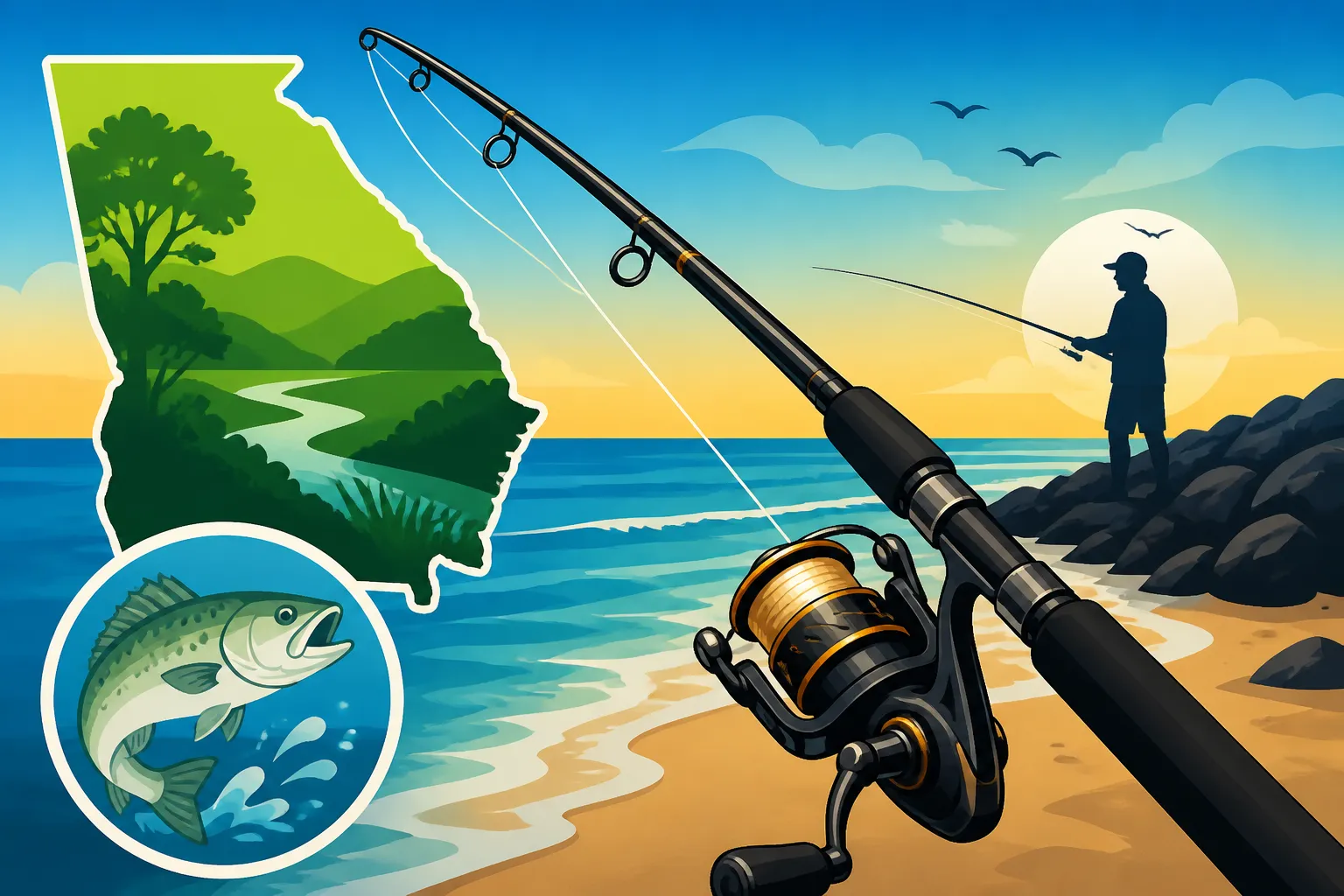
It's a familiar scenario for many of us: you're standing on the bank of your favorite Georgia lake or river, watching the perfect fishing spot just out of casting reach, wishing you had a boat. Shore fishing without a vessel presents unique challenges, especially when it comes to covering water and reaching those productive honey holes. This guide is all about helping you overcome that hurdle by choosing the absolute best fishing rod specifically designed to maximize your success and enjoyment when you're casting from dry land.
Understanding the Shore Angler's Unique Challenges
When you don't have a boat, your fishing game changes dramatically. You're not just limited by what you can see; you're limited by how far you can cast, how you navigate the terrain, and what gear you can comfortably carry. It's a different rhythm, a different dance with the water, and your rod needs to be your trusted partner in that dance.
The Frustration of Limited Reach and Mobility
One of the biggest headaches for shore anglers is simply not being able to reach the fish. Whether they're holding tight to a submerged brush pile far offshore, schooling up in the middle of a wide-open cove, or lurking just beyond a weed line, that feeling of being just out of range can be incredibly frustrating. A shorter rod, while great for pinpoint accuracy in tight spots, often leaves you wanting more distance when you're trying to reach that sweet spot. You might find yourself having to move along the bank, scrambling over rocks and through bushes, just to get a slightly better angle, only to realize the fish have moved on.
You're also confined to whatever bank access is available. You can't just motor over to the opposite side of a cove or follow a schooling pattern across the lake. This means every cast counts, and you need a rod that can deliver your lure with authority and precision to those distant targets. It’s all about making the most of the limited vantage points available to you when you're fishing from the shore.
Dealing with Obstacles and Uneven Terrain
Georgia's lakes and rivers offer incredible fishing, but the banks aren't always manicured parks. You might find yourself navigating rocky shorelines, dense underbrush, steep drops, or slippery mud. This isn't just a comfort issue; it's a safety and gear protection issue. A long, unwieldy rod can easily get snagged in trees behind you, broken on a slip, or become a tripping hazard as you move from one spot to another. Imagine trying to make a delicate cast under an overhanging tree with an 8-foot rod, only to have the tip catch a branch on your backcast. It's a recipe for disaster, or at least a lot of lost lures.
Furthermore, these obstacles often dictate your casting technique. You might be forced to make side-arm casts or roll casts to avoid overhead obstructions, which requires a rod that can load and unload efficiently in a confined space while still generating enough power for distance. Your rod needs to be durable enough to handle an accidental knock against a rock or a branch, and its balance should make it feel like an extension of your arm, rather than a cumbersome stick you're wrestling with.
Portability and Ease of Transport are Key
Since you don't have a boat with dedicated rod holders or storage, the ability to easily transport your gear is paramount. You might be hiking to a remote public fishing area, riding a bike to a local pond, or simply walking from your car to your favorite bank spot. A multi-piece rod, or even a telescopic rod, suddenly becomes a game-changer. Trying to haul a single, 7-foot rod through a wooded trail, or squeeze it into the back seat of a small car, can be a real hassle.
The overall weight of your setup also matters, especially if you plan on covering a lot of ground. A heavy rod, combined with a heavy reel, will quickly lead to fatigue, making your fishing experience less enjoyable. Think about packing light and efficient. You want a rod that can be broken down or collapsed quickly, fits into a backpack or duffel bag, and doesn't feel like a burden to carry over long distances. This often means sacrificing a tiny bit of sensitivity for the sheer convenience of getting to those prime, unpressured spots. For more tips on fishing from the bank, check out Best Bank Fishing Spots in Georgia.
Key Rod Features for Effective Shore Fishing
Choosing the right rod is an art, not a science, and it boils down to balancing several key features to match your specific needs as a shore angler. We're looking for that sweet spot where power meets portability, and sensitivity meets durability.
Rod Length: Finding Your Sweet Spot
For shore anglers, rod length is often the most critical decision. It’s a direct trade-off between casting distance and maneuverability. A longer rod—think 7 to 9 feet, or even longer for specialized applications—will almost always allow you to cast further. The extra length creates more leverage, generating higher line speed and propelling your lure to those distant spots where the fish might be holding. This is especially true when you're using lighter lures that don't have a lot of inherent casting weight.
However, that extra length can be a real pain when you're fishing in brushy areas, under low-hanging trees, or even just trying to get into your car. A 6-foot rod might be perfect for tight, overgrown creeks, but it will seriously limit your reach on a wide-open lake. Most shore anglers find a good compromise in the 7 to 7.5-foot range. This length provides a significant casting advantage over shorter rods while still being manageable enough to avoid constant snags or difficulty in transport. For those really needing to bomb out a lure, especially along the coast or huge reservoirs, rods pushing 9-10 feet or more are common.
Rod Power and Action: Matching the Fish and Lure
"Power" refers to how much force it takes to bend the rod blank, essentially its lifting strength. You'll see terms like Ultra-Light, Light, Medium, Medium-Heavy, and Heavy. "Action" describes where the rod bends along its length when pressure is applied, affecting how fast the tip returns to its straight position. Actions can be Fast, Moderate-Fast, Moderate, or Slow.
For shore fishing, a Medium to Medium-Heavy power rod is often a good all-around choice. This allows you to cast a wider range of lure weights, from smaller jigs and crankbaits to heavier Texas rigs or spinnerbaits. If you're targeting panfish or small trout, a Light or Ultra-Light rod might be better, offering more sport and sensitivity. If you're consistently slinging big swimbaits for trophy bass or battling heavy catfish, a Heavy power rod might be necessary.
Fast to Moderate-Fast action rods are generally preferred for most shore fishing applications. A fast action means the rod bends mostly in the tip section, providing excellent sensitivity for detecting subtle bites and quick hook sets. This is crucial when you're trying to feel what your lure is doing at the end of a long cast. A moderate-fast action offers a bit more flex through the middle of the rod, which can be beneficial for casting longer distances with larger baits and for keeping fish pinned during a fight by absorbing head shakes.
Handle Design and Comfort: Ergonomics for Extended Fishing
Don't overlook the handle! When you're standing on the bank, making cast after cast, often for hours on end, comfort is paramount. A poorly designed handle can lead to hand fatigue, blisters, or a less secure grip, especially in wet conditions.
Look for a handle that fits comfortably in your hand. Materials like cork and EVA foam are common. Cork generally offers a warmer, more traditional feel and can be very sensitive, while EVA foam is more durable and often easier to clean. The length of the handle is also important. A longer butt section can aid in two-handed casting, giving you more leverage for those distance casts. This is particularly helpful on longer rods. Ensure the reel seat holds your reel securely without any wobble, and that there are no sharp edges or rough spots that might rub your hand raw. Some anglers prefer split-grip handles for reduced weight and increased sensitivity, while others like full-grip handles for a more secure and traditional feel.
Top Rod Types for Georgia Shore Fishing (No Boat Needed)
Now that we've covered the essential features, let's dive into the types of rods that truly shine for the boatless angler in Georgia, helping you reach those elusive fish whether you're targeting bass in a reservoir or trout in a mountain stream.
Spinning Rods: The Versatile Workhorse
For the vast majority of shore anglers, a spinning rod is the undisputed champion. Why? Because spinning reels are incredibly user-friendly, especially for beginners or those who prefer a more relaxed casting style. They excel at casting lighter lures over long distances, which is a huge advantage when you're limited to bank access. You won't have to worry about backlashes (those infamous bird's nests that plague baitcasting reels), making your time on the water much more enjoyable.
When choosing a spinning rod for shore fishing in Georgia, consider a length between 7 and 8 feet. A 7-foot, Medium power, Fast action spinning rod is arguably the most versatile choice you can make. It's long enough to give you excellent casting distance, yet short enough to maneuver in many bank situations. It can handle a wide array of lures, from finesse worms and small crankbaits for bass to inline spinners for trout. Many anglers swear by brands available at places like Bass Pro Shops for their reliable performance and durability. This kind of setup allows you to fish effectively in many of Georgia's diverse waters, whether you're targeting bass on Lake Lanier Shore Fishing Access Points or panfish in a local pond.
Telescopic Rods: The Ultimate in Portability
If portability is your absolute top priority – perhaps you're hiking into remote areas, biking to a secluded creek, or just want something that easily stows away in your car's trunk without taking up much space – then a telescopic rod is a fantastic option. These rods collapse down into a compact size, often just a couple of feet long, making them incredibly easy to transport.
The main trade-off with telescopic rods is typically a slight reduction in sensitivity and action compared to a traditional one or two-piece rod. The multiple ferrules (connection points) can sometimes dampen the feel of subtle bites. However, modern telescopic rods have come a long way, with many reputable brands producing surprisingly good models. Look for ones with good quality guides and secure locking mechanisms for each section. They're perfect for impromptu fishing trips or when space is at a premium. Just imagine being able to throw a rod, reel, and a small tackle bag into a backpack and head out to those quiet fishing spots away from the crowds – a telescopic rod makes that dream a reality. You can often find decent options on platforms like Amazon, offering a convenient way to get your hands on a portable setup.
Surf Rods (for Coastal & Big Lake Anglers): Reaching Distant Waters
While often associated with saltwater beaches, "surf rods" are essentially very long, powerful rods designed for extreme casting distance. If your shore fishing takes you to Georgia's extensive coastline, or perhaps the vast open waters of a huge reservoir like Clarks Hill Lake where you need to reach beyond the second sandbar or a distant channel, a surf rod might be exactly what you need. These rods can range from 9 feet all the way up to 15 feet or more.
The sheer length and beefy construction of a surf rod allow you to cast heavy weights (often 2-8 ounces or more) with large baits hundreds of feet. This is invaluable when you're trying to target schools of fish far offshore or send a bait out past breaking waves. While not practical for smaller ponds or tight riverbanks, for wide-open spaces, they are unbeatable. They typically have a slower, more parabolic action to handle heavy loads, but still possess immense backbone for fighting big fish. If you plan on doing some serious long-distance casting from the shore, especially for larger species like striped bass or saltwater drum, investing in a dedicated surf rod is a wise decision. They often require a larger, more robust spinning reel to match their power and line capacity.
Here's a quick comparison of these rod types for shore fishing:
| Rod Type | Best Use Case | Pros | Cons | Typical Length Range |
|---|---|---|---|---|
| Spinning | General purpose, freshwater lakes & rivers, light to medium lures | Versatile, easy to cast, good sensitivity, wide lure range | Less portable than telescopic, can be cumbersome in dense brush | 6.5 – 8 feet |
| Telescopic | Hiking, travel, small streams, urban ponds, ultimate portability | Extremely compact, easy to transport, quick setup | Generally less sensitive, can have softer action, more connection points | 5 – 8 feet |
| Surf | Coastal fishing, large reservoirs, extreme distance casting, heavy baits | Maximum casting distance, handles heavy lures & big fish, durable | Very long and unwieldy, not suitable for tight spots, requires powerful casting | 9 – 15+ feet |
Pairing Your Rod with the Right Reel and Line
A fishing rod is only one part of the equation; it needs a complementary reel and the right kind of line to form a truly effective shore fishing system. Think of them as a team – each component plays a crucial role in your success.
Spinning Reels: A Match Made in Heaven
Since we've established that spinning rods are often the best choice for boatless anglers, it makes sense that spinning reels are their perfect partners. When selecting a spinning reel, consider its size, gear ratio, and drag system.
Size: Reel sizes are typically indicated by numbers (e.g., 2000, 3000, 4000). For most general shore fishing in Georgia, a 2500 to 4000 series reel is a good starting point. A 2500 or 3000 size is excellent for matching a 7-foot medium power rod, providing a balanced feel and enough line capacity for most freshwater species. If you're using a longer rod or targeting larger fish, moving up to a 4000 or even 5000 size might be appropriate.
Gear Ratio: This tells you how many times the spool rotates with one turn of the handle (e.g., 6.2:1). A higher gear ratio means faster retrieve, which is great for covering water quickly or working certain lures like topwater baits. A lower ratio provides more torque, useful for battling big fish or retrieving lures with a lot of water resistance. A middle-ground ratio (around 5.2:1 to 6.2:1) is generally versatile for shore fishing.
Drag System: A smooth, reliable drag system is crucial, especially when you hook into a powerful fish on light line. Ensure the drag adjusts easily and applies consistent pressure. You don't want a jerky drag that can snap your line during a crucial run. A well-maintained spinning reel will dramatically increase your landing rates.
Line Choices: Mono, Fluoro, or Braid?
The fishing line you choose also plays a significant role in your ability to cast far and effectively fish from the bank. Each type has its own strengths and weaknesses.
- Monofilament (Mono): This is the traditional, all-around workhorse. It's affordable, easy to tie knots with, and has a good amount of stretch, which can be forgiving when a fish strikes hard or makes a sudden run. However, its stretch can also reduce sensitivity over long casting distances, and it has more memory, meaning it retains its spool shape, which can lead to tangles.
- Fluorocarbon (Fluoro): Almost invisible underwater, fluorocarbon is fantastic for clear water conditions or when fish are line-shy. It has less stretch than mono, offering better sensitivity, and it sinks, which can be advantageous for certain lure presentations. The downside is it's generally more expensive, can be stiffer, and requires careful knot tying.
- Braided Line (Braid): The king of sensitivity and casting distance. Braid has virtually no stretch, allowing you to feel every bump and bite, even on super long casts. Its thin diameter for its breaking strength means less wind resistance and more line capacity. However, it's visible underwater, can be more expensive, and requires a fluorocarbon or monofilament leader for most applications. For shore fishing where maximum casting distance is key, pairing braid as your main line with a fluoro leader is a very popular and effective setup. Need to know more about different line types? Check out How to Rig a Slip Sinker for Catfish for a specific application.
Terminal Tackle Considerations
Beyond the rod, reel, and line, your terminal tackle (hooks, weights, swivels, lures) must also be suited for shore fishing. Since you're often casting long distances, you need lures that are aerodynamically efficient. Think about sleek spoons, lipless crankbaits, or Texas-rigged soft plastics with bullet weights that can cut through the wind.
Also, consider what kind of structure you're likely to encounter. If you're fishing around submerged timber or thick weeds – common features in many Georgia reservoirs – weedless presentations are your friend. Using Texas rigs or jigheads with brush guards can save you from countless snags and lost lures, which is especially important when you can't boat over to retrieve them. For more on catching specific fish, see Best Bait and Tackle for Catfish in Georgia. The combination of the right rod, reel, line, and terminal tackle will significantly boost your success from the bank.
Maximizing Your Shore Fishing Success with the Right Rod
Choosing the best rod for shore fishing without a boat is about empowering yourself. It’s about turning the disadvantage of not having a boat into an opportunity to explore hidden gems and outsmart fish that boat anglers often overlook or can't reach easily. Your rod is your primary tool in this endeavor, and selecting one that matches your specific shore fishing environment and target species is paramount.
Rods for Specific Georgia Species from Shore
Georgia is home to a fantastic array of fish, and while a versatile setup works for many, fine-tuning your rod choice for particular species can lead to even greater success.
- Largemouth Bass: If you're primarily targeting largemouth bass from the bank on lakes like Lake Lanier or Lake Oconee, a 7 to 7.5-foot Medium-Heavy power, Fast action spinning rod is incredibly effective. It's capable of casting heavier jigs, crankbaits, or topwater lures, and has the backbone to pull bass out of cover. For detailed tips on bass fishing, consider Spring Bass Fishing Patterns on Georgia's Reservoirs.
- Trout (Mountain Streams): For the cooler, tighter confines of North Georgia's trout streams, a shorter rod is often more appropriate. A 5.5 to 6.5-foot Light or Ultra-Light power, Moderate-Fast action spinning rod or even a fly rod is ideal. The shorter length allows for easier casting in tight, brush-lined streams, and the lighter power provides exhilarating fights with even smaller trout. Don't forget your Mountain Trout License Add-On in Georgia if you're hitting those designated streams!
- Catfish (Rivers and Lakes): When targeting larger catfish from the bank in rivers like the Altamaha or Ocmulgee, you'll want something with serious backbone. A 7.5 to 9-foot Medium-Heavy to Heavy power, Moderate action rod will give you the casting distance for heavy weights and bait, and the power to tame powerful cats. For more on catfish techniques, dive into How to Bottom Fish for Catfish.
- Panfish (Ponds and Lakes): For fun-filled days targeting bluegill, bream, and other panfish in local ponds or public fishing areas, an Ultra-Light to Light power rod, around 6 to 7 feet in length, is perfect. It makes even small fish feel like trophies and allows for delicate presentations of tiny baits and jigs. For family-friendly fishing, this is a great setup.
The Importance of Balance and Feel
Beyond the technical specifications, how a rod feels in your hand is incredibly important. A rod and reel combo should feel balanced, not tip-heavy or butt-heavy. When you hold the combo in your dominant hand with your finger on the reel foot, it should feel stable and comfortable. This balance reduces fatigue, makes casting more intuitive, and enhances your ability to detect subtle bites.
The "feel" also extends to sensitivity. A good shore fishing rod will transmit vibrations from your lure through the line, reel, and rod blank directly to your hand. This allows you to "read" the bottom, understand what your lure is doing, and identify those faint taps that signal a fish bite, even when your lure is far out in the water. High-quality graphite blanks typically offer superior sensitivity compared to fiberglass, though composite rods can offer a good blend of sensitivity and durability. For deeper dives into gear, explore Best Rods and Reels for Georgia Fishing.
Investing in Durability
Let's face it: bank fishing can be tough on gear. Your rod might accidentally get knocked against rocks, scraped by branches, or stepped on if you're not careful. Investing in a rod built with durable components, like stainless steel guides with ceramic inserts, can extend its lifespan significantly. These guides stand up better to abrasion from casting heavy lines and are more resistant to corrosion, especially if you're venturing into brackish or saltwater environments along the Georgia coast. A strong reel seat and a robust blank are also key considerations for a rod that will withstand the rigors of regular shore-based adventures.
Ultimately, the "best" rod for shore fishing without a boat is a personal choice that combines length, power, action, and ergonomic comfort to match your specific fishing style and the waters you'll be exploring. By carefully considering these factors, you'll be well-equipped to make every cast count, no matter where your feet are planted.
Disclaimer
This article is for general informational purposes only and does not constitute professional advice. Laws, prices and regulations vary by location and change over time. Consult a qualified professional for guidance on your specific situation.