How Much Does a Good Fish Finder Cost
Trying to figure out how much you really need to spend for a "good" fish finder can feel like trying to navigate a dense fog on Lake Lanier without a compass. With so many options out there, from tiny handheld units to massive, multi-screen setups, it's easy to get overwhelmed and wonder if you're about to blow your budget or, worse, buy something that won't actually help you find more fish. This guide is here to cut through the confusion, breaking down the general cost ranges for different types of fish finders and what you can expect for your hard-earned dollars, so you can make an informed decision for your Georgia fishing adventures.
Entry-Level Fish Finders: Getting Started Without Breaking the Bank
For many anglers, especially those just starting out, fishing from a kayak or a small jon boat, or simply enjoying some relaxed bank fishing, an entry-level fish finder is often all you need. The beauty of these units is that they offer a fantastic introduction to the technology without demanding a huge financial commitment.
What to Expect from Basic Models
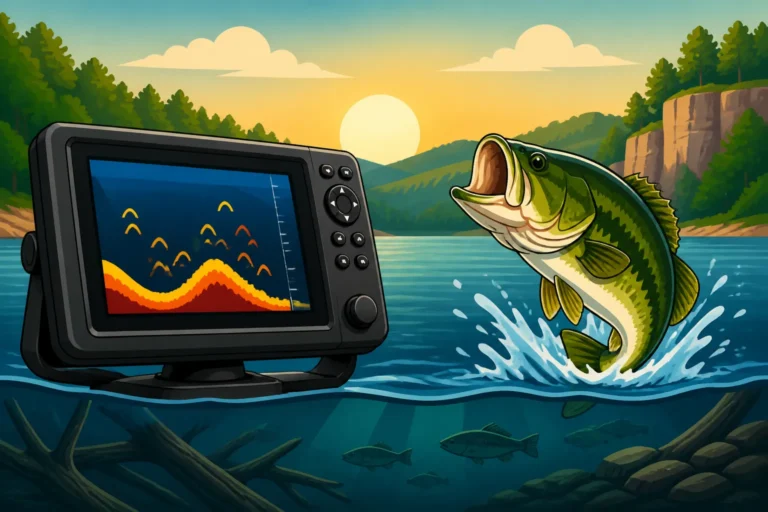
When we talk about entry-level fish finders, we're generally looking at units that prioritize simplicity and core functionality. These aren't going to have all the bells and whistles, but they do excel at showing you what's directly beneath your transducer. You'll typically get a clear, albeit smaller, color screen that displays depth, water temperature, and the presence of fish arches or icons. They often use basic 2D sonar, which is still incredibly effective for identifying structure and fish holding points. Many models in this category are designed for easy portability, often coming with transom-mount transducers that are simple to install and even easier to remove. Think of them as your reliable fishing buddy who points out the obvious but crucial stuff.
For example, if you're floating down the Chattahoochee River in a kayak targeting trout, a simple fish finder can tell you the depth of a promising pool or if there are any significant drop-offs. It's not about intricate mapping or networking; it's about getting real-time information that helps you make informed casts. You might find units that are particularly popular with kayak anglers because they're compact, draw little power, and are relatively quick to set up and take down. Many folks find these basic units perfectly adequate for discovering Best Kayak for Fishing Georgia Lakes or exploring new spots.
The Trade-Offs of a Lower Price Point
Of course, with a more accessible price point comes a few trade-offs. The screens on entry-level models are typically smaller and might not have the highest resolution. This means you won't get the super crisp, detailed images you see on more advanced units, which can sometimes make distinguishing between a submerged log and a school of baitfish a bit trickier. You'll also usually be limited to 2D sonar, without the added benefits of Side Imaging, Down Imaging, or high-definition mapping that can reveal a whole lot more about the underwater world.
Connectivity is another area where basic models usually fall short. Don't expect built-in GPS mapping with detailed contour lines, or the ability to network with other devices on your boat. These units are largely standalone. While some might have basic GPS to mark waypoints, they won't offer the rich topographical maps that help you navigate vast bodies of water like Lake Hartwell or Lake Oconee. However, for an angler focused on specific areas or smaller bodies of water, these limitations are often negligible. You're getting solid sonar performance for the price, which is exactly what many people are looking for. You can often find a good selection of these starter models at stores like Bass Pro Shops or by browsing online on Amazon.
Mid-Range Fish Finders: Stepping Up Your Game and Your Budget
For anglers who've gone beyond the basics and are looking to gain a significant advantage on the water, mid-range fish finders hit a sweet spot. They offer a substantial leap in technology and features compared to entry-level models, providing more detailed information and greater versatility, all without jumping into the deep end of professional-grade equipment.
Enhanced Features and Performance
Stepping into the mid-range category, you'll immediately notice improvements in screen size and resolution. Brighter, larger displays make it easier to interpret sonar readings, especially under bright Georgia sunlight. Crucially, this is where you start seeing advanced sonar technologies like Down Imaging (or DownScan/ClearVü) and often Side Imaging (or SideScan/SideVü) becoming standard.
- Down Imaging provides a photographic-like view directly beneath your boat, making it much easier to identify specific structures like brush piles, submerged timber, or even individual fish relating to those structures. It's incredibly helpful for pinpointing exactly where those crappie are hiding on a deep ledge.
- Side Imaging opens up a whole new world, allowing you to scan large areas to the sides of your boat. Imagine cruising down the shoreline of Lake Seminole and being able to see brush piles, rock formations, and even schools of baitfish extending out 100 feet or more on either side, all without driving directly over them. This technology is a game-changer for covering water efficiently and locating productive areas.
Many mid-range units also include more robust GPS capabilities, often coming pre-loaded with detailed mapping for major lakes and rivers in Georgia. You can create your own custom maps, mark countless waypoints, and easily navigate back to your favorite fishing holes. This integration of sonar and mapping is invaluable for understanding the underwater topography and how fish relate to it. If you're looking for Best Electronics for Bass Boats that can truly enhance your fishing, this is typically where you'll start your serious search.
Balancing Cost with Capabilities
The cost of mid-range fish finders reflects these advanced capabilities. While they're a significant step up from basic models, they typically remain within reach for serious recreational anglers. You're investing in clearer images, more comprehensive views of the underwater environment, and better navigation tools. This category is perfect for the weekend warrior or the angler who participates in local club tournaments, where finding fish quickly and efficiently is paramount.
For example, a mid-range unit could be ideal for someone who frequently fishes West Point Lake, where being able to scan submerged timber with Side Imaging or quickly identify a school of striped bass in a creek channel with high-resolution Down Imaging can make a huge difference in your success. You might also find models that allow for basic networking, perhaps connecting to a trolling motor for integrated control, or sharing waypoint data with a second unit on the boat. This level of versatility gives you room to grow and adapt your fishing techniques as you become more experienced. When budgeting for one of these, remember that while the head unit is the main cost, you're getting a lot more built-in value.
| Feature Category | Entry-Level Fish Finders | Mid-Range Fish Finders | High-Performance Fish Finders |
|---|---|---|---|
| Screen Size | Small (3-5 inches) | Medium (5-9 inches) | Large (9-16+ inches) |
| Resolution | Basic | Good to Very Good | Excellent, High-Definition |
| Sonar Types | 2D Sonar | 2D, Down Imaging, Side Imaging (often included) | 2D, Down Imaging, Side Imaging, Forward-Facing Sonar (often optional) |
| GPS/Mapping | Basic GPS, Waypoints only | Advanced GPS, Pre-loaded Maps, Custom Mapping | Advanced GPS, Hyper-detailed Mapping, Satellite Overlay |
| Networking | Limited/None | Basic (e.g., trolling motor integration) | Extensive (multiple units, radar, shallow water anchors) |
| User Interface | Simple, Buttons | Intuitive, Touchscreen options | Highly Customizable, Multi-Touch |
| General Cost Shape | Most accessible | Moderate | Significant Investment |
High-Performance Fish Finders: The Professional's Choice and Investment
When you're ready to truly immerse yourself in the cutting-edge of marine electronics and fishing technology, you're looking at high-performance fish finders. These are the units that professional anglers, serious tournament competitors, and dedicated enthusiasts often gravitate towards. They represent a significant investment, but they deliver unparalleled detail, advanced functionality, and robust networking capabilities that can genuinely transform your approach to finding and catching fish.
Unparalleled Detail and Advanced Functionality
High-performance fish finders are characterized by several key advancements. Their screens are typically much larger, often ranging from 9 to 16 inches or more, and boast incredibly high resolutions. This means crystal-clear images, allowing you to discern even the smallest details—a single fish relating to a specific rock, the texture of the bottom, or the precise density of a brush pile. Many of these units are also multi-touch screens, similar to your smartphone or tablet, offering incredibly intuitive navigation and customization.
Beyond standard 2D, Down Imaging, and Side Imaging (which are often pushed to their absolute limits in terms of clarity and range), this tier introduces technologies like Forward-Facing Sonar. This revolutionary technology allows you to see fish and structure in front of your boat in real-time. Imagine being able to cast directly to a school of bass you see 50 feet ahead, or navigate safely through submerged hazards before you get to them. This kind of technology gives you a massive advantage in understanding how fish react to your bait and boat. For competitive anglers in Georgia's Lake Hartwell Fishing Spots or Lake Lanier Fishing Guide, Georgia tournaments, this level of awareness is invaluable.
These units also typically come with hyper-detailed mapping software, often with options for satellite overlays, advanced contour shading, and even the ability to create your own high-definition maps of uncharted areas (known as "live mapping"). This gives you an unprecedented understanding of the bottom contours and structure, allowing you to quickly identify key holding areas for different species.
The Investment Beyond the Unit Itself
The cost of a high-performance fish finder head unit is just one part of the equation. This category often requires a more significant investment in complementary technologies and accessories.
- Advanced Transducers: To unlock the full potential of these units, you'll need high-end transducers that are capable of transmitting and receiving multiple frequencies, often with built-in temperature sensors and chirp capabilities for superior target separation. These can add substantially to the overall cost.
- Networking: These systems are designed to be networked with other marine electronics. This might include connecting multiple fish finder screens, integrating with your trolling motor (for automatic boat positioning or following contour lines), linking to radar, or even controlling shallow water anchors. Building a truly integrated system can be complex and adds to the expense, but the synergy between devices is remarkable. For example, your trolling motor could guide you along a contour line detected by your fish finder, keeping your boat perfectly positioned for repeated casts.
- Installation: Due to their complexity and size, professional installation is often recommended, especially if you're networking multiple devices or installing through-hull transducers. This labor cost should be factored into your budget.
- Mapping Cards and Software Updates: While many units come with excellent base maps, some advanced mapping features or specific regional maps may require purchasing additional SD cards. Keeping your software updated is also key to ensuring optimal performance and accessing new features.
For an angler who spends hundreds of hours on the water each year, fishing large reservoirs for Best Crappie Lakes in Georgia or chasing massive striped bass, the investment in a high-performance system pays dividends in efficiency, success, and enjoyment. You can find these top-tier systems at specialized marine electronics dealers or through major outdoor retailers like Bass Pro Shops, though you might need to order specific configurations.
Beyond the Initial Price: Understanding the Full Cost of a Fish Finder Setup
It’s easy to look at the price tag on a fish finder and think that’s your total cost. But, as with many pieces of specialized gear, there are often additional expenses that can add up, especially as you move into more advanced systems. Understanding these potential "hidden" costs upfront can help you budget more realistically for your perfect Georgia fishing setup.
Transducers: The Eyes Beneath Your Boat
The transducer is, quite literally, the eyes of your fish finder. It sends and receives the sonar waves that create the images on your screen. While many entry-level and even some mid-range units come with a bundled transducer, the quality and type of transducer can vary widely, and upgrading often means better performance.
For instance, if you want the clearest possible Side Imaging on Lake Sinclair, you might opt for a specific transducer designed for that technology, which could be an additional purchase. Some anglers choose a "through-hull" transducer for a cleaner signal, but this requires drilling a hole in your boat's hull, increasing installation complexity and potentially cost. Others might prefer "in-hull" transducers, which shoot through the fiberglass, or "trolling motor mount" transducers for dedicated use with their electric motor. Each type has its own price point and installation considerations. Always check what kind of transducer comes with your chosen unit and if it meets your specific fishing needs. Sometimes, buying a more robust transducer separately can unlock features that the bundled one simply can't handle.
Mapping Cards and Software
While many modern fish finders come with impressive built-in GPS and base maps, serious anglers often find themselves wanting more detailed cartography. This is where proprietary mapping cards come in. Brands like Garmin, Lowrance, and Humminbird offer premium mapping chips that provide incredibly detailed contours, bottom composition data, and even high-resolution aerial imagery for specific bodies of water. For example, a dedicated card for Lake Oconee Fishing Guide, Georgia might offer contours down to one-foot increments, revealing subtle breaks and humps that are invisible on standard maps.
These cards are an extra expense, but they can be invaluable for navigation and identifying prime fishing structure. Furthermore, software updates, while often free for the core operating system, might be necessary to access new features or improve performance, requiring you to connect your unit to a computer or update via Wi-Fi. It’s a good practice to keep your unit updated for the best experience.
Installation and Accessories
For simpler, entry-level units, installation might be as easy as clamping a transducer to your transom and mounting the head unit with a few screws. However, as systems become more complex, so does the installation. Routing wires neatly, connecting multiple units in a network, or installing large, high-power transducers can be quite involved. If you're not comfortable doing it yourself, professional installation from a marine electronics specialist will be an added cost.
Beyond installation, there's a whole world of accessories that can enhance your fish finder experience. Consider a sun cover to protect your screen from the elements when not in use. A dedicated battery might be needed for smaller boats or kayaks, especially if your main battery isn't sufficient for prolonged use of your electronics. RAM mounts or other adjustable brackets can provide more versatile viewing angles. For those fishing on a kayak, a portable power station or specialized battery box is essential. Even small things like extra fuses, waterproof connections, and cable management solutions can add up, but they contribute to a reliable and enjoyable setup. Many of these smaller accessories can be easily found on Amazon or at your local Bass Pro Shops.
Maintenance and Longevity
Finally, consider the long-term maintenance and longevity of your investment. While fish finders are generally robust, they operate in harsh environments. Regularly cleaning electrical contacts, inspecting cables for wear, and protecting your screen from scratches are small efforts that pay off. While not a direct cost, neglecting maintenance could lead to premature failure and the need for costly repairs or replacements down the line. Investing in a good quality cover and ensuring proper storage can help extend the life of your valuable electronics. Think of it as protecting your portal to the underwater world.
Making the Right Investment for Your Georgia Fishing Adventures
Choosing the "right" fish finder isn't just about picking the most expensive one; it's about finding the balance between your fishing style, your needs on the water, and your budget. Georgia offers such diverse fishing opportunities, from the deep, clear reservoirs of the north to the murky rivers and coastal waters of the south, that what works for one angler might not work for another.
Assess Your Fishing Style and Target Species
Before you even start looking at models, take a moment to honestly assess how and where you fish most often.
- Are you a bank angler who occasionally rents a john boat? A portable, entry-level unit with basic 2D sonar might be all you need to identify bottom structure and fish around a dock or a specific creek mouth.
- Do you primarily fish from a kayak or small boat on smaller lakes and rivers? A compact, mid-range unit with Down Imaging and basic GPS could significantly improve your success by helping you locate submerged cover for Best Bass Fishing Coves on West Point Lake or find depth changes in the Flint River Fishing Guide, Georgia.
- Are you a serious tournament angler with a dedicated bass boat, or do you frequently chase striped bass on large reservoirs? A high-performance, networked system with Side Imaging, Forward-Facing Sonar, and detailed mapping will give you the competitive edge you need to quickly locate schools of fish and navigate complex underwater terrain. If you're competing in Best Bass Fishing Lakes in Georgia tournaments, this level of technology can be crucial.
Think about the species you target, too. Bass and crappie anglers often benefit immensely from Side and Down Imaging to pinpoint cover, while open-water striped bass hunters might prioritize powerful 2D sonar and GPS to track schooling fish. Trout anglers on smaller mountain streams might only need a simple depth finder, as fish are often visible or found in obvious holding patterns. Your equipment should serve your specific pursuits.
Research, Compare, and Don't Be Afraid to Ask Questions
Once you have a clearer idea of your needs, dive into research. Look at brands like Garmin, Lowrance, Humminbird, and Raymarine. Each has its strengths and fan base. Read reviews from other anglers, particularly those fishing in similar conditions to yours. Check out videos on how different sonar technologies work.
Don't be shy about visiting a local tackle shop or a larger outdoor retailer like Bass Pro Shops. Their staff can often provide valuable insights and demonstrations. Comparing models side-by-side can give you a much better feel for screen clarity, user interface, and overall build quality. Ask about package deals that might include a unit and a more advanced transducer at a slightly reduced combined price. Online retailers like Amazon also offer a vast array of choices, and user reviews there can be very helpful for comparing real-world experiences.
Remember, a "good" fish finder isn't necessarily the most expensive one. It's the one that provides you with the information you need, in a format you can understand, to make you a more successful and confident angler on Georgia's incredible waterways. Whether you're just starting out or looking to upgrade your existing setup, taking the time to understand the costs and capabilities will ensure you make an investment that pays off in many memorable fishing trips.
Disclaimer
This article is for general informational purposes only and does not constitute professional advice. Laws, prices and regulations vary by location and change over time. Consult a qualified professional for guidance on your specific situation.