Best Fish Finder for Lake Lanier
When you hit the sprawling, beautiful waters of Lake Lanier, you know you're in for a challenge and a treat. It’s a massive, complex reservoir with incredible fishing, but also deep, varied structure that can make finding fish feel like searching for a needle in a haystack. This guide is all about helping you cut through the confusion and pinpoint the best fish finder technology to give you a serious edge on Lanier.
Why Lake Lanier Demands a Top-Tier Fish Finder
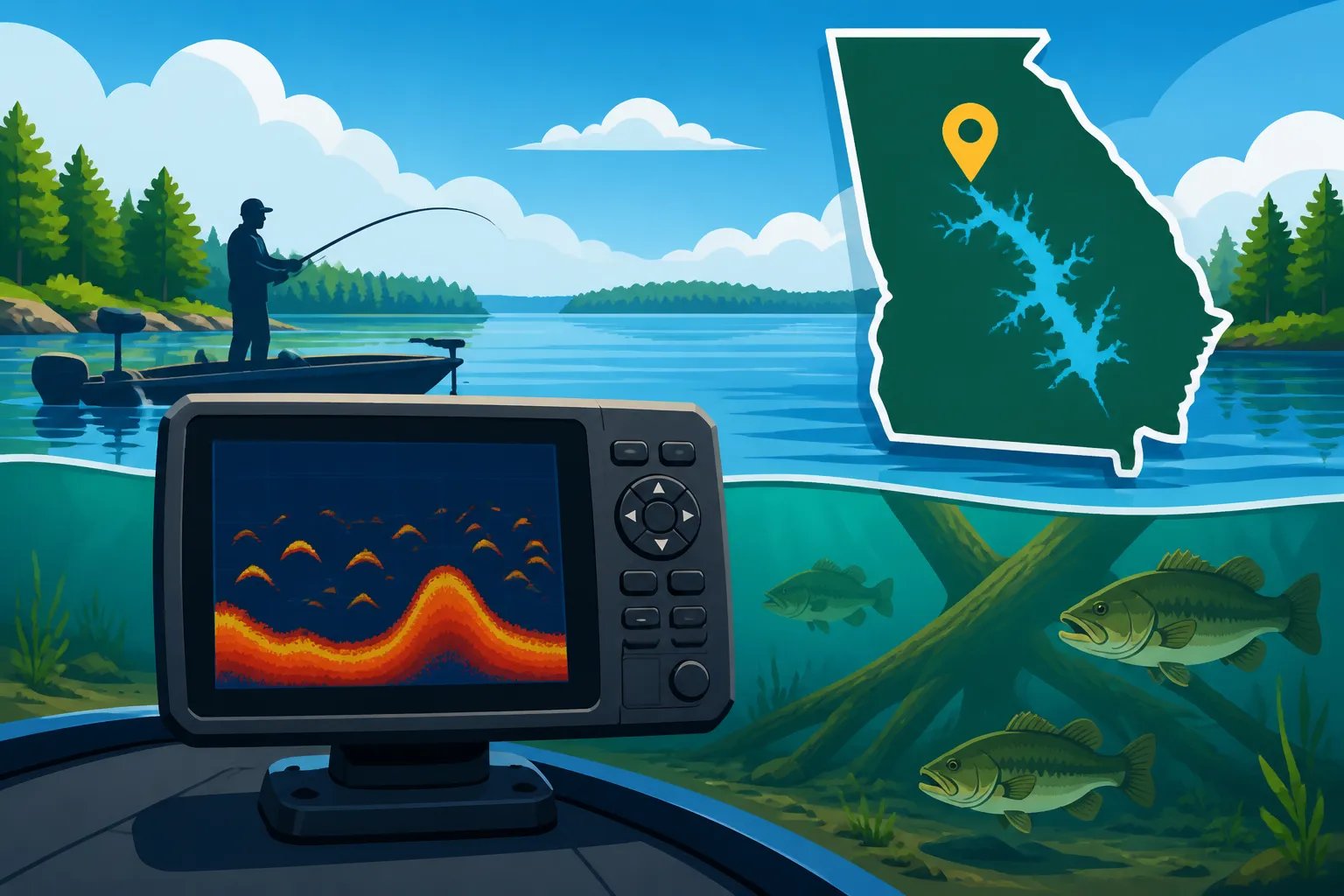
Lake Lanier isn't your average pond. This reservoir, carved from the Chattahoochee River, is renowned for its deep, clear waters, submerged timber, intricate creek channels, and expansive humps and ledges. It's home to a thriving population of spotted bass, largemouth bass, and a significant contingent of hard-fighting striped bass, all of which tend to relate to structure and baitfish in specific ways. Without the right technology to peer beneath the surface, you're essentially fishing blind.
Understanding Lanier's Unique Underwater Landscape
Imagine trying to navigate a dense forest in the dark – that's what fishing Lanier without a good fish finder can feel like. The lake bottom isn't flat; it's a topographical wonderland with sudden drops, submerged roadbeds, old foundations, and standing timber that can hold fish. These features are often hidden from plain sight, sometimes in 30, 60, or even 100 feet of water. You need a device that can paint a clear picture of this complex environment. Lake Lanier Fishing Guide, Georgia provides a great overview of the lake itself.
What makes Lanier particularly tricky is the thermocline in warmer months. Fish will often suspend at specific depths above or below it, making vertical presentations challenging if you don't know exactly where they're holding. A quality fish finder lets you see these temperature breaks and the fish relating to them, transforming a guessing game into a targeted strike.
The Challenge of Finding Lanier's Key Species
Each of Lanier's target species presents its own set of challenges that a fish finder can help overcome. Spotted bass, for example, are notorious for suspending over deep structure or schooling tightly around bait balls in open water. Largemouth bass will often hug tight to brush piles or submerged points, especially during cooler months. And then there are the stripers.
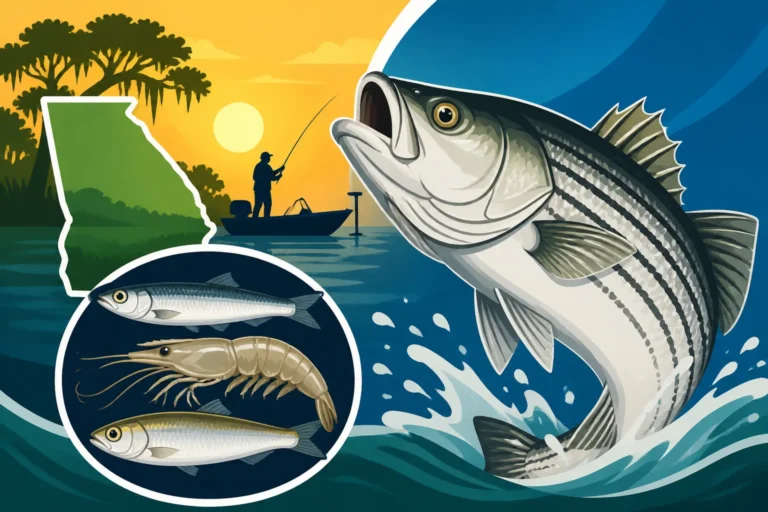
Striped bass on Lanier are often found chasing massive schools of baitfish, sometimes in very deep water or spread out over vast open areas. Locating these fast-moving schools is paramount to successful striper fishing. Without the ability to scan wide areas and mark these baitfish and the predators below them, you're relying heavily on luck or general patterns, which can be inconsistent at best. Where to Catch Striped Bass on Lake Lanier, Georgia explains more about these formidable fish.
Essential Features for a Lake Lanier Fish Finder
When you're investing in a fish finder for a lake like Lanier, you're not just looking for something that shows you a blob on a screen. You need advanced capabilities that provide detailed, nuanced information. Think of it as upgrading from a basic flashlight to a high-powered spotlight with various filters.
High-Resolution CHIRP Sonar
This is foundational. Traditional sonar sends out a single frequency, but CHIRP (Compressed High-Intensity Radar Pulse) sends out a continuous sweep of frequencies, from low to high. The result? Much clearer target separation and less clutter on your screen. On Lanier, where you might be looking for a single bass tucked into a brush pile or trying to discern individual stripers within a large bait ball, this clarity is invaluable.
With CHIRP, you can identify fish arches more accurately, even in deep water. It helps distinguish between a fish, a submerged log, or a rock, which can make all the difference when you’re dropping a lure down. Look for units that offer wide and narrow cone angle CHIRP transducers to give you versatility in different situations.
DownScan and SideScan Imaging
These technologies are absolute game-changers for interpreting Lanier's structure. DownScan provides a photo-like image directly below your boat, showing submerged timber, rock piles, ledges, and even individual fish with incredible detail. It's like having an underwater camera without getting wet. When you're trying to figure out if that fuzzy spot on your 2D sonar is a brush pile or a school of fish, DownScan gives you the definitive answer.
SideScan, on the other hand, lets you scan wide areas to either side of your boat, often up to hundreds of feet. This is priceless on a lake like Lanier. Instead of idling directly over every potential spot, you can quickly scan broad flats, creek channels, or long points to locate hidden structure, baitfish schools, and isolated cover that fish are relating to. Imagine cruising down a channel and seeing brush piles and fish on either side without ever passing directly over them – that's the power of SideScan. For deep-water tactics, these imaging types are crucial. Deep Water Techniques for Striped Bass often rely heavily on these advanced sonar views.
Accurate GPS and Detailed Mapping
A fish finder isn't just for seeing fish; it's also your navigation and mapping hub. On a lake as large and intricate as Lanier, a highly accurate GPS receiver is non-negotiable. It allows you to mark waypoints precisely where you found fish, brush piles, or promising structure, ensuring you can return to that exact spot again and again.
Beyond basic GPS, detailed mapping is critical. Many units come pre-loaded with high-definition charts that show contours, depths, navigation markers, and even submerged features. Look for models that support premium mapping cards (like those from Navionics or LakeMaster), which offer even greater detail, including shaded depth contours, custom depth highlighting, and satellite imagery overlays. This level of detail helps you identify subtle changes in the bottom that could hold fish, plan your drifts, and navigate safely, especially when exploring new areas or fishing at night.
Top Fish Finder Technologies for Lanier's Waters
When you're trying to decide on the best unit, it helps to understand the leading technologies and how they stack up for Lanier's unique environment. No single unit does everything perfectly, but some brands and technology suites stand out for their ability to deliver clarity and functionality on large, deep reservoirs. Many great options can be found at retailers like Bass Pro Shops or through online vendors such as Amazon.
The Power of Integrated Systems
Modern fish finders often come as part of an integrated system, meaning your chartplotter, sonar, and sometimes even your trolling motor can all communicate and work together. This seamless integration is a huge advantage on Lanier. For instance, you can mark a waypoint on your fish finder, and your compatible trolling motor can automatically navigate to it and hold you there, freeing you up to focus on fishing.
These systems also allow for split-screen views, letting you see 2D CHIRP, DownScan, SideScan, and your map all at once. This multi-faceted view gives you an unparalleled understanding of what's happening beneath your boat and around it. Being able to cross-reference what you see on SideScan with the depth contour on your map, for example, helps you build a more complete picture of fish behavior and habitat.
Comparing Leading Sonar Technologies
Let's break down the primary sonar types you'll encounter and their specific benefits for Lake Lanier.
| Sonar Technology | Best For | Benefits on Lake Lanier |
|---|---|---|
| 2D CHIRP Sonar | General fish finding, target separation, deep water | Excellent for marking fish arches, bait balls, and identifying suspended fish in the water column. Essential for open-water striper fishing and deep-water bass. |
| DownScan Imaging | Detailed structure identification directly below boat | Photo-like clarity for submerged timber, brush piles, rock formations, and ledges. Crucial for pinpointing bass cover and verifying bottom composition. |
| SideScan Imaging | Wide-area scanning, locating hidden structure | Scans vast areas to the left and right of the boat, revealing offshore humps, creek channel swings, and brush piles without driving over them. A time-saver for searching large areas. |
| Live Sonar (e.g., LiveScope, Mega Live) | Real-time viewing of fish and lures | Provides a real-time, video-game-like view of fish swimming, reacting to your bait, and relating to structure. Revolutionary for targeting individual fish and understanding their behavior. |
While 2D CHIRP, DownScan, and SideScan are fundamental, the newer "live" sonar technologies from companies like Garmin (LiveScope) and Humminbird (Mega Live) have taken the fishing world by storm. These systems provide real-time, video-game-like views of fish swimming, reacting to your lure, and relating to structure. For Lanier's clear waters and often suspended fish, this technology can be absolutely deadly for targeting specific fish, especially during challenging conditions. If your budget allows, adding a live sonar system can elevate your Lanier fishing exponentially. Best Electronics for Bass Boats often features discussions on these advanced systems.
Getting the Most Out of Your Fish Finder on Lake Lanier
Having the best equipment is only half the battle; knowing how to use it effectively is the other. A top-tier fish finder is a powerful tool, but it's your understanding of its capabilities and how they apply to Lake Lanier that will truly translate into more fish in the boat.
Calibrating and Customizing Your Settings
Out of the box, a fish finder will work, but to truly shine on Lake Lanier, you need to dial in the settings. This means adjusting sensitivity, range, color palettes, and scrolling speed. For instance, in Lanier's deep, clear water, you might be able to run higher sensitivity than in murkier environments to pick up fainter returns. Experiment with different color palettes; some anglers find certain color schemes make it easier to differentiate fish from structure.
Understanding how to adjust your gain (sensitivity) is paramount. Too low, and you'll miss fish; too high, and you'll get too much clutter. On Lanier, where both deep and shallow fishing are common, you'll find yourself adjusting these frequently. Don't be afraid to read your manual, watch instructional videos, and spend time on the water simply experimenting with settings without the pressure of catching fish. The time invested here will pay dividends.
Interpreting What You See
The screen of a fish finder is full of information, but it takes practice to interpret it correctly. Learn to distinguish between baitfish schools, individual fish, submerged trees, rock piles, and changes in bottom hardness. For example, a hard bottom (like rock or clay) will often show a thicker, more intense return than a soft bottom (like silt).
When using SideScan, look for shadows. A shadow behind a structure indicates its height and shape, giving you a better understanding of what you're looking at. For suspended fish, pay attention to the depth and how they relate to bait balls or thermal layers. How Water Temperature Affects Fish Behavior directly influences where fish show up on your sonar. Remember, it's not just about seeing a fish, but understanding why it's there and how it's positioned.
Combining Sonar with Fishing Techniques
Your fish finder is an extension of your fishing strategy. Use it to locate promising structure, then switch to DownScan to get a detailed view of fish relating to that structure. If you see fish holding tight to a brush pile, you might choose to drop a jig or a weighted worm directly on them. If you see stripers chasing bait in open water, you'll know to deploy downlines or umbrella rigs. Best Rod and Reel Combo for Largemouth Bass in Georgia might be different based on whether you're targeting fish you see on sonar.
For those fishing from smaller craft, even a dedicated kayak setup can benefit immensely from a good fish finder. While you might not have the power of a large bass boat, knowing what's under your kayak still gives you a significant advantage. Best Kayak for Fishing Georgia Lakes can be effectively paired with a portable fish finder. By continuously scanning and adjusting your presentation based on what your fish finder reveals, you'll develop a much more effective and adaptive fishing approach on Lake Lanier.
Disclaimer
This article is for general informational purposes only and does not constitute professional advice. Laws, prices and regulations vary by location and change over time. Consult a qualified professional for guidance on your specific situation.