Trolling Gear for Georgia Striped Bass
There's nothing quite like the thrill of a striped bass hitting your line, especially when you're out on one of Georgia's beautiful reservoirs. But if you've ever tried to consistently find and catch these powerful fish, you know it can feel like a game of hide-and-seek in a vast ocean of water. The secret weapon for many successful striper anglers is effective trolling, allowing you to cover vast areas and present your bait right where these schooling predators feed. This guide is all about equipping you with the knowledge and the right gear to master trolling for Georgia striped bass, transforming those frustrating days into memorable catches.
Understanding the Basics of Striped Bass Trolling in Georgia
Trolling for striped bass is less about casting to a visible target and more about a methodical search, presenting your lures or baits at the right depth and speed to cruising fish. It’s a highly effective technique, especially on Georgia’s large, deep reservoirs where stripers often suspend in open water. Many anglers get discouraged when they don't immediately hook up, thinking trolling is too complex, but with a foundational understanding, you'll be well on your way to success.
Why Trolling Works for Stripers
Striped bass are pelagic, meaning they often roam open water in large schools, chasing baitfish like threadfin or gizzard shad. They don't typically hold tight to structure in the same way a largemouth bass might, especially in larger impoundments. This makes covering a lot of water essential, and that's precisely where trolling shines. By slowly moving your boat and dragging multiple lines behind you, you can effectively sweep through vast stretches of water, increasing your chances of intercepting a hungry school.
Imagine a large school of stripers cruising at 20 feet over a 60-foot deep channel. If you're casting, you might get lucky with an occasional fish, but trolling allows you to present multiple baits at that precise 20-foot depth for an extended period, directly through their feeding zone. It's an active form of fishing that lets the boat do much of the searching work, while you focus on monitoring your lines and electronics. Trolling also allows you to keep your bait in the strike zone longer, a huge advantage when targeting fish that are constantly on the move. Many seasoned anglers will tell you that the consistent presentation is what truly sets trolling apart for Striped Bass and Hybrid Striped Bass in Georgia Waters.
Key Considerations for Georgia's Diverse Waters
Georgia offers a fantastic variety of striped bass fisheries, from the sprawling open waters of Lake Lanier and Lake Oconee to the river systems that feed them. Each body of water has its own quirks and requires slight adjustments to your trolling strategy. Lake Lanier, for instance, is known for its deep, clear waters and often requires trolling at greater depths, sometimes down 40-60 feet, particularly during the summer months when stripers seek cooler, oxygenated water.
Conversely, a lake like Lake Hartwell or Clarks Hill might have different prevailing baitfish patterns or structural elements that influence where stripers hold. In river systems, current becomes a much more significant factor, affecting how your lures run and how stripers orient themselves to feed. Understanding the specific characteristics of the body of water you're fishing – including water temperature, clarity, and the primary baitfish species – will help you choose the right gear and dial in your trolling depth and speed. This adaptability is what separates a good troller from a great one. You might find you need different setups for a deep thermocline on Lanier versus a shallow flat on Sinclair.
Essential Rods and Reels for Trolling Striped Bass
When it comes to trolling for striped bass, you can’t just grab any old rod and reel out of your garage. These fish are powerful, and the sustained pressure of trolling, plus the fight, demands specific characteristics from your equipment. Skimping on quality here can lead to frustrating break-offs, lost fish, and a generally miserable day on the water.
Trolling Rod Characteristics
A good trolling rod for Georgia stripers is typically longer and more robust than your standard casting or spinning rod. You're looking for something with a medium-heavy to heavy power rating and a moderate or slow action. The length usually falls between 7 and 9 feet. Why these specific traits? A longer rod helps spread your lines out, preventing tangles when running multiple baits, especially if you're using planer boards. The heavier power is crucial for handling the constant drag from large lures or heavy weights, and for muscling in a big, hard-fighting striper.
The moderate or slow action is key because it allows the rod to bend throughout its length, acting as a shock absorber. This is incredibly important for two reasons: first, it cushions the initial violent strike of a striper, preventing the hook from tearing out of its mouth. Second, it helps absorb the relentless surges and dives these powerful fish make during the fight, reducing the chance of line breakage. Brands like Ugly Stik or Penn offer durable and affordable options that can stand up to the abuse of trolling. You want a rod that can take a beating and keep on ticking, much like a reliable workhorse.
The Right Reel for the Job
Your trolling reel needs to be a beast of burden. For striped bass, most experienced anglers opt for conventional (baitcasting) reels rather than spinning reels. The primary reasons are line capacity, a strong drag system, and the ability to handle heavy lines and weights with ease. Look for a reel that can comfortably hold at least 200-300 yards of 20-30 pound monofilament or braid. Best Rod for Striped Bass Fishing in Georgia is not just about the stick, it's also about the spool.
A smooth, reliable drag system is non-negotiable. Stripers make powerful runs, and a sticky or inconsistent drag will either snap your line or allow the fish to break free. Test the drag before you head out, making sure it pulls smoothly without jerking. A lower gear ratio is often preferred for trolling reels, as it provides more cranking power, which is helpful when reeling in heavy weights, large lures, or big fish. Brands like Shimano Tekota, Daiwa Lexa, or Penn Squall are popular choices among striper trollers because they offer the durability and performance needed. Don't underestimate the strain your reel will endure, especially when you consider you might be pulling an umbrella rig with multiple baits through the water column.
Line Selection: Mono, Braid, and Fluorocarbon
Choosing the right fishing line is paramount, as it's the only thing connecting you to the fish. Each type of line has its advantages and disadvantages for trolling.
Monofilament: This is a traditional choice for a reason. It has stretch, which acts as an additional shock absorber, helping to prevent hooks from tearing out. It's also more forgiving when a fish makes a sudden run and is generally less expensive. However, its stretch can reduce sensitivity, making it harder to detect subtle bites, and it has a larger diameter for a given breaking strength, which can create more drag in the water. For beginner trollers or those using planer boards, monofilament in 20-30 lb test is a solid starting point.
Braided Line: Braid offers incredible strength-to-diameter ratio, allowing you to use lighter lines with higher breaking strengths, which means less water resistance. Crucially, it has virtually no stretch, providing superior sensitivity for detecting bites, feeling your lures work, and identifying when you've picked up debris. The downside is its lack of stretch means less forgiveness during hard strikes, and it can be more visible in clear water. Many experienced trollers use 30-50 lb braid as their main line, often pairing it with a leader. Best Braided Line for Georgia Bass Fishing often shares characteristics with striper lines: strength, sensitivity, and castability (though less crucial for trolling).
Fluorocarbon: While less common as a main line for trolling due to its cost and stiffness, fluorocarbon is an excellent choice for leaders. It’s nearly invisible underwater, which can be a huge advantage in clear Georgia waters, and it’s highly abrasion-resistant, offering protection against sharp striper teeth or underwater structure. Tying a 10-20 foot fluorocarbon leader (20-40 lb test) to your braided main line is a common strategy to gain the benefits of both lines: the strength and sensitivity of braid, with the stealth and abrasion resistance of fluoro. This combination provides a versatile setup that can handle a variety of trolling scenarios.
| Line Type | Pros | Cons | Best Use for Trolling Stripers |
|---|---|---|---|
| Monofilament | Stretch (shock absorber), forgiving, inexpensive | Less sensitive, larger diameter, more drag | Main line for beginners, planer boards, topwater |
| Braided Line | High strength/diameter, no stretch (sensitive) | Less forgiving, visible, cuts easily | Main line for most trollers, deep water, structure |
| Fluorocarbon | Nearly invisible, abrasion resistant | Stiff, expensive, less knot friendly | Leader material for stealth and protection |
Diving Deeper: Downriggers, Planer Boards, and Lead Core
Once you've got your rods and reels sorted, the next step in becoming a proficient striper troller is understanding how to control the depth and spread of your baits. Stripers can be found at various depths depending on the season, time of day, and baitfish location, so having methods to precisely target them is crucial. These specialized pieces of gear allow you to present your lures exactly where the fish are.
Mastering Downriggers for Depth Control
Downriggers are indispensable tools for targeting deep-holding striped bass, especially in Georgia's larger reservoirs like Lake Lanier or Lake Oconee. They allow you to send your lure or bait down to a precise, desired depth, independent of line diameter or trolling speed. A downrigger consists of a heavy lead ball (often 8-12 pounds) attached to a cable, which is lowered to the chosen depth using a crank or electric motor. Your fishing line is then clipped to the downrigger cable with a release clip, which holds the line until a fish strikes, at which point the line pops free, and you fight the fish directly on your rod.
The biggest advantage of a downrigger is precision. You can set multiple lines at different depths to find the striper school, or keep all your baits at a consistent depth once you've located them. This is particularly effective during warmer months when stripers retreat to the cooler, oxygenated water in the thermocline. Using a good fish finder to identify the depth of baitfish and stripers, you can then deploy your downriggers to put your offerings right in their face. It takes a little practice to learn how to rig and deploy them efficiently, but the payoff in consistent catches is well worth the effort.
Expanding Your Spread with Planer Boards
Planer boards are all about covering a wider area and getting your lines away from the immediate vicinity of your boat, which can sometimes spook wary stripers. These devices float on the surface and "plane" out to the sides of your boat as you troll, carrying your fishing line with them. This allows you to run multiple lines – often two or three per side – without them tangling, creating a broad spread that mimics a school of baitfish.
There are different types of planer boards, from large inline boards that clip directly to your fishing line to larger mast-and-tether systems that can pull multiple lines simultaneously. For most Georgia striper anglers, inline boards are a popular and versatile choice. They are especially useful in situations where stripers are feeding closer to the surface or when you want to target specific areas along a shoreline without the boat passing directly over them. Planer boards are also fantastic for presenting topwater lures or shallow-running crankbaits in areas where deep trolling might not be necessary. Learning to manage multiple lines with planer boards can feel a bit like conducting an orchestra, but once mastered, it significantly increases your chances of intercepting cruising fish.
The Art of Lead Core Line
Lead core line offers a simpler, low-tech way to achieve depth without needing downriggers or heavy weights on your line. It's essentially a special fishing line with a lead core encased in a braided or nylon sheath. The lead makes the line sink at a consistent rate per color (lead core lines are typically segmented into different colors, with each color representing about 10 yards of line), allowing you to calculate your depth based on how many colors you let out.
For example, if a brand of lead core sinks at 5 feet per color, and you let out 5 colors, your lure will be running around 25 feet deep (plus or minus based on lure action and trolling speed). This method is excellent for targeting mid-range depths and can be particularly effective in areas with varying bottom contours where downriggers might get snagged more easily. It's a great option for those who want to achieve controlled depth without the bulk and expense of downrigger systems. The key is understanding how What Depth Striped Bass Hold At and then matching your lead core deployment to hit that strike zone. It does require specific lead core reels with enough capacity, and tying in leaders can be a bit different, but it's a very effective technique for both stripers and trout in Georgia.
Lures, Baits, and Terminal Tackle for Trolling
Even with the best rods, reels, and depth control, your trolling setup is only as good as what you're presenting to the fish. Striped bass are voracious eaters, but they can also be surprisingly picky. Having a versatile arsenal of lures and knowing how to rig live bait is essential for consistent success.
Top Trolling Lures for Georgia Stripers
The world of striper trolling lures is vast and varied, but a few stand out as consistent producers in Georgia waters.
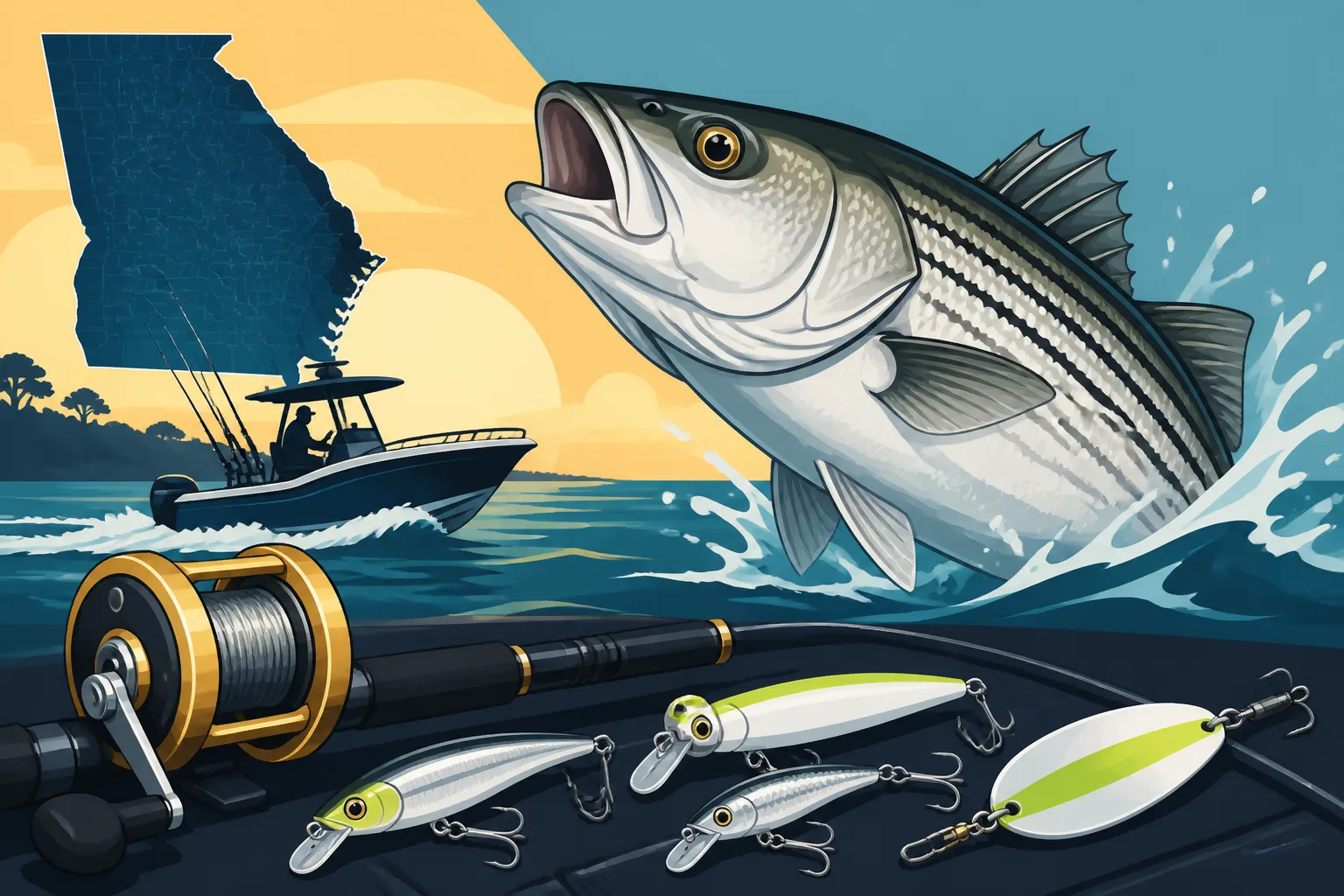
- Jerkbaits/Plugs: These hard-bodied lures mimic baitfish and come in various diving depths. Deep-diving plugs are excellent for targeting stripers suspended at 15-30 feet, while shallow-runners work well with planer boards. Brands like Rapala or Bomber offer a wide range of sizes and colors. Experiment with natural baitfish patterns (shad, herring) as well as brighter "reaction strike" colors.
- Spoons: Large trolling spoons, often chrome or white, are deadly on stripers. They flash and flutter, imitating an injured baitfish. Spoons are typically fished behind a downrigger or with lead core line to get them to the desired depth. Sizes ranging from 3 to 6 inches are common, with SPRO and Tony Accetta being popular choices.
- Umbrella Rigs: This is perhaps one of the most iconic striper trolling lures. An umbrella rig consists of a central mast with several wire arms, each ending in a teaser lure (often a small soft plastic or spoon). A larger "trailer" bait is then clipped to the main line, trailing behind the whole school. This setup mimics a small school of baitfish, making it incredibly attractive to hungry stripers. They're heavy and require stout gear, but when stripers are actively feeding, an umbrella rig can be unstoppable. You can find ready-to-fish umbrella rigs at Bass Pro Shops or online retailers.
When choosing lures, always consider the size of the prevalent baitfish in the lake you're fishing. Matching the hatch is often the most effective strategy.
Live Bait Trolling Rigs
While artificial lures are effective, sometimes nothing beats the real thing. Trolling with live bait, particularly shad or herring, is incredibly productive for striped bass in Georgia. It requires a bit more effort in terms of catching or sourcing bait and keeping it alive, but the results often speak for themselves.
- Catching Bait: Cast netting for threadfin or gizzard shad is a common practice on many Georgia lakes. You'll need a good cast net and a livewell with aeration to keep your bait frisky.
- Rigging: For trolling, a common setup is a simple Carolina rig or a three-way swivel rig. With a Carolina rig, you'll use an egg sinker above a swivel, then a fluorocarbon leader (2-4 feet) to a single or treble hook. For the three-way swivel rig, one eye goes to your main line, another to a short sinker leader (to control depth), and the third to your bait leader.
- Hooking Bait: Hook your shad lightly through the nose, lips, or just behind the dorsal fin, being careful not to hit the spine. The goal is to allow the bait to swim naturally and stay alive as long as possible while being trolled slowly. Some anglers also employ techniques like balloon trolling to keep live bait at a specific depth or along the surface. Properly rigged Live Bait Rigs for Striped Bass can be the difference between a slow day and a banner day.
Swivels, Leaders, and Hooks
Don't overlook the importance of your terminal tackle – the small but critical components that connect your line to your lure or bait.
- Swivels: Heavy-duty ball bearing swivels are a must, especially when trolling with lures that spin or rotate (like spoons or some plugs) to prevent line twist. They also provide a secure connection between your main line and leader. Size 2/0 to 4/0 swivels are typically appropriate for striper fishing.
- Leaders: As mentioned earlier, a fluorocarbon leader (20-40 lb test, 2-10 feet long depending on presentation) is highly recommended. It offers abrasion resistance and stealth. Connect it to your main line with a strong knot like a Blood Knot, FG knot, or uni-to-uni knot.
- Hooks: When using live bait, select sharp, strong hooks that match the size of your bait. Circle hooks are excellent for live bait as they often result in a hookup in the corner of the fish's mouth, reducing gut-hooking and making for easier release. For artificial lures, ensure the treble hooks are sharp and strong enough to withstand the fight of a powerful striper. It's often a good idea to upgrade factory hooks on lures if they seem flimsy.
Always check your terminal tackle regularly for wear and tear, especially after catching a fish. A weak knot or a bent hook can quickly lead to a lost trophy. Best Gear for Striped Bass Fishing includes these small but mighty components!
Electronics and Accessories for Enhanced Trolling Success
In modern striper trolling, electronics aren't just a luxury; they're practically a necessity. They provide critical information that allows you to locate fish, understand their behavior, and present your baits effectively. Think of your boat as a mobile command center, and your electronics are the instruments that guide your mission.
The Role of Fish Finders and GPS
A quality fish finder (also known as a sonar unit or depth finder) is arguably the single most important piece of electronics for trolling striped bass. It allows you to "see" what's beneath your boat, revealing depth contours, submerged structure, baitfish schools, and most importantly, individual or schools of striped bass.
- Sonar: Modern fish finders offer various sonar technologies, including traditional 2D sonar, Down Imaging, and Side Imaging. For trolling, traditional 2D sonar is excellent for seeing fish arches and bait schools directly beneath the boat. Down Imaging provides a more photographic view of what's below, helping you identify structure like ledges or brush piles. Side Imaging (or SideScan) is a game-changer for covering vast areas, allowing you to scan hundreds of feet to either side of your boat to locate bait and fish schools without driving directly over them. Being able to mark the depth of these schools is critical for setting your downriggers or lead core line correctly.
- GPS: Integrated GPS is equally vital. It allows you to mark waypoints where you've found fish or bait, helping you return to productive areas. You can also use it to track your trolling paths, ensuring you cover the desired contours or structure effectively. Many units offer mapping capabilities, showing lake contours, underwater points, and channels, which are essential for navigating and identifying prime striper habitat. Best Fish Finders for Georgia Reservoir Fishing will invariably highlight units with excellent sonar and GPS capabilities. Brands like Humminbird and Lowrance offer robust units suitable for serious striper anglers.
Without these tools, you're essentially trolling blind, hoping for a lucky strike rather than strategically targeting fish.
Trolling Motors and Batteries
While your main outboard engine handles the primary propulsion, a dedicated trolling motor plays a crucial role in fine-tuning your speed and maneuverability, especially for precise trolling patterns or when trying to hold over a specific spot.
- Electric Trolling Motors: These motors, typically mounted on the bow (front) of the boat, provide quiet, electric propulsion. They are invaluable for maintaining a consistent, slow trolling speed, which is often critical for triggering strikes from wary stripers. Many modern trolling motors feature GPS-enabled "spot-lock" or "anchor" functions, allowing them to automatically hold your boat's position against wind and current, freeing you up to focus on your lines. This is incredibly useful when you find a dense school of stripers and want to work that area thoroughly.
- Batteries: Electric trolling motors run on deep-cycle marine batteries. Depending on the motor's thrust and voltage (12V, 24V, or 36V), you might need one, two, or even three batteries. Investing in high-quality batteries is essential for long days on the water. Lithium-ion marine batteries are becoming increasingly popular due to their lighter weight, longer run times, and faster charging capabilities, though they come at a higher upfront cost. Proper battery maintenance and charging are key to ensuring your trolling motor performs reliably throughout your trip.
Having a good trolling motor allows you to control your boat with precision, making subtle adjustments to speed and direction that can make all the difference in presenting your lures effectively.
Comfort and Safety Gear
Long days on the water, especially when trolling, demand attention to comfort and safety. You might be out there for hours, so being prepared for various conditions is crucial.
- Sun Protection: Georgia sun can be intense. Wide-brimmed hats, polarized sunglasses (which also help you see subsurface structure), and high-SPF sunscreen are non-negotiable. Look for long-sleeved, breathable fishing shirts that offer UPF protection.
- Weather Gear: Be prepared for sudden changes in weather. Rain gear, including a waterproof jacket and pants, is essential. Layers are always a good idea, as temperatures can fluctuate throughout the day, especially from early morning to afternoon.
- Cooler: A good cooler is necessary for keeping drinks, snacks, and any legal-sized stripers fresh. Consider a marine-grade cooler that can hold ice for extended periods.
- First Aid Kit: Always have a well-stocked first aid kit on board for minor cuts, scrapes, or other emergencies.
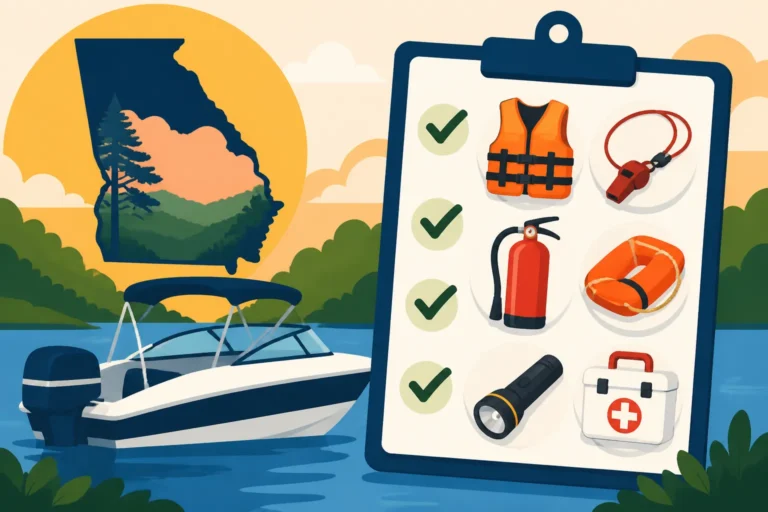
- Life Jackets: This isn't just a suggestion; it's the law. Ensure you have enough Coast Guard-approved life jackets for everyone on board, and make sure children wear them at all times.
- Basic Boat Safety Gear: Flares, a whistle or horn, a fire extinguisher, and a throwable flotation device are all required by law and critical for safety. You can often find many of these items, from marine electronics to safety gear, at your local Bass Pro Shops or on Amazon. Neglecting safety can turn a fun day into a dangerous one very quickly.
Putting It All Together: Trolling Strategies and Tips
Now that you've got a handle on the essential gear, let's talk about how to effectively use it out on the water. Trolling isn't just about dragging lines; it's a dynamic process of observation, adjustment, and understanding fish behavior.
Reading the Water and Adjusting Your Spread
Successful trolling starts before you even launch the boat. Check weather forecasts, water temperature reports, and recent fishing reports for your chosen lake. Once on the water, your fish finder becomes your eyes. Look for baitfish schools – they are the key to finding stripers. If you see clouds of bait at 20 feet, that’s where you want to target your lures. Also, pay attention to visible structure like points, humps, creek channels, and thermocline depths. How Water Temperature Affects Fish Behavior is a huge factor for stripers.
Once you start trolling, don't be afraid to experiment with your spread. Run some lures deeper and some shallower. Use different colors and styles of lures. If you're using planer boards, try putting one set out wider and another closer to the boat. The goal is to figure out what the fish are keying in on that day. When you get a strike, immediately pay attention to which rod went off, what lure it was, and at what depth it was running. This gives you valuable information to replicate your success. You might find that stripers are only hitting a specific color, or only at a very precise depth.
Speed, Depth, and Presentation
These three elements are the holy trinity of trolling.
- Speed: Trolling speed is critical and can vary greatly depending on the lure, bait, and fish mood. For artificial lures, a common range is 2.5 to 4.0 mph. Live bait trolling is often slower, around 0.5 to 1.5 mph, to allow the bait to swim naturally. Pay attention to your GPS speed over ground, as wind and current can drastically affect your actual lure speed and depth. Experiment with slight speed changes; sometimes a half-mile per hour difference is all it takes to trigger a strike.
- Depth: We've discussed this extensively, but it bears repeating: getting your lures to the right depth is paramount. Use your fish finder to pinpoint bait and fish. If you're using downriggers, set them precisely to that depth. With lead core, count out the appropriate number of colors. For planer boards, choose lures that run at the desired depth. Stripers are often suspended in the water column, so you need to present your offering right at their eye level. Targeting the depth of the What Depth Striped Bass Hold At can change daily.
- Presentation: This refers to how your lure or bait is moving through the water. Is your umbrella rig swimming true? Is your spoon flashing correctly? Is your live bait looking lively and natural? Periodically reel in a lure to check its action. Make sure lines aren't tangled, and that weeds or debris haven't fouled your presentation. Subtle boat movements, like wide turns or slight accelerations, can change the action of your lures and sometimes trigger a reluctant strike.
A methodical approach to adjusting these three factors will quickly reveal what the stripers want on any given day.
Seasonal Adjustments for Striped Bass Trolling
Striped bass behavior changes dramatically with the seasons in Georgia, and your trolling strategy needs to adapt accordingly.
- Spring: As waters warm, stripers become more active and often feed closer to the surface. You might find them chasing bait in shallow coves or around spawning flats. Trolling with planer boards and shallow-diving plugs can be very effective. As the water warms further into late spring, they'll start to move deeper, following the bait. Best Time of Year to Catch Striped Bass in Georgia often points to spring and fall.
- Summer: This is typically when stripers go deep, seeking cooler, oxygenated water in the thermocline. This is prime time for downriggers and lead core line, targeting depths often between 30-60 feet, especially in larger reservoirs like Lanier. Trolling during low light hours (dawn and dusk) can also be highly productive as stripers might move shallower to feed. Consider Summer Fishing Patterns on Georgia's Big Lakes.
- Fall: As water temperatures cool down, stripers will become more aggressive and often move back to shallower depths, chasing massive schools of baitfish. This is a fantastic time for umbrella rigs, large plugs, and live bait trolling. Look for birds diving on bait schools, which often indicates stripers feeding below.
- Winter: In the coldest months, stripers will often school tightly and hold in deep channels or around prominent structure. They might be less active, requiring slower trolling speeds and precise bait presentation right on their noses. Vertical jigging can also be very effective during this time, but trolling slowly with deep-diving lures or live bait can still produce.
Understanding these seasonal shifts in striper behavior and adjusting your trolling gear and techniques accordingly will significantly improve your chances of success throughout the year. It's about being prepared for what the lake and the fish throw at you.
Disclaimer
This article is for general informational purposes only and does not constitute professional advice. Laws, prices and regulations vary by location and change over time. Consult a qualified professional for guidance on your specific situation.