Best Gear for Georgia Spotted Bass Fishing
Fishing for spotted bass in Georgia can be an incredibly rewarding, yet sometimes frustrating, experience. These feisty fish often act differently than their largemouth cousins, leading many anglers to scratch their heads wondering why their usual tackle isn't quite cutting it. If you've found yourself struggling to consistently hook into these aggressive but sometimes particular fighters, this guide is for you. We're going to dive deep into the best gear to give you a serious edge, helping you understand what makes spotted bass tick and how to arm yourself for success on Georgia's lakes and rivers.
Understanding Spotted Bass Behavior and Habitat
Spotted bass, often called "spots," are a unique challenge and a blast to catch here in Georgia. They're built for speed and power, and they inhabit a different world than the largemouth we often target. Knowing their preferences is the first step in assembling the right gear.
Where Spotted Bass Thrive in Georgia
Unlike largemouth bass, which often prefer shallow, weedy cover, spotted bass typically gravitate towards deeper, clearer water with rocky bottom structures, points, humps, and submerged timber. Think about the big, clear reservoirs of North Georgia – places like Lake Lanier, Lake Hartwell, or even Lake Allatoona – these are prime spotted bass territory. You'll find them schooling up on offshore humps, along steep bluff walls, and suspended over deep water, often chasing schools of baitfish like blueback herring or shad.
River systems, especially those with good current and rocky bottom, also hold healthy populations of spotted bass. They love current breaks, eddies, and submerged logs or rock piles where they can ambush prey. Understanding these preferred habitats means you'll need gear that can effectively present lures in open water, along deep structure, and often with lighter lines to contend with clearer water conditions.
Key Differences from Largemouth Bass
One of the biggest frustrations anglers face when targeting spotted bass is trying to apply largemouth tactics. Spots are generally smaller than largemouth, but they pack an incredible punch for their size. Their fight is often described as "meaner" or "more bulldog-like," pulling hard and deep. They also tend to feed differently. While largemouth might lie in wait in thick cover, spotted bass are often more nomadic, patrolling open water or schooling up to chase baitfish.
Their mouths are also smaller than a largemouth's, which means certain larger baits or bulkier presentations might not be as effective. This often calls for more finesse-oriented tackle and smaller profile baits. Plus, in the clear water they often inhabit, line visibility becomes a much bigger factor. These differences mean we often need to adjust our rod power, line strength, and lure size to truly excel at Spotted Bass Fishing in Georgia Lakes and Rivers.
Rod and Reel Combinations for Spotted Bass
Getting the right rod and reel setup is paramount for spotted bass. You need sensitivity to detect subtle bites in deep water, the backbone to drive hooks, and enough power to handle their spirited fight. It's not a "one size fits all" situation, as different techniques will call for slightly varied gear.
Spinning Gear for Finesse Techniques
When the water is clear, the bite is tough, or you're fishing smaller baits like a drop shot, shaky head, or small jig, spinning gear is your best friend. A medium-light to medium power spinning rod, typically 6'9" to 7'3" in length, with a fast or extra-fast action, is ideal. This setup provides the sensitivity to feel light bites and the parabolic bend needed to fight a strong fish on light line without breaking off.
Pair this with a quality spinning reel in the 2000 to 3000 size range. Look for a reel with a smooth drag system – this is non-negotiable when fighting a hard-charging spot on lighter fluorocarbon. This type of setup allows for precise casts with lighter lures and ensures you can present those finesse baits naturally. Many anglers find great spinning reels that fit the bill at places like Bass Pro Shops. For specific techniques, consider exploring How to Fish a Drop Shot Rig for Bass or How to Fish a Jig for Largemouth Bass (which applies well to smaller spotted bass jigs).
Baitcasting Gear for Power and Precision
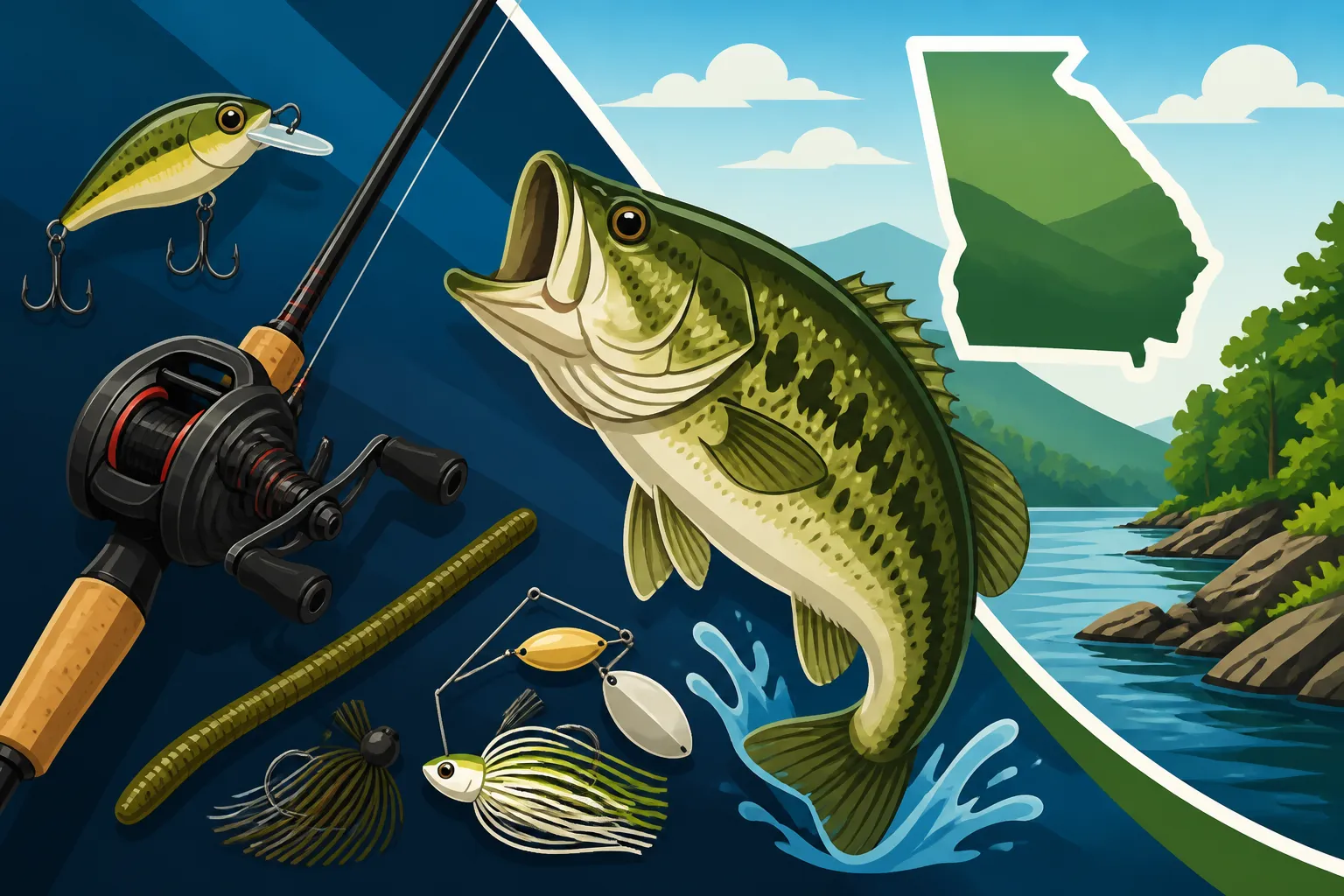
While spotted bass often demand finesse, there are certainly times when baitcasting gear is superior. When you're throwing larger crankbaits, spinnerbaits, heavier jigs, or fishing around thicker cover or deeper offshore structure, a baitcaster offers the power, accuracy, and line capacity you need. A medium to medium-heavy power baitcasting rod, again in the 6'9" to 7'3" range with a fast action, is a versatile choice.
A high-quality baitcasting reel with a gear ratio between 6.X:1 and 7.X:1 will give you the versatility to retrieve baits at different speeds and quickly take up slack. For heavier presentations or when you need to really lean into a fish, a slightly higher gear ratio can be an advantage. The key is balance – you want a setup that feels comfortable to cast all day without sacrificing the power needed to land a solid spot.
Choosing the Right Action and Power
"Action" refers to where a rod bends, and "power" refers to how much force it takes to bend it. For spotted bass, you generally want rods with a fast or extra-fast action. This means the rod bends mostly in the top third or quarter, which provides excellent sensitivity for detecting subtle bites and allows for quick, strong hook sets.
- Medium-Light Power: Great for ultra-finesse techniques, small soft plastics, and light jigs when the bite is extremely tough.
- Medium Power: Your workhorse for most finesse presentations like shaky heads, drop shots, small jerkbaits, and lighter spinnerbaits.
- Medium-Heavy Power: Ideal for larger crankbaits, heavier jigs, larger soft plastics, and when you're fishing in slightly heavier cover or needing more leverage over bigger fish.
Matching the rod's power and action to your chosen technique and bait is crucial for maximizing casting distance, lure presentation, and hook-setting efficiency.
Line Selection: Matching Your Gear to the Fight
Choosing the right fishing line for spotted bass is just as critical as your rod and reel. These fish fight hard, often in clear water around abrasive structure, so your line needs to be strong, sensitive, and often stealthy.
Fluorocarbon: The Stealthy Choice
Fluorocarbon line is arguably the most popular choice for spotted bass anglers, and for good reason. Its main advantage is its near-invisibility underwater, which is a huge plus in the clear waters spotted bass prefer. It also has very low stretch, offering exceptional sensitivity to feel those subtle "thumps" and "ticks" of a spotted bass bite, even in deep water.
Furthermore, fluorocarbon is incredibly abrasion-resistant, holding up well against rocks, shell beds, and submerged timber. For most finesse techniques like drop shots, shaky heads, or small jigs, a 6 to 10-pound test fluorocarbon main line is common. When fishing slightly heavier baits or around denser cover, you might bump up to 12-pound test. Brands like Seaguar and Berkley offer excellent fluorocarbon options that stand up to the rigors of spotted bass fishing. You can easily find these reliable lines on Amazon.
Braided Line: Power and Durability
Braided line offers incredible strength, minimal stretch, and excellent casting distance. While its visibility can be a concern in clear water, many anglers use it effectively by pairing it with a fluorocarbon leader. A common setup is 10 to 20-pound test braided main line tied to a 6 to 10-pound test fluorocarbon leader using a strong knot like an FG knot or an Alberto knot.
This combination gives you the best of both worlds: the power and sensitivity of braid for strong hook sets and feeling bites, plus the stealth of fluorocarbon at the business end. Braided line is particularly useful when fishing in slightly heavier cover, making long casts, or when you need to quickly pull a fish away from snags. It's also fantastic for topwater baits where line stretch isn't an issue and you want maximum hook-setting power. For more on this, check out Best Braided Line for Georgia Bass Fishing.
Monofilament: A Versatile Option
While not as popular as fluorocarbon for most spotted bass techniques, monofilament still has its place. Its inherent stretch can be beneficial when fishing reaction baits like crankbaits or spinnerbaits, as it acts as a shock absorber, preventing hooks from tearing out of a fish's mouth during aggressive strikes or head shakes. It also excels for topwater fishing, as it floats, which helps surface lures walk and pop effectively.
For topwater, a 10 to 14-pound test monofilament is a solid choice. While it's more visible than fluorocarbon, the action of a topwater lure often distracts the fish enough that it's less of a concern. Monofilament is also generally more budget-friendly and easier to tie knots with, making it a good choice for beginners or those who prefer its forgiving nature for certain presentations.
Essential Lures and Baits for Spotted Bass
Spotted bass are opportunistic feeders, but they do have preferences, especially when it comes to lure size and action. Because they often key in on smaller baitfish and rely on their keen eyesight in clear water, finesse presentations and realistic profiles are often key.
Finesse Baits: Drop Shots, Shaky Heads, and Jigs
These are the bread and butter for many spotted bass anglers, especially when the fish are deep, pressured, or finicky.
- Drop Shots: A drop shot rig allows you to suspend a small soft plastic bait at a specific depth, right in the fish's strike zone, without imparting much forward movement. This is deadly for suspended spots or fish holding tightly to structure. Small worms, minnow imitations, and creature baits are excellent choices.
- Shaky Heads: A shaky head jig consists of a weighted head with a screw-lock keeper, designed for fishing soft plastic worms. You "shake" the rod tip to make the worm quiver on the bottom, mimicking a foraging or injured baitfish. This is incredibly effective for spotted bass holding on rocky points or humps.
- Small Jigs: Compact jigs, often 1/4 to 1/2 ounce, paired with small craw or creature trailers, can be incredibly effective when hopped or dragged along the bottom. Black and blue, green pumpkin, and brown shades are classic choices. These work particularly well when bass are feeding on crayfish or tight to deeper cover.
Many of these finesse baits can be found in a wide variety of colors and sizes at your local Bass Pro Shops, making it easy to experiment and find what the fish are keying in on.
Reaction Baits: Crankbaits and Spinnerbaits
When spotted bass are actively feeding or you need to cover a lot of water quickly, reaction baits are your go-to.
- Crankbaits: Small to medium-sized crankbaits, especially those that mimic shad or crawfish, can be deadly. Look for lipless crankbaits for covering flats or targeting suspended fish, and diving crankbaits that can reach the depths where spots are holding. Medium diving crankbaits (8-15 feet) are often great for ledges and points.
- Spinnerbaits: While traditionally a largemouth bait, smaller, more compact spinnerbaits can be highly effective for spotted bass, especially around submerged brush or timber. Choose models with willow leaf blades for more flash and a tighter wobble, or Colorado blades for more thump and vibration in stained water. Vary your retrieve speed and depth to find the sweet spot. When deciding on baits, also consider Best Lures for Georgia Largemouth Bass as many smaller bass baits crossover for spots.
Topwater Lures for Explosive Strikes
There's nothing quite like a topwater explosion, and spotted bass are more than willing to oblige, especially during low light conditions or when they're schooling bait on the surface.
- Walking Baits: Lures like a Heddon Super Spook Jr. or a Lucky Craft Sammy are fantastic for "walking the dog" across the surface, mimicking an injured baitfish. The erratic side-to-side action can drive spots wild.
- Poppers: Small poppers create a splash and gurgle that can draw fish up from surprising depths. They're excellent for targeting individual fish or small schools.
- Prop Baits: These lures have small propellers that churn water, creating a commotion that attracts attention. They can be particularly effective when bass are aggressive and feeding on surface bait. Topwater action for spotted bass can be intense, especially around baitfish schools.
Critical Accessories for Spotted Bass Anglers
Beyond your rods, reels, and lures, a few key accessories can dramatically improve your success and efficiency when targeting Georgia spotted bass. These tools help you locate fish, stay on them, and handle them responsibly.
Fish Finders and Mapping
In the often-deep, clear waters where spotted bass reside, a good fish finder with quality mapping is almost indispensable.
- Side Imaging and Down Imaging: These technologies allow you to "see" underwater structure, baitfish schools, and even individual fish to the sides and directly beneath your boat. This is crucial for locating those offshore humps, rock piles, and submerged timber that spots love.
- GPS Mapping: Detailed lake maps (like those from Lowrance, Humminbird, or Garmin) show contours, depth changes, and points of interest. Being able to mark waypoints on productive spots and navigate precisely back to them is invaluable for repeatable success. Understanding the thermocline (a layer of rapid temperature change in the water column) is also key, as spotted bass often relate to this depth during warmer months. You'll find a wide array of cutting-edge fish finders on Amazon, often with integrated mapping capabilities. For more information on finding fish, explore Best Fish Finder for Lake Lanier.
Trolling Motors and Anchoring Systems
Maintaining boat control is paramount when fishing deep-water spotted bass.
- GPS Trolling Motors: Modern trolling motors with GPS anchoring capabilities (like Minn Kota's Spot-Lock or Lowrance's Ghost with Anchor mode) are game-changers. They allow you to hold your boat precisely over a productive spot, even in wind or current, freeing you up to focus on fishing. This is incredibly useful when dropping on a small hump or a school of suspended fish.
- Power Poles/Shallow Water Anchors: While less critical for deep-water spots, these can be useful in shallower spotted bass habitats, allowing for silent, quick anchoring without spooking fish. For deeper water, a traditional anchor with plenty of rope is still a viable option for holding position, though often less precise than a GPS trolling motor. Good boat control is covered in guides like Best Trolling Motor for Georgia Bass Boats.
Netting, Weighing, and Livewells
Proper fish handling ensures the health of the fish and accuracy of your catch reporting.
- Rubber-Coated Net: A net with rubber-coated mesh is much gentler on a fish's fins and slime coat, minimizing damage. It also prevents hooks from getting tangled, saving you time and frustration. Look for a net with a long enough handle to reach fish boatside, especially if you're fishing alone.
- Digital Scale and Measuring Board: For anglers who participate in tournaments or simply like to keep track of their catches, a certified digital scale and a sturdy measuring board are essential. Always handle fish carefully, supporting their weight, especially larger ones, and getting them back into the water quickly.
- Aerated Livewell: If you plan to keep fish for a short period before release, a well-aerated livewell is crucial for their survival. Ensure it's clean, has good circulation, and ideally includes a water exchange system to keep the water cool and oxygenated.
Adapting Your Approach for Different Seasons
Spotted bass, like all fish, change their behavior with the seasons. Understanding these patterns and adjusting your gear and techniques accordingly will drastically increase your success rate throughout the year.
Spring: Pre-Spawn and Spawn Tactics
Spring is an exciting time for spotted bass anglers. As water temperatures rise, spots move shallower to feed aggressively in preparation for spawning, and then eventually move onto beds.
- Pre-Spawn: In early spring, look for spotted bass to stage on main lake points, secondary points, and rocky banks leading into spawning coves. Reaction baits like lipless crankbaits, jerkbaits, and medium-diving crankbaits are highly effective for covering water and triggering strikes. As the water warms, shaky heads and jigs become increasingly productive. This is when the fish are bulking up and often at their heaviest weights of the year.
- Spawn: Unlike largemouth that often spawn in visible, shallow pockets, spotted bass tend to spawn in slightly deeper water, often on rocky ledges, hard bottom areas, or main lake points. They can be harder to spot. Drop shots, small jigs, and finesse worms presented slowly are your best bets. Focus on areas with good rock-to-sand transitions and clean bottom. Spring Bass Fishing Patterns on Georgia's Reservoirs is a great resource.
Summer: Deep Water and Night Fishing
Summer heat pushes spotted bass into deeper, cooler, and more oxygenated water. This is when your electronics really shine.
- Deep Water Structure: Look for spots on offshore humps, deep points, ledges, and creek channels, often relating to the thermocline if one has set up. Drop shots, spoons, deep-diving crankbaits, and heavy jigs are excellent for targeting these fish. Pay close attention to baitfish schools; where there's bait, there are usually spots. Fishing vertically directly over schools can be incredibly productive.
- Night Fishing: As temperatures soar, spotted bass often become more active at night. They'll move shallower to feed on baitfish that also migrate towards the surface in the dark. Large spinnerbaits, bladed jigs, and even certain topwater lures can be effective. Catfish anglers often find spotted bass by accident during summer nights, as the two species can share similar nocturnal feeding patterns. Night Fishing Spots Near Atlanta might include some lakes with good spotted bass populations.
Fall and Winter: Transition and Cold Water Bites
Fall sees spotted bass transitioning back to shallower waters as temperatures cool, while winter requires a slow, precise approach.
- Fall Transition: In autumn, spotted bass will follow baitfish into creeks and coves, feeding heavily to put on weight for winter. This is a great time for reaction baits like crankbaits, spinnerbaits, and chatterbaits. Look for them on channel swings, creek bends, and along rocky banks. The bite can be aggressive, mimicking the pre-spawn frenzy.
- Winter Slowdown: When water temperatures drop significantly, spotted bass become lethargic. They'll often school tightly in deep water, typically around main lake points, channel swings, and deep bluff walls. Slow, finesse presentations are key. Vertical jigging spoons, drop shots, and small jigs are highly effective. The key is to be patient, fish slowly, and use your electronics to pinpoint tightly schooled fish. This is where Winter Fishing Patterns on Georgia's Reservoirs can provide even more detail.
Here's a quick reference table for matching your gear to popular spotted bass techniques:
| Technique | Rod Type | Rod Power | Rod Action | Recommended Line (Main/Leader) | Key Lures/Baits |
|---|---|---|---|---|---|
| Drop Shot | Spinning | Med-Light/Med | Fast/X-Fast | 6-10lb Fluoro / 10-15lb Braid | Finesse worm, minnow imitation |
| Shaky Head | Spinning | Medium | Fast | 8-10lb Fluoro / 15lb Braid | Shaky head worm, small creature bait |
| Small Jigging | Spinning/Baitcasting | Medium | Fast | 10-12lb Fluoro / 15-20lb Braid | Football jig, casting jig, spider jig |
| Crankbaits (Mid/Deep) | Baitcasting | Med-Heavy | Moderate-Fast | 10-14lb Fluoro/Mono | Shad/crawfish imitation crankbaits |
| Spinnerbaits | Baitcasting | Medium-Heavy | Fast | 15-20lb Fluoro/Mono | 1/4 – 1/2 oz willow/Colorado blade spinner |
| Topwater (Walking/Poppers) | Spinning/Baitcasting | Medium | Moderate-Fast | 10-14lb Mono/Braid | Spooks, poppers, prop baits |
| Jigging Spoons | Baitcasting | Med-Heavy | Fast | 12-15lb Fluoro | 1/2 – 1 oz metal jigging spoon |
Ultimately, success with spotted bass fishing in Georgia comes down to a combination of understanding their unique habits, selecting the appropriate gear, and being willing to adapt your techniques to the conditions. These aren't just fish; they're puzzles, and solving them with the right tackle is what makes it so incredibly satisfying.
Disclaimer
This article is for general informational purposes only and does not constitute professional advice. Laws, prices and regulations vary by location and change over time. Consult a qualified professional for guidance on your specific situation.