Hybrid Striped Bass Size and Growth
Have you ever reeled in a fish in Georgia, felt that incredible fight, and wondered if it was a monster hybrid striped bass, or just a really feisty "regular" striper? It's a common question, and one that often leads anglers to wonder just how big these powerful hybrids can get in our beloved Georgia waters. This guide is dedicated to shedding light on the typical size, growth patterns, and factors that influence how large these exciting game fish become, helping you better understand your catch and what to expect on your next angling adventure.
Understanding Georgia's Hybrid Striped Bass Population
Hybrid striped bass are truly unique, offering an exciting challenge and a rewarding fight for any angler. They're a testament to thoughtful fisheries management, designed to thrive in our state's rich aquatic environments. But before we dive into their impressive size, let's clarify what we're talking about.
What Exactly is a Hybrid Striper?
A hybrid striped bass, often affectionately called a "wiper" or "sunshine bass" depending on its parentage, is a cross between a purebred striped bass (Morone saxatilis) and a white bass (Morone chrysops). In Georgia, most of the hybrids you'll encounter are the result of crossing a female striped bass with a male white bass. This genetic mix gives them the best traits of both worlds: the robust growth and fighting spirit of a striper, combined with the hardiness and schooling behavior of a white bass. They are primarily a stocked species, meaning the Georgia Department of Natural Resources (DNR) raises them in hatcheries and then releases them into specific lakes and reservoirs to enhance sport fishing opportunities.
These fish are designed for angler enjoyment. They grow relatively quickly, tolerate a wider range of water temperatures than pure stripers, and provide an absolutely thrilling battle on the line. Anglers often appreciate their aggressive feeding habits, which make them a bit more predictable to catch than some of their purebred cousins. If you've ever hooked into one, you know exactly what I mean – they pull hard and refuse to give up!
Key Differences from Purebred Striped Bass
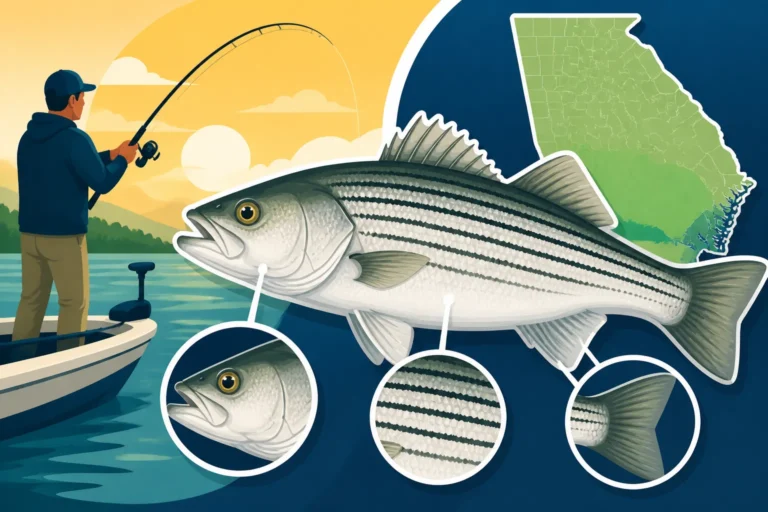
Distinguishing a hybrid striper from a purebred striped bass can be tricky at times, especially for a novice, but there are some tell-tale signs. Purebred stripers typically have solid, unbroken lateral lines running down their sides. These lines are usually distinct and continuous from gill to tail. Hybrid stripers, on the other hand, often have broken or discontinuous lines. You might see lines that are fragmented, zig-zagged, or fade out and reappear along their body. Sometimes, they'll have several broken lines among a few solid ones, creating a somewhat chaotic pattern.
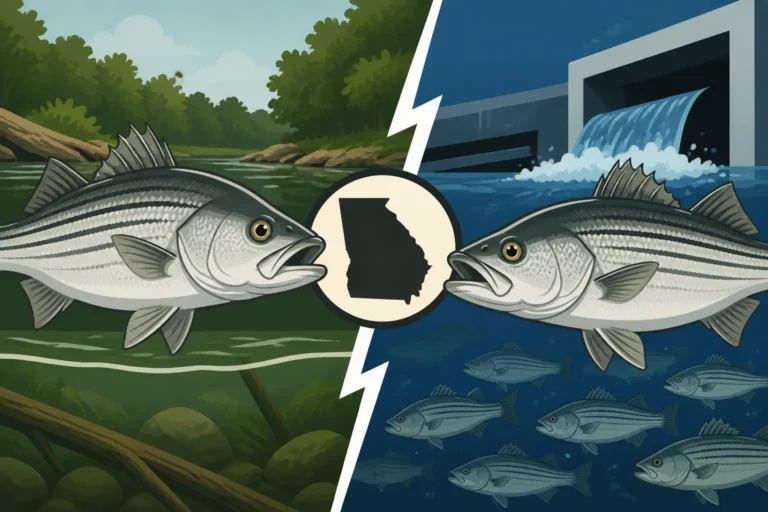
Another subtle difference can be their body shape. While both are powerful, torpedo-shaped fish, hybrids tend to be a bit deeper-bodied and more stout than the generally more elongated purebred striped bass. Their heads can also appear proportionally smaller relative to their body size compared to a purebred striper. Knowing these distinctions can make a big difference when you're trying to identify your catch and understand its growth potential. For a deeper dive into identification, check out our guide on Striped Bass vs Hybrid Striped Bass: Georgia Angler's Guide.
Unpacking the Size and Growth of Hybrid Striped Bass in Georgia
The big question for many anglers is, "How big can these things actually get?" The answer, as with many things in nature, varies, but Georgia's waters are certainly capable of producing some impressive hybrid stripers.
Average Size Expectations for Georgia Anglers
When you're out on the water in Georgia, an average hybrid striped bass catch might range anywhere from 2 to 5 pounds. These are commonly encountered fish and offer a fantastic fight on medium-heavy tackle. However, it's not at all uncommon to land hybrids in the 6 to 10-pound range, especially in well-managed reservoirs with abundant forage. These are the fish that really test your drag and give you a workout.
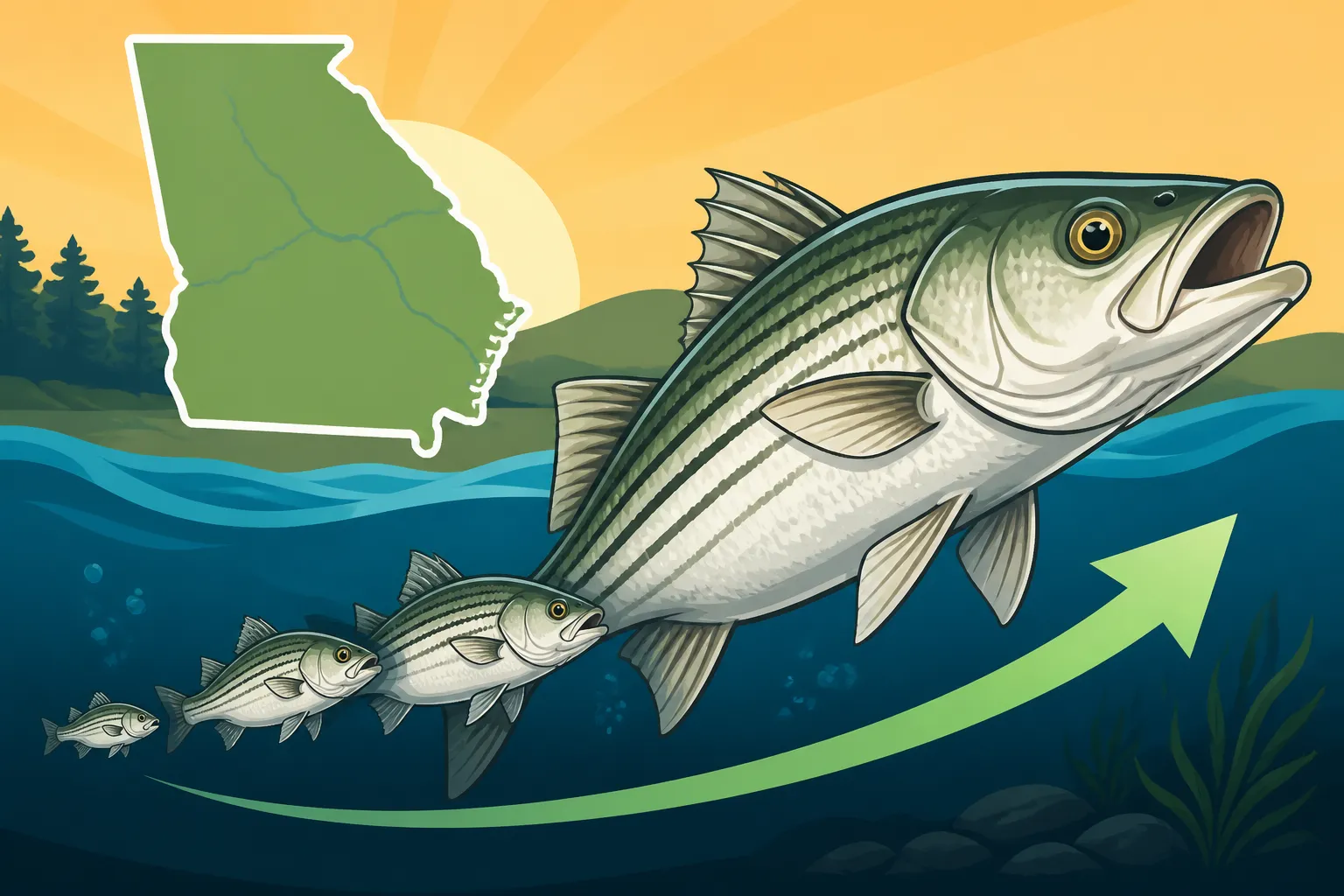
Trophy-sized hybrid stripers in Georgia can push the scales much further. While they generally don't reach the gargantuan sizes of purebred striped bass, which can easily exceed 50 pounds, a hybrid over 15 pounds is considered an absolute lunker in our state, and fish pushing 20 pounds are certainly possible. Imagine battling a 15-pound hybrid; it's an experience you won't soon forget! The key is understanding that their growth is often faster in their initial years compared to purebred stripers, but their maximum size potential is typically a bit lower.
Factors Driving Growth in Georgia's Waters
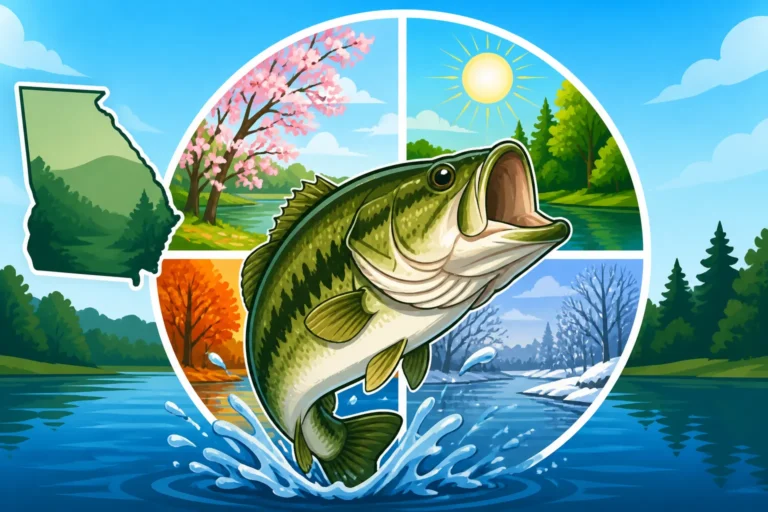
Several crucial factors play into how large a hybrid striped bass will grow in Georgia's lakes and reservoirs. It's a delicate balance of biology and environment.
Forage Availability
Just like any growing creature, hybrids need food, and lots of it. Their aggressive nature means they're constantly on the hunt for baitfish. Lakes rich in threadfin shad, gizzard shad, and blueback herring provide the ideal buffet for rapid growth. When a reservoir has an abundant and healthy population of these forage fish, the hybrids have a constant food supply, allowing them to pack on the pounds quickly. Conversely, in systems where baitfish populations are stressed, hybrid growth can be stunted. This is why you often hear about certain lakes being "better" for hybrids – it usually boils down to the health of the forage base. Lakes like Lake Oconee are well-known for their thriving hybrid populations, largely due to excellent forage. You can learn more about this in our guide to Hybrid Striped Bass at Lake Oconee.
Water Quality and Temperature
Hybrids are resilient, but optimal water quality and temperature ranges certainly aid in their growth and overall health. They can tolerate warmer water than pure stripers, which is a big advantage in Georgia's hot summers. However, extremely low oxygen levels, especially in deeper, stratified waters during late summer, can stress fish and slow growth. Access to a thermocline with suitable temperatures and oxygen levels is crucial. Georgia's large reservoirs, with their varying depths and consistent water flow, generally provide excellent conditions for these fish to thrive.
Stocking Programs and Genetics
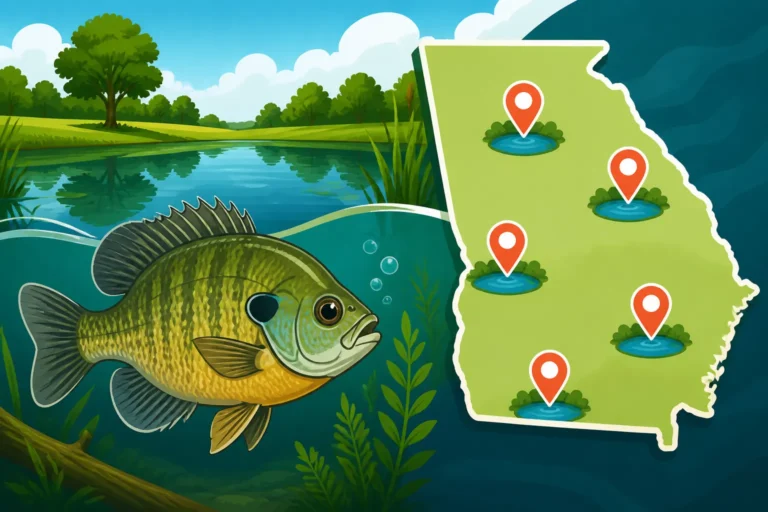
The Georgia DNR's stocking programs are instrumental in maintaining healthy hybrid populations. By selectively breeding and stocking healthy fingerlings, they ensure a strong genetic base. The initial size of the stocked fish and the consistency of stocking efforts directly impact the number of fish available and their potential to grow. These programs are carefully managed to balance the number of fish with the available forage, aiming for optimal growth rates. Sometimes, variations in genetic crosses can also subtly influence growth, with some strains showing a tendency for slightly larger sizes than others. If you're curious about where these fish come from, you might want to read Where Georgia Stocks Hybrid Striped Bass.
The Lifespan and Maximum Potential
Hybrid striped bass generally have a shorter lifespan than purebred stripers, often living 5 to 7 years in Georgia's reservoirs. While a purebred striper might live for 10-20 years and reach truly immense sizes, hybrids tend to reach their maximum growth potential within those first few years. This rapid growth is part of their appeal; they don't need decades to become a substantial catch.
A 20-pound hybrid striper is an exceptional catch, a true fish of a lifetime for many anglers. These larger fish are typically older specimens that have had consistent access to abundant food sources and have avoided predators and angling pressure. While the average angler might not encounter a 20-pounder every trip, the possibility is always there, and that's part of what makes targeting them so exciting.
Where to Find and Target Larger Hybrid Stripers
Knowing where and how to fish can dramatically increase your chances of hooking into one of Georgia's impressive hybrid stripers. These fish have distinct preferences and behaviors that, once understood, can lead to incredible success.
Prime Georgia Lakes for Trophy Hybrids
Georgia is blessed with several fantastic reservoirs that consistently produce large hybrid striped bass. Lake Oconee is arguably one of the most famous, renowned for its incredible hybrid fishery, often yielding fish in the double digits. The warm water discharge from the Wallace Dam power plant keeps the fish active year-round, especially in cooler months, leading to excellent growth rates. Anglers frequently praise Oconee for its robust hybrid population and the sheer size of the fish. Our guide Lake Oconee's Hybrid Striped Bass Fishery provides even more detail.
Other notable lakes include Lake Lanier, where hybrids also grow to respectable sizes, and even some public fishing areas (PFAs) managed by the state, though these might yield smaller fish on average. Generally, the larger, deeper reservoirs with healthy baitfish populations are your best bet for encountering those larger hybrids. These vast bodies of water provide ample space and diverse habitats for these powerful fish to roam and feed.
Fishing Techniques for Bigger Fish
To target those larger hybrid stripers, you often need to adjust your approach. They're strong, so heavy-duty tackle is a must. Many successful anglers opt for medium-heavy to heavy action rods paired with reels capable of holding 15-20 pound test monofilament or 30-50 pound braided line. You'll thank yourself for having robust gear when that 10-pounder hits!
Live bait is king when it comes to consistently catching larger hybrids. Gizzard shad, threadfin shad, or blueback herring are irresistible to them. Presenting these baits on a Carolina rig, free-lined, or even on a downline in deeper water, particularly around humps, points, and channel swings, can be incredibly effective. Hybrids often suspend in schools, following baitfish, so a good fish finder is an invaluable tool for locating them. You might find our article on Deep Water Techniques for Striped Bass or Live Bait Rigs for Striped Bass very helpful here.
When it comes to lures, large swimbaits, spoons, and topwater plugs (especially during low light conditions or when they're actively schooling on the surface) can also entice big strikes. Don't be afraid to experiment with different presentations and depths until you find what they're hitting. Remember, these fish are aggressive, so a fast retrieve or an erratic jigging motion can often trigger a reaction strike. You can find excellent selections of all these fishing essentials on Amazon, from rods and reels to a variety of lures and lines.
| Hybrid Striper Age (Approx.) | Typical Length Range (Inches) | Typical Weight Range (Pounds) | Notes |
|---|---|---|---|
| 1 Year | 10 – 14 | 0.5 – 1.5 | Fast initial growth, stocked at this stage. |
| 2 Years | 14 – 20 | 1.5 – 4 | Common keeper size, strong fighters. |
| 3-4 Years | 18 – 25 | 3 – 8 | Excellent fighting fish, highly sought after. |
| 5-7+ Years | 24 – 30+ | 8 – 20+ | Trophy potential, often lunkers from well-managed lakes. |
Conservation and Sustainable Practices for Hybrid Striper Fishing
While hybrids are primarily a stocked species, meaning they don't reproduce naturally in most of our waters, practicing responsible angling is still incredibly important for maintaining healthy populations and ensuring great fishing for years to come.
Importance of Catch and Release for Large Fish
Many anglers choose to practice catch and release, especially for the larger, trophy-sized hybrid stripers. While they are excellent table fare, releasing those bigger fish helps maintain a diverse population structure and allows them to continue growing and providing thrilling fights for others. If you plan to release, handle the fish gently, minimize its time out of the water, and ensure it's revived before letting it go. A good set of fish grippers and a pair of pliers for hook removal, both readily available on Amazon, can make this process smoother and safer for both you and the fish.
Consider the effort and resources that go into raising and stocking these fish. Each large hybrid represents years of growth and successful foraging. By releasing a trophy, you're investing in future fishing opportunities and respecting the hard work of fisheries biologists.
Regulations and Limits
It's absolutely crucial to always be aware of and follow the current Georgia fishing regulations. While this guide provides general information, specific creel limits (the number of fish you can keep) and size limits can vary by species, by water body, and can change over time. Before every fishing trip, make it a habit to consult the latest Georgia fishing regulations published by the DNR. This ensures you're fishing legally and contributing to responsible fisheries management. Penalties for not adhering to these rules can be significant, so it's always better to be safe than sorry. Remember, a Georgia Fishing License Guide is a great resource, and you'll need one before you even cast a line!
Catching hybrid striped bass in Georgia is an exhilarating experience, whether you're battling a feisty 5-pounder or aiming for that truly massive 15-pound trophy. By understanding their growth patterns, knowing where to find them, and employing effective techniques, you're well on your way to a successful and memorable day on the water.
Disclaimer
This article is for general informational purposes only and does not constitute professional advice. Laws, prices and regulations vary by location and change over time. Consult a qualified professional for guidance on your specific situation.