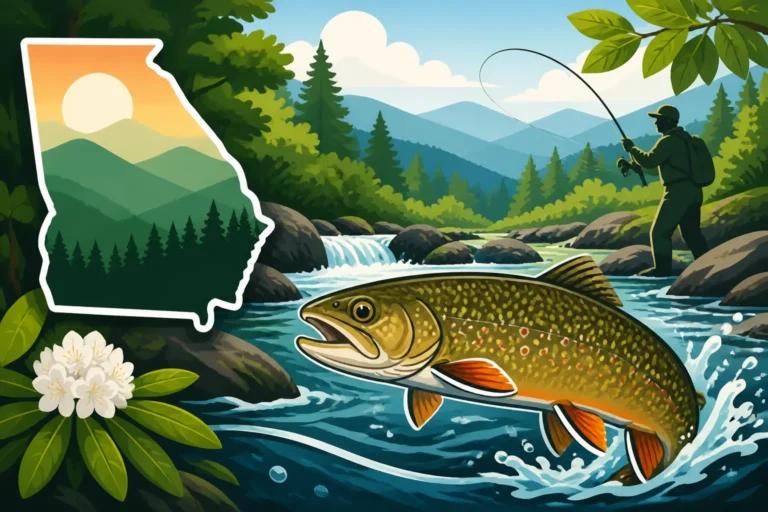
Best Lures for Brown Trout in Georgia
If you've spent any time chasing brown trout in Georgia, you know they can be incredibly elusive, often making you feel like you're playing a high-stakes game of hide-and-seek with a very smart, very picky fish. It's frustrating to cast your heart out only to be met with disinterest. This guide is here to cut through that frustration, diving deep into the lures that consistently fool these wily adversaries in our beautiful Georgia waters, and more importantly, why they work.
Understanding Brown Trout Behavior in Georgia
Before we even talk about specific lures, it’s absolutely essential to understand the mindset of a brown trout. These aren't your typical, eager-to-please stocked rainbows. Brown trout, especially the larger, wilder specimens found in Georgia's pristine mountain streams and river sections, are intelligent, opportunistic predators. They're often referred to as "trophy trout" for a reason – they've survived multiple encounters with anglers and developed a keen sense of what looks and feels real versus what's just passing by.
Habitat Preferences in Georgia
Brown trout thrive in cooler, well-oxygenated waters, which is why you'll primarily find them in the higher elevations of North Georgia. They're masters of camouflage and cover, preferring to hold in places where they can ambush prey without being seen. Think deep pools with undercut banks, fallen timber, large boulders that create current breaks, or shadowy riffles. The Chattahoochee River, particularly the stretches below Buford Dam, is renowned for its brown trout population, as are many of the smaller, colder feeder creeks. Understanding these hideouts is crucial because it dictates where and how you need to present your lure. If your lure isn't reaching their comfort zone, it's unlikely to get noticed.
They are also incredibly territorial, especially the bigger browns. They'll claim a prime feeding lie and defend it from smaller fish. This territorial aggression can sometimes be used to your advantage, as a well-presented lure might trigger a strike not out of hunger, but out of a need to remove an intruder from their space. Knowing that a large log or a dark seam in the current likely harbors a brown trout changes your casting strategy entirely. Instead of random casts, you're making targeted presentations, aiming to put your lure right into their living room.
Feeding Habits and Diet
Brown trout are voracious and opportunistic eaters, and their diet can vary significantly depending on the season and the specific waterway. While they'll happily munch on aquatic insects like nymphs and caddis larvae, especially when they're smaller, larger brown trout become increasingly piscivorous, meaning they prefer to eat smaller fish. Minnows, sculpins, darters, and even juvenile trout are all on the menu. This shift in diet is key to selecting the right lure – if you're trying to catch a true trophy brown, you're often better off presenting something that mimics a baitfish rather than a tiny insect.
Beyond fish, they'll also consume crayfish, worms, and even terrestrial insects like grasshoppers and beetles that fall into the water. This wide diet means you don't always need to "match the hatch" with exact precision, but rather offer a general profile of something tasty and easy to catch. They're not going to expend a lot of energy for a small meal if a bigger, easier one is available. That’s why bigger baits often entice bigger fish – it’s a better caloric payoff for their effort. For more details on what brown trout eat, you might find our guide on Brown Trout in Georgia: Where to Find Them helpful.
Classic Lures That Consistently Work for Brown Trout
When it comes to brown trout, sometimes the tried-and-true classics are classic for a reason. These lures have stood the test of time because they consistently trigger strikes from even the most cautious fish.
Spinners and Spoons
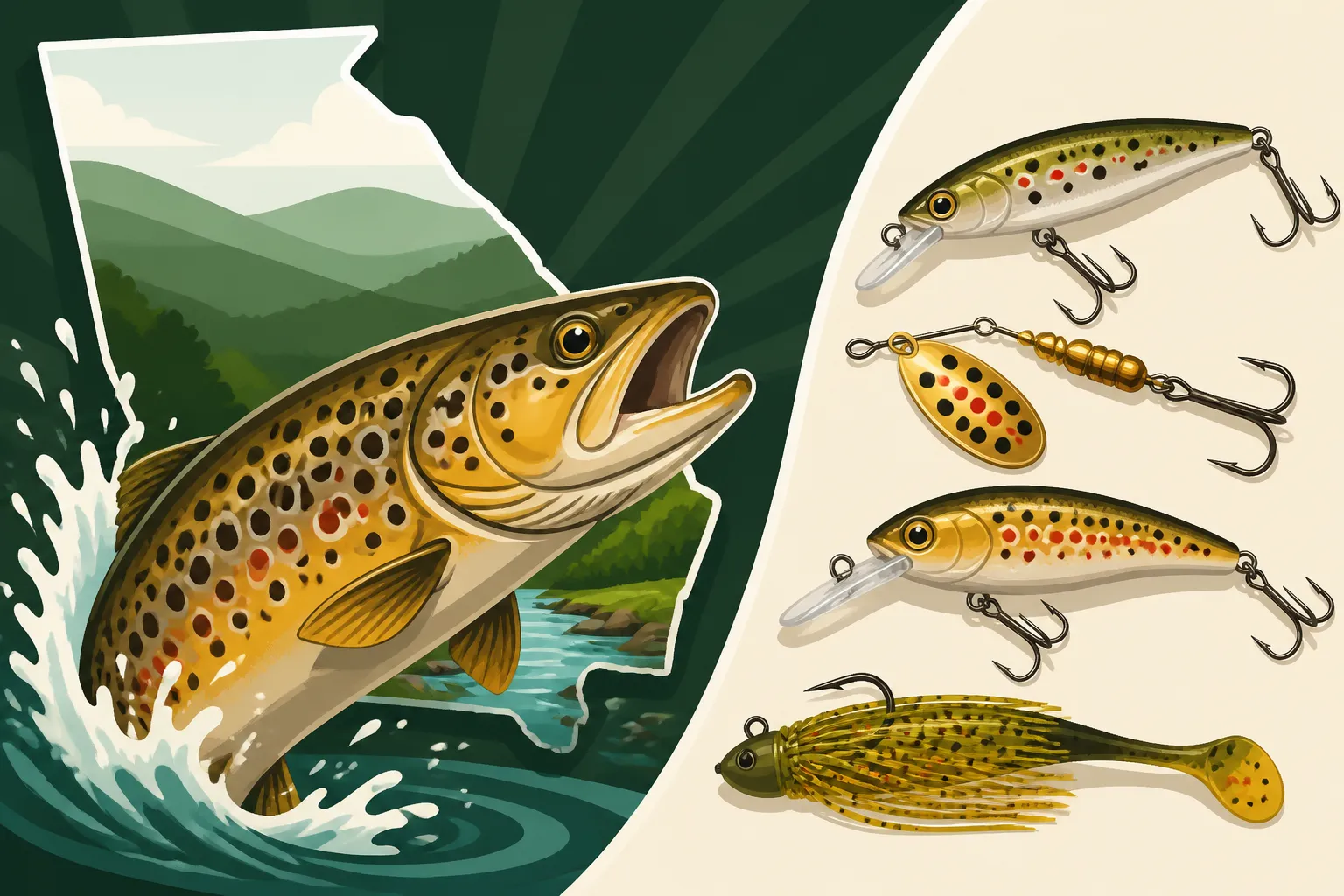
These are often the first lures many anglers reach for when targeting trout, and for good reason. Spinners, with their rotating blades, create flash and vibration that mimic a struggling baitfish or a buzzing insect. Brands like Rooster Tail, Mepps, and Panther Martin are staples in many Georgia trout anglers' tackle boxes. Sizes from 1/16 oz to 1/8 oz are usually perfect for our smaller mountain streams, while 1/4 oz can be effective in larger rivers like the Toccoa or the lower Chattahoochee. The key with spinners is often a steady retrieve, letting the blade do its work, but don't be afraid to add a twitch or two to make it erratic.
Spoons, on the other hand, have a wobbling, darting action that perfectly imitates an injured baitfish. The classic Little Cleo or Kastmaster spoons are incredibly effective. Their erratic flutter on the retrieve or during a fall can be irresistible to a brown trout lurking in a deep pool. Colors like gold, silver, or those with bright accents (think orange or red) are popular choices. The flash from both spinners and spoons can draw attention from a distance, making them excellent search baits when you’re not sure exactly where the fish are holding. You can usually find a wide variety of these tried-and-true options on Amazon, making it convenient to stock up.
Small Crankbaits and Jerkbaits
When brown trout are actively feeding on baitfish, small crankbaits and jerkbaits can be absolute killers. These lures are designed to imitate minnows and other forage fish with uncanny realism. Shallow-diving crankbaits that wobble tantalizingly through the water column are excellent for covering flats and shallower runs. Deeper-diving models can probe those significant pools and eddies where large browns often reside. Brands like Rapala (especially the Countdown series or the classic Floating Minnow), Berkley, and Rebel offer excellent options.
Jerkbaits, which are designed to be retrieved with a "twitch, twitch, pause" action, are another fantastic choice. The pause often causes the lure to suspend or slowly rise/fall, mimicking a stunned or dying baitfish – a sight that's almost impossible for a predatory brown trout to ignore. Focus on natural baitfish patterns like silver, brown, or gold, but don't shy away from brighter, more aggressive colors if the water is stained or the fish are particularly aggressive. Experiment with retrieve speeds and pause durations until you find what the fish prefer on a given day. Sometimes, a longer pause is all it takes to trigger that strike.
Soft Plastics and Jigs
Soft plastics, often rigged on a small jig head, offer incredible versatility and a natural presentation that can entice finicky brown trout. Small grub-style bodies, tiny minnow imitations, or even worm patterns can be deadly. The beauty of soft plastics is their subtle action and soft feel, which can convince a cautious brown trout to hold on longer after striking. Colors like white, chartreuse, natural browns, or black can be very effective, especially in clearer water or when the fish are wary. You can purchase multi-packs of these online at places like Amazon, giving you plenty of options to experiment with.
Jigs, whether dressed with bucktail, marabou, or a simple plastic body, are also fantastic. A small jig allowed to drift naturally with the current, occasionally bounced off the bottom, can imitate a sculpin, crayfish, or a large nymph. This technique, often called "tight-lining" or "Euro nymphing" with spin gear, keeps your lure in the strike zone longer and allows for a very stealthy presentation. Pay close attention to current seams and structure, and be ready for a subtle tap – brown trout often don't smash jigs but rather just "inhale" them gently. For further reading on various trout species, check out Trout Species Compared: Rainbow vs Brown vs Brook in Georgia.
Specialty Lures for Different Conditions
Sometimes, the standard lures just aren't cutting it. This is when you need to dig a little deeper into your tackle box and consider lures designed for specific, challenging conditions or particular feeding patterns.
Fly Fishing Imitations (for Spin Anglers)
Even if you're primarily a spin angler, understanding the world of fly fishing can greatly improve your lure selection for brown trout. Many successful spin lures are direct imitations of popular fly patterns. For example, small marabou jigs are essentially weighted streamers or woolly buggers. Micro-jigs, often 1/32 oz or smaller, can mimic nymphs or small emergers, especially when fished under a small float or indicator in slower water. The goal here is ultra-realism and subtlety.
Consider using lures that mimic the insect life prevalent in Georgia's trout streams. Small, dark-colored jigs can imitate stoneflies or caddis larvae. Flashy, weighted streamers in olive, black, or white can imitate larger baitfish that fly anglers would use. The key is to think about how a natural food source would behave in the water column and select a lure that replicates that action. This cross-pollination of techniques can open up a whole new world of success, particularly when the trout are being finicky.
Matching the Hatch (with Artificials)
While "matching the hatch" is a term most often associated with fly fishing, the principle applies to spin fishing for brown trout too. If you observe a particular insect hatch occurring – perhaps caddis flies buzzing around, or mayflies drifting on the surface – selecting a lure that roughly matches the size and color of those insects can be incredibly effective. For instance, if small black caddis are emerging, a tiny black grub or spinner might outperform a large, bright spoon.
This isn't about exact replicas, but rather about presenting a general profile that looks like what the fish are already keying in on. Pay attention to the water's surface, the banks, and even turn over a few rocks to see what aquatic invertebrates are present. Sometimes, brown trout will be selectively feeding, ignoring anything that doesn't closely resemble their current meal. This attention to detail can make all the difference, transforming a slow day into an unforgettable fishing experience. Understanding the nuances of trout fishing across species can also be enhanced by reading Rainbow Trout Fishing in North Georgia Streams.
Presentation and Technique: It's More Than Just the Lure
Having the "best" lure in the world means nothing if you don't present it properly. Brown trout are exceptionally sensitive to unnatural movements, vibrations, and colors. Your technique is often just as, if not more, important than the specific lure you tie on.
Reading the Water
Before you even make a cast, take a moment to "read the water." Look for those prime brown trout holding spots: deep pools, undercut banks, current seams where fast water meets slow, submerged logs, and large rocks. Brown trout are ambush predators, so they'll position themselves where they can dart out quickly to grab food while expending minimal energy. They also prefer areas that offer cover from predators (like eagles or osprey) and bright sunlight.
Your cast needs to be accurate, landing your lure quietly upstream of the suspected lie and allowing it to drift naturally into the strike zone. Avoid splashing or creating unnecessary disturbance, as this can spook wary browns. Think about how a natural food item would float or swim downstream – your lure should mimic that. Sometimes, a downstream presentation, where the lure swings through a run, can also be very effective, especially for fish looking upstream. For some prime locations to practice, consider Brown Trout Fishing on the Chattahoochee River.
Retrieves and Action
The way you retrieve your lure is paramount. A robotic, unchanging retrieve often signals "fake" to a clever brown trout. Instead, vary your retrieve speed, add twitches, pauses, and sudden accelerations. Imagine an injured minnow or a struggling insect – its movements would be erratic and unpredictable. That's the action you want to impart to your lure. With spinners, a slight flutter or sudden stop can make the blade stall and then kick back into action, often triggering a strike. With crankbaits, a "stop-and-go" retrieve or a sudden rip can provoke a reaction.
For soft plastics and jigs, the key is often a subtle, natural drift, occasionally bouncing off the bottom or ticking submerged structure. Let the current do some of the work, guiding your lure into likely holding spots. Be prepared for a strike at any point, but pay extra attention during pauses or when your lure changes direction. Many brown trout strikes occur when the lure looks most vulnerable.
Color and Size Considerations
Choosing the right color and size can sometimes feel like guesswork, but there are some general guidelines. In clear water, natural colors that mimic baitfish (silvers, browns, olives, muted greens) are often best. Brighter, more aggressive colors like chartreuse, orange, or fire tiger can be effective in stained or murky water, or on overcast days when fish are less wary and need more visual stimulation to locate your lure. The deeper the water, or the darker the conditions, the more contrast you might need.
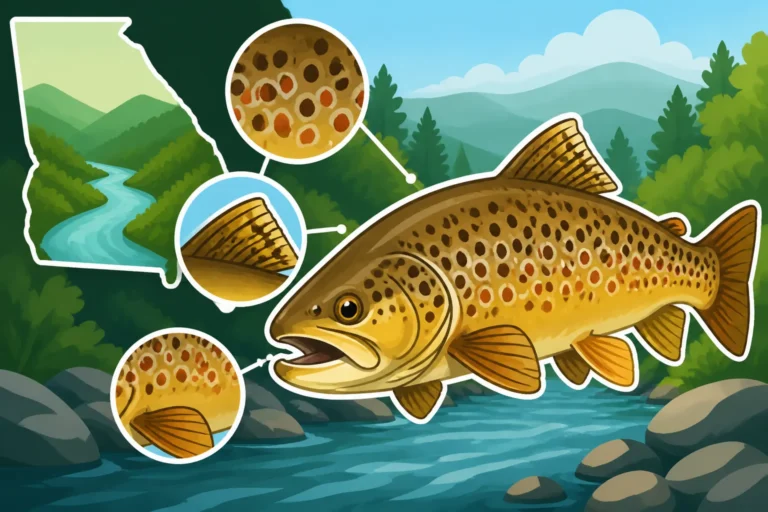
Size also matters. While big browns often prefer bigger meals, sometimes a smaller, more subtle presentation is what they're looking for, especially if they're feeding on small insects or if fishing pressure is high. It's always a good idea to have a range of sizes and colors in your tackle box. Start with a moderately sized, natural-colored lure, and if that doesn't produce, systematically try different sizes and colors until you find what the fish are responding to. Remember that factors like sunlight penetration and water clarity significantly influence visibility, so what works on a bright, sunny day might be completely ignored on a heavily overcast one. Having a diverse selection, easily acquired from retailers like Amazon, can really make a difference. How to Identify a Brown Trout will help you confirm your catches!
Here's a quick reference table for some common lure types and their best applications for brown trout in Georgia:
| Lure Type | Best Conditions | Key Action/Mimicry | Key Colors (General) | Pros | Cons |
|---|---|---|---|---|---|
| Spinners | General searching, clear to light-stained water | Flashing, vibrating baitfish or insect | Silver, gold, black, brown, chartreuse | Attracts from a distance, easy to fish | Can twist line if not using swivels, less subtle |
| Spoons | Deep pools, slow currents, open water | Injured baitfish, fluttering | Silver, gold, copper, white | Casts far, good for covering water | Less effective in heavy cover, can snag easily |
| Small Crankbaits | Baitfish-heavy waters, varying depths | Swimming minnow, erratic darting | Natural baitfish, fire tiger, perch | Realistic profile, dives to target depth | Can be expensive, limited by diving depth |
| Jerkbaits | Clear water, wary fish, cooler temperatures | Suspended/dying baitfish, "twitch-pause" | Natural baitfish, ghost patterns | Triggers reaction strikes during pauses | Requires active retrieval, less effective in murky water |
| Soft Plastics/Jigs | Finicky fish, bottom feeding, heavy cover | Nymphs, sculpins, crayfish, small baitfish | White, black, olive, brown, chartreuse | Very natural presentation, versatile | Can be hard to feel subtle bites, slow presentation |
Remember, brown trout fishing is an art form, a blend of science, patience, and intuition. No single lure is a magic bullet, but by understanding brown trout behavior and applying these proven lure choices and techniques, you'll dramatically increase your chances of landing that elusive Georgia brown. And if you're curious about different species, don't forget to check out Best Lures for Georgia Largemouth Bass.
Disclaimer
This article is for general informational purposes only and does not constitute professional advice. Laws, prices and regulations vary by location and change over time. Consult a qualified professional for guidance on your specific situation.