How to Identify a Brown Trout
It’s a common scenario: you’re out on a beautiful North Georgia trout stream, the water is crisp, and you hook into a gorgeous fish. As it comes closer, you start wondering, "Is that a rainbow? A brook trout? Or could it be one of those elusive brown trout?" Distinguishing between Georgia's various trout species can be a real head-scratcher, even for seasoned anglers. This guide is here to walk you through the tell-tale signs to confidently identify a brown trout, helping you understand your catch and adhere to local regulations.
The Distinctive Look of a Brown Trout
Brown trout, with their rich, earthy tones and unique spotting patterns, are truly a sight to behold in Georgia's waters. They possess a subtle beauty that often sets them apart, but you need to know what you're looking for beyond just a quick glance.
Body Shape and Coloration
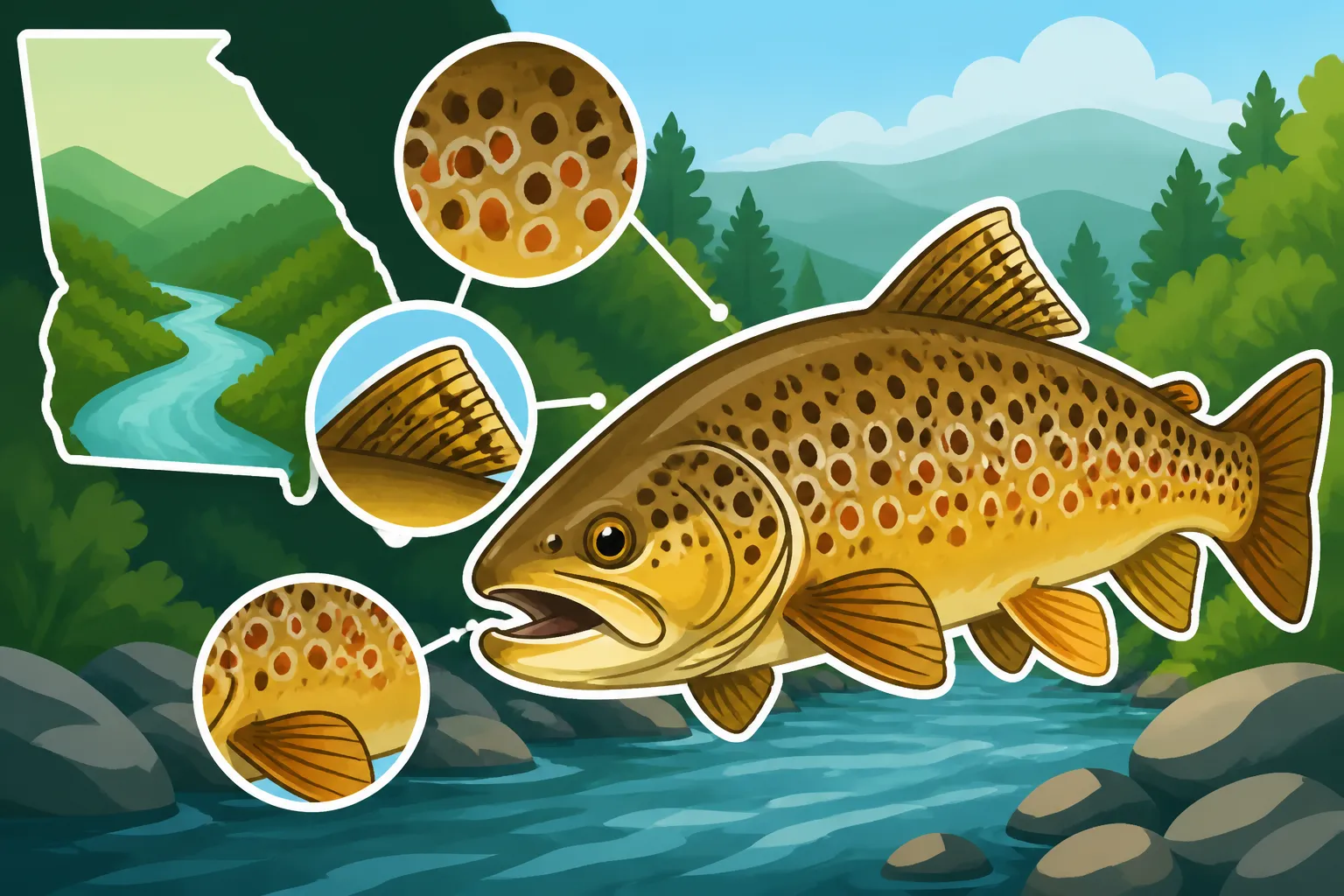
When you first lay eyes on a brown trout, you'll likely notice its rather robust, torpedo-like body. They tend to be more substantial and thicker-bodied than a typical rainbow trout of the same length, giving them a powerful, muscular appearance. Their base color can vary quite a bit, which is one of the reasons they can be tricky to identify. You might see shades ranging from a golden-brown or olive-brown on their backs, fading into a yellowish-tan or even silvery-bronze along their sides. The belly is usually a creamy white or pale yellow. This coloration serves as excellent camouflage in the tannin-stained rivers and rocky bottoms where they often thrive, helping them blend seamlessly into their surroundings. Don't be surprised if a fish from a darker, deeper pool looks significantly different from one caught in a sun-dappled, clear-water riffle.
Spotting Patterns: The Key Indicators
This is where the real identification detective work begins for brown trout. Their spots are their most distinguishing feature, and once you learn to recognize them, you'll find it much easier to tell them apart from their trout cousins.
Brown trout are characterized by two primary types of spots:
- Dark Spots: You'll see numerous dark, often black or very dark brown spots scattered across their back and extending down their sides. What's crucial about these dark spots is that many of them have a pale, almost silvery "halo" or ring around them. It's like someone took a dark stamp and then put a slightly larger, lighter ring around it. These spots typically extend onto the dorsal (top) fin and the adipose fin (the small, fleshy fin near the tail).
- Red or Orange Spots: This is perhaps the most defining characteristic. Interspersed among the dark spots, especially along the lateral line (the visible line running along the side of the fish) and above it, you'll find vibrant red or orange spots. Many of these red spots also have a distinct blue or purple halo around them. This combination of red/orange spots with blue halos is a dead giveaway for a brown trout and is rarely, if ever, seen on a rainbow or brook trout. These colorful spots are like little jewels scattered across their sides.
Unlike rainbow trout, brown trout usually have very few, if any, spots on their caudal (tail) fin. If you see a heavily spotted tail, it’s a good indication you might have a rainbow. The patterns can be quite diverse even among brown trout, but the presence of those haloed red/orange spots is the most reliable visual clue.
Mouth and Jaw Structure
Another helpful, though sometimes more subtle, identifying feature is the brown trout's mouth. They possess a relatively large mouth compared to other trout species. If you gently open its mouth, you'll notice it extends well past the back edge of the eye, especially in larger, mature adults. This is a common characteristic of predatory fish, and brown trout certainly fit that bill, often feeding on smaller fish, insects, and even crayfish. Their jaws are lined with sharp, conical teeth, which are more pronounced than those you might find on a typical rainbow trout. This larger mouth is a testament to their opportunistic feeding habits and can be another piece of the puzzle in proper identification.
Differentiating Brown Trout from Other Georgia Trout Species
The best way to confidently identify a brown trout is often by comparing its features directly to the other trout species you might encounter in Georgia's cold, clear waters. These subtle differences become much clearer when you know what specific attributes to look for in each species.
Brown Trout vs. Rainbow Trout
This is probably the most common identification challenge for anglers in Georgia. Both species are widely stocked and can be found in many of the same streams and reservoirs.
Here's how to tell them apart:
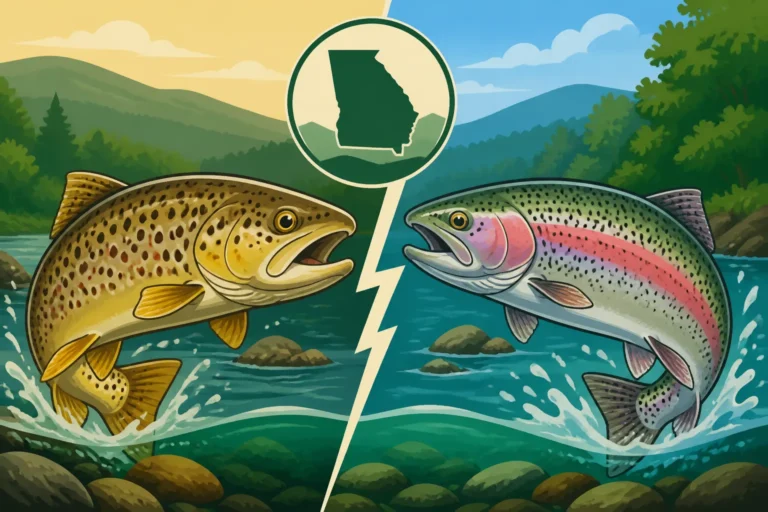
- Lateral Stripe: The most obvious difference for many is the rainbow trout's signature pink or reddish stripe running horizontally along its lateral line, from its gills to its tail. This stripe can be vibrant and iridescent, especially on spawning males. Brown trout, on the other hand, typically lack this prominent lateral stripe. While some brown trout might show a faint reddish hue during spawning, it’s never a distinct, iridescent band like on a rainbow.
- Spots: Rainbow trout generally have smaller, more numerous, and more uniformly black spots that are scattered over their back, sides, dorsal fin, and crucially, often extend noticeably onto their tail fin. These spots rarely have distinct halos. Brown trout, as we discussed, have those distinctive red or orange spots with blue halos, in addition to larger, darker spots often with pale halos. Their tail fins are usually free of heavy spotting.
- Mouth: While both have decent-sized mouths, a brown trout's mouth typically extends further back beyond the eye than a rainbow trout's.
- Overall Color: Rainbows tend to be more silvery or greenish-silver, especially on their sides, whereas browns have that characteristic golden-brown or olive-brown base color.
Understanding these distinctions is vital, especially since Brown Trout vs Rainbow Trout: How to Tell Them Apart is a question many anglers ponder, and sometimes regulations might differ slightly.
Brown Trout vs. Brook Trout
Brook trout are Georgia's only native trout species, though their range is limited primarily to the coldest, highest elevation headwater streams. They are quite distinct in appearance once you know what to look for.
Key differences include:
- Vermiculation: The most striking feature of a brook trout is the worm-like or labyrinthine pattern of dark, squiggly lines (known as vermiculation) on its back and dorsal fin. This pattern is utterly absent on brown trout, which have distinct spots.
- Spots: Brook trout also have spots, but they are different. They will have small, light-colored spots (often yellow or white) on a darker background, and sometimes vibrant red spots with distinct blue halos along their sides. While brown trout also have red spots with halos, the brook trout's spots are generally smaller, more numerous, and combined with the vermiculation, make them unique.
- Fin Edges: Look closely at the lower fins of a brook trout (pectoral, pelvic, and anal fins). They typically have distinctive white leading edges, often bordered by a thin black stripe. This "white-edged fin" look is a hallmark of the brook trout and is not present on brown trout.
- Tail: Brook trout usually have a slightly forked or square tail, whereas brown trout often have a more square or slightly emarginate (shallowly notched) tail.
The vibrant colors and unique patterns of a brook trout are truly special, making them often easier to differentiate once you've seen one. You can dive deeper into Brook Trout vs Rainbow Trout vs Brown Trout for a comprehensive comparison.
Factors Influencing Brown Trout Appearance
It's not always as simple as matching a picture from a field guide to the fish in your hand. Brown trout, like many fish, can show a surprising amount of variation in their appearance depending on a few key factors. This variability can sometimes make identification a bit more challenging, adding to the common frustrations of anglers.
Habitat and Diet
Imagine two brown trout: one living in a pristine, clear mountain stream with a gravel bottom, and another inhabiting a deeper, slower section of a river with dark, tannic-stained water and lots of submerged logs. Their appearances might differ dramatically!
- Water Clarity and Substrate: Fish from clear, rocky streams often display brighter, more vibrant colors, with their spots standing out sharply against a lighter background. The golden and olive tones might be more pronounced. Conversely, brown trout living in darker, murkier waters, or over dark substrates like mud or peat, tend to have a darker, more muted overall coloration. Their spots might not contrast as sharply, providing better camouflage for their environment.
- Diet: A brown trout's diet can also subtly influence its hue. If a fish is feasting heavily on crustaceans like crayfish, which contain carotenoids, its flesh might take on a pinkish or orangish tint, and its external colors could appear richer. A diet primarily of aquatic insects might result in a more standard coloration. The local food sources directly impact a fish's health and coloration, much like what we eat affects our own complexion.
Age and Spawning Season
A young, juvenile brown trout often looks quite different from a mature adult, and a fish in the throes of spawning is another creature entirely.
- Juveniles: Younger brown trout often exhibit prominent "parr marks" – dark, vertical bars along their sides. These marks are a form of camouflage for juvenile salmonids and typically fade as the fish matures, though faint ones can sometimes be seen on adult fish. Their spots might be smaller and less defined than those on older fish.
- Spawning Season: This is when brown trout truly put on a show. During the fall spawning season, especially the males, their colors intensify dramatically. The golden and bronze hues deepen, and the red and orange spots become incredibly vibrant. Males also develop a distinct "kype" – a hooked jaw – which is used in territorial displays and fighting for mates. Females, while not developing the kype, also exhibit enhanced colors, though usually less intensely than the males. After spawning, fish can look a bit worn out, and their colors may fade slightly, before gradually regaining their vibrancy.
Wild vs. Stocked Fish
Many of Georgia's trout streams are regularly stocked by the Department of Natural Resources (DNR) to supplement wild populations and provide ample fishing opportunities. This often includes brown trout.
- Wild Fish: Wild brown trout, born and raised in the stream, typically have perfectly formed fins and a lean, athletic physique. Their colors are often incredibly vivid and well-camouflaged for their specific environment. They tend to be warier and can be harder to catch, having honed their survival instincts. If you're lucky enough to catch a true wild brown, you'll immediately notice the difference in its pristine condition.
- Stocked Fish: Brown trout that have been raised in a hatchery and then released often show some tell-tale signs. Their fins, particularly the pectoral, pelvic, and caudal fins, might be worn, frayed, or stubby due to rubbing against concrete raceways or other fish in crowded conditions. Their overall coloration might appear somewhat paler or less vibrant compared to wild fish, as they haven't had to develop the same level of camouflage. They might also look a bit thicker-bodied and less streamlined, reflecting a diet of commercial pellets rather than varied natural forage. When you're trying to identify your catch, these physical cues can sometimes provide hints about its origin.
Why Accurate Identification Matters
Beyond the sheer satisfaction of knowing what you've caught, being able to accurately identify a brown trout (or any fish, for that matter) is crucial for responsible angling. It's not just about bragging rights; it's about respecting the fish, the environment, and the rules that protect them.
Following Regulations and Creel Limits
This is perhaps the most practical reason for accurate identification. Georgia's fishing regulations are designed to protect fish populations and ensure sustainable angling for everyone. These regulations often differ by species, and trout are a prime example. For instance, there might be specific size limits or daily creel limits (the number of fish you can keep) that apply to rainbow trout but are different for brown trout, or vice-versa. Georgia Fish Size and Creel Limits can vary considerably depending on the water body and the species.
Imagine you're fishing a stream with a 12-inch minimum size limit for brown trout, but a 10-inch limit for rainbow trout. If you mistakenly identify a 10.5-inch brown trout as a rainbow and keep it, you've inadvertently violated a regulation. Penalties for fishing violations can range from fines to loss of fishing privileges, which nobody wants. By knowing exactly what you've caught, you can confidently decide whether to keep it or release it, ensuring you're always on the right side of the law. This is particularly important for species like brook trout, which may have even more stringent regulations due to their native status. For specific stream rules, it’s always wise to check resources like Georgia Trout Stream Size Limits by Creek.
Conservation and Understanding Fish Behavior
Accurate identification also plays a vital role in conservation efforts and helps you become a more knowledgeable angler. Knowing the species allows you to:
- Practice Species-Specific Catch-and-Release: If you're targeting a certain species for sport, like a trophy brown trout, knowing how to identify it means you can quickly release smaller or undesired fish of that species, minimizing stress and injury. Different species also react differently to handling, so knowing what you have helps you apply the best How to Catch and Release Trout Properly techniques.
- Contribute to Data: While not directly for individual anglers, if you participate in surveys or report your catches (such as through fishing apps or to local biologists), accurate species identification helps wildlife agencies gather better data on population dynamics, health, and distribution. This data is invaluable for making informed management decisions.
- Enhance Your Fishing Strategy: Understanding which species you're catching in a particular spot helps you refine your tactics. If you're consistently catching brown trout, you might adjust your lure selection (perhaps considering some of the Best Lures for Brown Trout in Georgia) or fishing depth to better target them, knowing their preferred habits and forage. This deeper understanding enhances the entire fishing experience, turning a simple outing into a more informed and rewarding pursuit.
To help you keep track of the key differences, here's a quick comparison table:
| Feature | Brown Trout | Rainbow Trout | Brook Trout |
|---|---|---|---|
| Body Color | Golden-brown, olive-brown, yellowish-tan sides | Silvery, greenish-silver, lighter belly | Dark olive to black back, red/orange sides |
| Lateral Stripe | Absent or very faint reddish hue (spawning) | Prominent pink/red iridescent stripe | Absent |
| Back Pattern | Scattered dark spots, often with pale halos | Numerous small black spots | Worm-like (vermiculation) patterns |
| Side Spots | Dark spots with pale halos; red/orange spots with blue halos | Small black spots | Small light spots (yellow/white); red spots with blue halos |
| Tail Fin Spots | Few to no spots | Numerous small black spots (often heavily spotted) | Few to no spots, often slightly forked |
| Mouth Extent | Past the back edge of the eye (especially adults) | Typically not past the back edge of the eye | Not past the back edge of the eye |
| Lower Fins | Plain, no distinct white edges | Plain, no distinct white edges | White leading edges, often with black border |
Being able to correctly identify the beautiful brown trout adds another layer of enjoyment to your time on Georgia's waters. It allows you to appreciate the specific nuances of each fish and helps ensure you're fishing responsibly and sustainably. Happy angling out there, and may your next catch be a clearly identifiable brown!
Disclaimer
This article is for general informational purposes only and does not constitute professional advice. Laws, prices and regulations vary by location and change over time. Consult a qualified professional for guidance on your specific situation.