Best Bait for Rainbow Trout in Georgia
Finding the perfect bait for rainbow trout in Georgia can feel like a never-ending quest, especially when you're faced with streams ranging from crystal-clear mountain flows to heavily stocked community ponds. It's frustrating to stand there, watching other anglers pull in fish while your go-to bait gets ignored. This comprehensive guide is here to demystify the art of bait selection for rainbow trout, helping you understand what these beautiful fish are looking for in different Georgia waters and giving you the confidence to hook up more often.
Understanding Rainbow Trout Feeding Habits in Georgia
Before you even think about what to tie onto your line, it helps to understand a little bit about what makes rainbow trout tick. These fish aren't all the same, and their feeding habits can change drastically based on whether they're wild or stocked, and what the water conditions are like. It’s like trying to feed a house cat versus a bobcat – both are felines, but their diets and hunting instincts are worlds apart!
Stocked Trout vs. Wild Trout Preferences
This is perhaps the biggest factor in choosing the right bait for rainbow trout in Georgia. The truth is, a trout raised in a hatchery and one born and bred in a cold mountain stream are two very different creatures when it comes to their palate.
The Hatchery-Raised Appetites
Most of the rainbow trout you'll encounter in Georgia, especially in popular fishing destinations like the Chattahoochee River through Atlanta or many state park ponds, are hatchery-raised. These fish are essentially "pets" before they're released. They've spent their entire lives being fed a consistent diet of protein pellets. What does this mean for us anglers? It means they're often conditioned to recognize specific colors, scents, and textures that mimic their upbringing. They might be a bit less wary and more opportunistic, often hitting anything that looks or smells remotely like food. It's super frustrating to throw what worked last week at the hatchery-fed stream only to get ignored by wild trout later on, but knowing this difference is half the battle! You'll often find these fish congregated near their release points, and they’re generally easier to catch.
The Discerning Tastes of Wild Trout
Wild rainbow trout, on the other hand, are truly survivors. They've learned to forage for themselves, relying on a diverse natural diet of aquatic insects, small baitfish, and even terrestrial insects that fall into the water. These fish are typically much warier, more sensitive to unnatural presentations, and will often shun anything that doesn't look, feel, or act like their natural food sources. You'll find wild trout in pristine, clear mountain streams in North Georgia, where they have to work harder for every meal. Their instincts are finely tuned, and they've likely seen every artificial bait under the sun. This is where a subtle approach and a keen understanding of insect life cycles truly pay off.
Seasonal and Water Condition Influences
Beyond whether a trout is stocked or wild, the time of year and the prevailing water conditions play a massive role in what bait they'll respond to. Trout are cold-blooded creatures, and their metabolism, activity levels, and food sources are heavily dictated by water temperature and flow. For more on this, check out our guide on How Water Temperature Affects Fish Behavior.
Cold Water and Slower Metabolism
During the colder months of winter and early spring, rainbow trout, like many fish, become a bit sluggish. Their metabolism slows down, and they're not expending as much energy chasing down food. This means they often prefer a bait that's presented slowly, subtly, and directly in their strike zone. Think natural live baits like worms, or small, slow-moving jigs and flies. They're less likely to chase a fast-retrieved spinner, opting instead for an easy meal that drifts by. The trick here is patience and precision.
Warmer Water and Increased Activity
As water temperatures rise in late spring and summer, trout become more active. Their metabolism picks up, and they're more willing to chase down a meal. This is when you can often get away with faster retrieves, more aggressive lures, and even topwater presentations if insects are hatching. However, warmer water also means trout will seek out cooler, more oxygenated pockets of water, often deeper pools or shaded areas. During these times, terrestrial insects like grasshoppers and crickets become more prevalent, and trout will key in on them. Just be mindful of excessively warm water, which can stress trout; sometimes it's best to fish early or late in the day or target other species.
The Impact of Water Clarity
Water clarity is another huge factor. In crystal-clear mountain streams, where trout have excellent visibility, stealth is paramount. This means lighter lines, smaller baits, and more natural colors. Anything too flashy or unnatural will likely spook them. After a rain, when streams might be a bit murky or stained, trout tend to be less wary. This is when brighter colored baits, those with a strong scent, or lures that create more vibration can be incredibly effective, as they help the fish locate your offering in reduced visibility.
Top Baits for Stocked Rainbow Trout in Georgia
Alright, let's talk about the bread and butter for many Georgia trout anglers: the baits that consistently put stocked rainbows in the net. These are generally easier fish to catch, and with the right approach, you can have a very successful day on the water.
Scented Dough Baits and Pastes (e.g., PowerBait)
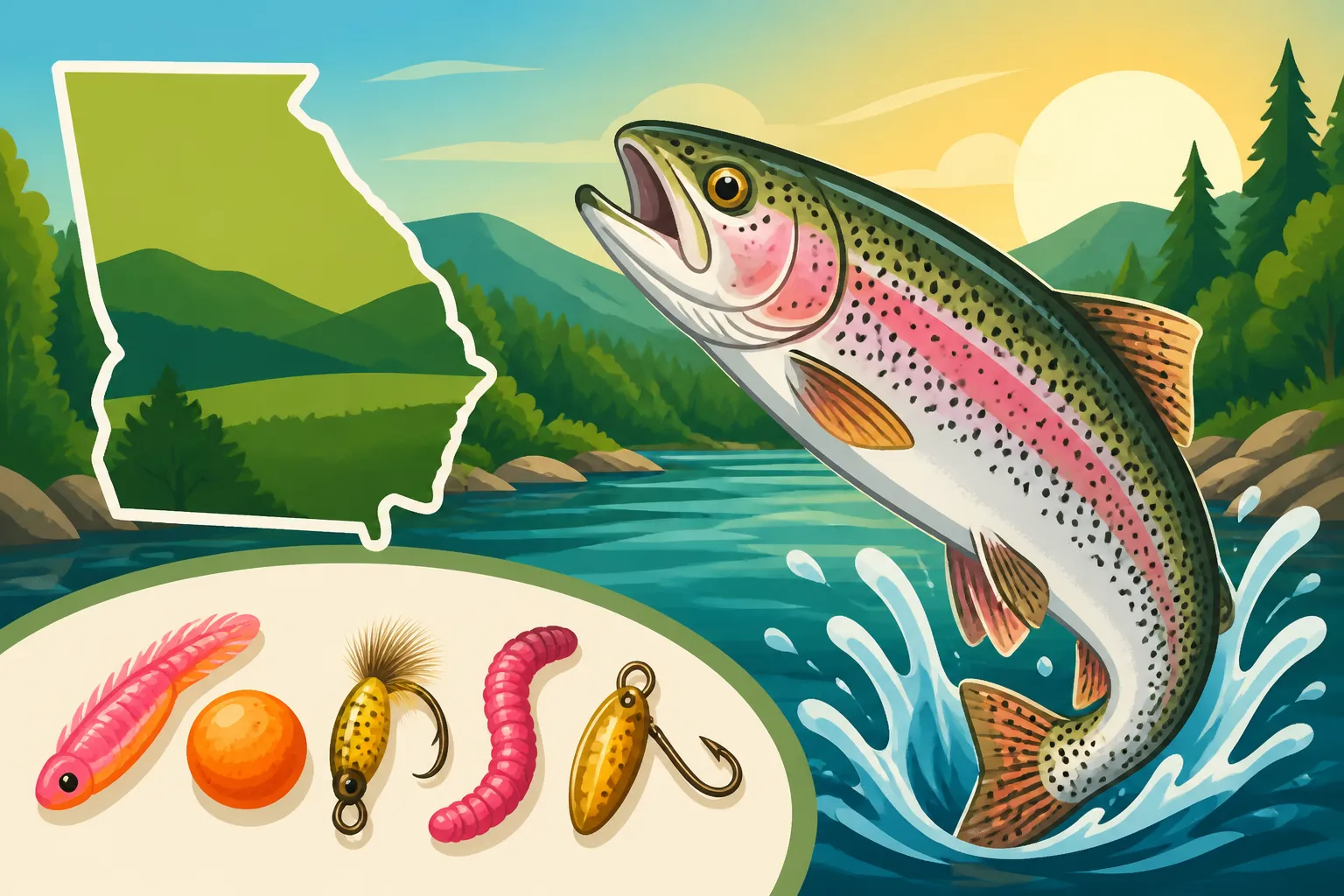
If there's one bait that almost screams "stocked trout," it's the scented dough baits. Brands like PowerBait are ubiquitous in tackle shops, and for good reason. They work incredibly well for hatchery-raised fish because they are designed to mimic the texture, color, and most importantly, the scent of the pellets these fish were fed in the hatchery.
Why They Work So Well
The magic of dough baits lies in their strong scent profile and buoyancy. The scent acts as a powerful attractant, drawing trout in from a distance, especially in still or slower-moving waters. Many varieties also float, which is a huge advantage. When rigged correctly with a small sinker, the bait will suspend just off the bottom, putting it right in the trout's feeding zone where they often cruise. This is particularly effective in lakes, ponds, or slow-moving stretches of rivers where the trout aren't actively fighting a current. You can even find PowerBait on Amazon if your local shop is out!
Colors, Flavors, and Rigging Secrets
Dough baits come in a dizzying array of colors and "flavors" – from classic chartreuse and neon pink to garlic, cheese, and even salmon egg scents. It's often a good idea to experiment with a few different colors until you find what the fish are keying in on that day. For rigging, a small treble hook (size 10-14) or a single salmon egg hook is ideal. Pinch off a small piece of dough bait and mold it completely around the hook, making sure the hook point is covered. The goal is to create a small, floating ball that looks appealing. Use a very light leader (2-4 lb fluorocarbon) and a small split shot or sliding sinker a foot or two above your hook to get the bait down to the desired depth. This technique can be a real game-changer in those stocked public fishing areas.
Live Baits: Worms and Corn
It might sound a bit old-school, but never underestimate the power of a simple worm or a can of corn! These natural baits have been catching fish for generations, and they remain incredibly effective for stocked rainbow trout.
The Timeless Appeal of Worms
Whether it's a juicy nightcrawler or a wiggling red worm, live worms are practically universal trout bait. They offer natural movement, a powerful scent, and are something that trout in both wild and stocked environments recognize as food. For stocked trout, a small piece of nightcrawler or a full red wiggler threaded onto a small hook (size 8-12) can be deadly. You can fish them on the bottom with a small sinker, or under a bobber in slower water. The natural wiggling action is often irresistible. Plus, worms are readily available at most bait shops, or you can even find them for sale on Amazon through various suppliers.
Canned Corn: A Hatchery Trout's Delight
This one always surprises beginners, but canned whole kernel corn is an absolute staple for stocked trout. Why? Because the pellets fed to hatchery trout often resemble corn kernels in size and color, and the sweet scent of corn is also very attractive. It's a cheap, easy-to-use bait that can be incredibly effective, especially in heavily pressured waters where trout might be tired of artificial offerings. Rigging is simple: place two or three kernels on a small salmon egg hook (size 12-16), making sure the hook point is exposed. Fish it similarly to dough bait, either on the bottom or under a bobber. It's especially effective in smaller, community ponds or sections of rivers that see frequent stockings.
Small Artificial Lures and Jigs
When trout are a bit more active, or if you want to cover more water, small artificial lures and jigs can be incredibly effective for stocked rainbows. They offer flash, vibration, and an erratic action that can trigger a strike. You can find many of these great options at your local sporting goods store or easily browse a huge selection on Amazon. If you're looking for more general lure advice, check out Best Lures for Stocked Trout.
In-Line Spinners
In-line spinners like Mepps, Panther Martins, and Rooster Tails are classic trout lures. Their spinning blade creates flash and vibration that fish can detect from a distance, mimicking a fleeing baitfish or a struggling insect. For stocked rainbows, sizes 0 to 2 are usually best. Silver, gold, black, and white are all excellent starting colors. Cast them upstream and retrieve slowly, just fast enough to get the blade spinning, allowing the current to help with the presentation. This is a fantastic way to fish larger pools or runs in stocked rivers.
Small Spoons and Micro Jigs
Small casting spoons, often in sizes from 1/16 to 1/8 ounce, also work wonders. Their wobbling action and flash can imitate a wounded baitfish, and they can be cast a good distance. Gold, silver, and fire tiger patterns are often productive. Another effective option, especially when fish are finicky or water is cold, are micro jigs. These tiny jigs (often 1/32 or 1/64 ounce) are usually tipped with a small plastic grub, tube, or even a piece of scented soft plastic like Berkley Gulp! maggots or minnows. Fished under a small bobber or slowly twitched along the bottom, their subtle action can coax bites from hesitant trout.
Effective Baits for Wild Rainbow Trout in Georgia's Streams
Now, for the challenge! Targeting wild rainbow trout in Georgia's pristine mountain streams requires a different mindset. These fish are often more discerning, and your bait selection needs to be much more aligned with what they naturally eat. Patience, stealth, and a keen eye for nature are your best friends here. For general trout fishing in these areas, our Rainbow Trout Fishing in North Georgia Streams guide can offer more insights.
Natural Live Baits
Even when targeting wild trout, natural live baits can be incredibly effective, especially if you match what's found in the stream. The key here is presenting them as naturally as possible, letting them drift with the current.
Aquatic Insects and Small Worms
If you're truly dedicated, turning over a few rocks in the stream can reveal what the trout are actively feeding on. Finding natural stonefly nymphs, caddis larvae, or hellgrammites and rigging them on a tiny hook can be an absolute goldmine. These are the trout's natural diet, and they will rarely refuse them. More commonly, a small garden worm or a red wiggler, hooked once through the very tip, can be deadly. The goal is to let it drift naturally downstream without any added weight or with just a tiny split shot, mimicking a worm that's fallen into the water. This "drift fishing" technique is paramount for success with live baits in moving water.
Small Minnows for Trophy Trout
In larger wild trout streams or deeper pools, especially if you're targeting bigger, more aggressive wild rainbows, small live minnows can be incredibly effective. Shiners, dace, or other local baitfish, hooked lightly through the back or lips, and allowed to drift or swim naturally can entice a predatory strike. You'll need a slightly heavier setup for this, but the reward of a larger wild trout is often worth it. Just be sure to check local regulations on using live baitfish, as some streams have restrictions.
Fly Fishing: Emulating Natural Insects
For many, fly fishing is the quintessential way to target wild rainbow trout. It's an art form that focuses on perfectly imitating the insects (and other food sources) that make up a wild trout's diet. It requires a different set of skills and gear, but the reward is immense. If you're curious to start, our How to Fly Fish for Trout as a Beginner guide is a great place to begin.
Dry Flies: Surface Action Thrills
When trout are actively feeding on insects hatching and floating on the surface – an event known as "the hatch" – dry flies are your go-to. These flies are designed to float and accurately imitate adult mayflies, caddisflies, stoneflies, or even terrestrial insects like grasshoppers and ants that have fallen into the water. The thrill of watching a wild trout rise and sip your perfectly presented dry fly is truly something special. Matching the specific insect species and size currently hatching is key to success.
Nymphs: The Subsurface Workhorses
The vast majority of a trout's diet consists of aquatic insects in their larval or pupal stages, which live beneath the water's surface. Nymphs are flies designed to imitate these subsurface insects. Patterns like the Pheasant Tail, Hare's Ear, Prince Nymph, and Squirmy Wormy are incredibly effective. Nymphs are typically fished weighted, either with beads built into the fly or with added split shot, to get them down to the depth where trout are feeding. A drag-free drift is crucial here, allowing the nymph to tumble naturally with the current, just like a real insect. This often accounts for the most consistent catches of wild trout.
Streamers: For Aggressive Predators
Streamers are larger, often flashier flies designed to imitate baitfish, leeches, or larger aquatic invertebrates. When wild trout are feeling aggressive or are targeting larger meals, a well-presented streamer can elicit a violent strike. Patterns like the Woolly Bugger in various colors (black, olive, brown) are incredibly versatile. Streamers are typically stripped or swung through the current, giving them a lifelike swimming motion that triggers a predatory response from hungry trout.
Ultra-Light Spin Fishing for Wild Trout
Not everyone is a fly fisher, and that's totally okay! Spin fishing with the right gear and techniques can be just as effective for wild trout. The key is to downsize your gear and use a stealthier approach. Our How to Spin Fish for Trout article dives deeper into this.
Smaller Spinners and Spoons
Similar to stocked trout, small in-line spinners and tiny casting spoons can work for wild trout, but you'll want to go even smaller. Think size 0 or 00 spinners, often in more subdued colors like dull silver, copper, or black, to avoid spooking wary fish. The same goes for spoons; tiny, subtle wobblers that imitate small minnows can be deadly. The retrieve should be slow and controlled, focusing on getting the lure into deep pools or undercut banks where wild trout often hide.
Micro Soft Plastics on Tiny Jig Heads
Modern ultra-light soft plastics, when rigged on tiny jig heads (1/32 to 1/64 ounce), can be fantastic for wild trout. These mimic small aquatic insects, worms, or even tiny minnows. Colors that imitate natural food, like olive, brown, black, or white, are usually best. The key is to fish them slowly, with subtle twitches, allowing them to drift naturally with the current or slowly bounce along the bottom. Berkley Gulp! baits designed for trout can also be very effective, as they combine natural action with a potent scent.
Tips for Maximizing Your Bait's Effectiveness
Choosing the right bait is a great start, but how you present it, and your overall approach, can make all the difference between a productive day and a frustrating one. Remember, fishing is as much about technique as it is about tackle.
Presentation is Key
You could have the perfect bait, but if you don't present it correctly, it might as well be a rock. Trout, especially wild ones, are incredibly sensitive to unnatural movements.
The Art of the Drag-Free Drift
This is paramount for both fly fishing with nymphs or dry flies, and for spin fishing with live bait or micro jigs in moving water. A "drag-free drift" means your bait or fly is moving at the exact same speed as the current, just like a natural piece of food. Any unnatural drag from your line will immediately tell the trout something is amiss, and they'll often ignore it. Learning to mend your line (flipping a loop of line upstream to straighten it out) is essential for achieving this in streams. Practice makes perfect here!
Casting Accuracy and Stealth
Putting your bait where the fish are is obvious, but often overlooked. Wild trout in particular hold in very specific spots – behind rocks, in seams of current, under cut banks, or in deep pools. Your cast needs to be accurate enough to drop your bait directly into these strike zones without spooking the fish. Also, remember that trout can see you! Wear subdued clothing, approach the water quietly, and keep a low profile. A shadow over the water can send them scattering.
Matching the Mood with Retrieval Speed
When using artificial lures, your retrieval speed is crucial. In cold water or when fish are lethargic, a slow, methodical retrieve is often best. Let the lure wobble or spin just enough to be enticing. When fish are active, a faster retrieve with more erratic twitches can trigger a reactionary strike. Always start slow and gradually increase your speed until you find what the fish prefer that day.
Experimentation and Observation
Sometimes, what worked yesterday won't work today. That's just fishing! The best anglers are those who are willing to adapt and learn.
Don't Be Afraid to Change It Up
If you're not getting bites, don't keep doing the same thing. Change your bait, change your color, change your retrieve speed, or change your depth. Often, a subtle adjustment is all it takes to unlock a bite. Carry a variety of baits and lures so you have options. It’s better to spend a few minutes re-tying than to waste an hour with a setup that simply isn’t producing.
Pay Attention to Nature's Clues
Observing your surroundings can give you invaluable hints. Are there insects hatching on the water? Then dry flies might be the ticket. Are minnows darting around? A small spinner or streamer could work. Has it rained recently, making the water a bit murky? Brighter, scent-heavy baits might be best. Even looking under rocks in a stream can tell you what kind of aquatic insects are present, helping you choose the right nymph. Knowing How to Read Water for Trout Fishing can significantly improve your observation skills.
Gear Considerations for Trout Fishing
Having the right bait is one thing, but pairing it with the right gear will elevate your success, particularly with wary trout. You don't need the most expensive equipment, but matching your tackle to the species and conditions is vital. You can find excellent options for all these items from various brands on Amazon.
Light Line for Stealth
Trout have excellent eyesight, especially in clear water. Using light monofilament or fluorocarbon line (2-6 lb test) is almost always a good idea. Fluorocarbon is nearly invisible underwater, making it a favorite for leaders. Lighter line also allows your bait to move more naturally. While heavy line might seem safer, it will drastically reduce your bites.
Ultra-Light Rod and Reel Combos
An ultra-light spinning rod (4.5-6 feet long) paired with a small, sensitive spinning reel (500-1000 size) is perfect for trout fishing. A sensitive rod tip helps you detect the subtle bites of trout, and the light action allows you to cast those small, light baits and lures effectively. A quality reel with a smooth drag is essential for fighting spirited trout on light line. If you're looking for more general rod and reel advice, see our Best Rods and Reels for Georgia Fishing guide.
Small Hooks for Subtle Presentations
For most trout baits, you'll want to use small, sharp hooks. Sizes 10-16 are common for worms, corn, or dough baits, while flies are typically much smaller. Using too large a hook will make your bait look unnatural and can deter a trout from biting. Always make sure your hook points are sharp, as trout mouths can be surprisingly tough.
| Bait Category | Specific Bait Examples | Target Trout Type | Key Advantage | Best Presentation |
|---|---|---|---|---|
| Scented Dough Baits | PowerBait (various colors/scents) | Stocked Rainbow Trout | Strong scent, buoyant, familiar | Still water, light sinker, floating off bottom |
| Live Baits | Nightcrawlers, Red Wigglers, Canned Corn | Stocked & Wild Trout | Natural scent, movement, universal | Drift fishing (worms), still water (corn) |
| Small Artificials | In-line Spinners, Small Spoons, Micro Jigs | Stocked & Active Wild Trout | Flash, vibration, covers water | Cast and retrieve, slow twitch |
| Fly Fishing Baits | Dry Flies (Mayfly, Caddis), Nymphs (Pheasant Tail), Streamers (Woolly Bugger) | Wild Rainbow Trout | Highly natural, specific imitation | Drag-free drift (dry/nymph), strip/swing (streamer) |
Remember, trout fishing in Georgia is an incredibly rewarding pursuit, offering everything from easy-to-catch stocked fish for beginners to challenging wild trout for experienced anglers. By understanding their habits and selecting the right bait, you'll be well on your way to a successful day on the water. And don't forget the importance of proper handling and How to Catch and Release Trout Properly to ensure these beautiful fish thrive for generations to come.
Disclaimer
This article is for general informational purposes only and does not constitute professional advice. Laws, prices and regulations vary by location and change over time. Consult a qualified professional for guidance on your specific situation.