How to Identify a Rainbow Trout
It's incredibly exciting to land a trout in Georgia's beautiful mountain streams, but let's be honest, sometimes it feels like you need a biology degree to figure out exactly what kind of trout you've just caught! With rainbows, browns, and brookies all swimming in the same waters, it can be tricky to tell them apart, especially when they're feisty and wet. This guide is going to walk you through all the tell-tale signs to help you confidently identify a Rainbow Trout the next time you reel one in.
The Distinctive Markings of a Rainbow Trout
When you pull a fish from the cool waters of a Georgia stream, the first thing that often catches your eye is its coloring and patterning. Rainbow trout, while they can vary a bit depending on their environment and whether they are wild or stocked, generally have some very clear characteristics that set them apart. Understanding these features is your first step to becoming a seasoned trout identifier.
The Iconic Rainbow Band and Spotting Pattern
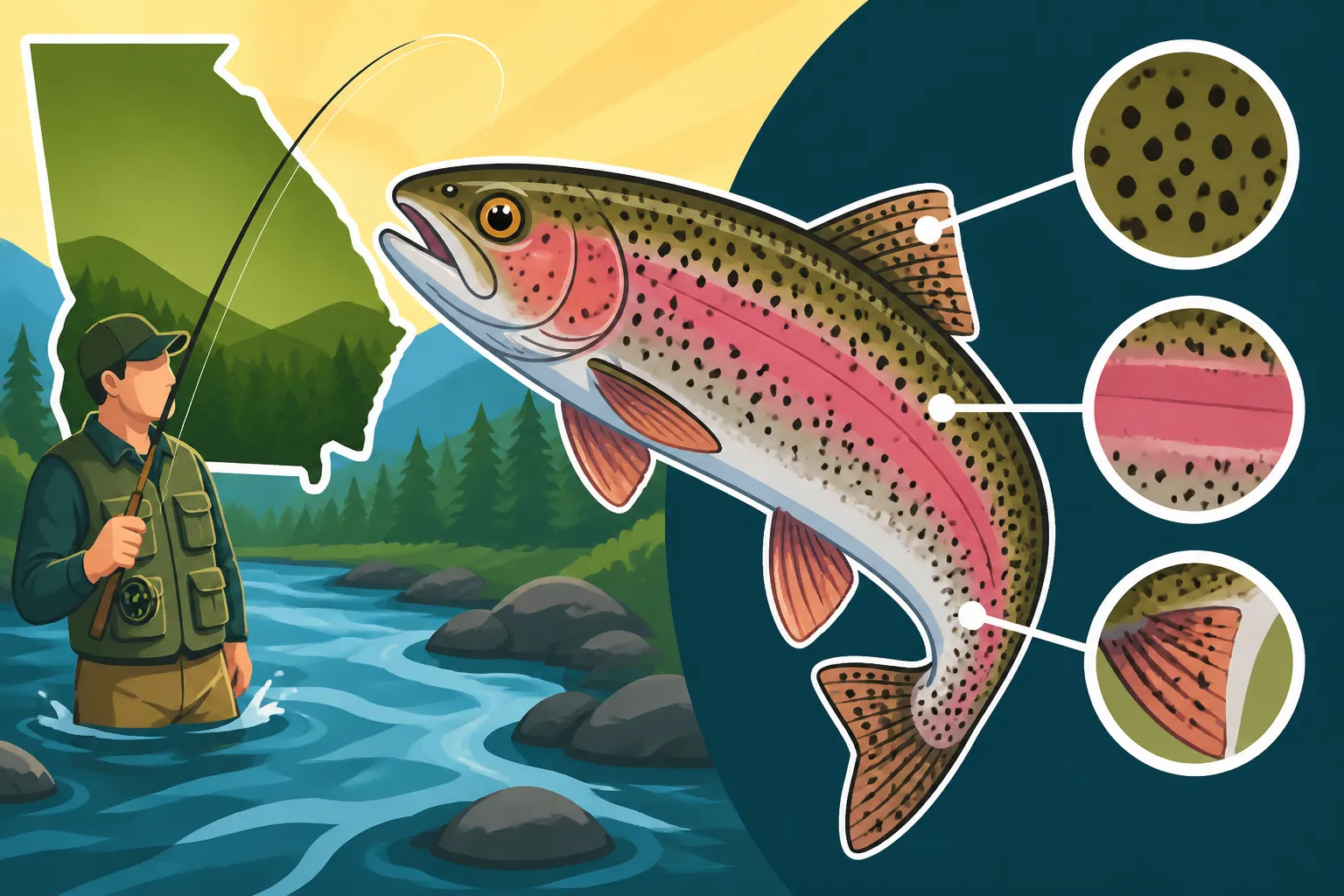
The most famous characteristic of a rainbow trout, and the one that gives them their name, is often a prominent, iridescent pink or red band running horizontally along their sides, from gill plate to tail. This band can be super vibrant on some fish, especially males during spawning season, almost glowing in certain light. On others, particularly those from more muted, clear-water environments or younger fish, it might be more subtle, appearing as a faint blush or a slightly darker stripe. Don't let a less vibrant stripe throw you off, though!
Beyond the band, look closely at their body for a profusion of small, dark spots. These spots are usually concentrated on the back, dorsal fin, and caudal (tail) fin, but you'll often find them scattered across their sides, even within that distinctive rainbow band. These spots are generally round or oval and fairly uniform in size, though they can vary. Unlike some other trout species, the spots on a rainbow trout are usually pretty consistent in their dark pigmentation. Sometimes, if you're fishing a highly pressured stream or a freshly stocked area, the fish might be a little beaten up, and their colors might be less vivid, but those spots will almost always be there. It's truly amazing how a fish can blend in with its surroundings and then explode with color once it’s in your hand. For more on where these beautiful fish are found, check out Rainbow Trout Fishing in North Georgia Streams.
Fin Characteristics and Body Shape
Now, let's talk fins and overall body structure. Rainbow trout typically have a relatively streamlined, torpedo-shaped body, which helps them navigate swiftly through currents. They're built for speed and agility. Their caudal fin (tail) is usually broad and slightly forked, and you'll notice those dark spots extend well into it. This spotted tail is a pretty reliable indicator.
Their dorsal fin (the one on their back) is generally taller and more pointed than, say, a brown trout's, and it's also covered in those same dark spots. The adipose fin, that small, fleshy fin located between the dorsal and caudal fins, is usually present on a rainbow trout and doesn't have any distinctive coloring on its edge like some other species. Their pectoral (chest) and pelvic (belly) fins are typically clear or slightly amber-colored, without the stark white leading edges you might see on a brook trout. When you're handling the fish, feel its scales. Rainbows tend to have smaller, smoother scales compared to some other fish, giving them a sleek feel. Just be gentle when you're examining them, especially if you plan to release them!
Comparing Rainbow Trout to Other Georgia Trout Species
One of the biggest challenges in trout identification in Georgia comes when you’re trying to distinguish between the three main trout species: rainbow, brown, and brook trout. They often inhabit the same waters, especially in our cooler, higher-elevation streams. Knowing the subtle (and sometimes not so subtle) differences is key.
Rainbow Trout vs. Brown Trout
Brown trout are another popular species found in Georgia, often growing to larger sizes than rainbows in many waters. While both have spots, the character of those spots is a major giveaway. Brown trout typically have a mix of dark spots and reddish-orange or yellow spots, often with pale halos around them. Think of them as looking like little bullseyes. These spots are usually less uniformly scattered than a rainbow's and often don't extend as profusely onto the tail fin. The tail of a brown trout is usually square or slightly emarginate (meaning just a tiny bit indented), and it typically has few to no spots, or at least far fewer than a rainbow's tail.
The overall coloration of a brown trout is also different. They often have a more olive, golden-brown, or even yellowish hue, especially on their sides and belly, which truly lives up to their name. Rainbows, as we discussed, have that more silvery, iridescent, or bluish-green sheen, particularly on their upper body. The presence of that bold, reddish lateral stripe is almost exclusively a rainbow trout feature, whereas brown trout do not have this distinct band. Looking at a good visual guide, perhaps one you carry with you or can reference on your phone (there are many great ones available on Amazon), really helps drive home these differences. When considering which lures to use, it's good to remember that these different species might respond to different presentations; you might want to look into Best Bait for Rainbow Trout in Georgia or Best Lures for Brown Trout in Georgia.
Rainbow Trout vs. Brook Trout
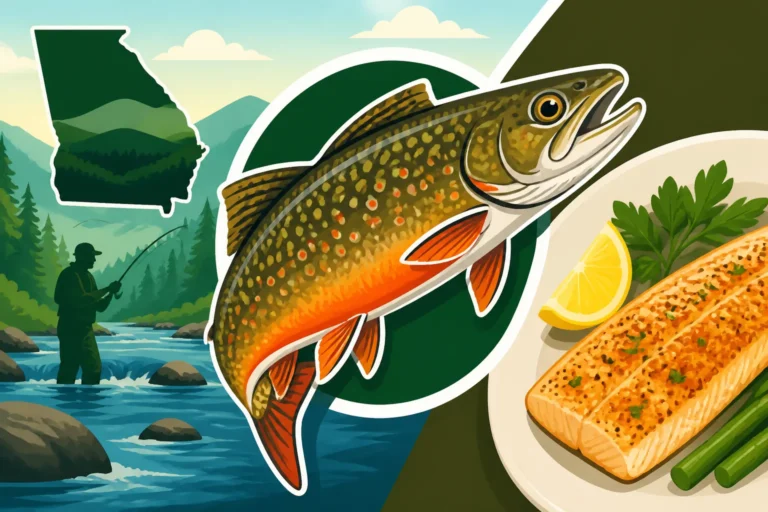
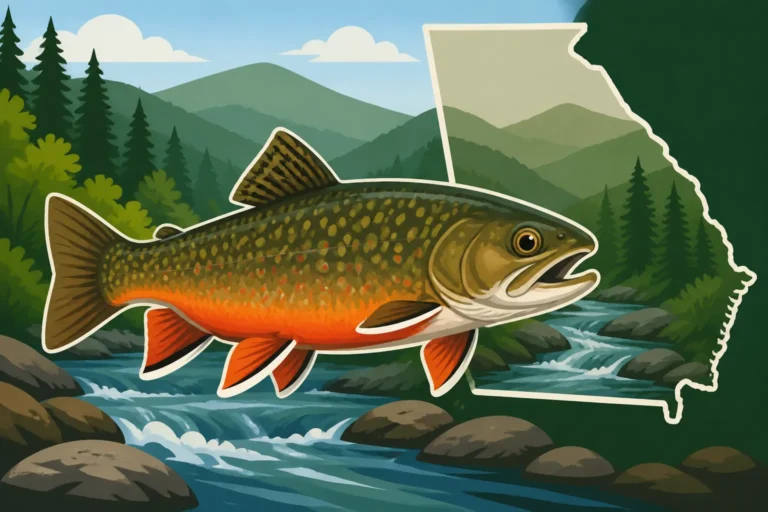
Brook trout are Georgia's only native trout species, and they are truly a treasure to behold. Identifying them is usually a bit easier than distinguishing between rainbows and browns because their markings are quite distinct. The most striking feature of a brook trout is its unique "worm-like" or vermiculation pattern on its back and dorsal fin. These squiggly, light-colored lines on a darker background are unmistakable and look almost like a maze. You won't find this pattern on a rainbow trout.
Furthermore, brook trout have bright, vibrant spots that are typically red with blue halos, scattered on their sides. This "red spot with blue halo" is a classic brook trout marker, completely different from the solid dark spots of a rainbow. But perhaps the most iconic feature, especially on their lower fins (pectoral, pelvic, and anal), is their stark white leading edges, often followed by a black stripe, and then the rest of the fin being reddish-orange. This "white-black-red" fin pattern is a dead giveaway for a brook trout and is not present on rainbow trout. Rainbows might have clear or amber fins, but never that sharp white edge. Brook trout also tend to be smaller, generally, in Georgia's headwater streams, and have a more robust, almost stockier body shape than the sleek rainbow. If you're curious about all the trout species in Georgia, Brook Trout vs Rainbow Trout vs Brown Trout dives deep into their differences.
Here's a quick comparison table to help you keep things straight:
| Feature | Rainbow Trout | Brown Trout | Brook Trout |
|---|---|---|---|
| Lateral Band | Often prominent pink/red iridescent stripe | Absent | Absent |
| Body Spots | Small, uniformly dark spots, often on body & tail | Dark and reddish/yellow spots, often with halos; few on tail | Red spots with blue halos; worm-like pattern on back |
| Tail Fin | Broad, slightly forked; many dark spots | Square or slightly emarginate; few to no spots | Square or slightly forked; no spots |
| Dorsal Fin | Spotted with dark spots, taller | Few dark spots, more rounded | Worm-like pattern (vermiculation) |
| Lower Fins | Clear or amber | Clear, yellow, or slightly brown | White leading edge, followed by black stripe |
| Overall Color | Silvery, iridescent, bluish-green back | Golden-brown, olive, yellowish | Dark olive-green back, speckled sides, vibrant belly |
Habitat and Behavior Clues for Identification
Beyond physical appearance, where you catch a fish and how it behaves can also give you some excellent hints about whether it’s a rainbow trout. While not foolproof, these contextual clues can greatly assist your identification efforts, especially when a fish's coloring might be a bit ambiguous.
Where Rainbows Prefer to Live in Georgia
Rainbow trout in Georgia are most commonly found in the cooler, well-oxygenated streams of North Georgia. Many of the rainbows you encounter are stocked fish, released by the Georgia Department of Natural Resources (DNR) into various creeks, rivers, and even some public fishing areas. Streams like the Toccoa River or sections of the Chattahoochee River are prime examples of places where you'll frequently find stocked rainbows. You can often predict where they might be by checking the Georgia Trout Stocking Schedule Explained. These stocked fish tend to be a bit more uniform in appearance due to their hatchery origins, often exhibiting brighter colors and more pronounced spotting.
Wild rainbow trout, which are descendants of stocked fish that have successfully reproduced, can also be found in some of our pristine, colder headwater streams. These wild fish often show more vibrant, deeper colors and can be harder fighting. They prefer areas with good current, plenty of rocks, and submerged logs for cover. They're less likely to be found in slow, warm, or muddy waters. If you're fishing a well-known stocked trout stream and you catch a trout, there's a very high probability it's a rainbow. Knowing the typical habitats is a huge part of being a successful angler, and understanding Stocked vs Wild Rainbow Trout in Georgia helps explain these differences.
Behavioral Traits That Hint at a Rainbow
When you hook a rainbow trout, their fight can also be a good clue. Rainbows are known for their acrobatic jumps and strong runs once hooked. They often leap clear out of the water, shaking their head vigorously, trying to throw the hook. If the fish you've just hooked is putting on a spectacular aerial show, darting back and forth with surprising speed, chances are it's a rainbow. Brown trout can also be strong fighters, but they tend to be more bulldog-like, staying deeper and trying to rub the line on rocks or logs. Brook trout, being generally smaller, put up a spirited but usually less explosive fight.
In terms of feeding habits, rainbow trout are often opportunistic feeders, willing to strike a wide variety of baits and lures. They'll readily take artificial lures like spinners and spoons, as well as natural baits like worms, corn, or powerbait. This makes them a favorite target for many anglers, especially beginners. They tend to be a bit less wary than wild brown trout, which can sometimes be incredibly selective about what they'll eat. So, if your lure selection is getting consistent hits, and the fish is putting on a show, you're likely dealing with a rainbow. For more specific location tips, you can explore Where to Catch Rainbow Trout on the Toccoa River.
Other Considerations for Certain Identification
Sometimes, even with all the best identification tips, a fish can still leave you scratching your head. Environmental factors, genetics, and even the age of the fish can influence its appearance. It's important to remember that nature doesn't always follow strict rules, but there are ways to approach these tricky situations.
Size and Age Factors in Identification
The size and age of a trout can significantly affect its coloration and spot intensity. Younger rainbow trout, often called "fingerlings" or "parr" (though parr marks are more common on very young fish across species), might not have that vibrant lateral stripe yet. Their spots might also be fainter or less defined. As they grow and mature, their colors deepen, and the iconic rainbow band typically becomes much more pronounced. Larger, older rainbow trout, especially wild ones, can develop incredibly rich and deep hues.
Conversely, fish that have been in a hatchery environment and recently stocked might sometimes appear paler or have less distinct markings due to their controlled diet and environment. After some time in the wild, feeding on natural forage and adapting to their new surroundings, their colors will usually intensify. Therefore, don't rely solely on the intensity of the colors or spots. Always try to consider the full picture of markings, fin characteristics, and body shape, rather than just one feature. Rainbow Trout Size and Growth in Mountain Streams talks more about how big these fish can get.
When in Doubt: Consult Resources or Release
If you're still truly stumped after considering all the characteristics and consulting your handy guides, don't fret! It happens to the best of us. The most important thing is to make an educated guess, and if you're unsure about specific regulations for a particular species, especially if there are size or creel limits that vary by species, it’s always best to practice catch and release. Releasing the fish unharmed ensures it can continue to thrive and potentially grow larger.
Consider carrying a waterproof field guide or a laminated card with pictures of Georgia's trout species. You can find excellent options for these on Amazon, often designed specifically for regional fish identification. Some anglers even use fishing apps on their smartphones that have identification features, though always be mindful of water and phone safety! If you're planning to keep fish for dinner, make absolutely sure you're within legal limits for the specific species you've caught. Nobody wants to face a penalty for misidentification. Remember that proper handling techniques are crucial for catch and release, regardless of species.
So, the next time you feel that exciting tug on your line in a North Georgia stream, you'll be well-equipped to make a confident identification. Happy fishing!
Disclaimer
This article is for general informational purposes only and does not constitute professional advice. Laws, prices and regulations vary by location and change over time. Consult a qualified professional for guidance on your specific situation.