Largemouth Bass Bait: Worms, Crankbaits, and Topwater Lures
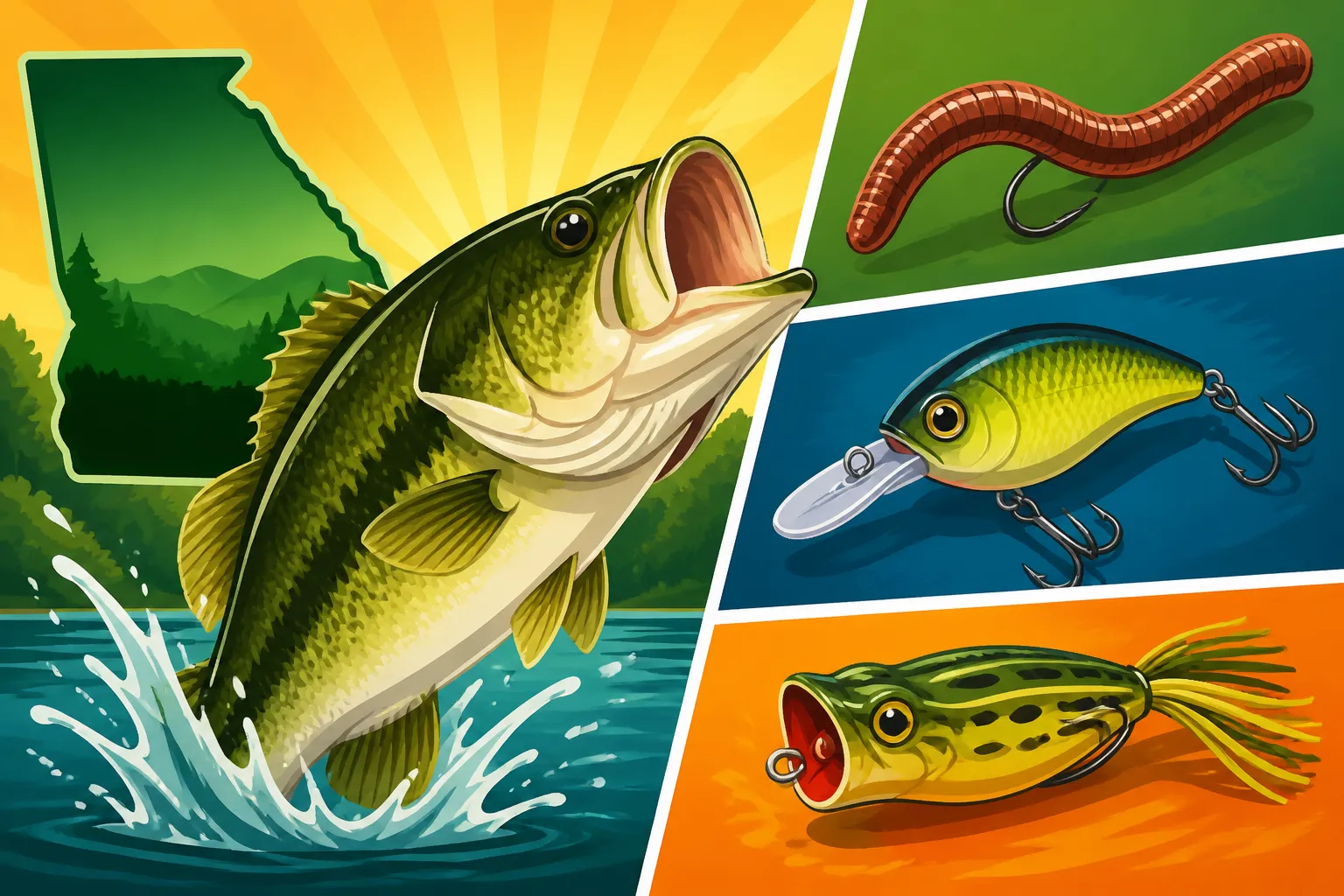
There's nothing quite like the thrill of a largemouth bass strike in Georgia, but knowing which bait to tie on can feel like a puzzle with a thousand pieces. Many anglers, seasoned pros and beginners alike, often grapple with picking the perfect lure for the conditions, leading to frustration and missed opportunities. This comprehensive guide will untangle that confusion, diving deep into three of the most effective bait categories for Georgia largemouth bass: versatile worms, aggressive crankbaits, and exciting topwater lures, providing you with the knowledge to make confident choices and increase your catches.
The Versatility of Worms for Georgia Largemouth Bass
If there's one bait that every Georgia bass angler should have in their arsenal, it's the soft plastic worm. These aren't just for finesse fishing; with the right rigging, worms can be incredibly versatile, mimicking a variety of natural prey items that largemouth bass find irresistible. From subtle presentations that tempt weary fish to powerful rigs that punch through heavy cover, soft plastic worms are a year-round staple.
Soft Plastic Worms: The Ultimate Finesse and Power Bait
Soft plastic worms come in an astonishing array of shapes, sizes, and colors, each designed for a specific purpose. You've got your traditional straight-tail worms, which offer a subtle, undulating action perfect for finicky fish. Then there are curly-tail worms, which produce more vibration and appeal to aggressive bass, especially in stained water. For punching through thick vegetation, consider a creature bait or a bulky ribbon-tail worm on a heavy Texas rig. The beauty of these baits lies in their ability to imitate everything from swimming baitfish to scurrying crawfish or even a slithering snake, making them incredibly effective in almost any situation you encounter across Georgia's diverse lakes and rivers.
When bass are playing hard to get, perhaps after a cold front or in highly pressured waters like parts of Lake Lanier, a finesse worm on a shaky head or a weightless wacky rig can be a game-changer. The slow, natural fall of these rigs often triggers bites from lethargic bass that might ignore more aggressive presentations. On the flip side, when you're targeting bass buried deep in hydrilla beds or underneath thick mats of lily pads, a heavy-weighted Texas Rigged worm or creature bait can be precisely what you need to penetrate the cover and get to where the big fish live. You can find a huge variety of these soft plastics and the necessary hooks and weights on Amazon, ensuring you have options for every scenario.
Rigging Techniques for Different Scenarios
The way you rig your soft plastic worm is just as important as the worm itself. The Texas Rig is perhaps the most common and versatile, making your worm weedless and ideal for fishing in and around cover. To rig it, simply thread the worm onto a worm hook, burying the hook point back into the plastic body. You can add a bullet weight in front of the worm for faster sinking and punching through cover, or fish it weightless for a slow, seductive fall. This rig is fantastic when you're flipping into brush piles or fishing along rocky ledges, allowing you to work the bait through snags with minimal hang-ups.
Another incredibly effective technique, especially for suspended fish or when you want a more horizontal presentation, is the Carolina Rig. This setup involves a heavier sinker and a swivel, with your soft plastic worm tied on a leader behind it. The weight drags along the bottom, kicking up sediment, while the worm floats freely above, mimicking a baitfish swimming through. This is an excellent search bait for covering broad flats or targeting deeper structure. Then there's the wacky rig, where the hook is inserted directly through the middle of the worm, causing both ends to wiggle enticingly as it sinks. This ultra-natural presentation is deadly around docks, laydowns, or any isolated cover, especially for highly pressured bass. Knowing these techniques will make your soft plastic worms much more effective for Largemouth Bass Fishing in Georgia: The Complete Species Guide.
Crankbaits: Covering Water and Triggering Bites
Crankbaits are power fishing tools designed to cover water quickly and provoke aggressive reaction strikes. These hard-bodied lures dive to various depths, often mimicking baitfish with their wobbling action and vibrant colors. They're excellent for locating active bass and are a staple for anglers across Georgia's many reservoirs.
Types of Crankbaits and Their Diving Depths
Crankbaits come in a spectrum of designs, each with a specific diving profile. Shallow-diving crankbaits, with their smaller bills, typically run from 1 to 5 feet deep. These are perfect for fishing shallow flats, around submerged grass, or over rock piles in places like Lake Sinclair in the spring. Medium-diving crankbaits, with slightly larger bills, hit depths of 6 to 12 feet, making them ideal for targeting submerged points, humps, or the upper reaches of creek channels. Deep-diving crankbaits, with their long, often angled bills, can reach impressive depths of 15-25 feet or more. These are your go-to lures for offshore structure, deep ledges, or targeting bass holding tight to the bottom in the summer heat on a large reservoir like Clarks Hill Lake.
Beyond the traditional lipped crankbaits, you also have lipless crankbaits, which are incredibly versatile. These compact, often rattling lures sink quickly and can be fished at any depth by varying your retrieve speed. They're fantastic for schooling fish, burning over grass beds, or even vertical jigging around structure. Imagine trying to locate schooling bass on a vast flat on Lake Oconee; a lipless crankbait allows you to fan-cast and quickly find active fish. The vibrations and rattles they emit are often enough to draw strikes even when fish aren't actively feeding, simply provoking a reaction bite. Amazon offers an extensive selection of crankbaits, allowing you to experiment with different brands and dive depths to find what works best on your local waters.
Retrieving Crankbaits for Maximum Effectiveness
The key to successfully fishing crankbaits lies in varying your retrieve and understanding how to make the lure "work" for you. A consistent retrieve will catch fish, but often, adding pauses, jerks, or speed changes can be the trigger. Many anglers find that letting a crankbait "deflect" off submerged cover—like a stump, rock, or brush pile—is incredibly effective. When the lure hits an obstruction, it often darts erratically, mimicking a fleeing baitfish, and that's precisely when a bass will pounce.
Color choice is also crucial. In clear water, natural baitfish patterns (shad, bluegill) tend to perform best. In stained or muddy water, brighter colors like chartreuse, orange, or firetiger can offer better visibility and help bass locate your lure. Think about the local forage base for Largemouth Bass Fishing in Georgia: The Complete Species Guide and try to match it. For instance, if you're fishing a lake with a strong shad population, a chrome and blue or white crankbait would be an excellent starting point. Don't be afraid to experiment with retrieve speeds and patterns until you find what the bass are reacting to on any given day. Remember, it's not just about getting the bait to the right depth, but making it behave in a way that screams "EAT ME!" to a hungry largemouth.
Topwater Lures: The Thrill of the Surface Strike
For many anglers, there's no more exciting way to catch a largemouth bass than on a topwater lure. The explosive surface strike is an adrenaline rush unlike any other. Topwater baits are designed to mimic injured baitfish, frogs, or even small rodents struggling on the water's surface, making them irresistible targets for aggressive bass.
Poppers, Walkers, and Frogs: When and Where to Use Them
Topwater lures come in a few main categories, each with its own unique action and ideal fishing scenarios. Poppers, characterized by their concave faces, create a "popping" or "chugging" sound and splash when retrieved. They're fantastic for calm water conditions, low light, or when bass are feeding on small baitfish. A slow, methodical "pop-pop-pause" retrieve can drive bass crazy, especially around docks or laydowns on a quiet morning. Walking baits, or "walkers," have a slender profile and are designed to be retrieved with a specific rod twitching motion that makes them "walk the dog" – a side-to-side gliding action. These are great for covering open water, searching for schooling fish, or drawing strikes from aggressive bass over submerged structure.
Then there are frog lures, which are typically made of soft plastic and designed to be weedless. These are absolutely indispensable for fishing heavy cover, such as lily pads, thick grass mats, or dense cattails. The weedless design allows you to cast them directly into places other lures simply can't go, opening up access to bass that are completely hidden. Imagine casting a frog into a lily pad field on a hot summer morning in a Georgia pond or a quiet cove on Lake Blackshear. The lifelike presentation and ability to navigate dense vegetation make them a favorite for big bass hiding in ambush. You can find a huge array of frog lures on Amazon, perfect for those challenging, overgrown spots.
Mastering the Topwater Presentation
Successful topwater fishing isn't just about casting and reeling; it's about mastering the retrieve and understanding the bass's mood. With poppers, experiment with the length of your pauses. Sometimes bass want a quick, aggressive pop-pop, while other times a long, drawn-out pause after a single subtle pop is the ticket. For walking baits, consistency in your rod tip movements is key to achieving that rhythmic, side-to-side glide that big bass can't ignore. Practice this action until it feels natural; it's a technique that pays off handsomely.
When fishing frog lures in heavy cover, the retrieve is often slower and more deliberate. Work the frog across the top of the mats, pausing it in any open pockets. When a bass blows up on your frog, the most crucial thing to remember is don't set the hook immediately! Often, bass will create a commotion without actually getting the lure in their mouth. Wait until you feel the weight of the fish, or until your line starts to move, then set the hook hard. This patience can be agonizing, but it significantly increases your hook-up ratio. The color and profile of your topwater lure should also be considered based on the light conditions and the type of forage present. Darker colors are often better in low light or overcast conditions, while lighter colors can excel on bright, sunny days.
Matching Your Bait to Georgia's Conditions
Understanding the nuances of bait selection goes beyond just knowing the types of lures. The true art of fishing lies in matching your bait choice and presentation to the prevailing conditions, including the season, water clarity, and available forage. Georgia's diverse climate and aquatic environments mean that what works wonders in March might be completely ineffective in August.
Seasonal Considerations for Bait Selection
Georgia's distinct seasons play a massive role in where largemouth bass hold and what they're willing to eat. In the early spring, as water temperatures begin to rise, bass move shallow for the pre-spawn. This is a prime time for lipless crankbaits, square bill crankbaits worked around emerging cover, and slower presentations of soft plastic worms. As the spawn gets underway, Texas rigged worms pitched into bedding areas, or even weightless flukes, can be very effective.
Summer in Georgia can be brutal, pushing bass to deeper, cooler waters, often around thermoclines or deep structure. This is when deep-diving crankbaits become invaluable for reaching those depths, while heavy Texas-rigged worms can be punched through thick overhead cover that provides shade. Early morning and late evening topwater action can be phenomenal, especially around grass beds and docks, before the sun gets high. Summer Fishing Patterns on Georgia's Big Lakes often revolve around these deeper or low-light strategies.
As fall arrives and water temperatures drop, bass often go on a major feeding spree, schooling up to chase baitfish. This is a fantastic time for aggressive presentations: lipless crankbaits, shallow-running crankbaits, and even large swimbait-style soft plastics can excel. Look for schooling activity on the surface, especially around main lake points and creek mouths. Finally, winter fishing generally means slowing everything down. Bass become sluggish and move deeper. Finesse techniques with smaller soft plastic worms, or slow-rolled deep-diving crankbaits, are often the most productive. Winter Fishing Patterns on Georgia's Reservoirs will require patience and precise bait placement.
Water Clarity and Forage Base
Beyond seasons, water clarity and the predominant forage in a particular body of water are critical factors in bait selection. In clear water, which you might find in some parts of the Chattahoochee River Headwaters or specific North Georgia reservoirs, bass rely heavily on sight. This means natural colors, subtle actions, and realistic presentations are key. Think natural greens, browns, and whites for your soft plastics, and realistic shad or bluegill patterns for your crankbaits and topwaters. Fluorocarbon line can also be beneficial due to its low visibility.
Conversely, in stained or muddy water, which is common in many of Georgia's rivers after heavy rains, bass primarily use their lateral line to detect vibrations and their sense of smell. Here, brighter colors like chartreuse, orange, or black and blue become more effective. Lures that displace a lot of water or have strong rattles, like lipless crankbaits or large-profile soft plastics, can also help bass locate your offering. For example, if you're fishing the Flint River, and you know there's a strong population of crawfish, then a crawfish-patterned crankbait or a creature bait in a brown/orange color might be just the ticket. Always try to "match the hatch" – choose baits that closely resemble what the bass are naturally feeding on in that specific environment. This strategic approach to bait selection will dramatically improve your success on the water.
| Bait Type | Best Conditions | Strengths | Weaknesses | Recommended Use Cases |
|---|---|---|---|---|
| Soft Plastic Worms | All seasons, clear to stained water, heavy cover | Versatile, natural presentation, weedless options | Can be slow to fish, require finesse | Finesse fishing, pitching/flipping, deep structure |
| Crankbaits | All seasons, open water to medium cover, searching | Cover water quickly, provoke reaction strikes, depth control | Can snag easily, less natural presentation | Locating active fish, covering flats, targeting ledges |
| Topwater Lures | Low light, calm water, heavy surface cover | Exciting strikes, fish shallow cover, mimic distressed prey | Limited to specific conditions, missed strikes common | Early morning/late evening, lily pads, matted grass |
Disclaimer
This article is for general informational purposes only and does not constitute professional advice. Laws, prices and regulations vary by location and change over time. Consult a qualified professional for guidance on your specific situation.