Lake Seminole Fishing Guide
Oh, the frustrations of trying to figure out a new body of water, especially one as sprawling and legendary as Lake Seminole! You hear the stories, see the pictures of monster bass, and dream of those perfect crappie slabs, but then you get there, and it just feels overwhelming. All that water, all that cover, and where do you even start? This guide is here to cut through the confusion and give you the real lowdown on fishing Lake Seminole, helping you unlock its secrets for an unforgettable trip, whether you're chasing a lunker bass, a cooler full of crappie, or a massive catfish.
Welcome to Lake Seminole: A Georgia Fishing Powerhouse
Lake Seminole isn't just another body of water; it's an experience, a living, breathing ecosystem that constantly challenges and rewards anglers. Straddling the Georgia-Florida border, this massive reservoir, formed by the Chattahoochee and Flint Rivers converging with Spring Creek, offers a truly unique fishing environment. For many, it's the ultimate destination to test their skills against some of the South's most impressive freshwater species.
A Unique Hydrology: Where Rivers Meet
What makes Lake Seminole so special, and sometimes so challenging, is its intricate hydrology. You've got the mighty Chattahoochee River, flowing down from the north, bringing its own unique current and nutrients. Then there's the Flint River, another major artery, entering from the northeast. And let's not forget Spring Creek, winding its way through. This confluence creates a dynamic environment with varying water depths, currents, and nutrient loads that directly influence fish behavior. Imagine three distinct personalities coming together, each leaving its mark on the overall character of the lake. It's not a uniform bowl; it's a tapestry of river channels, backwater sloughs, and expansive flats, all teeming with life. This constant flow ensures healthy oxygen levels and a rich food chain, contributing to the incredible fishing opportunities found here.
Why Anglers Flock to Lake Seminole
The sheer diversity and quality of fishing are what draw anglers from all over the Southeast and beyond to Lake Seminole. It's consistently ranked as one of the best bass fishing lakes in Georgia, producing trophy largemouth year after year. But it's far from a one-trick pony. Crappie fishing can be phenomenal, with anglers often filling coolers with fat slabs, especially in the cooler months. Catfish grow to impressive sizes, offering a powerful fight and a delicious meal. Beyond the big three, you'll also find healthy populations of bream, striped bass, and even some unique species that thrive in this rich aquatic habitat. It's a place where you genuinely feel like every cast has the potential to hook into something special, a feeling that keeps you coming back despite the occasional frustration of navigating its dense cover.
Navigating the Lake: Key Access Points
With over 37,500 acres of water, getting onto Lake Seminole requires knowing the best points of access. You can't just drop in anywhere; you need proper boat ramps that can handle the size and traffic this lake sees. On the Georgia side, Seminole State Park offers excellent facilities, including multiple ramps and plenty of parking. Other popular public ramps can be found at various county parks and wildlife management areas, often operated by the Georgia Department of Natural Resources. Be aware that some of these might require a nominal fee, so always check ahead of time. For detailed information on specific locations and amenities, a quick search for Lake Seminole Boat Ramps and Access Points can be incredibly helpful before you load up your gear. The key is to pick an access point that puts you close to your target fishing area to minimize travel time on the water, especially if you're exploring for the first time.
Dominant Fish Species of Lake Seminole
While Lake Seminole is a diverse fishery, three species truly stand out, captivating the hearts and efforts of most anglers: the legendary largemouth bass, the ever-popular crappie, and the hard-fighting catfish. Understanding their habits and preferred habitats is crucial for consistent success on this dynamic water.
Largemouth Bass: The Undisputed King
When most people think of Lake Seminole, they think of Largemouth Bass Fishing in Georgia: The Complete Species Guide. And for good reason! This lake is a known trophy factory, producing double-digit bass that can truly test your tackle and your nerves. The abundance of submerged hydrilla, cypress trees, stump fields, and natural river channels creates an ideal habitat for largemouth to thrive, grow large, and ambush unsuspecting prey. They have endless places to hide, from the dense mats of vegetation to the shadowy roots of ancient cypress. This isn't a lake where you just cast open water; you're often pitching and flipping into heavy cover, challenging yourself to extract these powerful fish from their fortresses. The sheer challenge and the potential for a truly enormous fish are what make the largemouth the undisputed king here.
Successfully targeting largemouth on Seminole means embracing the cover. Think heavy braided line, stout rods, and lures designed to punch through vegetation or crawl over structure. Frogs, swim jigs, flukes, and various Texas-rigged plastics are staples. During the spawn, sight fishing around cypress trees and shallow grass can be effective, but even then, these fish are often tucked away. The consistent pressure from tournaments and recreational anglers means these bass can be finicky, requiring precise presentations and a willingness to explore new areas as the fish shift with water levels and seasonal patterns.
Crappie: A Panfish Paradise
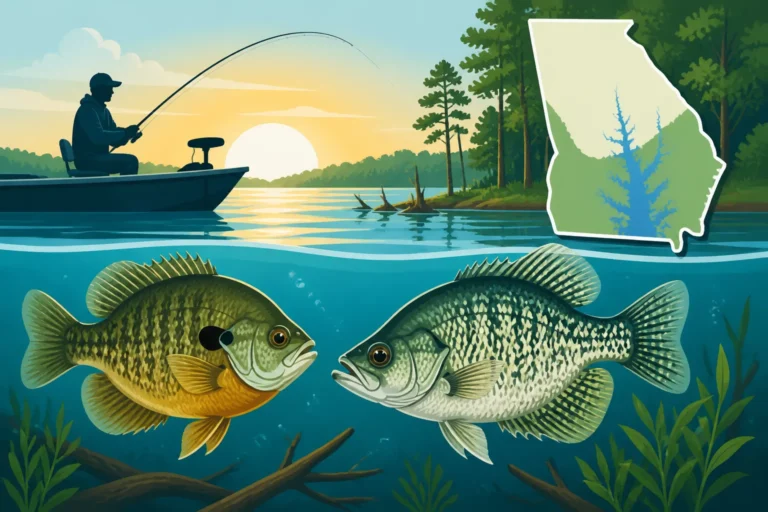
While bass steal many headlines, the crappie fishing on Lake Seminole is nothing short of fantastic, especially if you enjoy filling a cooler with delicious fillets. Both black and white crappie thrive here, growing to impressive sizes. Their preference for submerged timber, brush piles, and the edges of hydrilla beds makes them a fun challenge for anglers. They often congregate in large schools, meaning that once you find them, you can have some truly fast-paced action. It’s not uncommon to hear tales of anglers catching limits in just a few hours, especially during the spring and fall migrations. If you're looking for a relaxing day with consistent bites, chasing crappie is an excellent choice. You can learn more about finding these delicious panfish in our comprehensive guide, Crappie Fishing in Georgia: Black and White Crappie Guide.
Many crappie anglers here rely on jigging techniques, using small jigs tipped with minnows or soft plastics, often fished vertically around structure. Spider rigging, where multiple rods are fanned out from the boat, is also popular for covering more water and enticing these schooling fish. During the cooler months, crappie will often move to deeper channels and suspend over structure, while in the spring, they push into shallower coves and creeks to spawn. Finding that perfect brush pile or submerged log can be the key to unlocking a crappie goldmine, and a good fish finder is an invaluable tool for locating these hidden treasures.
Catfish: Deep Water Giants
For those who prefer a powerful tug-of-war and the chance at a truly massive fish, Lake Seminole’s catfish population delivers. Channel catfish, blue catfish, and flathead catfish all call these waters home, with the blues and flatheads reaching impressive sizes in the deeper river channels. These bottom dwellers provide an exciting alternative to bass and crappie, especially for anglers who enjoy fishing after dark or setting out multiple lines. Imagine hooking into a 40-pound blue cat in the dead of night – that's the kind of thrill Lake Seminole can offer! Our Catfish Species Guide: Channel, Blue, and Flathead Catfish has more details on these formidable fish.
Targeting catfish on Seminole often involves traditional bottom fishing techniques. Sturdy rods, heavy line, and a variety of baits are essential. Cut bait (like shad or bream), chicken livers, and various stink baits are popular for channel and blue catfish. For the elusive and powerful flathead, live bait – particularly a lively bream or small shad – is often the most effective. Focus your efforts on the deeper river channels, submerged humps, and areas with strong current, as these are prime feeding grounds for large cats. Many experienced catfishermen will use a good fish finder to locate schools of baitfish or subtle depth changes in the old river beds, knowing that where the bait is, the big cats won't be far behind.
Top Fishing Hotspots and Structures on Lake Seminole
Lake Seminole's reputation as a fishing haven is largely due to its incredibly diverse and abundant cover. From vast hydrilla beds to ancient cypress trees, the lake offers endless hideouts and ambush points for its resident fish. Understanding these structures and knowing where to focus your efforts is paramount to success.
River Channels and Hydrilla Beds
The original river channels of the Chattahoochee and Flint Rivers form the backbone of Lake Seminole's underwater topography. These deeper channels, often lined with stumps, ledges, and drop-offs, act as highways for fish moving between feeding and spawning grounds. Even when the lake is covered in thick vegetation, these channels provide crucial relief and oxygen, especially during hotter months. Bass, crappie, and especially catfish, will orient themselves along these channels, particularly where they intersect with submerged humps or feeder creeks. Learning to read your depth finder and identify these old riverbeds is an absolute game-changer.
Overlaying these channels, and indeed much of the lake, are extensive hydrilla beds. This dense, often impenetrable aquatic vegetation can be frustrating to navigate, but it's also a nursery, a pantry, and a fortress for baitfish and game fish alike. Largemouth bass absolutely thrive in hydrilla, using it for ambush points and cover from predators. Punching through thick mats with heavy jigs or Texas-rigged creatures can be incredibly effective, especially when the bass are buried deep. The key is to find the edges, pockets, and holes within these beds where bass can easily move in and out to feed. Don't be intimidated by the green stuff; learn to love it, and it will often reward you handsomely.
Stump Fields and Standing Timber
Before the Flint and Chattahoochee Rivers were dammed to create Lake Seminole, vast tracts of timber stood tall. Now, much of that timber remains submerged, creating sprawling stump fields and areas of standing timber that are absolute magnets for fish. These woody structures provide excellent cover, shade, and a substrate for algae and insects, which in turn attract baitfish. Largemouth bass will often relate directly to individual stumps or the edges of dense timber stands, waiting for prey to swim by. Crappie will suspend within the branches of standing timber, especially in deeper water.
Navigating these areas requires caution and a good trolling motor, but the rewards can be immense. Look for clusters of stumps, especially those near drop-offs or deeper water access. Using spinnerbaits, crankbaits, or jigs that can be worked through or around timber effectively is crucial. Many anglers develop a keen sense for "feeling" their way through these areas, distinguishing a bite from a snag. These timeless structures provide classic ambush points, and fishing around them can feel like stepping back in time, connecting you to the lake's wild past.
Grassy Flats and Cypress Knees
Beyond the dense hydrilla, Lake Seminole also boasts expansive grassy flats, particularly in shallower areas and along the edges of creeks and bays. These flats, often dotted with lily pads and other emergent vegetation, are crucial feeding grounds during various seasons. Bass will cruise these flats, particularly in low light conditions, hunting for baitfish, frogs, and even small rodents. They offer a different kind of challenge than the deep hydrilla, often requiring topwater lures, shallow-running crankbaits, or weedless soft plastics fished slowly and methodically.
And then, of course, there are the iconic cypress trees and their gnarled "knees." These magnificent trees, often draped in Spanish moss, are synonymous with Southern fishing, and Lake Seminole has them in spades. The root systems and knees provide intricate cover, casting shadows that fish love to hide in. Bass will often hold tight to these structures, especially during the spawn or when seeking shade on bright days. Flipping jigs or Texas-rigged plastics right up against the cypress trunks or knees can elicit explosive strikes. These areas are not just visually stunning; they are prime real estate for game fish, offering both cover and ambush opportunities in equal measure.
| Structure Type | Primary Species | Key Techniques | Lure/Bait Examples | Notes |
|---|---|---|---|---|
| River Channels | Largemouth, Catfish | Bottom Fishing, Deep Cranking | Cut Bait, Live Shad, Deep Diving Crankbaits | Look for bends, humps, and intersections with creeks. |
| Hydrilla Beds | Largemouth, Crappie | Punching, Flipping, Topwater | Heavy Jigs, Frogs, Texas Rigs, Swim Jigs | Target edges, holes, and isolated clumps. |
| Stump Fields | Largemouth, Crappie | Cranking, Spinnerbaits, Jigging | Squarebill Crankbaits, Spinnerbaits, Jigs | Work slowly, feel for individual stumps, use weedless options. |
| Standing Timber | Crappie, Largemouth | Vertical Jigging, Carolina Rigging | Minnows, Small Jigs, Plastics | Crappie suspend in branches, bass use trunks for cover. |
| Grassy Flats | Largemouth, Bream | Topwater, Shallow Cranking, Weedless | Frogs, Buzzbaits, Worms | Best in low light; great for sight fishing in clear areas. |
| Cypress Knees | Largemouth, Bream | Flipping, Pitching, Creature Baits | Jigs, Texas Rigs, Worms | Fish tight to cover, target shade and root systems. |
Mastering Lake Seminole's Seasonal Fishing Patterns
Just like any great fishery, Lake Seminole's fishing patterns are heavily influenced by the changing seasons. What works in spring might be completely ineffective in summer, and vice-versa. Understanding how the fish move, feed, and behave throughout the year is key to consistent success and avoiding those frustrating days when nothing seems to bite.
Spring: The Spawn and Post-Spawn Frenzy
Spring on Lake Seminole is, for many anglers, the absolute prime time to be on the water. The warming water temperatures signal the approach of the annual spawn, which kicks off an incredible period of activity. Fish move from their deeper winter haunts into shallower coves, bays, and protected areas, often around cypress trees, lily pads, and submerged vegetation. This is when you'll find largemouth bass actively building nests, guarding fry, and becoming incredibly aggressive. It's truly a sight to behold and one of the best times for trophy bass. You can delve deeper into this exciting period with our guide on Spring Bass Fishing Patterns on Georgia's Reservoirs.
Crappie also follow a similar pattern, moving into shallow brush piles and timber to spawn, making them very accessible to anglers. The air buzzes with anticipation, and the lake hums with boat traffic as everyone tries to capitalize on the fish's natural drive to reproduce. Topwater lures, spinnerbaits, and soft plastics fished around visible cover are highly effective for bass. For crappie, small jigs and minnows fished around submerged timber in coves are hard to beat. Just remember, while it's exciting, practice good catch and release, especially with spawning fish, to ensure the lake's health for future generations.
Summer: Heat, Hydrilla, and Early Morning Bites
As the scorching Georgia summer settles in, Lake Seminole undergoes a significant transformation. The shallow water heats up dramatically, and the hydrilla grows incredibly thick, often forming dense, seemingly impenetrable mats across large sections of the lake. This can be frustrating, as many traditional fishing spots become inaccessible. However, this also forces the fish into more predictable patterns, often seeking refuge in deeper, cooler water or dense overhead cover during the heat of the day. Our guide on Summer Fishing Patterns on Georgia's Big Lakes offers more insights into this challenging but rewarding season.
Successful summer fishing often means embracing the early morning bite, when temperatures are cooler and fish are more active in shallower water before retreating. Topwater lures at dawn, followed by punching heavy jigs or Texas-rigs through the thickest hydrilla, can be incredibly effective. Bass will often suspend under these mats, taking advantage of the shade and slightly cooler water. Crappie will move to deeper timber or suspend over channel breaks, and catfish become more active in the evenings and overnight, patrolling the deep river channels. Don't be afraid to fish at night for cats, as the cooler temperatures and reduced boat traffic can make for some incredible action.
Fall & Winter: Transition and Cooler Water Tactics
Fall on Lake Seminole is a beautiful and often very productive time to fish. As water temperatures begin to drop, the hydrilla starts to thin out, and baitfish become more active, moving into creeks and shallower flats. This triggers a "feeding frenzy" for many species, especially bass, as they try to fatten up for the leaner winter months. They'll be more aggressive and willing to chase a variety of baits. Look for bass schooling in open water, busting baitfish on the surface, or concentrating along creek channels and grass lines. Consult our guide on Fall Bass Fishing Patterns on Georgia's Lakes to fine-tune your approach during this prime season.
Winter fishing can be challenging but highly rewarding for those willing to brave the cold. While many anglers pack away their gear, some of the biggest fish of the year are often caught during winter. Fish will generally move deeper, congregating around structure in the main river channels, on deep ledges, or in submerged timber. Slow presentations are key, as fish metabolism slows down. Vertical jigging for crappie in deep timber, slow-rolling spinnerbaits or crankbaits for bass along deep drops, and targeting lethargic catfish on the bottom with cut bait can all produce excellent results. Don't underestimate the potential for a trophy catch when the temperatures plummet.
Essential Gear and Techniques for Lake Seminole
Fishing Lake Seminole isn't just about showing up; it's about showing up prepared. The lake's unique characteristics – dense vegetation, vast open water, and diverse species – demand specific gear and refined techniques. Skimping on tackle or heading out without the right approach can lead to a frustrating day.
Lure and Bait Selection for Diverse Species
When it comes to lures and bait on Lake Seminole, variety is your best friend. For largemouth bass, you'll want to have a robust selection. Heavy jigs (1/2 oz to 1 oz) with creature baits or craw trailers are essential for punching through thick hydrilla. Weedless frogs and buzzbaits are absolute killers over matted vegetation and across grassy flats, especially in low light. Spinnerbaits and chatterbaits are excellent for covering water along grass lines and around stumps. And, of course, soft plastics like Texas-rigged worms, Senkos, and flukes are versatile and always effective. Don't forget crankbaits for hitting those deeper channel edges or shallower squarebills for deflecting off timber.
Crappie anglers will find success with a range of small jigs (1/16 oz to 1/8 oz) in various colors, often tipped with a minnow. Live minnows are a classic and highly effective bait, fished under a slip bobber or vertically jigged. For catfish, the menu varies. Cut bait (shad, bream, carp) is fantastic for blue and channel catfish, while live bream or sunfish are preferred for targeting large flatheads. Prepared stink baits can also work for channel cats. The key is to match your bait to your target species and presentation, always considering the current conditions and water clarity.
Rods, Reels, and Line for Seminole's Challenges
The tackle you bring to Lake Seminole needs to be up to the task. For punching and flipping in heavy cover for largemouth bass, you'll want a heavy or extra-heavy action baitcasting rod, typically 7' to 7'6" long, paired with a high-speed baitcasting reel. Spool it with 50-80 lb braided line – anything less risks break-offs in the thick stuff. For general bass fishing with spinnerbaits, crankbaits, or Texas rigs, a medium-heavy action baitcasting rod (6'6" to 7'3") with 15-20 lb fluorocarbon or monofilament line is a good all-around choice. Our guide on the Best Rods and Reels for Georgia Largemouth Bass provides more detailed recommendations.
Crappie fishing calls for lighter gear. Light or ultralight spinning rods, 6-7 feet in length, paired with small spinning reels spooled with 4-6 lb monofilament or braided line are ideal for feeling those subtle bites. For catfish, you'll need heavy-duty conventional or spinning combos. Think medium-heavy to heavy action rods, 7-10 feet long, capable of handling 20-50 lb test monofilament or braided line, especially if you're targeting those potential giants in the river channels. The strength of your gear directly correlates with your ability to land big fish in this cover-rich environment.
Electronic Aids and Boat Handling in Thick Cover
Modern electronics are not just a luxury on Lake Seminole; they're practically a necessity. A good fish finder with down imaging, side imaging, and GPS capabilities will dramatically increase your success. It allows you to identify submerged river channels, locate hidden brush piles, pinpoint schools of baitfish, and navigate safely through stump fields. Marking waypoints of productive areas or potential hazards on your GPS is invaluable for returning to spots and safely navigating the lake. Many experienced anglers use advanced units from brands like Humminbird or Lowrance to paint a detailed picture of the underwater world.
When it comes to boat handling, a powerful and reliable trolling motor is crucial, especially for navigating the dense vegetation and tight cover. Whether it's a Minn Kota or a MotorGuide, having a strong thrust motor, preferably with GPS spot-lock capabilities, will allow you to hold your position against current or wind and work specific areas thoroughly. Shallow water anchors, like those from Power-Pole or Talon, can also be a huge advantage for holding your boat in place while fishing shallow grass beds or cypress trees, preventing you from drifting and allowing for precise presentations. Remember, Lake Seminole can be tricky to navigate with its vast areas of hydrilla and stump fields, so patience and careful boat control are paramount.
Navigating Regulations and Responsible Angling on Lake Seminole
One of the unique aspects of Lake Seminole is its location on the Georgia-Florida border. This means that anglers need to be aware of and comply with regulations from both states, depending on where they are fishing. It can be a little confusing, but understanding the rules is critical to a lawful and enjoyable outing. Beyond the legalities, practicing responsible angling ensures the health and longevity of this incredible fishery for generations to come.
Understanding Georgia and Florida Regulations
Here's where it gets a little tricky, but it's super important. Because Lake Seminole straddles two states, the specific fishing regulations, including license requirements, size limits, and creel limits, can differ depending on which side of the lake you're on. Generally, if you're fishing in Georgia waters, you need a Georgia fishing license. If you're in Florida waters, you need a Florida fishing license. However, there are agreements that allow you to fish the contiguous waters of the lake with either a Georgia or Florida freshwater fishing license, provided you launch from the state where your license was issued and remain on the contiguous portion. It's best to carry both if you plan to roam freely or check the specific details on the Georgia Department of Natural Resources (GA DNR) and Florida Fish and Wildlife Conservation Commission (FWC) websites before you head out. A good starting point is our general guide on Georgia Fishing Regulations Explained for the Georgia side, but always cross-reference with Florida's rules for Lake Seminole specifically.
Beyond licenses, pay close attention to the specific size and creel limits for each species. For example, while Georgia might have one set of rules for largemouth bass, Florida's rules might be slightly different for Lake Seminole. The same applies to crappie and catfish. Ignorance of the law is not an excuse, and game wardens from both states patrol these waters diligently. A quick call to the GA DNR or FWC, or a detailed review of their online regulations pertaining to Lake Seminole, can save you a headache (and a potential fine). It truly pays to be informed!
Practicing Ethical Catch and Release
Lake Seminole is a productive fishery, but its continued health relies on responsible angling practices, especially when it comes to catch and release. Many anglers, particularly those targeting trophy largemouth bass, choose to release their catches to ensure these fish can reproduce and grow even larger. If you're going to practice catch and release, do it correctly. This means handling fish gently, minimizing their time out of the water, and using proper unhooking tools. Avoid dragging fish onto dry land or concrete, and if possible, keep them in the water while removing the hook.
For larger fish, especially those caught in deeper water, consider using a fizzing tool to release air from their swim bladder if they show signs of barotrauma (e.g., bulging eyes, bloated belly) to increase their chances of survival. Knowing how to properly release a fish not only contributes to the fishery's sustainability but also upholds the ethics of the sport. It's about respecting the resource and ensuring that others can experience the thrill of catching these magnificent creatures in the future.
Local Guides and Fishing Resources
If Lake Seminole still feels overwhelming, or if you're short on time and want to maximize your chances of success, consider hiring a local fishing guide. Guides are invaluable resources; they spend countless hours on the water, know the subtle nuances of the lake, understand the current conditions, and can put you on fish quickly. They also provide all the necessary safety gear and often top-notch fishing tackle. Platforms like FishingBooker connect anglers with experienced local guides who specialize in Lake Seminole, offering a range of trips tailored to different species and skill levels. Think of it as a masterclass on the water, giving you insights you couldn't gain in years of solo fishing.
Beyond guides, there are many other resources available. Local bait and tackle shops around Bainbridge, Georgia, or Chattahoochee, Florida, are goldmines of information. The folks working there live and breathe Lake Seminole and can provide up-to-the-minute reports on what's biting, where, and on what. Online fishing forums and social media groups dedicated to Lake Seminole fishing are also great places to connect with other anglers, share tips, and learn. The more you immerse yourself in the local knowledge, the quicker you'll unlock the lake's incredible potential.
Disclaimer
Please note that fishing regulations, license requirements, and local conditions can change. Always consult the official websites of the Georgia Department of Natural Resources (GA DNR) and the Florida Fish and Wildlife Conservation Commission (FWC) or contact their offices directly for the most current and accurate information before planning your fishing trip to Lake Seminole. FishingBooker is mentioned as a helpful resource for finding guides, but anglers should always conduct their own due diligence when booking services.