How Striper Fishing Techniques Differ From Bass Fishing
It’s a common frustration for Georgia anglers: you’ve spent years perfecting your bass fishing game, learning all the nuances of plastic worms and crankbaits, only to realize that the strategies that land those chunky largemouths often fall flat when you're targeting striped bass. While both are predatory fish, their behaviors, habitats, and feeding patterns are distinct enough to require a complete shift in your approach. This guide is here to unravel those differences, helping you understand why your favorite bass techniques won't always cut it for stripers, and what you need to do to successfully chase both species across Georgia's diverse waterways.
Understanding the Fundamental Differences in Fish Behavior
When you're out on the water, the first step to success is truly understanding the fish you're after. Bass and stripers, though both apex predators, have vastly different lifestyles that dictate how and where they feed. Recognizing these fundamental behaviors is key to adjusting your fishing strategy.
The Lone Wolf vs. The Schooling Hunter
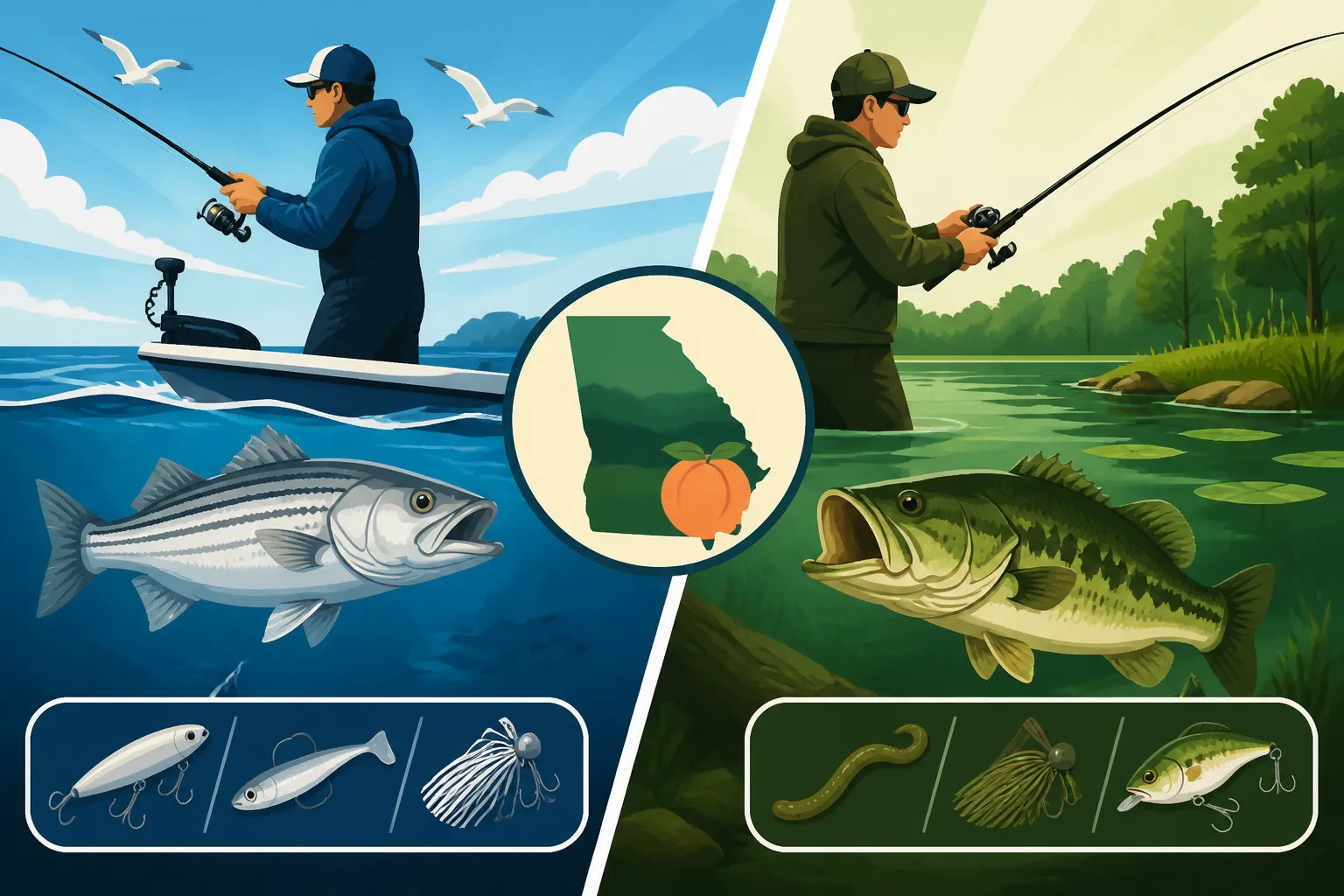
Largemouth bass are often characterized as ambush predators, typically operating as solitary hunters, especially as they grow larger. They love to hide in cover – think submerged timber, thick hydrilla beds, rock piles, or dock pilings – waiting for an unsuspecting meal to swim by. This means bass fishing often involves dissecting small areas, making precise casts, and working your lure slowly through potential hiding spots. You might catch one or two fish from a prime piece of cover, then move on to the next likely spot. Their territory might be small, and they tend to hold tight to structure.
Striped bass, on the other hand, are the ultimate schooling predators. They move in packs, often large ones, relentlessly chasing down baitfish in open water. This makes them more nomadic and less tied to specific structures, though they will use deep humps, points, and creek channels as ambush points or travel lanes. When you find a school of stripers, you can often catch multiple fish in a short period, sometimes even a dozen or more, as they aggressively compete for food. This schooling behavior often leads to explosive topwater bites or deep-water "meatball" schools marked on your sonar, where dozens of fish are packed together, gorging on shad.
Preferred Habitat and Depth
Bass, especially largemouths, are kings of the shallow to mid-depth zones. They thrive in water temperatures that are comfortable for them to cruise, spawn, and feed, typically from 55 to 75 degrees Fahrenheit. You'll find them actively hunting in water from a few feet deep down to perhaps 20-30 feet, heavily reliant on cover and structure to hide, ambush, and protect their nests. Think about those juicy lily pads, submerged brush piles, or shady creek banks where a bass can quickly dart out and grab a meal. This often puts them within easy casting distance from the bank or from a boat working the shoreline. Many of Georgia's Best Fishing Spots in Georgia are perfect for finding bass close to shore.
Stripers, particularly in larger reservoirs like Lake Lanier or Lake Oconee, are often found in much deeper, cooler water. They are pelagic, meaning they live in the open water column, and are highly sensitive to water temperature and oxygen levels. During the warmer months, they'll retreat to thermal refuges in deep water, sometimes 40, 60, or even 100 feet down, only coming up to feed during dawn, dusk, or when baitfish schools are pushed to the surface. Their preferred habitat often lacks the visible cover bass relate to, instead focusing on changes in bottom contour, main lake points, or vast open water where they can corral bait. Understanding their movements and preferred depths is crucial for successful Striped Bass and Hybrid Striped Bass in Georgia Waters.
Tackle and Gear: Why You Need Different Setups
If you've ever tried to land a 20-pound striped bass on your favorite medium-action bass rod with 10-pound test line, you know it's a recipe for disaster. The sheer power and size of stripers demand a completely different approach to your fishing gear.
Rods, Reels, and Line Strength
For largemouth bass, especially in Georgia's lakes and rivers, anglers typically use a range of gear from medium-light spinning setups for finesse techniques to heavy-action baitcasters for flipping heavy cover or throwing large swimbaits. A typical bass setup might involve a 6'6" to 7'6" rod, a reel spooled with 10-20 lb monofilament or fluorocarbon, or 30-50 lb braided line for punching heavy mats. This allows for precision casting, sensitivity to detect subtle bites, and enough backbone to pull fish out of cover. Many anglers swear by a balanced Best Rod and Reel Combo for Largemouth Bass in Georgia for versatility.
When it comes to stripers, you need to think "heavy-duty." These fish are built for power and sustained fights. You'll want a medium-heavy to heavy-action rod, usually 7 to 8 feet long, capable of handling larger lures and heavier line. Spinning reels for stripers will be larger, in the 4000-6000 size range, with robust drag systems, while baitcasting reels will also be larger, capable of holding hundreds of yards of line. Your line choice will typically be 20-40 lb monofilament or fluorocarbon, or 40-80 lb braided line, especially if you're trolling or casting heavy plugs. A proper Best Rod for Striped Bass Fishing in Georgia can make all the difference when a big striper decides to run. You can often find durable, high-capacity reels suitable for stripers on Amazon.
Terminal Tackle and Accessories
Bass fishing often involves a variety of smaller, lighter terminal tackle. Think 1/0 to 5/0 worm hooks, small bullet weights from 1/16 oz to 1 oz, swivel snaps, and sometimes even lighter leader material. Your tackle box is probably filled with an assortment of hooks, weights, and swivels to adapt to various lures and conditions. Even larger bass lures rarely require excessively strong components.
Stripers, however, require robust terminal tackle. Their powerful jaws can bend weaker hooks, and their strong runs can snap lighter swivels or lines. You'll need stout hooks, often 6/0 or larger, heavy-duty swivels, and strong split rings on your lures. Lead weights for deep-water trolling or downlining can range from 1 oz up to several pounds. Everything needs to be oversized and durable to withstand the brute force of a schooling striper. Don't skimp on quality when selecting your terminal tackle; a cheap snap swivel can mean the difference between landing a trophy and a heartbreaking break-off. Look for quality components that are designed for saltwater, as they're often strong enough for freshwater stripers, available from reputable brands on platforms like Amazon.
Lure and Bait Selection: Matching the Species' Appetite
Just as their behaviors and the gear they demand differ, so too do the lures and baits that reliably trigger strikes from bass and stripers. While there can be some overlap, focusing on baits designed for each species will significantly increase your success rate.
Bass Lures: Cover and Finesse
Bass fishing is a world of endless lure options, each designed for a specific scenario. For largemouths, you're looking at baits that mimic crawfish, shad, or other forage, and can be worked effectively around cover. This includes:
- Plastic Worms and Jigs: Texas rigs, Carolina rigs, shaky heads, and various jigs are workhorses for probing cover, imitating crawfish or worms.
- Crankbaits and Spinnerbaits: These are excellent for covering water and triggering reaction strikes, especially around structure or in open water.
- Topwater Lures: Frogs, poppers, and walking baits are thrilling for early morning or late evening bites over hydrilla or near docks.
- Swimbaits: Realistic plastic or hard-bodied swimbaits are great for imitating larger baitfish.
The common theme here is often a lure that can be presented precisely, retrieved slowly, or paused in strike zones where a bass might be waiting to ambush. Many of these lures are designed to be weedless or snag-resistant to navigate dense cover. Learning various Bass Fishing Techniques for Pre-Spawn and Post-Spawn Patterns will highlight the breadth of lure choices.
Striper Baits: Speed, Size, and Live Action
Stripers are often feeding on large schools of baitfish like shad or herring, and their lures and baits reflect this. They are less about finesse and more about drawing attention and mimicking fleeing prey.
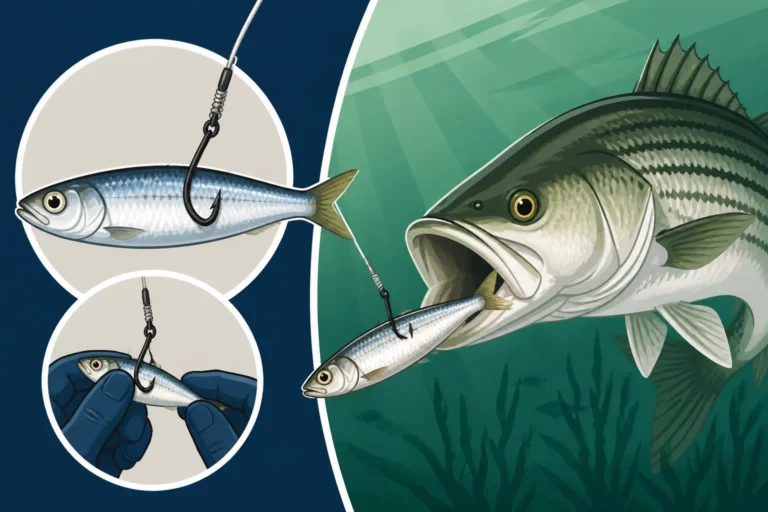
- Live Bait: This is arguably the most effective method for stripers. Large shiners, gizzard shad, threadfin shad, or herring are fished on freelines, downlines, or under planer boards to mimic distressed baitfish. Fishing Live Bait Rigs for Striped Bass is a tried-and-true method.
- Large Plugs and Jigs: Big bucktail jigs, large swimbaits, Sassy Shads, or large lipless crankbaits that mimic shad are excellent choices. They're often retrieved at high speeds or worked deep.
- Topwater Poppers and Spooks: When stripers are schooling on the surface, large, noisy topwater lures can create explosive strikes.
- Trolling Spoons and Umbrella Rigs: For covering vast expanses of open water, especially when fish are deep, trolling methods with large spoons or multi-lure umbrella rigs are incredibly effective. This is where Trolling Gear for Georgia Striped Bass really shines.
The key with striper baits is often size, speed, and the ability to fish them effectively in open water or at great depths. Presentation is about finding the schools and putting your bait in front of them quickly. When searching for the Best Bait for Striped Bass in Georgia, live bait will always be at the top of the list for serious anglers.
Fishing Strategies: Tailoring Your Approach
Because of their behavioral and gear differences, the actual act of fishing for bass versus stripers requires a completely different mindset and set of strategies. You can't just casually cast a spinnerbait into open water hoping for a striper, nor can you troll a massive umbrella rig through lily pads looking for a largemouth.
Bass Fishing: Precision and Patience
Bass fishing, particularly for largemouths, is often about "structure fishing." This means identifying key pieces of cover or changes in depth that might hold a fish. You might spend hours dissecting a single cove, making hundreds of casts to specific targets. Techniques include:
- Flipping and Pitching: Getting a jig or plastic bait into tight cover like brush piles, docks, or laydowns.
- Casting Crankbaits and Spinnerbaits: Working these baits along contours, points, or over submerged grass beds.
- Topwater Action: Targeting low-light conditions or calm water to entice explosive surface strikes.
- Drop Shotting or Ned Rigging: Finesse techniques for pressured fish or when bass are deep and inactive.
Success in bass fishing often comes down to patience, stealth, and a deep understanding of how bass relate to their immediate environment. It's about presenting your lure naturally and enticing a fish that might be camouflaged and waiting. For instance, knowing the Best Time of Day to Fish for Bass can dramatically increase your chances of success, often in early morning or late evening.
Striper Fishing: Covering Water and Locating Schools
Striper fishing is far more about mobility, covering large areas, and actively searching for fish. Your electronics become your best friend, helping you locate the massive schools of bait and the predatory stripers feeding on them.
- Downlining Live Bait: A classic technique for deep-water stripers. You'll use heavy weights to present live bait directly into schools of fish you've marked on your sonar. This is often necessary for those Deep Water Techniques for Striped Bass.
- Trolling: Using multiple rods with various lures or umbrella rigs, trolling allows you to cover vast amounts of water and present baits at different depths until you find active fish.
- Casting to Surface Boils: This is the most exciting striper fishing! When stripers drive bait to the surface, causing a "boil" or "bust," anglers rush to cast topwater lures or large swimbaits into the frenzy. This is often a fast-paced, adrenaline-pumping experience.
- Freeline/Planer Board Live Bait: For shallower stripers or when they're feeding near the surface, live bait can be presented naturally without weights, or with planer boards to spread out your presentation.
Striper fishing can be a high-octane experience, demanding constant vigilance and a willingness to move until you locate actively feeding fish. Unlike bass, where you might camp on a good spot, striper fishing is often about the hunt across wide-open spaces.
Comparing Bass and Striper Fishing Techniques
To give you a clearer picture, here's a table summarizing the key differences we've discussed.
| Feature | Largemouth Bass Fishing | Striped Bass Fishing |
|---|---|---|
| Primary Behavior | Solitary ambush predator, cover-oriented | Schooling predator, open-water baitfish chaser |
| Preferred Habitat | Shallows, mid-depths, heavy cover (wood, grass, rocks) | Open water, deep channels, humps, main lake points, cooler depths |
| Typical Depth | 5-30 feet | 20-100+ feet (depending on season/water temps) |
| Rod Action | Medium-light to Heavy (e.g., 6'6" – 7'6" rods) | Medium-heavy to Heavy (e.g., 7' – 8' rods) |
| Reel Size | 2000-4000 spinning, 100-200 baitcasting | 4000-6000 spinning, 300+ baitcasting |
| Line Strength | 10-20 lb mono/fluoro, 30-50 lb braid | 20-40 lb mono/fluoro, 40-80 lb braid |
| Key Lures/Baits | Plastic worms, jigs, crankbaits, spinnerbaits, topwaters | Live shad/herring, large plugs, bucktail jigs, umbrella rigs, spoons |
| Common Techniques | Flipping/pitching, casting, jigging, finesse fishing | Downlining, trolling, casting to boils, freeline bait |
| Patience Level | High, dissecting specific spots | Moderate to high, actively searching and covering water |
| Electronics Use | Helpful for structure, contour, baitfish | Essential for locating schools of bait and fish |
Conclusion: Adapting for Success
As you can see, while both bass and stripers offer incredible angling experiences in Georgia, they demand entirely different strategies. Trying to apply your seasoned bass techniques to striper fishing is like trying to use a screwdriver when you really need a wrench – you might get lucky, but you're not going to be consistently effective.
The beauty of fishing in Georgia is the incredible diversity of species and the opportunities to learn and grow as an angler. Don't be afraid to step out of your comfort zone and invest in the right gear and knowledge for each fish. Whether you're chasing the solitary largemouth in a weed line or battling a school of stripers in open water, understanding these distinctions will make you a more versatile and successful angler. So go ahead, rig up a different rod, switch out those lures, and enjoy the thrill of mastering both of these incredible species!
Disclaimer
This article is for general informational purposes only and does not constitute professional advice. Laws, prices and regulations vary by location and change over time. Consult a qualified professional for guidance on your specific situation.