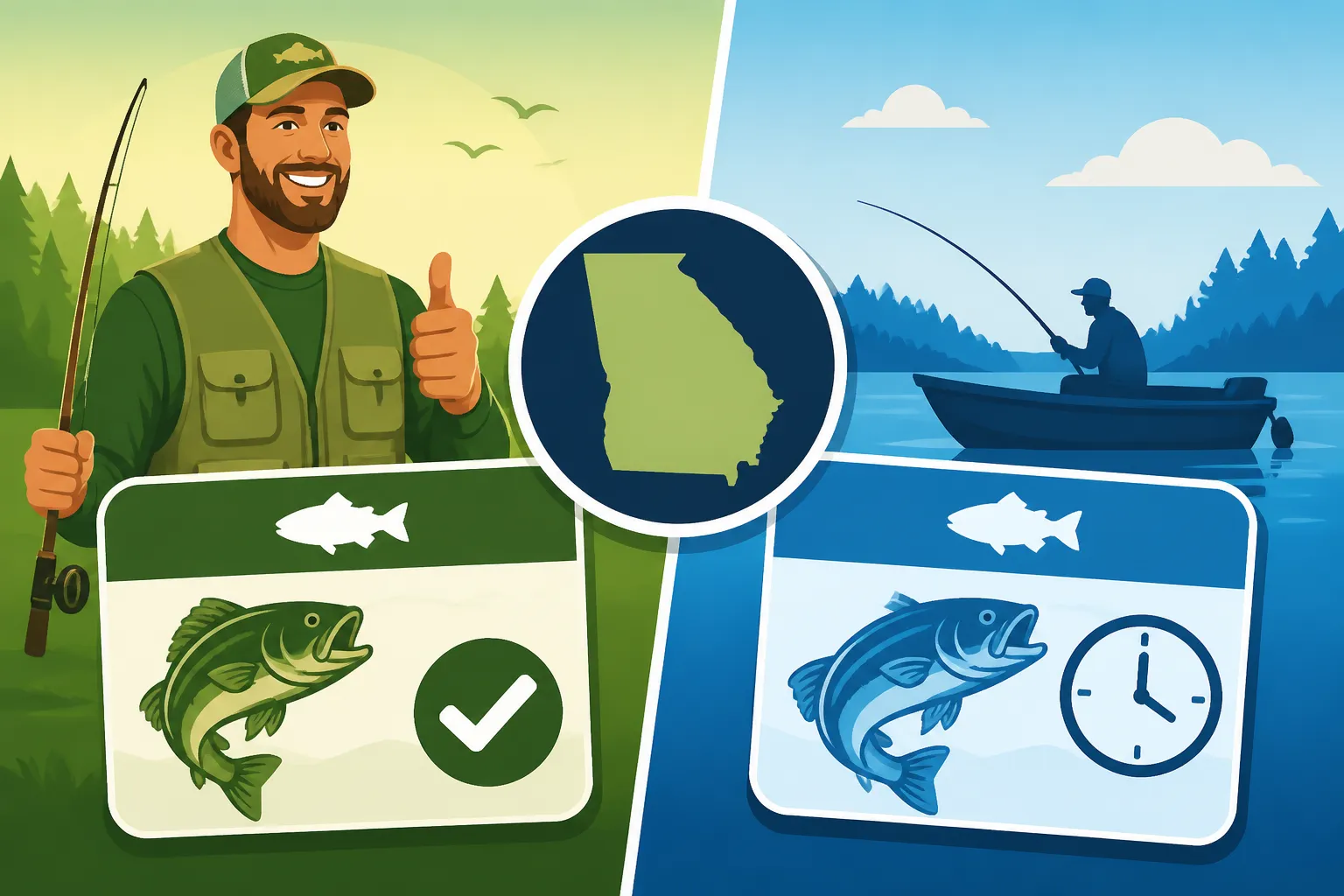
Annual vs Short-Term Fishing License Options
It's a familiar scenario for many anglers: you're itching to hit the water, but then that little voice pops up, asking, "What kind of fishing license do I even need?" Whether you're a lifelong Georgia resident or just passing through, trying to decide between an annual license that covers you year-round or a short-term option for a quick trip can be surprisingly confusing. This comprehensive guide is here to cut through the noise, walk you through the nuances of Georgia's annual and short-term fishing license options, and help you pick the perfect permit for your next angling adventure.
Understanding the Georgia Fishing License System
Why Licenses Matter for Georgia Anglers
It can sometimes feel like just another hurdle, another piece of paperwork, another fee to pay before you can even get your line wet. But the truth is, fishing licenses in Georgia, much like everywhere else, are absolutely crucial for the health and future of our beloved waterways and fish populations. These fees aren't just disappearing into a bureaucratic black hole; they're directly funding the efforts of the Georgia Department of Natural Resources (DNR) to manage fish stocking programs, enforce fishing regulations, and maintain public access points. Think about it: without these funds, those vibrant trout streams up in North Georgia or the thriving bass populations in our big reservoirs wouldn't be nearly as robust.
Beyond conservation, having a valid license ensures you're fishing legally and avoiding unnecessary fines. Getting caught without one isn't just an inconvenience; it can lead to some pretty hefty penalties that far outweigh the cost of a license. The DNR officers are out there doing important work, ensuring everyone plays by the rules so that our natural resources can be enjoyed by all, now and in the future. It's really about being a responsible steward of Georgia's incredible fishing heritage.
Resident vs. Nonresident Classifications: Who Pays What?
One of the first things you'll encounter when looking at Georgia fishing license options is the distinction between residents and nonresidents. This isn't unique to Georgia, but it's a critical point because it significantly impacts the cost of your license. A resident is generally someone who has established a permanent home in Georgia for at least 90 days, with the intention of remaining here, and isn't claiming residency in any other state for any other purpose. This usually means things like having a Georgia driver's license, registering your vehicles here, and paying Georgia taxes. If you're unsure, it's always best to check the exact criteria with the Georgia DNR, but generally, if you live here, you're a resident.
Nonresidents, on the other hand, are pretty much everyone else. Visitors from out of state, people vacationing in Georgia, or those who simply haven't established permanent residency here will fall into this category. And, as you might expect, nonresident licenses come with a higher price tag. This differential pricing helps ensure that residents, who contribute to the state's tax base year-round, receive a benefit in terms of lower licensing costs. It’s a common practice across the U.S. to ensure local residents feel the benefit of their continued contributions to the state's infrastructure and conservation efforts. Our Georgia Fishing License Guide delves deeper into these classifications.
The Annual Fishing License: Your Year-Round Companion
Resident Annual License Details
For those of us who call the Peach State home and enjoy hitting the water regularly, the annual fishing license is often the most straightforward and economical choice. A Georgia resident fishing license provides you with 365 days of fishing freedom from the date of purchase, not just for the calendar year. This means if you buy it in June, it’s good until June of the following year, which is a fantastic perk many anglers appreciate. It covers fishing in Georgia's freshwater and saltwater environments, though there are specific add-ons you might need for certain types of fishing, like trout in designated mountain streams, or a free permit for saltwater information.
The convenience of an annual license is huge. You buy it once, and you're good to go for a whole year. No need to worry about purchasing a new permit every time you get the urge to fish. This frees you up to enjoy spontaneous fishing trips, whether it's a quick evening outing to a local pond or a planned weekend excursion to one of Georgia's amazing lakes like Lake Lanier or Lake Oconee. It simplifies your fishing life immensely, allowing you to focus on the bite, not the bureaucracy. For more specifics on costs, check out our guide on Georgia Resident Fishing License Cost.
Nonresident Annual License Breakdown
If you're an out-of-state angler who loves visiting Georgia regularly for its incredible fishing opportunities, the nonresident annual fishing license can sometimes be a surprisingly good deal, especially if you plan on making multiple trips throughout the year. Yes, it’s pricier than the resident version, but it offers the same 365 days of validity from the purchase date. This means if you schedule two or three week-long fishing vacations to Georgia within a year, an annual license could actually save you money compared to buying multiple short-term permits.
Let's be realistic: the cost of a nonresident annual license can feel like a bit of a shock compared to what you might pay in your home state, or even compared to Georgia's resident fees. However, when you factor in the sheer variety of fishing experiences Georgia offers—from chasing bass in the southern reservoirs to fly fishing for trout in the mountains, or even saltwater angling along the coast—it begins to make more sense. This license is your all-access pass to explore everything Georgia's waters have to offer for a full year. For a full breakdown of what you might expect, take a look at our Nonresident Fishing License Prices in Georgia article.
Benefits of Going Annual
Beyond the sheer convenience of not having to think about it every time you go fishing, an annual license offers peace of mind. Imagine this scenario: you're driving to your favorite spot on the Flint River for some shoal bass fishing, and suddenly, you decide to make a detour to a different lake. With an annual license, you don't have to pause and calculate if your current short-term permit covers the new location or if it's still valid. You're just good to go.
This consistent coverage encourages more frequent outings, allowing you to really get to know different bodies of water throughout the seasons. You can experiment with various techniques, learn the nuances of local fish behavior, and truly become a better angler. It’s also often the most cost-effective option for anyone fishing more than a handful of days a year. The break-even point against short-term licenses usually comes fairly quickly, making it a sound investment for the avid angler. Plus, a portion of your license fee goes towards crucial conservation efforts, helping to ensure that future generations can enjoy the same fantastic fishing experiences we do today.
Short-Term Fishing Licenses: Flexibility for Visitors and Occasional Anglers
The 1-Day Option: Quick Trips and "Just Trying It Out"
Sometimes, you just need a quick fix. Maybe you're visiting family in Atlanta and have a free afternoon, or you're on a business trip and spotted a promising pond near your hotel. For these spur-of-the-moment or single-day excursions, Georgia offers a convenient 1-day short-term fishing license. This option is perfect for those who know for sure they'll only be fishing for a single calendar day. It's a no-frills, get-your-line-in-the-water solution without committing to more days than you need.
The 1-day license is also fantastic for introducing newcomers to fishing, especially kids or friends who are curious but not yet ready to fully commit to the sport. You can grab a license for them without a significant financial outlay, letting them experience the joy of catching a bluegill or a small bass. If they love it, great! If not, you haven't invested much. It's truly designed for maximum flexibility and minimal commitment, making fishing accessible for casual encounters with Georgia's waters. Our guide on Do Kids Need a Fishing License in Georgia? offers insights for young anglers.
Multi-Day Options: The 3-Day and 7-Day Permits
For visitors planning a slightly longer stay, or residents who only fish a few times a year, Georgia provides multi-day short-term fishing licenses. These typically come in 3-day and 7-day increments, offering more coverage than a single-day pass but still less commitment than a full annual license. These options are particularly popular among nonresidents who travel to Georgia specifically for fishing trips. Imagine planning a long weekend bass fishing trip to Lake Seminole or a week-long fly-fishing adventure on the Toccoa River. These multi-day permits are tailor-made for such scenarios.
The cost structure for these multi-day licenses is designed to be incrementally more expensive than the 1-day, but still often more economical than buying multiple individual 1-day licenses for consecutive fishing days. For instance, a nonresident might find that a 3-day license covers their extended weekend perfectly without breaking the bank. It's all about matching the license duration to your planned fishing itinerary. You can explore Georgia's Nonresident Short-Term License Options for a detailed look at these choices.
When Short-Term Makes Sense
Deciding when a short-term license is the smart move really boils down to your fishing habits and travel plans. If you're an out-of-state angler who only visits Georgia once a year for a dedicated fishing vacation that lasts less than a week, a 3-day or 7-day license is almost certainly your best bet. It covers your trip duration without making you pay for an entire year's worth of access you won't use.
Similarly, for Georgia residents who truly only fish once or twice a year—perhaps for a specific family outing or a rare solo escape—a 1-day license or two might be more cost-effective than the annual pass. Think of that annual company picnic at a local pond or a single camping trip where fishing is just one activity among many. In these cases, the flexibility and lower upfront cost of a short-term license clearly win out. It allows you to participate without over-investing in a hobby you rarely engage in.
Choosing the Right License for Your Fishing Habits
Assessing Your Fishing Frequency
This is the absolute core of your decision-making process. Honestly, how often do you realistically go fishing in Georgia? Be brutally honest with yourself. Are you out on the water every other weekend, or are your fishing trips more like rare, special occasions? If you're the kind of angler who plans multiple trips a month, or even just one or two solid trips a quarter, an annual license is almost certainly going to save you money in the long run. The cost per day of fishing plummets dramatically with an annual pass the more you use it.
However, if you can count your fishing days on one hand for the entire year, opting for a short-term license—either a 1-day, 3-day, or 7-day option—will prevent you from paying for months of unused coverage. For instance, a resident who fishes only two separate days in a year would spend less on two 1-day licenses than on one annual resident license. It truly is a numbers game based on how much you realistically get out there. For a broader overview of options, our Georgia Fishing License Costs and Types guide is a great resource.
Planning for Visitors and Guests
This scenario often catches people off guard. You've got friends or family visiting from out of state, and they express an interest in joining you on the lake. It's a fantastic way to share your passion, but remember that unless they meet the specific criteria for a senior or youth exemption, they're going to need their own nonresident fishing license. This is where short-term options really shine. You wouldn't expect your visiting aunt from Ohio to buy a full annual nonresident pass for a single afternoon of crappie fishing.
Instead, a 1-day or 3-day nonresident license is the perfect solution. It's easy for them to purchase online or at a local bait shop, and it covers them legally for their brief adventure. This planning ensures everyone on the boat or bank is properly licensed, preventing any awkward encounters with DNR officers and making the experience enjoyable for all. You can even help them get one by looking into How to Buy a Fishing License Online in Georgia before they arrive.
Cost-Benefit Analysis: When Does Annual Become Cheaper?
Let's get down to brass tacks: money. The exact break-even point where an annual license becomes more cost-effective than multiple short-term licenses will vary slightly depending on whether you're a resident or nonresident, and the specific fees for each license type at the time. However, we can look at general examples.
For a Georgia resident, the annual fishing license is usually around the cost of two or three 1-day licenses. So, if you plan to fish more than two or three separate days within a 365-day period, the annual license is the clear winner. For nonresidents, the annual license is considerably more expensive than a 1-day permit. The break-even point for nonresidents often falls somewhere around three to four weeks' worth of fishing spread throughout the year, or roughly five to eight individual days if those days aren't consecutive.
Here's a simplified table to help visualize (note: actual costs can fluctuate, always check the Georgia DNR website for current pricing):
| License Type | Resident (Approx. Cost) | Nonresident (Approx. Cost) | Days Covered | Value Proposition |
|---|---|---|---|---|
| Annual All-Game/Fishing | ~$15 – $20 | ~$60 – $75 | 365 | Best for frequent anglers; pays for itself in 3-5 trips |
| 1-Day Fishing | N/A | ~$10 – $15 | 1 | Ideal for single, spontaneous trips or try-outs |
| 3-Day Fishing | N/A | ~$20 – $30 | 3 | Good for long weekend visitors or short fishing vacations |
| 7-Day Fishing | N/A | ~$30 – $45 | 7 | Excellent for a full week of dedicated fishing in GA |
Note: Resident fishing-only licenses are typically very affordable. Nonresident 1-day, 3-day, and 7-day licenses are fishing-only options, and these are often the "best" short-term options for visiting anglers.
This table illustrates that for nonresidents, two 3-day trips in a year (totaling 6 days) would likely cost less with a 7-day license. If you're making four such trips, the annual might start looking very attractive. Always do the math based on your anticipated trips and current prices to make the most informed decision.
Special Considerations and Add-Ons
Mountain Trout License Add-On in Georgia
Ah, the allure of North Georgia's pristine mountain streams, with their elusive rainbow, brown, and native brook trout! If you plan to fish for trout in any of the designated mountain trout waters, a basic Georgia fishing license isn't quite enough. You'll need to purchase a separate Mountain Trout License Add-On in Georgia. This additional endorsement is crucial and allows you to legally pursue trout in these specially managed streams. It's an extra layer of regulation designed to protect these sensitive ecosystems and ensure sustainable trout populations, many of which are supported by active stocking programs.
Even if you only plan one or two trout fishing trips a year, this add-on is mandatory. It's a small additional cost, but it supports the specific conservation efforts focused on cold-water fisheries. So, if you're dreaming of casting a fly on the Chattahoochee River Headwaters or spinning for trout on the Toccoa, don't forget this vital component of your licensing. It applies to both resident and nonresident anglers.
Saltwater Information Permit Explained
This is one that sometimes confuses anglers, especially those new to Georgia's beautiful coast. If you're planning to fish in Georgia's saltwater estuaries, sounds, or offshore, you might wonder if you need a specific saltwater license. The answer is a little nuanced. If you possess a valid Georgia resident or nonresident fishing license (annual or short-term), you also need a free Georgia Saltwater Information Permit Explained. This isn't an extra fee, but rather a mandatory registration that helps the DNR collect vital data on saltwater fishing effort and catches, which is essential for managing coastal fisheries.
It's literally free and takes just a moment to add to your license online or when purchasing from an agent. Don't skip it! Without this permit, even with a valid general fishing license, you could face issues if you're caught fishing in saltwater. It’s a simple step that helps state agencies maintain healthy redfish, sea trout, and other coastal species populations for everyone to enjoy.
Senior and Disability Exemptions
Georgia is quite generous to its senior citizens and individuals with disabilities when it comes to fishing licenses, which is wonderful to see. Many senior anglers, depending on their birthdate and residency, may qualify for significantly reduced-cost or even free lifetime licenses. For example, Georgia residents born before July 1, 1952, are eligible for a free Senior Lifetime Sportsman’s License, which is an amazing benefit covering both hunting and fishing. Those born after this date but over 65 still receive heavily discounted annual or lifetime options.
Similarly, specific provisions exist for residents with certain disabilities, often granting them free or reduced-cost licenses. These programs are designed to ensure that fishing remains an accessible and enjoyable pastime for all Georgians, regardless of age or physical challenge. If you or a loved one falls into one of these categories, it's absolutely worth exploring the detailed requirements for these exemptions. You can find more information in our dedicated post on Senior Fishing License Rules in Georgia and other specific guides. Always verify eligibility requirements with the Georgia DNR.
How to Purchase Your Georgia Fishing License
Online and Phone Options: Convenience at Your Fingertips
In today's digital age, getting your Georgia fishing license is incredibly convenient, no matter if you're going for an annual pass or a quick 1-day permit. The most popular method for many is purchasing online directly through the Georgia Department of Natural Resources (DNR) Go Outdoors Georgia website. This portal is available 24/7, meaning you can buy your license from the comfort of your home at any time of day or night, even if you decide to go fishing spontaneously at 3 AM. The process is usually straightforward: you provide your personal information, select the license type you need, pay with a credit card, and you'll often receive a printable license or an electronic version on your phone immediately. It seriously couldn't be easier.
For those who prefer a more personal touch or don't have easy internet access, you can also purchase your license over the phone. The Georgia DNR usually has a dedicated phone line for license sales, staffed during business hours. This is a great option if you have specific questions about license types or need assistance navigating the process. Just be sure to have all your personal information and payment details ready when you call. This flexibility ensures that everyone, regardless of their tech comfort level, can easily obtain the necessary documentation.
In-Person at License Agents: Local Support and Gear Opportunities
For many of us, the tradition of buying a fishing license in person is still a cherished part of the fishing ritual. Georgia makes this easy by partnering with a vast network of authorized license agents across the state. These agents are typically local sporting goods stores, bait and tackle shops, Walmart, or even some convenience stores. Not only can you walk in and get your annual or short-term license instantly, but it also gives you a fantastic opportunity to chat with local experts, get current fishing reports, and maybe even pick up some last-minute bait or tackle.
Imagine you're driving up to Lake Hartwell for a weekend trip, and you realize you forgot to grab a license. Pulling into a local bait shop like Hammond's Fishing Center in Cumming or a Georgia DNR office means you can rectify that oversight quickly and be on your way. Plus, it's a great way to support small local businesses that cater specifically to anglers. While you're there, you might even find a great deal on a new fishing rod or some specialized lures. You can often find a list of Georgia License Agents Near You on the DNR website, so a quick search can guide you to the closest spot. Sometimes, buying in person even allows you to browse for those little extras you might have forgotten, like a new pair of pliers or a tackle box organizer, maybe even a new fishing hat. You can always check popular online retailers like Amazon for deals on fishing gear beforehand, but sometimes the local shop has just what you need in a pinch.
Don't Forget to Renew!
Whether you opt for an annual license or find yourself purchasing short-term permits repeatedly, keeping track of expiration dates is crucial. The annual license, as mentioned, is good for 365 days from the purchase date, which means it doesn't always align with the calendar year. It's easy to forget when that exact date rolls around. Many anglers set a reminder on their phone or mark it on their calendar to avoid any lapses.
If you let your annual license expire and then unexpectedly hit the water, you're essentially fishing without a license, which can lead to those unpleasant penalties we talked about earlier. Luckily, renewing is just as easy as purchasing for the first time, whether you do it online, by phone, or in person. The DNR even sends out reminders to many anglers, but it’s always best to be proactive. For more details on this process, our Georgia Fishing License Renewal Guide offers step-by-step instructions to ensure you're always covered.
Making Your Final Decision: Annual or Short-Term?
The Cost-Effectiveness Sweet Spot
Ultimately, the choice between an annual and a short-term Georgia fishing license boils down to a personal "sweet spot" of cost-effectiveness versus convenience. For the vast majority of dedicated resident anglers, the annual license is a no-brainer. Its relatively low cost quickly makes it the most economical option if you fish more than a handful of times a year. The freedom to fish anytime, anywhere (within regulations, of course!) without checking validity dates is priceless for many.
For nonresidents, the math gets a little tighter. If you're a hardcore out-of-stater who makes multiple, extended fishing trips to Georgia throughout the year, an annual nonresident license could certainly be more beneficial than continually buying 7-day permits. However, if your visits are limited to one or two short trips per year, the 3-day or 7-day options will almost always be more financially prudent. It's truly about mapping out your anticipated fishing days over a 12-month period and comparing the cumulative cost of short-term licenses against the single price of an annual one. Don't forget to factor in any potential add-ons, like the Mountain Trout License, into your total calculation. You can also compare pricing on fishing gear from different retailers, including large online marketplaces like Amazon, to get a full picture of your investment in the sport.
Matching Your Lifestyle to Your License
Beyond just the numbers, consider your overall lifestyle and how fishing fits into it. Are you a spontaneous angler who loves to seize any opportunity to get on the water, even if it's just for an hour after work? The annual license supports that flexibility perfectly. You can literally grab your rod and go, knowing you're fully covered. This encourages more fishing, which, let's be honest, is usually a good thing for our mental well-being!
On the other hand, if your life is so busy that fishing trips are rare, carefully planned events, then a short-term license might be less hassle in the long run. It reduces the feeling of "wasting" an annual license if you barely use it. Perhaps you only fish when your grandkids come to visit, and in that case, getting a specific license for that weekend event is ideal. Sometimes, the peace of mind of not having an "unused" annual subscription is worth the slightly higher per-day cost of a short-term option. Think about what brings you the most joy and the least stress when planning your fishing outings.
The Environmental Contribution Angle
While we've talked a lot about cost and convenience, it’s important to remember the bigger picture. Every Georgia fishing license, whether annual or short-term, contributes directly to the vital conservation efforts that sustain our fisheries. These funds are used for habitat restoration, fish stocking (especially for popular species like trout and bass), research, and enforcement. By purchasing a license, you're not just buying the right to fish; you're investing in the future of Georgia's natural resources.
So, while you're weighing the options, consider that your decision also has an impact on the broader health of our lakes, rivers, and coastal waters. It's a small but significant way for every angler to give back to the sport and the environment that provides so much enjoyment. Being informed about Georgia Fishing Regulations Explained further emphasizes this responsibility. The collective contribution from thousands of anglers ensures that Georgia remains a premier fishing destination for years to come.
Disclaimer
The information provided in this guide is for general informational purposes only and is not intended as legal advice. Fishing regulations, license requirements, and fees are subject to change by the Georgia Department of Natural Resources (DNR). While we strive to keep this information accurate and up-to-date, it is the sole responsibility of the individual angler to consult the official Georgia DNR website or contact them directly for the most current and precise regulations and licensing details before engaging in any fishing activities.