Best Baitcasting Reel for Bass Fishing
Choosing the right baitcasting reel for bass fishing in Georgia can feel like trying to solve a complicated puzzle, especially with the sheer number of options available. Many anglers get bogged down by technical jargon or simply pick a reel based on aesthetics, only to find it doesn't quite match their fishing style or the unique challenges of Georgia's lakes and rivers. This guide is here to untangle that complexity, helping you understand what truly matters in a baitcasting reel so you can make an informed choice for your next bass fishing adventure.
Understanding the Baitcasting Reel for Georgia Bass
Baitcasting reels are a cornerstone for serious bass anglers, and for good reason. They offer a level of control and power that spinning reels often can't match, especially when you're targeting those feisty largemouth bass in our Georgia waters. But what exactly makes them tick, and why are they so popular among bass enthusiasts?
The Core Mechanics and Why They Matter
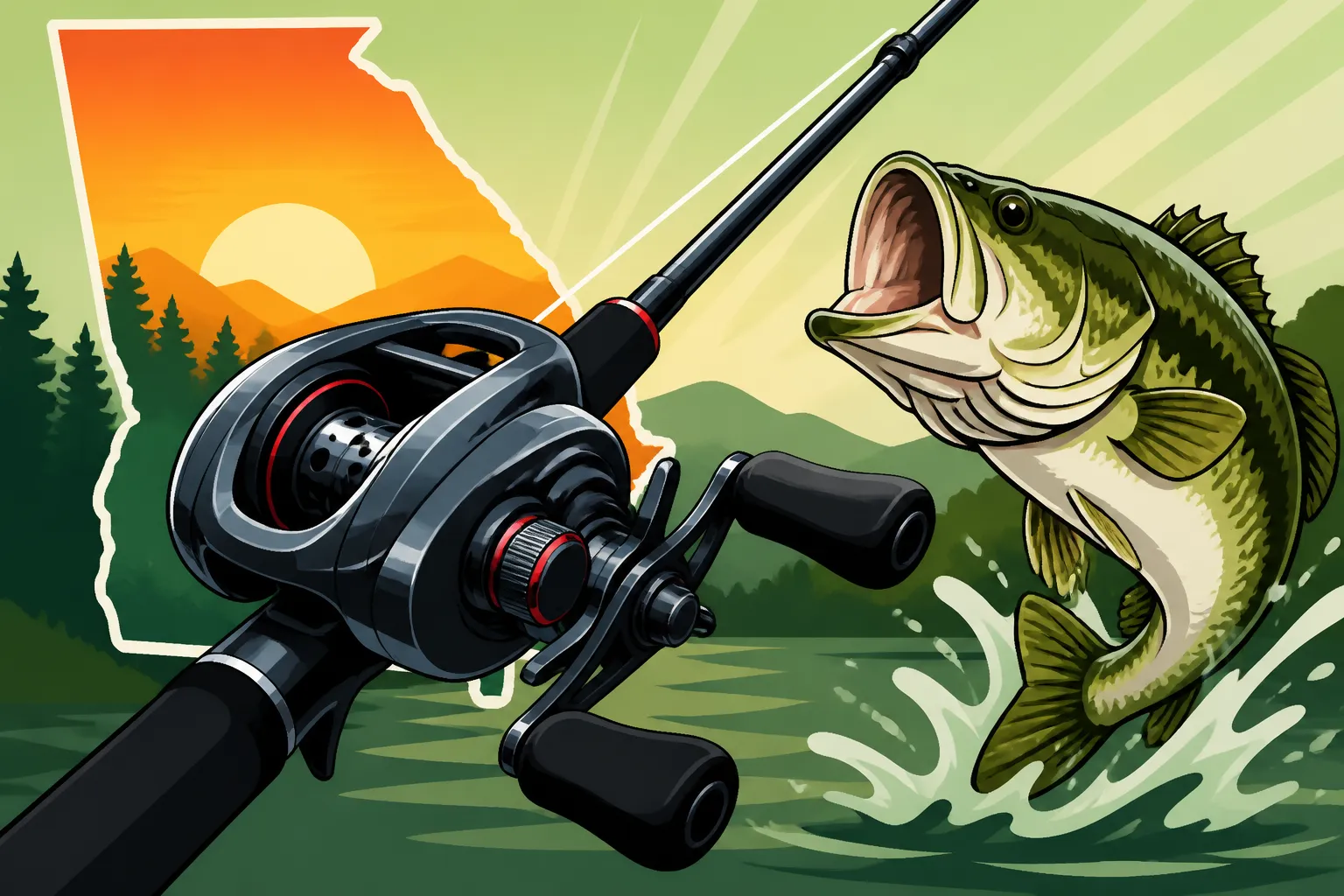
At its heart, a baitcasting reel features a revolving spool that spins directly in line with the rod. When you cast, the weight of your lure pulls line from the spool, causing it to rotate. The magic happens with the braking system, which controls that spool rotation to prevent overruns (those dreaded backlashes!). When you retrieve, a series of gears crank the line back onto the spool. This direct-line design is what gives baitcasters their superior feel and control, allowing you to "feel" the bait's action and subtle strikes much more effectively than with a spinning reel.
Think about fishing a jig or a worm along the bottom of Lake Lanier or Lake Oconee. With a baitcaster, you can literally feel every bump, every rock, every twig your lure encounters. This sensitivity is crucial for detecting those barely-there bites that often result in a trophy catch. It’s also incredibly satisfying when you learn to harness that power and precision.
Advantages of a Baitcaster for Bass Angling
The benefits of using a baitcasting reel for bass fishing in Georgia are pretty compelling, especially once you get past the initial learning curve. One of the biggest advantages is accuracy. The ability to feather the spool with your thumb gives you unparalleled control over where your lure lands, which is invaluable when you're trying to hit a small pocket of cover, a dock pilings, or a submerged brush pile. This precision is hard to achieve with a spinning reel.
Beyond accuracy, baitcasters excel in handling heavier lines and lures, making them ideal for throwing big swimbaits, deep-diving crankbaits, or even punching through thick mats of vegetation that you might find in some of our shallower reservoirs. The robust gearing and drag systems in quality baitcasters provide the brute force needed to winch a big bass out of dense cover, preventing it from burying itself in snags. If you're looking to target Largemouth Bass Fishing in Georgia: The Complete Species Guide or even a Spotted Bass Fishing in Georgia Lakes and Rivers that's dug into a hydrilla bed, a strong baitcaster gives you the leverage you need to turn their head and bring them in.
Essential Features to Consider for Your Bass Baitcaster
When you start looking at baitcasting reels, the sheer number of specifications can be overwhelming. But don't fret! A few key features are really going to make a difference in your bass fishing success here in Georgia. Understanding these will help you navigate the options, whether you're browsing the aisles at Bass Pro Shops or scrolling through listings on Amazon.
The All-Important Gear Ratio
The gear ratio tells you how many times the spool rotates with one full turn of the handle. This is critical because it dictates how fast you can retrieve your lure, which directly impacts the effectiveness of different techniques.
Let's break it down:
- Low Gear Ratio (around 5.x:1 to 6.3:1): These reels are workhorses. They excel at applications where power and a slower retrieve are key. Think deep-diving crankbaits that create a lot of drag, or big swimbaits you want to crawl along the bottom. The slower retrieve helps keep these lures in the strike zone longer and gives you more torque to fight bigger fish. If you're fishing a big crankbait on West Point Lake, a 5.x:1 ratio will make that retrieve much more comfortable on your arm.
- Medium Gear Ratio (around 6.4:1 to 7.3:1): These are your versatile all-arounders, often referred to as "do-it-all" reels. They're fantastic for spinnerbaits, chatterbaits, Texas rigs, and jigs. They offer a good balance of speed for quick retrieves and enough power for fighting fish. If you're only going to buy one baitcaster, a reel in this range, perhaps a 7.1:1, is a superb choice for most Georgia bass applications. For understanding how retrieve speed impacts your fishing, check out Best Retrieve Speed for a Crankbait.
- High Gear Ratio (7.4:1 and up, often 8.x:1 or even 9.x:1): Speed demons! These reels are designed for techniques where quickly picking up slack line is vital. Think topwater baits where you need to react instantly to a strike, or pitching and flipping jigs into heavy cover where you need to get the fish out fast before it snags you. They're also great for burning baits back to the boat for another cast when fish aren't hitting. Imagine a bass blowing up on a frog in a lily pad field on Lake Seminole – you need to pick up that slack and set the hook immediately!
Braking Systems: Taming the Backlash Beast
Ah, the dreaded backlash! Every baitcaster angler knows this pain. The braking system is what helps prevent the spool from spinning faster than the line is going out, which is the primary cause of backlashes. There are a few main types:
- Centrifugal Braking: These systems use small pins or weights that move outward as the spool spins, rubbing against a brake drum inside the reel. They offer excellent control during the initial, fast part of the cast but don't adjust as the spool slows down. They are often set internally and require opening the side plate to adjust. Many experienced anglers prefer centrifugal brakes for their consistent performance once dialed in.
- Magnetic Braking: These systems use magnets that create resistance against the spool. They are typically adjusted externally with a dial, making them incredibly easy to fine-tune on the fly, even mid-cast, which is a huge plus for beginners or when conditions change (like a sudden gust of wind). They tend to apply more consistent braking throughout the cast.
- Dual Braking (Combo): Some high-end reels combine both centrifugal and magnetic systems, offering the best of both worlds. This allows for incredible fine-tuning and maximizes backlash prevention, giving you more confidence to make those long casts or cast into the wind.
For a beginner, a reel with an externally adjustable magnetic brake or a dual system will be much more forgiving as you learn the ropes. Being able to quickly adjust your brakes is a game-changer when you're dealing with varying wind conditions or switching between different lure weights out on the water.
Drag Systems and Bearings: Power and Smoothness
Beyond gear ratio and braking, the drag system and the number/quality of bearings are crucial for performance.
- Drag System: The drag allows line to slip from the spool when a fish pulls hard, preventing your line from breaking and your rod from snapping. A smooth, consistent drag is paramount. You want a drag that engages without hesitation and delivers consistent pressure throughout the fight. Carbon fiber drag washers are often preferred for their smoothness and heat dissipation. A powerful drag system is essential when you're trying to pull a chunky bass out of a thick hydrilla bed or battling a powerful Striped Bass and Hybrid Striped Bass in Georgia Waters that might surprise you.
- Bearings: Reel manufacturers love to tout high bearing counts, but quality trumps quantity every time. Good quality bearings (often stainless steel or ceramic) contribute to the overall smoothness of the reel, making casting and retrieving feel effortless. Look for reels with at least 5-7 quality bearings. A single high-quality bearing is often better than three cheap ones. Don't fall for the "more is better" trap; instead, focus on reputable brands known for using durable, smooth bearings.
Matching Your Reel to Your Bass Fishing Style in Georgia
Choosing the best baitcasting reel isn't just about specs; it's about matching the tool to your intended job. The diverse fishing opportunities in Georgia, from the deep clear waters of Lake Burton to the shallow, cover-rich Flint River, mean that a single "best" reel might not cut it for every situation. However, you can certainly find versatile options that cover most bases, or specialize if you have a particular technique in mind.
The All-Purpose Bass Angler's Reel
For many Georgia anglers, especially those just getting into baitcasting or who fish a wide variety of techniques, a versatile reel is the way to go. I'd recommend looking for a reel with a gear ratio in the mid-to-high 6.x:1 or low 7.x:1 range (like a 6.8:1 or 7.1:1). This gives you enough speed for spinnerbaits and topwater, while still having enough torque for cranking or throwing jigs.
- Consider this scenario: You're fishing a weekend trip on Lake Hartwell. In the morning, you might be throwing a topwater lure around some docks, requiring a faster retrieve to pick up slack. Later in the day, you might switch to a crankbait to cover deeper points. A mid-range gear ratio allows you to adapt fairly well to both, even if it's not perfectly optimized for either.
- Why it works: These reels offer a good balance of power and speed, making them suitable for a vast array of common bass lures like jigs, Texas rigs, smaller crankbaits, and even some spinnerbaits. Most reputable brands, whether you're looking at Bass Pro Shops or browsing online, will offer excellent options in this versatile category. When pairing with a rod, consider a medium-heavy power, fast action rod to complete a great all-around Best Rod and Reel Combo for Largemouth Bass in Georgia.
Specializing for Specific Techniques
As you gain experience or if you know you'll be focusing on a particular technique, you might want to invest in reels optimized for that specific purpose.
- Heavy Cover Flipping and Pitching: For wrestling big bass out of thick cover like hydrilla beds, dense lily pads, or submerged timber found in places like Clarks Hill Lake, you want a reel with a high gear ratio (7.x:1 or 8.x:1) to quickly pull fish out, and a super strong, smooth drag. The quicker you can get a hooked fish moving away from the cover, the less chance it has to wrap around a snag. These reels often have larger line capacities for heavier fluorocarbon or braided lines. For more on this technique, see How to Flip a Jig Into Heavy Cover for Bass.
- Crankbait and Reaction Bait Fishing: If you love throwing deep-diving crankbaits or large lipless crankbaits, a lower gear ratio reel (5.x:1 or low 6.x:1) is your friend. The reduced speed makes it easier to keep the bait in the strike zone longer and gives you incredible power to fight the lure through water resistance. This also helps reduce fatigue over a long day of cranking. Imagine throwing a big plug all day on Lake Oconee; a lower gear ratio will save your arm and let you fish harder.
- Topwater and Jerkbait Fishing: These techniques often involve quick twitches and pauses, and when a bass explodes on your lure, you need to reel up slack fast to set the hook effectively. High gear ratio reels (7.x:1 to 8.x:1) shine here, allowing for lightning-fast line pickup. This is especially important for baits that require a "walk-the-dog" retrieve, where you create a lot of slack between twitches.
Maintenance for Your Baitcasting Reel
A baitcasting reel is an investment, and just like any good tool, it performs best and lasts longest with proper care. Especially with the humidity and sometimes dusty conditions we experience in Georgia, a little maintenance goes a long way to ensuring your reel is always ready for action, whether you're chasing bass on the Chattahoochee River or exploring a remote pond.
After Every Trip: The Quick Wipe-Down
This is the absolute minimum, but it makes a huge difference. After each fishing trip, take a few minutes to wipe down your reel.
- Rinse (if needed): If you've been saltwater fishing (though this guide focuses on bass, many baitcasters pull double duty) or if your reel got soaked in a rain shower, a light rinse with fresh water is a good idea. Make sure the drag is tightened to prevent water intrusion, and never spray directly into the gears or bearings. Let it air dry thoroughly.
- Wipe Down: Use a soft cloth to wipe away any dirt, grime, or fish slime from the exterior of the reel. Pay special attention to the line guide, spool, and handle. This simple step prevents corrosive elements from building up and eating away at your reel's finish or components. If you've been fishing a sandy river like the Flint River, those tiny sand particles can be abrasive, so getting them off quickly is important.
- Light Lubrication: A tiny drop of reel oil on the worm gear (the long, spiral shaft that moves the line guide back and forth) and a dab of grease on the main gear teeth (if accessible without disassembly) can keep things running smoothly. This prevents friction and wear, ensuring your reel maintains its buttery retrieve.
Periodic Deep Cleaning and Lubrication
Every few months, or after about 10-15 heavy fishing trips, your baitcasting reel will benefit from a more thorough cleaning and lubrication. This might sound intimidating, but it’s often simpler than you think.
- Disassembly (Basic): Most reels have a side plate that can be easily removed to access the spool and some internal components. Remove the spool and gently clean any dirt or old grease from the spool shaft and the inside of the frame.
- Clean and Inspect: Use cotton swabs and a reel cleaner/degreaser (specifically designed for fishing reels, not harsh household cleaners!) to clean around the main gear and pinions. Inspect your drag washers for any signs of wear or contamination.
- Lubrication: Apply a thin layer of light reel oil to the spool bearings, the ends of the spool shaft, and the worm gear. Use a small amount of reel grease on the main gear and any other moving metal-on-metal parts. Less is often more with lubrication; over-oiling can attract dirt. Refer to your reel's owner's manual for specific lubrication points, as they can vary by model.
- Reassembly: Carefully reassemble your reel, making sure all parts fit correctly. Test the drag and retrieve to ensure everything is functioning smoothly. Proper maintenance will ensure your reel is always ready for the Best Spring Bass Fishing Spots in Georgia.
Storage Tips for Longevity
How you store your reel between trips also plays a crucial role in its lifespan.
- Loosen the Drag: Always back off your drag completely when storing your reel. Keeping the drag tightened puts constant pressure on the drag washers, which can cause them to compress and lose their effectiveness over time.
- Protect from Elements: Store your reel in a cool, dry place, out of direct sunlight. A reel cover or a soft reel case can protect it from dust, scratches, and accidental bumps. If you have multiple reels, keeping them in a tackle bag or on a dedicated reel rack helps prevent them from getting knocked around.
- Avoid Extreme Temperatures: Leaving reels in a hot car trunk for extended periods can cause lubricants to break down and plastic parts to warp. Similarly, extreme cold can make lubricants thicker and less effective.
- Consider a Professional Service: If you’re not comfortable with disassembling your reel for a deep clean, or if it’s developed a persistent grinding noise or rough retrieve, consider sending it to a professional reel repair service. Think of it like getting your car serviced – sometimes the pros have the specialized tools and expertise.
By following these simple maintenance steps, you'll extend the life of your baitcasting reel, keep it performing at its peak, and ensure it's always ready to help you land that next big Georgia bass.
Recommended Baitcasting Reel Features at a Glance
To give you a quick summary of what to look for when you're shopping for your next baitcasting reel, here’s a handy table. Remember, the "best" choice often depends on your specific fishing style and budget, but these general guidelines should help.
| Feature | Ideal for Power & Big Lures / Slow Retrieve | Ideal for All-Around / Versatile Fishing | Ideal for Speed & Quick Take-Up / Topwater |
|---|---|---|---|
| Gear Ratio | 5.x:1 to 6.3:1 | 6.4:1 to 7.3:1 | 7.4:1 to 9.x:1 |
| Braking System | Centrifugal or Dual | Magnetic or Dual | Magnetic or Dual |
| Drag System | Strong, smooth carbon fiber | Strong, smooth carbon fiber | Strong, smooth carbon fiber |
| Bearings | 6+ high-quality | 7+ high-quality | 7+ high-quality |
| Frame Material | Aluminum (durable) | Aluminum or Graphite (balanced) | Graphite (lighter weight) |
| Typical Lures | Deep Crankbaits, Big Swimbaits, Carolina Rigs | Jigs, Texas Rigs, Spinnerbaits, Chatterbaits | Topwater, Jerkbaits, Flipping/Pitching Jigs |
| Example Use in GA | Deep structure on Lake Sinclair | General bass fishing on Lake Lanier | Frogging in Lake Seminole |
Whether you're new to baitcasters or looking to upgrade, understanding these components will make your selection process much easier. There are fantastic options out there from a variety of manufacturers, many of which you can explore in detail at stores like Bass Pro Shops or through online retailers like Amazon. Don't be afraid to try a few different models in your hand to get a feel for them before making your final decision. Your next unforgettable catch is waiting!
Disclaimer
This article is for general informational purposes only and does not constitute professional advice. Laws, prices and regulations vary by location and change over time. Consult a qualified professional for guidance on your specific situation.