Bream and Sunfish Species Found in Georgia Waters
Many anglers, from seasoned veterans to parents introducing their kids to fishing, often use the terms "bream" and "sunfish" interchangeably, and it's easy to see why. Georgia's waters are absolutely teeming with a diverse array of these panfish, making it a little confusing to tell them apart sometimes. This guide is here to clear up that confusion, diving deep into the fascinating world of bream and sunfish species found throughout our beautiful state, helping you identify your catch and understand where to find these accessible and fun-to-catch fish.
Demystifying "Bream" and "Sunfish" in Georgia
When you hear someone in Georgia talk about "bream," they're usually referring to one of several species within the sunfish family, specifically those that are pan-sized and often caught for the frying pan. While technically a "sunfish" is the broader family (Centrarchidae) that also includes black bass, crappie, and rock bass, "bream" tends to be the common, affectionate local term for the smaller, flatter, rounder species. So, if you're out fishing and someone asks if you've caught any bream, they're likely asking about bluegill, redbreast sunfish, or maybe a warmouth.
This casual terminology highlights the accessible nature of these fish. They're everywhere, they're relatively easy to catch, and they provide endless enjoyment for anglers of all ages. For kids, catching a bream can be a foundational fishing experience, sparking a lifelong love for the sport. The beauty of Georgia's sunfish is that you don't need fancy gear or a boat; often, a simple cane pole and a worm are all it takes to have a fantastic time.
What's in a Name? Understanding the Terminology
Let's break down the scientific side just a little, without getting too bogged down. The family Centrarchidae is home to all our favorite sunfish species, including the different types of black bass (like largemouth and spotted bass) and crappie (black and white). However, the smaller, rounder, brightly colored species that we typically call "bream" or "panfish" fall under various genera within this family, most notably Lepomis. This genus includes species like bluegill, redbreast sunfish, and pumpkinseed, among others.
For the everyday angler, the key takeaway is this: "sunfish" is the overarching family, and "bream" is a common, regional term used primarily in the southeastern U.S. to refer to the pan-sized members of that family. You can correctly call a bluegill a sunfish, and you can correctly call it a bream. It's really just a matter of common local parlance. This shared terminology often unites anglers because it points to the joy of catching these readily available and delicious fish, no matter their exact scientific classification.
The Importance of Panfish in Georgia's Ecosystems and for Anglers
Bream and sunfish species play a critical role in Georgia's freshwater ecosystems. They are a vital link in the food chain, serving as a primary food source for larger predatory fish like Largemouth Bass Fishing in Georgia: The Complete Species Guide and even wading birds and otters. Their abundance helps sustain healthy populations of these larger game species. Without a thriving population of panfish, the entire aquatic food web would suffer.
From an angling perspective, sunfish are immensely important. They are often the first fish a new angler, especially a child, will ever catch, making them an excellent gateway to the sport. Their willingness to bite, their vibrant colors, and their feisty fight on light tackle make them incredibly rewarding. Beyond the beginner appeal, they also offer fantastic table fare, with many people considering freshly caught bluegill or redbreast sunfish to be among the tastiest fish found in Georgia waters. It’s no wonder they hold such a special place in the hearts of so many Georgia anglers.
Common Bream and Sunfish Species You'll Encounter
Georgia is blessed with a fantastic variety of sunfish, each with its own unique charm and characteristics. While many anglers simply categorize them as "bream," getting to know the individual species can enhance your fishing experience, helping you understand their preferred habitats and behaviors. Knowing what you're targeting can also make your fishing more successful and enjoyable.
These panfish are truly ubiquitous across the state, from the smallest farm pond to the largest reservoir, and in countless rivers and creeks. Understanding what makes each species distinct will not only impress your fishing buddies but also allow you to appreciate the subtle nuances of Georgia's diverse aquatic life.
The Ubiquitous Bluegill
The bluegill (Lepomis macrochirus) is arguably the most recognized and sought-after bream species in Georgia. They are celebrated for their aggressive bite, widespread availability, and excellent taste. You'll find bluegill in virtually every pond, lake, and slow-moving river throughout the state, making them a staple for anglers of all ages. Their common presence means they're often the first fish a child catches, creating cherished memories.
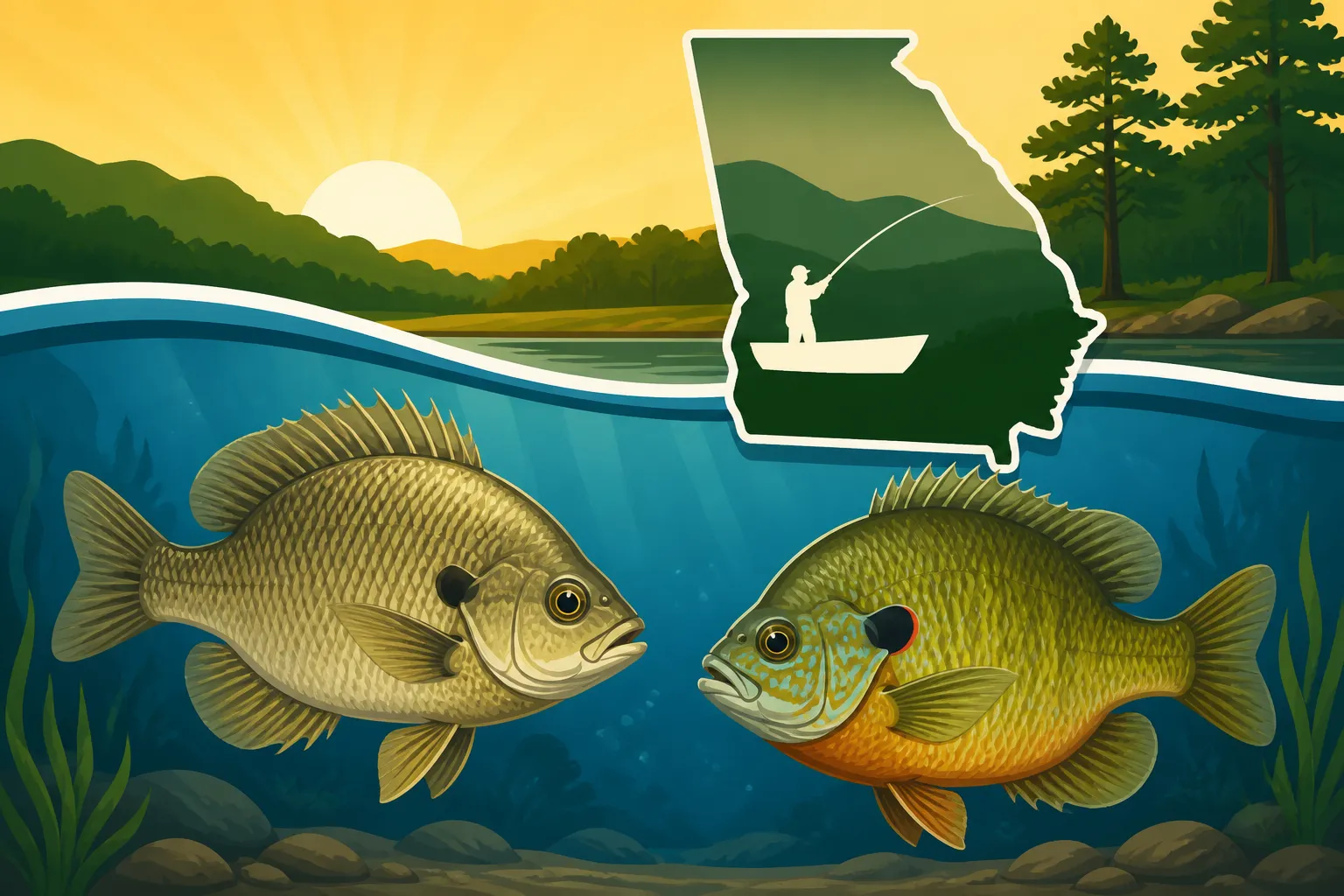
Bluegill are typically identified by a dark spot on the soft dorsal fin, vertical barring on their sides (though sometimes faint), and a distinctive dark "ear flap" (operculum) that is entirely black. Their bodies are usually round and compressed, with colors ranging from olive-green to dark blue on the back, fading to yellowish sides and a white or orange belly. During spawning season, males develop incredibly vibrant orange-red chests, making them particularly striking. They are a fantastic fighting fish for their size and provide endless entertainment on ultralight gear. For tips on targeting them, check out Bluegill Fishing: A Beginner's Guide for Georgia Kids.
The Striking Redbreast Sunfish
If you're fishing in Georgia's rivers and streams, particularly those with a bit of current, you're very likely to encounter the beautiful redbreast sunfish (Lepomis auritus). These fish are characterized by their brilliant orange or red belly and breast, along with a remarkably long, slender black operculum (ear flap) that lacks any sort of fringe. They also tend to have wavy, iridescent blue lines on their cheeks and gill covers, adding to their striking appearance.
Redbreast sunfish are often found hiding around submerged logs, rock structures, and undercut banks, especially in flowing water. They are aggressive feeders and will readily take small spinners, flies, or natural baits like worms and crickets. Their spirited fight on light tackle makes them a favorite among river anglers. While not as round as bluegill, their elongated body provides a surprising amount of power when hooked. They are truly a gem of Georgia's flowing waters, offering both beauty and a thrilling catch.
The Colorful Longear Sunfish
The longear sunfish (Lepomis megalotis) is another vibrant species that adds a splash of color to Georgia's waters. True to its name, the longear boasts an exceptionally long, flexible opercular (ear) flap that is often edged in red or orange. Their bodies are adorned with a dazzling array of iridescent blues, greens, and oranges, with wavy blue lines on their cheeks and gill covers, similar to the redbreast but typically more pronounced.
You'll often find longear sunfish in clear, slow-moving streams, small rivers, and quiet coves of larger lakes, typically over gravel or rocky bottoms. They are smaller on average than bluegill or redbreast, but what they lack in size, they make up for in sheer beauty and feistiness. They are aggressive biters and a pure joy to catch on ultralight tackle. How to Identify Bluegill and Other Sunfish provides more details on distinguishing these beauties from their cousins.
The Feisty Warmouth
The warmouth (Lepomis gulosus) stands out from its sunfish relatives with a more bass-like appearance and a slightly different habitat preference. Unlike the typically rounder sunfish, the warmouth has a stouter, more elongated body, a larger mouth, and typically three to five dark stripes radiating back from its eyes, often giving it a "grumpy" look. Their coloration is usually mottled brown and olive, providing excellent camouflage in murky waters, and their opercular flap is short and stiff.
Warmouth are champions of dense cover and often thrive in water conditions that other sunfish avoid, such as murky ponds, swamps, and sluggish streams with heavy aquatic vegetation or submerged timber. They are aggressive predators, readily hitting small lures, crickets, or worms. Their feisty nature and willingness to bite in tough conditions make them a rewarding catch for anglers exploring Georgia's more secluded or swampy fishing spots. If you're looking for Bream and Panfish: Georgia's Everyday Catch in these areas, the warmouth is often a primary target.
Other Notable Georgia Sunfish
While bluegill, redbreast, longear, and warmouth are the most common and popular "bream" species in Georgia, our waters are also home to a few other fascinating members of the sunfish family. These include the green sunfish (Lepomis cyanellus), often found in small creeks and culverts, identifiable by its larger mouth and iridescent green body. They often have a small orange spot on the opercular flap, and iridescent blue-green markings.
Another species you might encounter, particularly in southern Georgia, is the spotted sunfish (Lepomis punctatus), sometimes called a "stumpknocker." As the name suggests, it's covered in small black spots and often found around submerged wood or vegetation. These lesser-known sunfish still provide excellent sport on light tackle and contribute to the rich biodiversity of Georgia's aquatic environments. They prove that there’s always something new and exciting to discover in our local fishing holes.
Spotting the Differences: Identification Tips
Learning to differentiate between the various bream and sunfish species in Georgia can be a fun challenge and greatly enhance your angling knowledge. While many share similar shapes and colors, paying attention to specific features will quickly turn you into an expert identifier. It's not just about knowing what you caught; it's about understanding their unique preferences and habits.
Many anglers initially struggle, especially if they're used to a simpler classification system. However, once you know what to look for, these fish become much easier to tell apart. Having a simple visual guide, like the table below, and practicing observation while on the water will quickly make you proficient.
Fin Spines, Operculum Tabs, and Color Patterns
The first place to look for clues is usually the operculum, or "ear flap," located at the back of the gill plate. This often overlooked feature is a key identifier. For example, the bluegill's operculum is entirely black, while the redbreast sunfish has a distinctively long, slender, all-black flap. The longear sunfish has an even longer, more flexible flap, often edged in a contrasting color. The warmouth, on the other hand, has a short, stiff operculum that might not be as prominent.
Beyond the ear flap, examine the body shape and color patterns. Bluegill are typically rounder and flatter, with distinct vertical bars (though these can fade). Redbreast sunfish are more elongated, boasting that vibrant orange-red breast. Longear sunfish are a kaleidoscope of blues, greens, and oranges. Warmouth are mottled brown and olive, with radiating lines from the eye, giving them a more rugged, camouflaged look. Observing these details will quickly help you confirm your catch.
Size and Shape Clues
While size can vary depending on age and environment, certain sunfish species tend to grow larger than others. Bluegill are commonly caught in pan-sized dimensions, often reaching respectable sizes, making them a primary target for dinner. Redbreast sunfish also grow to a good eating size, particularly in fertile river systems. Longear sunfish, however, tend to be smaller on average, making them more of a catch-and-release pleasure, though still very tasty.
The overall body shape is another good indicator. Bluegill are classic "panfish"—round and thin, like a dinner plate. Redbreast sunfish have a more elongated, oval shape. Warmouth are chunkier, with a deeper body and a wider mouth, more akin to a small bass. By considering both shape and the unique color patterns, you can confidently identify nearly any sunfish you pull from Georgia's waters.
Here's a quick reference table for some of Georgia's common bream and sunfish species:
| Species | Key Identification Features | Typical Habitat | Common Size Range |
|---|---|---|---|
| Bluegill | Dark spot on dorsal fin, entirely black ear flap, vertical bars | Lakes, ponds, slow rivers, clear water | 6-10 inches |
| Redbreast Sunfish | Long, slender all-black ear flap, orange/red belly, blue lines | Rivers, streams, flowing water, rocky bottoms | 5-8 inches |
| Longear Sunfish | Very long, flexible ear flap (often red-edged), iridescent colors | Clear, slow streams, small rivers, gravel/rocky bottoms | 4-7 inches |
| Warmouth | Stout body, large mouth, dark stripes from eye, mottled brown | Murky ponds, swamps, sluggish streams, heavy vegetation | 5-9 inches |
| Green Sunfish | Large mouth, iridescent green body, orange spot on ear flap | Small creeks, culverts, stagnant ditches, very adaptable | 4-7 inches |
| Spotted Sunfish | Covered in small black spots, often called "Stumpknocker" | Southern Georgia rivers/ponds, around submerged wood | 4-6 inches |
Where to Find and How to Catch Georgia's Sunfish
The fantastic thing about bream and sunfish in Georgia is their sheer accessibility. You don't need expensive gear or exotic locations to find them. From bustling community fishing piers to secluded creeks, these fish are everywhere. This accessibility is what makes them such a perfect target for family outings or a quick solo trip when you need to wet a line.
Whether you're fishing from the bank of a local pond or drifting down a scenic river, sunfish are usually just a short cast away. Knowing their preferred hangouts and presenting the right bait or lure can almost guarantee a successful and fun day on the water.
Preferred Habitats Across Georgia
Bream and sunfish are incredibly adaptable, but each species has its favorite haunts. Bluegill, for instance, are quintessential lake and pond dwellers. You'll find them around docks, submerged brush piles, lily pads, and any kind of structure that offers cover in calm, clear waters. In the spring, they move into shallow beds to spawn, making them very easy to locate. Best Fishing Spots in Georgia will often highlight local ponds and lakes that are prime bluegill territory.
Redbreast sunfish, on the other hand, are river rats. They thrive in the flowing waters of Georgia's rivers and larger creeks, often congregating around submerged logs, current breaks, and rocky outcroppings. The Ocmulgee, Altamaha, and Savannah Rivers are excellent spots for redbreast. Warmouth prefer the sluggish, often murkier waters of swamps, backwater areas, and heavily vegetated ponds, making them a common catch in the southern parts of the state. Understanding these habitat preferences is key to a successful outing.
Simple Techniques and Baits for Success
One of the greatest joys of fishing for bream and sunfish is how simple the techniques can be. For most species, a light-action rod, a small hook (size 8 or 10), a bobber, and a few split shot weights are all you need. You can find excellent, affordable setups, perfect for beginners, on Amazon. Natural baits are usually the most effective. Live worms, crickets, grasshoppers, and even small pieces of corn are irresistible to these opportunistic feeders.
For artificial lures, tiny spinners, small jigs (1/32 to 1/16 ounce), or even a fly rod with poppers or wet flies can be incredibly productive. Cast your bait or lure near cover – a log, a lily pad patch, or an overhanging bush – and let it sit or retrieve it slowly. Patience is key, but often, the bite comes quickly! For more specific advice on what to put on your hook, check out Best Bait for Bream Fishing. With the right approach, you'll be pulling in these colorful panfish all day long, creating memories and perhaps, a delicious meal.
Disclaimer
This article is for general informational purposes only and does not constitute professional advice. Laws, prices and regulations vary by location and change over time. Consult a qualified professional for guidance on your specific situation.