Flathead Catfish Size in Georgia Waters
There's nothing quite like the thrill of a bent rod and the drag screaming as you battle a truly massive fish, and for many anglers in Georgia, that dream often involves the mighty flathead catfish. These incredible fish aren't just big; they're powerful, elusive, and can truly test your mettle. But how big do they really get in our Georgia waters? This guide is going to dive deep into everything you need to know about the size of flathead catfish you can expect to encounter across our state, from average catches to the true monsters that capture our imaginations.
Understanding Flathead Catfish Growth and Habitat in Georgia
Flathead catfish are fascinating creatures, and their size isn't just a matter of age. Several crucial factors, deeply tied to the environments they inhabit, play a huge role in how large these magnificent fish can grow in Georgia. It's a complex interplay of food availability, water conditions, and the very structure of the rivers and reservoirs they call home.
Key Factors Affecting Flathead Size
When we talk about what makes a flathead catfish grow to impressive sizes, a few things immediately come to mind. First and foremost is the food source. Flatheads are opportunistic predators, and they love live bait. Rivers and lakes with an abundant supply of smaller fish like bluegill, shad, or even smaller carp provide a rich buffet that allows flatheads to pack on the pounds. Imagine a massive buffet where the main course is always fresh and plentiful – that's what a good flathead habitat provides. Waters that are rich in nutrients and support a thriving ecosystem of forage fish are prime locations for growing big flatheads.
Another significant factor is the water quality and temperature. Flatheads thrive in warmer water, and Georgia certainly offers plenty of that during much of the year. Stable water temperatures and good oxygen levels contribute to a healthy metabolism, allowing them to feed and grow consistently. Rivers and large reservoirs often have these conditions, especially in the deeper channels and pools where flatheads prefer to lurk. Lastly, the fishing pressure on a particular body of water can impact the average size. Heavily fished areas might see a higher proportion of smaller fish caught, while less pressured spots can allow older, larger fish to survive and continue growing.
Preferred Habitats for Large Flatheads
Flatheads aren't just found anywhere; they have very specific preferences, especially when they reach impressive sizes. These fish are masters of ambush, preferring dark, secluded spots where they can wait for unsuspecting prey. Think about deep holes, submerged timber, rock piles, and undercut banks. These are the equivalent of a flathead's comfortable armchair, offering cover from currents, shelter from light, and a perfect ambush point. In many of Georgia's larger rivers, such as the Altamaha River Fishing Guide or the Flint River Fishing Guide, Georgia, you'll find them holding tight to these structures in the main channels or deeper bends.
Reservoirs also hold massive flatheads, often in the deeper sections near the old river channels, especially around standing timber or deep brush piles that were flooded when the lake was created. They'll use these structures to hide during the day, becoming more active hunters as dusk falls. It's a game of hide-and-seek with these fish, and understanding their preferred hideouts is critical to finding the larger specimens. The more complex the underwater structure, the better the chances of finding a true monster that has lived for many years, growing steadily in its secluded haven.
Average vs. Trophy Flathead Catfish Sizes in Georgia
When you're out on the water, you might catch a variety of flathead sizes. It's important to differentiate between what's a common catch and what truly qualifies as a trophy fish in Georgia. Both offer a fantastic fight, but the sheer power and memory of landing a giant flathead are something else entirely.
What to Expect from a Typical Catch
For many anglers fishing Georgia's rivers and lakes, a "typical" flathead catfish might range anywhere from 5 to 20 pounds. These are still respectable fish, offering a strong tug and a fun battle, especially on medium-heavy tackle. You'll often find these fish in decent numbers, and they make for excellent table fare if you're looking to bring home a meal. They're often caught on a variety of baits, from cut bait to smaller live baits, and are a common reward for anglers who are actively targeting catfish in general.
These mid-sized flatheads are often found in a broader range of habitats, from feeder creeks to the main river channels. They're still learning the ropes, so to speak, of being a top predator, and while they're powerful, they don't possess the sheer brute strength and experience of their larger brethren. Think of them as the energetic teenagers of the flathead world, always on the hunt and willing to put up a good scrap. They're what most folks encounter when they go out specifically for catfish, making for a memorable day on the water.
Chasing Georgia's Trophy Flatheads
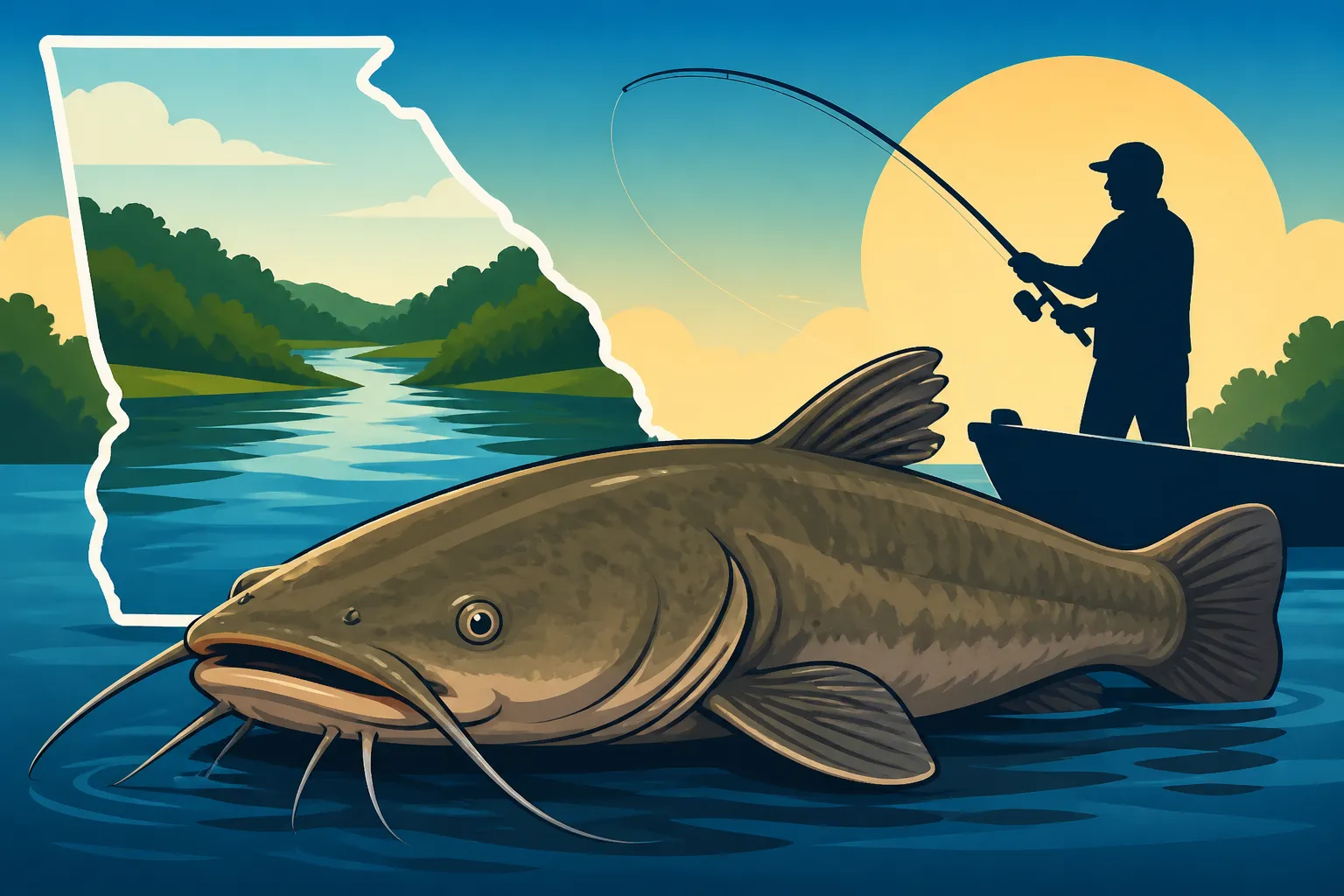
Now, when we talk about trophy flatheads in Georgia, we're talking about a whole different beast. These are the fish that weigh in at 30, 40, 50 pounds, or even more. Landing one of these requires patience, specialized gear, and a good understanding of their habits. A 30-pound flathead can easily be a couple of feet long, with a broad, flat head that gives them their name and a powerful, muscular body built for crushing prey and fighting currents.
These true trophies are often solitary, territorial creatures. They've lived through many seasons, evaded countless anglers, and grown to their immense size by dominating their chosen stretch of water. They require stout rods, heavy-duty reels, and strong line – sometimes up to 50-pound test or more – to even have a chance at pulling them out of their snag-ridden lairs. The fight is legendary; a trophy flathead can peel line off your reel with incredible speed and power, often trying to bury itself back into submerged timber or rock formations. It's not just a catch; it's an epic struggle that makes for an unforgettable fishing story.
Here's a quick comparison of what you might expect:
| Flathead Category | Typical Weight Range (lbs) | Typical Length Range (inches) | Common Habitat | Challenge Level |
|---|---|---|---|---|
| Average | 5 – 20 | 18 – 30 | Deeper holes, smaller snags | Moderate |
| Large | 20 – 40 | 30 – 45 | Main river channels, major timber | High |
| Trophy | 40+ | 45+ | Deepest holes, heavy cover, isolated structure | Extreme |
The Georgia State Record and Beyond: A Glimpse at Giants
While many anglers dream of a 30 or 40-pound flathead, Georgia has produced fish that dwarf even those impressive numbers. The state record stands as a testament to the incredible potential of these fish in our waters, and it continues to inspire anglers to push the boundaries.
The Current State Record
The current Georgia state record for flathead catfish is a truly monstrous fish, weighing in at an astounding 83 pounds! This incredible catch was made on the Altamaha River, a waterway renowned for its robust flathead population. Imagine the fight involved in bringing in a fish of that magnitude – it would have been a battle of wills, strength, and sheer endurance. This record isn't just a number; it represents years, perhaps even decades, of growth in a perfect habitat with abundant food.
The existence of such a record proves that Georgia's waters are perfectly capable of supporting flathead catfish of truly world-class dimensions. It's a beacon for those who dedicate themselves to targeting these colossal bottom-dwellers, knowing that every cast could potentially hook into a fish that reshapes the record books. It's also a reminder of the ecological health and productivity of our major river systems.
Historical Catches and Angler Legends
Beyond the official state record, there are always whispers and legends of even bigger fish. Anglers tell tales of flatheads caught and released, or lost at the boat, that seemed to defy belief. While not officially recorded, these stories fuel the passion and determination of countless catfish enthusiasts. It's not uncommon to hear of flatheads in the 60 to 70-pound range being caught and photographed, proving that the state record is certainly attainable and perhaps even surpassable by a lucky and skilled angler.
These historical catches often come from the same types of places as the record fish: deep, powerful rivers with plenty of cover and an endless supply of forage. The sheer longevity these fish demonstrate in order to reach such sizes is incredible, surviving floods, droughts, and countless fishing pressures. They are the true kings of their aquatic domains, and encountering one is a privilege that few anglers forget. For anyone looking to understand the true size potential of Flathead Catfish Size in Georgia Waters, looking at these giants, both recorded and legendary, is a must.
Gear and Techniques for Targeting Larger Flatheads
To consistently land those larger flatheads, you can't just throw out any old bait and expect results. These giants require specific gear and refined techniques. You need to be prepared for a fight and have the tools to back it up. Understanding these elements is crucial for anyone hoping to graduate from catching average flatheads to battling true monsters.
Essential Gear for Big Flatheads
When you're after those 30, 40, or even 50-plus pound flatheads, your tackle needs to be serious. Forget your panfish rod; we're talking about heavy-duty equipment. First, a stout rod with a strong backbone is non-negotiable. Look for something in the 7 to 10-foot range, with a heavy action, capable of handling lines up to 80 pounds. Paired with this, you'll need a large, robust baitcasting or spinning reel with a smooth, powerful drag system and a high line capacity. Many anglers prefer baitcasters for the brute force they offer when fighting big fish in heavy cover.
Line choice is critical. Braided line, in the 50 to 80-pound test range, is highly recommended due to its incredible strength, lack of stretch, and abrasion resistance. Flatheads live in gnarly places, and monofilament often won't stand a chance against submerged timber or sharp rocks. You'll also need strong, sharp hooks, usually circle hooks in sizes 7/0 to 10/0, to ensure a solid hookset and to minimize gut hooking, especially if you plan to release these magnificent fish. Don't forget heavy sinkers to keep your bait on the bottom in strong currents, and a sturdy landing net or a set of quality fish grips to safely bring your catch aboard. You can find a fantastic selection of all this specialized gear, from heavy-duty rods to braided lines and oversized hooks, on sites like Amazon. Having the right tools, like the ones highlighted in Best Catfish Gear for Georgia Rivers and Lakes, makes all the difference.
Effective Techniques for Landing Giants
Targeting large flatheads isn't about casting and waiting; it's a strategic game. One of the most effective methods is using large, live bait. Flatheads are notorious for their preference for living prey. Common live baits include large bluegill, shad, or even smaller carp, usually hooked through the back or lips. The key is to present this bait in their preferred ambush zones: deep holes, adjacent to log jams, or under cut banks. Best Bait for Flathead Catfish goes into more detail on specific choices.
Techniques like How to Bottom Fish for Catfish with a Carolina rig are classic for flatheads, allowing your live bait to swim naturally while keeping your weight on the bottom. For truly massive flatheads, some anglers employ trotlines or jug fishing methods in specific areas where permitted, which can be highly effective for covering more water and enticing larger, more cautious fish. Understanding How to Set a Trotline for Catfish or How to Jug Fish for Catfish can give you an edge, but always check local regulations first. Flatheads are also primarily nocturnal hunters, so fishing from late evening into the night is often the most productive time, as detailed in How to Catch Catfish at Night. Patience is paramount, as these intelligent fish may take their time before committing to a strike. It's a waiting game, but the reward of a giant flathead makes every minute worthwhile.
Disclaimer
This article is for general informational purposes only and does not constitute professional advice. Laws, prices and regulations vary by location and change over time. Consult a qualified professional for guidance on your specific situation.