Blue Catfish Size and Growth in Georgia Reservoirs
One of the most thrilling experiences for any angler in Georgia is hooking into a truly massive blue catfish, the kind that bends your rod double and tests every ounce of your strength. But it can be incredibly frustrating when you spend hours on the water, only to pull in smaller fish, leaving you wondering if those legendary giants even exist. This guide is all about understanding the incredible growth potential of blue catfish in Georgia's reservoirs, where they get big, and what factors contribute to their impressive size, so you can increase your chances of landing that trophy fish.
What Makes Blue Catfish Such Giants in Georgia?
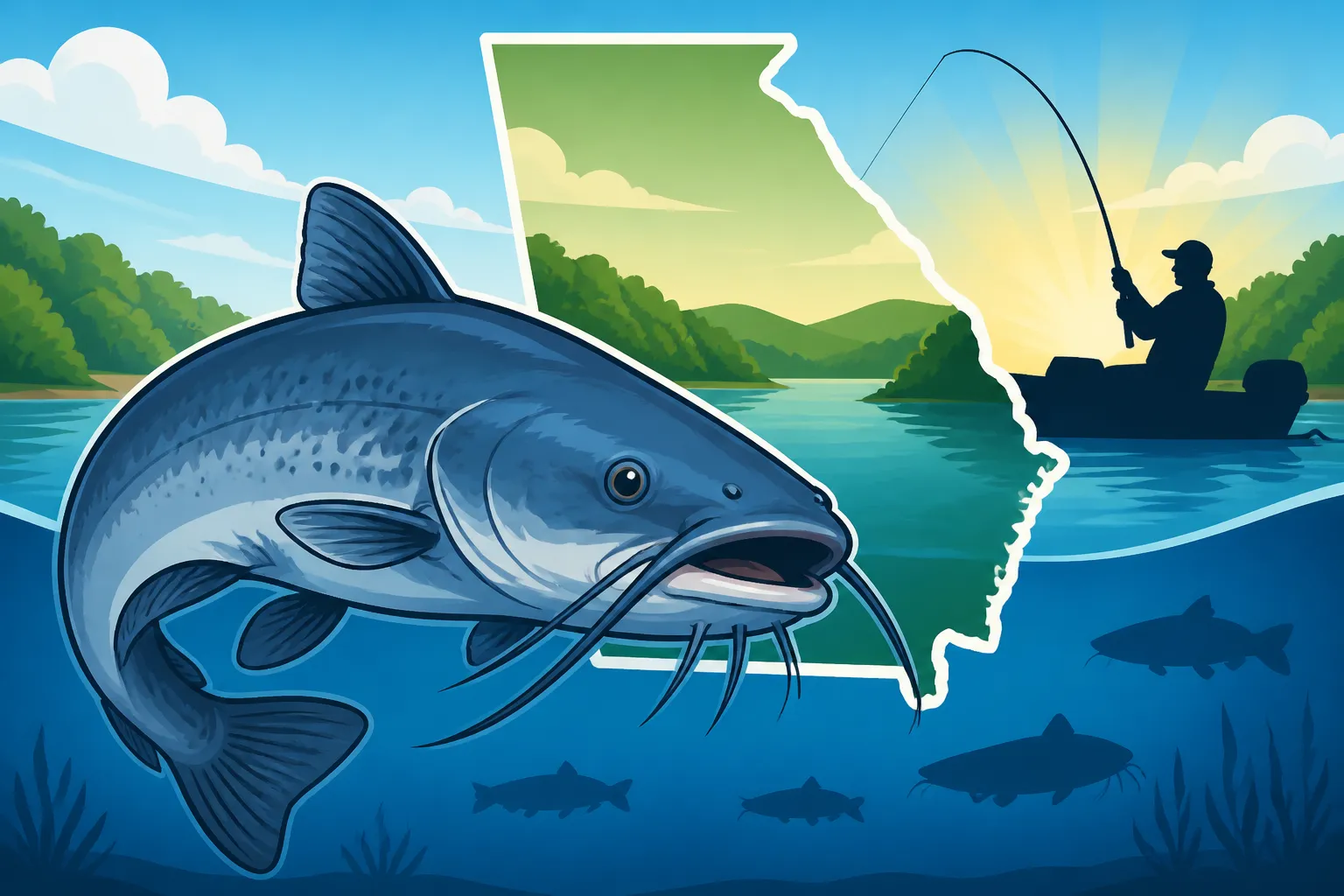
When you look at a truly enormous blue catfish, it's easy to see why they're such a sought-after species. These fish aren't just big by accident; their immense size is a combination of their inherent biology, the rich environments they inhabit, and a plentiful food supply. Georgia's sprawling reservoirs, with their deep channels and abundant forage, provide the perfect conditions for blue cats to thrive and reach truly monumental proportions. It's a fantastic recipe for creating trophy-class fish, if you know where to look.
The Genetic Potential for Size
Blue catfish, scientifically known as Ictalurus furcatus, are inherently built for size. They are the largest species of North American catfish, with a genetic blueprint that allows them to grow much larger than their channel or flathead cousins. This isn't just about getting long; it's about developing immense girth and weight. From the moment they hatch, they have the potential to become giants, given the right conditions. This genetic predisposition means that even if a blue cat doesn't encounter optimal conditions, it's still likely to be a substantial fish. However, in Georgia's nutrient-rich waters, that potential is often fully realized, leading to fish that can tip the scales at truly impressive weights. Understanding this fundamental aspect of their biology is the first step in appreciating what makes them so special.
Prime Habitat in Georgia Reservoirs
Georgia's large reservoirs offer an ideal environment for blue catfish to grow large and old. Think about vast, deep impoundments like Lake Eufaula (also known as Walter F. George Reservoir), Lake Sinclair, or Lake Oconee. These bodies of water provide extensive deep-water sanctuaries where large catfish can escape pressure, find consistent temperatures, and reside undisturbed. They also feature complex underwater structures – old river channels, submerged timber, roadbeds, and ledges – which provide crucial ambush points for feeding and protection. The sheer volume of water and diverse underwater landscape means blue cats aren't confined to small areas, allowing them to range widely in search of food and grow without the stress of overcrowding. This expansive and varied habitat is a critical component in their journey from fingerling to formidable predator. You can find more details on these fish in our Blue Catfish Guide for Georgia Anglers.
Abundant Food Sources
A fish can only grow as large as its diet allows, and Georgia's reservoirs are absolute smorgasbords for blue catfish. Their diet is incredibly varied, making them highly adaptable and efficient predators. As juveniles, they'll feast on insects, crustaceans, and smaller fish. But as they mature, their diet shifts dramatically to larger prey, predominantly other fish species. Shad, particularly gizzard and threadfin shad, are a primary food source, often schooling in vast numbers. Bream, small bass, and even other catfish (especially if injured or sick) become part of their menu. This rich and readily available protein supply fuels their rapid growth, allowing them to pack on pounds quickly. Imagine a constantly replenished buffet – that's what many of our best catfish lakes are for these giants, and it’s why they get so big.
Typical Growth Rates and Size Ranges in Georgia
It's one thing to talk about blue catfish getting big, but what does that actually mean in terms of their growth over time in Georgia's waters? Anglers often wonder how quickly these fish reach impressive sizes and what a "typical" big blue cat looks like. While every fish is an individual, and conditions can vary from one reservoir to another, we can still establish some general patterns that help us understand their journey from tiny fry to colossal adults.
Factors Influencing Growth Speed
Several key factors dictate how quickly a blue catfish will grow in a Georgia reservoir. The most obvious is the availability of food. Reservoirs with abundant shad populations or other forage fish will produce faster-growing and ultimately larger blue cats. Water temperature also plays a significant role; warmer water generally means a higher metabolism and more frequent feeding, leading to quicker growth, especially in the spring and summer months. However, excessively hot water can sometimes stress fish, making them less active. Water quality, including oxygen levels and clarity, is also important. Healthy, well-oxygenated water helps fish thrive. Finally, fishing pressure and population density can influence growth. In areas with high catch rates, older, larger fish might be removed, potentially leaving more food for the remaining fish to grow faster, or simply reducing the number of truly ancient giants. It's a delicate balance that determines the average size you'll encounter.
Average Sizes in Different Age Classes
Blue catfish growth can be quite impressive, especially in their early years. In their first year, they might only reach 6-10 inches. By age two or three, they could be pushing 15-20 inches and starting to gain some serious weight. What many anglers consider a "keeper" or a good eating-sized fish, typically in the 2-5 pound range, is often a fish that's 3-6 years old.
However, the real magic happens as they age further. A blue catfish in the 10-20 pound range might be 8-15 years old, having slowly but steadily put on mass. The true trophy fish – those exceeding 30, 40, or even 50 pounds – are often venerable veterans, potentially 20 years old or more. These ancient giants have survived countless challenges, consistently finding enough food, and avoiding predators (including anglers) to reach their incredible size. It's a testament to their resilience and the richness of Georgia's waters.
Here's a general idea of how blue catfish size can correspond with age in a productive Georgia reservoir:
| Approximate Age (Years) | Typical Length Range (Inches) | Typical Weight Range (Pounds) |
|---|---|---|
| 1 | 6 – 10 | < 1 |
| 2-3 | 15 – 20 | 1 – 3 |
| 4-6 | 20 – 28 | 3 – 8 |
| 7-10 | 28 – 35 | 8 – 20 |
| 10-15 | 35 – 45 | 20 – 40 |
| 15+ | 45+ | 40 – 100+ |
Note: These are approximations and can vary greatly depending on the specific reservoir, food availability, water conditions, and individual fish genetics.
The Trophy Hunt: What Defines a "Big" Blue Catfish?
Defining what constitutes a "big" blue catfish is subjective, but for many Georgia anglers, it often starts when the fish gets into the double-digit weight class. A 10-pound blue cat is a respectable catch, offering a good fight and often excellent table fare. However, when we talk about trophy blue catfish, most experienced anglers are looking for something significantly larger. For some, it might be a fish over 20 pounds. For others, particularly those who consistently target blues, the threshold might be 30, 40, or even 50 pounds.
A blue catfish over 50 pounds is truly a remarkable specimen in Georgia, putting it in the "fish of a lifetime" category for many. These are the fish that demand specialized heavy-duty gear, patient tactics, and often a deep understanding of the specific waters they inhabit. Landing one of these giants is not just about luck; it's a culmination of skill, preparation, and perseverance. If you're hoping to land one of these, you'll want to read up on Where to Catch Trophy Blue Catfish in Georgia.
Where to Find the Biggest Blue Catfish in Georgia
Knowing that blue catfish can grow huge in Georgia is one thing; knowing where to find those giants is the real challenge, and the true quest for many dedicated anglers. While smaller blue cats can be found in many waters across the state, certain reservoirs consistently produce bigger, older fish due. It's all about understanding their preferences for deeper, more stable environments, and their seasonal movements.
Top Georgia Reservoirs for Trophy Blues
Georgia is blessed with several fantastic reservoirs that have established reputations for producing enormous blue catfish. These are often large, mature impoundments with extensive forage bases and deep-water habitat.
- Lake Sinclair: Located near Milledgeville, Lake Sinclair is a powerhouse for catfish. Its nutrient-rich waters and ample shad populations create a perfect environment for blue cats to grow large. Anglers regularly report fish in the 30-50 pound range, with larger ones not uncommon. Its diverse structure, including submerged timber and deep channels, holds a lot of fish.
- Lake Oconee: Just upstream from Sinclair, Lake Oconee also offers incredible blue catfish opportunities. Like Sinclair, it benefits from strong shad populations and deep water, particularly in the lower end of the lake and around the river channels. You'll find many anglers here specifically targeting trophy blues.
- Walter F. George Reservoir (Lake Eufaula): Straddling the Georgia-Alabama border, this massive lake on the Chattahoochee River is legendary for its catfish, including some truly monstrous blues. Its vastness, combined with deep river channels and a prolific forage base, makes it a prime location for anglers seeking 50+ pound fish. The lower Chattahoochee River below the dam can also produce some giants.
- West Point Lake: Up on the Georgia-Alabama line on the Chattahoochee River, West Point is another excellent choice. While perhaps not as famous for its blues as Sinclair or Eufaula, it consistently produces big fish, especially in the main river channel and deeper creek arms. It's a fantastic place to spend a day targeting big cats.
These lakes are not just good for catching any blue cat, but specifically for increasing your odds of encountering one of the truly massive ones. They represent the best of Georgia's catfishing opportunities.
Seasonal Movements and Deep Water Haunts
Big blue catfish aren't just sitting ducks; they move and adapt to seasonal changes. During the warmer months of late spring and summer, blue cats tend to be more active and can be found in a wider range of depths, often moving into shallower flats or creek channels to feed, especially at night or during low light conditions. As the water cools in the fall and winter, the largest blues will typically retreat to deeper water. They might stage in the main river channels, suspended off ledges, or congregate in deep holes. Winter Fishing Patterns on Georgia's Reservoirs can shed more light on this.
Look for areas where old river channels intersect with humps or ledges, or where deep creek channels merge with the main lake. Submerged timber and brush piles also attract them. These deep-water haunts provide stable temperatures and access to schooling baitfish, making them prime locations for trophy hunters year-round. Understanding these patterns, and using your electronics to locate both the fish and their food, is crucial for consistently finding the biggest blue catfish.
Gear Up for Giant Blues: Essential Equipment Considerations
When you're chasing blue catfish, especially the enormous ones that lurk in Georgia's reservoirs, you quickly learn that standard bass or crappie gear just won't cut it. These fish fight with incredible power and tenacity, and if your equipment isn't up to the task, you're going to end up with a broken line, a snapped rod, or a lost fish – or all three! Gearing up properly is not an expense; it's an investment in success.
Rods, Reels, and Line for Monster Catfish
To tackle Georgia's biggest blue cats, you need heavy-duty, reliable equipment designed for serious pulling power.
- Rods: Look for heavy or extra-heavy action rods, typically 7 to 10 feet long. Shorter rods can be used for bank fishing or tight quarters, but longer rods offer better casting distance and leverage for fighting big fish from a boat. A good catfish rod will have a stout backbone to handle the initial powerful runs and keep the fish from digging into cover, but also a relatively sensitive tip to detect subtle bites. Fiberglass or composite rods are often preferred for their durability and shock absorption.
- Reels: Your reel is arguably the most critical component. A robust baitcasting reel (often called a conventional reel) is the go-to choice for serious catfishing. These reels are built with stronger gears and drags to handle heavy lines and the immense strain of a fighting blue cat. Look for models with a high line capacity, smooth, powerful drag system, and a comfortable handle for cranking. Many anglers prefer reels specifically branded for catfishing or saltwater applications due to their inherent toughness.
- Line: Forget light monofilament. For big blue cats, you'll want heavy braided line or a strong monofilament. Braided line in the 50-100 pound test range is common due to its incredible strength, zero stretch (which aids in hooksets), and smaller diameter compared to mono of the same breaking strength. If you prefer monofilament, opt for 30-50 pound test, keeping in mind it will have more stretch and a larger diameter. Always use a heavy leader (60-100 pound fluorocarbon or monofilament) at the business end to protect against abrasion from the fish's rough mouth or underwater structures. Best Rod for Catfish Fishing on Georgia Rivers has more specific recommendations.
Baits and Rigs That Attract the Big Ones
Blue catfish are primarily scavengers and opportunistic predators, meaning they're not too picky, but some baits are undeniably more effective for drawing in the biggest fish.
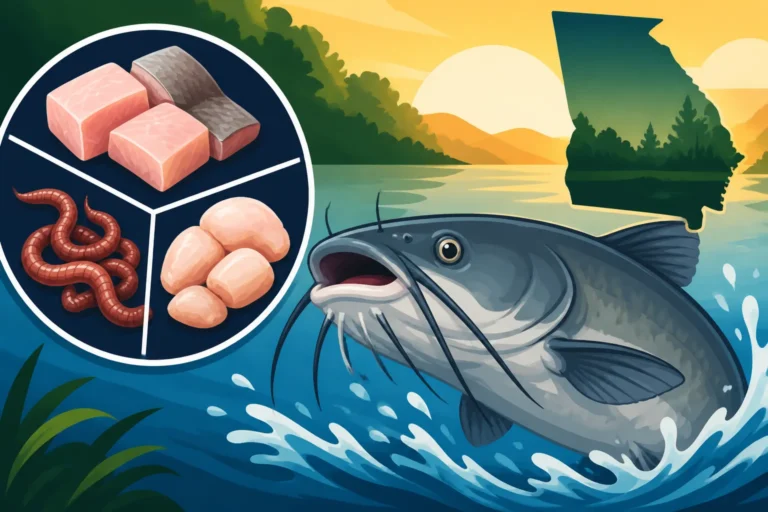
- Cut Bait: This is king for blue catfish. Freshly cut pieces of oily baitfish like shad, herring, or skipjack are irresistible. The scent trail they emit travels far in the water, attracting distant catfish. You can also use cut pieces of carp or even smaller catfish. The fresher the better!
- Live Bait: While cut bait is often preferred, live bait can also be effective, especially for drawing in actively hunting fish. Live shad or bluegill can entice a strike from a monster blue.
- Prepared Baits (Stink Baits/Punch Baits): While many prepared baits work for smaller channel cats, the biggest blues generally prefer natural cut or live bait. However, some very potent punch baits or dip baits can occasionally tempt larger fish, especially in warmer water.
When it comes to rigs, simplicity and strength are key. The most common setup is a Carolina rig or a three-way swivel rig.
- Carolina Rig: This involves a heavy sinker (often 2-8 ounces, depending on current) above a swivel, followed by a heavy leader (12-36 inches) and a large, strong circle hook (8/0 to 12/0). The sliding sinker allows the fish to pick up the bait without immediately feeling the weight, leading to better hooksets.
- Three-Way Swivel Rig: This rig is excellent in current or when you want to present multiple baits at different depths. One eye of the swivel goes to your main line, another to a short leader with a sinker, and the third to your bait leader.
Always use heavy-duty swivels, snaps, and hooks. Strong, sharp circle hooks are essential for effectively hooking large blues in the corner of the mouth, reducing gut hooking and making release easier if desired. You can find a wide array of these essential components, from powerful rods and reels to tough lines and circle hooks, readily available on Amazon, ensuring you're fully equipped for your next big cat adventure. Remember, quality gear is paramount when a potential state record is on the line!
Disclaimer
This article is for general informational purposes only and does not constitute professional advice. Laws, prices and regulations vary by location and change over time. Consult a qualified professional for guidance on your specific situation.