Crappie Compared: Black vs White in Georgia Waters
For many of us who love chasing panfish, the crappie holds a special place in our hearts. They're often abundant, a blast to catch, and absolutely delicious on the dinner table. But have you ever found yourself pulling in what you think is a crappie, only to pause and wonder if it's a black crappie or a white crappie? It's a common dilemma, even for seasoned anglers in Georgia, and understanding the subtle (and sometimes not-so-subtle) differences between these two beloved species can seriously up your fishing game. This guide will dive deep into how to identify and successfully target both black and white crappie right here in Georgia's diverse waters.
Understanding Crappie in Georgia's Waters
Crappie fishing is practically a rite of passage for many Georgia anglers. These silvery panfish offer fantastic opportunities year-round, from the warming waters of spring to the cooler depths of winter. But beyond just knowing they're "crappie," recognizing the specific species can significantly influence your tactics and understanding of their habits.
Why Crappie Identification Matters
You might think, "A crappie is a crappie, right?" Well, not quite! While they share many similarities, black crappie and white crappie often have slightly different preferences when it comes to habitat, water conditions, and even the type of structure they relate to. Knowing which one you're primarily targeting, or which one is more prevalent in your chosen fishing spot, can help you pick the right lures, the right depth, and even the best time of day to cast your line. For example, if you know you're in a clear water lake with lots of vegetation, you might lean towards tactics more suited for black crappie. Conversely, if you're on a muddier river system with plenty of standing timber, white crappie techniques might be more productive. This subtle shift in strategy can mean the difference between a few bites and a full livewell.
Crappie's Popularity Among Georgia Anglers
There's no denying the immense popularity of crappie fishing across Georgia. From the sprawling reservoirs of Lake Lanier and Lake Oconee to countless smaller ponds and rivers, crappie are sought after by anglers of all ages and skill levels. They're often one of the first fish a child catches, instilling a lifelong love for the sport, and they continue to challenge experienced anglers with their sometimes finicky habits. Their tendency to school up also means that when you find one, you often find many, leading to exciting and productive days on the water. Plus, their mild, flaky white meat makes them a superb table fare, highly prized for family fish fries. This combination of accessibility, sportiness, and deliciousness ensures crappie will remain a favorite target for generations of Georgia fishermen and women.
Black Crappie: The Spotted Sister
Often seen as the "prettier" of the two to some anglers, black crappie are distinct in their markings and generally prefer slightly different environments than their white crappie cousins.
Physical Characteristics and Markings
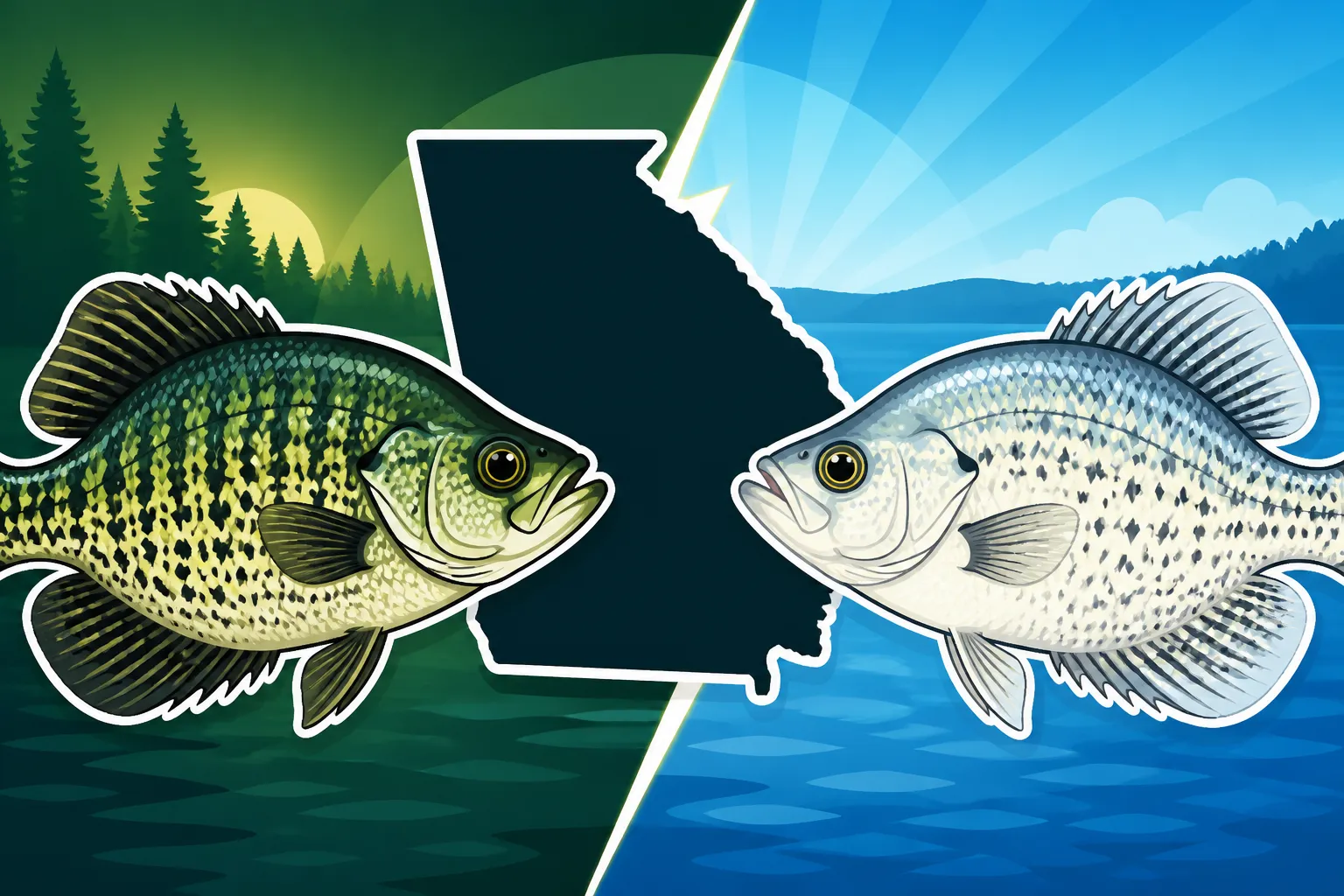
When you look at a black crappie, the most striking feature you'll notice is their irregular, dark blotches scattered across their silvery-green or olive-brown body. Unlike the more organized vertical bars of white crappie, these spots look almost like someone splattered paint on them haphazardly. Their overall body shape tends to be more disc-like or "round," with a deeper body depth compared to the white crappie's elongated profile.
Another crucial identifier lies in their dorsal fin. Count the spines on a black crappie's dorsal fin – you'll almost always find 7 or 8 spines. This is a reliable way to tell them apart from white crappie, which typically have fewer. Their mouth is fairly large, extending back to beneath the middle of the eye, indicating their predatory nature. Their fins can also show a subtle network of dark speckles, further adding to their "spotted" appearance. Sometimes, especially during spawning season, males can take on an almost jet-black coloration, particularly around the head and throat, making them even more distinct. Black Crappie Identification: Spots vs Stripes goes into more detail on how to spot these features.
Preferred Habitat and Behavior
Black crappie are generally lovers of clearer, cooler water, and they have a strong affinity for dense cover and aquatic vegetation. Think lily pads, submerged timber, brush piles, boat docks, and thick weed beds. In Georgia's lakes and rivers, you'll often find them tucked into these areas, using the cover for ambush points and protection. They are less tolerant of turbid (murky) water compared to white crappie.
Behaviorally, black crappie tend to be more solitary or form smaller schools outside of spawning season. When they do school, they often hold tight to specific structures. They are also generally considered to be a bit more finicky, especially when water temperatures are fluctuating. They'll often suspend at a specific depth near cover, making vertical jigging or slow-trolling effective tactics. During the spawn, they will move into shallow, protected coves and will often bed in and around vegetation or submerged roots, making them a prime target for shore anglers or those with small boats.
Diet and Feeding Habits
Like all crappie, black crappie are opportunistic predators. Their diet primarily consists of smaller baitfish such as shad, minnows, and small sunfish. They'll also readily consume insect larvae, crustaceans, and zooplankton, especially when they are younger. This varied diet is why a diverse tackle box is so effective when targeting them.
Black crappie are sight feeders, which ties back to their preference for clearer water. They'll often position themselves in ambush points, waiting for unsuspecting prey to swim by. They feed throughout the day, but often have peak activity during low light conditions like dawn and dusk, or on overcast days. During these times, they are more likely to move out from the heaviest cover to hunt. Anglers often find success using small jigs, minnows, or even tiny crankbaits presented slowly and precisely around their preferred cover. Understanding their feeding habits can help you choose the right presentation, whether it's a slow fall or a subtle twitch.
White Crappie: The Striped Cousin
The white crappie, with its distinctive vertical bars, is another incredibly popular game fish in Georgia, often found in slightly different environments than its black crappie counterpart.
Physical Characteristics and Markings
The most telling feature of a white crappie is the presence of 5 to 10 distinct, dark vertical bars running down its sides. These bars are usually quite prominent and evenly spaced, giving them a "striped" appearance. Unlike the black crappie's rounder body, the white crappie typically has a more elongated, oval-shaped body, appearing a bit "taller" than it is wide.
Again, the dorsal fin is key. A white crappie will almost always have 6 dorsal spines. This is the simplest and most reliable way to differentiate it from a black crappie, which, as we discussed, has 7 or 8. Their mouth is similar in size to the black crappie, extending back to below the eye. Their overall coloration tends to be a lighter silvery-white, sometimes with a yellowish or greenish tint on the back. The fins are usually clearer, with fewer dark speckles than you'd find on a black crappie. Checking for these markings and the dorsal fin spine count will quickly confirm your catch. For more identification tips, see White Crappie Fin and Spine Count vs Black Crappie.
Preferred Habitat and Behavior
White crappie are generally more adaptable and tolerant of turbid or murky water conditions than black crappie. While they also appreciate structure, they often prefer areas with standing timber, brush piles, submerged stumps, and docks, but might be found further away from dense vegetation. They thrive in reservoirs and larger river systems that might experience more fluctuating water levels or sediment.
White crappie are known for forming larger schools, especially during the colder months when they congregate in deeper holes or around significant underwater structures. They are often less tied to dense cover than black crappie and can be found suspending in open water near channel bends or humps. During the spawn, they move into shallower waters, often preferring hard bottom areas like gravel beds or submerged wood in protected coves. They are generally considered to be slightly more aggressive feeders than black crappie, often willing to chase a lure a bit further.
Diet and Feeding Habits
The diet of white crappie is very similar to that of black crappie, consisting primarily of small baitfish like threadfin shad, gizzard shad, and minnows. They also feed on aquatic insects, insect larvae, and zooplankton. Their adaptability allows them to thrive in a wider range of forage conditions, which contributes to their prevalence in many of Georgia's larger, more dynamic water bodies.
White crappie are also sight feeders, but their tolerance for murkier water suggests they might rely a bit more on other senses in low visibility conditions, or simply adapt their feeding windows. They are known for aggressive feeding frenzies, particularly when schools of baitfish are present. Anglers often find success with a variety of small jigs, live minnows, and small crankbaits or spinnerbaits. Because they often school in open water near structure, vertical jigging, casting and retrieving, or slow trolling can be highly effective. Understanding where the baitfish are is often the key to finding a school of hungry white crappie.
Key Differences: Side-by-Side Comparison
While both crappie species are fantastic targets, knowing their distinctions helps hone your approach. Let's break down the main differences.
Spotting the Distinctions
The easiest and most reliable way to tell a black crappie from a white crappie once you've landed one is by counting the spines on its dorsal fin. This is the fin on its back. A black crappie will have 7 or 8 spines, while a white crappie will have 6. This is a consistent anatomical difference that rarely fails.
Beyond the spine count, the visual markings are also a strong indicator. Black crappie will have irregular dark blotches that look "scattered" across their body. White crappie, on the other hand, will display distinct vertical bars, usually 5 to 10 of them, running down their sides. Finally, consider their body shape: black crappie tend to be more rounded, almost like a dinner plate, whereas white crappie are more elongated and oval.
Here's a quick reference table to help you:
| Feature | Black Crappie | White Crappie |
|---|---|---|
| Dorsal Fin Spines | 7 to 8 | 6 |
| Body Markings | Irregular dark blotches/spots | 5 to 10 distinct vertical bars |
| Body Shape | More rounded, deeper body | More elongated, oval-shaped |
| Water Preference | Clearer, cooler water | More tolerant of murky/turbid water |
| Cover Preference | Dense aquatic vegetation, brush piles | Standing timber, brush piles, docks |
Behavioral Contrasts
Beyond their looks, black and white crappie often exhibit subtle behavioral differences that can guide your fishing approach. Black crappie are generally perceived as being a bit more structure-oriented and can be more finicky. They tend to stick tighter to cover, using it for ambush and protection, and might require a more precise presentation. If you're fishing a thick brush pile and getting light bites, you might be dealing with black crappie that are well-hidden.
White crappie, while still relating to structure, are often more willing to roam and suspend in open water, especially in large schools. They can be more aggressive, readily chasing lures, and are often found in larger, more active schools. If you find a massive school of crappie suspending over a creek channel, chances are you've stumbled upon white crappie. Their willingness to chase also means you might have success with a slightly faster retrieve or trolling speed.
Habitat Preferences in Georgia Waters
Georgia offers a wide array of habitats where both crappie species thrive, but understanding their general leanings can help you choose your fishing spot wisely.
Black crappie are often found in the clearer, often slightly cooler waters of North Georgia lakes or the clearer sections of larger reservoirs. Think areas with abundant aquatic vegetation, like the upper reaches of some arms of Lake Lanier or certain state park ponds with plenty of lily pads. They love natural lakes with a good amount of weed growth.
White crappie are very much at home in the larger, often more turbid reservoirs and river systems that dominate much of central and south Georgia. Lakes like Oconee, Sinclair, or the Chattahoochee River below the dams, with their vast expanses of standing timber, channel bends, and varying water clarity, are prime white crappie territory. They do well in systems that might experience more inflow and outflow, which can lead to fluctuating water levels and clarity. Knowing whether you're fishing a clear, weedy lake or a large, timber-filled reservoir can give you an early clue as to which crappie species you're likely to encounter most frequently.
Fishing Strategies for Each Species in Georgia
Even with similar gear, subtle tweaks in your approach can make a big difference when targeting black versus white crappie. It's all about playing to their preferences!
Targeting Black Crappie
When you're after black crappie, think precision and subtlety, especially when they're tucked deep into cover. Because they prefer clearer water and dense vegetation, your presentation needs to be accurate.
- Jigging in Cover: Small jigs (1/32 to 1/16 ounce) tipped with a tiny plastic grub or a live minnow are incredibly effective. Focus on dropping these offerings vertically into brush piles, around submerged trees, or into pockets within weed beds. The key is to get your bait right into their living room. A sensitive light-action rod, readily available on retailers like Amazon, can help detect those often subtle bites.
- Slow Trolling: If black crappie are suspended near cover but not directly in it, slow trolling with multiple rods can be deadly. Use small Jiffy Jigs, Bobby Garland crappie baits, or Road Runner lures. Vary your depths until you find where the fish are holding. This method allows you to cover more water efficiently, especially if you're marking fish on your Best Fish Finders for Georgia Reservoir Fishing.
- Finesse Tactics: In clear water, black crappie can be spooky. Downsizing your line (4-6 lb test fluorocarbon or monofilament), using smaller baits, and making longer casts to avoid disturbing them can pay off. During the spawn, they'll be in very shallow water around vegetation, making tiny spinnerbaits or even fly-fishing with small nymphs effective.
- Best Time: Overcast days or low-light periods at dawn and dusk are often prime times for black crappie, as they'll venture out from cover a bit more.
Targeting White Crappie
White crappie, with their tendency to school in larger groups and their greater tolerance for varying water conditions, often respond well to slightly more aggressive tactics and covering broader areas.
- Spider Rigging: This is a classic white crappie technique, especially on larger reservoirs with extensive standing timber or creek channels. Using multiple long rods fanned out from the boat, each with a different bait or depth, allows you to find those large schools quickly. Live minnows are king here, often paired with a small jig head.
- Casting and Retrieving: When white crappie are actively chasing bait, especially in open water near structure or along channel edges, casting small crankbaits, spinnerbaits (like a Mr. Crappie), or jig-and-grub combos can be incredibly effective. A steady retrieve with occasional pauses can trigger bites. You can find a wide selection of these lures on Amazon, perfect for experimenting.
- Deep Water Jigging: In winter, white crappie often congregate in deep channels, under bridges, or around deep timber. Vertical jigging with heavier jigs (1/8 to 1/4 ounce) or spoons can entice them. Your fish finder is your best friend here, helping you pinpoint those deep schools.
- Best Time: White crappie can bite well throughout the day, particularly if there's an active baitfish presence. They're often less affected by bright sun than black crappie, especially if they're holding in deeper water. Look for them in areas like Best Crappie Fishing Spots on Lake Sinclair.
Essential Crappie Gear
No matter which crappie species you're after, having the right gear makes the experience much more enjoyable and successful.
- Rods and Reels: Light to ultra-light action spinning rods, typically 6 to 9 feet long, paired with small spinning reels (500 to 1000 size) are ideal. This setup provides the sensitivity needed for light bites and the backbone for fighting decent-sized crappie. Brands like Ugly Stik offer affordable and durable options for crappie fishing, and you can usually find great deals on Amazon.
- Line: 4 to 6 lb test monofilament or fluorocarbon line is usually sufficient. Some anglers prefer braided line for its sensitivity, often with a fluorocarbon leader.
- Terminal Tackle: A variety of small jig heads (1/32 to 1/8 oz) in different colors, small plastic grubs, tubes, and curly-tail baits are a must. Don't forget live bait hooks for minnows (sizes #4 to #8), split shot weights, and small bobbers.
- Electronics: A good fish finder can be invaluable for locating schools of crappie and their preferred structure, especially in larger lakes.
- Net and Livewell: A small landing net protects the fish, and a functioning livewell is essential if you plan on keeping your catch fresh. Remember to always check Georgia Fish Size and Creel Limits before you head out.
Conservation and Regulations for Crappie in Georgia
As with any popular game fish, responsible angling practices and adherence to regulations are crucial for maintaining healthy crappie populations in Georgia.
Understanding Georgia's Crappie Limits
Georgia has specific regulations in place to ensure the sustainability of its crappie fisheries. These regulations often include daily creel limits (the number of fish you can keep in a day) and sometimes size limits (a minimum length a fish must be to be kept). These limits can vary by water body, so it's absolutely essential to check the latest Georgia Department of Natural Resources (DNR) fishing regulations booklet or website before you head out. Don't rely on old information or hearsay.
For instance, a general statewide daily creel limit for crappie might be 30 fish, but a specific lake could have a more restrictive limit or a size minimum. These rules are designed to prevent overfishing and allow crappie to reach reproductive maturity, ensuring future generations of anglers can enjoy catching these fantastic fish. Violating these limits can result in penalties, so always be informed and fish legally.
Practicing Responsible Catch and Release
While crappie are often kept for the table, practicing responsible catch and release, especially for larger breeding-size fish, contributes significantly to conservation efforts. If you're not planning to eat every fish you catch, consider releasing some, particularly the larger females that are crucial for reproduction.
- Minimize Handling: Try to handle the fish as little as possible. Wet your hands before touching them to protect their protective slime coat.
- Use Barbless Hooks: Barbless hooks make it much easier to remove the hook quickly and cleanly, reducing damage to the fish. You can also crimp down the barb on your existing hooks.
- Quick Hook Removal: Have a pair of pliers or a de-hooking tool readily available to remove hooks efficiently. If a fish is deeply hooked, it's often best to cut the line as close to the hook as possible rather than trying to tear the hook out.
- Support Vertically: If possible, support the fish vertically, especially larger ones, rather than holding them horizontally by the jaw, which can damage their internal organs.
- Revive If Necessary: If a fish seems stressed or lethargic, hold it gently in the water, facing into the current, until it regains its strength and can swim away on its own.
By understanding the subtle differences between black and white crappie and practicing responsible angling, we can all contribute to the health and abundance of Georgia's crappie populations for years to come. So next time you're on the water, take a moment to really look at your catch – is it the spotted sister or the striped cousin? Knowing the answer might just make you an even better crappie angler.
Disclaimer
This article is for general informational purposes only and does not constitute professional advice. Laws, prices and regulations vary by location and change over time. Consult a qualified professional for guidance on your specific situation.